Showing posts with label repurposing. Show all posts

Plastic, plastic use, and plastic pollution

by Michael Smith (Veshengro)
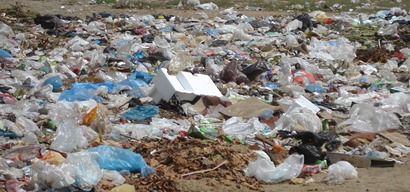
plastic_waste1Plastic is pervasive nowadays and there is almost no place where you can look and plastic will not be staring you in the face in some for or the other. The computer keyboard, the case of the laptop, of the cellphone; all plastic, and that just for starters.

Since the real commercial production of plastic begun in the 1950s the world has produced more than eight billion tons of plastic which is about as much in weight as a billion elephants. Now let that sink in for a moment. That's an awful lot of the stuff. And that which has not been recycled or burned is in landfills and much of it, in fact, is floating around in the sea, causing problems to marine life, and in the end to us, who eat some of that marine life.

In 1950 the world produced around two million tons of plastic per year, while 65 years later, in 2015, it was 380 million tons in that year alone. Half of the so far produced plastic has been has been made in the last 13 years. Until 2015 only nine percent of this plastic has been recycled while twelve percent has been burned. The rest, alas, is still with us, predominately in landfills.

In some cases, let's face it, there, probably, is no real substitute for plastic and there is plastic and then there is plastic, as I keep saying. Instead of making it from petroleum there are other ways plastic materials could and can be made but even if the plastic is from a plant-based source it remains plastic and compostability is in most cases nothing more than greenwash.

On the other hand plastic can be extremely durable – aside from being light – and I say the can be because some of it is not made to be durable and that is due again to industry's design of needing things to break in order to sell more of the things to us.

It is the single use plastic that really is the greatest of problems, whether it comes in the form of the all present and all pervasive PET-bottle or the other plastic packaging such as fruit punnets, salad bowls, etc. ad infinitum.

What bugs me is that many of those things can be given an extended life if we but put our thinking cap on when we encounter them. Only recently I rescued the bases of some Sainsbury's sandwich trays (the kind you but ready-made sandwiches in for parties) which will become the trays for plant pots when raising seedlings.

I have found that the plastic that is used for those salad bowls with ready-made made salads from supermarkets, for instance, is a fairly flexible and also strong kind in that there is nothing preventing us from reusing those small and not so small bowls for a variety of uses in the kitchen, at table and otherwise in the home (and garden).

Those single-use plastic beer beakers (1pt), often made of a strong and flexible plastic, that are used at festivals and such like, instead of glasses, and then, obviously, being tossed thoughtless into the countryside, make for great propagators put upside down over a small plant pot for raising seedlings.

While, obviously, it would be good if we could get rid off all single-use plastic I, personally, doubt that that is going to happen soon and thus we ensure that we dispose of the stuff responsibly (for recycling ideally though we can but wonder how much recycling actually truly happens) or, maybe better still, must find a way of making use of those things by reusing, repurposing and upcycling them in other ways, stretching their lifespans for as far as possible.

In the case of plastic drinks bottles, be it water or other, I would advocate the introduction of a deposit, as it is done in some countries already, and the use of reverse vending machines where such bottles can be returned to and the deposit given to whoever returns them.

Bottled water is a scam anyway as most of the water is not “spring water” or “mineral water” but simply ordinary, often tap, water filled into bottles and sold at a huge profit. In most places in Europe, bar a couple of countries, the local tap water is better than any bottled water. The US still has a problem despite considering itself to be such a great advanced nation. In some places the municipal water supply there is as bad, sometimes even worse, than that in many a city in the Third World.

The problem nowadays though is also that other drinks and products that used to be packaged in glass come now in plastic bottles and jars, such as wine, spirits, peanut butter, etc. The claim is that this is being done to reduce the impact on the environment as glass is heavier than plastic and thus transportation requires more fuel. Come on, let's be honest dearest people. It is cheaper and the environmental claim is but hogwash or should we better call it greenwash. Fact is that plastic bottles and jars are cheaper than glass and that they are cheaper to transport than glass. Hence the move to more and more plastic.

As consumer we are facing a dilemma when it comes to the above, that is to say drinks and produce in plastic jars, let's not even talk about fruit and vegetables packages in unnecessary plastic (wasn't sure whether to laugh or cry the other day when I saw at ALDI apples packaged in the kind of tube in which tennis balls are sold) as in the great majority of cases we do not have an alternative. It was Sainsbury's a couple of years ago that started the trend of peanut butter in plastic jars and now almost every producer of peanut butter has followed suit.

Wines and spirits, at least those at the lower end of the price scale, now also come in plastic, rather than glass, in our supermarkets and the letters WTF very much come to mind with regards to that.

So, instead of working to reduce the problem industry and supermarkets actually perpetuate the problem by introducing more and more plastic packaging. Get rid off the plastic carrier bag, to some degree, and they just get some more plastic in that you can't avoid, more or less. Sometimes I do wonder whether they actually want to help or not, and it looks more like that they do not want to help at all. Plastic is cheaper to use than glass and much cheaper to ship as it is lighter and there are no breakages. It's all down to money yet again. But where does that leave us, as consumer, who are left without an alternative and choice often?

© 2017

The reuse economy or reuse sector

by Michael Smith (Veshengro)

reuse_fabrics-940x400New York City Department of Sanitation Commissioner Kathryn Garcia thinks, as does the department, that the reuse sector, both the nonprofit and the for-profit sector, are key to moving forward with regards to a New York City's “zero-waste” drive.

Compared to the heavy duty world of urban waste collection in New York, the reuse sector can seem quite esoteric. Now, the city is looking to make it a mainstream operation.

Because reusable items are generated more sporadically than the steady streams of refuse, recyclables and organics, the systems to handle them can be less organized. Due to a lack of awareness or access, it’s often easier for many residents to just put their old couches and dusty guitars out on the curb. In many places, one has to add, such systems are not – at least not on an official level – even existent.

So, let's look at what this “new” or “newish” sector of the economy, this reuse thing, actually is. Well, to have said new or even newish is rather incorrect for it is neither of it; it is quite old, only it was not called reuse or even an economy back then.

It was what the rag and bone man and others did, namely pick up things that could either be sold for scrap, refurbished, reworked or whatever, and secondhand shops, once upon a time, were very common. Now they have gone upmarket and are called charity shops. Often the same difference. And those charity shops are, obviously, the nonprofit part of the sector, although, considering that the items are donated to them, and even bought to them, they do make quite a bit of profit from the sale of them.

To bring about a more or less zero waste situation the reuse economy must also include and incorporate the repair, rework and upcycling economy, like those artisans and and other workers who will make goods, ideally usable goods and not just art, for sale, as a business, out of items of waste.

It it made to appear as if the reuse and remake economy is something new, recently invented by the green movement, but it has existed for ages. And even upcycling is not a new thing at all. It too has existed for almost ever and a day. Only it was not called upcycling. It was just what one did, and especially what those that did not have the financial resources to buy did. But it also was an economy in that people repaired, restored and upcycled for sale.

Fact is though that over the last number of decades it fell out of fashion and that was as much due to the fact that people just wanted to appear affluent pretending that they could buy new all the time as with the fact that products became, almost all, non-repairable.

The latter especially led to the demise of the repair economy and repair businesses, large and small, fell by the wayside and died a death. Yes, we still have the so-called shoe repairers, for instance, who often also operate the dry-cleaners and key cutting, but you try to get those franchisees to sew back leather upper to a leather midsole. They can't do it “because they haven't got the machine for it”, as I was told when wanting it done. They are not cobblers, the are just machine operators and if there is not a machine with which to do it they cannot do it. Anything that would involve sewing by hand, where a machine cannot be used, they cannot do. Basically all they can do it put a new heel or sole onto a shoe or boot and that is about it. And the latter obviously only if the shoe or boot has a sole that can be removed and a new one put on and with many shoes and boots today that no longer can be done today.

Before every manufacturer – or almost every one – jumped on the bandwagon of built-in obsolescence, following the likes of Osram in the mid-twentieth century and other US firms after World War II, the repair economy was everywhere because everything could be fixed, at least almost everything.

In countries such as the GDR – often referred to as (communist) East Germany – there were entire small enterprises as well as state combines dedicated to repair. The combines were like a department store where you could bring anything to be fixed, even bed sheets and such, though many things people just fixed themselves.

When the built-in obsolescence “hit the shelves”, so to speak, it was the death knell for the repair businesses, large and small, under capitalism, as almost nothing could be fixed anymore or was and still is too expensive to fix with repairs costing many times that of a new one. And we are surprised that our landfills are overflowing and that we have a waste problem.

That is not to say that people are not a problem here either as many seem to treat everything as disposable even if it is not. It begins with cutlery and other reusable things at picnics in parks where those items are, once soiled having been used for eating with, are tossed out just like disposable items. It carries on with clothes where a button has come off, even though they still have the button in their possession, and so on and so forth.

The reuse sector could really have its work cut out nowadays with people's waste alone to clean, rework and all that, and then bring it back into circulation. And if we add to that upcycling then we would really be motoring and a good thing it would be too.

© 2017

Reusing and upcycling tin cans

by Michael Smith (Veshengro)

Tin Can Cutlery Bins2_webMany food products and produce still come in tin cans of various sizes and while they, the tins, are – mostly – completely recyclables, as they are – predominately – steel, they also lend themselves extremely well for reuse and for upcycling.

As with glass jars the attitude of my grandparents and their parents, and, generally the majority of the people of that time, was that they had paid for the tin cans – and those were the days before there was recycling – and because of that as many as possible of them were put to reuse and were upcycled, although that word also did not exist then, the practice, however, did, before throwing them into the trash.

Reuse and upcycling of them came in many ways from the simple reuse of a can as s coop for chicken feed, for example, to more elaborate conversions. The Australian bushmen (nothing to do with Aborigines or the Bushmen of Southern Africa) were also real masters in the reuse and upcycling of all manner of tin cans.

Personally I always have to smile and almost laugh out loud when some people are so proud buying recycled steel pencil bins and such for quite a lot of money while they toss clean tin cans into the recycling bin, apparently incapable of thinking that such a can, in itself, can serve immediately as such a receptacle.

I have personally encountered such “green” contemporaries who were so proud of having purchased recycled steel pencil bins while, at the very moment of telling me, deposited a number of tin cans, which they had even washed out and the labels removed, into the recycling bin. When I commented on it they just could not get the message. What has gone wrong with the mindset of people?

Below a couple of ideas (of mine... there are more) and I am sure there are others who have more ideas still.

Storage Wall: Wooden board with various different sized tin cans attached to it by means of screws (and affixed to wall). Such a storage wall can be used for all manner of storage, even in the kitchen for utensils.

Billycans: Carefully drill two holes on opposite sides just below the rim, make fence wire handle, put the wire in through the holes and voila! One billycan. That's the way the Australian Bushmen used to make the first before billycans were made by manufacturers. OK. Your homemade one won't have a lid but so what. It is, after all, the way they originally were. The bigger the can, obviously, the better, in a way.

Drinking cups: Tin cans such as from condensed milk with either handle made from wire, such as softer fence wire or aluminum wire, or a tin handle affixed by means of wire, or solder.

Beakers: Use narrower and taller tins than those used for the little cups (above), such as those larger ones, and they often are olive drab color on the metal, in which tuna comes.

Desk Tidy: That is to say “pencil bins” made from tin cans. You can paint those, give a sleeve of denim or whatever else. Or you could, obviously, use them as they are, or use those that have pictures on them. Some still are that way instead of having paper labels. But even plain tin ones are fine, in my opinion. They also make an instant statement of a reuse mindset.

Storage for kitchen utensils: Same idea as for the desk tidy/pencil bins only that they hold cutlery and such instead (see photo above).

The above is but a small list, even of what I, on my own, could come up with, but there is so much more what can be done with tin cans of (almost) all sizes. While they are recyclable steel I still rather like to use them for something that will keep them even out of the recycling steam for longer than just tossing them into the recycling bin.

© 2017

What to do with an old toothbrush

by Michael Smith (Veshengro)

toothbrush-311373_960_720Over the course of your life, you will buy things that are meant to last, like a home (if you are lucky enough to have the funds to do so), and others that are frequently replaced, like the humble toothbrush.

Speaking of the toothbrush, dentists recommend replacing your toothbrush every three months. If you adopt that schedule, four of your toothbrushes will hit landfills every year. If you are feeling resourceful, however, you can prolong your former toothbrush's landfill trip by putting it to further use after you are done using it on your teeth.

This may be seen, even by ardent reusers, as somewhat of a yuck subject but it is not and does not have to be.

You may want to give old brushes a good cleaning before taking on these projects. To do that I simply stick them in a small container with some hot water and chlorine bleach. After that, you are good to go.

I know that some people have a problem with bleach as not being environmentally friendly but as a disinfectant it is hard to beat and replace.

Get the dirt off veggies

Mushrooms often come with a bit of dirt, but they hate being cleaned with water. A soft-bristle brush will let you remove dirt easily and effectively. Don't stop at mushrooms, either. Other fruits and veggies can be cleaned just as thoroughly with a soft-bristle brush.

Cleaning pesky dishes and tile grout

The lids of sippy cups, stubborn Tupperware containers, and other hard-to-clean kitchen hardware are a perfect use for an old toothbrush. You can get right into the spots that a typical kitchen sponge or even dishwash brush cannot reach.

A toothbrush is wonderful for cleaning pesky kitchen grout and for certain cleaning jobs, including the tile grouts, in the bathroom.

In the bathroom

As already indicated an old toothbrush can serve very well as a cleaning brush for tile grout in the bathroom and is equally at home cleaning off gunk, limescale, and other stuff from around the taps at the sink and the bathtub.

Bicycle chains

A toothbrush is great for getting dirt and such out of bicycle chains and also the freewheel and crank wheel, as well as the gear cluster, if your bike has one, before it causes problems or builds up excessively.

Working with crafts

A toothbrush can be used to apply paint, glue, polish, and all manner of arts-and-crafts materials. It is a brush, after all.

Applicator brush for boot polish

As we have just established that the toothbrush is a brush, after all, it is quite natural to also consider using a retired toothbrush as an applicator brush for boot and shoe polish.

When your toothbrush is done cleaning your teeth, its life has only just begun, and with the above list we have only just about scratched the surface of all the tasks that an old toothbrush could be put to before finally putting it into the trash.

© 2017

Reusing plastic utensils in the garden

Reusing plastic utensils (flatware) in the garden (and elsewhere)

by Michael Smith (Veshengro)

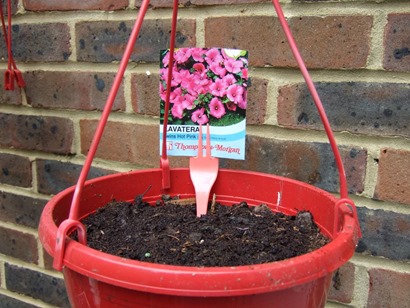
Plastic fork plant label holder1-webDon't toss those plastic knives, forks and spoons. There are number of reasons why you should plant them in your garden beds instead. No, they do not sprout roots if you do and reproduce, but for other reasons.

These days people are looking to be more environmentally conscious, which means using reusable utensils instead of plastic ones. However, if you have to use plastic utensils there are ways that you can reuse them instead of just tossing them out after eating one meal.

Also, although to some this may sound gross, why not pick up and take home those plastic cutlery pieces you may find laying about when on a walk or such. Plastic utensils can work wonders for your garden. Well, if not directly wonders then they still can be useful.

Deterring garden “pests”

Place plastic utensils in your garden to keep pests that might sabotage growth, like dogs and cats, at bay. They will not want to maneuver around the pointed objects where your fruits, vegetables, and flowers are in the process of growing.

If you have animals who like to trounce or do their business in your garden, certainly may want to use this option. You can remove the cutlery when your plants grow.

You, obviously, won't keep slugs and snails at bay with this method but it could help to keep squirrels, cats, and others off your plants when they are growing.

Plant labels

Don't waste your money on fancy garden labels. You can write the names of your plants on handles of the utensils and stake them in the ground next to your plant.

This goes especially for the white of light colored ones, not so much the black ones, unless you have a white permanent marker.

Alternatively, use plastic forks, and here the color does not matter, stuck into the soil by their handles, and tuck the pack into the tines.

White plastic spoons, for instance, you could paint and then write the name of the plant, or draw/paint a picture of it, on the spoon. The back of the bowl probably would work best for this.

Make a little fence

Place forks into the soil with the prongs facing upward and in a row to create a spiked fence. This will keep squirrels out – well, hopefully – and can also make a cute fence for a fairy garden, if you are thus inclined.

Strong plastic forks – more of the reusable plastic cutlery kind that people nevertheless tend to treat like disposable – can also serve as small garden forks in pots, hanging baskets, and window boxes, etc. for loosening soil should this be deemed necessary.

Oh yes, I did not get around to ideas about the “elsewhere”, but that might happen in another article.

© 2017

Eco-friendly storage in the home by reuse and repurposing

by Michael Smith (Veshengro)

Eco-friendly storage in the home - shoesMost of us, I am sure, are always trying to find ways to live in a bit more environmentally friendly fashion. But looking after the environment does not mean forgetting to look after the pennies as well, though all too many in the lower income bracket, especially, think that in order to go and be “green” they need to have the money to buy all those “green” products. Well, you don't have to and going “green” should save you money and not cost you money.

From buying recycled kitchen paper to re-using products in other areas of the home once they are finished with there are lots of ways to help the environment wherever you can, and increasingly this can also mean more money in your back pocket as well. But do you really have to buy kitchen paper, or kitchen roll, or whatever this stuff may be called? It it is spillage that needs mopping up then some toilet paper will do almost as well if not as well and for many other wiping tasks I suggest we use cloths rather than paper in the first place.

When it comes to creating some environmentally friendly storage in the home, options are everywhere. It doesn’t matter whether you need extra space in the bathroom, or you need a way to organize pan lids in the kitchen, there are lots of clever and unique ways to reuse everyday household items you already have, and items of “waste”, to create fantastic new storage solutions. And this is nothing new; our ancestors did this with all manner of things that otherwise would have become “waste”. Anything that could be used for storing things in one way or shape was reused; shoe-boxes, glass jars, tins of various kinds, wooden crates and boxes, cardboard boxes, etc.

Hallway

It is somewhat important to create a good impression when someone enters your home, but with muddy shoes, numerous jackets, school bags and more, the entrance hallway is often the hardest area of the house to keep tidy, and I am sure most would agree.

Use this brilliant idea to create some extra storage in your entrance hallway, simply by painting some crates and hanging them up to use as shoe or bag storage.

Or why not use a cardboard wine box as a shoe rack? Keeps mud from carpets and saves the environment at the same time. Wooden fruit crates or the plastic ones that greengrocers tend to have to dispose off and which they gladly let you have also would be great candidates here.

Kitchen

Re-use your old wet wipe containers as somewhere to store plastic supermarket bags. These tubes can hold a surprisingly large amount of bags, and this keeps them dry and in one place, saving space. But as they now tend to cost you at five pence each there may not be so many that you need to store in the first place.

The question of how to store pan lids is a constant source of frustration. But by fixing an old magazine rack to the inside of a cupboard, lids can be securely stored by using space not previously used.

Storage jars: There is no need to go and buy “recycled glass” storage jars. Just use those that you get from produce such as pickles or what-have-you and use those instead, you could decorate them, use a label maker to make labels for them to tell you what they are for or, simply, leave them as they are.

Garden

Need a way to organize your arsenal of gardening tools? Nail off-cuts of piping to the inside of your shed or garage to hold rakes, brooms and other gardening tools to keep them in one place and easy to access. Often cut off sections of various kinds of plastic pipes can be found and had for free in the dumpsters at building sites or such. They can be useful for so many things.

Another alternative is to employ pallets for garden tool storage and pictures as to the how-to of this can be found in a variety of places on the Internet

Drawers (no, not the underwear)

Well the drawer for those you can also organize by way of reuse and repurpose but that is as general as for other drawer. Many of have all manner of things rattle – often literally – around our drawers, whether in the kitchen, our desks, or elsewhere, and often trying to find something means going through the entire contents of those drawers.

Dependent on the items that are in the individual drawers there are many solutions using and reusing things that are in the household already or that are destined, if no reuse is found, for the trash can or the recycling bin.

Magazine storage: Cardboard wine boxes (the ones that hold six ordinary wine bottles) can be turned into the same kind of storage files that you pay around $5 each for in the stores with just a craft knife or strong pair of scissors, a ruler and a pencil and a little measuring on a manufactured filing box. Not only can we save money doing that, we can also keep waste out of the landfill.

And the list could go on, and on, and on, but as so much inspiration can be found on the worldwide web elsewhere I will not try and write a book here on this subject though one very well could.

© 2015

Repurposing NOLA: An entire store full of stuff made from scrap and waste

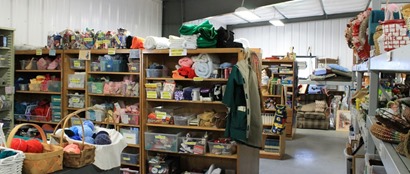
Repurposing nola bags on wall photoBeing in New Orleans for the big Greenbuild conference, we didn't get a whole lot of time to look in stores. However it was hard for a TreeHugger to pass a store called REpurposing NOLA, billed by founder Traci L. Claussen as " female-owned triple bottom line company utilizing excess fabrics of our community to create sustainable designer goods."

In 2009 Traci started making bags from burlap coffee sacks and old carpet.

She began designing bags for her own travels: an eco-duffel for a trip to the Jurassic Coast of England; a burlap HoBo handbag for running around town; a RE-weekender Bag for trips to the coast. She made adjustments to the prototype after each trip, to add or edit options that would make it more useful for the next trip.

She has also filled her store with an eclectic mix of furniture, accessories and knick-knacks, all repurposed from what normally would go to the dump. It's all a great eccentric experience, and Traci seems a bit eccentric too. This seems to be a New Orleans specialty.

Read more: http://www.treehugger.com/sustainable-fashion/repurposing-nola-entire-store-full-stuff-made-scrap-and-waste.html

Waste has to stop

by Michael Smith (Veshengro)

All waste has to stop and we are the only ones that can do this. We can stop waste and starve the trashcan.

While it is true that we will never be able to eliminate all waste, and that aside from human waste; not even our ancestors of old managed to do that, much of it can be eliminated, especially food waste and packaging waste.

The former we can tackle by learning to cook from scratch and to make use of any leftovers and the second by reusing, repurposing and upcycling as much of it as possible, in the way that our forebears did, whether on the farm or not.

In addition to that we, as consumers, have the power to demand that the manufacturers reduce packaging and also that packaging be designed in such a way that it can have a second or even third life. The Japanese can teach us a thing or two about that.

They package goods more often than not – or at least they did – in boxes, and whatever else, that are purposely intended for reuse.

But even in the West similar things were happening not so long ago, but seem to have gone with the wind no. Nutella used to have its spread in glass jars that were designed to be used after as drinking glasses as did the makers of a number of brands of French mustard and also Kuehne, a German mustard producer, did the same. So why does it seem to be so difficult now, not more than two or three decades after?

Wen it comes to glass jars for packaging our forefathers and -mothers reused each and every one, until they no longer had a use for them. A glass jar is what? A glass and they can be used for drinking out amongst other things. So, let's not waste them. After all you pay for them when you buy the product contained therein.

It seems, however, so alien to many of our contemporaries today to do that. They rather go out and buy a pencil bin for $7 (made from recycled steel) than to use a tin can, destined for the recycling bin, for the same purpose.

And the same goes for glass storage jars. People spend $15 or more on recycled glass storage jars, thinking they do the green thing, while tossing some large glass jars, from products they bought, into the recycling bin.

Aside from the fact that this is waste of resources it is also a waste of money. As I said, you paid for that glass jar or the tin can or the cookie tin; so reuse it.

But we have come so far from the source, so to speak, that now some cookie tins, whether metal or plastic, have printed on them the fact that they can be reused and also for what purpose. Maybe, in fact, we need such instructions printed on the labels and such like in order for people to understand that the trip to the trashcan or the recycling bin is not necessary and should only be the last resort.

Packaging waste is our biggest problem, aside from food waste, and both can be overcome.

As far as packaging waste is concerned we have to reuse, repurpose and upcycle as much as possible of it, as said already, by using our mind. And, in addition, we must demand redesign of it and a reduction of it and also return to lose products, as once was the case. We, as consumers, have the power to make this happen by demanding it and the same goes for products that can be repaired. Let's do it. Let's reduce waste by all means possible.

© 2013

Repurposing glass containers

by Michael Smith (Veshengro)

Reusing and repurposing class containers is probably as old as such containers themselves and in times past most of those were used, reused and repurposed until such a time that they could no longer be used because they were broken.

Many of us have a steady stream of glass containers coming into our homes, but we often don't know what to do with all of them. Reason for that, more often than not, is that we have been condition to immediately go into the recycling mode.

Now most people cannot think further than tossing such valuable items, as glass jars and other glass containers, are into the recycling bin. That bin should be the absolute last resort and not the first thought. We have, however, been conditioned, or should I say brainwashed, to think only recycle and buy new what we could easily reuse and repurpose such containers for. And this does not just for glass containers. It does so equally for paper and card, for plastic containers, tin cans, and much, much more.

Used glass jars and other such items can be repurposed for so many different things.

When I was a child most people reused glass jars of all kinds for all kinds of things. Grandfathers and fathers kept screws, nails, and what-have-you in them and grandmothers and mothers used them in the kitchen as storage containers for dried things such as sugar, coffee, tea, beans, rice, salt, and also for to store leftovers. They also used them for buttons and other small things. We seem to have lost that and buy all manner of storage containers when an glass jar we have finished with would do the job just as well with no impact on out finances and the Planet's resources.

Oh, and before anyone suggests that the glass jars that go into the recycling bin are made into new bottles and jars let me enlighten you. They are not. In 99% of all cases they are made into products other than what they were, often simply road sand, bricks, and counter tops. A waste of resources and energy.

There are many ways of reusing and repurposing glass jars and here are just a few suggestions.

You can, for instance, turn old glass containers into beautiful vases for your kitchen window or even for the table.

One of my favorites for that, I have to say, are tall square glass jar in which I buy my coffee from Lidl.

You can also use larger glass containers as mini 'cloches' to get an early start on planting tomatoes and such outdoors. Many dill pickles tend to come in large jars that are well suited for this. Just remember to take them off the plants when the sun beats down on them as there will be no opening to regulate the heat. But then the old glass cloches had not any either.

The same jars also are good for the making of a small terrarium or especially a bottle garden.

Like many of our ancestors your could also use them for leftovers, small and large ones, depending how much you have on leftovers. Glass jars are also great for keeping small items organized, such as crafts, hardware, jewelry, toiletries, you name it.

I remember cottage gardens as a child where the part borders were all lined with old glass bottles, stuck into the ground by their necks and many people also created borders for slightly raised beds with them.

Empty wine bottles and such can also be used as candlesticks, obviously, for use during power outages or for a (romantic) dinner or dinner party.

In the good old Hippie days of the 1960s and 1970s many repurposed glass jars for drinking vessel, as I still do today. Small squat ones from, for instance, mustard, become whisky tumblers, larger ones, from small Frankfurters glass for beer, water and juice and those from herbs and spices shot glasses.

As you can see only you imagination sets the limits as to how glass containers can be reused and repurposed, and the same is true for other so-called waste items, whether tin cans, plastic containers, and much else.

Always reuse and repurpose before heading for the recycling bin...

© 2013

Too many reports and studies, not enough thinking

by Michael Smith (Veshengro)

Be it the governments or organizations such as FoE reports and studies seem to be in the forefront and it is, when it comes to resources, always recycling that is being highlighted.

However, we must begin further down the field for recycling is the last resort in waste and resource management. When we have to go down that route we have already lost (the plot).

Reuse and repurposing is the stepchild time and again when anyone seem to look at the issue of waste and resource management. Why? Because reuse and recycling does not bring in any money for the recyclers, councils and other interested parties, that's why. Recycling in the form of recyclables that can be sold does.

Reuse, however, and repurposing and upcycling has, after waste reduction, to be our first priority and reuse of glass bottles and glass jars must become policy again of companies and governments alike.

Glass bottles and -jars do not, unless broken, belong into the recycling stream but in the reuse stream, like it used to be, and still is in many countries as far as glass bottles are concerned.

Until such option is available where you and I live, however, we must reuse and repurpose them. Why buy a reusable water bottle when you Snapple glass bottle or similar will do the same job for free. And while glass is breakable it is the only taste neutral material as far as drinks carriers are concerned making it, thus, still the best choice for reusable water bottles, etc. But why buy when you can repurpose one or two or even three.

Waste paper and card is another one of those issues as regards recycling. First of all much of the paper that is collected for recycling is, in fact, destined for the landfill as it is ink jet printed which tends to be water soluble ink which contaminated the paper pulp.

On the other hand waste paper can be used much better for other purposes than making “new” paper. Shredded for animal bedding, especially good cross-cut shredded for hens; single side printed for hand-made notebooks; notelets; and waste card from packaging, if blank on the other side, for the making of index cards, business cards, notebook covers, and much more.

Sure there are waste products that cannot be reused, repurposed and upcycled easily and they will have to go the other route, such as batteries and other electronic products, metals, etc., but there are many that can be made use of directly through reuse and such. Those include pallets and other wooden crates and boxes, though all too often they are tossed out as well.

Despite the fact that recycling is being so very much promoted, to the detriment of waste reduction and reuse, much of the recyclables that are collected do, in fact, end up in the landfill, and that for several reasons.

One being that, despite the fact the items are being collected, there is not “market” for those recyclables and two that some things cannot be recycled in some areas.

Often the curbside collections are no more than a fig leaf where municipalities pretend to be green but behind the scenes the things are just dumped as they used to be, in landfill. Or, if we are lucky, incinerated.

It does not matter how many reports are being written. People must learn to think for themselves again and reduce waste in another way and one of those ways is to reuse and repurpose everything possible that comes our way.

This is the only way that we will succeed in this endeavor. Not by means of “official” recycling and recycling targets that are just a whitewash, or should we say, greenwash.

© 2013

The real R's of waste management

by Michael Smith (Veshengro)

We keep hearing the mantra “reduce, reuse, recycle” but they way most people seem to perceive it, due to government brainwashing, is as “recycle, recycle, recycle”.

All talk is about that we must recycle more, and more, and about recyclability of products and so on. Reducing waste to start with and then reuse (and repurposing) never gets a looking in and a mention. But, the governments, central and local, cannot make any money from us reusing things now, can they. Only recyclables that they collect from the curbside and businesses can be sold to processors.

We do not so much need recyclability in products but we need repairability of products and people who can fix those products if and when there is something wrong with them.

The problem is, however, that even if a product if repairable it is more often than not more expensive to repair it or getting it repaired, with the parts being prohibitively expensive not even to talk about labor costs.

Recyclability for one is becoming a great get out as the very fact that so many products can, now, be recycled is, paradoxically, feeding consumption.

Buying recyclable and recycled has become the “in thing” and is giving people a false sense of making a sustainable choice.

While products now often are considered to be recyclable, that is to say they can be broken up into their components and then the bits recycled, they still have a factored-in obsolescence of three years or less and that factored in obsolescence, in itself, is causing our problems and recyclability is changing not one iota here.

Recyclability is, in fact, now fueling consumption as people think that it does not mater if they toss their laptop, smartphone, or what-have-you, out after less than a year because they want to upgrade. “What's the problem”, they say. “It can be recycled”.

We must start with Rethink: That is to say we must rethink our consumption and what we really need rather than what we are told that we need.

Do you really need a new cellphone, a new iPhone, for instance, after you have just got a new one a few months ago simply because there is a new one out. No. It is not need but want.

And we often mistake wants for needs because the way advertising and marketing suggest to us that we need those things to make us happy, or make us feel part of a group, or whatever. But many of those things are not need, they are but wants that we need not fulfill.

The second R to look at is Respect: Respect for what we have and for the resources that went into the products that we already have. This respect was once known as “looking after out things” and especially our younger generation needs to learn this again.

As children when we were given, say, a knife or a bicycle or whatever, we were also told to look after it and taught how to look after it. Which reminds me that I really have to give my bicycles – yes, more than one, but all rebuilt ones – a good looking over and service and repair them where necessary.

The next to consider is Refuse: Refusing to buy into the consumerism that we are told, including by our governments, we should do to “grow the economy”.

Reduce is a very obvious one and it means for us to do not just one form of reducing but more than one. The most obvious is to reduce the waste that we produce; the other to reduce our consumption of things we do not really need.

Now we come to the most important of the R's, namely to Reuse: Reusing of everything, almost, was the way of our parents and grandparents and their parents. Tin cans, glass jars, etc., all were reused for other purposes, which is already the other R of Repurpose.

Other ways of reuse were that clothes that the children had grown out of were passed on to younger siblings, cousins, etc., or simply to children of the neighbors.

Repair is the next one when it comes to products that we own when they develop a problem or to clothes and shoes when they come apart or get torn.

Most people, however, today cannot even sew on a button let alone repair a tear in a garment, or patch a hole in a pair of pants or such, and patching is definitely something that most have not got the slightest idea of.

When it comes to the repair of footwear the problem is also that most so-called shoe repairers in fact cannot do much more than glue a new sole or heel on a shoe or boot. Reattaching the upper to the bottom is something they have almost no idea of at all.

And the other issue is that most of our products today, as already said, can either not be repaired or, if and when they can, repair often costs several times more than a new product, thus giving the consumer, that is you and me, no other choice but to buy new and thus carry on the onslaught on the environment and resources.

Only after all has failed and as a last resort there comes Recycle: Recycling is presented to us as almost the be all and end all of waste management and how we should treat our rubbish but it should never be the fist choice. Alas, for many, even in the green movement, it is.

Instead of reusing a tin can as a pencil bin (and yes, I have arrived at that peeve of mine again) they toss the clean can into the recycling bin and go out to buy a recycled steel pencil bin. Duh? And the same goes for glass jars that are tossed into the recycling and then they go out and buy recycled glass storage jars where the ones tossed, like the tin can, would have done the same duty, for free.

Recycling is the last resort and that simply because it is costly, to our municipalities and to the environment.

The curbside pickup costs money and also costs the environment by way of emissions, that is to say pollution from the diesel trucks. The recyclables then go to the plant to be broken up and then made into products again, though, don't be deceived, your glass jar or bottle tossed is not going to become another bottle or jar. In fact a whole industry has sprung up creating new products using the materials created by heavy use of energy, such as “bricks” from the ground up glass, or road aggregate.

The steel from tin cans does become steel again and the same is true about aluminum from soda and beer cans but that is not the point. All of it costs a great deal of money which, if those items where not waste in the first time, and glass bottles and jars, for instance, cleaned, can be used time and again until they finally break. Only then should the glass be recycled.

Look at every item of waste that you do, after reducing, produce as to whether it may have a new use in one way or the other. With the right mindset those uses can and will be found.

Be frugal and live frugal. Use various kinds of small glass jars as drinking vessels for various drinks, larger ones as vases, and others as storage jars for dried foods, coffee, tea, etc. It saves you money and prevents things going for recycling or into the landfill.

Look at some of the old books as to how the people in the last century of your grandparents' and their parents' generation reused items of “waste”, and here especially those that had very little.

Make this into a philosophy and a way of life and both your wallet and the Planet will benefit.

© 2013

Why buy what you can make yourself?

by Michael Smith (Veshengro)

Often it is just a case of putting your mind to it and reusing, repurposing or upcyling some bits of waste into just the thing that you want and need. At other times it is using ingenuity and some tools to make things from natural materials.

However, more often that not, people cannot think in that fashion anymore and that even applies to those in the “green movement”. All seem to have been brainwashed, and it is a case of brainwashing for sure, to buy, buy and then to buy some more.

While, at the same time they have also been brainwashed to throw everything that could be reused, repurposed and upcycled into the recycling bin for, well, recycling.

Despite the fact that the mantra that everyone was taught, almost, is “reduce, reuse, recycle” it has become a brainwashing into “recycle, recycle, recycle” and people have swallowed that hook, line and sinker.

Reusing and repurposing was the way of our forefather and foremothers – no one ever seems to mention those, the foremothers (and I know I have just invented that word) – and everything that could be used in that way was.

No tin can that could be reused, no glass jar, no piece of paper, no rubber band, or whatever else, was ever thrown into the trash if there was just the remotest of use for it.

But that was and is only half the story for, aside from using items of trash they also used, as can we, the things that Mother Nature provides. They did.

Reuse and repurposing can give us lots of the things that we would otherwise go out and buy and many, even many in the green movement, do not manage to see and understand that.

An empty tin can becomes a pencil bin, or a bin for cutlery. A glass jar that once contained food or spices a storage jar, a drinking glass for different purposes depending on type and size.

Coffee jars can become vases for flowers, and many other items of “waste” can be upcycled into things we want and need. Paper printed on just one side can be made, with little effort, into notebooks. Card stock from packaging, cut to size by using a guillotine, and then printed by means of a rubber stamp, can become business- and visiting cards or, cut to different size, e.g. index card size, and then without any print, become, well, index cards.

And this is just a very small selection of ideas what can be made from and with things that others would consider “waste”.

In addition to that there are so many other things that we can make ourselves such as from natural materials with a little ingenuity and some tools.

Tree offcuts are, with some skill and a couple of tools, easily made into wooden spoons, spatulas (easier even than spoon) and other kitchen utensils. Offcuts from tree pruning can also be fashioned into other things such as, when they lend themselves to it, coat hooks, walking sticks, and much more.

Our grandparents and great-grandparents still had this mindset of making things they wanted and needed for themselves in this fashion, at least those that did not have money to burn, but today most cannot think further than going to the stores and buying what they want and need.

Nowadays a great majority, it would appear, have more money than sense and that can also be seen by what they throw away and things that they lose and never come looking for it again.

How one can lose a hat, whether wooly or other, that costs ten, fifteen or even twenty Pounds to buy and not try to find it again is a question to which few, if any, who grew up with little money will ever understand. Our grandparent and great-grand parents certainly would not.

© 2013