Showing posts with label homesteading. Show all posts

Zip ties and their many uses

by Michael Smith (Veshengro)

Zip ties and their many uses on the farm, homestead, the garden and elsewherezip-tiesZip ties, or as they are called in England, cable ties, are, even though they are plastic and some people do have a problem with plastic, are often a godsend when it comes to temporarily or even, more or less, permanently fixing something, be this in the home, on the farm, the homestead, the garden or elsewhere. The uses literally are legion.

While, as said, those little (and not so little) ties are plastic and thus (probably) not all that green but they are so very useful for so many things, be it for temporary or even permanent fixing of things.

These simple strips, typically made of plastic, come in many lengths and feature a special ratcheting design, some even can be reused in that they have a “reversible” catch. When you insert the pointed end into a slot at the opposite end, it latches firmly in place and creates a loop that can be tightened (but not loosened – unless the special kind) to whatever size you need. You can combine multiple zip ties to create much longer zip ties.

The potential uses for zip ties are almost limitless and all I can give you here are a few example of their uses around the farm, the garden, the homestead and the home. As far as I am concerned zip ties are so useful that I even pick up any unused ones that people, who have been using them somewhere, have dropped. Weird, I know, but then that's what I am like; waste not want not.

The uses for those – predominately – plastic strips, those cable- or zip ties are legion and, more or less, I should guess, endless, on the farm, in the garden, in the home, and elsewhere.

Installing wire mesh fencing: When installing mesh wire fencing, it doesn't get much easier than securing the wire in place with large zip ties. The evenly spaced gaps in the mesh wire ensures that you can slide the ties through wherever necessary, securing them around metal stakes to hold the wire upright. They work equally well for installing deer netting.

Guiding grape vines and other climbers: Simply attach the vines to the trellis of wires or fence on which you want them to grow up on with zip ties. It could not be easier. Eventually, the vines will curl their tendrils around the wires and be able to support themselves, but in the meantime, the ties effectively hold the vines in place.

The same applies to all kinds of vines, not just grape vines, and delicate plants that need support can also be helped with zip ties.

Repairing fruit tree branches: Unfortunately, it's fairly common for fruit trees to overestimate how much fruit their branches can support and branches can crack under the weight of a heavy crop. However, as long as the branch is not fully broken, it is possible to support it with a stake and allow the tree to heal the crack. Zip ties are an important part of the process, perfect for holding everything in position. This may even work, though I have not tried it, with tree saplings that have been accidentally broken though not completely off.

Securing tarps: Need to tie down a tarp to keep something dry? Loop some zip ties through the grommets on the tarp and secure it in place. It does not get easier than that now, does it.

Pole bean teepee (pole beans = runner beans in Britain): When installing bean poles and turning them into the teepee shape there is no easier way than using some cable ties and, voila, ready is the thing. While it is possible to do it with string, or wire, doing it on one's own with the latter two can be a little bit of a problem, time-consuming and fiddly. Not so with cable ties.

Bicycles: Here they have their first uses, obviously, to hold cables and such in place, but there are also things on the bike that can be temporarily or permanently tied down with cable ties.

Shower curtains: Want to put up a shower curtain (think tarp but hanging down) onto a pole and there are no hooks or rings. Zip ties through the grommets and over the pole and voila, there it hangs ready for use.

This is but a very small list of the uses for zip ties around farm, homestead, home, etc., and one could, I should guess, fill a small book with them at least and after publication of such book another hundred uses would come up. So, maybe, a book I won't write about it.

© 2018

Reusing and upcycling tin cans

by Michael Smith (Veshengro)

Tin Can Cutlery Bins2_webMany food products and produce still come in tin cans of various sizes and while they, the tins, are – mostly – completely recyclables, as they are – predominately – steel, they also lend themselves extremely well for reuse and for upcycling.

As with glass jars the attitude of my grandparents and their parents, and, generally the majority of the people of that time, was that they had paid for the tin cans – and those were the days before there was recycling – and because of that as many as possible of them were put to reuse and were upcycled, although that word also did not exist then, the practice, however, did, before throwing them into the trash.

Reuse and upcycling of them came in many ways from the simple reuse of a can as s coop for chicken feed, for example, to more elaborate conversions. The Australian bushmen (nothing to do with Aborigines or the Bushmen of Southern Africa) were also real masters in the reuse and upcycling of all manner of tin cans.

Personally I always have to smile and almost laugh out loud when some people are so proud buying recycled steel pencil bins and such for quite a lot of money while they toss clean tin cans into the recycling bin, apparently incapable of thinking that such a can, in itself, can serve immediately as such a receptacle.

I have personally encountered such “green” contemporaries who were so proud of having purchased recycled steel pencil bins while, at the very moment of telling me, deposited a number of tin cans, which they had even washed out and the labels removed, into the recycling bin. When I commented on it they just could not get the message. What has gone wrong with the mindset of people?

Below a couple of ideas (of mine... there are more) and I am sure there are others who have more ideas still.

Storage Wall: Wooden board with various different sized tin cans attached to it by means of screws (and affixed to wall). Such a storage wall can be used for all manner of storage, even in the kitchen for utensils.

Billycans: Carefully drill two holes on opposite sides just below the rim, make fence wire handle, put the wire in through the holes and voila! One billycan. That's the way the Australian Bushmen used to make the first before billycans were made by manufacturers. OK. Your homemade one won't have a lid but so what. It is, after all, the way they originally were. The bigger the can, obviously, the better, in a way.

Drinking cups: Tin cans such as from condensed milk with either handle made from wire, such as softer fence wire or aluminum wire, or a tin handle affixed by means of wire, or solder.

Beakers: Use narrower and taller tins than those used for the little cups (above), such as those larger ones, and they often are olive drab color on the metal, in which tuna comes.

Desk Tidy: That is to say “pencil bins” made from tin cans. You can paint those, give a sleeve of denim or whatever else. Or you could, obviously, use them as they are, or use those that have pictures on them. Some still are that way instead of having paper labels. But even plain tin ones are fine, in my opinion. They also make an instant statement of a reuse mindset.

Storage for kitchen utensils: Same idea as for the desk tidy/pencil bins only that they hold cutlery and such instead (see photo above).

The above is but a small list, even of what I, on my own, could come up with, but there is so much more what can be done with tin cans of (almost) all sizes. While they are recyclable steel I still rather like to use them for something that will keep them even out of the recycling steam for longer than just tossing them into the recycling bin.

© 2017

Crisis Preparedness

by Michael Smith (Veshengro)

krisenvorsorgeWhen we look at the world today we can see that preparedness, being prepared and equipped to deal with any kind of crisis, is very important. The world in which we live today, being overly dependent on technology, especially the electronic kind, can easily be brought out of its equilibrium.

The next financial crash is only around the corner especially considering the way that many banks are back playing the same ponzy schemes that they played last time round and there are many economists and others who predict that the next crash is already on its way – probably just a year or a couple away – and that it will be worse than the last and probably worse than the Great Depression even.

But, unlike when the Great Depression hit, the majority of the people today live a life that is so far removed from reality that they do not have the skills and also not the mental frame to do things for themselves. They have to learn this from scratch and while today we have all the knowledge we – the majority at least – do not have the practical skills. Some cannot even cook from scratch let alone be capable of growing their own food, know where to get wild food, or now to make this or that they need or want for themselves.

Many people who are more or less self-appointed and self-acclaimed experts in the field of preparedness always suggest that people should have gold and silver coins as means of cash/currency. That is utter baloney as nowadays gold and silver, unlike in the days of the Great Depression and even still after WW2 are not recognized (as currency) and thus are absolutely useless. They offer no means of and for barter whatsoever. Gold and silver in whatever kind of coins are just a way for you to waste your money. In addition to that if those coins are not old currency coins how can you be sure, if they come from some “wild” mints, that they actually have the gold or silver content that is being claimed?

Your best bet is not gold and silver coins but skills and tools to perform jobs or produce goods that other want and need. Knowledge and skills are the key here. And knowledge must be more than just theory.

In times gone by people always prepared for the unexpected and for lean times and that not just by having some cash under the mattress or such place. They canned, the preserved food in other ways, and they knew how to make things from almost nothing. Today most do neither and do not have the skills either.

Cash under the mattress is not going to be an option anymore today where the coins and notes are changed in design every five minutes – well, almost – and the old version being no longer legal tender within a short space of time. All done in order to make us dependent on the state and its agencies. Therefore it will have to be other supplies – and especially skills – that you have to make it possible for your to live well enough after such an event and which also provide a means of barter with other, perhaps.

Theoretically, properly prepared there is no reason to fear a crisis nor is there any need to get into a panic and tiswas, when it happens. I did say theoretically, for the world today is not the world of the 1920s and 30s when people still had proper community and also knew how to do things.

Books on the various subjects of preparedness, homesteading, gardening, survival, and the many crafts and whatever, are good to have as a reference library but they are not something that you would want to go to when the proverbial already has hit the air moving device but you want to learn from them, and ideally also from live teachers, and acquire the knowledge and especially the practical skills well before well before any such event.

In the event of a crisis, which, more than likely will be a global one, you cannot rely of the state or other body for help. You have to know how to help yourself and you can only rely on yourself.

You may have the skills, the knowledge, and the provisions. Others that don't, however, are the danger; a danger to you, your loved ones and your survival. In a crisis you also cannot rely on the state and its agencies to protect you from any marauders; in fact the state and its agencies themselves will become a threat to you and your freedom.

So, thus, when it comes to protection from marauders it would appear that you will be, in the event, more or less on your own. The agencies of the state, as I have just said, will not (be able to) protect you and therefore you will have to do that yourself and you may also need to protect yourself and your loved ones from the very agencies of the state.

© 2017

Some Urban Homesteader Is Living In A Bucolic Cabin On A Roof In Manhattan

Flying above New York City in a helicopter can be a beautiful thing, until you look down and see that someone has stolen and is living your dream life in a bucolic cabin on a rooftop in the West Village. Is there anything more enviable in the real estate racket of NYC than a house on a regular old apartment building's roof? Sonnets should be written about this shit. Ballads composed and sung... from other, lesser rooftops. The dichotomy of country and city right there, together, and yet still so close to mass transit and Starbucks. From the safety of the sidewalk you'll continue to live on in blissful ignorance, seeing only this as you pass by the building on Greenwich Street:

boringbuilding15.jpg

From up above, however, you'll discover a picturesque cabin that looks like it belongs in a horror flick, or maybe a Lifetime Christmas special. Someone comes home to this. Someone comes up from the dirty city streets, kicks their shoes off, uncorks some rosé, and drinks it straight from the bottle while walking around barefoot in that fresh grass.

cabininthesky15.jpg

Read more here.

Tips for Properly Seasoning Firewood

Keep these tips in mind while seasoning firewood to heat your home.

Want to heat your rural home without gas or coal? In Wood Heat (Firefly Books, 2014), author Andrew Jones provides a useful guide to using wood to heat your home. Jones dissects the environmental and economical upsides and downsides of heating with wood while providing advice and instructions that are necessary to help you successfully produce enough energy to keep your home warm during the winter. This excerpt, which discusses drying and seasoning firewood for use, is from Chapter 2,”Wood.”

You can buy this book from the MOTHER EARTH NEWS store: Wood Heat.

Tips for Properly Seasoning Firewood

Wood is essentially a mass of tiny long tubes, or cell cavities, that run the length of the tree. Moisture exists both as “free water” in these cavities and as molecular water that is locked in the cell walls. When a tree is felled, the slow process of drying begins, and the free water is the first to evaporate. Once the free water evaporates, the moisture content of the wood is around 30 percent. This is called the “fiber saturation point.” After this, water begins to leave the cell walls, and the wood starts to shrink and crack.

For optimal burning, firewood should be dried, or “seasoned,” until its moisture content is less than 20 percent. Firewood with a moisture content higher than that may eventually burn, but it is devilishly hard to light and just as hard to keep burning. Also, your new high-efficiency wood-burning stove or furnace is guaranteed to perform sluggishly as it struggles to burn freshly split, or “green,” firewood—much of the heat and energy content produced are wasted in drying the wood’s excess moisture. Just as important, the stove does not burn the tars and creosote in the smoke produced by the fire, and they end up lining the inside of your flue pipes and chimney. They also blacken the glass windows of your wood-burning appliances and produce a lot of blue-gray smoke, fouling your house and annoying your neighbors.

Seasoning wood has another important but less obvious benefit—when wood is properly cut and stacked right away, mold has less opportunity to establish itself. Throwing unseasoned firewood into a pile allows mold to spread throughout the logs, mold that you unwittingly release into your home’s environment when you bring the firewood inside throughout the heating season.

You can buy already seasoned firewood or buy it green and season it yourself. How can you tell whether wood is properly seasoned? It's possible to test the wood with a moisture meter, which measures resistance to a small current and converts it into a moisture-content reading, yet this reading can vary widely from one area of the log to another. With a little practice, however, you can use the following tips to judge accurately for yourself whether your wood is dry. Use as many as you can for the best results.

Read more: http://www.motherearthnews.com/homesteading-and-livestock/seasoning-firewood-tips-ze0z1411zdeh.aspx

Grow Comfrey for a Perennial Source of Organic Fertilizer

Using commercial fertilizers, particularly sustainable or non-synthetic ones, can get really expensive. Compost and manures add important organic matter to the soil, which helps to build the subterranean ecosystems that support plant health, but they don't add much in the way of major nutrients.

Fortunately, nature has provided a means to make our own sustainable fertilizers. Comfrey (Symphytum officianale), a plant that grows well in most gardens, provides nutrient boosts when added to compost or used in liquid fertilizers. And once you've bought the plants, it's free.

Comfrey is a borage relative. Hardy to Zone 3, it has large, broad leaves like those of Pulmonarias, to which they are related, and small clusters of blue or white pendulous flowers. Comfrey's fuzzy, sometimes prickly leaves discourage insect pests. It grows in a range of soils in sun to part shade, and uses its impressive root system, which may grow anywhere from 6 to 10 feet deep, to mine minerals from the subsoil, aerate its surrounding soil, and break up the heaviest clays. It will regrow from tiny slivers of root, though, so be sure to plant it where you want it. If you are as indecisive as I am, grow it in a container. You won't get quite the same level of benefits as compared to comfrey grown in the ground, but at least you won't have it permanently installed.

comfrey and bee

Comfrey has been used in the past in herbal medicine, but research proves comfrey contains poisonous chemicals called pyrrolizidine alkaloids (PAs). The roots contain up to 10 times the amount of PAs as the leaves. Its toxic chemicals can be absorbed through the skin, though, so it is advisable to wear gloves when handling comfrey. Do not take any part of the plant internally, as it is extremely toxic to the liver and may also be carcinogenic.

For plants, though, it's a wonder food.

Comfrey contains high levels of the macronutrients nitrogen (N), phosphorus (P), and potassium (K), as well as calcium and vitamin B12. Comfrey also contains allantoin, a chemical compound that stimulates cell growth and regeneration. It may be the allantoin that makes comfrey so effective as a fertilizer. Extracts from comfrey's leaves have antifungal properties, and have been shown to effectively combat powdery mildew.

It's good to know the specific epithet of the plant you're getting. Symphytum officianale, the species, will seed prolifically and may become problematic in the home garden. The Bocking 14 strain of comfrey (Symphytum x uplandicum) contains the high nutrient levels of the species, but it's also sterile, so it won't self-seed and become invasive. Bocking 14 is difficult to track down in the United States, but is available from a few Internet sources.

Comfrey leaves can be used as a mulch or buried in the garden bed at planting time. As they rot down, they'll enrich the soil. Take care when using them as a mulch, though: The decaying leaves can be attractive to slugs, so don't mulch with them around leafy greens or ornamentals like hostas.

Read more: http://www.grit.com/farm-and-garden/do-it-yourself/grow-comfrey-for-a-perennial-source-of-organic-fertilizer.aspx#ixzz3CYxMHTgb

5 Herbs Your Chickens Will Love

Use both fresh and dried, these herbs will help boost your flock’s health and keep them laying happily.

Just as they do for humans, most culinary herbs have wonderful and varied health benefits for your chickens. Whether you scatter herbs in your coop and nesting boxes to help repel insects and parasites, feed them fresh to your chickens, or dry them to add to feed, you can greatly enhance your flock’s health by incorporating a few herbs into their living environment and diet. Like grass and weeds, herbs are considered green treats and can be fed free-choice. Each hen will eat as much or as little as it wants or needs.

Herbs are easy to grow, and many are perennials in much of the country. They generally aren’t very picky about soil conditions and don’t need a lot of water or babying to thrive. I grow a variety of herbs for my chickens, but these five are my favorites.

1. Lavender

5 Herbs Your Chickens Will Love - Photo by Lisa Steel (HobbyFarms.com)

Lavender leaves and flowers are my favorite herb to use in nesting boxes. An aromatic stress reliever, lavender also increases blood circulation and acts as an insecticide, so it’s beneficial to your laying and setting hens. The leaves and flowers can be harvested as needed and scattered in your nesting boxes to keep them fragrant.

Lavender loves dry soil and full sun. Flowers, buds and leaves all can be air-dried and used through the winter.

Read more: http://www.hobbyfarms.com/crops-and-gardening/5-herbs-your-chickens-will-love.aspx

Why Are My Chickens’ Egg Shells So Thin?

If your hens give you more cracked eggs than whole ones, it's time to give them a calcium boost.

Why Are My Chickens’ Egg Shells So Thin? - Photo courtesy Helen Cassidy (HobbyFarms.com)Inside the nest boxes, four brown eggs wait to be collected. Three of the four are nestled in wood shavings, the fourth looks like a wet mass; the egg’s insides are visible along with a flimsy film of shell. Laying an egg or two with a flimsy shell might occur as days get shorter in the fall and winter and young layers reach peak production. However, if you continue to see thin-shelled eggs, you need to examine the variables affecting a hen’s health.

Understand Shell Structure
An eggshell’s main ingredients are calcium carbonate, magnesium carbonate and calcium phosphate, as well as soluble and insoluble proteins. Ninety-five percent of the eggshell is calcium carbonate—the same sturdy substance that makes up coral, limestone and seashells.

It takes 2 grams of calcium carbonate for a backyard hen to form each egg. To come up with the necessary calcium each day, the hen borrows it directly from its own bones. Leg, wing and rib bones contribute the calcium without impacting its health.

An eggshell has an inner and outer membrane, a mammillary layer, a spongy layer and a cuticle layer that is finished with calcium carbonate, says Joe Regenstein, professor of food science at Cornell University.

"The porous nature of the egg allows for gas transport between the interior and exterior of the egg,” he says.

The eggshell can release carbon dioxide build-up inside while absorbing atmospheric air into the interior. At hatching, the air cell inside the egg is 15 percent of the egg’s volume, providing the first air the chick will breathe.

Regenstein explains that if the hen isn’t laying a structurally sound eggshell, its hormones, physiology and nutrition might not be working efficiently to support the egg-development process. If a hen isn’t consuming enough calcium in its for eggshell production, it may need more nutritional support.

Read more: http://www.hobbyfarms.com/livestock-and-pets/why-are-my-chickens-eggshells-so-thin.aspx

Taming the Wild Backyard

Ten years ago when we moved into our house the backyard was a big blank canvas ripe for planting, there was nothing there but grass. I did what any over-enthusiastic gardener under 40 without a clue would do and planted a nursery full of variety. I sort of had a plan. I envisioned a cottage garden, full of blooms neatly tucked behind a white picket fence; only 10 years later, there is no picket fence and it definitely didn’t end up neat.

yard2014

I started with small patches along the back of the house and around the deck. Then we took down some large nut trees a little too close to the house for comfort and the stumps were transformed into flower beds. And wouldn’t it look nice if that bed connected to that one. And I had too many vegetable seedlings and couldn’t fit them all in the raised beds so we could just add this here or that there. And so it went for six years or so, there was always one more thing I needed to find a spot for.

These days between age and having a 5-year-old to keep up with, I just don’t have the time and energy I did when I created it all. If I had the body I had at 25 with the smarts I’ve acquired at 43, I’d be in good shape, but no such luck, it’s all going in the same direction and that definitely isn’t towards youth. Last year, I decided it needed to become more manageable, and I’ve been working towards that goal, some days though, it gets overwhelming. If I had the time to dedicate to fixing it all, it wouldn’t be so bad, unfortunately I live in the real world. There are no hired gardeners, no landscape designers, no hunky muscled workers to tear it all for me. There’s just me, and I’m also the cook, the housekeeper, the finance clerk, the laundress, the babysitter, and a million other things all in a day’s work.

Read more: http://www.grit.com/farm-and-garden/landscaping/taming-the-wild-backyard.aspx#ixzz3B3AMyiRZ

Caring for your cast iron skillets

Never ever wash your cast iron pans with soap, not even the mildest washing-up liquid. It will destroy the seasoning of the pans and stop them from being non-stick.

Instead scrub your cast iron with coarse salt and a soft sponge. The salt is a natural abrasive and will absorb oil and lift away bits of food while preserving the pan's seasoning. Rinse away salt and wipe dry.

Wash cast iron with salt

Defensive Landscaping

by Michael Smith (Veshengro)

What do we mean by defensive landscaping?

In military terms this is also referred to as the killing zone, which is a cleared area around a base. But this is not the way it works in the civilian setting of protecting a property.

However, to a degree similarities exist but there is more to it when it comes to landscaping for protection and defense than barbed wire and such as in protecting a military base.

Defensive landscaping has your security at heart and is intended to make it as hard as possible for an intruder or assailant to reach you in your home, which is supposed to be your castle. And, yes, a moat is a good idea also at times but not always practical.

Much like at an FOB (Forward Operating Base) and other military installations you chose what you want to be your perimeter to be around your homestead. The closer you are to your neighbors the narrower the margin but that is the way things are.

The first part of your defensive landscape is going to be the fence, on, in this case you plant a hedge. If you need an instant perimeter protection then, obviously, we start with a good solid fence and depending where you live, rural, semi-rural, sub-division, or whatever, the size depends on what you can put up.

If the instant one is required then we start a hedge behind it and this hedge is going to be made of any type of thorny shrub that will grow where you live and will make what is called a stock-proof hedge.

No one in his or her right mind is going to try to go through a four foot six to five foot hedge made up of the nastiest thorns possible.

My choice of plants would be:

  • Hawthorn

  • Blackthorn

  • Berberis (Nature's barbed wire, as far as I am concerned)

  • Pyracantha (Firethorn)

All of those, bar berberis, can be laid, as is the common practice to create stock-proof hedges and laying a hedge will make for a closer structure. Having berberis mixed inside of it will make anyone think more than twice about trying to get to your home that way.

Aside from the protection factor all of those shrubs I mentioned above have berried which the birds love, bar the Blackthorn, which are sloes which can be used to make Sloe Gin. So some for the birds and some for the man or woman.

Directly behind the hedge, as far as I am concerned, should come a ha-ha or haw-haw, which is a sunken ditch to impede any access even further.

All paths should be gravel or pea shingle, which means that no one can approach the house itself silently, even if he or she crossed planted areas. The house itself should be surrounded by a wide strip/path of shingle or gravel which will make a silent approach entirely out of the question.

In the previously mentioned ha-ha or haw-haw it would be a good idea, is possible, to plant vegetation that also can impede anyone falling into this, after managing to cross the hedge, such as Maguey, which is an American agave and one variety is known as Spanish bayonet. I would not like to fall into one of them.

If you really want to make the defensive landscaping extra tight, so to speak, then plant hedges aside all of the paths. This will give anyone attempting to cross to the hose itself even more difficulties, especially at night when the obstacles are not, necessarily, easy to see.

Gates and other means, including man-made obstacles, fall under a different category of perimeter defense and those also include electronic means, such as sensors. It is all a case of “horses for courses”.

© 2013

Pioneer skills you may need

Pioneer skills you may need and and why you may want to learn them

by Michael Smith (Veshengro)

Often referred to “pioneer skills” as, in the US, they are associated with the pioneers that “opened” the West those skills were also common almost everywhere in the Old World in those days, especially in the countryside.

Those skills will not only come in handy when the chips are down and things have failed, they already can make you and yours more independent from the system now. Also, you don't want to be looking for the manuals for those skills after the event and then slowly learn them. Nay, you want to learn them now and become proficient in them.

Here are some of the skills that were very much everyday to the pioneers and to our forefather and -mothers that you may want to learn.

Most of those are skills that will be useful even now, while some may be more necessary in a grid down type situation.

Gardening: Growing your own vegetables and fruits, knowing soil conditions, how to get water to your plants, extending your harvest season, and common garden pests will be vital to having a continuous food supply.

Saving seed: The other end of gardening is being able to plant again next year. Saving seed can be kind of intimidating and mysterious, especially for plants like carrots that don’t go to seed in their first growing season. Start with non-hybrid seeds and a reference book and practice saving some kind of seed from your next garden. This is definitely a learned skill, but could be vital to a continued food supply. The easiest seeds to start with are beans, peas, as it is also the seeds that you eat and store, dried, for use during winter.

Blacksmithing: Being able to make something useful like a horseshoe, tool, a knife or cooking utensil from scrap metal could come in very handy. This is a skill people will happily barter for. Blacksmith work does require a good deal of practice and some “special” equipment, but it’s a skill worth learning.

In all honesty, at least for the learning process, there is not all that much required as far as “special” equipment goes. You can use a short section of railroad line or the head of an old sledgehammer for an anvil and a couple of hammers of different weights. Learn cold forging first before you start with the hot stuff.

Making a fire: Before you can cook on a fire, whether open or in a wood cook stove, you will have to know how to make a fire first and for both open fire and a fire in a wood cook stove the methods of setting up the tinder, kindling, etc., are very much the same. Try some methods without using matches for an extra challenge because matches and/or lighters may be in very short supply.

Cooking over an open fire: You may have other methods to cook your food available, like a solar oven or barbecue grill, but an open fire is the most primitive and one of the most common means of cooking in a grid down emergency.

Knowing and preparing wild edibles: Learn which wild plants in your area are safe to eat and what parts of them are edible. A little foraging can add variety to your diet or even sustain life if there’s nothing else to eat. You can also grow such wild edibles and edible weeds in your garden. Nutritious weeds grow often where nothing else will grow and thus you need less time to look after them.

I purposely grow dandelion, sorrel and lambs quarter (aka fat hen) in my garden and am looking to introduce some more too. And I am also aiming to do the same with healing herbs.

Herbal remedies: If the doctor’s not around, knowing which herbs to use and how to use them to treat common ailments like cough, fever, headache, etc. can be a great blessing to your family or others around that may need the help.

Grow you own drugs, which is also a book by the same title, is better than having to hunt for the appropriate herb when the need arises.

Sewing: Patching, fixing tears, altering hems and waistbands, or creating an entire new piece of clothing or bedding could help you stay warm and keep you from running around half naked or even naked altogether. The kids might enjoy that but...

In addition to that it may be a good idea to learn to shooting your dinner and shooting to protect yourself. Learn how to dress that game that you have shot or trapped. Learn to ride a horse and drive a buggy and wagon. The building a home or shelter, or a fence, or something else is also one of those skills to learn and it will come in handy in so many way.

Besides their obvious uses to yourself and your family, most of these skills can be used to barter with as well. So while you’re acquiring your preparedness gear, remember to add some skills to your inventory also.

To the above list we also must add skills of working in wood and to fashion tools and weapons from green wood and from seasoned wood. Preparing wood for use as building materials and for the making of furniture.

In the aftermath of a breakdown of the way of life as we know it there will be a lot more “raw materials” about than there was in the days of the old pioneers and homesteaders, and the folks in the countryside in Europe.

This “raw material” comes in the form of scrap and waste and we can make use of it now already and we should. Reusing is a must because the Planet cannot be recycled.

Our parents and grandparents and their parents, and not just the pioneers and those in the countryside, were masters in reuse and upcycling but today we have been brainwashed into tossing those things that could be reused into the recycling bin and then going to the stores to buy the very things that we could have reused this or that item of waste for.

We need to change our ways to be able to survive the future...

© 2012

Choosing an ax and caring for it

by Michael Smith (Veshengro)

Many people, even homesteaders, and here, obviously and especially the beginning homesteaders, seem to have little to now idea as to what makes a good ax and how to actually use it and care for it.

14707136253286325_coJBDjCm_f Especially sharpening of one, in the same way as sharpening a knife or other cutting implement, seems to be something that they think they know but actually don't and the same goes for caring for an ax or knife.

Axes are not made – generally – of stainless steel and thus do need keeping clean (but even a stainless steel blade does) and should have, as far as I am concerned, oil applied to the head every now and then.

The same, as to oiling, goes for the handles of wood. However, you don't use the same oil there as you would for the metal. Having said that, on the other hand, you can use vegetable oil for oiling the metal and the wood, only never use metal oil on wood.

The ideal medium for oiling is vegetable oil, any type, and I, personally, drain the oil that is left in bottles and which one normally cannot get out and keep this for treating wood and also the metal parts of garden tools.

The US Forest Service has a small valuable manual as to the ax, it's uses and care, called “An Ax to Grind: A Practical Ax Manual” and it is available free as a PDF at the link given below.

http://www.fhwa.dot.gov/environment/recreational_trails/publications/fs_publications/pdf/pdf99232823.pdf

Right-click the link and “save link” to your hard drive. It is less than 70 pages and well worth a download.

© 2012

Scandi Grind Bull Dust

by Michael Smith (Veshengro)

A lot of American “survivalists” keep harping on about the superiority of Scandi Grind, a single bevel grind, that they claim Scandinavian knives come with. I hate to ask where they got this from?

I have many a Scandinavian knife; Norwegian handmade, Swedish and Finish, and not a single one of those has this chisel grind, for that is what it is; not one single one. I also happen to be a knifemaker.

The Viking “Seax” may have had such an edge in some examples as may have some carving and whittling knives but the great majority of knives, Scandinavian or other, have not and that with good reason, I should think.

The true Scandinavian (Scnadi) grind, in fact, does have two bevels and not one and thus the single bevel claim is nothing but, as our Australian cousins would say, bull dust.

The single bevel, or chisel, grind (Scandi grind is a misnomer as 99% of all Scandinavian knives are NOT made with that single bevel) is a lazy knifemaker's choice, though it has its uses, especially in carving wooden tools and such.

This single bevel grind, wrongly referred to, rime and again, as Scandi grind, came about predominately by knifemakers (manufacturers) wanting to save time and thus money and, in fact, was probably first used in cheap kitchen knives.

As far as I, as a knifemaker, knife-grinder and knife user, are concerned the erroneously called Scandi grind is not a grind that lends itself well to fine slicing, for instance, or careful skinning, amongst other things.

The single bevel grind, which could also be called a chisel grind, is not a Scandinavian knife grind and thus not a Scandi grind,

All the talk about this single bevel being such a superior grind for a knife is as false as calling it by the name that some have given it. Scandinavian knives, per se, have a simple two bevel grind and that is the best of all grinds.

So, let's cut all the garbage...

© 2012

Old Fashioned?

by Erin Harrison

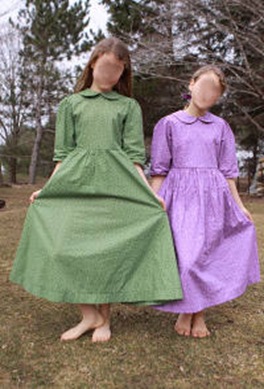
Old Fashioned_sml

Fashion or Old Fashioned?

Homesteaders are like pioneers.  While the rest of society is marching to the beat of pop culture, we are marching out to the barn to milk the family cow.  My husband and I were public-schooled and had the opportunity to be caught up in the popularity contest of fashions and fads. We were thought of as weirdos because we didn't comply to the trends.

I was never popular because I could not afford the name brands nor keep up with the steep competition. Even now, I can not afford the modern woman’s frequent hair and nail upkeep. I find that I do not care anyhow, now.  I find that fashions and fads are not typically very flattering. They quite often lead to revealing more of the body than is appropriate.  Fashion seems to cry out for attention, “Please look at me!” or “I want to blend into the crowd.”

This is my list of what I would rather:

~I would rather be a Rag Doll than a Barbie Doll, my cloth is worn from hours of working on the homestead.  My hands are wrinkled from washing clothes and dishes, scrubbing pans, and baking bread.  I would rather my hands be withered and my fingernails broken off to the nubs, than painted to perfection and have a hard time grabbing things because my nails were to soft and pretty.  I would rather that my hair was frizzy and whispy held in a bun because it is practical and it makes it so the hair doesn't get into the food I make, than to have my hair perfectly wavy and golden to attract.  My eyes are wrinkled from hours of smiling and working in the sunshine, not darkened with makeup.  I rub the eyes and they do not smear.  Barbie can have her chiseled and boney figure while I will keep my fluff.  It is much softer to hug!

~I would rather live in a shack than a mansion on a hilltop.  The creeky wooden floors would be filled with many hours of sweeping, baking, and children under foot.  The shack would be tiny, and only a few could fit, but it would be cozy, while the mansion would be cold and lonesome.  The electric bill for the mansion would be enormous while the shack would be free.  More money to buy things to raise on the farm.  Oh, and by the way, by the time you pay interest on a nice home, you could have bought one shack in that year, had it paid off and the rest of the money  you make, is a bonus.  Of course, you would not need as much income, so you could have a small business raising chickens or produce to pay for any other expenses.  Plus, you would have more time with family.  I think most of us would rather that.  The bigger the house, the more house to clean and the more STUFF you acquire.  And STUFF just takes up space and is seldom used.  I like to think of the home like a digestive system, you take things in but in most cases, you do not get the waste out.  Keeping your stuff going out, makes life more simple.  Only keeping what is needed.  I am spring cleaning now, and it is such a relief to get rid of things.  It makes life more organized and simple.  

~I would much rather eat homegrown food than eat at a restaurant.  I like to know where my food comes from.  I like to prepare it.  I put a lot of love in my cooking, and I love to share it with my family, knowing they are getting the very best I have to offer.  Cleaning up is fun too, when everyone pitches in.   It is fun to live through the seasons, growing food and raising livestock.  It is very satisfying.  

~I would rather ride in a horse drawn carriage than in a fancy car.  You can keep your car.  I know I do not have a horse drawn carriage, but I know that I would like it a lot.  I would even take a beater over a fancy car.  As long as I can get from point A to point B, that is all that matters.  I guess, I like to be home most times.  The older I get, the more I want to just be with my family and stay home.  I am just content with that!  How about that!  There is so much to do at the homestead that running around is just not as fulfilling to me anymore.  I like to keep life simple.

Keep it simple.

N.B. The faces of the girls in the picture were obscured to protect their privacy.

Rock Croft Safe® Eyes – Product Review

Un-Fog-Able protective eye wear that will not fog, scratch or smear.

Review by Michael Smith (Veshengro)

SafeEyes1 Most, if not indeed all, ordinary safety goggles and -“glasses” have one major drawback, when you discount that the lenses scratch very easily indeed, and that is the fogging up in a variety of conditions, leading to loss of vision.

Safe® Eyes mesh safety goggles by Rock Croft, on the other hand, eliminate both of these problems. No fogging and they also are not affected by scratching. On both counts this is due to the fact that the “lenses” are not lenses but are made of a blackened stainless steel mesh. They will also not smear.

While seeing through the mesh takes a little getting used to, much in the same way when using a mesh visor on a chainsaw helmet, one soon does not even really notice the mesh pattern anymore.

The Safe® Eyes goggles are, basically, your mesh visor in goggle/safety glasses format, with the “lenses” being very strong and resistant to many a thing.

Read more here...

© 2011

Does a homestead have to be in the country?

By Michael Smith (Veshengro)

Everywhere, almost, where we look when the word homestead and homesteading is mentioned it is done so in the same breath with country and countryside.

Now does this mean that you can only homestead in the boonies, on some property in the sticks? Can you only live the “good life” in the country?

To all intents and purposes a homestead can be anywhere, really. It depends on how one defines “homesteading” and “homestead” and the good life can be lived in suburbia as much as in the boonies, only it is on different scales.

Depending on where you live, which country and state, you may owner-build your home and thus can create a homestead even in the suburbs and even in town. As said, it is all a question of scale and perception.

It obviously depends on the local ordinances and rules as to what you can do and those you need to consider before acquiring a flock of hens for the backyard for instance or digging up the front garden to grown food.

Some local ordinances, we all know, are stupid in the extreme, such as where it is a felony to do rainwater harvesting for use in the garden and elsewhere. How come that someone, apparently, owns the rights to the water coming from your roof? The problem is, however, that if you break such laws you can be called to account for it. Therefore do check first as to what you can and cannot do.

In Britain, even though central government decreed, basically, that it is supposed to, now, be a right to be able to install PV panels or small wind turbines, the local authorities still insist that you go through the planning process and more often than not will refuse permission, despite of the fact they should grant it.

There are ways that you can “homestead” anywhere and much of it is a case of what you perceive as homesteading and homestead, as I have said already. A home with some garden space for growing food can be a urban or suburban homestead, no problem. And if your backyard (and front lawn) is not enough for your food growing requirements see whether you can get an allotment plot.

Anyone can can, and the double can is intended. Home canning, in jars; making preserves and jams; drying herbs and fungi; etc. is all homesteading, wherever this may happen.

Reducing your food miles, and otherwise your impact in the Planet too is homesteading.

When you put your mind to reusing and repurposing and even upcycling items of waste into usable and even saleable things then you are also homesteading, at least as far as I, and many others, are concerned.

When you go wild food foraging in countryside and urban parks then you are also homesteading, as far as I am concerned.

Homesteading is not just for the countryside and the boonies; homesteading is possible (almost) anywhere and everywhere.

© 2011

Fertilizer from banana peels

by Michael Smith (Veshengro)

banana If you eat lots of bananas, like I do, at least at times, you end up with lots of banana peels. Instead of throwing them out or even composting all of them you can turn them into a potassium- and phosphorus-rich fertilizer.

While it is indeed true that, if you compost them, those minerals will find their way into the compost and subsequently to your plants by making this banana fertilizer you can apply the nutrients to the plants directly.

All they then need are matured chicken pellets for nitrogen. No, matured chicken pellets don't come from old chickens, but it is chicken pellets that have rested for at least a year.

Making banana peel fertilizer:

Place a tray in the oven and lay banana peels on it. Place the banana peels on the tray with the outer skin facing down so that they don't stick to the tray.

Leave the tray with the banana peels in the oven when you cook other food. That way you save energy by piggy-backing on your normal oven usage. Don't turn the oven on just to roast the banana peels. Just leave the tray in the oven until you're cooking something else.

Once the banana peels have cooled break them up and store them in an airtight container.

To use the baked banana peels as a fertilizer spread the mulch around houseplants and garden plants. The cooked peels will fertilize the plants as they break down, gently releasing the potassium and phosphorus.

You will need – and this is all rather more than obvious:

Banana peels (add them to the tray as the bananas are eaten)

Tray for the oven & before anyone wonders, yes, you also need an oven.

While, as I have said, it would be possible, and to a degree easier, just adding the banana peels to your compost heap, this way you can create a potassium and phosphorus fertilizer that you can use in addition to your compost.

© 2011

How to use a gun in defense

by Michael Smith (Veshengro)

There are a few important points to remember as to using a gun – or anything else for that matter – for personal defense.

First of all you must be prepared to use it. And this is the most important point.

If you do not have the power to pull it off and are not prepared to pull the trigger to, if necessary, kill you opponent then you will be the victim and someone will use the gun against you. And this is also true for another weapon you may be using in defense, though we are talking here specifically about a gun.

I have dealt with rookie military cops that did not have the power even to pull the trigger “in anger” (without ammo in the gun) and I was able to disarm them without hearing the clicks of the safety and the hammer. Anyone like that will be, as said, a victim in any confrontation, regardless whether he or she has all the firepower in the world at his or her disposal.

Without the will to use such deadly force even the possession of a battle tank would not swing the situation in that person's favor.

Aside from the skills to shoot straight and to know how to properly handle the gun you have to have the determination to use it against your opponent. If you don't have that mental strength then do not, under any circumstances, pull the gun.

While it is true that in many cases the pure presence of the gun having been drawn may stop what is happening, in most cases the opponent will have to see your iron resolve that you are prepared to use, as it is termed, “deadly force” in that you are prepared to pull that trigger.

If you are not prepared to pull the trigger it is a little like bringing a knife to a gun fight... it will be rather dangerous. If you are not prepared to use the weapon that you carry – and draw – for personal defense but hope that just flaunting it will change things, the very same weapon could and, probably, will be used against you. So, use it!

© 2011

Utah legislators propose M1911 as official state gun

by Michael Smith (Veshengro)

Salt Lake City, UT, USA: Lawmakers of the State of Utah are debating whether to designate a semiautomatic pistol as the official gun of Utah, despite protests from people who believe it's inappropriate because of recent mass shootings.

M1911_A1_pistol_smlThe bill to make the Browning M1911 the official gun breezed through a committee hearing recently and is scheduled to be debated by the full House soon after.

Republican Rep. Carl Wimmer said the state should have the gun as one of its state symbols to honor John Browning, a Utah native who invented it in 1911. He defended the idea by saying that Browing invented a firearm that has defended American values and the traditions of this country for 100 years. Who could argue with that?

Utah has 24 state symbols recognizing the history, geography and culture of the state. They include a state cooking pot, a state tree, a state hymn and a state folk dance and the committee approved the bill to add a state gun on a 9-2 vote.

Wimmer said the Browning M1911 is widely used by the military, police officers and private citizens, which is why he chose the pistol instead of another Browning gun. And it was the standard sidearm of the United States Army in both World Wars and still in the Vietnam era.

I personally carried a 1911 in preference even when the Beretta had become the official issue sidearm and I would give the 1911 preference always. While it may not have the ammunition capacity of the Beretta and others, as in magazine capacity, the .45 ACP is superior in all things to the 9mm Parabellum.

Gun Violence Prevention Center board member Steve Gunn told the media that honoring the M1911 is wrong because the people who opened fire in most recent U.S. mass shootings used semiautomatic pistols. That includes the shooting of January 8, 2011, in Arizona where six people were killed and 13 – including Rep. Gabrielle Giffords – were wounded, though with a Glock pistol.

The likes of Steve Gunn have no idea, it would appear, as to what they are talking about. It is not guns that kill but the person pulling the trigger. If it is not a gun then those people will use a knife, a hammer, or a brick or iron bar. Though I can see the likes of him trying to ban all those things too.

“There is nothing about the actions of a madman,” said Rep. Wimmer, “to change the fact that firearms have been used throughout our history to defend American values and traditions.”

One might also add that had others in the crowd in Tuscon that day been armed with a pistol and been prepared to use it then maybe, just maybe, the perpetrator would not have killed other innocent people but would have been one of the only casualties himself.

While some legislators oppose the idea of honoring Browning via his firearm by designating the 1911 as Utah's state gun others see things rather differently.

Republican Rep. Stephen Sandstrom told the committee that recognizing the M1911 is an appropriate honor for Browning. Instead of the gun being blamed for killing people, it should be credited for saving lives on the battlefield, Sandstrom said.

“Tragic events happen because of bad people in this world. But handguns, and firearms in general, do not kill people,” Sandstrom said. “We need to stop demonizing firearms.”

In the same line as what Rep. Sandstrom says I say again that guns do not kill people, it is people that kill people and if they don't have access to guns they will use something else. Stone age man used rocks and in many cases today a rock still is the murder weapon. Therefore I propose that we ban all rocks.

The bill to designate a state firearm is H.B. 219.

© 2011