Showing posts with label recycling. Show all posts

Recycling is a fraud, a sham, a scam

by Michael Smith (Veshengro)
Recycling is a fraud, a sham, a scamRecycling is a fraud, a sham, a scam, perpetrated by big business on the citizens and municipalities to make us all feel good about single use packaging. It won't save the planet.

We blame ourselves, or consumers are getting blamed, that's you and me, by government, for not recycling more plastics, and yet our efforts are like “hammering a nail to halt a falling skyscraper.” It is time we got to the root of the problem.

“People need to get better at recycling” is a comment we often hear as soon as the topic of (plastic) waste comes up. It is a misleading assumption, however, to think that tossing more items in the recycling bin and fewer in the trash can make that much of a difference in dealing with the catastrophic level of plastic contamination that our planet currently faces. In fact, it is actually pretty much pointless. And the same goes for other single-use, or perceived single-use, items of packaging, even for glass jars. Aside from the fact that the latter can be reused in so many ways and do not have to end up as recyclables.

We need to rethink the way that we deal with trash because individual consumer cannot solve this problem as individual consumers are not the problem. We have taken it on as our problem because of some very astute, corporate-driven psychological misdirection in the form of campaigns like Keep America Beautiful and other such “initiatives”, created by industry.

Keep America Beautiful, Keep Our Country Tidy, Don't Be A Litterbug, and others were all, in one way or another created, brought to life or sponsored, by industry in an attempt to place the problem of litter, waste and trash on the shoulders of the consumer rather than keeping it on their own and dealing with it.

Keep America Beautiful was founded by major beverage companies and tobacco giant Philip Morris in the 1950s as a way to encourage environmental stewardship in the public. Later it joined forces with the Ad Council, at which point, "one of their first and most lasting impacts was bringing 'litterbug' into the American lexicon." This was followed by the 'Crying Indian' public service announcement and the more recent 'I Want To Be Recycled' campaign.

We can safely assume that campaigns of a similar nature in other countries were and are sponsored by the same entities, be it the programs like “Keep Our Country Beautiful” (UK), ot others of a similar nature.

While these PSAs appear admirable, they are little more than corporate greenwashing. For decades Keep America Beautiful has actively campaigned against beverage laws that would mandate refillable containers and bottle deposits. Why? Because these would hurt the profits of the companies that founded and support Keep America Beautiful. Meanwhile, the organization has been tremendously successful at transferring the blame for plastic pollution onto consumers, rather than forcing the industry to shoulder responsibility.

The greatest success of Keep America Beautiful has been to shift the onus of environmental responsibility onto the public while simultaneously becoming a trusted name in the environmental movement. This psychological misdirect has built public support for a legal framework that punishes individual litterers with hefty fines or jail time, while imposing almost no responsibility on plastic manufacturers for the numerous environmental, economic and health hazards imposed by their products.

The burden, whether as regards to plastics or other waste, was placed on the should of the consumer, and the same, today, happens also as regards to food waste. The majority of food that is wasted has never even made it to the consumer.

If we are serious about tackling plastic pollution, then corporations' actions are where we should start. They are the real litterbugs in this situation. The focus should be on the source of the plastic, not its near-impossible disposal.

This also goes for any packaging and also for food waste. It needs to start at the source and not at the consumer. When it comes to food waste, as mentioned already, the majority of waste occurs before it ever gets to the shop let alone on the consumer side. When the market buyers refuse vegetables and fruit because it does not fit certain criteria and the farmer is ordered to destroy the crop. That is where the waste starts.

With plastic and packaging it starts at the manufacturers of products who use too much packaging.

But, it would appear that we, the consumers, allowed ourselves to accept individual responsibility for a problem we have little control over. In fact, a problem over which we have almost not control.

I know we all want to feel that we can do something to make a difference and, indeed, we can, but it starts well before we think “recycling”, or at least it should. We can refuse, where possible, to buy things in plastic bottles – though in certain cases it gets more and more difficult. We can refuse to buy bottled water altogether for in most places the tap water is at least as good as to water in those bottles – which often is, by the way, from municipal sources, in other words, it is tap water, just bottled tap water.

I am not saying don't separate your recyclables and put them out for the municipalities to collect, only that that, in itself, is not going to make much of a difference, especially not considering that much of what you are going to put out ends up in landfill again because either the price that can be achieved for the recyclables is too low to make dealing with them viable or, as with China refusing to take the West's garbage, many countries do not know what to do with the stuff. Processing it at home, obviously, wouldn't do – in the eyes of the powers-that-be – as at home there are higher environmental protection standards and thus it would cost a lot of money to do so. So, if they can't dump it on third (world) countries they just dump it in holes in the ground.

We need to start well before recycling but often we have little to no control over that department other than buying products elsewhere where there is no over-packaging but, alas, some cannot afford to do that. Nor is the suggestion to leave all the packaging at the checkout a brilliant idea because for one it often is not possible and also, in some cases, should you have to return anything the packaging, to some extent, such as a box in which some item came, has to go back as well with the item to be returned.

So where does that leave us, as the consumer? It leaves us as the reuse, repurpose, upcycle and such stage. True, you can't do that with everything and how many glass jars (and other items) can you really reuse. Fair enough, I seem to be able to make use of an awful lot of glass jars for storage purposes but not everyone can. I also tend to make things from plastic milk jugs and such for the garden and for other uses. In addition to that many of those things could even be upcyled by craftspeople for sale, but, alas, few seem to think along those lines.

Where it all has to start, however, is with industry and also with design (do you hear me #designers). Designers come in to design packaging either to be compostable, or with a second use automatically obvious. This has been done, and is still been done, with mustard, and similar glass “jars” and containers, such as in France where they have the automatic reuse potential as drinking glasses, such as the ones used commonly for vin de pays in the homes, and even bars.

This should also be possible with other packaging, including plastic packaging, thus making us think as to whether we want to throw the item away in the first place or whether we do not, maybe, have a personal use for it. It can be done because it has been done before. We just need to remember, dearest designers, and adapt some of the things from the past when it was done to the present. Not rocket science but then you have studied design, not rocket science.

For us as consumers, yes, we can do our bit but the recycling bin, please remember, should always be the last consideration.

© 2018

Buying for the landfill

by Michael Smith (Veshengro)

cobaltWith a great number of products the wear out is pre-programed. This deliberate limited lifespan is called “planned obsolescence”. There are some tech people who actually claim that many electronic devices and also white goods have a chip “implanted” that starts counting down a set time span after the device has begun to be used which shuts it down after that set time. But may that as it be (or not be). Fact is that there appears to be a predestined limited lifespan of our devices in order for the companies to be able to be selling us the same products again, and again, after a short space of time rather than, as used to be the case when products were made to last (almost indefinitely with care) and were repairable, having to bring out better versions or other products, in order to stay in business.

It would appear that the producers of light bulbs decided that the lifespan of the original ones was too long – almost indefinite – and that that would have to change. They seem to have been the first with this lightbulb moment for the capitalists. So they changed the design of the elements and, voila, it would only work for a limited time. In the same vein as when the new owner (a West German capitalist) of once people-owned glass-works in the GDR that made unbreakable (yes, they even had the patent for it) glass he immediately had all the machines removed with the words: “I am not going to make something that does not break.”

As a result of this capitalist model we have the modern “throw away society” because the manufacturers of those products also make it (almost) impossible to open the devices and repair them. That is also part of the plan. And in addition to that they now “sell” us a supposed sustainability of those products – that we have to toss after they no longer work – as they are, so they tell us, fully recyclable.

Whether it is light bulbs, nylon tights, printers, mobile telephones – most of those, and many, many other products, already have their expiry date preplanned. The consumer shall be induced to rather buy a new product than to have the old one repaired. Often, as indicated, this is (almost) impossible and where it is possible to costs can be several times higher than the purchase cost of a new one.

The deliberate foreshortening of the lifespan of an industrial products in order to keep the economy in motion is called “planned obsolescence”. Already in 1928 an advertising magazine wrote candidly: “A product that does not wear out is a tragedy for business.”

In the 1920s a cartel was set up to limit the lifespan of light bulbs and from then on everything went slowly downhill bar for say in the GDR where products were made not to wear out. Why? Because of scarcity of resources and because it was not a capitalist state.

Even after the light bulb story many products were still well-made and repairable, to some extent even by the user in the DIY-mode. Things begun to change after the Second World War. It was here that companies made big money due to military contracts but after those profits began to fall off. Realizing that this was due to the fact that the products they supplied to the military ended up destroyed in action they came up with the idea (no, not of another war, though that was not far behind either) to find ways to limit the lifespan of products other than what would be called “consumables”.

Slowly, however, people in general are getting fed up with this model and are beginning to demand – once again – products that last. The manufacturers, though, are responding rather with the “sustainability” model I mentioned earlier, that is to say the claim that their products are entirely recyclable and thus the consumer does not have to worry about buying new then the previous one breaks as everything goes back into the loop. That is not the point though, is it.

Whether or not the everything in a product is recyclable and even if everything goes back into the loop of making new products the impact on the environment, not to speak of our pocketbooks, is not elevated really. Recycling of electronic goods, and recycling in general, is a dirty business which is why most countries have outsourced it to countries where the environmental codes are lower to non-existent and where there are also no protections for the workers in this industry.

With China now refusing to take much of our recyclables the nations of the so-called West are in a quandary as what to do and are looking – no, not so much at reducing waste and making long-lasting products – to other, poorer countries where they can dump their recyclables.

However, nothing is going to change unless either the political model changes and capitalism is tossed on the landfill itself, the landfill of history, or consumers vote with their feet and wallets. What must become obsolete are not products but the system that created this willful “planned obsolescence” and the idea of infinite perpetual economic growth on a finite Planet with finite resources.

And while we are at limited resources let me, just for a second, touch upon the batteries, the rechargeable Lithium-ion ones, that our devices devour rather also quite often. The rare earths required for this, including cobalt, and others, are not just mined in a way that ravages the Planet and which are polluting, but which also ravage children who work as slaves, often literally, in those mines (and the factories making the batteries). But then, oh well, seems to be the attitude of so many, it is not in our countries and it is far away.

© 2018

Recycling helps us avoid tackling Climate Change

by Michael Smith (Veshengro)

Climate change and environmental destruction are contentious and disputed topics.

Recycling helps us avoid tackling Climate ChangeIn the US, for instance, there is a powerful faction of Republican politicians who flat-out deny that climate change even exists. In Britain, the former Environment Secretary, Owen Patterson, under David Cameron, is also a climate change skeptic, oddly enough. The current one, under Theresa May, does not appear to be much better in that department either. And it has become worse in the USA under Donald Trump. That is not to say that it was good under Obama.

These denials go against science: carbon emissions have increased by 35 per cent since 1990, and climate change is responsible for over 300,000 deaths a year, a figure that could rise to half a million people by 2030.Or so, at least, we are being told. It is blindingly obvious that we are heading towards environmental destruction and any failure to admit this is negligent and dangerous.

The climate is changing though – and I am swaying that rather carefully – whether all is down to CO2 emissions is another thing altogether. I would actually say that the entire thing of focusing on “carbon emissions” is also making us fail to look at other culprits, for which we, as humans, are also responsible, such as pollution, exploitations of soil and forests, etc., ad infinitum. Ever since they but the word carbon in front of emissions we have failed to look at the other contributing factors that used to go by the name of pollution, from air pollution, to pollution of soil, water and land. But that kind of pollution cannot be traded in the form of carbon certificates, those modern day indulgences.

The international system has set numerous targets to resolve the crisis, such as the UN Millennium Development Goals on the environment, but they are rarely, if ever, met. The many environment summits which regularly take place also fail to produce tangible results, with the big powers failing to agree on terms. On top of that they emit more pollution than almost anything else as those leaders keep jetting around the globe, together with entourage and journalists in tow. And let's not even talk of all those eco-organizations whose people also do this.

On the micro level, people tend to make quite an effort. We are often told to monitor our carbon footprint and in many countries, recycling has become normalized, a part of people's daily routine. These micro-level changes are theoretically somewhat reducing our environmental crisis. Or so we are led to believe.

A greener approach is encouraged by the governments, for both businesses and ordinary citizens. Despite this, the environment is not really improving. When we take our small green steps, we tend to assume that we are solving the problem, and that we do not have to worry about it anymore. This veneer of “action” misleads us and essentially pulls the wool over our eyes, stopping us from asking deeper questions about the environment and what truly contributes to climate change and wider environmental degradation.

We recycle our waste, but do not link it to the consumer society we live in. The media and advertising industries are constantly telling us to buy things we don't need, yet we rarely, if ever, link this to climate change. Our efforts to recycle nullify us and prevent deeper thought. In addition to that there is “greensumption”, the believe that we make a change when we buy “green” products. Hello!! We are still consuming and in that department often things that are greenwashed rather than anything else.

Debates surrounding the environment seldom link the problem to capitalism, and they are too often seen as separate issues. Capitalism is the elephant in the room.

Our capitalist world encourages and ingrains a consumerist mentality that is driving us to environmental ruin. It has been estimated that if everyone consumed at the same rate as your average American, then the world would only be able to support 1.4 billion people.

Capitalism, however, needs that kind of mentality to exist in order for corporations to thrive, and doing the recycling is not going to change our consumerist habits. Therefore what is really needed is a change of system not a change of habits. That, though, the powers-that-be (but really shouldn't be) are hardly going to tell us now, are they.

It is precisely this ideology that is behind the extraction of resources meant to facilitate our lifestyles. The environmental damage done by extractive industries far outweighs what we can achieve as individuals on a micro-level.

The United Nations Environment Program a while ago released a report highlighting how environmental damage caused by Shell in Ogoniland, Nigeria, could take more than 30 years to be reversed. Still, we don't make the link between what happens in places like Ogoniland and our consumer lifestyles at home. There is a huge disconnect there and environmental NGOs are often closely linked to big business, so they can't act as whistleblowers anymore. In other words, very few can do so, nowadays and it is up to us, the people, to make a noise.

Extractive industries have a huge influence in the policy making sphere, particularly in the US. It has been estimated that 94% of US Chamber of Commerce contributions went to climate denier candidates, with the oil and gas industries' lobby worth almost $1.5 billion per year.

It is, therefore, not difficult to see who is shaping policy and why our environmental crisis has only worsened in recent decades. As long as there are powerful interest groups influencing the EU and the US governments, it is unrealistic to expect international conventions to ever make a difference.

Big business has more say than local groups, such as indigenous people, who often have a powerful environmental message to share, but who are persistently ignored. It is beyond irony that the richest most powerful countries in the world are racing towards disaster while the so-called primitive societies are the ones at the forefront of trying to avert it.

There is definitely merit in reducing our individual environmental footprints, but in the grand scheme of things, it is unlikely to make any difference to the Planet's environmental outlook; at least, not as long as capitalism reigns supreme.

Encouraging micro-level changes and giving money to green NGOs merely serves as a smokescreen to prevent real in-depth analysis. It almost facilitates a system whereby corporate-made environmental degradation can continue, while we keep on recycling and forget about the problem.

In order to truly make a change we must begin to ask deeper questions about the society in which we live in and start trying to operate outside of the status quo capitalist framework. Thus we must change the system and no, social democracy will not make one iota of a difference here either the politicians in this often refer to themselves as democratic socialists.

But, as long as we are going to be lulled to sleep by the recycling message, and to believe that we can make a great and significant difference if we but separate our waste properly, etc., we will never get the idea to call for a change of system. Unless, however, the system is changed we – and our children and children's children – are not going to have a Planet on which to live. It is as simple but also as crass as that.

See for this also my article “Fighting climate change and poverty in the Third World at the same time?

© 2018

Flour sack dresses from the Flour Mills

by Michael Smith (Veshengro)

Flour sack dresses from the Flour MillsIn times gone by, amidst widespread poverty, the Flour Mills realized that some women were using sacks to make clothes for their children. In response, the Flour Mills started using flowered and patterned fabric.

With the introduction of this new cloth into the home, thrifty women everywhere began to reuse the cloth for a variety of home uses – dish towels, diapers, and more. The bags began to become very popular for clothing items.

This is almost 100 years ago and instead of improving the reuse things have gotten worse. But, what the Flour Mills did then every manufacturer could do for packaging. Firstly using things that can be reused and secondly to already create the idea of a secondary use of the materials. But, let's for the moment get back to the lour sacks and textiles made from them.

As the recycling trend looked like it was going to stay, the manufacturers began to print their cloth bags – or feedsacks – in an ever wider variety of patterns and colors, including those more suitable for boys and their shirts and nightshirts.

Over time, the popularity of the feedsack as clothing fabric increased beyond anyone's wildest expectations, fueled by both ingenuity and scarcity.

By the time WWII dominated the lives of Americans, and cloth for fabric was in short supply due to its use in the construction of uniforms, it was estimated that over three and a half million women and children were wearing garments created from feedsacks.

Images of the times help to remind us that large swaths of the country were once so poor that making clothes for children, out of flour sacks, was simply a part of life in those times. The manufacturers even gave instructions for how to remove the ink of their logos and such.

The family in the photo show their children wearing the Feed Sack dresses and shirts. People back then certainly knew how to try to use and reuse everything they had and not be wasteful.

Feed sacks continued to grab the attention of women during the Depression and World War II. In the 1950s, though, cheaper paper sacks became available, and thus the gradual decline for these bright, beautiful and functional fabrics began.

The start of the 1960's saw sack manufacturers trying to tempt customers back with cartoon- printed fabrics, from Buck Rogers to Cinderella. There was even a television advertising campaign intended to prick the conscience of the American housewife, but it failed to generate a significant upsurge in sales. Today it is only the Amish who still use cotton sacks for their dry goods.

The world has changed in so many ways since back then, yet having a mindset for making the best use of what you have available to you is a trait that, rightly, does and should carry on.

As I said earlier in this essay we need designers and manufacturers, of packaging especially, to design a second life into their packaging. It can be done as the flour sacks and feed sacks and other examples show.

Some of the makers of mustard, in both Germany and France, still do this in that the glasses in which the mustard comes, without even having to give it a second thought, are meant to be retained as drinking glasses. In Germany they are often small beer tankards which those of French mustard are the kind of glasses that would be used in homes for the vin de pays. It is hardly rocket science as it was done before and thus could easily be done again and, with giving people templates and ideas to go with it, encouraging them to reuse, it more than likely would work and work well.

In those days when people used the flour and feed sacks – made from cotton then – times were hard and money in short supply and they did not just use and reuse that kind of material but everything that they could reuse, including glass jars for drinking vessels – aside of other uses too. Though the poor working class did that well before the Great Depression and from that, we more than likely have the term of “having a jar” as to having a drink.

If we really want to be serious about reducing waste it requires industry and design as well as us as consumers to think and rethink our ways and we, as consumers, if there is not other way finding ways to make use of as much as the stuff that comes our way as possible. Consider also that (1) you have paid for the packaging in your purchase price thus you might as well reuse it and make something out of it if and where you can and (2) you have to pay for the disposal of it and the less you have to dispose ideally the less you have to pay.

© 2018

Europe drowning in plastic waste

by Michael Smith (Veshengro)

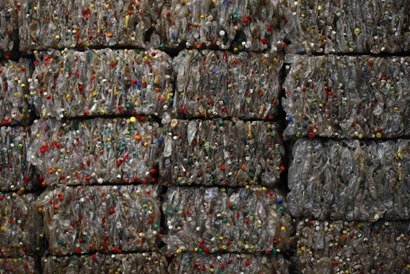
Plastic bottles at a Chinese recycling plantNow that China has closed its doors, from January 1, 2018, to (plastic) waste for recycling from Europe (and elsewhere) the countries of Europe are beginning to drown in (plastic) waste and many are now looking for other developing countries, such as Vietnam, to take this waste for recycling, Britain among them.

Instead of actually reducing waste, especially, though not restricted to, plastic waste, and secondly building our own facilities for recycling the countries are, yet again, looking for places with lower environmental standards to where to dump the waste rather than doing the other.

Obviously, considering the high environmental legislations in the home countries it would be too expensive for the capitalists to do it at home and hence other countries, with lower and fewer environmental laws and legilations have to be found where our waste can poison the unsuspecting workers. Couldn't possibly have those recycling plants properly operated in our own countries now, could we. But that is exactly what we should be doing.

Before even thinking about recycling we should, properly, work on reducing the amount of waste, plastic and otherwise, that we generate and that is where all, but for starters industry and legislators, come in.

Now that China declines to take any more of our garbage we should be doing our own recycling, after reducing as much as we can, of our waste and by doing so lead the way and we would also create jobs.

When, however, we talk about recycling then recycling it really should be rather than, as in the case of most glass recyclables, downcyling said glass into a road aggregate akin to sand. That is not recycling.

As far as single-use plastic is concerned this needs to be eliminated once and for all as it cannot, properly, be recycled, at least not into decent objects and while there is nothing, per se, wrong with good solid, for lack of a better word, plastic that will and can be in use for a long time, we should phase out plastic more and more over time till we are almost, once again, free of the stuff.

As far as other waste, including and especially E-waste is concerned, industry has to come into play and design to once again – yes, we were there once already – to make products that actually last not just for a year or three but for decades and more. Oh, yes, sorry, I forgot that that does not give huge profits to the capitalist shareholders.

Instead of solving the problem at home our respective governments are looking for other developing – we used to call those Third World – countries which we can contaminate, and their unsuspecting residents, with our waste, by having them recycle the stuff that we don't want to recycle at home, in bad conditions. The new colonialism.

We should be doing the recycling – after looking at all the other options of reuse and so on prior to recycling – at home, in good conditions for the workers and the environment, as dictated by law. This would also create jobs, from collecting, to sorting, to the actual recycling. But, alas, that cannot be as that would be expensive.

© 2018

Plastic, plastic use, and plastic pollution

by Michael Smith (Veshengro)

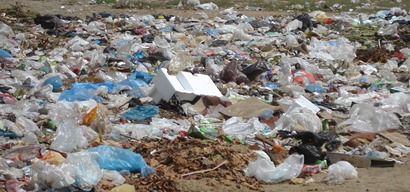
plastic_waste1Plastic is pervasive nowadays and there is almost no place where you can look and plastic will not be staring you in the face in some for or the other. The computer keyboard, the case of the laptop, of the cellphone; all plastic, and that just for starters.

Since the real commercial production of plastic begun in the 1950s the world has produced more than eight billion tons of plastic which is about as much in weight as a billion elephants. Now let that sink in for a moment. That's an awful lot of the stuff. And that which has not been recycled or burned is in landfills and much of it, in fact, is floating around in the sea, causing problems to marine life, and in the end to us, who eat some of that marine life.

In 1950 the world produced around two million tons of plastic per year, while 65 years later, in 2015, it was 380 million tons in that year alone. Half of the so far produced plastic has been has been made in the last 13 years. Until 2015 only nine percent of this plastic has been recycled while twelve percent has been burned. The rest, alas, is still with us, predominately in landfills.

In some cases, let's face it, there, probably, is no real substitute for plastic and there is plastic and then there is plastic, as I keep saying. Instead of making it from petroleum there are other ways plastic materials could and can be made but even if the plastic is from a plant-based source it remains plastic and compostability is in most cases nothing more than greenwash.

On the other hand plastic can be extremely durable – aside from being light – and I say the can be because some of it is not made to be durable and that is due again to industry's design of needing things to break in order to sell more of the things to us.

It is the single use plastic that really is the greatest of problems, whether it comes in the form of the all present and all pervasive PET-bottle or the other plastic packaging such as fruit punnets, salad bowls, etc. ad infinitum.

What bugs me is that many of those things can be given an extended life if we but put our thinking cap on when we encounter them. Only recently I rescued the bases of some Sainsbury's sandwich trays (the kind you but ready-made sandwiches in for parties) which will become the trays for plant pots when raising seedlings.

I have found that the plastic that is used for those salad bowls with ready-made made salads from supermarkets, for instance, is a fairly flexible and also strong kind in that there is nothing preventing us from reusing those small and not so small bowls for a variety of uses in the kitchen, at table and otherwise in the home (and garden).

Those single-use plastic beer beakers (1pt), often made of a strong and flexible plastic, that are used at festivals and such like, instead of glasses, and then, obviously, being tossed thoughtless into the countryside, make for great propagators put upside down over a small plant pot for raising seedlings.

While, obviously, it would be good if we could get rid off all single-use plastic I, personally, doubt that that is going to happen soon and thus we ensure that we dispose of the stuff responsibly (for recycling ideally though we can but wonder how much recycling actually truly happens) or, maybe better still, must find a way of making use of those things by reusing, repurposing and upcycling them in other ways, stretching their lifespans for as far as possible.

In the case of plastic drinks bottles, be it water or other, I would advocate the introduction of a deposit, as it is done in some countries already, and the use of reverse vending machines where such bottles can be returned to and the deposit given to whoever returns them.

Bottled water is a scam anyway as most of the water is not “spring water” or “mineral water” but simply ordinary, often tap, water filled into bottles and sold at a huge profit. In most places in Europe, bar a couple of countries, the local tap water is better than any bottled water. The US still has a problem despite considering itself to be such a great advanced nation. In some places the municipal water supply there is as bad, sometimes even worse, than that in many a city in the Third World.

The problem nowadays though is also that other drinks and products that used to be packaged in glass come now in plastic bottles and jars, such as wine, spirits, peanut butter, etc. The claim is that this is being done to reduce the impact on the environment as glass is heavier than plastic and thus transportation requires more fuel. Come on, let's be honest dearest people. It is cheaper and the environmental claim is but hogwash or should we better call it greenwash. Fact is that plastic bottles and jars are cheaper than glass and that they are cheaper to transport than glass. Hence the move to more and more plastic.

As consumer we are facing a dilemma when it comes to the above, that is to say drinks and produce in plastic jars, let's not even talk about fruit and vegetables packages in unnecessary plastic (wasn't sure whether to laugh or cry the other day when I saw at ALDI apples packaged in the kind of tube in which tennis balls are sold) as in the great majority of cases we do not have an alternative. It was Sainsbury's a couple of years ago that started the trend of peanut butter in plastic jars and now almost every producer of peanut butter has followed suit.

Wines and spirits, at least those at the lower end of the price scale, now also come in plastic, rather than glass, in our supermarkets and the letters WTF very much come to mind with regards to that.

So, instead of working to reduce the problem industry and supermarkets actually perpetuate the problem by introducing more and more plastic packaging. Get rid off the plastic carrier bag, to some degree, and they just get some more plastic in that you can't avoid, more or less. Sometimes I do wonder whether they actually want to help or not, and it looks more like that they do not want to help at all. Plastic is cheaper to use than glass and much cheaper to ship as it is lighter and there are no breakages. It's all down to money yet again. But where does that leave us, as consumer, who are left without an alternative and choice often?

© 2017

The Rs and the U

by Michael Smith (Veshengro)

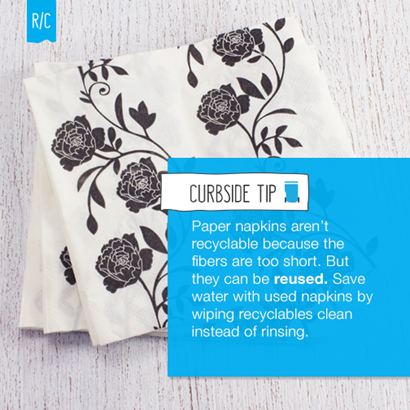
Paper napkins are not recyclableWe have always told, and still are being told, that there are three Rs when it comes to “going green” and that those are “reduce, reuse, recycle” but, in fact, there are more than just those three, or at least there should be. And then there is also the U for upcycle. Recycle should come at the very bottom of the list, and that is why I have put it here.

Reduce: Just use and buy less. Also, obviously, reduce your waste, especially the stuff you send into the waste stream. When it comes to food and food waste use everything and leftovers are used the next day. That's the way our parents and their parents did things. It works, would you believe it. Oh, and guess what, reusable cutlery, plates, cups and such are meant to be washed after use and used again.

Return: Producers should take back what they sell. This is not going to happen very soon, of that we can be certain, even as far as packaging, and over-packaging goes.

Reuse: Almost boring, but we throw too much stuff out too soon. Reuse also must include not just continued use of what we have but reusing and repurposing items of waste such as glass jars and much more. There often is another life for many of so-called waste products.

Repurpose: That is taking reuse to another level in that the product is used for another, often “higher” purpose.

Repair: Fix and mend things rather than replacing them.

Rework: Taking an item of waste and making something new, which could include changing the shape of the original waste product but does not have to be and is akin to upcycling.

Refurbish: This is a little like repair but may go a lot further than just simple repair, that is to say fix and mend.

Refill: In Ontario Canada, 88% of beer bottles are returned to the beer store, washed and refilled; just south of the border in the USA, the number drops to under 5%. In many countries of Europe beer bottles are also returned, washed, sterilized and refilled; alas not in the UK. Apparently, according to government, it was never done in Britain and thus could never work here despite the fact that until the end of the 1970s this was done, last with lemonade bottles and until not so long ago – and in some cases still – with milk bottles.

Rot: Compost what is left over, turning it into valuable nutrients.

Refuse: Simply refuse to accept this crap from the manufacturers any more.

Reducing and reusing also saves money, as do many of the other Rs, aside from being good for the Planet they are good for your wallet and bank balance too. If that isn't an incentive I don't know what ever would be.

And now for the U, even though this one should come well before this stage and that is:

Upcycling: This is the process where (at least) some of the shape and properties of the original waste product are retained and where another useful product is produced from it. Though at times it might also be a decorative item or a piece of art.

Upcycling ideally, however, should be about turning an item of waste into a useful item and product rather than a work of “art”. Although there are times when making artworks out of such waste is the only answer to throwing it and that is still better than doing that.

Recycle: Yes, I have put recycling at the very bottom of the list, and not just of the Rs because of the way recycling, at least commercial recycling, generally, works. The problem with recycling is that it, actually, destroys the “waste” product and more often than not this product is not recycled but downcycled.

Glass is a prime example here where in the majority of instances, aside from being broken into fragments anyway in the first case, it is ground down to make road aggregate, a glass sand, rather than new glass. In other words they are turning it almost into the material that glass is made from in the first place, namely sand. But, as all the colors are being mixed together it is not possible to make new glass products from them, or so they say. Why not make multicolored glass tumblers and such?

Many other “waste” products in commercial recycling also are downcycled rather than properly recycled into what they originally were, hence recycling should always be the very last resort to turn to when everything else has failed. But, for some unexplainable reason, there is no infrastructure there for a proper reuse and upcycling economy, so to speak, and everyone concentrates in commercial recycling on what actually is downcycling.

That is why upcycling has to become a main part of the equation also and especially on a commercial level, from small independent craftspeople to SMEs as recycling does recycle very little and mostly downcycles the materials. This may be good, to some extent, for the large operators and their shareholders but not for the Planet.

Some of us may have already seen the little gadget and “trick” about turning PET bottles into string that makes for an extremely strong rope. There is potential in small and larger scale recycling or upcycling of such bottles (yes, in this instance the original shape is not retained) and using the material thus garnered to make ropes, but also woven products such as mats, and others. And that is just via one simple method.

Just some food for thought, maybe.

© 2017

Nation wakes up to coffee cup recycling on-the-go-go

Veolia’s coffee cup recycling bins brew up a solution

by Michael Smith (Veshengro)

NoPapercupUnderpinned by insight into coffee cup disposal habits and with trials supported by partners such as Costa and Starbucks, Veolia, the UK’s leading resource management company, is rolling out a national coffee cup recycling solution.

With 84% of takeaway hot drink consumers still using disposable cups, Veolia’s coffee cup solution aims to collect takeaway cups as soon as the consumer has finished their drink to reduce cup contamination and increase recycling rates.

The solution is now available to existing customers nationwide and to potential new customers, as part of a packaged service, and offers multiple service options. These include a specialist designed in-house recycling bin, a bulk collection option and a post back service – which is available to all business types nationally.

By capturing cups before they enter the general waste stream Veolia’s solution aims to get a higher quality of material that can be reprocessed into a new product. And the public is onboard.

The latest YouGov research shows a staggering 88% of the public would use a purpose-built bin to ensure their disposable paper cups is recycled. Almost half (47%) would even be willing to hold onto their cup for longer if they knew they would pass a purpose-built bin, and nearly a quarter (24%) would go out of their way to use one. As a result, Veolia is calling for more disposal locations, such as train stations, university campuses and offices, to step-up and help solve the coffee cup conundrum with them.

For regular takeaway hot drink consumers, those that buy at least four drinks a week or more, the most popular location for cup disposal is at work. In fact, over half (52%) cite the office as a disposal location, with ‘on-the-go’ locations such as train stations, service stations and on trains, the second most popular (40%) and then in coffee shops third (31%).

Estelle Brachlianoff, Senior Executive Vice-President at Veolia UK & Ireland, comments: “Over the last six months a lot of activities have been taking place with our customers, such as Costa and Starbucks to overcome our biggest challenge – contamination in the cups. As a result, we’ve worked on a solution that will separate the cup from the general waste stream as soon as the customer has enjoyed their drink – and we’re thrilled to see so much public support for cup recycling.

“Coffee cup recycling is now happening across the country but I’d like to take this opportunity to further encourage a mass collaboration between designers, manufacturers, vendors and consumers as we all have a part to play in making all of our packaging more environmentally friendly and ensuring our resources are kept in the loop for longer.”

Once the consumer has ‘Tipped-it, flipped-it and stacked-it’ – a process to ensure any remaining liquid is drained and the lid, sleeve and cup are separated – Veolia undertakes a further separation process to guarantee all rogue items have been removed. This is key because it will help to ensure a higher quality of material that can be reprocessed into a new product.

After the cups have been debagged, separated, checked for quality and contamination, and baled up they go on to further treatment at paper pulping facilities, which recover the fibers and separate the polymer plastic lining. Working with a number of outlets, the fiber could potentially be used to make a multitude of products such as egg boxes or cup holders given back out in stores or alternatively used in the manufacturing of cellulose-based insulation for homes.

OK, so much for what Violia UK says and now let's looks at the way the world really works, at least according to what I am being told by other experts in the waste management industry.

Violia UK is claiming to have a facility that can separate cardboard from the polymer liner of those cups. If that is the case than this is the only such plant and no one else in the waste industry heard of it being possible.

I know that I am a skeptic and rather sarcastic with regards to this but when 99.9% experts in the industry tell me that those “paper” cups with their polymer linings cannot be recycled and that separation of the two components is not possible I find the claims of one or two companies questionable in the extreme.

As I have said it is either the case that Violia UK has a facility that is capable of doing the things that the vast majority, bar one or two, claim cannot be done or somewhere along the line someone is rather economical with the truth.

It would be better by far if the beverage industry would get away from those cups and people would carry their own. There are enough alternatives available.

© 2017

The great recycling scam

by Michael Smith (Veshengro)

And, yes, it is indeed a scam!

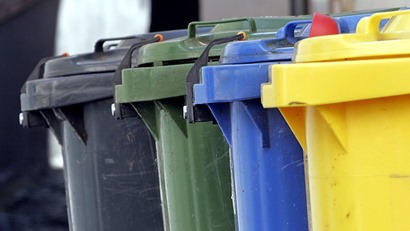
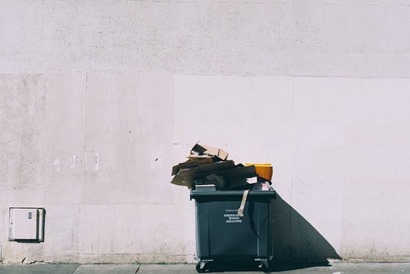
Sinnlos sammeln und sortieren - recycling bins1We are encouraged, nay pressured even, to clean and nicely separate all our recyclables – glass, plastic, paper, etc. – into bins for the different ones. But what really happens to those “recyclables” that our municipal refuse services pick up from the kerbside? Often, actually, nothing more that being dumped in the same place where all the other refuse, all the other “waste”, goes; the landfill.

Most municipalities do not have the expensive sorting facilities and in more than half of all cases – if not at times in 90% of them – the collections are all but for show, more or less.

Reuse is much better but most people just cannot think what to do with this or that item of “waste” (waste as a resource) as our mindset, at least that of the great majority, is to buy rather than to make.

This thing about recycling is that it is a crutch to those not wishing to think about the above and as far as our governments are concerned it is a means to blind people into believing that the government and industry care about the Planet. Capitalism never will. The main reasons that many recyclables – aside from the financial costs of sorting centers – are landfilled are at least two-fold.

One is market related and has to do with the over saturation of recyclables meaning that the price ends up so low that separation, even if collected through kerbside collections where we have done much of the sorting already for them, and shipping the stuff out just is not cost effective.

The other is that households and businesses still do not understand that the recyclables have to be clean. Just one wrong item of cardboard, for instance, say one that is greasy or whatever, in an entire container means that all of it gets tossed. Again due to the processing centers not being there and it being expensive to actually do the separation, especially manually.

So municipalities go through the motions of collecting our recyclables – for it looks good to be seen to do it – but then due to low prices on the world market, or whatever, nevertheless, landfill them.

Many of the recyclables – most of them in fact – if they don't get landfilled are not processed “at home” but are shipped to China, or, in the case of appliances, computers and such, to some third world country to be processed, and in the latter case under very polluting conditions and even in China the environmental protection standards are much lower than in Europe or in the USA. So we also export not only our recyclables but also the pollution and poisons that go with the processing of them.

Recycling is also very energy intensive and while, if recycling is done properly, it still saves raw materials and some energy in the processing, the kerbside collections, the shipping to port, the transportation across the oceans, etc., uses lots of energy and creates emissions and pollution.

We must get away from this fig leaf and have products made that, one, last, two, that can be easily repaired and, three, that at the final end of their lives can be reprocessed “at home”.

What can we do?

Use less stuff

The first step to waste reduction and avoiding the recycling scam is to use less stuff, to try, when buying things to buy with less packaging or zero packaging, and to reduce our waste. It also means buying less (new) stuff especially when there is actually no need for it and whatever you have got is still working perfectly well and doing the job that it is meant to do.

Use what you have got

Instead of running off to the stores to get the next generation iPhone or whatever else stick with what you have got (as long as it works, obviously). The latest is not, necessarily, better than the old one that you have already got and the “bells and whistles” that the new version may have are, more often than not, something that you will never, ever use.

Reuse, repair, repurpose

Reuse falls into two categories really. One of them is the continuous use by ourselves, or someone else who we have passed this or that on to, and the other is reusing what are often referred to as items of “waste”, as did our grandparents and their parents or in some cases even our parents still, or making use of what some other person has thrown out.

Repair is, obviously, simple as to what it means. The problem today, though, is that many products are designed in such a way that they cannot be opened and repaired. This is called built-in obsolescence. However, it is possible to “hack” a fair number of products that are believed, even by repair shops, if they still exist, to be non-repairable. In a time not so long ago everything was repairable and if it could not be done by the user then there were shops that could do it for a fee. But today it is getting more and more difficult to find repairers even for those things that can be fixed.

Passing it on

Now that recommendation, I think, is so simple that it needs no explanation. If you, yourself, no longer have use for anything then pass it on to someone who will (be able to) make use of it. If you don't know someone to pass it on to then donate it to a charity shop so that it will find a new home and may even benefit on other ways too.

© 2017

The bane of the wooden disposable chopstick

by Michael Smith (Veshengro)

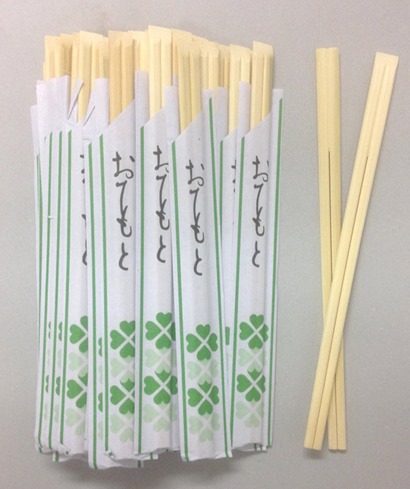
disposable chopsticks1_webI might just be able to live with it – but then more than like not even then – if the majority of those disposable chopsticks that are given out with sushi and other East Asian takeout dishes were made of bamboo but they are not. The great majority are made of wood, and it would appear of some hardwood as well in most cases. Some of them may be bamboo but the majority that we encounter here seem to be more wood, hardwood, in nature.

Chopsticks have a long and storied history, dating back to 2100 BC when Da Yu, the founder of the Xia dynasty, was trying to reach a flood zone. In his haste, he didn't want to wait for his food to cool down, and adapted two twigs to help him eat his food quickly. With the popularization of Asian food all over the world, chopsticks – especially the disposable kind – are now being used the everywhere.

But “throwaway” chopsticks are an unmitigated environmental disaster. In China alone, 80 billion chopsticks are thrown away each year, requiring hundreds of acres of forest to be cut down every day just to keep up with the demand, so some reports go. From where we are sitting this is, obviously, very hard to verify. In response to this, however, the Bring Your Own Chopsticks (BYOC) movement began and is gaining ground in places like Japan, China and Taiwan.

Often I tend to find them thrown away unused, still in their packets, which means that the person eating the dish opted, more than likely, for a plastic fork or spook instead of the supplied chopsticks. In that case the chopsticks come home with me to be (re)used as tools for which they are intended for, namely eating with.

From those I have made up a couple of BYOC sets, one in a leather sleeve that can be easily tucked into a pocket, for use when out and about so as not to use disposables from a restaurant.

Those that are out of their packets and have been used or otherwise tossed are reworked into dibblets, that is to say for tools to prick out seedlings in gardening.

In North America, apparently, those single use chopsticks are more of bamboo than of hardwood. How that is to be I do not understand but so the story goes and in Canada recently a young start-up has begun recycling those into a variety of products.

In Vancouver, Canada, this young start-up called “Chopvalue” cleans them up and turns them into home accessories and furniture.

Chopvalue's founder, Felix Böck, is a doctoral student in the faculty of forestry at the University of British Columbia. The idea for the start-up came when he realized how many chopsticks were thrown out every day.

Böck estimates that in Vancouver alone over 100,000 pairs of these utensils are sent to the landfill every day. Wanting to do something to address the problem, Böck invested in some recycling bins, and recruited restaurants to get their customers to throw their bamboo chopsticks in the recycling bin, rather than in the trash. These are then picked up by Chopvalue, and then taken to their lab, where they are cleaned, coated in resin and then hot-pressed with a machine to come up with a flat material.

The use of a fair amount of resin in the making of the products, however, makes me question the green credentials of this though as no information is given as to what kind of resin is being used. Also the heat and pressure in the production required a great deal of energy and again the green credentials are, thus, at least in my opinion, more than questionable.

Better would be if we would first of all not use them and really bring our own chopsticks or, alternatively, find ways to reuse and upcycle those sticks on a different level that does not require an amount of chemicals and energy. I am sure that it can be done in a way that is much better for the environment than making “planks” our of them by use of resins, heat and pressure.

© 2017

The 81-year-old woman inspiring a nation to recycle

Zeinab Mokalled

An 81-year-old who set up an all-woman rubbish collection team in her village in Lebanon now has a stream of visitors asking how she did it. For nine months in 2015 and 2016 rubbish piled up on the streets of the capital, Beirut, and even now a lack of landfill sites means some of the city's waste is being thrown in the sea. Zeinab Mokalled has shown that when government fails, do-it-yourself local initiatives can work.

"There used to be dirt everywhere and the kids were filthy," Zeinab Mokalled tells me.

She is remembering the 1980s and 90s, when Israel occupied part of the south of the country for 15 years, and waste collection came to a halt in her village, Arabsalim.

As the years went by, it piled up, and Mokalled went to the regional governor to ask for help.

"Why do you care? We are not Paris," he told her.

"I knew that day that I had to take it upon myself," she says.

Mokalled called on the women of the village to help, not the men - partly because she wanted to empower them, and partly because she thought they would do a better job.

Read more here.

Recycling is taking our mind off the real issue

by Michael Smith (Veshengro)

Recycling and recyclability is taking our minds off the real issue and that is the overconsumption and consumerism but then that is also the aim.

The act of recycling and the recyclability of products and/or their components is meant to make us feel good and forget about the real culprit; our wasteful consumption and the built-n obsolescence in most of the products on the market today.

Not so long ago goods were made to last and so they could be repaired if and when they eventually did break down, but they did cost more, by comparison. We did, therefore, not simply throw them out when they were a little older or when a new model came out. We used them for as long as it was possible. Often the money would not have been available to afford to change them. Instead things got repaired, whether this were clothes or shoes and boots or other goods, and that even in the homes and offices of the very rich.

Today the model has changed to cheap(er) goods that fail soon and we have to buy the same product over and over again as they cannot, more often than not, be repaired, or it is much more expensive to repair than to buy new. This is the way our economy today actually functions. Company profits depend on products breaking just at the right time so that we have to rush out and buy new and the cycle begins all over again and this built-in obsolescence is equally found in expensive brands as in discounter products, and about the same time span goes for them all.

But this built-in obsolescence is only half of the problem though, to a degree, a large one. The biggest problem by far is consumerism and our belief that we must have this or that, or that we must this or that item new because the old one, well, is old and old in this context is often six months to a year old only, and that all the while the old one still dos work and still does the job perfectly well. But throwing it out is not a problem, industry now tells us, as everything in it is recyclable. And so what if it is? Is that a good enough reason? No!

Recycling and recyclability is not the answer to the problem. It only clouds the real issues and problems, namely consumerism and the perpetual growth economy.

We all know what we must do if we want to rectify this and that is to stop buying all those products we do not need and to upgrade our things every five minutes even though our “old” ones still work perfectly well.

We must learn to also repair the things we have and to maintain them, even, though it is often claimed today that this cannot be done, although with some products this is, unfortunately, the case, and that is a rather sad state of affairs. But even when repair is easy and can be carried out by almost anyone there are still people who rather buy new than to spend half and hour or an hour fixing it again. The case of a bicycle someone brought to the refuse tip because it had a flat tire which they could not bother to repair is but one of those “shining” examples. Oh yes, they had already bought a new bike, by the way.

But, seems to be the attitude, those products can all be recycled and thus I can just go and buy new and toss the “old” one into the recycling bin or whatever. Scary, I know!

Despite the fact that almost everything nowadays can be recycled chances are that most things are not and are just dumped into landfill. Or they are sent, a great cost to the Planet, to Third World countries to be broken up into their component parts, causing misery to the workers and pollution the environment. Much of the so-called recyclables, however, and that includes glass, textiles, and what have you, that are being collected by the kerbside collections, end up in the very place we don't want them to end up, namely the landfill.

That, and because I have learned from a very young age to value things and money is the reason I try to make everything last for as long as possible. In some instances I probably take things to the extreme as far as this and repurposing and reuse is concerned. But so be it.

© 2015

A Note On Recycling, From Your Crappy Old Furniture

Before you haul me to the curb, let's have a little chat.

Boy looking at old chair

Hey there! I’m that old wingback you got for your first apartment—remember me? I totally lent that studio some respectability. And we had some good times, cuddling up with books, doing crossword puzzles together, staying in and watching movies. Sure, I was a little broken-in when you first found me, but you had more time than money back then, and I made a great fix-up project. You ironed patches on my thin spots, and we had fun with that ill-fated painting experiment. When I came out looking less damask burgundy and more multi-colored barf, you sewed me several slipcovers, and I’ve got to say: Each was more professional-looking than the last.

But I can see you’re not so keen on me anymore. You haven’t sat in me forever. And lately you’ve been dumping all over me (usually your dirty laundry). And I get why—I’m not as comfortable as I used to be. I’ve got a broken spring that’s a pain in the ass if you sit in the wrong place, the cat’s been tearing at my arms and back for years, and I’ll admit: One of my legs is a little wobbly. I saw your look the other day, and I know what you’re thinking—it’s time for me to go.

Read more here.

RECYCLING HELPS US AVOID TACKLING CLIMATE CHANGE

Climate change and environmental destruction are contentious and disputed topics.

In the US, for instance, there is a powerful faction of Republican politicians who flat-out deny that climate change even exists. In Britain, the Environment Secretary, Owen Patterson, is also a climate change sceptic, oddly enough.

These denials go against science: carbon emissions have increased by 35 per cent since 1990, and climate change is responsible for over 300,000 deaths a year, a figure that could rise to half a million people by 2030. It is blindingly obvious that we are heading towards environmental destruction and any failure to admit this is negligent and dangerous.

The international system has set numerous targets to resolve the crisis, such as the UN Millennium Development Goals on the environment, but they are rarely met. The many environment summits which regularly take place also fail to produce tangible results, with the big powers failing to agree on terms.
The 2011 Durban Climate Change Conference is a case in point – we’re three years later and no agreements have been reached. All these meetings are mere rhetoric aimed at duping the public into thinking that our leaders are taking action.

Read more here.

Wine bottles get a second life as chic, multifunctional furniture

Tati Guimarães

Wine bottles are easy to recycle into new, more interesting and more functional objects, be they lamps, glasses or even whole buildings. Brazilian, Spain-based designer Tati Guimarães takes the pragmatic route, repurposing wine bottles into stylish, multifunctional furniture that wouldn't look out of place in a fancy living room or gathering.

We've seen the designer recycle wine corks too; here, Divinus is Guimarães' simple but clever collection of versatile pieces made out of wood and reused wine bottles. Guimarães' design studio, Ciclus, attempts to marry eco-friendly materials with a sense of elegance and depth, says Guimarães:

When designing, I go beyond functionality, beauty and sustainability. I seek to design versatile objects which convey a message, which interact with people, move them and invite them to reflect.

Read more here.

DIY Raised Planter Stand

raised-planter-stand

If you have enough free space in your garden it would be a pity to waste it. The ideal way to use that space is to plant something, but that would be a lot of work and maybe even some future troubles. So in order to avoid that, you can make a raised planter that will help you organize your garden in a more efficient way. To build such a planter you will need: treated lumber, 55 gallon juice drum and lots of tools (hammer, drill, screws, saw, etc.).[Read all details step by step in the link below]. First you will be making the place for the drums, by making a support for them. Create wooden legs for the support to stand on, in order to assure extra stability to your structure. Once every piece is done, connect them and assemble the planter. Install the drums and create holes for drainage. After that you can start planting, just make sure to water your plants regularly and protect them from pests.

Read more here.

The Rag and Bone Man

by Michael Smith (Veshengro)

800px-Rag_&_Bone_ManThe rags collected by members of this occupation were used for what, you may ask. Well, not to be recycled into new clothes but to be made into rags for cleaning, primarily in industry, for gun cleaning patches, and also for making paper. And yes, the Rag and Bone Man also collected bones. The latter where made into fertilizer, before the advent of petro-chemical ones, namely bone meal, often mixed with fish and blood.

But rags and bones where not the only things, despite the title, that the Rag and Bone Man collected. His main target would have always been scrap metal of all kinds, as that is where the money was, although he, obviously, also got paid for the rags and the bones that he collected from households and other premises.

The Rag and Bone Man performed a vital function for the economy and in keeping valuable (secondary) raw materials out of the waste dumps, that is to stay stopping them from becoming waste in the first place.

In spite of this he was looked down upon by most members of society and today his activities are being curtailed by more and more restrictive local and central government legislation. This despite the fact that his activities nowadays are more important than ever as to preventing valuable resources from becoming waste.

Today we need a modern version of the old Rag and Bone Man and rags (and maybe even bones) should once again be on the collection menu also. As should, possibly, be plastic bottles and aluminum and steel cans, plus a variety of other things.

© 2015

Pedal-powered recycling program allows low-income communities to turn waste into value

Wecyclers cargo bikeAlong with helping neighborhoods to clean up unmanaged waste, Wecyclers also enables people in low-income communities to turn waste into value through an incentive program.

In most modern cities, we don't have to worry so much about what to do with our waste (though we should be doing our part to reduce it), because we have waste management infrastructures in place to take care of everything from picking it up at the curb to sorting it to properly disposing of it or recycling it. However, in many parts of the developing world, waste management systems can be so overburdened that it can create an 'urban waste crisis', leading to not only unsanitary living conditions for the residents (and in the waterways of others who live downstream), but also contributes to their psychological stress due to the urban blight it creates.

One solution, which took top honors in this year's Sustainia Awards, is currently in place in Lagos, Nigeria, and uses a household recycling service with a rewards program to solve the urban waste challenge, effectively letting low-income earn useful goods from the waste in their communities.

Wecyclers uses a fleet of cargo bikes to provide a convenient household recycling service for those living in densely populated low-income neighborhoods in Lagos, where only about 40% of the garbage in this city of 18 million people gets collected. The program is tackling the unmanaged waste situation by connecting it to the needs of recycling firms in the city, many of which are under capacity and suffer from supply constraints due to an inadequate stock of materials to process.

Read more: http://www.treehugger.com/clean-technology/pedal-powered-recycling-solution-low-income-communities-value-waste.html

Your iPhone Is Literally Crippling People In Third World Countries. Watch This, Make A Difference.

More than half of U.S. electronic waste is shipped overseas.Okay, your iPhone is not directly causing a problem; rather it, in combination with all the other electronics of the world, contributes to a devastating global issue–electronic waste dumping. Even more devastating, however, is the fact that the very people who fuel the endless cycle of electronics consumption have no idea that this problem exists*. The latest and greatest gadgets hit the market, and the old (and usually, perfectly good) devices fill our closets, trash cans, and maybe (but likely not) our recycling bins. Out with the old, and in with the new, right? Well, it’s not that simple.

As this video illustrates, there is no magical place called “away” in terms of electronic waste. In most cases, “away” is a smoldering dumping ground on the other side of the ocean where children burn electronics to salvage their scrap metals, inhaling toxic fumes in exchange for a few measly dollars. And, if it’s not the fumes that hurt, then the dangers of a crime-ridden electronics black market add to the harmful impact. Whatever the issue may be, “dumping” creates serious, and in some cases life-threatening, problems for its victims.

Read more and watch video: http://inspiremore.com/youll-think-twice-before-you-throw-away-your-old-iphone-after-watching-this/

Recycling is BULLSHIT

by Michael Smith (Veshengro)

This video explains, though a little tongue in cheek, what I have been saying in several of my pieces over time too as regards to recycling and all that.

Much of what we have been told about recycling, and the mantra has become one of “we must recycle more, and more and still some more”, rather than the original one of “reduce, reuse, recycle”, is false and is not because our governments and industry are concerned about the environment and the amount of refuse. Recycling is big business. But when there is a glut of recyclables then then what happens? They go the normal route, namely to the landfill and in fact even when there is not a glut many of them do.

The most important thing for us to do to reduce waste going into the waste stream – and I include the “recycling stream” here – is to reduce the waste that we generate and then we must learn to reuse and upcycle before we even consider any other option. That way we save money and keep stuff out of the trash tips.

© 2014