Showing posts with label repurpose. Show all posts

The great recycling scam

by Michael Smith (Veshengro)

And, yes, it is indeed a scam!
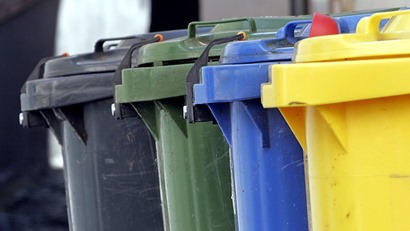
Sinnlos sammeln und sortieren - recycling bins1We are encouraged, nay pressured even, to clean and nicely separate all our recyclables – glass, plastic, paper, etc. – into bins for the different ones. But what really happens to those “recyclables” that our municipal refuse services pick up from the kerbside? Often, actually, nothing more that being dumped in the same place where all the other refuse, all the other “waste”, goes; the landfill.

Most municipalities do not have the expensive sorting facilities and in more than half of all cases – if not at times in 90% of them – the collections are all but for show, more or less.

Reuse is much better but most people just cannot think what to do with this or that item of “waste” (waste as a resource) as our mindset, at least that of the great majority, is to buy rather than to make.

This thing about recycling is that it is a crutch to those not wishing to think about the above and as far as our governments are concerned it is a means to blind people into believing that the government and industry care about the Planet. Capitalism never will. The main reasons that many recyclables – aside from the financial costs of sorting centers – are landfilled are at least two-fold.

One is market related and has to do with the over saturation of recyclables meaning that the price ends up so low that separation, even if collected through kerbside collections where we have done much of the sorting already for them, and shipping the stuff out just is not cost effective.

The other is that households and businesses still do not understand that the recyclables have to be clean. Just one wrong item of cardboard, for instance, say one that is greasy or whatever, in an entire container means that all of it gets tossed. Again due to the processing centers not being there and it being expensive to actually do the separation, especially manually.

So municipalities go through the motions of collecting our recyclables – for it looks good to be seen to do it – but then due to low prices on the world market, or whatever, nevertheless, landfill them.

Many of the recyclables – most of them in fact – if they don't get landfilled are not processed “at home” but are shipped to China, or, in the case of appliances, computers and such, to some third world country to be processed, and in the latter case under very polluting conditions and even in China the environmental protection standards are much lower than in Europe or in the USA. So we also export not only our recyclables but also the pollution and poisons that go with the processing of them.

Recycling is also very energy intensive and while, if recycling is done properly, it still saves raw materials and some energy in the processing, the kerbside collections, the shipping to port, the transportation across the oceans, etc., uses lots of energy and creates emissions and pollution.

We must get away from this fig leaf and have products made that, one, last, two, that can be easily repaired and, three, that at the final end of their lives can be reprocessed “at home”.

What can we do?

Use less stuff

The first step to waste reduction and avoiding the recycling scam is to use less stuff, to try, when buying things to buy with less packaging or zero packaging, and to reduce our waste. It also means buying less (new) stuff especially when there is actually no need for it and whatever you have got is still working perfectly well and doing the job that it is meant to do.

Use what you have got

Instead of running off to the stores to get the next generation iPhone or whatever else stick with what you have got (as long as it works, obviously). The latest is not, necessarily, better than the old one that you have already got and the “bells and whistles” that the new version may have are, more often than not, something that you will never, ever use.

Reuse, repair, repurpose

Reuse falls into two categories really. One of them is the continuous use by ourselves, or someone else who we have passed this or that on to, and the other is reusing what are often referred to as items of “waste”, as did our grandparents and their parents or in some cases even our parents still, or making use of what some other person has thrown out.

Repair is, obviously, simple as to what it means. The problem today, though, is that many products are designed in such a way that they cannot be opened and repaired. This is called built-in obsolescence. However, it is possible to “hack” a fair number of products that are believed, even by repair shops, if they still exist, to be non-repairable. In a time not so long ago everything was repairable and if it could not be done by the user then there were shops that could do it for a fee. But today it is getting more and more difficult to find repairers even for those things that can be fixed.

Passing it on

Now that recommendation, I think, is so simple that it needs no explanation. If you, yourself, no longer have use for anything then pass it on to someone who will (be able to) make use of it. If you don't know someone to pass it on to then donate it to a charity shop so that it will find a new home and may even benefit on other ways too.

© 2017

The reuse economy or reuse sector

by Michael Smith (Veshengro)

reuse_fabrics-940x400New York City Department of Sanitation Commissioner Kathryn Garcia thinks, as does the department, that the reuse sector, both the nonprofit and the for-profit sector, are key to moving forward with regards to a New York City's “zero-waste” drive.

Compared to the heavy duty world of urban waste collection in New York, the reuse sector can seem quite esoteric. Now, the city is looking to make it a mainstream operation.

Because reusable items are generated more sporadically than the steady streams of refuse, recyclables and organics, the systems to handle them can be less organized. Due to a lack of awareness or access, it’s often easier for many residents to just put their old couches and dusty guitars out on the curb. In many places, one has to add, such systems are not – at least not on an official level – even existent.

So, let's look at what this “new” or “newish” sector of the economy, this reuse thing, actually is. Well, to have said new or even newish is rather incorrect for it is neither of it; it is quite old, only it was not called reuse or even an economy back then.

It was what the rag and bone man and others did, namely pick up things that could either be sold for scrap, refurbished, reworked or whatever, and secondhand shops, once upon a time, were very common. Now they have gone upmarket and are called charity shops. Often the same difference. And those charity shops are, obviously, the nonprofit part of the sector, although, considering that the items are donated to them, and even bought to them, they do make quite a bit of profit from the sale of them.

To bring about a more or less zero waste situation the reuse economy must also include and incorporate the repair, rework and upcycling economy, like those artisans and and other workers who will make goods, ideally usable goods and not just art, for sale, as a business, out of items of waste.

It it made to appear as if the reuse and remake economy is something new, recently invented by the green movement, but it has existed for ages. And even upcycling is not a new thing at all. It too has existed for almost ever and a day. Only it was not called upcycling. It was just what one did, and especially what those that did not have the financial resources to buy did. But it also was an economy in that people repaired, restored and upcycled for sale.

Fact is though that over the last number of decades it fell out of fashion and that was as much due to the fact that people just wanted to appear affluent pretending that they could buy new all the time as with the fact that products became, almost all, non-repairable.

The latter especially led to the demise of the repair economy and repair businesses, large and small, fell by the wayside and died a death. Yes, we still have the so-called shoe repairers, for instance, who often also operate the dry-cleaners and key cutting, but you try to get those franchisees to sew back leather upper to a leather midsole. They can't do it “because they haven't got the machine for it”, as I was told when wanting it done. They are not cobblers, the are just machine operators and if there is not a machine with which to do it they cannot do it. Anything that would involve sewing by hand, where a machine cannot be used, they cannot do. Basically all they can do it put a new heel or sole onto a shoe or boot and that is about it. And the latter obviously only if the shoe or boot has a sole that can be removed and a new one put on and with many shoes and boots today that no longer can be done today.

Before every manufacturer – or almost every one – jumped on the bandwagon of built-in obsolescence, following the likes of Osram in the mid-twentieth century and other US firms after World War II, the repair economy was everywhere because everything could be fixed, at least almost everything.

In countries such as the GDR – often referred to as (communist) East Germany – there were entire small enterprises as well as state combines dedicated to repair. The combines were like a department store where you could bring anything to be fixed, even bed sheets and such, though many things people just fixed themselves.

When the built-in obsolescence “hit the shelves”, so to speak, it was the death knell for the repair businesses, large and small, under capitalism, as almost nothing could be fixed anymore or was and still is too expensive to fix with repairs costing many times that of a new one. And we are surprised that our landfills are overflowing and that we have a waste problem.

That is not to say that people are not a problem here either as many seem to treat everything as disposable even if it is not. It begins with cutlery and other reusable things at picnics in parks where those items are, once soiled having been used for eating with, are tossed out just like disposable items. It carries on with clothes where a button has come off, even though they still have the button in their possession, and so on and so forth.

The reuse sector could really have its work cut out nowadays with people's waste alone to clean, rework and all that, and then bring it back into circulation. And if we add to that upcycling then we would really be motoring and a good thing it would be too.

© 2017

Reusing and upcycling tin cans

by Michael Smith (Veshengro)

Tin Can Cutlery Bins2_webMany food products and produce still come in tin cans of various sizes and while they, the tins, are – mostly – completely recyclables, as they are – predominately – steel, they also lend themselves extremely well for reuse and for upcycling.

As with glass jars the attitude of my grandparents and their parents, and, generally the majority of the people of that time, was that they had paid for the tin cans – and those were the days before there was recycling – and because of that as many as possible of them were put to reuse and were upcycled, although that word also did not exist then, the practice, however, did, before throwing them into the trash.

Reuse and upcycling of them came in many ways from the simple reuse of a can as s coop for chicken feed, for example, to more elaborate conversions. The Australian bushmen (nothing to do with Aborigines or the Bushmen of Southern Africa) were also real masters in the reuse and upcycling of all manner of tin cans.

Personally I always have to smile and almost laugh out loud when some people are so proud buying recycled steel pencil bins and such for quite a lot of money while they toss clean tin cans into the recycling bin, apparently incapable of thinking that such a can, in itself, can serve immediately as such a receptacle.

I have personally encountered such “green” contemporaries who were so proud of having purchased recycled steel pencil bins while, at the very moment of telling me, deposited a number of tin cans, which they had even washed out and the labels removed, into the recycling bin. When I commented on it they just could not get the message. What has gone wrong with the mindset of people?

Below a couple of ideas (of mine... there are more) and I am sure there are others who have more ideas still.

Storage Wall: Wooden board with various different sized tin cans attached to it by means of screws (and affixed to wall). Such a storage wall can be used for all manner of storage, even in the kitchen for utensils.

Billycans: Carefully drill two holes on opposite sides just below the rim, make fence wire handle, put the wire in through the holes and voila! One billycan. That's the way the Australian Bushmen used to make the first before billycans were made by manufacturers. OK. Your homemade one won't have a lid but so what. It is, after all, the way they originally were. The bigger the can, obviously, the better, in a way.

Drinking cups: Tin cans such as from condensed milk with either handle made from wire, such as softer fence wire or aluminum wire, or a tin handle affixed by means of wire, or solder.

Beakers: Use narrower and taller tins than those used for the little cups (above), such as those larger ones, and they often are olive drab color on the metal, in which tuna comes.

Desk Tidy: That is to say “pencil bins” made from tin cans. You can paint those, give a sleeve of denim or whatever else. Or you could, obviously, use them as they are, or use those that have pictures on them. Some still are that way instead of having paper labels. But even plain tin ones are fine, in my opinion. They also make an instant statement of a reuse mindset.

Storage for kitchen utensils: Same idea as for the desk tidy/pencil bins only that they hold cutlery and such instead (see photo above).

The above is but a small list, even of what I, on my own, could come up with, but there is so much more what can be done with tin cans of (almost) all sizes. While they are recyclable steel I still rather like to use them for something that will keep them even out of the recycling steam for longer than just tossing them into the recycling bin.

© 2017

Make Do and Mend

by Michael Smith (Veshengro)

18557251_1397913886914578_1270310445997979841_nMake do and mend is a basically philosophy and mindset that I grew up with as a child, as much as I grew up in hand-me-downs whether this were clothes, bicycles, or what-have-you, and it is something that has stayed with me to this day. I still practice this philosophy – which nowadays is often known as practical recycling, reusing and upcycling – in various forms to this very day.

Already as a small boy I developed the habit, which was actively nurtured by our parents and other elders, and it has – unfortunately, some of my friends would say – stayed with me too, of picking up anything from the streets, the woodland paths, the hedgerows, and so on that might just come in handy. Old nails and screws; nuts and bolts; tools that have been lost or thrown away; even “old” knives; and much more are in that category.

Among the knives that I have found there have been knives for the re-working into sheath knives, as well as pocketknives with nothing wrong with them; there have been spanners and wrenches, screwdrivers, and many other tools, including a Leatherman Wave, in its holster, that was almost new and only required deburring the two knife blades. It had been deliberately thrown into the trash in a Park and had not just been lost accidentally. Some people simply seem to have too much money to know what to do with it, it appears, and more money than sense, that's for sure.

The habit of making do and making things also stretches with me to making use of everything that can be, in one way or another, re-worked into something else, whether this be old and worn Jeans into Ditty/Possibles bags or other things; old kitchen and butcher’s knives into “new” sheath knives. The leather of old boots, shoes and bags will be made into the sheath for such knives and/or into other items such as belt pouches for folding-knives, compass, pocket-watch, and so on.

There is only one severe drawback to such a habit and that is the need for a fairly large storage area in your home for all the things ”that might come in handy some day”.

During WWII in England booklets galore were published by the Ministry (and there was a shortage of things but they seemed to have enough paper to produce those official booklets) on the very subject of “Make Do & Mend” telling people, for instance, of how to change adult clothes into underclothes for children; to convert Dad’s old cotton shirts into nightshirts for the boys, and so on.

The philosophy and attitude of making do also applied in those days to digging up one’s flowerbeds and “digging for victory” by growing vegetables there instead of flowers in one’s garden. That could also still be a very valuable philosophy today too – instead of filling the garden up with grass and flowers, which may be esthetically pleasing to the eye and all that don’t feed no-one. Growing at least some of one’s own vegetables and such could give one some more cash in one’s pocket. Vegetables can – in actual fact – grown behind say a flowery border in a garden and look quite nice as well. The trees in one’s garden should not be ornamental this or that but fruit trees such as apples, pears, cherries, walnut and hazelnut, and anything else in that league and the ground beneath such trees should be utilized by vegetables and soft fruit such as strawberries. Also grow your own culinary and medicinal herbs in your garden, including such beneficial plants as Aloe Vera. If the climate isn’t suited for growing the latter out-of-doors than grown those in pots in the house. The same can also be done with many other herbs and spices.

And if you have no garden to speak of to grow your own vegetables and such then you can use various forms of containers such tubs made of various things such including old bathtubs even. Almost everything can be grown in containers, fruit trees even. Hanging baskets of all kinds also can be employed for growing fruit and vegetables. Strawberries do well there, and even beans and peas can be grown in such containers.

But back to the make do and mend philosophy per se.

While make do and mend seems to be coming back into fashion to some degree many people still have the disposable attitude and seem to have to have the latest in fashion, be this with regards to clothes or anything else.

Among children and young people peer pressure may have something to do with it in that clothes from a charity shop don't, in their minds, have much street cred and all that. Years ago it had to be Adidas, then Fila, then Nike, and the wheel keeps turning in that department. But what makes them better then non-brands? The name only, not necessarily the quality, and the price is often astronomical. The same goes for other things. And ordinary cell phone doesn't cut it; it has to be an iPhone, and ideally always the latest.

All need to learn, and the children and young people have to be taught, that it does not have to be the latest and that the latest and most expensive is not always the best, especially not for the Planet and the wallet.

Staying with what we have, making things ourselves even from things considered “waste” in the common perception, and generally making do and mending, buy secondhand, and so on, must be the way to go. The latter also and especially keeps money in the local economy, though only if we are using local secondhand shops, thrift stores and charity shops. And, if things can be repaired and you cannot do it yourself then use local repair shops to do it. Keeps the money local and also work.

© 2017

Some eco-friendly actions you can take to protect the Planet

by Michael Smith (Veshengro)

14570257_10205580764277263_3669665344947784806_nTaking steps to protect the environment is something everyone should do and can do. It is our Planet and our responsibility to do what we can to protect and preserve it.

Whether you are believer in climate change and global warming or not, the actions you take do have consequences. As our children and their children will be inhabiting this world long after we have gone, it is important we take a few key actions to protect the environment in which we live.

Clean-up your local community: You don't need a national “clean-up day”, or even a regional or local one to pick up around your local community and encourage others to do the same. If you see trash, pick it up. Toss it in the nearest trash can.

Where I live and work, in a municipal park, there are a number of dog walkers and other park users who do exactly that. In fact they reach the parts that park staff often does not get to, or not very often, and thus keep the park clear of littler even more. Some actually carry their own bags and picking gear. Other dog walkers, unfortunately, are less considerate and dispose of their dog waste bags by simply leaving them everywhere.

I have come across advice from some people who have written on this matter as to politely challenging people who they observe dropping litter to please put it into the bins. Personally I would advise against such actions. A great many people who inconsiderately drop litter will not be happy to be reminded of it.

Reduce and minimize waste: United Nations estimates indicate around 33 percent of the food that is produced around the world is wasted, according to The Guardian. This means close to 1.3 billion tons of food is wasted each year, while close to 795 million people are going hungry or suffering from malnutrition. When you break this down by category, it is easy to see which foods are being wasted most:

45% fruits and vegetables

35% fish and seafood

30% cereals

20% dairy

20% meat

People living in the highly developed countries, such as the US, the UK, Germany, and others, appear to be the worst offenders, whereas those living in less-developed and poorer countries are generally more frugal. And that goes not just for food. They are more frugal in general.

Do a little gardening: Those who grow their own food can become more sustainable, and will be less likely to waste the food for which they worked so hard. In addition, gardening is good for your overall health and well- being. You know what you are eating, as you grew it yourself, so you won't have to worry about ingesting harmful pesticides and toxins and GMOs bits. Parts of the herbs, fruits or vegetables that aren't used can go right back into your garden a compost to complete the circle.

Oh, sorry, what was that? You haven't got space to grow food? If you have a garden you can grow food and even if you haven't got much of one or none at all you can.

Get busy reusing, repurposing, upcycling and finally recycling: The more you you do that, the less will end up in dumps and landfills.

Before you even go near the recycling bin(s) with anything think RRU first. First think reuse, then repurpose, then possibly upcycling, and that well before you ever toss it into that bin or those bins.

You should first work on reducing your overall consumption, reusing those materials and goods that can be used again, and upcycling items which no longer have a use in their current form into new, usable items. You might as well get the most out of your purchases.

Think of those glass jars that certain produce come in. Aside from the fact that you have paid for them through your purchase they are useful for so many things. Warning everyone, I am now on a roll again.

Our grandparents and their parents rarely would ever toss such things out until or unless they were broken. Such jars were used for storage of dry goods and foods by grandma and grandpa, and they were even used for drinking vessels. After all, they would say, they paid for them, and right they were. Empty tin cans too were used for a variety of tasks and purposes and even the lids.

Food waste, after you have eliminated as much of it as possible, does not belong into the trash can. It belongs into the compost bin or composter to be used in the garden.

Only when all the reuse, repurposing and upcycling options are exhausted, and only then, the recycling bin(s) come(s) in. though that only works really if there is a kerbside collection in your area.

Stay in touch and in tune with Nature: Take the time each day to get out and about, so you stay closely connected with Nature. The better you understand its value, the more respect you will have and the more you will do to protect the environment. Even if it is just for a short time each day, go for a walk, take a bike ride, go on a hike or just sit outside and look around. When you look closely, you will be amazed and awed by Nature and its capabilities.

Lowering emissions: Don't forget to lower your emissions by opting for eco-friendly forms of transportation. I know that that all depends on where you live and the distances that you have to travel; for work for instance. If distances are not too far then opt for a good quality bicycle and also learn how to maintain it. When traveling further than you would wish to with a bike and the facilities are there opt for public transport, such as bus, tram, metro, train, over the car. Only use the latter if absolutely necessary.

While none of these actions will not necessarily change the world over night or even in a day, each can make quite a difference. When we work together as a whole, all our small actions combined, the people of the world can accomplish quite a bit. Start now and be the change you want to see in the world.

© 2017

What to do with an old toothbrush

by Michael Smith (Veshengro)

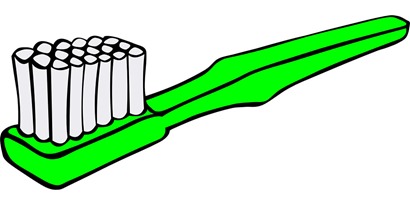
toothbrush-311373_960_720Over the course of your life, you will buy things that are meant to last, like a home (if you are lucky enough to have the funds to do so), and others that are frequently replaced, like the humble toothbrush.

Speaking of the toothbrush, dentists recommend replacing your toothbrush every three months. If you adopt that schedule, four of your toothbrushes will hit landfills every year. If you are feeling resourceful, however, you can prolong your former toothbrush's landfill trip by putting it to further use after you are done using it on your teeth.

This may be seen, even by ardent reusers, as somewhat of a yuck subject but it is not and does not have to be.

You may want to give old brushes a good cleaning before taking on these projects. To do that I simply stick them in a small container with some hot water and chlorine bleach. After that, you are good to go.

I know that some people have a problem with bleach as not being environmentally friendly but as a disinfectant it is hard to beat and replace.

Get the dirt off veggies

Mushrooms often come with a bit of dirt, but they hate being cleaned with water. A soft-bristle brush will let you remove dirt easily and effectively. Don't stop at mushrooms, either. Other fruits and veggies can be cleaned just as thoroughly with a soft-bristle brush.

Cleaning pesky dishes and tile grout

The lids of sippy cups, stubborn Tupperware containers, and other hard-to-clean kitchen hardware are a perfect use for an old toothbrush. You can get right into the spots that a typical kitchen sponge or even dishwash brush cannot reach.

A toothbrush is wonderful for cleaning pesky kitchen grout and for certain cleaning jobs, including the tile grouts, in the bathroom.

In the bathroom

As already indicated an old toothbrush can serve very well as a cleaning brush for tile grout in the bathroom and is equally at home cleaning off gunk, limescale, and other stuff from around the taps at the sink and the bathtub.

Bicycle chains

A toothbrush is great for getting dirt and such out of bicycle chains and also the freewheel and crank wheel, as well as the gear cluster, if your bike has one, before it causes problems or builds up excessively.

Working with crafts

A toothbrush can be used to apply paint, glue, polish, and all manner of arts-and-crafts materials. It is a brush, after all.

Applicator brush for boot polish

As we have just established that the toothbrush is a brush, after all, it is quite natural to also consider using a retired toothbrush as an applicator brush for boot and shoe polish.

When your toothbrush is done cleaning your teeth, its life has only just begun, and with the above list we have only just about scratched the surface of all the tasks that an old toothbrush could be put to before finally putting it into the trash.

© 2017

Waste has to stop

by Michael Smith (Veshengro)

All waste has to stop and we are the only ones that can do this. We can stop waste and starve the trashcan.

While it is true that we will never be able to eliminate all waste, and that aside from human waste; not even our ancestors of old managed to do that, much of it can be eliminated, especially food waste and packaging waste.

The former we can tackle by learning to cook from scratch and to make use of any leftovers and the second by reusing, repurposing and upcycling as much of it as possible, in the way that our forebears did, whether on the farm or not.

In addition to that we, as consumers, have the power to demand that the manufacturers reduce packaging and also that packaging be designed in such a way that it can have a second or even third life. The Japanese can teach us a thing or two about that.

They package goods more often than not – or at least they did – in boxes, and whatever else, that are purposely intended for reuse.

But even in the West similar things were happening not so long ago, but seem to have gone with the wind no. Nutella used to have its spread in glass jars that were designed to be used after as drinking glasses as did the makers of a number of brands of French mustard and also Kuehne, a German mustard producer, did the same. So why does it seem to be so difficult now, not more than two or three decades after?

Wen it comes to glass jars for packaging our forefathers and -mothers reused each and every one, until they no longer had a use for them. A glass jar is what? A glass and they can be used for drinking out amongst other things. So, let's not waste them. After all you pay for them when you buy the product contained therein.

It seems, however, so alien to many of our contemporaries today to do that. They rather go out and buy a pencil bin for $7 (made from recycled steel) than to use a tin can, destined for the recycling bin, for the same purpose.

And the same goes for glass storage jars. People spend $15 or more on recycled glass storage jars, thinking they do the green thing, while tossing some large glass jars, from products they bought, into the recycling bin.

Aside from the fact that this is waste of resources it is also a waste of money. As I said, you paid for that glass jar or the tin can or the cookie tin; so reuse it.

But we have come so far from the source, so to speak, that now some cookie tins, whether metal or plastic, have printed on them the fact that they can be reused and also for what purpose. Maybe, in fact, we need such instructions printed on the labels and such like in order for people to understand that the trip to the trashcan or the recycling bin is not necessary and should only be the last resort.

Packaging waste is our biggest problem, aside from food waste, and both can be overcome.

As far as packaging waste is concerned we have to reuse, repurpose and upcycle as much as possible of it, as said already, by using our mind. And, in addition, we must demand redesign of it and a reduction of it and also return to lose products, as once was the case. We, as consumers, have the power to make this happen by demanding it and the same goes for products that can be repaired. Let's do it. Let's reduce waste by all means possible.

© 2013

Repurposing glass containers

by Michael Smith (Veshengro)

Reusing and repurposing class containers is probably as old as such containers themselves and in times past most of those were used, reused and repurposed until such a time that they could no longer be used because they were broken.

Many of us have a steady stream of glass containers coming into our homes, but we often don't know what to do with all of them. Reason for that, more often than not, is that we have been condition to immediately go into the recycling mode.

Now most people cannot think further than tossing such valuable items, as glass jars and other glass containers, are into the recycling bin. That bin should be the absolute last resort and not the first thought. We have, however, been conditioned, or should I say brainwashed, to think only recycle and buy new what we could easily reuse and repurpose such containers for. And this does not just for glass containers. It does so equally for paper and card, for plastic containers, tin cans, and much, much more.

Used glass jars and other such items can be repurposed for so many different things.

When I was a child most people reused glass jars of all kinds for all kinds of things. Grandfathers and fathers kept screws, nails, and what-have-you in them and grandmothers and mothers used them in the kitchen as storage containers for dried things such as sugar, coffee, tea, beans, rice, salt, and also for to store leftovers. They also used them for buttons and other small things. We seem to have lost that and buy all manner of storage containers when an glass jar we have finished with would do the job just as well with no impact on out finances and the Planet's resources.

Oh, and before anyone suggests that the glass jars that go into the recycling bin are made into new bottles and jars let me enlighten you. They are not. In 99% of all cases they are made into products other than what they were, often simply road sand, bricks, and counter tops. A waste of resources and energy.

There are many ways of reusing and repurposing glass jars and here are just a few suggestions.

You can, for instance, turn old glass containers into beautiful vases for your kitchen window or even for the table.

One of my favorites for that, I have to say, are tall square glass jar in which I buy my coffee from Lidl.

You can also use larger glass containers as mini 'cloches' to get an early start on planting tomatoes and such outdoors. Many dill pickles tend to come in large jars that are well suited for this. Just remember to take them off the plants when the sun beats down on them as there will be no opening to regulate the heat. But then the old glass cloches had not any either.

The same jars also are good for the making of a small terrarium or especially a bottle garden.

Like many of our ancestors your could also use them for leftovers, small and large ones, depending how much you have on leftovers. Glass jars are also great for keeping small items organized, such as crafts, hardware, jewelry, toiletries, you name it.

I remember cottage gardens as a child where the part borders were all lined with old glass bottles, stuck into the ground by their necks and many people also created borders for slightly raised beds with them.

Empty wine bottles and such can also be used as candlesticks, obviously, for use during power outages or for a (romantic) dinner or dinner party.

In the good old Hippie days of the 1960s and 1970s many repurposed glass jars for drinking vessel, as I still do today. Small squat ones from, for instance, mustard, become whisky tumblers, larger ones, from small Frankfurters glass for beer, water and juice and those from herbs and spices shot glasses.

As you can see only you imagination sets the limits as to how glass containers can be reused and repurposed, and the same is true for other so-called waste items, whether tin cans, plastic containers, and much else.

Always reuse and repurpose before heading for the recycling bin...

© 2013

Too many reports and studies, not enough thinking

by Michael Smith (Veshengro)

Be it the governments or organizations such as FoE reports and studies seem to be in the forefront and it is, when it comes to resources, always recycling that is being highlighted.

However, we must begin further down the field for recycling is the last resort in waste and resource management. When we have to go down that route we have already lost (the plot).

Reuse and repurposing is the stepchild time and again when anyone seem to look at the issue of waste and resource management. Why? Because reuse and recycling does not bring in any money for the recyclers, councils and other interested parties, that's why. Recycling in the form of recyclables that can be sold does.

Reuse, however, and repurposing and upcycling has, after waste reduction, to be our first priority and reuse of glass bottles and glass jars must become policy again of companies and governments alike.

Glass bottles and -jars do not, unless broken, belong into the recycling stream but in the reuse stream, like it used to be, and still is in many countries as far as glass bottles are concerned.

Until such option is available where you and I live, however, we must reuse and repurpose them. Why buy a reusable water bottle when you Snapple glass bottle or similar will do the same job for free. And while glass is breakable it is the only taste neutral material as far as drinks carriers are concerned making it, thus, still the best choice for reusable water bottles, etc. But why buy when you can repurpose one or two or even three.

Waste paper and card is another one of those issues as regards recycling. First of all much of the paper that is collected for recycling is, in fact, destined for the landfill as it is ink jet printed which tends to be water soluble ink which contaminated the paper pulp.

On the other hand waste paper can be used much better for other purposes than making “new” paper. Shredded for animal bedding, especially good cross-cut shredded for hens; single side printed for hand-made notebooks; notelets; and waste card from packaging, if blank on the other side, for the making of index cards, business cards, notebook covers, and much more.

Sure there are waste products that cannot be reused, repurposed and upcycled easily and they will have to go the other route, such as batteries and other electronic products, metals, etc., but there are many that can be made use of directly through reuse and such. Those include pallets and other wooden crates and boxes, though all too often they are tossed out as well.

Despite the fact that recycling is being so very much promoted, to the detriment of waste reduction and reuse, much of the recyclables that are collected do, in fact, end up in the landfill, and that for several reasons.

One being that, despite the fact the items are being collected, there is not “market” for those recyclables and two that some things cannot be recycled in some areas.

Often the curbside collections are no more than a fig leaf where municipalities pretend to be green but behind the scenes the things are just dumped as they used to be, in landfill. Or, if we are lucky, incinerated.

It does not matter how many reports are being written. People must learn to think for themselves again and reduce waste in another way and one of those ways is to reuse and repurpose everything possible that comes our way.

This is the only way that we will succeed in this endeavor. Not by means of “official” recycling and recycling targets that are just a whitewash, or should we say, greenwash.

© 2013

The real R's of waste management

by Michael Smith (Veshengro)

We keep hearing the mantra “reduce, reuse, recycle” but they way most people seem to perceive it, due to government brainwashing, is as “recycle, recycle, recycle”.

All talk is about that we must recycle more, and more, and about recyclability of products and so on. Reducing waste to start with and then reuse (and repurposing) never gets a looking in and a mention. But, the governments, central and local, cannot make any money from us reusing things now, can they. Only recyclables that they collect from the curbside and businesses can be sold to processors.

We do not so much need recyclability in products but we need repairability of products and people who can fix those products if and when there is something wrong with them.

The problem is, however, that even if a product if repairable it is more often than not more expensive to repair it or getting it repaired, with the parts being prohibitively expensive not even to talk about labor costs.

Recyclability for one is becoming a great get out as the very fact that so many products can, now, be recycled is, paradoxically, feeding consumption.

Buying recyclable and recycled has become the “in thing” and is giving people a false sense of making a sustainable choice.

While products now often are considered to be recyclable, that is to say they can be broken up into their components and then the bits recycled, they still have a factored-in obsolescence of three years or less and that factored in obsolescence, in itself, is causing our problems and recyclability is changing not one iota here.

Recyclability is, in fact, now fueling consumption as people think that it does not mater if they toss their laptop, smartphone, or what-have-you, out after less than a year because they want to upgrade. “What's the problem”, they say. “It can be recycled”.

We must start with Rethink: That is to say we must rethink our consumption and what we really need rather than what we are told that we need.

Do you really need a new cellphone, a new iPhone, for instance, after you have just got a new one a few months ago simply because there is a new one out. No. It is not need but want.

And we often mistake wants for needs because the way advertising and marketing suggest to us that we need those things to make us happy, or make us feel part of a group, or whatever. But many of those things are not need, they are but wants that we need not fulfill.

The second R to look at is Respect: Respect for what we have and for the resources that went into the products that we already have. This respect was once known as “looking after out things” and especially our younger generation needs to learn this again.

As children when we were given, say, a knife or a bicycle or whatever, we were also told to look after it and taught how to look after it. Which reminds me that I really have to give my bicycles – yes, more than one, but all rebuilt ones – a good looking over and service and repair them where necessary.

The next to consider is Refuse: Refusing to buy into the consumerism that we are told, including by our governments, we should do to “grow the economy”.

Reduce is a very obvious one and it means for us to do not just one form of reducing but more than one. The most obvious is to reduce the waste that we produce; the other to reduce our consumption of things we do not really need.

Now we come to the most important of the R's, namely to Reuse: Reusing of everything, almost, was the way of our parents and grandparents and their parents. Tin cans, glass jars, etc., all were reused for other purposes, which is already the other R of Repurpose.

Other ways of reuse were that clothes that the children had grown out of were passed on to younger siblings, cousins, etc., or simply to children of the neighbors.

Repair is the next one when it comes to products that we own when they develop a problem or to clothes and shoes when they come apart or get torn.

Most people, however, today cannot even sew on a button let alone repair a tear in a garment, or patch a hole in a pair of pants or such, and patching is definitely something that most have not got the slightest idea of.

When it comes to the repair of footwear the problem is also that most so-called shoe repairers in fact cannot do much more than glue a new sole or heel on a shoe or boot. Reattaching the upper to the bottom is something they have almost no idea of at all.

And the other issue is that most of our products today, as already said, can either not be repaired or, if and when they can, repair often costs several times more than a new product, thus giving the consumer, that is you and me, no other choice but to buy new and thus carry on the onslaught on the environment and resources.

Only after all has failed and as a last resort there comes Recycle: Recycling is presented to us as almost the be all and end all of waste management and how we should treat our rubbish but it should never be the fist choice. Alas, for many, even in the green movement, it is.

Instead of reusing a tin can as a pencil bin (and yes, I have arrived at that peeve of mine again) they toss the clean can into the recycling bin and go out to buy a recycled steel pencil bin. Duh? And the same goes for glass jars that are tossed into the recycling and then they go out and buy recycled glass storage jars where the ones tossed, like the tin can, would have done the same duty, for free.

Recycling is the last resort and that simply because it is costly, to our municipalities and to the environment.

The curbside pickup costs money and also costs the environment by way of emissions, that is to say pollution from the diesel trucks. The recyclables then go to the plant to be broken up and then made into products again, though, don't be deceived, your glass jar or bottle tossed is not going to become another bottle or jar. In fact a whole industry has sprung up creating new products using the materials created by heavy use of energy, such as “bricks” from the ground up glass, or road aggregate.

The steel from tin cans does become steel again and the same is true about aluminum from soda and beer cans but that is not the point. All of it costs a great deal of money which, if those items where not waste in the first time, and glass bottles and jars, for instance, cleaned, can be used time and again until they finally break. Only then should the glass be recycled.

Look at every item of waste that you do, after reducing, produce as to whether it may have a new use in one way or the other. With the right mindset those uses can and will be found.

Be frugal and live frugal. Use various kinds of small glass jars as drinking vessels for various drinks, larger ones as vases, and others as storage jars for dried foods, coffee, tea, etc. It saves you money and prevents things going for recycling or into the landfill.

Look at some of the old books as to how the people in the last century of your grandparents' and their parents' generation reused items of “waste”, and here especially those that had very little.

Make this into a philosophy and a way of life and both your wallet and the Planet will benefit.

© 2013

Why buy what you can make yourself?

by Michael Smith (Veshengro)

Often it is just a case of putting your mind to it and reusing, repurposing or upcyling some bits of waste into just the thing that you want and need. At other times it is using ingenuity and some tools to make things from natural materials.

However, more often that not, people cannot think in that fashion anymore and that even applies to those in the “green movement”. All seem to have been brainwashed, and it is a case of brainwashing for sure, to buy, buy and then to buy some more.

While, at the same time they have also been brainwashed to throw everything that could be reused, repurposed and upcycled into the recycling bin for, well, recycling.

Despite the fact that the mantra that everyone was taught, almost, is “reduce, reuse, recycle” it has become a brainwashing into “recycle, recycle, recycle” and people have swallowed that hook, line and sinker.

Reusing and repurposing was the way of our forefather and foremothers – no one ever seems to mention those, the foremothers (and I know I have just invented that word) – and everything that could be used in that way was.

No tin can that could be reused, no glass jar, no piece of paper, no rubber band, or whatever else, was ever thrown into the trash if there was just the remotest of use for it.

But that was and is only half the story for, aside from using items of trash they also used, as can we, the things that Mother Nature provides. They did.

Reuse and repurposing can give us lots of the things that we would otherwise go out and buy and many, even many in the green movement, do not manage to see and understand that.

An empty tin can becomes a pencil bin, or a bin for cutlery. A glass jar that once contained food or spices a storage jar, a drinking glass for different purposes depending on type and size.

Coffee jars can become vases for flowers, and many other items of “waste” can be upcycled into things we want and need. Paper printed on just one side can be made, with little effort, into notebooks. Card stock from packaging, cut to size by using a guillotine, and then printed by means of a rubber stamp, can become business- and visiting cards or, cut to different size, e.g. index card size, and then without any print, become, well, index cards.

And this is just a very small selection of ideas what can be made from and with things that others would consider “waste”.

In addition to that there are so many other things that we can make ourselves such as from natural materials with a little ingenuity and some tools.

Tree offcuts are, with some skill and a couple of tools, easily made into wooden spoons, spatulas (easier even than spoon) and other kitchen utensils. Offcuts from tree pruning can also be fashioned into other things such as, when they lend themselves to it, coat hooks, walking sticks, and much more.

Our grandparents and great-grandparents still had this mindset of making things they wanted and needed for themselves in this fashion, at least those that did not have money to burn, but today most cannot think further than going to the stores and buying what they want and need.

Nowadays a great majority, it would appear, have more money than sense and that can also be seen by what they throw away and things that they lose and never come looking for it again.

How one can lose a hat, whether wooly or other, that costs ten, fifteen or even twenty Pounds to buy and not try to find it again is a question to which few, if any, who grew up with little money will ever understand. Our grandparent and great-grand parents certainly would not.

© 2013

Recycling is dead!

Reuse is king and we must change our ways to rethink how we act and interact

by Michael Smith (Veshengro)

The mantras and mindsets of the past have become obsolete. We must now throw them out and create space to develop new ones which will guide us into the future as well as in the future.

It is no longer enough to simply REDUCE, REUSE, RECYCLE the damage we do to the world we live in.

Instead we must RETHINK the very systems in which we function (do we really function in it) today which allow such damage to occur in the first place.

We must create new systems which allow us to REIMAGINE a world in which we are not separate from our environment but a vital, meaningful and integral part of it.

In this new world we will not only renew ourselves but also REGENERATE Mother Nature so that she may provide for not simply a few but indeed for all.

This means that first and foremost we must get away from consumerism and that includes greensumption.

Going Green is not about buying a bunch of new organic and recycled stuff and then feeling good and smug in the belief that you've done your bit. It is about reducing the amount that we buy and choosing to reuse. We must reuse because the Planet cannot be recycled but all too many think that if they but buy new recycled stuff they are really, really green. Well, they are not.

It is amazing how many people in the Green Movement even do not seem to be able to think past recycling, especially when considering that they are repeating the Three R mantra all the time.

There is, however, no need to reinvent the wheel. Reuse is almost as old as the hills and we need but look at the way our grandparents and their parents did things in the reuse department and then apply our mind to the new materials that they did not know.

We must also bring back the systems of reusing glass bottles and glass jars) as was in the past by using the incentives of then too; namely refundable deposits on the containers. It is hardly rocket science now, is it?

However, we are being conditioned and have been conditioned – brainwashed almost – into believing that recycling can save most of our problems.

As long as a product can be recycled at the end of its life we have been fed, for lack of a better word, it is OK to toss it and buy new when we desire a new version of the product. After all, we have to stimulate the economy; an economy that is based on ever more growth, which means the need for ever more consumption. This does not compute considering that the Planet is finite; it cannot grow.

Our economic system, as it stands today, is broken and we need to change it. That means replacing it and not repairing it or tinkering with it.

While I am always for repairing as far as things are concerned this system cannot be repaired and that also goes for our political systems; but that is a different story.

We cannot continue to consume at the rate that we do at present and it is not a case of “it's the economy, stupid” but “it's the stupid economy”.

Non-renewable resources of this Planet and even renewable resources are being depleted at a rate of knots and we have come to a point now where the global annual consumption of oil is 40% greater than the rate of production. One does not have to be an economist or mathematical genius to realize that that does not add up. Even the least brightest person will recognize that if you use more than you produce it is not sustainable, not even in the short run, let alone the long one.

This operation is only possible by using so-called strategic reserves and those reserves are going to run out in the not so distant future.

It can safely be assumed that the powers that be feed the reserves into the market in order to massage and manipulate the fuel prices at the pumps at a level so that people are not going to revolt and all that in the hope that more cheap oil can be found. That, however, is highly unlikely and that means that the shortage is only being delayed. But, oops, I digressed again.

Resource, especially non-renewable ones, be this oil, gas, minerals, etc., are getting short in supply and wars are already being fought about then and conflicts. Only a reduction in consumption is going to being sanity back and products that are made to last.

© 2012

Think reuse and repurpose always first

By Michael Smith (Veshengro)

Recycling is, indeed the final option and solution. Once you head for the recycling bin you have lost.

All the time we hear “recycle”, “recycle”, “recycle”, as if that would be the “3Rs” of waste management. But reuse is before recycle on the list and we must think reuse and, as said, and thus really we might need a fourth “R”, repurpose before recycle, if reuse is not a possible option.

The fact that recycle is the final solution and that once you head for the recycling bin you have lost the battle already really.

Many things that people toss, thoughtlessly often, for we have been so conditioned to only one “R” really, namely, recycle, into the recycling bin could continue life elsewhere as something else.

A clean tin can, lid cut out, makes for a great pencil pin or receptacle for cutlery, etc. It only belongs into the recycling stream if you (or others) have no other and further use for it.

The same goes for glass jars (and even some types of bottles) and for many other things as well.

If you use blank index cards why not make your own from cereal packs and such? Use a paper trimmer, aka guillotine, and cut them 3”x5” (or whatever size you use) and you save money and do the Planet some good too.

Green business and visiting cards too can be created using this method of upcycling packaging card stock and a rubber stamp. They work well and are a great conversation piece. All my index cards and business/visitor cards are upcycled from waste packaging material and such like waste card stock.

Our ancestors, our great-grandparents and our grandparents, in many cases even our parents, were masters in reusing and repurposing and the majority of them looked at each and every item of waste – often – several times before ever tossing it out.

The Australian Bushmen, the often called squatters, used as many items of waste as possible from which to fashion everything that they needed. There are some great examples in some books and – probably – on the Internet on those things that they made.

Many of us could use their examples and from them get ideas as to what we can use this or that item of waste for that we come across on a daily basis at home, at work, or even laying about in the street.

If we all put our minds into gear I am sure that there would be very little that actually would have to go into the recycling stream and even less into landfill.

© 2011

Something Found and Something Made

by Michael Smith (Veshengro)

Reusable finds and recycling DIY (with those items found or others)

Ever since childhood this has been a part of me; the taking home with me of things found (that have been lost or even discarded by others) that might be useful in themselves as they are or if broken that could be repaired or that could be made into something else. I just hate seeing things go to waste and into the waste stream that do not have to.

If one but has one's eyes open without even specifically looking for items in dumpsters, for instance, one will be amazed how much useful stuff is being lost or thrown out.

I certainly am amazed at a more or less daily basis, even though, by now, I should have really gotten used to it and it should no longer really surprise me at my age, I guess, but it still does.

Time and again I still am being surprised as to what the ordinary punter will throw into a park's litter bin, for instance.

Only the other day I found two brand new Duracell AAA batteries, still in their package of originally four, thrown away. Whoever dumped them obviously only needed two batteries at the time but bought a 4-pack, as that is often the only way to purchase them, and then could not be bothered to take the other two with him. Why, one can only ask in amazement.

I do not really complain as this gave me two more batteries and two new ones that I do not have to pay for. Just the fact of them having been tossed is what got to me.

In my experience keeping the eyes wide open is definitely advantageous at times for people are careless with their stuff and even money and they also often throw stuff simply away because it was cheap or because they go t a new one.

As a society, but then who am I telling that, we are, in the developed world, wasteful in the extreme.

To me, I have to say, finding stuff and reusing, repurposing, repairing and converting it, has a great thrill attached and that thrill has never gone ever since childhood.

When I was growing up money was at a premium and toys were not something that there was ever much money for. The toys that we had when I was a boy were either homemade by ourselves or one of our Elders or “rescued” from found items or from the dump.

I guess that that childhood of mine is responsible for still looking at waste in the same way as then; a resource from which to make things and this also applies to things that are left lying about the streets and countryside.

A great number of my tolls such as spanners and such came to me as finds from the side of the roads, including some expensive Snap-On wrenches and sockets. Thus, I have found, that open eyes can save money.

Often items tossed into litter bins can either be upcycled, repurposed or repaired be be of use (again) and I have found new radios that were thrown away simply for the fact that the batteries had run out, and the same with flashlights and such.

Other things get thrown because people simply cannot see other uses for them such as, for instance, the plastic dishes, with lids on them, from Chinese or Indian take-out places. Nowadays those have replaced, in most cases, the tin foil dishes of before.

Apparently folks do not realize that they could use those plastic boxes at home for storing leftovers or other things.

While, once they have been in a little bin, I will not use them for food they are great in drawers of desks and such to keep things neat and tidy. Even if the lid is damaged or missing the container still can find uses.

Other finds can be use to make decorative art, of various kinds, or used in other ways to make things, such as found nails and screws, for instance, or bits of (fence) wire.

The frugal person with an eye for things and an imagination can find uses for many of the things that get lost or thrown into litter bins or just tossed tot he side of the road, into roadside ditches and such.

If we do not pick those things up for reuse in one way or the other they will, invariably, end up in the municipal landfill.

So save the Earth and your money buy reusing found items.

© 2010

Need a beer glass? Pull out a Frankfurter jar.

Let’s, maybe, start a fashion trend

by Michael Smith

In the old poor student days of the 1960s and 1970s this was the way things were done. Glass jars of this kind, and smaller ones even, were got out and used for serving drinks, as many of them did not have the money to buy glasses and such. Then there were the old Hippies did this too and it was trendy in those circles for sure. They did it because they were making a statement; the same statement, in a way that we should be making today.

Why buy when you can reuse. After all, you paid for that glass jar when you bought those sausages. When we talk about recycling, recycled goods, etc., why do we never, it would seem, in the main, think about the simple act of reusing?

Students, the poor, and the Hippies used to do this many a times in years gone by. For the latter, as I said, it was a statement, for the former two groups it was done for reasons of necessity. Maybe it needs to be made a fashion and I am rather serious here. Why not just directly reuse such items? This could be the start of a fashion and a trend and why not.

The same could be done with the smaller jars whence mustard, for instance, comes in. They make great “green” Whisky tumblers. Just add Malt and soda or ice, or just have it neat without anything added – the way I like it – and cheers. Frankfurter jars are great for beers and ales, as well as the alcoholic and non-alcoholic “long drinks”, as well as for the likes of Coke (Yuck! But some like the stuff), while the smaller ones are great for, well, other drinks.

With the use of a “frosting kit” or such designs too could be etched into the jars and voila, even more fashionable still.

By by re-using the right kind of jars in lieu of glasses all the costs and impact of making new glasses, even from those jars by reworking and recycling, or by factory recycling, could be avoided.

Some jars, obviously, lend themselves to such a re-purpose operation much more easily than others. For beer the best are the slim Frankfurter jars and for use as Whisky tumbler the ones mentioned before, those from mustards, are best, I am sure even shot glasses can be found and others.

By re-purposing such jars we might just, as said, start a trend and a fashion and I am sure it would not be the worst of trends now, would it.

My view always is on this: why should we send those jars to the recycling center for no reward. At least this is the way it goes in Britain. In America, I know, things are different in most places, and you actually get money for bringing them in. The fact is that you and I, when we bought the product, we also paid for the glass container. Hence my view is that we should, ourselves, think of ways of re-purposing the items, as in the case of such jars for drinking vessels, before we even think of sending them to the recycling centers. Such is my view, at least, anyhow.

Maybe this could be called, the way Tom Szaky does at Terracycle, upcycling rather than recycling and hopefully, by doing so, we could lead for others to follow.

If others indeed follow this could become a fashion, one that is good for the Planet as it would keep a great deal of stuff out of the waste stream and this has to be good.

This kind of upcycling principle here can also be employed for other items of waste as well, such as tin cans by way of an example. While those would not, necessarily, become drinking vessels they can, however, became most interesting and useful pencil bins and such like for desks and elsewhere. And that is just the standard tin cans. More on that, however, in another article.

© M Smith (Veshengro), 2009
<>

How are the Rs”, as in Reduce, Reuse, Recycle, working out for us?

by Michael Smith

First of all as far as I am concerned there should be at least one more “R” namely that or “re-purpose” or “rework”, that is to say making things from the trash that otherwise would be destined for the recycling bin or, the gods forbid, the landfill. In addition to that “R” another one or two more might be considered too, and we will come to one more further on.

When it comes to “recycling” anyway now we are in trouble in the developed world. China is no longer buying as much of the recyclable materials from the our waste stream these days. There is no need for them to make products because we are not buying them at the moment. This is resulting in recyclable waste backing up at the recycle broker 's locations in the USA, the UK, and elsewhere in the developed world who rely on sending their recyclables to China. In the UK brokers have already asked for exception from safety rules and such so that they can store the materials in locations that might otherwise never have been approved for this purpose.

But let's face it, there is only that much that the brokers will be willing to store anywhere, especially as stage is costly too. Therefore, if this keeps up, when they run out of space and reserves, those waste brokers will likely send into the landfill everything that you and I have been striving to recycle.

Hence, my usual message: think reuse, then re-purpose and rework before even sending it into the recycling stream.

What also gets to me in this is why do we send the recyclables thousands of miles away to China broken up (where this term might be appropriate) and then to be reprocessed. I really have a problem with the fact that the material is shipped across the globe to China (and other places) instead of being processed and reprocessed at home.

So how is that message of “Reduce, Reuse, Recycle” working out for us now? For reasons of the economic downturn we reduced consumption, which I personally think is a good idea, but that now has caused the “Recycle” to be in trouble.

The problem here is that we, or better the powers that be and industry, have turned recyclables into a commodity to be sold to the highest bidder and such and sent abroad to be reprocessed rather than too be used here, at a local level.

When the economy is in full spate it is normally the environment and social equity that suffer and this seems to get worse still when the economy does a downturn toward recession and depression. Now, because we have reduced no one is buying and no one needs to make much and therefore all that stuff than can be recycled and that we do send to recycling piles up in yards and warehouses and, obviously, it cannot stay there indefinitely.

The fact is that we may, indeed be headed foe a depression rather than a simple recession and it that is the case then we are in trouble and the recyclables will end up in the landfill again, as all those glass bottles did some years ago when the bottom fell out of the marked for recyclable glass for a while.

The Boy Scouts used to go from door to door every year collecting the old phone books for recycling. Paper that they could sell for the association to the recyclers but, again, the bottom fell out of that market a while back too and those collections never resumed. And this all was years back.

Then, it would appear, all went up again in the market of secondary raw materials, as this was called in the old German Democratic Republic, and money was being made, mostly though by the brokers and resellers rather than by those that collected the materials.

Meantime we have been told to “reduce” as the first “R” in the collection and we have done so, primarily now because of the economy and the downturn of the same and now, because we have reduced, as I have already said, the market for recyclables has taken a downturn and everyone ends up sitting on mountains of the stuff. In the end, unless the market is going to go up very soon, and this is something that I am beginning to doubt, we will end up with much of the recyclables going into landfill for lack of another outlet. Therefore, on that level incineration in CHP plants should be considered so that, at least, we can reap the benefit of heat and power from it.

On the other hand, as I have said already, and not just here, we must look at recycling and recyclables from a different angle and perspective and look at making the things into resalable items at home rather than shipping the stuff all the way to Asia and elsewhere for processing into the base materials again from which to make new plastic, or whatever.

Retailers and stores in general report that consumers are buying what they need rather than what they want. In this way the credit crunch and the downturn are having a very healthy benefit.

There is also lately the voice of Common Sense heard calling from the far side of WWII. “Hey! How many of those do you need anyway? Eh? You just bought one last year and the year before. Give one to somebody who needs it.”

Maybe we must add yet another “R”into the equation, the “R” for Relate; in other words to give it away to someone in need.

Maybe we should open up to the idea that while we could keep this or that of which we have too many, someone else might actually need it. Reduce, Reuse, Re-purpose, Rework, Recycle, Relate. It just might be what we need, though not necessarily in that order.

Some suggestions for the other “R” for Relate:

You could place items by the curb for a day or two with a “FREE” sign on it. Though suggest you check with your local authority and housing association and other relevant places as to whether this is OK and acceptable.

You could also offer items on www.freecycle.org or on places such as Greenopolis' Free N Exchange

Call your church or any church, or synagogue or temple, to ask if someone needs what you like to give away

Listen to people talking and you may hear that someone says they need such an item as the one you wish to part with

Donate it to a charity or a Goodwill Store. In the UK we are quite fortunate to have all those many Charity Shops in our neighborhoods, often, and who are also willing to come and pick things up in many instance.

© M Smith (Veshengro), March 2009
<>

Local Councils in England ask people re-reuse and recycle this festive season

No, not recycling the festive season itself...

by Michael Smith

Households in the county of Kent, the neighbor to my own county, produced 22,000 tonnes of waste over the Christmas and New Year period last year.

Now the Green Party in Kent, as well as Boris Johnson, the Mayor of London, have issued the challenge to their respective residents urging them to have a greener and less wasteful festive season.

Dr Hazel Dawe, the party’s chair, said: “We want everyone to re-use packaging, re-heat appropriate foods, redistribute usable goods to charity shops or use them as presents.

‘Reclaim unwanted furniture for secondhand use, rot down all kitchen waste into compost, recycle what cannot be re-used and above all re-educate the whole household about redeeming the maximum benefit from the money we all spend at Christmas time.”

Mayor of London Boris Johnson has urged Londoners to make a concerted effort to recycle this Christmas, saying that "we need to stop thinking of rubbish as 'waste' - it is in fact a resource."

"This is a time when we produce acres of extra waste," the Mayor told the London Waste and Recycling Board.

Last year in the county of Kent only 23 per cent of the waste, 5,000 tonnes, produced in the county last Christmas and New Year was recycled – despite the fact that 80 per cent of household rubbish is recyclable. The rest ended up being sent to landfill.

Nationally, the Institute of Environmental Assessment and Management estimates that this Christmas the country will create three million tonnes of rubbish – enough to fill 400,000 double-decker buses.

Kent County Council is keen for people in the county to have a green Christmas and is launching a new campaign working with the national Waste Resources Action Programme (WRAP) to encourage people to recycle small electrical items at their local recycling center rather than throwing them in their dustbins.

A spokesman said: “Radio adverts will start on Boxing Day in time for the sales. The main message is ‘Bring It, Don’t Bin It’.”

Computers 4 Africa, a charity based in Maidstone, takes people’s unwanted PCs and laptops and sends them to schoolchildren in Africa, which has the lowest ratio of computers to people in the world.

While this is a nice gesture I am sure there are also deserving children in this country that cpuld benefit from having such a PC or laptop given to him or her – especially with a safe operating system – and a free one to boot – installed upon the system, such as Linux Ubunbtu.

The wrapping paper used for the country’s gifts is equal to 50,000 trees, according to the Department for Environment, Food and Rural Affairs, and is enough to giftwrap the island of Guernsey.

Christmas trees can also be recycled alongside your festive greetings cards. The charity Action for Sustainable Living estimates that around six million Christmas trees are bought each year in the UK, but only 750,000 (12.5 per cent) of them are recycled.

The best idea is when it comes to a real Christmas tree is to buy one that is potted, use it for the festive season and then either plant it in the garden or have it planted in a wood or a park. Obviously, if you have a garden of your own you can plant it there and use it again next year. Beware, however, those things grow.

Dr Dawe had some wise words for this Christmas, which is set against the gloomy backdrop of the credit crunch.

She added: “The eight ‘Rs’ – re-use, re-heat, redistribute, reclaim, rot down, recycle, reeducate and redeem – will help to keep household debts under control at the most challenging time of year.

“By all means, have a happy Christmas and New Year – but remember, now is the season of waste, not just good cheer, and why waste money if a little thought will make it go further?”

Alas, Dr Dawe forgot a couple of “Rs”, namely repurpose and rework. She also omitted the most important one of the “Rs” and that is “reduce”.

As Mayor Johnsaon said, waste is not something to be thrown away, it is a resource, and one for a variety of uses.

We have to come to look at so-called waste and rubbish or refuse in a new light, whether domestic or commercial. Much of it can be made into new of some sort or another and not just by commercial recycling. Craft recycling is a great way to go and much of the refuse that is about could find its way back to people to be used as something else, be this waste leather, waste wood, PET bottles, or whatever else.

If you are looking for recipes suggestions to try with your leftover turkey, stuffing and party food try the Love Food Hate Waste campaign’s website www.lovefoodhatewaste.com.

© M Smith (Veshengro), December 2008
<>

Reuse and re-purpose – better than recycle

by Michael Smith

Reuse and re-purposing must always be the first step. Recycling should only be the final option.

While the slogan may indeed be “reduce, reuse, recycle” the thought in everyone's mind is only the third “R”, in the majority of cases. They all think first and foremost about “recycle” and not about reducing and reusing. Why? Because they just cannot think any other way, it would seem. They do not, as yet, have the proper developed “green mindset”. Reusing and re-purposing are much more important than recycling as they can reduce the produced waste to a great degree and also the amount that have to go to recycling.

The best case in point here would be that of glass bottles and glass jars. Instead of going off to be broken and ground down and then to be reprocessed into new glass bottles and jars – or even stuff of much less usable value – bottles and jars should be returnable again for reuse, like it used to be with bottles not so long ago when they had a deposit on them. The same could be done with all glass containers as glass can be reused ad infinitum. Collecting bottles and jars and then sterilizing them and refilling them must be a lot more energy efficient than destroying them and reprocessing them into new glass articles, mainly again bottles and jars. To me this is the wrong way round.

Only when the bottle or jar, in the end, actually suffers and accident and breaks should the glass then, finally, go the “recycle” route to be reprocessed and not before. We waste the already made product and resource by breaking them up to be reprocessed when we could use them as they are. It is not rocket science and it has been done before. Mind you, I guess that the British government would have to commission a study on this matter first which would cost millions before we could even as much as think about doing it again. Unless, of course, industry will take the lead.

Glass bottles and jars can be cleaned and then reused ad infinitum, as said already, without any effect on the produce inside the bottle or jar. Although I have not conducted a scientific study on the costing I am sure that it would be cheaper to reuse the bottles and jars – even if one would pay the consumer to return them by having a deposit of 20p on them or such, or even just 10p – than to collect the bottles for breaking up and reprocessing into new. The energy cost compared with the other cost, plus the environmental footprint must be a lot higher than that of the old way, that of deposit and return.

Years ago we had, in most countries, deposit on lemonade, soda and beer bottles. Why not introduce this system again and also do the same for glass jars. Most jars are universal ones anyway and they could be all reused. This is neither, as previously said, rocket science nor will it require a multi-million Pound feasibility study. It is feasible for it has been done before. All it needs is the will, political and commercial, to set it up.

I know that with regards to most of my readers here I am preaching to the choir in this matter but... there is always the chance, however, small, that someone who can do something reads this.

Aside from the afore deposit and reuse of glass jars there is the old way of using them ourselves.

Many readers, I am sure, remember their granddad or dad have a collection of glass jars in the workshop or garage with nuts, bolts, nails and all the other things that “might come in handy some day”. I still use jars for the same kind of purpose or, when they are about, plastic containers for this.

In reality though I would rather see those jars go back to be refilled and that too could be rather simply done if stores would be set up who would sell goods loose again and where the consumer would go with his jars and containers to be filled up.

Neal's Yard in Covent Garden, London, was set up like that many years back when one could go there with one's own jars and such to have them filled with peanut butter and other goods.

The only things that, as far as bottles and jars are concerned, that cannot be reused by the companies, are the lids.

After reuse comes re-purpose, as I said, and that we have covered also already as far as using them as containers for other things. Jars too make good storage containers for in the refrigerator for leftover foods and sauces. Do not attempt to freeze them though.

With the help of some or the other bottle cutting device bottles and jars, until such as time that they can be returned for reuse, can be re-purposed by making them into usable and saleable items, from drinking glasses to vases and more.

The lids from beer bottles and such, with the addition of a little magnet, make great little fridge magnets and there are many other ideas, I am sure, that readers can come up with. Anyone wishing to do so is welcome to share them here with the readers too.

Aside from glass jars and bottles there are many other items too that could and should be looked at first and foremost with the view of how can they be reused or re-purposed before they are tossed into the appropriate recycling bin.

Whether this be certain cardboard boxes – and let's face it, we used to make great use of shoe boxes in years gone by and I still do to this very day – or plastic containers of various types and sizes. In everything our first thoughts should be “what can I use it for or how can I re-purpose it” rather than simply “can it be recycled commercially and how and where”. First reuse and re-purpose at home or by means of being a little crafty for sale. Only when there is really no other option then the recycling bin.

I hope I have given everyone some food for thought on a number of levels. Now let's reappraise the way we do things.

© M Smith (Veshengro), September 2008
<>