by Michael Smith (Veshengro)
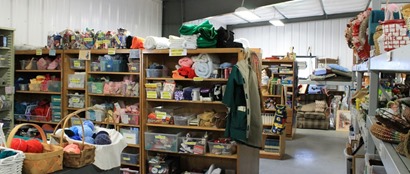
In the reuse sector we would have the secondhand stores, charity shops and even flea markets and car boot sales. While in the upcycling sector all those that rework – upcycle – items of waste of all kinds.
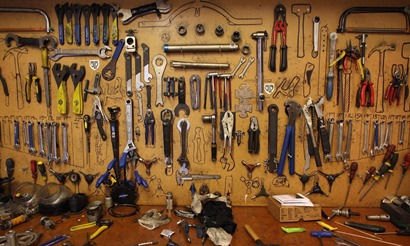
The little unassuming repair shop on the high street may not look like a major disruptive force. However, being able to extend the lifespan of your possessions by getting them fixed is one of the most effective green direct actions that are available. The problem is though that often neither the shops nor the repairability of the products are available.
Repair shops are often few and far between and those that there are, such as some of the so-called “shoe & boot menders” are not very capable in that department when it comes to things that cannot be done by the machines that they have, such as sewing back a midsole to leather uppers, for instance.
In addition to that there is the problem that many goods cannot be repaired as they have actually be designed in such a way and furthermore that for those that may, possibly, be repaired the costs of repair is several times that of buying the same product new. Here we are faced and confronted with a dilemma that needs to be overcome.
Making all the stuff that we buy requires raw materials and energy. Across the European Union now, recycling and recovering energy from waste when it is burned, only captures around 5% of the value of the original raw material used to make all the products in the first place. But consumption in 2030 is predicted to be twice that of 2010. A very troubling prospect given that it is already responsible for between 50% and 80% of total land, material, and water use.
The cycling community is at the forefront of the repair economy. An increase in people using their bikes and an abundance of independent bike retailers offering repair services (there are 2,500 retailers across the UK) means repair is booming. The reason for that is, though, that bicycles can be repaired and that, theoretically, quite easily.
When it comes to the bicycle much of the repairs and more can be done by the user with a little knowledge, including rebuilding “new” from old. But again here often the cost of spares is astronomical. And properly adjusting, say, Shimano gears, can, even at a repair shop, take several hours and thus the labor charges here can make getting a new (cheap) bike almost cheaper than the repair. I have been quoted more than once – I was just checking really – around £75 for that job. That is one of the reasons that I have converted all my bikes (yes, plural, but most are rebuilds from abandoned bicycles that have been found in parks and open spaces) to single speed by simply removing the gears and setting the chain onto one of the cogs in the back cluster.
What is missing sadly, is proper repair services for clothing and also for shoes and other goods. The few small attempts by certain sectors do not make up for the lack of the repairers we once used to have, in both clothing, shoes, boots, and leather goods.
Neuroscience research claims to have shown that our consumption of low-cost consumables, including fashion, activates dopamine receptors in the pleasure region of the brain and it is difficult to compete with our hard-wiring. Repair needs to not only make environmental and moral sense, it needs to make us feel good, too. But that is just what it should do, anyway.
Personally, unless I am hard-wired in a different way, and that is why I do not buy into the neuroscience research, find it much more pleasurable to be able to extend the life of something that I have rather than buying new. But then, I am strange.
In addition to repair, as said, we need to also accommodate the other parts, that is to say reuse and upcycling, into the economy and also, maybe, the teaching of repair, reuse and upcycling as part of that economy.
Repair, in some way, is also reuse as you continue to use the item repaired, while reuse can be secondhand, and that's where the particular stores and shops come in, but also reusing things found and items of what generally might be considered waste directly by us as individuals and households.
Upcycling is going a step above simple reuse, as far as items of “waste” are concerned, as it may come in a couple of forms. The first one is the simple reuse of something for a higher purpose, such as, say as glass jar becoming a drinking vessel. The next level is the transforming an item into something new, without, necessarily, destroying the shape and such while the third, which still is not recycling (though that word is always, erroneously, used there) but is close to it, is taking the material and reworking it into something new, combining elements from more than one items, and such.
The simple reuse, as mentioned earlier, like reusing a glass jar that had some produce in in as a storage jar, and that of the upcycling such as glass jar into drinking vessel (and those are just examples) is something to that most can do at home in the way that our parents, grandparents and their parents did. While it is not part of the economy – so to speak – it is a way for us to save money that we can circulate into the economy in another way.
The other upcycling, reworking, etc., again is part and must be part of the economy. This is what is done my craftspeople, artisans and such who make things from waste and material that others have declared to be waste.
But, as far as repair is concerned, the first thing that needs to happen is that industry actually starts producing again goods that can be repaired and for which spare parts (and repair) do not cost more than a new product.
Just by way of an example allow me to tell you this true story: Some years ago I was using an Epsom PC printer that cost then £35 to buy. It lasted about six months (well within the warranty period of a year). When I contacted Epsom I was told: “The waste ink reservoir is full. You are printing too much with it, Sir.” They were not going to honor any warranty because of that claim from them and as to repair I was told: “Yes, can be done. Part will be £70 and labor, not counting sending it back and forth, £75”. When I told the person from Epsom that I could buy more than four new printers of that make for that money I was told: “Well, I would suggest anyway that you buy a new one.”
That kind of attitude from manufacturers has to change first of all and products, all products, must become repairable, at a reasonable cost, again, though ideally they should also be repairable by a user who likes tinkering around. It once was that way with most things, today though it is exactly the opposite. Often goods cannot be opened even without specialist tools, if even then.
Only when that happens again and when repair is actually economically will we also see the return of the repair shops of all kinds to the High Street, and the not so high one, and the true repair economy, that we once had, will return.
In addition to that a change of mindset amongst the people is required and it has nothing to do, in my view, with any hard-wiring the neuroscience research claims, but with the fact that people have been brainwashed into a perpetual consumption mode, to buy everything new. Then again, as long as repair is not possible or simply not economical what else is one to do when something breaks?
But the mindset is a problem. We can see that every time a new iPhone, or whatever, hits the market. People will queue for hours and hours to be the first to get this new model even though they still have the previous one – in some cases less than a year old and still working perfectly – simple because they have to have it.
Well, that shall be all in the food for thought department on this subject for this time. I have talked enough, I think.
© 2017