Showing posts with label repair. Show all posts

The repair, reuse and upcycling economy

by Michael Smith (Veshengro)
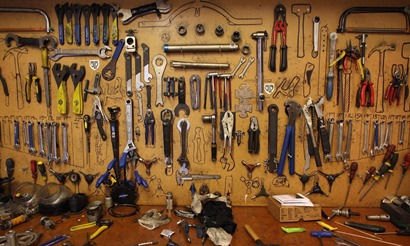
Bike repair tools1_webTaking possessions to be repaired, be it bicycles, clothes, shoes, or anything else, instead of throwing them out and replacing them is green gold. But reuse and upcycling should and must also be and become part of this economy. For it is not “just” repair that we must be looking at.

In the reuse sector we would have the secondhand stores, charity shops and even flea markets and car boot sales. While in the upcycling sector all those that rework – upcycle – items of waste of all kinds.

The little unassuming repair shop on the high street may not look like a major disruptive force. However, being able to extend the lifespan of your possessions by getting them fixed is one of the most effective green direct actions that are available. The problem is though that often neither the shops nor the repairability of the products are available.

Repair shops are often few and far between and those that there are, such as some of the so-called “shoe & boot menders” are not very capable in that department when it comes to things that cannot be done by the machines that they have, such as sewing back a midsole to leather uppers, for instance.

In addition to that there is the problem that many goods cannot be repaired as they have actually be designed in such a way and furthermore that for those that may, possibly, be repaired the costs of repair is several times that of buying the same product new. Here we are faced and confronted with a dilemma that needs to be overcome.

Making all the stuff that we buy requires raw materials and energy. Across the European Union now, recycling and recovering energy from waste when it is burned, only captures around 5% of the value of the original raw material used to make all the products in the first place. But consumption in 2030 is predicted to be twice that of 2010. A very troubling prospect given that it is already responsible for between 50% and 80% of total land, material, and water use.

The cycling community is at the forefront of the repair economy. An increase in people using their bikes and an abundance of independent bike retailers offering repair services (there are 2,500 retailers across the UK) means repair is booming. The reason for that is, though, that bicycles can be repaired and that, theoretically, quite easily.

When it comes to the bicycle much of the repairs and more can be done by the user with a little knowledge, including rebuilding “new” from old. But again here often the cost of spares is astronomical. And properly adjusting, say, Shimano gears, can, even at a repair shop, take several hours and thus the labor charges here can make getting a new (cheap) bike almost cheaper than the repair. I have been quoted more than once – I was just checking really – around £75 for that job. That is one of the reasons that I have converted all my bikes (yes, plural, but most are rebuilds from abandoned bicycles that have been found in parks and open spaces) to single speed by simply removing the gears and setting the chain onto one of the cogs in the back cluster.

What is missing sadly, is proper repair services for clothing and also for shoes and other goods. The few small attempts by certain sectors do not make up for the lack of the repairers we once used to have, in both clothing, shoes, boots, and leather goods.

Neuroscience research claims to have shown that our consumption of low-cost consumables, including fashion, activates dopamine receptors in the pleasure region of the brain and it is difficult to compete with our hard-wiring. Repair needs to not only make environmental and moral sense, it needs to make us feel good, too. But that is just what it should do, anyway.

Personally, unless I am hard-wired in a different way, and that is why I do not buy into the neuroscience research, find it much more pleasurable to be able to extend the life of something that I have rather than buying new. But then, I am strange.

In addition to repair, as said, we need to also accommodate the other parts, that is to say reuse and upcycling, into the economy and also, maybe, the teaching of repair, reuse and upcycling as part of that economy.

Repair, in some way, is also reuse as you continue to use the item repaired, while reuse can be secondhand, and that's where the particular stores and shops come in, but also reusing things found and items of what generally might be considered waste directly by us as individuals and households.

Upcycling is going a step above simple reuse, as far as items of “waste” are concerned, as it may come in a couple of forms. The first one is the simple reuse of something for a higher purpose, such as, say as glass jar becoming a drinking vessel. The next level is the transforming an item into something new, without, necessarily, destroying the shape and such while the third, which still is not recycling (though that word is always, erroneously, used there) but is close to it, is taking the material and reworking it into something new, combining elements from more than one items, and such.

The simple reuse, as mentioned earlier, like reusing a glass jar that had some produce in in as a storage jar, and that of the upcycling such as glass jar into drinking vessel (and those are just examples) is something to that most can do at home in the way that our parents, grandparents and their parents did. While it is not part of the economy – so to speak – it is a way for us to save money that we can circulate into the economy in another way.

The other upcycling, reworking, etc., again is part and must be part of the economy. This is what is done my craftspeople, artisans and such who make things from waste and material that others have declared to be waste.

But, as far as repair is concerned, the first thing that needs to happen is that industry actually starts producing again goods that can be repaired and for which spare parts (and repair) do not cost more than a new product.

Just by way of an example allow me to tell you this true story: Some years ago I was using an Epsom PC printer that cost then £35 to buy. It lasted about six months (well within the warranty period of a year). When I contacted Epsom I was told: “The waste ink reservoir is full. You are printing too much with it, Sir.” They were not going to honor any warranty because of that claim from them and as to repair I was told: “Yes, can be done. Part will be £70 and labor, not counting sending it back and forth, £75”. When I told the person from Epsom that I could buy more than four new printers of that make for that money I was told: “Well, I would suggest anyway that you buy a new one.”

That kind of attitude from manufacturers has to change first of all and products, all products, must become repairable, at a reasonable cost, again, though ideally they should also be repairable by a user who likes tinkering around. It once was that way with most things, today though it is exactly the opposite. Often goods cannot be opened even without specialist tools, if even then.

Only when that happens again and when repair is actually economically will we also see the return of the repair shops of all kinds to the High Street, and the not so high one, and the true repair economy, that we once had, will return.

In addition to that a change of mindset amongst the people is required and it has nothing to do, in my view, with any hard-wiring the neuroscience research claims, but with the fact that people have been brainwashed into a perpetual consumption mode, to buy everything new. Then again, as long as repair is not possible or simply not economical what else is one to do when something breaks?

But the mindset is a problem. We can see that every time a new iPhone, or whatever, hits the market. People will queue for hours and hours to be the first to get this new model even though they still have the previous one – in some cases less than a year old and still working perfectly – simple because they have to have it.

Well, that shall be all in the food for thought department on this subject for this time. I have talked enough, I think.

© 2017

The great recycling scam

by Michael Smith (Veshengro)

And, yes, it is indeed a scam!

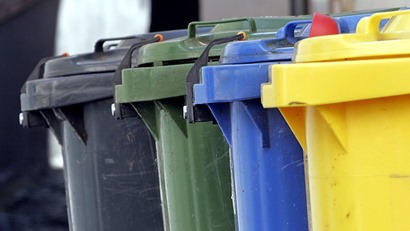
Sinnlos sammeln und sortieren - recycling bins1We are encouraged, nay pressured even, to clean and nicely separate all our recyclables – glass, plastic, paper, etc. – into bins for the different ones. But what really happens to those “recyclables” that our municipal refuse services pick up from the kerbside? Often, actually, nothing more that being dumped in the same place where all the other refuse, all the other “waste”, goes; the landfill.

Most municipalities do not have the expensive sorting facilities and in more than half of all cases – if not at times in 90% of them – the collections are all but for show, more or less.

Reuse is much better but most people just cannot think what to do with this or that item of “waste” (waste as a resource) as our mindset, at least that of the great majority, is to buy rather than to make.

This thing about recycling is that it is a crutch to those not wishing to think about the above and as far as our governments are concerned it is a means to blind people into believing that the government and industry care about the Planet. Capitalism never will. The main reasons that many recyclables – aside from the financial costs of sorting centers – are landfilled are at least two-fold.

One is market related and has to do with the over saturation of recyclables meaning that the price ends up so low that separation, even if collected through kerbside collections where we have done much of the sorting already for them, and shipping the stuff out just is not cost effective.

The other is that households and businesses still do not understand that the recyclables have to be clean. Just one wrong item of cardboard, for instance, say one that is greasy or whatever, in an entire container means that all of it gets tossed. Again due to the processing centers not being there and it being expensive to actually do the separation, especially manually.

So municipalities go through the motions of collecting our recyclables – for it looks good to be seen to do it – but then due to low prices on the world market, or whatever, nevertheless, landfill them.

Many of the recyclables – most of them in fact – if they don't get landfilled are not processed “at home” but are shipped to China, or, in the case of appliances, computers and such, to some third world country to be processed, and in the latter case under very polluting conditions and even in China the environmental protection standards are much lower than in Europe or in the USA. So we also export not only our recyclables but also the pollution and poisons that go with the processing of them.

Recycling is also very energy intensive and while, if recycling is done properly, it still saves raw materials and some energy in the processing, the kerbside collections, the shipping to port, the transportation across the oceans, etc., uses lots of energy and creates emissions and pollution.

We must get away from this fig leaf and have products made that, one, last, two, that can be easily repaired and, three, that at the final end of their lives can be reprocessed “at home”.

What can we do?

Use less stuff

The first step to waste reduction and avoiding the recycling scam is to use less stuff, to try, when buying things to buy with less packaging or zero packaging, and to reduce our waste. It also means buying less (new) stuff especially when there is actually no need for it and whatever you have got is still working perfectly well and doing the job that it is meant to do.

Use what you have got

Instead of running off to the stores to get the next generation iPhone or whatever else stick with what you have got (as long as it works, obviously). The latest is not, necessarily, better than the old one that you have already got and the “bells and whistles” that the new version may have are, more often than not, something that you will never, ever use.

Reuse, repair, repurpose

Reuse falls into two categories really. One of them is the continuous use by ourselves, or someone else who we have passed this or that on to, and the other is reusing what are often referred to as items of “waste”, as did our grandparents and their parents or in some cases even our parents still, or making use of what some other person has thrown out.

Repair is, obviously, simple as to what it means. The problem today, though, is that many products are designed in such a way that they cannot be opened and repaired. This is called built-in obsolescence. However, it is possible to “hack” a fair number of products that are believed, even by repair shops, if they still exist, to be non-repairable. In a time not so long ago everything was repairable and if it could not be done by the user then there were shops that could do it for a fee. But today it is getting more and more difficult to find repairers even for those things that can be fixed.

Passing it on

Now that recommendation, I think, is so simple that it needs no explanation. If you, yourself, no longer have use for anything then pass it on to someone who will (be able to) make use of it. If you don't know someone to pass it on to then donate it to a charity shop so that it will find a new home and may even benefit on other ways too.

© 2017

Make Do and Mend

by Michael Smith (Veshengro)

18557251_1397913886914578_1270310445997979841_nMake do and mend is a basically philosophy and mindset that I grew up with as a child, as much as I grew up in hand-me-downs whether this were clothes, bicycles, or what-have-you, and it is something that has stayed with me to this day. I still practice this philosophy – which nowadays is often known as practical recycling, reusing and upcycling – in various forms to this very day.

Already as a small boy I developed the habit, which was actively nurtured by our parents and other elders, and it has – unfortunately, some of my friends would say – stayed with me too, of picking up anything from the streets, the woodland paths, the hedgerows, and so on that might just come in handy. Old nails and screws; nuts and bolts; tools that have been lost or thrown away; even “old” knives; and much more are in that category.

Among the knives that I have found there have been knives for the re-working into sheath knives, as well as pocketknives with nothing wrong with them; there have been spanners and wrenches, screwdrivers, and many other tools, including a Leatherman Wave, in its holster, that was almost new and only required deburring the two knife blades. It had been deliberately thrown into the trash in a Park and had not just been lost accidentally. Some people simply seem to have too much money to know what to do with it, it appears, and more money than sense, that's for sure.

The habit of making do and making things also stretches with me to making use of everything that can be, in one way or another, re-worked into something else, whether this be old and worn Jeans into Ditty/Possibles bags or other things; old kitchen and butcher’s knives into “new” sheath knives. The leather of old boots, shoes and bags will be made into the sheath for such knives and/or into other items such as belt pouches for folding-knives, compass, pocket-watch, and so on.

There is only one severe drawback to such a habit and that is the need for a fairly large storage area in your home for all the things ”that might come in handy some day”.

During WWII in England booklets galore were published by the Ministry (and there was a shortage of things but they seemed to have enough paper to produce those official booklets) on the very subject of “Make Do & Mend” telling people, for instance, of how to change adult clothes into underclothes for children; to convert Dad’s old cotton shirts into nightshirts for the boys, and so on.

The philosophy and attitude of making do also applied in those days to digging up one’s flowerbeds and “digging for victory” by growing vegetables there instead of flowers in one’s garden. That could also still be a very valuable philosophy today too – instead of filling the garden up with grass and flowers, which may be esthetically pleasing to the eye and all that don’t feed no-one. Growing at least some of one’s own vegetables and such could give one some more cash in one’s pocket. Vegetables can – in actual fact – grown behind say a flowery border in a garden and look quite nice as well. The trees in one’s garden should not be ornamental this or that but fruit trees such as apples, pears, cherries, walnut and hazelnut, and anything else in that league and the ground beneath such trees should be utilized by vegetables and soft fruit such as strawberries. Also grow your own culinary and medicinal herbs in your garden, including such beneficial plants as Aloe Vera. If the climate isn’t suited for growing the latter out-of-doors than grown those in pots in the house. The same can also be done with many other herbs and spices.

And if you have no garden to speak of to grow your own vegetables and such then you can use various forms of containers such tubs made of various things such including old bathtubs even. Almost everything can be grown in containers, fruit trees even. Hanging baskets of all kinds also can be employed for growing fruit and vegetables. Strawberries do well there, and even beans and peas can be grown in such containers.

But back to the make do and mend philosophy per se.

While make do and mend seems to be coming back into fashion to some degree many people still have the disposable attitude and seem to have to have the latest in fashion, be this with regards to clothes or anything else.

Among children and young people peer pressure may have something to do with it in that clothes from a charity shop don't, in their minds, have much street cred and all that. Years ago it had to be Adidas, then Fila, then Nike, and the wheel keeps turning in that department. But what makes them better then non-brands? The name only, not necessarily the quality, and the price is often astronomical. The same goes for other things. And ordinary cell phone doesn't cut it; it has to be an iPhone, and ideally always the latest.

All need to learn, and the children and young people have to be taught, that it does not have to be the latest and that the latest and most expensive is not always the best, especially not for the Planet and the wallet.

Staying with what we have, making things ourselves even from things considered “waste” in the common perception, and generally making do and mending, buy secondhand, and so on, must be the way to go. The latter also and especially keeps money in the local economy, though only if we are using local secondhand shops, thrift stores and charity shops. And, if things can be repaired and you cannot do it yourself then use local repair shops to do it. Keeps the money local and also work.

© 2017

‘Restart’ parties: prolong the life of your electrical goods and pick up some useful skills in the process

restart1

On Saturday I dropped into a ‘Restart’ party near to where I live in Tooting. If you don’t know what a Restart party is – they’re a group of techies who raise funds to be able to hold events in various locations where the public can turn up with broken electrical goods and be trained how to fix them. A completely fantastic idea, in other words – people can learn skills, save money, extend the life of electrical goods and reduce waste going to landfill.

So I went along on Saturday afternoon, just to be nosy, without anything to fix. The event was at Mushkil Aasaan (a community centre for Asian families in crisis) on Upper Tooting Road. It was organised in conjunction with our local Transition group, so there were a couple of people there I recognised. I could see people in deep discussion, bent over laptops, radios, mobile phones and a vacuum cleaner.

Read more here.

THREE EASY WAYS TO MEND FABRIC, INSPIRED BY JAPANESE TEXTILES

japanese-boro-6860

Ever since I started embroidering I’ve had a growing love for textiles. Surface design, pattern, texture and embellishment have crept their way into my everyday work. Fabric is also everywhere! From the clothes we wear, to the blanket at the foot of the bed, we use and need fabrics for daily living. I wanted to share some ideas to help keep, care for and mend our clothing and other textiles in heavy use, inspired by century-old Japanese textiles.

On a cloudy afternoon I visited Stephen, the owner of Sri Threads — a showroom specializing in antique Japanese folk textiles, in Greenpoint, Brooklyn — and pretty much touched every piece of fabric I could. There are kimonos and other clothing, futon covers and weavings, painted and indigo-dyed textiles beautifully worn with use, layered over time with careful repairs of patches and stitches. The repaired textiles with many patches and stitches are called boro, or ragged, and are often built up of many layers of stitched-together cloth and scattered patches as needed. At the time of repair they were not meant to be an aesthetic enhancement, but purely functional and even hidden.

Read more here.

Making do with less

by Michael Smith (Veshengro)

It is not so much of making do with less than using what you have and having fewer possessions, especially gadgets and also simpler things.

I am not talking about minimalism here but just reducing the unnecessary things, and there have been times that I have myself been guilty such as buying kitchen gadgets which are then used but a few times and that is. Afterwards they then just sit about somewhere doing nothing. But such and other gadgets are only one part. But I also do not mean throwing out what you have in order to unclutter unless uncluttering is absolutely necessary. Making do with less also means, obviously, making do with what you already have without adding any more to it.

Doing with less also means using the car less and using your feet more instead and the bicycle. You have one, haven't you?

When it comes to a bicycle it does not have to be the most “state of the art” (where is this state, this country, anyway?) one but an old one – done up – will do just as well, maybe even better. And a simple bike, especially a single-speed one, is much easier to maintain.

Such a simple bicycle can easily from an old derailleur gear change one by simply removing the gear changers, shortening the change so that the drive train runs true from either the middle or the outer crankshaft cogwheel to one of the smaller ones on the back wheel cluster. There is no need to buy a simple speed back wheel nor, in all honesty, a conversion kit.

There is no need to buy a new bicycle. An older or even old one can often be found for little money at a variety of places and mostly they but require a little TLC to get them back on the road and save you money and get you and keep you fit at the same time.

Reuse, because we can't recycle the Planet!

All too often people are obsessed with having to have the latest “toys” like as if they had never grown up. Then, maybe, they haven't. At least that is definitely how it does appear. They also seem to have been fiddling with those “toys” all the time, even when they are talking with another person.

I never did, as a child, have many toys. The toys that we did have when I was a child were either hand-made, found ones, or those handed down to us from others, and may be that has given me an edge here as not always to be looking for the latest “toy” but to make do with what I have got and also with what I find and what I can make from trash, for instance.

This is something that, for the sake of the Planet, and also as a preparation for changes in our world that are coming, we all must consider doing, that is to say making use of what we have and that includes reusing and upcycling some of the “waster” that we generate.

There is so much that we can change without having to shell out a single cent only no one seems to realize that and many people seem to think that living a simpler life actually costs them money, in the same way that they believe leading and living a greener life does. And by making do with less this can be achieved easier than with any green gadgets.

Reuse and upcycling is the name of the game as well as repair and not buying unnecessary stuff. Many things that you may need or want you can easily make your self by repurposing, reusing and upcycling and thus living a simpler life and making do with less by way of purchased possessions.

All too many people seem to be permanently buying something new, be this clothes, shoes, gadgets, or whatever, even though they already have enough of everything. I am not talking here about those that don't have enough to live comfortably but about those that have more that enough.

However, even those that do not – almost – have two pennies to rub together also fall for this and are prepared even to go into debt in order to afford all those things that everyone else has, as they think. If I have to go into debt to buy something then I cannot afford it and I will not try regardless if the neighbor has this or that that I may not have.

How many clothes or shoes, for instance, does one need or how many cellphone, TVs or whatever? You can only wear one pair of shoes at any one time and one set of clothes. But, apparently, they have to have at least one pair of shoes for every day of the week and at least two to three sets of clothes per day of the week. And, ideally, all of those clothes and shoes have to be respectable designer brands.

Then there has to be a pair of pajamas for every day of the week it seems and on and on it goes. That also means that there is a great deal of laundry that must be tackled at the end of the week or several times during the week even because of the sheer amount of it and that means energy and water usage by the ton.

We are being told, at least by those who buy all of that, that they need a suit for work, then a set of clothes for after work, and then something to lounge about in in the evening. And you have to have some good special clothes for going out to restaurants and such (and that also seems to have to happen several times a week), and on and on the excuses go as to why they have to buy all of that stuff and why they have to have it all.

We have become possessed by our possessions and while this may not be true for everyone, thank god, it seems true for a great majority, unfortunately. This all comes to the detriment of resources, of the Planet, and everything else.

Apparently there also has to be a TV set in every room of the house, and everyone has to have their own PC, their own this device and that, and on and on the list goes.

There is another way but it is almost as hard a sell as voluntary poverty, and in a way it is part of it, and that is to make do and to live well with less, especially with buying less unnecessary stuff, as said already.

With simple reuse, repurposing and upcycling you can make many of the things that you may need (and want) yourself without spending another single cent often. But most have become so accustomed to and, dare I say, brainwashed into having to buy everything that they need and want. And whatever they may need and want has to be able to be purchased now, there and then. It is, apparently, not possible to wait until one can actually afford it or look for a substitute to repurpose or a way to make this or that oneself.

Among some it has not become fashionable to drink from jars, glass jars, but they have to be designer recycled jars, it seems. To do what was common when I was a child, a definitely with my folk, to reuse a glass jar that had products packaged in them when you bought those products and which cost nothing bar what you paid for them (hidden cost) when you bought the products packaged in them, appears to be impossible. But at the same time they will toss such jars into the recycling bin doing their bit for the environment.

For those that are minded to do it there are so many ways to make things for themselves (and even for others) that it baffles me that there are so very few of us actually doing it. What was once, and that is not even that long ago, so common has now become something a rare a common sense and think of the rarest mineral. Not so long ago most people didn't even consider buy what they could make for themselves in one way or the other. Today, however, they do not think about the simple ways, only about buying, even if they cannot afford it. And, if they cannot buy it because they have not got the funds they bemoan that fact.

Sometimes, I must say, I despair of humanity. We believe to be so advanced but there are times that I am beginning to think that all that technology and the consumerism that we have brainwashed into has stifled everything else. We have lost, it would seem, any sense of resourcefulness and of the make do and mend attitude that existed not so long ago.

© 2015

Wall Street Journalist Backs Right to Repair

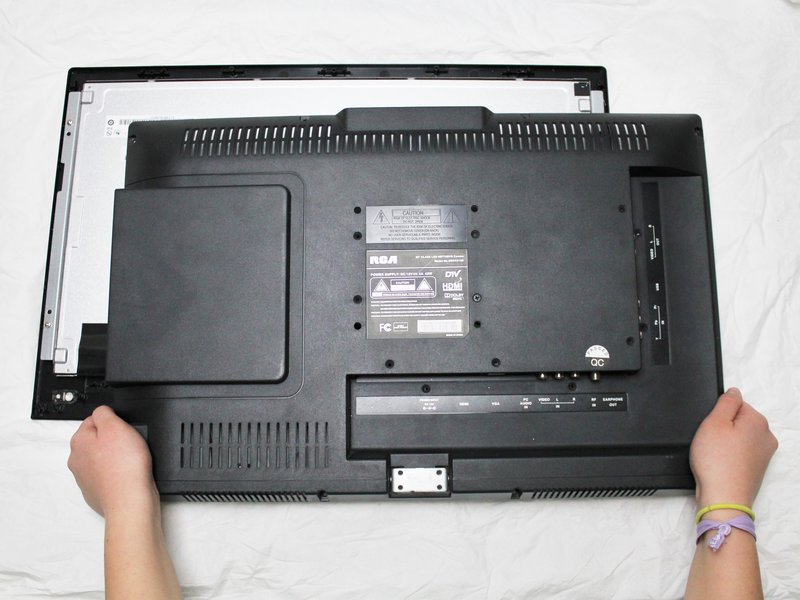
Geoffrey Fowler has a friend with a Samsung TV that inexplicably stopped working halfway through a movie. Geoff’s friend thought she had no other option than to replace it. Geoffrey—a writer with Wall Street Journal—wondered what it would take to fix the flat screen TV. And so, he went down the repair rabbit hole.

“We ended up with a project that changed my view on our shop-till-you-drop gadget culture,” writes Geoff. “We’re more capable of fixing technology than we realize, but the electronics industry doesn’t want us to know that. In many ways, it’s obstructing us.”

Geoff’s story is common enough. Things break every day—that’s the nature of entropy. But being a tinkerer is knowing that “broken” isn’t the end. Indeed, for most tinkerers, repair techs, and DIY masters, “broken” is an origin story. It’s how most of us got started: with one broken phone, or one broken toy, or one broken radio. And that repair journey broadened into a hobby, or a passion, or even a business. iFixit, for example, got its start after our co-founder dropped a laptop from a bed, broke the charge port, and decided to fix it himself. In the process, he learned that manufacturers aren’t making it easy to repair stuff: most companies don’t release repair information and many don’t sell repair parts to either the public or to independent repair technicians—and that’s something that needs to change.

Geoff came to the same conclusion. Geoff’s 2008 Samsung 40-inch television was out of warranty. A little Google troubleshooting revealed that the television suffered from a problem endemic to his model: a blown capacitor. But Samsung doesn’t publish repair instructions on its website. Instead, a Samsung spokesperson pointed Geoff to an official Samsung repair center, which wanted over $200 for diagnosis and repair—that’s more than half of the cost of a new, similarly-sized television.

Read more here.

How to Replace a Wooden Tool Handle

handleWhat’s the best way to replace wooden tool handles? I’ve got an axe with a handle that’s completely broken off, and a sledge hammer with a cracked handle.

Hammers, hatchets, axes and sledge hammers usually have wooden handles and eventually they all get loose and break in time. That’s why learning to replace wooden tool handles is such a useful self-reliance skill. You really can’t pay anyone to do this work for you, and you shouldn’t.

Get a new handle, whittle it to fit your tool head, then anchor the handle into the head so it doesn’t move. These are the three steps to tool handle replacement, but you’ll need to understand details for success.

Hardware stores everywhere sell replacement wooden handles, but when you select one, look for growth rings that extend from the front of the handle edge to the back. Avoid side-to-side grain orientation since this makes for a weaker handle. Grain orientation is not something that tool handle makers pay attention to, so you’ll find a wide variety of growth ring patterns on any store shelf.

Read more: http://www.motherearthnews.com/diy/wooden-tool-handle-zbaz1407zwea.aspx

Buy less and make do with what you've got

by Michael Smith (Veshengro)

The average person – guess I am not one of them – is bombarded with about 5000 ads per day telling them to buy more and how much happier they would be if they just would buy this, and that and the other.

Far too many, unfortunately, fall for that trick and actually believe that if they have more and buy more they are happier, be this possessions or money to buy those possessions.

And they try to do just that. They have the iPhone that only came out say six months ago but as soon as a new version comes out they have to queue up to get the newest one, and to make sure that they are one of the first to have the latest one, they stand in line for hours and hours. Does it make them happy? For five minutes maybe but that is about it.

What is wrong with using and continuing to use the things that you already have got and which work perfectly well? Well, nothing! But those adverts keep suggesting to the minds of those not as strong as some of us that they have to have those new things because of the additional bells and whistles and in order to be happy and “cool”. If you want to be cool go and sit in a refrigerator.

The first thing to do is in order to avoid all those suggestive adverts, those commercials, is to divorce yourself from your television. You won't regret it, especially not in places where you have to pay some US$200 per year for the permit to be able to watch all that garbage that masquerades as entertainment on the goggle box.

Use the Internet for real good films and material and with the right little websites and add-ons (more often than not free) you can even download many of the movies and such. Furthermore revert back to the radio and to reading – ideally real – books. You know those things printed on paper. The good part of the latter “entertainment” is that it does not need power to run and you can even read during a power outage, at the beech, on the mountain top and wherever else you might fancy. The danger is with reading that it broadens your mind and horizon, especially if you read the appropriate materials.

And you don't even have to buy the books. There are places – I am sure you may have heard of them – where you can borrow books. They are called public libraries. Though, if the powers-that-be had their way those would end up being closed depriving those with little resources of the possibility of reading.

On the other hand many public libraries, as they are run and funded, through tax monies, by the powers-that-be is that you won't necessarily get your hands on every book you might want to read. Some may be banned as too dangerous for public consumption.

On another level there is no need to buy a new cellphone, a new TV (best get rid off the old one to someone who wants it and forget about the TV altogether), PC, or what-have-you when the old one is still performing its service well and covers all our real needs. What good are all those bells and whistles that we will – more than likely – never ever use? They are but a waste of our money – in buying the new product while the old one still works – and a waste of resources. And, despite the claims of the adverts, those new products will make us no happier than the old ones. In addition to that when buying a new one you – more often than not – have to learn an entire new way of using it.

Before you heed the messages in those commercials first consider a few things.

  1. Does my old one still work?

  2. If the answer is yes then don't buy new.

  3. Does my old one still do what I need and want it to do?

  4. If the answer to this is also yes then, again, don't buy new.

  5. If it does not work ask yourself (or someone else) if can be repaired.

  6. If the answer here is yes then repair it, get it repaired or go to a Repair Cafe and get help in repairing it and do it yourself.

When it comes to repairing good old things that are more than worth retaining and (re)using then there are a number of resources you can access for free or almost free.

First there is Instructables (Internet), and also other sites that guide you through repairs and hacks, and then there are the Repair Cafes. Fair enough the latter are still few and far between in some places and they are not held frequently in some places as in others. Nevertheless they are something to look into before tossing a buying new.

Often the reason that something no longer works, specially when it comes to electrical and electronic goods, is a blown internal fuse, a faulty switch or a loose solder joint. While those faults are easy to locate and repair, in theory, the fact that manufacturers today don't want us to be able to repair anything or get anything repaired means that the screws often are of such a type that the ordinary person does not have the tools to remove them.

In other instances the cases are actually glues shut rather than the parts held together by screws and this makes access even more tricky. But with the help of someone who knows how to do it without damaging case and product a repair can, quite often, be successfully achieved and the products saved from becoming another item in the waste stream and a burden to the Planet.

© 2014

Restarter Profile: Meet Faraz

Untitled 5Tell us a little about yourself.

I studied Materials Science in Oxford University and I’m still finding my way, career-wise. What I’d like to do is design and invent interesting products, so I spend lots of time in hackspaces working on prototypes.

When did you start repairing electronics and electricals?

My secondary school science teacher had given me a soldering iron when I did an after school electronics class. I still have it today and bring it to every Restart Party. It helped me replace a capacitor in an LCD monitor being discarded at uni. If there was a broken electronics item in the house it was a good exercise to break it open and deduce how it works. This sort of curiosity helps with fault finding skills.

Why do you attend Restart Parties?

I love helping people, I love learning and I love solving a puzzle. At Restart Parties I can do all three at the same time. I have made some great friends amongst the regular Restarters and it’s awesome to meet up and see how they’re getting on.

What is your favourite kind of repair?

I like hacks. They may not be pretty, and it’s a bit of a grey area for repair, but it’s cool to use the tools at your disposal and some creative ingenuity to improve something. Those fixes leave me with a good feeling.

What do you do when you are not Restarting?

I spend a few evenings in an open workspace/hackspace in my area. Use the few hours to develop something I’m working on that might use an arduino. I have a wild imagination with many ideas I’d like to explore, I hope one day I can use some of them to earn money.

Read more: http://therestartproject.org/restart-project/restarter-profile-meet-faraz/

If it’s broke, they’ll fix it

COURTESY OF REPAIR CAFEIt’s not often that in between readings and coffee you get a chance to hone any practical skills. So, when my pants need to be hemmed or my computer is being troublesome, I find myself either at the mercy of my grandmother, or at some Future Shop emptying out my wallet. That, or whatever it is that needs fixing often ends up in the trash.

I found myself in this position once again looking down at my trusty backpack, which had lasted me quite a while during my university travels. In the hopes of saving it, and some dollars, I made my way to the Repair Café. I was a little confused about the concept myself, but on the promise of free coffee and baked goods, I made my way over to the event to see what was what. A monthly affair, this month being held at Skills for Change on St. Clair Avenue West. On September 13, the meet up involved furniture, electrical appliances, bicycles, crockery, toys and more, all to be repaired for no cost at all.

When I first arrived, my honest expectations were to meet elderly people looking to do something with their spare time and antiques. This wasn’t all wrong. But surprisingly, as the morning carried on, I noticed how diverse the group became. Experts on items varied in age and background, and so did those coming with broken items to be mended. As I waited for an expert of my own, I watched as Sam, a young boy, helped a middle-aged man repair his old radio, while an elderly man assisted a young Russian woman with her laptop.

The Repair Café not only offered the opportunity to learn new skills but also the chance to connect with skilled people. After snacking on the free coffee and baked goods for an appropriate amount of time, I made my way to the sewing room where two women were able to help me stitch back together my tattered bag.

Read more: http://thevarsity.ca/2014/09/21/if-its-broke-theyll-fix-it/

Gorilla Glue is amazing

by Michael Smith (Veshengro)

And no, they did not pay me to say this. Chance would be a fine thing.

23629-1002-2-3ww-lAt the GARDEN PRESS EVENT 2014 I got a bottle of this glue – and yes, that event is a while back now – and I already have used it for repairing the handle of an old garden trowel, together with some sugru®, to great effect.

The other day I bought a set of 12 wood carving chisels from Lidl and with one of them the blade had come out of the handle. I know, I should have gone back and exchanged it, in all reality, but decided that I could not bother to make the trip to the store again and thought I would fix it myself.

The first thought, as it would be a case of bonding metal (the tang of the chisel blade) to wood (the inside of the handle), to use “superglue” but as I would have had to use a whole tube at a cost of somewhere in the region of £3 I decided to give Gorilla glue another try instead. And, well, it worked. The blade appears to be very solid now in the handle.

I hasten to add that I have not used the chisel – as yet – on a lathe where the vibrations might be a different kettle of fish and neither do I use a lathe. But the blade appears to be very much set in the handle now with the resin of the glue.

Not knowing what chemicals actually make up the Gorilla glue I can't directly say how green or not it may be but it can fix things and that is one of the points I want to make here.

Fixing with glue – whatever kind – is often very green indeed regardless of what the glue's components may be. Here, I know, it was a case of fixing something that should not have been “broken” in the first place but returning the entire case would have meant, and I know that for certain, that Lidl would have just thrown the case, with the tools away, after issuing me with a replacement.

I encountered that a few times now such as with a small shortwave radio receiver where the mains adapter burned out after a short while and, instead of sending a new adapter it was cheaper for them to send an entire new boxed radio with adapter and telling me to keep the other radio also.

Waste is created in our society on so many levels that repair even in this case of the chisel was the greener option than a return for replacement. Thus, thanks to Gorilla glue and a wait of about 24 hours at least something was, once again, kept out of the waste stream and, probably, the landfill.

© 2014

Don't throw it out; repair instead

by Michael Smith (Veshengro)

repair1“Fast fashion” relies on consumers accepting poor quality clothing as a given, in exchange for lower price-points on the garments they wear. As long as we view our clothing as disposable and easily replaceable, we’ll keep throwing it away and buying more of it. But this mindset is doing irreparable damage to our Planet – not to mention our wallets and our closets.

Does it take more effort to repair your clothes instead of tossing them right away? Of course, but it’s also infinitely more rewarding. Next time you’re tempted to toss a damaged or outdated garment in the trash, try one of these creative fixes instead:

A BASIC SEWING LESSON TAKES 20 MINUTES AND THE SKILLS LEARNED WILL LAST A LIFETIME

Small tear? Loose button? Wonky zipper? Fix it yourself!

There’s been a huge resurgence in the popularity of sewing in recent years, and for good reason: repairing your own clothes is fun, thrifty, and surprisingly empowering. Whether you take a basic sewing class, enlist a family member to teach you, or turn to the wisdom of YouTube. Sewing and mending is a skill you’ll use for a lifetime.

Hole in your jeans? Add lace!

If closing the hole or adding a subtle denim patch isn’t an option, turn the hole in your jeans into a feminine fashion statement by sewing a small piece of lace underneath. Voila! Your pants are reborn.

Lost a button forever? Replace it with vintage!

It’s incredibly annoying to realize you’ve lost a button (especially if it was of the unique or hard-to-replace variety), but you can always take it as an opportunity to reinvent the whole look of your garment. Track down some interesting vintage buttons at your local thrift store and swap out all the buttons with a mix and match assortment. The resulting look is stylish, quirky, and guaranteed to speed up your lost button mourning process.

Too big, too small, doesn’t fit quite right? Take it to the tailor!

For items that are in otherwise good condition, but destined for the throwaway pile due to fit issues, a trip to the tailor is in order. Raising the hem, taking the waist in or out, adjusting the fit to shape your body, or altering the neckline can make a garment feel brand new. Extensive tailoring can be a bit pricey, but it’s still almost always cheaper than buying a new garment, and you can’t beat the custom fit of a tailored piece.

Stain on your t-shirt? Hide it with ruffles!

So you spilled mustard or coffee down the front of your shirt. It happens to the best of us. But that doesn’t mean your shirt is a lost cause. This ruffled t-shirt DIY is a brilliant way to cover the stain and reinvent your shirt in the process. Pair your new ruffled top with a simple blazer and you’ll look so great you might be glad your klutzy ways forced you to get creative.

ONE PERSON’S CASTAWAY IS ANOTHER PERSON’S GEM.

Shrunk your sweater? Turn the sleeves into boot socks!

It doesn’t get much easier than this DIY solution: just cut off the sleeves and layer under boots for a cute winter look. Sew on lace or other embellishments for an even more personalized look.

Ripped, stained, stretched, or damaged beyond repair? Repurpose it!

There are an infinite number of ways to reinvent and reuse clothing that seems unsalvageable. Button-up blouses that have seen better days can be reborn as pillow covers into pillow covers. No matter how shredded a pair of jeans are, if you have a pocket, you can make a denim wallet. At the very least, you can always cut fabric up into rags to use for cleaning around the house.

As fun and rewarding as it can be to mend your clothing yourself, the best way to avoid getting stuck in a cycle of constant repairs is to buy high quality clothing that’s built to last. You can only repair or reinvent a flimsy dress so many times before it’s relegated to the rag pile, so keep that in mind when you’re shopping. Higher quality garments might cost you a bit more up front, but they pay off in the long run. Cheap clothing often ends up in landfills. Quality clothing, when cared for and repaired properly, often ends up hanging proudly in the closets of daughters and granddaughters. So, shop accordingly.

This also, by the way, goes for the clothes for the guys and the guys also would no go wrong to know how to sew, including how to sew leather goods. Why throw away an otherwise perfectly good belt just because the sewing has come undone at the buckle end, for instance? Or because the buckle has got damaged. Replace with a thrift shop find and make a new belt. It is not rocket science and not difficult.

The message of “don't throw it out; repair instead” goes for other things too. Don't just toss and buy new. Instead learn how to fix your things and, maybe, also those of others. You could establish a new sideline business doing it and start a trend even of new small repair businesses.

© 2014

Microsoft-iFixit scheme offers free training for fledgling repair and reuse firms

Microsoft has entered into a partnership with iFixit, the online repair manual site, to boost the reuse market for smartphones, tablets and laptops.

The work is being sponsored by Microsoft's Registered Refurbisher Programme, which already works with PC refurbishers to extend the life of Windows PCsOver the past year the two companies have been developing and testing a free online training programme - the Pro tech Network - to help start-ups and small enterprises who wish to offer repair services for these products get off the ground.

The work is being sponsored by Microsoft's Registered Refurbisher Programme, which already works with PC refurbishers to extend the life of Windows PCs. The online toolkit offers a range of support for businesses - these include in-depth repair manuals, repair skills training, marketing best practices and design templates, as well as parts sourcing and testing pointers.

The network is also intended to act as a collaborative platform, enabling repair technologists to share their knowledge and learn from each other. Both companies hope the initiative will spur on the repair industry as a whole.

According to Microsoft, mobile devices are often used intermittently by consumers. This, combined with their very low power consumption means they use relatively minimal electrical power over their lifetime. However, the process to manufacture these devices takes a significantly larger amount of power consumption.

Read more: http://www.edie.net/news/5/Microsoft-iFixit-scheme-offers-free-training-for-fledgling-repair-and-reuse-firms/

Recycling is bad

by Michael Smith (Veshengro)

Recycling makes people believe that they do good for the Planet, but is that really so?

bad_recycling_finalRecycling is bad for the Planet and I do mean that. I know that that sounds strange but the way that recycling is managed and operated makes it so.

Now that products can be recycled and their components be reclaimed – by law in many countries – people think that it it fine to buy a new gadget, even though their old one still works perfectly, as they can recycle it.

The very recyclability of almost everything nowadays, though being a good thing in a way (and no, I am not contradicting), is making consumers believe that they can just go on consuming regardless as the products can be recycled.

In place of recyclability – or in conjunction with it – we must bring back repairability and the latter is much more important and must have much greater priority even than the former. Things must be made again in such a manner and fashion that they can be easily repaired when the go wrong, as used to be the case not so many decades ago. Corporations, however, make everything now in such a way that repair is either impossible or too costly compared to buying new in order to sell us the same product time and again. This must change and it must change now!

The problem, as we could call it, is the fact though that neither local authorities nor central government and even less so industry are going to entertain this idea in the same way, despite giving lip-service, they also do not like reuse much. Recycling gives governments income from recyclables they collect which you, as citizen, have also so very kindly cleaned and sorted often to make it easier for them.

Now industry, even though very reluctant at first, likes the idea of everything being recyclable thus making the consumer feel good throwing his “old” stuff away and buying new as the goods and their components can be recycled.

Recycling is not energy neutral, however, in comparison to reuse and a lot more energy hungry than would be repair. But the latter two do not keep the economy growing, so the government economists and others.

Repair would, and they never seem to think about it, if products would be repairable again, create new sector – well, not new really, we we once had it already – in the economy, that of, well, repair, of workshops fixing this or that as not everyone would be capable or willing of fixing things themselves.

In the former East Germany, the German Democratic Republic, to give it its proper name, there was a real and proper repair sector that was part of the economy and contributed greatly to it but also and especially to keeping things going for as long as possible.

Many products made in the GDR still work to this very day and they can still be, as long as one has the skills and tools be kept going for many years to come. Today such repairs will have to, in the main, be carried out by the user as the repairmen and -women who once did that work no longer exist.

Because East Germany was short of resources products were made in such a way that they would last as long as possible and also and especially so that they could be repaired if they did break down. Unlike in the capitalist West where, ever since around the late 1970s everything was made with a built-in obsolescence and in a way that prevents repair to ensure that people have to buy new all the time.

It is repairability that we need much more than recyclability, though ideally both combined for when the last rites must be given to a product as will be required at some stage. Recyclability on its own is not good enough. In fact it is bad; period!

© 2014

Sugru: Fixing the future

by Michael Smith (Veshengro)

Well, that may be a little overstated but it can fix a great deal...

sugru-applications1_smlNot so long ago I wrote about how I used Gorilla Glue and sugru® to fix the handle of an old garden trowel that was destined, prior to that, not by me but by previous owner, to be thrown away.

I had always wanted – after rescuing it – to somehow resurrect this lovely old trowel but there just was no material around bar, eventually, making a new handle and with the kind of trowel that it is, where the tool sits in the handle and not the handle in the tool, so to speak, this is always a difficult task.

So the poor trowel sat around moping until sugru arrived and I attempted a repair only with sugru. However, as there was a large deep crack in the top of the handle that went for quite a way it did not directly work and also not because the handle had a deep patina from use and the fact that with some wood it is best to roughen it up a little with sandpaper.

That still left the crack and sugru, together with Gorilla Glue, sorted that and the trowel has become now useful and usable again.

sugru® is a new self-setting rubber that bonds to most other materials. You form it by hand into any shape, apply it and make it into what you want it to be, and overnight it turns into a strong, flexible silicone rubber.

Only a generation or two ago, it was natural and obvious to repair something when it broke and to adapt something if it wasn’t quite right. It just made sense! The illusion of a never-ending supply of new things in recent decades has caused us to forget how to mend things.

sugru® was invented to get the world fixing and making again. From patching up hiking boots, to protecting iPhones with rubber bumpers, to customising the grips on sports equipment, it provides a versatile and easy-to-use solution for even those who’ve never fixed things before. Its flexibility and adhesiveness to all kinds of materials - from leather to wood to plastics - means that it can be used to make all kinds of products better.

The idea is catching on and sugru is now used by nearly 500,000 people from 151 countries around the world, whilst Forbes.com call sugru ‘21st Century Duct Tape’, and TIME magazine listed it as one of the top 50 inventions of 2010.

An 8 x 5g multi-colour pack of sugru retails at £11/$18/€15 at www.sugru.com

sugru® was invented by Jane Ní Dhulchaointigh who is also the CEO of sugru, the exciting new self-setting rubber for fixing, modifying, and improving your stuff. Originally from Ireland, Jane studied at the Royal College of Art in London, where she had an idea that led to the first version of sugru in 2003. While there, she imagined a world where this magic material existed and set out to make it a reality.

Six years and 8,000 lab hours later, the formula for sugru was complete. Made in London, sugru launched in December 2009 and its community of users has continued to grow, reaching over 500,000 customers worldwide.

Jane is passionate about promoting a culture of creativity and resourcefulness, and sees it as an antidote to the throwaway mindset. Her mission is hitting a chord with the growing number of people looking to live more sustainably whilst doing what they love.

© 2014

Full Disclosure Statement: The GREEN (LIVING) REVIEW received no compensation for any component of this article.

Waste has to stop

by Michael Smith (Veshengro)

All waste has to stop and we are the only ones that can do this. We can stop waste and starve the trashcan.

While it is true that we will never be able to eliminate all waste, and that aside from human waste; not even our ancestors of old managed to do that, much of it can be eliminated, especially food waste and packaging waste.

The former we can tackle by learning to cook from scratch and to make use of any leftovers and the second by reusing, repurposing and upcycling as much of it as possible, in the way that our forebears did, whether on the farm or not.

In addition to that we, as consumers, have the power to demand that the manufacturers reduce packaging and also that packaging be designed in such a way that it can have a second or even third life. The Japanese can teach us a thing or two about that.

They package goods more often than not – or at least they did – in boxes, and whatever else, that are purposely intended for reuse.

But even in the West similar things were happening not so long ago, but seem to have gone with the wind no. Nutella used to have its spread in glass jars that were designed to be used after as drinking glasses as did the makers of a number of brands of French mustard and also Kuehne, a German mustard producer, did the same. So why does it seem to be so difficult now, not more than two or three decades after?

Wen it comes to glass jars for packaging our forefathers and -mothers reused each and every one, until they no longer had a use for them. A glass jar is what? A glass and they can be used for drinking out amongst other things. So, let's not waste them. After all you pay for them when you buy the product contained therein.

It seems, however, so alien to many of our contemporaries today to do that. They rather go out and buy a pencil bin for $7 (made from recycled steel) than to use a tin can, destined for the recycling bin, for the same purpose.

And the same goes for glass storage jars. People spend $15 or more on recycled glass storage jars, thinking they do the green thing, while tossing some large glass jars, from products they bought, into the recycling bin.

Aside from the fact that this is waste of resources it is also a waste of money. As I said, you paid for that glass jar or the tin can or the cookie tin; so reuse it.

But we have come so far from the source, so to speak, that now some cookie tins, whether metal or plastic, have printed on them the fact that they can be reused and also for what purpose. Maybe, in fact, we need such instructions printed on the labels and such like in order for people to understand that the trip to the trashcan or the recycling bin is not necessary and should only be the last resort.

Packaging waste is our biggest problem, aside from food waste, and both can be overcome.

As far as packaging waste is concerned we have to reuse, repurpose and upcycle as much as possible of it, as said already, by using our mind. And, in addition, we must demand redesign of it and a reduction of it and also return to lose products, as once was the case. We, as consumers, have the power to make this happen by demanding it and the same goes for products that can be repaired. Let's do it. Let's reduce waste by all means possible.

© 2013

Reuse a T-shirt by mending it

by Michael Smith (Veshengro)

Get a hole in your T-Shirt? Use a piece of another T-Shirt to patch it up.

All too often we throw clothes that have but a small hole in them away. This did not happen in years gone buy where patching was the order of the day and done in such a way that it was a fashion statement often.

Everything was being patched up and worn, often, until it fell apart, literally, and this was the same for shirts (T-shirts are rather a newish invention), trousers, coats, and, basically, every other textile item, and we must return to such a make do and mend attitude. We cannot afford to continue using resources in the way we are doing presently.

It was common to see patches on the outside of pants, for instance, whether jeans or others, especially at the knees, where pants tend to wear out first and the same was true for sweaters, where often the elbows were, in fact, patched with leather.

Socks were darned and the same went for holes in woollies of all kinds and some people were extremely apt in this skill making the repair to be almost invisible.

However, why not wear your repaired style with pride by patching your clothes well but openly? It could even become fashionable to do it (again).

Repair, don't replace...

© 2012

Repair Café: A concept that hopefully catches on all over

by Michael Smith (Veshengro)

Trust the Dutch to come up with a great idea of waste reduction yet again and it is an idea that should find followers everywhere.

What do you do with a chair when the leg has come loose? With a toaster that no longer works? Or a woollen jumper with moth holes? Toss it? No way!

The problem is that far too many people do and that for more than one reason, but the two main ones being that they cannot repair it themselves as they either lack the skills or the tools and also because so many things today can no longer be repaired as they have been designed so that they cannot.

However, there may be an answer to our waste problem and that is the Repair Café. If something can be repaired you can, more than likely, repair it at the Repair Café.

Repair Cafés are free meeting places and they are all about repairing things (together). In the place where a Repair Café is located, you will find tools and materials to help you make any repairs you need, whether on clothes, furniture, electrical appliances, bicycles, crockery, appliances, toys, etc. You will also find repair specialists such as electricians, seamstresses, carpenters and bicycle mechanics in those Repair Cafés.

Visitors can bring their broken items from home and together with the specialists they start making their repairs in the Repair Café. It is an ongoing learning process and if you have nothing to repair, you can enjoy a cup of tea or coffee. Or you can lend a hand with someone else’s repair job. You can also get inspired at the reading table – by leafing through books on repairs and DIY.

Why a Repair Café?

We throw away vast amounts of stuff in Europe and other developed countries of the world. We even throw things out that have almost nothing wrong with them at all and which could be given a new lease on life with often just a simple repair.

The trouble is, however, that lots of people have forgotten that they can repair things themselves or they no longer know how. Knowing how to make repairs is a skill that becomes quickly lost when everything is mass produced and cheap and because of low costs easy to replace. So people go and buy new rather than repairing.

Society doesn’t always show much appreciation for the people who still have this practical knowledge, and against their will they are often left standing on the sidelines. Their experience is never used, or hardly ever.

Repair Café is changing all that! People who might otherwise be sidelined are getting involved again. Valuable practical knowledge is getting passed on. Things are being used for longer and don’t have to be thrown away. This reduces the volume of raw materials and energy needed to make new products. It cuts CO2 emissions, for example, because manufacturing new products and recycling old ones causes CO2 to be released.

Repair Café teaches people to see their possessions in a new light and, once again, to appreciate their value. Repair Café helps change people’s mindset. This is essential to kindle people’s enthusiasm for a sustainable society. But most of all, Repair Café just wants to show how much fun repairing things can be, and how easy it often is.

But aren't Repair Cafés competing with professional repairers?

This is often a question that, so I understand, the Repair Café Foundation is also asked sometimes and the answer is that that is not meant to be the case despite the free repair get-togethers.

It is the aim of the Repair Cafés across the whole of the Netherlands, and hopefully the idea is going to spread further afield, to focus attention on the possibility of getting things repaired and visitors are often advised to go to the few professional repairers that are still about. They are, however, very few indeed nowadays.

Furthermore, people who visit Repair Cafés are not usually customers of repair specialists. They say that they normally throw away broken items because paying to have them repaired is, in general, too expensive, which is true. In Repair Café they learn that you don’t have to throw things away; there are alternatives. And the alternatives are to do it oneself which means that only spare parts cost money and you don't get charged labor costs.

Now let's just hope that this idea is going to catch on everywhere...

© 2012