Showing posts with label foraging. Show all posts

Don't weed them – Eat them

by Michael Smith (Veshengro)

How to use and benefit from Dandelions
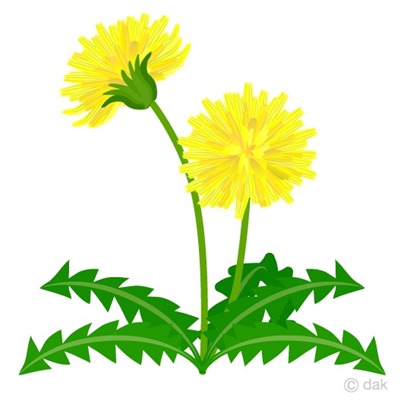
Dandelion-clipart1We are now entering the season where people will start to do battle again with the weeds in the garden beginning, no doubt, with the humble Dandelion. But if these maligned yellow-blossomed plants pop up in a yard or garden, there is a much better way to “control” the problem and that is by eating them. But, even though they are edible, do leave the flowers as they are some of the first nigh-nectar flowers the bees will need after winter.

Every part of the Dandelion is edible – leaves, roots, stems, and flowers. And the plants are nutritional powerhouses. The greens are rich in beta-carotene, fiber, potassium, iron, calcium, magnesium, phosphorus, B vitamins, and protein. Their nutrition profile compares favorably to kale and spinach and trounces iceberg lettuce, the most widely eaten salad green in the United States.

It may sound strange to forage in the backyard for dinner, but wild greens were once a dietary staple around the world. Many cultures still eat them regularly. Apparently many people in France deliberately grow Dandelion in their gardens as a greens while we in the UK, the USA, and some other places, try our very best to eradicate this beneficial weed.

Some North Americans have caught on to Dandelion's “superfood” status. High-end farmers' markets and boutique grocery stores often sell them in small, expensive bundles. But thrifty consumers can gather Dandelions from lawns and urban meadows for free. However, not all Dandelion greens are equal. It pays to know when and how to safely pick them.

On the other hand why not harvest those in your own garden and why not, like many French gardeners do, grow them deliberately. I have been doing that for years now. I tend to remove them, as far as possible will all of the roots from where I may not want them to planters where I want them to grow.

I get great pleasure out of people – I work in a public park and garden – asking when I am weeding: “As a professional gardener...” and I already know that nine times our of ten the continuation of question will be “...what do you suggest I'd do with the Dandelions in my garden?” To which I, invariably, reply “eat them!” The looks on the faces, generally, are priceless.

Once I said that and got the usual “but aren't the poisonous, seeing they have milky sap”, etc. when a French lady stood nearby who then, when the questioner had gone, commented that she did no understand the Brits as regards to their obsession as to getting rid off Dandelions as the French grew them on purpose and used them.

The entire plant is, by the way, edible, from leaves, over stems to flowers and roots. The French use the leaves in place of rocket salad leaves or the older ones sauteed with garlic as a side dish. The Greek dish “Hortes”, meaning simply “greens” is made of Dandelion and some other wild leaves, including stinging nettle.

How to harvest Dandelion greens: First, be sure to identify Dandelion correctly, because it has a few doppelgangers. Look for smooth leaves shaped like jagged teeth. The plant's name comes from the French dent-de-lion or “tooth of lion”, that's why the German name is “Loewenzahn”. Dandelions' thick stems are hollow and filled with milky sap. Catsears – Dandelions' most ubiquitous look-alike – are often called False Dandelions. They are distinguished by hairy leaves with round lobes and wiry, branched stems. Catsears are edible, but the leaves are not as palatable as those of the Dandelion. Also it must be remembered that not every Dandelion looks alike in the shape of their leaves. Some are wider and bigger, some thinner and smaller.

When harvesting Dandelion leaves pick them from lawns, or other areas, free of pesticides or herbicides only. Avoid areas near building foundations, streets, and driveways, where the soil's lead levels tend to be highest. And always wash the greens well. Alternatively, or in addition, you could, like many French gardeners do, plant Dandelions on purpose.

For the most tender and least bitter greens, herbalists advise foragers to harvest before the plant flowers. However, it can be tricky to find the leaves before the blossom appears. Raw Dandelion greens will probably taste bitter to most people, regardless of when they are harvested. The key is to look for tender leaves and learn how to prepare them based on taste preferences.

The bitterness, however, is no reason to lose out on the benefits of this nutritious plant. There are plenty of tactics to tame the bitterness of Dandelion greens. Moreover, food preferences are malleable and based on exposure. In addition, many health experts believe bitterness is an important, often- neglected key to optimum wellness.

Bitter foods for better health: Bitter compounds are plants' way of protecting themselves from being eaten by mammals. Bitter plants are more likely to be dangerous to humans, so we are acutely sensitized to the taste. However, bitter plants are also more likely to be highly nutritious, because hytonutrients have a bitter, sour, or astringent taste. It is no coincidence that kale, broccoli, Brussels sprouts, and other phytonutrient-rich foods are bitter.

Unfortunately because of consumer preference the food industry has largely bred bitterness out of our food. As a result, we lose out on more than just nutrition. Bitterness is important for liver health. It stimulates the liver to produce bile, which aids digestion and nutrient availability. Bitter foods also modulate hunger.

Eating Dandelion is an excellent way to benefit from bitterness, and Dandelion's curative powers go beyond its bitter taste. It has been used as a medicine for thousands of years for numerous conditions. In fact, its Latin name Taraxacum officinale means the “official remedy for disorders.” What kind of “disorders” is not specified.

Dandelion cures: Native Americans boiled Dandelion and drank the water to treat kidney disease, swelling, skin problems, heartburn, and stomach troubles. The Chinese use the plant to treat breast and stomach issues and appendicitis. In Europe, it has been used for fever, boils, eye problems, diabetes, and diarrhea.

Modern scientific studies are scant, but research has confirmed Dandelions as a folk-remedy diuretic. It is prescribed for edema in Germany and may be safer than other remedies because it replenishes potassium. Preliminary animal studies suggest that Dandelion may help normalize blood sugar and fight inflammation.

Recipes for the use of Dandelions can be found in large numbers in certain books and, nowadays, all over the Internet. My personal favorite is the way we used to eat Dandelion leaves as children, in a sandwich just with butter, salt and pepper. Or, if really decadent, then a good mayonnaise is substituted for the butter. Another is sauteed as greens, with garlic in oil and spices.

Here a link to a more sophisticated recipe using Dandelion greens: https://www.motherearthnews.com/real-food/fresh-dandelion-spring-salad-recipe-zerz1802zmos

© 2018

Experience: foraging nearly killed me

‘We realised we were reacting to something we’d eaten, but as we tried to work out what, we became confused’

I went to Sicily to learn about Mediterranean horticulture as part of my degree. I’d agreed to work in an ornamental garden on a huge estate for six months, helping to grow crops for the local culinary school to use in their experimental Sicilian cuisine. One night a couple of months in, though, things got more experimental than I had bargained for.

I was sharing a cottage in the grounds with two other foreign students, an American and a Canadian. One evening, they returned from a foraging trip with some leaves they’d found on the estate, which they had identified as chard. They were already cooking when I got in from the garden. It was late and I was ravenous, and I ate at least twice as much of the boiled greens as either of the others. It was a good meal, slightly bitter, but that’s not unusual in the region and, seasoned with salt and a little lemon juice, it went down a treat.

For dessert, we had fresh blood oranges, but I took one bite and spat mine out – it was mouldy. The other two had the same reaction, but when we examined the fruit they looked perfectly fresh. Rinsing our mouths out with bottled water didn’t help, either – that had the same mouldy taste. We realised we must all be reacting to something we’d eaten, but as we tried to work out what, we became confused.

Read more here.

In the Weeds: A Beginner's Guide to Foraging

dandelion-0711mbd107398.jpg

Foraging. It’s a buzzword you'll soon start hearing everywhere, if you haven't already (foraged fiddleheads or ramps are on all the hip spring menus). It's also an ancient way of gathering food.

“Foraging is not associated with Dumpster diving,” laughs Ava Chin, urban forager and author of "Eating Wildly," addressing a common misconception. "Yes, is it a kind of 'freeganism,' but no, I do not eat roadkill. Foraging is a way of learning about the edible plants that are all around us, whether in a city, a suburban yard, or a state park.”

Nowhere near the wilderness? Ava wants you to know that the "concrete jungle" actually hides many wild edibles. “You can find a variety and abundance of wild foods in a city or in the suburbs.”

A number of edible plants and mushrooms can be found throughout the country, in fact. Ava cites the wild plant lambsquarters -- a relative to spinach, quinoa, and beets, and one of most nutritious plants, she says. “It’s prized in Greek, Persian, and Bangladeshi cuisines, but here it’s a weed, hard to find to buy in even a farmers’ market." Yet lambsquarters grows “everywhere from semi-arid L.A. to busy avenues in Brooklyn.” Ava has found it on “college campuses, in friends' backyards, parks -- almost everywhere.”

Read more here.

Foraging for wild food and medicinal plants - Chickweed Plant Profile

While much greenery dies back in winter, there is plenty of food to forage from hedgerows and even unexpected parts of your garden. Christopher helps you to identify and use Chickweed

chickweedflora.JPG

Winter is a challenging time when it comes to food growing, so why not take advantage of what nature provides for free? More often than not, our hardy wild plants will offer us nutritionally-high greens for the salad bowl or cooking pot (often far higher than from plants generally grown or bought), and provide us with safe, effective medicine!

Hardy winter greens

When in the garden or plot at this time of year, the otherwise-ignored wild plants will grab our attention, and naturally so, because there is precious little other growth about. The simple aim of this article is for people to think thrice about ripping these gifts out of the ground and plonking them on the compost heap. For that would be a waste of the food and medicine on offer, as well your valuable time and energy. Not very permaculture!

One plant that you will almost certainly come across, is that most tenacious of cultivated weeds, little old chickweed. Yet not too many years ago, it would have been one of the plants that we turned to for food during the darker months.

Getting to know... Chickweed

Read more here.

Illegal foragers are stripping UK forests of fungi

Gangs commercially picking edible fungi to sell to restaurants and markets are leaving a ‘trail of destruction’ across ancient woodlands, such as Epping and New Forest

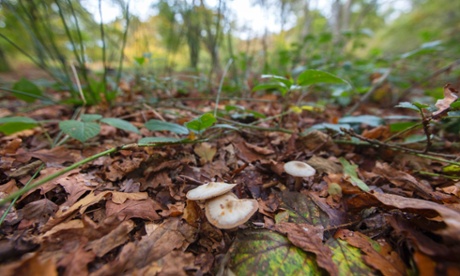
Fungus in Epping Forest.Saprotrophic funghi, a fungus that can be found in Epping Forest.“Here we go – this is one of the really nasty ones,” says Jeremy Dagley, pointing at the cappuccino-coloured cap of a two-inch mushroom nestled in the coppery leaf litter in Epping Forest. “The brown roll rim will kill you and it is not a slow death.”

But a few steps further on he discovers a mushroom the size and shape of a toasted tea cake. “This is a penny bun - also called a cep - and it’s really edible,” he says. “It is the one the pickers love. They are really expensive and really lovely to eat.”

Epping Forest, an ancient woodland straddling the border of greater London and Essex, is one of the best fungi sites in the country, with over 1,600 different species. But, like other fungi-rich sites such as the New Forest, it is being stripped out by illegal picking by gangs believed to sell the wild mushrooms to restaurants and markets.

“They leave a trail of destruction,” says Dagley, who has been head of conservation for 20 years at the 6,000 acres wood. “It has stepped up over the last five years. Sometimes people run away when they are challenged, but we have been threatened too. People pick using knives so they feel armed.”

He says pickers often take everything away and sort the edible from the poisonous later: “You can find people with 40kg of fungi, which is huge” but much is just thrown away.

Dagley says it is distressing to see the destruction, and it prevents the forest’s 4.5 million annual visitors enjoying the spectacular variety of fungi. The weird and wonderful shapes and colours of the fungi he points out revives his enthusiasm. “You have gills, frills and pores and the puffballs, they are like things from outer space,” he says.

Read more: http://www.theguardian.com/environment/2014/oct/24/illegal-foragers-are-stripping-uk-forests-of-fungi

Gourmet Weeds

Gourmet WeedsForaging for wild food provides a huge range of delectable delights as well as bringing us closer to nature and more in tune with the seasons.

Many of us have foraged for blackberries, sloes, elderberries, dandelion, nuts and much more, but here Katrina Blair, founder of the wild food cafe at Turtle Lake Refuge, Durango, US, explains the never ending list of wild edibles available that we can easily miss.

Katrina looks at the wide range of weeds many people pull up and discard - some with medicinal benefits, others packed full of nutrients. From cleavers, milk thistle, mallow and wild sage to

She then shares how these seeds, roots and leaves can be turned into delicious meals of 'leaf chips', flax crackers and chicory chai tea.

Katrina is genuinely inspiring and has an amazing insight into the bounty nature provides. We guarantee you will enjoy this video wherever you live!

Read more: http://www.permaculture.co.uk/videos/gourmet-weeds

Beacon Food Forest offers foraging, free garden produce during harvest

Karla and Kaylah Garcia, 9, are handed veggies by Olive Astra Utter, 4, at a free roadside stand on 15th Avenue South at the Beacon Food Forest. The community garden, built on land owned by Seattle Public Utilities, is being harvested, and on Wednesday evenings the bounty is offered free to the community at a roadside stand. Photographed on Wednesday, September 17, 2014. (Joshua Trujillo, seattlepi.com)The Beacon Food Forest is a labor of love. Volunteers have carved the public garden from two acres of Seattle Public Utilities-owned property adjacent to Jefferson Park, with plans in the future to add more tilled property for a total of 7 acres.

Now that much of the fruit and veggies are ready for harvest, visitors can be found regularly foraging among greenery, grazing and sampling. And through October 8th, people looking for tomatoes, zucchini, green beans, acorn squash, Swiss chard and other produce, can stop by a free roadside stand staffed by garden volunteers along 15th Avenue South. Volunteers will be there from 5:30-7:30 p.m.

The Beacon Food Forest is a community-driven project to grow an edible urban forest garden on public land. Volunteer Michael Muehlbauer helped design the space, with its rows of plants arranged to look like a two-dimensional DNA helix from overhead. “The symbol represents our diverse ecosystem, the diverse neighborhood where the garden is located and visitors shared ancestry with the plants and animals,” he said recently while staffing the roadside stand.

Read more: http://blog.seattlepi.com/thebigblog/2014/09/24/beacon-food-forest-offers-foraging-free-garden-produce-during-harvest/

Foraging for wild food and medicinal plants - Hedge Mustard Plant Profile

Sisymbrium officinale wall.JPGHedge mustard (Sisymbrium officinale) is a plant in the Brassicacaea family: The brassica family contains fantastic plants for foragers. They are a completely edible family, providing a number of medicinally valuable foods for us, all year round. Many different species can be found in the garden or allotment, and just as likely on your way there! If you like the peppery flavour in the different 'rockets' (Eruca and Diplotaxis spp), then you may love this commonly found plant.

Hedge mustard can pack quite a pungent, peppery punch, dependent on where it's found, and the time of year. Apothecary physicians regularly employed this plant as an official medicine during the 17th and 18th centuries, as its name - 'officinale' points to.

Getting to know hedge mustard

This particular brassica is an annual, although as these 'rules' aren't set in stone, it will often be seen acting as a biennial, overwintering as a rosette of leaves, before flowering the following year. Timing of germination will dictate matters to a large extent.

In keeping with many herbaceous plants, hedge mustard's leaves will appear different at the rosette stage, compared to during flowering. Alongside the obvious elongation of the stem as a plant grows higher and produces flowering organs, the leaf shape and form can also drastically alter during the metamorphosis from juvenile to adult.

The basal leaves are deeply pinnately-lobed and typically grow to around 15-20cm long, ending with a large terminal lobe. The whole plant feels somewhat coarse and hairy to the touch. Crushing or nibbling a leaf will instantly release the characteristic brassica flavour! During flowering, the alternately-spaced stem leaves reduce in size, and increasingly become more refined in shape, eventually looking like an arrowhead towards the top of the stem. A mature hedge mustard plant can typically grow to a height of around 60-70cm.

Read more: http://www.permaculture.co.uk/articles/foraging-wild-food-and-medicinal-plants-hedge-mustard-plant-profile

How to forage for fresh food this autumn

by Michael Smith (Veshengro)

autumn_foragingAutumn, or Fall as our American cousins call it mostly, is the season for fruits, nuts and fungi on the foraging list.

However, when it comes to fungi, that is to say, mushrooms and the foraging of them for food make sure that you really know what you are looking at and what you intend to pick. If not sure leave well alone. Even with a book or app for you smartphone still does not guarantee that you will be able to safely identify if you have not been taught well.
As one of the latest foodie trends, foraging has become a popular way to find delicious plants, berries and nuts growing wild.
Foraging not only gives access to fresh and seasonal healthy foods, it's also a great way to get outdoors to where our food really comes from – as opposed to the supermarket aisles and plastic packaging where it eventually ends up.

Berries, mushrooms and nuts are amongst the best foods to forage at this time of year, but make sure that you know, with everything, that what you pick is safe to eat. Blackberries and hazelnuts are quite obvious; other things may not be so obvious, such as mushrooms, as already mentioned.

Remember to get permission before foraging on private land and don’t over-forage: birds and animals rely on wild foods on their survival, so leave some for them too.

Please remember that Parks and Open Spaces also are private property and you theoretically need the owner's permission. There is no such thing as “public land” in the UK. The owner in this instance would be the local authority or similar.

Having said this in a large countryside park or open space the rangers or wardens will, more likely, no be concerned if you do a little foraging but remember the code as mentioned above. Only take for yourself and only as much as you need. Do not start commercial foraging as that will be regarded as theft and treated and prosecuted as such.

Ministry of Defense land is another kettle of fish and you do well to inquire first as to whether you may actually enter it and then as to whether foraging is permitted in any way.

When picking any wild food it has to be considered that it may have come into contact with animal feces and urine, such as fox, rats and others and thus everything needs to be thoroughly washed, aside from nuts and berries that are well above the level of reach of those animals.

In many old publicly-owned woods and along roadsides you may also find fruit trees, the ones along the roads often are so-called common trees, which were intended for use by the commoners, and amongst those there will be many old varieties of apples and pears and, even though, due too the age of trees, the fruit often is smaller than those of younger trees they often are much tastier.

When I was a child scrumping the common trees which in those days still were – pardon the pun – common along the roads of the countryside and it was everything old variety apples over pears to plums, including my favorite, the Damson. More than once I overate from those fruits and I suffered for it but, nevertheless, I would repeat that about every year.

The countryside is full of free foods for the taking and foraging was a common occupation for all that lived in the countryside or near it. And not just in autumn, though autumn appears to have been the time when more people would go out and gather wild foods than at any other time of the year.

Those that know what is edible out there for the taking – but we must remember to take not all of it – will always have to eat and it was for that reason that the country people lived better – aside from the fact that most had their gardens too – than did the people in the towns and cities during the Second World War in Britain, for instance.

© 2013

Renewed interest in wild edibles

by Michael Smith (Veshengro)

Rumex_acetosa_webWild edibles, also referred to as “hedgerow harvest”, were a good part of the diet of at least the country people and poor folks in general in year gone by. But the use and knowledge of wild edibles fell by the wayside in our recent decades of plenty.

The Great Recession and the austerity measures taken by the governments to, supposedly, reduce national debt, has led to a resurgence in the use of edible weeds and other wild edibles, especially in towns and cities, and has caused many to forage for them again. So much so, in fact, that the authorities in New York City, for instance, had to place a ban on foraging in Central Park fearing that trees and shrubs be stripped of leaves.

Foraging in the wilds needs to be done with care in order to allow enough for all and especially for regeneration of the plants.

In 2012 I saw the seed heads of Rumex acetosa (Common Sorrel) walk out of “my” park by the handfuls on a daily basis and it is surprising that the plants have actually been able to reproduce as bountiful as they did.

The majority of people who were abducting those seeds were of the Asian community in this country who use the leaves in their cuisine. I assume that they took the seeds in order to, like me, deliberately grow them in their gardens and on their allotments and sorrel is not the only edible weed which they grow in their kitchen gardens.

While removing seed heads in the quantities that they did is not something that I would ever encourage growing wild edibles for one's need in one's own garden or on one's allotment is a better choice than taking too much of it out of the wild. It is for that reason (and a couple of others) that I grow edible weeds deliberately in my kitchen garden also.

Foraging has, definitely, seen a resurgence everywhere due to the rising food costs caused by the Great Recession which is not, not even by a long shot, over as yet and food prices, no doubt, are going to rise for a long time to come still.

However, foraging should be done, like all things, in a sustainable manner and while the true foragers will do just that the new kind of forager is but interested to harvest as much as possible with as little effort as possible and without having to venture too far. This is not sustainable. The true forager lives and harvests by a code which this new kind of forager does not follow, alas.

While the gardener may take the entire harvest as, in most cases, he will start with newly bought seeds the next time Mother Nature does not garden in the same way and thus we need to leave a sustainable number of plants and especially seed in order to ensure new growth.

For that reason, when foraging in the wild we should only take a few leaves, or what-have-you, from an individual plant and then move on to the next one and not strip plants bare, as many of the new foragers do.

Leave enough so that the plants can regenerate and there will be enough for all.

© 2013

Please pass the weeds

Get even with weeds by eating them!

by Michael Smith (Veshengro)

Dandelion, chickweed, purslane and lamb's quarters are common greens that are used, and enjoyed in some regions of the USA, as well as in other countries. In fact, in some countries Sorrel and Lamb's Quarter, a cousin to the Quinoa, are purposely grown, such as on the Indian Sub-Continent.

When you use weeds, and I very much encourage you to do so, just make sure that, if you forage for them in the wild, they have not been sprayed with pesticides or herbicides.

Toss dandelion flowers into a green salad for a touch of color and flavor! Use the young leaves as you would rocket (arugula) or cook alder leaves into a spinach dish. And that is not even all that you can do with the humble dandelion.

The Greek have a dish called “horta” which often contains edible weeds rather than garden greens, mainly dandelion leaves and those of the stinging nettle, boiled like spinach. In fact, more or less, any edible weed can go into this dish.

The Asian community from the Indian Sub-Continent grow some plants that we would regard as (edible) weeds on purpose, including on their allotments in Britain such as goosefoot, aka lamb's quarter, and also sorrel.

Last year I saw many people taking the seed heads from the sorrel (Rumex acetosa) home from the park. So much so that there were no seed heads left on any of the plants that are growing in the pinetum of the park to be found afterward.

The majority of those that took those seed heads were from the Asian community and I am certain that they took them in order to sow sorrel in their gardens to grow for food. And I know that this is not the only wild plant that those folks will “cultivate” in their gardens for use in their diet. Should this not give us some food for thought?

Sorrel can be and is being used as spinach of the cut-and-come-again type; chickweed as a pot herb and also goes well with chopped egg as a substitute for salad cress in sandwich filling, when combined with a good mayonnaise.

Goosefoot (Lamb's Quarter or Fat Hen) can be used in a number of different ways: The leaves as a spinach substitute, the stems, especially when the plant, which can reach up to three feet in height, has grown well, steamed like asparagus, the flower head, before it goes to seed, as broccoli and the seeds themselves as quinoa.

And this is but a small list of edible weeds that can be used for and are good as food. Why waste a good resource and better still why throw them out of your garden when they are that good.

So, pass the weeds and don't pass up on the weeds.

© 2013

Foraging in your backyard

Growing edible weeds on purpose

by Michael Smith (Veshengro)

Edible_weeds_in_gardenMuch has been written, and talked, about foraging for wild foods in the wilds but no one, so far, seems to have considered – or if so then a very small number – growing those foods purposely in the backyard or the allotment.

When it comes to doing this on your allotment often the management of the allotment society will object to the growing of “weeds”, as some people have found out even when growing Jerusalem Artichokes (Sun Chokes). Some of those little Hitlers classify those vegetables as “invasive weeds” also. Thus growing wild edibles may only work in your backyard therefore.

However, as far as I am concerned, growing wild foods, aka wild edibles or edible weeds is a good idea as firstly many of them are more nutritious than cultivars and secondly they grow almost without any attention and many would grow without being introduced in your garden anyway and many a gardener is fighting a losing battle with the likes of dandelion, fat hen (aka lamb's quarter), ground elder and nettles. So why not let them grow and eat them rather than battling to remove them.

Some while back I decided to deliberately leave dandelion in place and use the leaves for use as salad leaves as they are very much like rocket; best when young. They can also be cooked like spinach, and then the age of the leaves does not matter much. The flowers, if one wanted to, can be used to make dandelion wine and the roots can be roasted and ground to make a coffee substitute. Dandelion is, after all, a relation to the Chicory from which the French do make a coffee.

Stinging nettle, like dandelion, is a plant that needs no introduction as to looks, and nettle is also, in the form of the younger leaves, a great vegetable as it can be made into soup, or cooked like spinach, and also makes a great herbal tea. So, again, why battle to remove it when it is that useful.

Ground elder is a seriously invasive plant and if you deliberately want to grow it – which I will be doing – it should be contained as it spreads via the roots.

It is another one of those wild plants that are very good to eat and thus well worth using, especially when the plant has decided to colonize your garden as eradication of ground elder is nigh impossible once it has established itself, and that happens fast. So, don't battle, eat.

Other great wild edibles to get into your garden are Sorrel (Rumex acetosa) which is, basically, a wild spinach and of the cut-and-come-again variety, and Ransoms, a wild garlic of which, however, predominately the leaves are used, again like spinach.

The previously mentioned lamb's quarter is a relation to the Amaranths and can be used in a variety of ways. They leaves, yet again, cooked like spinach. It is being advised that this vegetable should be eaten in moderation as it contains high levels of oxalic acid. People who use it a lot, however, consider that the acid is being destroyed in the cooking process.

The stems of Chenopodium album, which is the scientific name of this plant, can be steamed and eaten like asparagus and the mature flower heads in the same way processed like broccoli.

The Asian community in the UK likes to use fat hen, aka lamb's quarter (Chenopodium album) in curries where spinach is also used and the same wish sorrel (Rumex acetosa) and tend to grow both because of this purposely in their gardens. Chenopodium album is extensively cultivated and consumed in Northern India as a food crop, and in English texts it may be called by its Hindi name bathua or bathuwa.

This is just a small selection of wild edible and edible weeds that I am considering and I am turning over some of the beds in my vegetable garden to the deliberate growing – have done some already – of wild edibles to enable me to go foraging just outside the backdoor and will also harvest and eat those edible weeds that turn up in other beds among the crop plants.

Don't weed you weeds; eat them instead.

© 2013

Foragers beware... there's hemlock about

by Michael Smith (Veshengro)

Spring has sprung or is about to and foragers will be out in force again, even though foraging can be done also during the winter months, though the bag is smaller and has less variety.

But aside from the good to eat wild plants, which we often also, especially when they turn up, even if edible, in our gardens, as weeds there are poisonous ones growing right among the good ones often.

Hemlock1The wary forager should certainly know his Hemlock. This plant is extremely common throughout Britain and seems to have settled in quite nicely in many areas of our parks, woodlands and general countryside. In some places it creates a literal carpet and spreads all over the place.

It is chiefly notable to the forager for bearing similarities with wild carrot and other wild umbellifers. As luck would have it, however, it does not smell at all carrot-like but rather like something nasty, which it is.

The main distinction is the purple blotches on the tall stems of the flowers, but in spring time those are not grown and the rosettes of young hemlock lurk and loiter among the nettles and hedge garlic where consumers of leaves are likely to be rummaging. Only later on, toward summer, the telltale stems with their purple splotches will appear.

Hemlock is principally famous for putting a sad end to Socrates, and it is deadly poisonous and even a very tiny piece of it in your salad is not healthy at all. Therefore please watch out for it.

As they say on so many instances, “if in doubt, leave it out”, and this is very good advice here. In fact you do want to leave it out. It will kill and, as said, it takes but a very small amount. A little like the death cap when a piece of it finds its way into a mushroom soup only that hemlock works faster.

As with everything know what you are gathering for your table and if you are not 100% certain that that plant is the right one then leave it where it is.

If you have some real favorites among the wild foods and edible weeds why not then actually grow them in your own garden. That way you know for certain what they are, where they grow, that they are free of dog, fox or other urine, and you also don't have to travel far to harvest them. This is, in fact, something that I am doing and will be doing a lot more of.

So far I am growing dandelion, chickweed, sorrel, wild blackberries, narrow-leaf plantain, sorrel and stinging nettle in my garden and hope to be adding – hopefully it comes come up again – lamb's quarter, and ransoms. And others are also being considered. Weeds seem to do much better than cultivars and thus I am going to go down that route.

Also better to have that all close to home than having to do field trips for it all.

© 2013

A Handbook of Scotland's Wild Harvest – Book Review

Review by Michael Smith (Veshengro)

A Handbook of Scotland's Wild Harvest
Fi Martynoga (ed)
295 pages Paperback
ISBN: 9781887354967
£12.99

An authoritative new companion for sustainable foraging

hswh_book_coverFrom experts at the Scottish Wild Harvests Association, together with the team who brought us Handbook of Scotland's Trees, comes this indispensable guide to sustainable, responsible harvesting and use of our natural bounty, from its most trusted custodians.

This inspirational guide is packed with invaluable know-how on Scotland’s wild harvest, covering what, where, when and how you can use your bounty in sustainable ways – from the most useful and widespread of species to the less well-known, and from leaves and berries to saps, seeds, seaweeds, mosses and wood. Learn how to begin or extend a repertoire of wild foods and materials that can be used as dyes, remedies and around the home. Complete with recipes, from nettle haggis, blaeberry muffins to elderflower cordial, and and a wealth of woodland and hedgerow materials you can use in the garden or home.

The book is a partnership project between Reforesting Scotland and the Scottish Wild Harvests Association (SWHA), with the information drawn together from expert members of both. Many are professionals in the field, and all of them know their plants and materials thoroughly from years or decades of experience. Their entries abound in useful information on habitat, history, uses, lore, and how to distinguish a useful plant from similar species that are not.

As well as providing a good introduction to foraging in Scotland, the book contains enough detailed tips and insights to be of real interest to experienced gatherers as well.

The Handbook is available direct from Reforesting Scotland - contact the Reforesting Scotland office for details - and also from the publishers, Saraband. Retail price is £12.99 and an app for mobiles and iPads is also being released.

With wild foods and foraging very much in vogue we must harvest Nature's bounty, however, as the book points out, responsible and sustainable and not take too much from any one spot to allow for regrowth, as well as for wildlife's needs.

While concentrating, as the title suggests, on Scotland, in the main, with but a few exceptions, the wild edibles, etc., featured in the book are found throughout Britain.

This is a most valuable boot for anyone wishing to make use of Nature's Wild Harvest and now only are most of those plants, etc., listed in the book found all over Britain, and not just in Scotland, but also in many other places in in Europe and even in the United States.

The book is beautifully illustrated throughout with pen and ink drawings which do not, however, therefore, show the colors and such like. I would, thus, suggest using it together with a good field guide or smartphone app. And for those really serious about foraging I would suggest attending a course with a good teacher or learn from someone who has been doing it for some time successfully.

Many of those wild edibles featured in the book can also, if you would be thus inclined, be grown in your garden and that saves having to go and look for them in the wild. I am doing just that already for a while with a number of them, such as dandelion, sorrel, chickweed, nettles, etc.

© 2013

Urban foraging

by Michael Smith (Veshengro)

Spring is about around the corner in the northern hemisphere and the time for serious foraging is going to be at hand again soon.

Some plants that can be foraged for food have, this winter of 2011/2012, not even stopped growing really. One of them is, for instance, Dandelion. The only problem is that, even those that I specifically grow in the garden, have been taken as lettuce by the pesky pigeons.

There are many other foods that can be foraged in the urban environment, including and especially in parks and open spaces. However, other places too hold culinary staples and delights.

Many an old Horse Chestnut tree may have Oyster Mushrooms growing on them and Oyster Mushrooms are great eating indeed and also add flavors to stews and such, especially when dried.

Other foods of the urban wildspaces in the same way as of the suburbs and the countryside are nettles – nettle tea and nettle soup, as well as nettle greens – and plantain (no, not the thing that looks like a banana).

Furthermore, also still in spring, and then for most of the year there are the plants in the rumex family which are all but a wild spinach.

Some wild foods are easy to spot others are not.

Who could miss the bright yellow flowers of dandelions for example? Sautee the young, tender leaves in olive oil or use the young flowers as a garnish. Use the leaves in salads as you would rocket for it is, basically, wild rocket.

Dandelion and nettles cooked together like spinach are what in Greece cuisine is called Hortes, meaning greens, and which is a common side dish in that country's cooking.

With spring approaching dandelions and nettles could and actually should be on the menu and here is the beginning of foraging in the urban environment for dandelions can be found almost everywhere. As, for that matter, can nettles.

Nettles, aside from being cooked like spinach, can be turned into a great soup and are known to have medicinal benefits. Nettles are also good when brewed in a tea.

So get out there and forage... but make sure that you know what you are picking. In addition make sure everything is well and thoroughly washed before consumption.

© 2012

Foraging in the urban environment

By Michael Smith (Veshengro)

UrbanForaging What do dandelions, mulberries, black walnuts, haws (the berries of hawthorn), nettles, and wild onion have in common? They are all edibles that can be foraged in the wilds of suburbia or around the neighborhood.

That’s right.

Foraging for food is not just for hikers and wannabe survivalists, and even real ones. It’s possible to go foraging for wild foods even if you’re in the middle of civilization, even in Central Park in New York.

Some of these free wild foods are quite easy to spot and identify. Who could miss the bright yellow flowers of dandelions for example, but even when the flowers are not out you cannot, generally, mistake the leaves either?

Sautee the young, tender leaves in olive oil or use the young flowers as a garnish. Make dandelion sandwiches using chopped dandelion leaves and use the leaves as they are in green salads in the same way as you would rocket.

Mulberries and other berries, as well as other fruit and nut trees are also easy finds, especially if you’re looking up or down on the ground. There are wild strawberries to be had as well as well as blackberries (brambles) and they certainly cannot be missed either.

Wild onions are pesky plants that invade lawns. Ask if you can dig them up and you’ll probably receive an enthusiastic yes from the person whose lawn they’ve invaded. The same, more likely, will also be the case as regards to dandelions.

Other weedy plants that may require field identification, but that are commonly found in vacant lots and fields include purslane, chickweed, lamb’s quarters, wood sorrel, and in shady damp spots nettles and violets, though I doubt it that really many people need a guide to identify nettles. Alone the very fact that they sting might be a good indication. Some of the others, yes, especially for those not all that familiar with the wild edibles.

Brew tea with violets or use them as garnishes on pastries and deserts. Nettles are known to have medicinal purposes when brewed in a tea and nettles also cook well into a dish like spinach. The Greek kitchen has a greens dish called “Hortes”, which basically equals “green” and is nothing but nettle leaves and dandelion leaves cooked together.

Wood sorrel, aka Common sorrel, which is slightly sour in taste, thus known in German as “Sauerampfer”, is a relation to spinach and works well raw in green salads or cooked as spinach.

Other wild herbs worthy of collecting, though not, necessarily, for food, is Ribwort, aka Narrow-leaf plantain. This is a great medicinal herb that can be used as a poultice for cuts and also is useful for other ailments. But here we are headed into the realm of the medicinal uses and we might also leave that for a separate piece.

© 2011