Showing posts with label urban foraging. Show all posts

Don't weed them – Eat them

by Michael Smith (Veshengro)

How to use and benefit from Dandelions
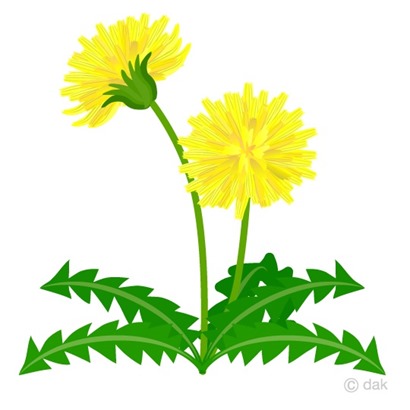
Dandelion-clipart1We are now entering the season where people will start to do battle again with the weeds in the garden beginning, no doubt, with the humble Dandelion. But if these maligned yellow-blossomed plants pop up in a yard or garden, there is a much better way to “control” the problem and that is by eating them. But, even though they are edible, do leave the flowers as they are some of the first nigh-nectar flowers the bees will need after winter.

Every part of the Dandelion is edible – leaves, roots, stems, and flowers. And the plants are nutritional powerhouses. The greens are rich in beta-carotene, fiber, potassium, iron, calcium, magnesium, phosphorus, B vitamins, and protein. Their nutrition profile compares favorably to kale and spinach and trounces iceberg lettuce, the most widely eaten salad green in the United States.

It may sound strange to forage in the backyard for dinner, but wild greens were once a dietary staple around the world. Many cultures still eat them regularly. Apparently many people in France deliberately grow Dandelion in their gardens as a greens while we in the UK, the USA, and some other places, try our very best to eradicate this beneficial weed.

Some North Americans have caught on to Dandelion's “superfood” status. High-end farmers' markets and boutique grocery stores often sell them in small, expensive bundles. But thrifty consumers can gather Dandelions from lawns and urban meadows for free. However, not all Dandelion greens are equal. It pays to know when and how to safely pick them.

On the other hand why not harvest those in your own garden and why not, like many French gardeners do, grow them deliberately. I have been doing that for years now. I tend to remove them, as far as possible will all of the roots from where I may not want them to planters where I want them to grow.

I get great pleasure out of people – I work in a public park and garden – asking when I am weeding: “As a professional gardener...” and I already know that nine times our of ten the continuation of question will be “...what do you suggest I'd do with the Dandelions in my garden?” To which I, invariably, reply “eat them!” The looks on the faces, generally, are priceless.

Once I said that and got the usual “but aren't the poisonous, seeing they have milky sap”, etc. when a French lady stood nearby who then, when the questioner had gone, commented that she did no understand the Brits as regards to their obsession as to getting rid off Dandelions as the French grew them on purpose and used them.

The entire plant is, by the way, edible, from leaves, over stems to flowers and roots. The French use the leaves in place of rocket salad leaves or the older ones sauteed with garlic as a side dish. The Greek dish “Hortes”, meaning simply “greens” is made of Dandelion and some other wild leaves, including stinging nettle.

How to harvest Dandelion greens: First, be sure to identify Dandelion correctly, because it has a few doppelgangers. Look for smooth leaves shaped like jagged teeth. The plant's name comes from the French dent-de-lion or “tooth of lion”, that's why the German name is “Loewenzahn”. Dandelions' thick stems are hollow and filled with milky sap. Catsears – Dandelions' most ubiquitous look-alike – are often called False Dandelions. They are distinguished by hairy leaves with round lobes and wiry, branched stems. Catsears are edible, but the leaves are not as palatable as those of the Dandelion. Also it must be remembered that not every Dandelion looks alike in the shape of their leaves. Some are wider and bigger, some thinner and smaller.

When harvesting Dandelion leaves pick them from lawns, or other areas, free of pesticides or herbicides only. Avoid areas near building foundations, streets, and driveways, where the soil's lead levels tend to be highest. And always wash the greens well. Alternatively, or in addition, you could, like many French gardeners do, plant Dandelions on purpose.

For the most tender and least bitter greens, herbalists advise foragers to harvest before the plant flowers. However, it can be tricky to find the leaves before the blossom appears. Raw Dandelion greens will probably taste bitter to most people, regardless of when they are harvested. The key is to look for tender leaves and learn how to prepare them based on taste preferences.

The bitterness, however, is no reason to lose out on the benefits of this nutritious plant. There are plenty of tactics to tame the bitterness of Dandelion greens. Moreover, food preferences are malleable and based on exposure. In addition, many health experts believe bitterness is an important, often- neglected key to optimum wellness.

Bitter foods for better health: Bitter compounds are plants' way of protecting themselves from being eaten by mammals. Bitter plants are more likely to be dangerous to humans, so we are acutely sensitized to the taste. However, bitter plants are also more likely to be highly nutritious, because hytonutrients have a bitter, sour, or astringent taste. It is no coincidence that kale, broccoli, Brussels sprouts, and other phytonutrient-rich foods are bitter.

Unfortunately because of consumer preference the food industry has largely bred bitterness out of our food. As a result, we lose out on more than just nutrition. Bitterness is important for liver health. It stimulates the liver to produce bile, which aids digestion and nutrient availability. Bitter foods also modulate hunger.

Eating Dandelion is an excellent way to benefit from bitterness, and Dandelion's curative powers go beyond its bitter taste. It has been used as a medicine for thousands of years for numerous conditions. In fact, its Latin name Taraxacum officinale means the “official remedy for disorders.” What kind of “disorders” is not specified.

Dandelion cures: Native Americans boiled Dandelion and drank the water to treat kidney disease, swelling, skin problems, heartburn, and stomach troubles. The Chinese use the plant to treat breast and stomach issues and appendicitis. In Europe, it has been used for fever, boils, eye problems, diabetes, and diarrhea.

Modern scientific studies are scant, but research has confirmed Dandelions as a folk-remedy diuretic. It is prescribed for edema in Germany and may be safer than other remedies because it replenishes potassium. Preliminary animal studies suggest that Dandelion may help normalize blood sugar and fight inflammation.

Recipes for the use of Dandelions can be found in large numbers in certain books and, nowadays, all over the Internet. My personal favorite is the way we used to eat Dandelion leaves as children, in a sandwich just with butter, salt and pepper. Or, if really decadent, then a good mayonnaise is substituted for the butter. Another is sauteed as greens, with garlic in oil and spices.

Here a link to a more sophisticated recipe using Dandelion greens: https://www.motherearthnews.com/real-food/fresh-dandelion-spring-salad-recipe-zerz1802zmos

© 2018

Living the good life in town and city

by Michael Smith (Veshengro)

Growing your own food and living the good life of a homesteader is, all too often, associated in the minds of most people with living in the country, the sticks, the boonies. This is a fallacy, however, for it is a mindset rather than being dependent on location.

grow-your-own-in-the-city True, it is easier, to some degree, to do it in the boonies, especially if you have a home with a little – or more than just a little – land. That does not mean, however, that living in town has to prevent you from living it; at least to some degree.

“Living the good life” of a homesteader, as said, is dependent on your mindset much more than it is on your location and it also does not just and only mean growing your own food.

Growing your own food, or at least part of it, while being the main stay, so to speak, of living the good life, is only part of living the life of a homesteader, whether in the boonies or the city. Self-reliance in everything, as fas as this is possible and feasible, is the name of the game, and I say deliberately self-reliance and not self-sufficiency as the latter is impossible to achieve, ever, on your own.

There is more, much more, to living the life of a homesteader, whether in the country or town, than just growing your own food.

Making do with what you have got and making things you want and need as much as possible yourself is, and always has been, a very large part of it, as was and is reusing, repurposing and upcycling things that others regard as waste, be that tin cans, glass jars, bits of paper, string, rubber bands, card or pallet lumber, to name but a few. Much more than that can be reused, repurposed and upcycled and our parents and grandparents, and not just in the country, did just that. Everyone, in fact, bar the very rich, was doing it.

It is very much a mindset and one that we must redevelop for the good of the Planet and for our very survival on this Planet. Like then it also can and will save money but it will do more than just that. It will allow us to live a much more fulfilled life and it will save vital resources on a global scale. The good life is about that too.

All too often the other aspects of what makes up homesteading are forgotten and not only when being considered for an urban or suburban environment. Too many eco-warriors are still in a consumer mindset rather than one of producer.

We have to learn once more to make and produce things for ourselves, with the resources to hand, rather than popping to the stores for everything, even if the things we look at buying are ethically produced, are “green”, etc.

An old friend of mine, now sadly deceased, was a great example of a homesteader in an urban setting. He lived in an apartment but canned all manner of things for his pantry and made much for himself, including clothes, and much more besides.

While I know that he would have much rather have preferred to live in a shack in the mountains the fact that he did not did not let it stop him from pursuing his dream of self-reliance and self-sufficiency, as far as possible, in town and that very successfully.

It can be done and do it we must.

© 2013

Urban foraging

by Michael Smith (Veshengro)

Spring is about around the corner in the northern hemisphere and the time for serious foraging is going to be at hand again soon.

Some plants that can be foraged for food have, this winter of 2011/2012, not even stopped growing really. One of them is, for instance, Dandelion. The only problem is that, even those that I specifically grow in the garden, have been taken as lettuce by the pesky pigeons.

There are many other foods that can be foraged in the urban environment, including and especially in parks and open spaces. However, other places too hold culinary staples and delights.

Many an old Horse Chestnut tree may have Oyster Mushrooms growing on them and Oyster Mushrooms are great eating indeed and also add flavors to stews and such, especially when dried.

Other foods of the urban wildspaces in the same way as of the suburbs and the countryside are nettles – nettle tea and nettle soup, as well as nettle greens – and plantain (no, not the thing that looks like a banana).

Furthermore, also still in spring, and then for most of the year there are the plants in the rumex family which are all but a wild spinach.

Some wild foods are easy to spot others are not.

Who could miss the bright yellow flowers of dandelions for example? Sautee the young, tender leaves in olive oil or use the young flowers as a garnish. Use the leaves in salads as you would rocket for it is, basically, wild rocket.

Dandelion and nettles cooked together like spinach are what in Greece cuisine is called Hortes, meaning greens, and which is a common side dish in that country's cooking.

With spring approaching dandelions and nettles could and actually should be on the menu and here is the beginning of foraging in the urban environment for dandelions can be found almost everywhere. As, for that matter, can nettles.

Nettles, aside from being cooked like spinach, can be turned into a great soup and are known to have medicinal benefits. Nettles are also good when brewed in a tea.

So get out there and forage... but make sure that you know what you are picking. In addition make sure everything is well and thoroughly washed before consumption.

© 2012

Foraging in the urban environment

By Michael Smith (Veshengro)

UrbanForaging What do dandelions, mulberries, black walnuts, haws (the berries of hawthorn), nettles, and wild onion have in common? They are all edibles that can be foraged in the wilds of suburbia or around the neighborhood.

That’s right.

Foraging for food is not just for hikers and wannabe survivalists, and even real ones. It’s possible to go foraging for wild foods even if you’re in the middle of civilization, even in Central Park in New York.

Some of these free wild foods are quite easy to spot and identify. Who could miss the bright yellow flowers of dandelions for example, but even when the flowers are not out you cannot, generally, mistake the leaves either?

Sautee the young, tender leaves in olive oil or use the young flowers as a garnish. Make dandelion sandwiches using chopped dandelion leaves and use the leaves as they are in green salads in the same way as you would rocket.

Mulberries and other berries, as well as other fruit and nut trees are also easy finds, especially if you’re looking up or down on the ground. There are wild strawberries to be had as well as well as blackberries (brambles) and they certainly cannot be missed either.

Wild onions are pesky plants that invade lawns. Ask if you can dig them up and you’ll probably receive an enthusiastic yes from the person whose lawn they’ve invaded. The same, more likely, will also be the case as regards to dandelions.

Other weedy plants that may require field identification, but that are commonly found in vacant lots and fields include purslane, chickweed, lamb’s quarters, wood sorrel, and in shady damp spots nettles and violets, though I doubt it that really many people need a guide to identify nettles. Alone the very fact that they sting might be a good indication. Some of the others, yes, especially for those not all that familiar with the wild edibles.

Brew tea with violets or use them as garnishes on pastries and deserts. Nettles are known to have medicinal purposes when brewed in a tea and nettles also cook well into a dish like spinach. The Greek kitchen has a greens dish called “Hortes”, which basically equals “green” and is nothing but nettle leaves and dandelion leaves cooked together.

Wood sorrel, aka Common sorrel, which is slightly sour in taste, thus known in German as “Sauerampfer”, is a relation to spinach and works well raw in green salads or cooked as spinach.

Other wild herbs worthy of collecting, though not, necessarily, for food, is Ribwort, aka Narrow-leaf plantain. This is a great medicinal herb that can be used as a poultice for cuts and also is useful for other ailments. But here we are headed into the realm of the medicinal uses and we might also leave that for a separate piece.

© 2011