Showing posts with label capitalism. Show all posts

Take back the tap

by Michael Smith (Veshengro)
Take back the tap: Let's put and end to the big business fraud of bottled water

Take back the tapCorporations like Nestlé are wasting your money, and not just Nestlé. All bottled water is a scam and to a great extent the water actually comes from the same source that you have in the kitchen, the faucet, the tap. At times it may have been filtered to remove chlorine and the taste of it but it is still nothing but tap water and you pay hundreds of times as much for a bottle than you would if you fill up your own at home.

Industry marketing from corporations like Nestlé, and others, means that more people are buying bottled water than ever – even though about 64 percent of the bottled water comes from municipal water systems. That means that people buying bottled water are paying much, much more than they would for that same water from the tap. Bottled water is literally more expensive than gasoline – and about 2,000 times more expensive than tap water.

Bottled water companies profit from misleading advertising. People and the environment lose and this advertisement targets people of color, women, mothers, children and lower-income groups.

Industry marketing strategies designed to promote the safety of bottled water to people who historically lack access to safe tap water (especially recent immigrants) prey upon those who may mistrust tap water and communities concerned about obesity and sugary beverages.

The truth, however, is that tap water, generally, is more rigorously tested for safety than is any kind of bottled water and many of the bottled water that is marketed as “spring water” actually sprung forth from the same source as the water in your kitchen, namely the tap.

While it has to be said that in some areas in the USA, one of the richest countries in the world, the municipal water is not very good (and also not very safe when one considers some areas) but in general tap water is safe and a great deal cheaper – and safer – than bottled water.

The abstraction of water for bottling, often from municipal sources, prior to going into the general consumer stream, put a great strain on often already overstretched water resources and in some places, where the abstraction happens from aquifers, it puts water for people, animals and crops at risk but still Nestlé even is permitted to abstract water in times of drought in places such as California. They would otherwise sue the state for damages. Industry comes always first in capitalism.

Companies such as Nestlé also greatly benefit from public disinvestment in water infrastructure, as the chairman of Nestlé Waters stated in 2009: “We believe tap infrastructure in the US will continue to decline. People will turn to filtration and bottled water for pure water needs.” Well, that is definitely what they hope, aided and abetted by the senators and other politicians that they have paid off.

According to the CEO of Nestlé in a statement some years ago water is not and should not be a human right but should be for the corporations to make profits from. That is how callous those capitalists are. Every bit of Nature and human need is there only for their exploitation and profit.

On the water from we can fight them by refusing to fall for their tricks and filling up our own reusable water bottles at home – and at refilling stations, where they exist, and more and more are coming “on stream” – and thus not giving them our hard-earned money and making them rich.

Then we must demand from the powers-that-be in our countries, powers that often better would not be – that water infrastructure, including waste water, as much as other utilities, are taken (back) into public ownership and if that means outright expropriation. Vital utilities and services such as water, energy, health, transportation, and many more, should never be in the hands of private business, but in the hands of the people as a whole, either as co-operatives or in the hands of the state.

© 2018

The problem with consumerism

by Michael Smith (Veshengro)

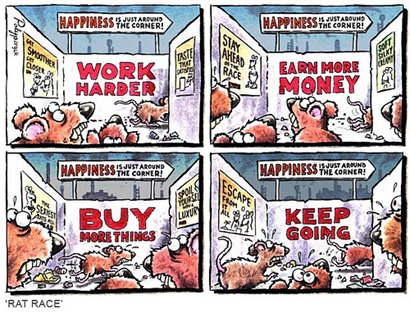
consumerism1We do this not because it is the only way to meet our needs but because we live in an economy which requires us to consume more every year or it implodes and can't meet anyone's needs.

At the moment the entire global economy seems to be built on the model of digging things up from one hole in the ground on one side of the Earth, transporting them around the world, using them for a few days, and then sticking them into a hole in the ground on the other side of the world.

We have, by now, more or less, been programed to perform in exactly that model, and all so that the economy can keep growing without manufacturers having to come up with new products really. And that is aside from all of the, mostly unnecessary, packaging.

Consumerism has so much become part of the (new) capitalist model that it is destroying the Planet right before our eyes but we either, because of having been programed in that way already, are not prepared to go another way, cannot see another way, or, and that is more often than not the case, feel powerless to do anything about it.

It has been said that capitalism carries the seed of war in itself like clouds carry rain, but to that we should add that it also carries the seed of planetary destruction in itself in the same way.

So, what is the answer? Simply put it is that we need a new system. The capitalist economic model of perpetual growth via predestined and pre-programed obsolescence can no longer – in fact it never could – function on a finite Planet.

Is socialism the answer? Maybe, then maybe not, as it would very much depend on the model that is being applied. The socialism and communism that we have, mostly, seen in the past – with a few exceptions – have not been proper socialism or communism but state capitalism and whether it is private capitalism or state capitalism, it still is capitalism.

Though, having said that, due to lack of resources mostly, many of the socialist countries, such as the German Democratic Republic, however, produced consumer goods that were made to last, in the main, such as, per example, the RG28 kitchen machine, made in the GDR, that still, after 40 years, is doing its duty in many a kitchen. The reason? It is made well and repairable, even by a user with some tinkering ability.

It has to be said, also, that until about the 1980s most products, also in the West, were made more or less in a similar way in that they could be easily repaired and the repair economy also existed. Today, if repair is possible, it is made so expensive that the real option for most people is to toss the old and buy new. The system is designed in that way nowadays and that deliberately. It is called built-in obsolescence. In other words the system is designed in such a way – and the products – that after a given time they either break down and cannot be repaired, or repair being too expensive or, in the case of computers, are no longer hardware compatible with software, and thus have to be replaced. This is how the current economic model functions and that means that we, the consumer, have to buy the same product, with some modifications, over and over again.

In fact it is not a problem with consumerism that we have, although there is an element of that in it as well, but a problem with the economic system which is designed to grow through us, the consumer, having to, as said above, the same product, with some modifications, over and over again, because of (1) that the products are made to break down and (2) that they have also been designed not to be repairable or repair being too costly.

By means of this model the economy grows, but to the detriment of the Planet as well as our finances. And does the economy actually really grow when this is the case? While, on the outside, it may appear to do so in all honesty, as we have to buy the same thing over and over again, it does not really make for real and honest growth. Just for well massaged figures, so to speak.

Unfortunately, as long as the system is skewed like this we have very little choice, unless we can afford it, to buy in the way we are being forced to do. The alternative, though much more expensive, is to buy well-made, ideally made in our own respective countries, products. Products that are made to last and that can be repaired and hand-made goods. But who has that kind of money as that does not come cheap?

Well-made, and especially hand-made, is not cheap because a great deal of work time goes into making each and every product, and this even more so with hand-made than with just well-made. That is the difference between mass-produced goods produced outsources in countries such as China and others. Already mass-produced goods in our own countries are more expensive and that is due to labor costs, and years ago that would have also been due to quality, though that is no longer necessarily the case.

Most consumer goods, nowadays, are produced as consumables, to be used once or a couple of times and then discarded, because they are either outdated, worn out, broken and too expensive to repair, etc., and we have to buy new. That is, however, the way the system is skewed against, us, the consumer and the Planet. It is all about quick profit for the corporations at any and all expense in human and environmental costs. That is why the system needs replacing, not just changing or “repairing”. It can't be repaired because it is not broken; it was designed this way.

© 2018

Buying for the landfill

by Michael Smith (Veshengro)

cobaltWith a great number of products the wear out is pre-programed. This deliberate limited lifespan is called “planned obsolescence”. There are some tech people who actually claim that many electronic devices and also white goods have a chip “implanted” that starts counting down a set time span after the device has begun to be used which shuts it down after that set time. But may that as it be (or not be). Fact is that there appears to be a predestined limited lifespan of our devices in order for the companies to be able to be selling us the same products again, and again, after a short space of time rather than, as used to be the case when products were made to last (almost indefinitely with care) and were repairable, having to bring out better versions or other products, in order to stay in business.

It would appear that the producers of light bulbs decided that the lifespan of the original ones was too long – almost indefinite – and that that would have to change. They seem to have been the first with this lightbulb moment for the capitalists. So they changed the design of the elements and, voila, it would only work for a limited time. In the same vein as when the new owner (a West German capitalist) of once people-owned glass-works in the GDR that made unbreakable (yes, they even had the patent for it) glass he immediately had all the machines removed with the words: “I am not going to make something that does not break.”

As a result of this capitalist model we have the modern “throw away society” because the manufacturers of those products also make it (almost) impossible to open the devices and repair them. That is also part of the plan. And in addition to that they now “sell” us a supposed sustainability of those products – that we have to toss after they no longer work – as they are, so they tell us, fully recyclable.

Whether it is light bulbs, nylon tights, printers, mobile telephones – most of those, and many, many other products, already have their expiry date preplanned. The consumer shall be induced to rather buy a new product than to have the old one repaired. Often, as indicated, this is (almost) impossible and where it is possible to costs can be several times higher than the purchase cost of a new one.

The deliberate foreshortening of the lifespan of an industrial products in order to keep the economy in motion is called “planned obsolescence”. Already in 1928 an advertising magazine wrote candidly: “A product that does not wear out is a tragedy for business.”

In the 1920s a cartel was set up to limit the lifespan of light bulbs and from then on everything went slowly downhill bar for say in the GDR where products were made not to wear out. Why? Because of scarcity of resources and because it was not a capitalist state.

Even after the light bulb story many products were still well-made and repairable, to some extent even by the user in the DIY-mode. Things begun to change after the Second World War. It was here that companies made big money due to military contracts but after those profits began to fall off. Realizing that this was due to the fact that the products they supplied to the military ended up destroyed in action they came up with the idea (no, not of another war, though that was not far behind either) to find ways to limit the lifespan of products other than what would be called “consumables”.

Slowly, however, people in general are getting fed up with this model and are beginning to demand – once again – products that last. The manufacturers, though, are responding rather with the “sustainability” model I mentioned earlier, that is to say the claim that their products are entirely recyclable and thus the consumer does not have to worry about buying new then the previous one breaks as everything goes back into the loop. That is not the point though, is it.

Whether or not the everything in a product is recyclable and even if everything goes back into the loop of making new products the impact on the environment, not to speak of our pocketbooks, is not elevated really. Recycling of electronic goods, and recycling in general, is a dirty business which is why most countries have outsourced it to countries where the environmental codes are lower to non-existent and where there are also no protections for the workers in this industry.

With China now refusing to take much of our recyclables the nations of the so-called West are in a quandary as what to do and are looking – no, not so much at reducing waste and making long-lasting products – to other, poorer countries where they can dump their recyclables.

However, nothing is going to change unless either the political model changes and capitalism is tossed on the landfill itself, the landfill of history, or consumers vote with their feet and wallets. What must become obsolete are not products but the system that created this willful “planned obsolescence” and the idea of infinite perpetual economic growth on a finite Planet with finite resources.

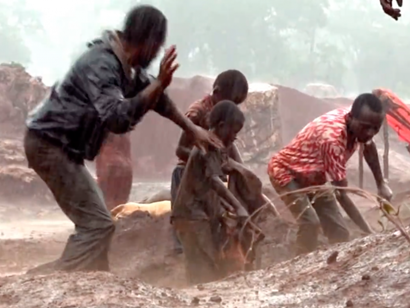
And while we are at limited resources let me, just for a second, touch upon the batteries, the rechargeable Lithium-ion ones, that our devices devour rather also quite often. The rare earths required for this, including cobalt, and others, are not just mined in a way that ravages the Planet and which are polluting, but which also ravage children who work as slaves, often literally, in those mines (and the factories making the batteries). But then, oh well, seems to be the attitude of so many, it is not in our countries and it is far away.

© 2018

Recycling helps us avoid tackling Climate Change

by Michael Smith (Veshengro)

Climate change and environmental destruction are contentious and disputed topics.

Recycling helps us avoid tackling Climate ChangeIn the US, for instance, there is a powerful faction of Republican politicians who flat-out deny that climate change even exists. In Britain, the former Environment Secretary, Owen Patterson, under David Cameron, is also a climate change skeptic, oddly enough. The current one, under Theresa May, does not appear to be much better in that department either. And it has become worse in the USA under Donald Trump. That is not to say that it was good under Obama.

These denials go against science: carbon emissions have increased by 35 per cent since 1990, and climate change is responsible for over 300,000 deaths a year, a figure that could rise to half a million people by 2030.Or so, at least, we are being told. It is blindingly obvious that we are heading towards environmental destruction and any failure to admit this is negligent and dangerous.

The climate is changing though – and I am swaying that rather carefully – whether all is down to CO2 emissions is another thing altogether. I would actually say that the entire thing of focusing on “carbon emissions” is also making us fail to look at other culprits, for which we, as humans, are also responsible, such as pollution, exploitations of soil and forests, etc., ad infinitum. Ever since they but the word carbon in front of emissions we have failed to look at the other contributing factors that used to go by the name of pollution, from air pollution, to pollution of soil, water and land. But that kind of pollution cannot be traded in the form of carbon certificates, those modern day indulgences.

The international system has set numerous targets to resolve the crisis, such as the UN Millennium Development Goals on the environment, but they are rarely, if ever, met. The many environment summits which regularly take place also fail to produce tangible results, with the big powers failing to agree on terms. On top of that they emit more pollution than almost anything else as those leaders keep jetting around the globe, together with entourage and journalists in tow. And let's not even talk of all those eco-organizations whose people also do this.

On the micro level, people tend to make quite an effort. We are often told to monitor our carbon footprint and in many countries, recycling has become normalized, a part of people's daily routine. These micro-level changes are theoretically somewhat reducing our environmental crisis. Or so we are led to believe.

A greener approach is encouraged by the governments, for both businesses and ordinary citizens. Despite this, the environment is not really improving. When we take our small green steps, we tend to assume that we are solving the problem, and that we do not have to worry about it anymore. This veneer of “action” misleads us and essentially pulls the wool over our eyes, stopping us from asking deeper questions about the environment and what truly contributes to climate change and wider environmental degradation.

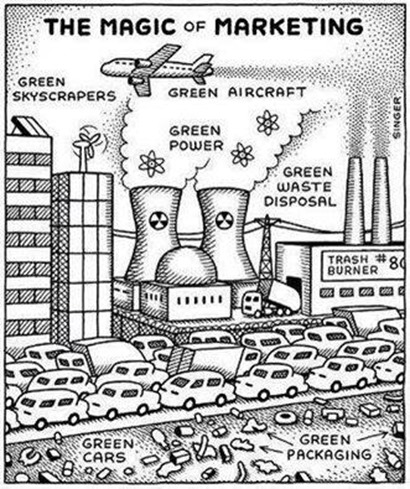
We recycle our waste, but do not link it to the consumer society we live in. The media and advertising industries are constantly telling us to buy things we don't need, yet we rarely, if ever, link this to climate change. Our efforts to recycle nullify us and prevent deeper thought. In addition to that there is “greensumption”, the believe that we make a change when we buy “green” products. Hello!! We are still consuming and in that department often things that are greenwashed rather than anything else.

Debates surrounding the environment seldom link the problem to capitalism, and they are too often seen as separate issues. Capitalism is the elephant in the room.

Our capitalist world encourages and ingrains a consumerist mentality that is driving us to environmental ruin. It has been estimated that if everyone consumed at the same rate as your average American, then the world would only be able to support 1.4 billion people.

Capitalism, however, needs that kind of mentality to exist in order for corporations to thrive, and doing the recycling is not going to change our consumerist habits. Therefore what is really needed is a change of system not a change of habits. That, though, the powers-that-be (but really shouldn't be) are hardly going to tell us now, are they.

It is precisely this ideology that is behind the extraction of resources meant to facilitate our lifestyles. The environmental damage done by extractive industries far outweighs what we can achieve as individuals on a micro-level.

The United Nations Environment Program a while ago released a report highlighting how environmental damage caused by Shell in Ogoniland, Nigeria, could take more than 30 years to be reversed. Still, we don't make the link between what happens in places like Ogoniland and our consumer lifestyles at home. There is a huge disconnect there and environmental NGOs are often closely linked to big business, so they can't act as whistleblowers anymore. In other words, very few can do so, nowadays and it is up to us, the people, to make a noise.

Extractive industries have a huge influence in the policy making sphere, particularly in the US. It has been estimated that 94% of US Chamber of Commerce contributions went to climate denier candidates, with the oil and gas industries' lobby worth almost $1.5 billion per year.

It is, therefore, not difficult to see who is shaping policy and why our environmental crisis has only worsened in recent decades. As long as there are powerful interest groups influencing the EU and the US governments, it is unrealistic to expect international conventions to ever make a difference.

Big business has more say than local groups, such as indigenous people, who often have a powerful environmental message to share, but who are persistently ignored. It is beyond irony that the richest most powerful countries in the world are racing towards disaster while the so-called primitive societies are the ones at the forefront of trying to avert it.

There is definitely merit in reducing our individual environmental footprints, but in the grand scheme of things, it is unlikely to make any difference to the Planet's environmental outlook; at least, not as long as capitalism reigns supreme.

Encouraging micro-level changes and giving money to green NGOs merely serves as a smokescreen to prevent real in-depth analysis. It almost facilitates a system whereby corporate-made environmental degradation can continue, while we keep on recycling and forget about the problem.

In order to truly make a change we must begin to ask deeper questions about the society in which we live in and start trying to operate outside of the status quo capitalist framework. Thus we must change the system and no, social democracy will not make one iota of a difference here either the politicians in this often refer to themselves as democratic socialists.

But, as long as we are going to be lulled to sleep by the recycling message, and to believe that we can make a great and significant difference if we but separate our waste properly, etc., we will never get the idea to call for a change of system. Unless, however, the system is changed we – and our children and children's children – are not going to have a Planet on which to live. It is as simple but also as crass as that.

See for this also my article “Fighting climate change and poverty in the Third World at the same time?”

© 2018

The pathological consumption of the majority

by Michael Smith (Veshengro)

13876526_1045327358850366_8227695636228548239_nThe pathological consumption of the majority, for I do know that not all participate in it, has become so normalized that we scarcely notice it.

The way the majority buys things that is, aside from the essentials, with which we are not concerned really when it comes to consumption for we all have to eat, have at least some clothes to wear, need toilet paper and other things.

What I do mean here with pathological consumption is buying the things that really they don't need and only buy because the latest version is on the market or whatever. It is killing our Planet, other people and ourselves in the end.

There is nothing really that they need, nothing that they don't own already, and still they keep on buying. The new smartphone that has more bells and whistles than the one they only got six months ago and which they still have not used to its full potential, and so on and so forth. And then there are all those things that really are of little use, such those unitaskers for kitchen and elsewhere that will never, actually, be used but be just white elephants. And yes, alas, I have also managed to buy one or two proverbial white elephants for the kitchen at times. Some people work just so they can afford the next new gadget, etc..

Researching her film The Story of Stuff, Annie Leonard discovered that of the materials flowing through the consumer economy, only 1% remain in use six months after sale. Even the goods we might have expected to hold onto are soon condemned to destruction through either planned obsolescence, meaning that they are designed to break or fail quickly and cannot be fixed or perceived obsolescence, that is to say by becoming “unfashionable”. When the new iPhone comes out it is obvious that an old one is unfashionable; or at least so we seem to have been programed.

Grown men and women devote their lives to manufacturing and marketing often a load of rubbish, and dissing the idea of living without it. “I always knit my gifts”, says a woman in a television ad for an electronics outlet. “Well you shouldn’t,” replies the narrator. An advertisement for Google’s latest tablet shows a father and son camping in the woods. Their enjoyment depends on the Nexus 7’s special features. The best things in life are free, but we’ve found a way of selling them to you, and we, the majority at least, have been brainwashed enough to believe that we need those things for our enjoyment of life. Things have gone so far that people go for hikes in the woods, along trails, etc., either glued to the screens of their smartphones and/or having earphones on or in and listening to some music, or podcast, or whatever. Pray, what's the point?

The growth of inequality that has accompanied the consumer boom ensures that the rising economic tide no longer lifts all boats, not that it ever really did. In the US in 2010 a remarkable 93% of the growth in incomes accrued to the top 1% of the population. The old excuse, that we must trash the planet to help the poor, simply does not wash and the trickle down economy does not work and it is a load of hogwash.

So effectively have governments, the media and advertisers associated consumption with prosperity and happiness that to say these things is to expose yourself to opprobrium and ridicule. When the world goes mad, those who resist are denounced as lunatics. Well, let's be lunatics then and swim, like living fish, against the current of this madness.

The problem is that the system is not broken but that it was designed in this way. So, what are we to do? May I suggest we break the system and make a new one, one that benefits all of the Planet; people, animals, and the biosphere as a whole.

To some extent some of us are already doing it by moving away from the consumer culture and -society, by reusing, upcycling and by making do and mending. By growing some of our own food and by making things that we want and need ourselves, even, as I love to do, from items that others regard as waste.

However, those that are doing this not only encounter ridicule at times, as said above, but are even seen and proclaimed – by governments even – as a threat to the economy and the nation. Thriftiness was declared by some politicians (in the UK) not so long ago as akin to domestic terrorism.

© 2017

Why do we have people going hungry?

by Michael Smith (Veshengro)

x-defaultPeople are not going hungry or are starving because we cannot produce enough food, though that is what governments and the media are trying to make us believe.

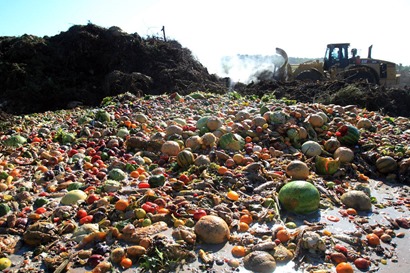
Instead, the real reason why people are starving is because capitalism says that it is better to throw away suboptimal vegetables, which means those that not conforming to the approved norm, instead of selling them (cheaper).

Cucumbers that are too small or too big, or have a bigger than permitted bend, apples that do not fit into the size and whatever criteria, and the same goes for potatoes, carrots and other fruit and vegetables that are not grown straight, and so on; they all are not allowed to be sold.

It is because of this kind of manic capitalist system there is hunger at home and abroad. It has nothing to do with an inability to produce enough food or the lack of suitable land and the amount of suitable land for growing produce. When we are told that we are being lied to. Already at present the amount of perfectly good edible food, though misformed, according to the standards, that is being thrown before it ever makes it to the shelves of the stores, or even the wholesalers, could feed the entire global population several times over.

Years back in Britain we had the so-called Agricultural Intervention Board which stepped in each and every time there was a glut, whether it was apples, potatoes, or whatever else, and ordered a proportion of the produce to be destroyed by being dumped in holes in the ground and having bleach poured over everything.

Today it is the wholesalers and supermarkets who make the decisions after having hammered into the heads of the consumers that vegetables should look a certain way and since then claim that they cannot sell the what we would lovingly call “ugly” fruit and vegetables, as no one would buy it as they are not esthetically right.

In addition to that, in Europe, there seem to be European Union regulations which specify ho much bend a cucumber, for instance, is allowed to have and any that fall outside that rule are to be destroyed. The same seems to go for the size and shape of apples, bell pepper, and so much more; potatoes even.

Anyone, however, who has ever grown fruit and vegetables in a garden, allotment, smallholding or farm will know that such engineering criteria almost cannot be applied to stuff that grown in the ground or on a tree and in the stages between. While we may be quite happy to eat the non-conform fruit and vegetables from our own garden – and those of us who would do that, I am sure, would also buy and eat such produce if it would come onto the market, especially when a little cheaper – such produce may not, legally, apparently, be sold on market stalls or in stores.

In times of glut have you ever notices that – generally – the prices do not fall in the store, at least not significantly. The reason for that is that only a certain amount of the produce is allowed to make it to the market so as to keep the prices artificially high. That is what was, in the older day, the task of the Agricultural Intervention Board in Britain and it would appear that the practice if still alive and well, only operated by different agencies; nowadays by the capitalist entities themselves.

It is not a lack of produce, of food, that is the cause of hunger in the world, especially not in the countries of the so-called West, but the capitalist system. And there is enough food being produced capable of also eliminating hunger in the Third World, especially if we would not force countries such as Kenya, and others, to grow food for the market in the West; food that the people there often would not, themselves, eat, as it is not part of their diet, such as green beans. Obviously the roses grown in Kenya for the market in Europe and elsewhere are not edible in the first place and take up valuable agricultural land and water.

© 2017

The invention of capitalism

by Michael Smith (Veshengro)

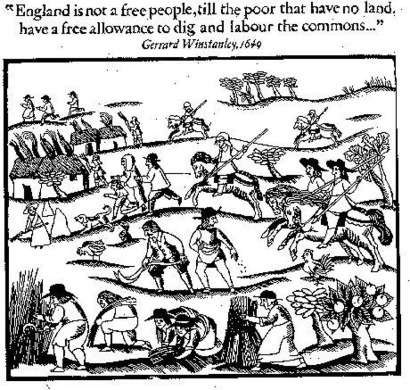
diggers1_webCapitalism was invented, yes, invented, and its aim was to turn a self-sufficient peasantry into industrial wage slaves, and my oh my, has it worked.

“...everyone but an idiot knows that the lower classes must be kept poor, or they will never be industrious.” ~ Arthur Young,1771

Our popular economic wisdom – and what the people are told – says that capitalism equals freedom and free societies. But is the really the case? The short answer to this is a firm no. It is slavery in all but name.

Instead of the master the owner of a business is referred to in capitalism as the employer, or worse still in the German language as “giver of work”, while the slave is called “employee” or, let's quote a German translation again “taker of work” which the “giver of work” out of his kind heart (please take not: sarcasm) makes available to the worker. You still with me here?

While in the old days of slavery the slave owner had to look – more or less – after his investment, the workers, house them, clothe them, feed them, in wage slavery the owner pays the slave who then has to use the little money for such things as food, clothing and housing. Often the housing was provided by the factory even which means that the owner got money back for more often than not hovels, and many also had to buy their provisions in factory stores. But they were free. Yeah, right!

This transition to a capitalistic society did not happen naturally or smoothly. The English peasants did not want to give up their rural communal lifestyle, leave their land and go work for below-subsistence wages in dirty, dangerous factories being set up by a new, rich class of landowning capitalists. And for good reason, too.

The peasant – the independent peasant – in his community was self-reliant if not even more or less self-sufficient. He did not need much in the way of coin, of money, to get the thing he and his family needed. While the factory slave had to toil for days to afford to buy a pair of commercially produced shoes or boots the rural peasant could make his own of an evening, often clogs with a leather upper, for instance, or had them made paying in kind.

But in order for capitalism to work, capitalists needed a pool of cheap, surplus labor. So what to do? Call in the National Guard? Well, in a manner of speaking yes.

Faced with a peasantry that did not feel inclined to playing the role of slave, philosophers, economists, politicians, moralists and leading business figures began advocating for government action. Over time, they enacted a series of laws and measures designed to push peasants out of the old and into the new by destroying their traditional means of self-support.

The serious brutal acts associated with the process of stripping the majority of the people of the means of producing for themselves are very much at odd with and very far removed from the reputation of people having had free choice in this matter as often portrayed by proponents of classical political economy.

Many different policies were enacted through which peasants were forced off the land – from the enactment of so-called Game Laws that prohibited peasants from hunting, to the destruction of the peasant productivity by fencing the commons into smaller lots – and even that did not immediately bring the peasants flocking to the towns and cities and into the factories.

The proto-capitalist were openly complaining and whining about how peasants are too independent and comfortable to be properly exploited, and were trying to figure out how to force them to accept a life of wage slavery.

Pamphleteers of that time got busy in decrying the laziness of the peasants and their indolence and those paragraphs below will show the general attitude of those capitalists and their supporters towards successful, self-sufficient peasant farmers:

“The possession of a cow or two, with a hog, and a few geese, naturally exalts the peasant. . . . In sauntering after his cattle, he acquires a habit of indolence. Quarter, half, and occasionally whole days, are imperceptibly lost. Day labour becomes disgusting; the aversion increases by indulgence. And at length the sale of a half-fed calf, or hog, furnishes the means of adding intemperance to idleness.”

While another pamphleteer wrote:

“Nor can I conceive a greater curse upon a body of people, than to be thrown upon a spot of land, where the productions for subsistence and food were, in great measure, spontaneous, and the climate required or admitted little care for raiment or covering.”

John Bellers, a Quaker “philanthropist” and economic thinker saw independent peasants as a hindrance to his plan of forcing poor people into prison-factories, where they would live, work and produce a profit of 45% for aristocratic owners:

“Our Forests and great Commons (make the Poor that are upon them too much like the Indians) being a hindrance to Industry, and are Nurseries of Idleness and Insolence.”

Daniel Defoe, the novelist and trader, noted that in the Scottish Highlands “people were extremely well furnished with provisions – venison exceedingly plentiful, and at all seasons, young or old, which they kill with their guns whenever they find it.”

To Thomas Pennant, a botanist, this self-sufficiency was ruining a perfectly good peasant population:

“The manners of the native Highlanders may be expressed in these words: indolent to a high degree, unless roused to war, or any animating amusement.”

Having a full belly and productive land was in their eyes the problem, and the solution to whipping those “lazy bums” into shape was obvious: kick them off the land and let em starve. And that is exactly what was done...

Arthur Young, a popular writer and economic thinker respected by John Stuart Mill, wrote in 1771: “everyone but an idiot knows that the lower classes must be kept poor, or they will never be industrious.” Sir William Temple, a politician and Jonathan Swift's boss, agreed, and suggested that food be taxed as much as possible to prevent the working class from a life of “sloth and debauchery.”

Temple also advocated putting four-year-old kids to work in the factories, writing “for by these means, we hope that the rising generation will be so habituated to constant employment that it would at length prove agreeable and entertaining to them.” Some thought that four was already too old. According to Perelmen, “John Locke, often seen as a philosopher of liberty, called for the commencement of work at the ripe age of three.” Child labor also excited Defoe, who was joyed at the prospect that “children after four or five years of age... could every one earn their own bread.”

To combat any dissent of the peasants conscripted by force to be wage slave the Reverend Joseph Townsend believed that restricting food was the way to go: “[Direct] legal constraint [to labor] . . . is attended with too much trouble, violence, and noise, . . . whereas hunger is not only a peaceable, silent, unremitted pressure, but as the most natural motive to industry, it calls forth the most powerful exertions. . . . Hunger will tame the fiercest animals, it will teach decency and civility, obedience and subjugation to the most brutish, the most obstinate, and the most perverse.”

Patrick Colquhoun, a merchant who set up England's first private “preventative police” force to prevent dock workers from supplementing their meager wages with stolen goods, provided what may be the most lucid explanation of how hunger and poverty correlate to productivity and wealth creation: “Poverty is that state and condition in society where the individual has no surplus labor in store, or, in other words, no property or means of subsistence but what is derived from the constant exercise of industry in the various occupations of life. Poverty is therefore a most necessary and indispensable ingredient in society, without which nations and communities could not exist in a state of civilization. It is the lot of man. It is the source of wealth, since without poverty, there could be no labor; there could be no riches, no refinement, no comfort, and no benefit to those who may be possessed of wealth.”

So, just to let that think in a little more here I repeat the important part from the above: “Poverty is therefore a most necessary and indispensable ingredient in society... It is the source of wealth, since without poverty, there could be no labor; there could be no riches, no refinement, no comfort, and no benefit to those who may be possessed of wealth.”

So much for the historic part, and more, so to speak.

Hunger, as advocated by the good Reverend Joseph Townsend, is still today used as a weapon against the working class and for the fear of becoming destitute and homeless the worker will even accept cuts in wages and conditions so as to keep his job (and home). The threat of loss of employment – for the worker does not have a cottage and garden to fall back on and some cottage industry skills that can make him a little money on the side, like the peasant has/had – and thus loss of home and more will keep the worker in line, so to speak, and a good ample supply of unemployed is also necessary for this.

The Irish Famine also has to be seen in this context and the same light for it had less to do with the potato harvest failing due to the blight but everything to do with the fact that the powers-that-be wanted to rid the countryside of the independent peasant.

Full employment is bad for capitalism and the capitalist and thus there has to be a pool of unemployed maintained under conditions worse than under the worst employment so that there remains always the threat from the master to the slave that the slave might be joining that pool if he or she does not do as ordered. That is how the capitalist masters maintain their hold over the workforce and nowadays even the trade unions, more often than not, help to keep the worker in chains rather than helping him to throw off those shackles, as in the case, for instance, most recently in Germany where the IG Metal, the metal workers' union, has colluded with the employers that temporary workers can be used by a company for several times greater a time span, before they have to become permanent employees, as the government has decreed.

Not only did the independent (minded) peasants had to be forced off the land and into the cities and the factories to create wage slaves for the capitalists, even the independent craftsmen had to be destroyed, as both were in the way for capitalism to develop.

It is for that very reason that the powers-that-be are making it as difficult as at all possible for anyone wishing to take up smallholding, for instance, or living and working in a wood, even if they own that land or wood. The independent peasants and woodsmen, as well as craftsmen, are a threat to them still to this very day as they do not fit in with the plans of capitalism.

© 2017

System change not climate change

by Michael Smith (Veshengro)

18671227_1512636235435117_4603586090297904153_nWould any sane person think dumpster diving would have stopped Hitler, or that composting would have ended slavery or brought about the eight-hour workday; or that chopping wood and carrying water would have gotten people out of Tsarist prisons; or that dancing around a fire would have helped put in place the Voting Rights Act of 1957 or the Civil Rights Act of 1964?

Then why now, with all the world at stake, do so many people retreat into these entirely personal “solutions”? Why are these “solutions” not sufficient? But most importantly, what can be done instead to actually stop the murder of our Planet?

While “personal solutions” have some effect, even the smallest things, but they will not really change anything unless we are, all together, prepared to change the system. It does not matter how “green” and environmentally-friendly you may make your lifestyle capitalism will still remain unsustainable. Thus system change that is required for the world to become a better place where people and the Planet count and not (just) money.

When it comes to climate change the question we also have to ask ourselves if why is the emphasis placed so much on the word “carbon” and everything almost is, even when it is pollution in the form of soot, and such, all called carbon, in the latter instance “brown carbon”. So, why? Because carbon has become a tradeable commodity, so to speak, with modern day indulgences, called carbon certificates and such. That does not make it right; the opposite rather. So, in other words, are we being sold somewhat of a falsehood or at least a half-truth?

The Hippies, who often today are being belittled, warned us already in the 1970s about pollution and what we were doing to the Planet by doing what we were doing. The message still stands for it is pollution that has been the culprit and is the culprit, industrial pollution and the pollution from vehicles, from the burning of fossil fuels, coal, oil and gas.

Many people today seem to forget that in around that same time of the Hippies scientists were telling us that the world was going to be hit by a new ice age and that we were going to end up with glaciers all over the place and to some extent the very same signs that then were claimed to be the signs of global warming were cited; the expansion of the Sahara and the Sahel, and books were written about it and movies made.

Fact is that the Earth is going through some kind of climatic upheaval but despite the fact that everyone – or almost everyone – is jumping up and down in triangles claiming carbon-dioxide and other “greenhouse” gasses being the culprit such changes are not something new. And, no, the last changes did not happen millions of years ago; they happened around a thousand years ago, and it would appear as if there is an almost 500 year cycle from cold to warm to cold, etc.

When the Romans were in Britain they grew grapes in this country, apparently almost as far north as Hadrian's Wall, for the making of wine. Then, and more for reasons of climatic change than anything else, in the early fifth century they just packed up and left.

Some centuries later the Vikings settled on a large island that they called Greenland and unless they were all seriously colorblind the “green” part of the word should be a giveaway. The island was covered in forests and meadows.

In the tenth century the son of the Viking chieftain of Greenland, one Leif Eriksson, arrived on the Labrador coast and, according to records, was presented with sweet black grapes by the local inhabitants. But less than hundred years later the Vikings seem to have abandoned Greenland for climatic reasons.

In the sixteenth century frost fairs were held on the Thames with the river, apparently, frozen to almost its total depth. The cold time seems to have then carried on, more or less, as far as winters are concerned, because some of the summers seem to have been very hot and dry at some times during King Henry VIII time, until about the beginning of the Industrial Revolution when it started to get warmer, incrementally, to where we are today.

While some of the climatic upheaval, or climate change, today is due, no doubt, to what we have been doing, in the name of progress and profit, to the Planet, some of it, probably around fifty percent, or even more, is due to the cycles the Earth seems to be going through on a more or less regular basis.

What we are facing at this very moment also is an Earth axis shift, which the powers-that-be claimed to be a shift of the magnetic north pole, and this will impact on the changes even more than anything. The magnetic north pole, by the way, cannot shift or move, at least not according what we were taught when I was a little younger, as it is located, according to what were taught, on an island off the north coast of Canada. In know that Wikipedia and other “sources” today claim it to be different but I am not buying that.

If the Earth axis is tilting, or even if it is that the magnetic field of the Planet is changing, this will have an impact on the likes of the Gulf Stream, the Jet Stream and many other weather and climate phenomena, and no matter how much we cut “carbon” it will not make much of a difference. That is not to say that we should not reduce or eliminate pollution of the air, the water and the soil, etc. we should and we must. But we must, along with this, also prepare to adapt to the changes and prepare.

But this is not going to happen in the current political and economic system where everything is run by some hidden agendas that just do not make sense to anyone who is prepared to think for him- or herself. The great problem is, though, that many, the great majority in fact, it would appear, are not prepared to think for themselves and want to leave that all to the politicians, the very same who have gotten us into much of the mess in the first place in many instances.

We have to be and create the changes that we want and need and the models for a new society, community by community and area by area and while there are many things that can be done on a individual basis others may and do require a community to do them.

There are some things, as said, that we can do on our own, and those can also be done on a larger scale, such as withdrawing our support for the current system; refusing to partake in the wild consumerism that we are being encouraged to partake in; and others. Creating the new models of the society that we would want, however, can only be done in a group, in a community, in a village, and therefore we must find like-minded folks to work together with.

© 2017

Poverty is now a way of life for many again

The scourge of modern day poverty in Britain

by Michael Smith (Veshengro)

The Tories have for a long time, under various administrations, intended to bring the country back to Victorian values; to the Victorian era more like. And to all intents and purposes they are succeeding.

We have today an epidemic in the Britain, a scourge in our communities, and this epidemic and scourge is called poverty. Taboo, however, does make it difficult for sufferers to admit that this epidemic affects them. Millions are being condemned by a food poverty that has reached the level of a ‘health emergency’ while Government policy merely fans the flames of this national scandal. At least 1.3 million people, adults and children, in Britain live in poverty and this is a national disgrace for a nation that is rated as the 11th richest country in the world. A country with a GDP of $2,375 trillion.

The poverty that we see today differs somewhat from poverty from the past. We may not see the squalor and hardship as yet that was seen prior to the creation of the welfare state but the effects of poverty still hit extremely hard. One definition of poverty is: “People are said to be living in poverty if their income and resources are inadequate as to preclude them from having a standard of living acceptable in the society in which they live.”

Poverty has a horrendous effect in the UK but this is exasperated by a Government that has no interest in combating poverty, in fact, it is near fatal to appear poor as it makes the Government want to kick you.

Today’s Government has a mantra of ‘making work pay’. They tell a story of shirkers vs. skivers, a narrative that informs us that people living in poverty do so due to them being feckless, workshy individuals languishing in the bed all day watching repeats of the Jeremy Kyle show. But the rhetoric doesn’t match the stats.

In 2011/12 there was 1.3 million people living in poverty in the UK and over half of these people were in employment. How in the name of the Big Man above did we end up in a situation where so many people in our fantastically rich country are living in poverty while in employment?

One of the reasons is Income Inequalities. The UK’s Gina coefficient, a method to measure income inequalities between nations, is now higher than at any time in thirty years.

This is reinforced by data showing that, in the last decade, the poorest 10% of our nation have seen a fall in their ‘real income’ after deducting housing costs which is in sharp contrast to all other sections of our population.

In layman’s terms, it means that after adjusting for inflation, the poorest 10% of the UK have had less income that they did 10 years ago while everyone else has seen a rise in their income.

What makes matters worse is the Government’s attack of the welfare state which is removing the protection that people had from the blight of poverty. Their attacks, under the auspices of reforms, has linked to the rise in the use of foodbanks and homelessness. Their system of unwarranted and senseless sanctions has literally take food from the tables of our children which an extra 600,000 children being thrown into absolute poverty by Governmental policy.

So what do the Conservatives do when they are confronted by the facts? Kent Council commissioned an official report which concluded that the rise in foodbanks and a rise of homelessness being linked to the Government’s welfare reforms. After looking at all the evidence the report concludes that these rises were due to ‘welfare reform as no other alternative explanatory factor is yet apparent’.

Did the ruling Conservatives at Kent council at Kent Council act on this report? No, they attempted to suppress this report as they did not like the report’s conclusion.

So we live in an unequal country where the poorest become poorer and the wealthy become richer. But there is an alternative. There is a better way so that we can have a democratic nation based on equality and fairness which I will write about in future post.

It has to be said, however, that there is poverty and then there is poverty. And while this may sound a little too cryptic I will try to explain.

What is perceived by many today as “poverty” is a reduction of what they have been used to and the problem is that many, I am afraid to say, are not prepared to forgo some things that are not necessities and needs but only wants. Many also are unable to manage the money that they have and spend it unwisely.

Do you really have to have cable TV (pay for) or TV at all? Do you have to have take out meals almost every day of the week? And the list of questions could go on and on. Fact is that that is exactly, I am afraid to say, the way some of the poor behave.

I am not trying to lessen the fact that, according to the way the index is used, people are poor and some are even poorer than that, but there are times when people also must blame some of their own actions for the fact that they are short of money and not try to shift the blame onto others, onto circumstances and especially the government, even though the latter has a great deal to answer for.

© 2015

Is BT about to Ditch Fixed Line Phones?

by Michael Smith (Veshengro)

BTAccording to sources BT considers existing telecoms regulations obsolete and wishes to drop its commitment to fixed line telecommunications.

The future strategy vision from BT forecasts "IP services will be used nationwide by 2025". It considers a review currently being undertaken by Ofcom (the telecoms regulator) into digital communications as "an opportunity to roll back obsolete rules in this area to create a level playing field".

According to BT, "Regulation has not kept up with the massive growth in competition and rapid pace of technology change over the last decade, whilst there are many overlaps between British and European laws which could be removed and simplified. Such measures would improve efficiency, stimulate competition, and encourage investment in the UK's connected future."

Ofcom launched a review of digital communications in March this year, to ensure telecoms companies have the incentive to invest in their infrastructure and to innovate and flesh out future competition policy in the market. It will also look to identify whether there are opportunities for deregulation.

According to Ofcom, internet players such as Skype and WhatsApp currently deliver a broad range of voice, video and messaging services by broadband. Most of the UK's fixed network operators now have plans to emulate these companies, delivering services over their broadband networks and eventually switching off their traditional voice networks.

What could possibly go wrong? Well, almost everything imaginable.

A power outage in general used to make the ordinary telephone network almost immune as it was powered by its own current and the exchanges were working on backup generators. When, however, there is no power in the home then the broadband and VoIP phone is rather useless. When your router is down so it your broadband, unless you access all those service via a smartphone. But what guarantees that the service will work in a power outage? None!

The reason BT (and other fixed line telephone providers) wants to get rid off the regulation and fixed line phones is because of costs eating up some of the profits. It is all about that and shows, once again, the danger capitalism is to the people and privatization of essential services, be this post, telephone, or other utilities.

Time to bring all those utilities, including BT and other telecommunications, the Post Office (Royal Mail), the railroads, etc., back into public ownership and give them the brief that they are to perform and make the stick by it. Public utilities and services are not meant to be a for-profit operation but one for the people. What is so difficult to understand there?

© 2015

Changing the system

by Michael Smith (Veshengro)

The system cannot be improved, it must be changed. The problem is that the system is not broken, it was designed this way, that is to say to be benefiting but the wealthy few and leaving the poorer section of “society” out in the cold, literally.

When talking here about the system I am not referring just to the political system or the economic one separately but to both combined as one as, to more than one degree, they do go hand in hand.

Capitalism does not work and never will in bringing the working class and the poor in general to a better living standard and the “trickle down” approach is at best a fallacy, at worst a total lie that is known to be the lie by those who are its advocates.

And the political system of what is being referred to as “democracy” also does, cannot and will not and never, as the people do not really have a say in their own affairs. They are being governed, from above, which means they are nothing but slaves and our system is but a new version of feudalism.

The people, in the main, however, do believe that voting allows them a say in how they are governed – please note that being governed means that one is not a free person – and that the rulers are doing their bidding.

The fact is that if voting would change anything it would have been made illegal long ago. The “right” to vote, and so-called democracy, is being used to keep the people quiet, that is all, plain and simple.

When from the electorate, being 100%, only 35% turn out to vote because the rest has become disillusioned by the process, then a majority vote out of the 35%, of say 55%, which then would be less than 20% of the entire electorate cannot be seen as having been given a majority mandate to govern. The truth is that in such a case, and it is the case in the UK in most elections, that 80% of the electorate voted against any of the parties represented on the ballot by abstention. And I have not even mentioned spoiled ballot papers.

Often people like to say that government is a necessary evil. That, by the same token, then also would equate that evil is necessary. But I don't think anyone would agree with the latter, that is to say that evil is necessary.

The system that there exists at the present, political and economic, is geared to create a ruling class, a ruling elite, that will lord it over the masses like feudal lords and masters and treat the people as serfs and it does not matter whether it is in Britain, other countries of Europe or the USA. It is the same everywhere even though many Americans claim that, according to the Constitution they, as individuals, are sovereigns in their own right. Try to assert that “right” and see where that gets you.

In all truth the system is one and not two, as the two components really cannot be separated from each other and thus it is capitalism that, in itself, is the problem. It is geared to suppress and oppress the people to keep them “down” in order for the lords to have a pliable labor force, and to have such a pliable labor force full employment, for instance, is an anathema. Without a large pool of unemployed workers capitalism simply cannot exist and function.

Capitalism requires, for it to function, that a certain number of the population is unemployed as otherwise they could not scare the workers that they have into accepting bad condition, low pay, and all the rest. As long as unemployment exists the capitalists can wave the sword of loss of job over any worker who kicks back at low wages, bad conditions, etc. and who joins a trade union.

For that very reason there will never be enough jobs created by those capitalists for each and every member of the labor force in a country or an area. It simple would not be profitable for them to do so even if they have the order books full to overflowing and it is not ever going to happen. And that is why we have to change the system to one where everyone can have work in which he or she is happy.

© 2015

Pope Francis calls for new economic order, criticises capitalism

Pope Francis blesses a woman as Bolivian President Evo Morales (R) looks on, during a World Meeting of Popular Movements in Santa Cruz, Bolivia, on July 9.

In Bolivia during his tour of South America, Pope Francis on Thursday urged the downtrodden to change the world economic order, denouncing a "new colonialism" by agencies that impose austerity programs and calling for the poor to have the "sacred rights" of labour, lodging and land.

In one of the longest, most passionate and sweeping speeches of his pontificate, the Argentine-born pope also asked forgiveness for the sins committed by the Roman Catholic Church in its treatment of native Americans during what he called the "so-called conquest of America".

Quoting a 4th century bishop, he called the unfettered pursuit of money "the dung of the devil", and said poor countries should not be reduced to being providers of raw material and cheap labour for developed countries.

Read more here.

Reuse Economy

by Michael Smith (Veshengro)

This is not about reusing the economy but about an economy of reuse rather. Reusing what we have and this reuse can, does and will take many different forms.

It will, however, stifle the economic growth – and a good thing that will be too – that the powers-that-be keep telling us we must have in order to prosper; they that is, not us, the ordinary man and woman.

The economy today, the one that they promote, is an obsolete model. It is not broken, however. It was designed this way. It is, however, not fit for any purpose on a finite Planet and is only designed to exploit both man and beast and the Earth.

Douglas Rushkoff has said that we are living in an economy where productivity is no longer the goal, employment is. That's because, on a very fundamental level, we have pretty much everything we need. America is productive enough that it could probably shelter, feed, educate, and even provide health care for its entire population with just a fraction of us actually working.

That is what is called overproduction and has nothing to do with making things that are needed but with keeping “slaves” employed – and only that to some degree – and thus built-in obsolescence in products, graveyards for newly produced cars, etc.

Industry keeps producing things that no one buys, because they do not have the money to do so, to make it appear as if the economy is booming. In the case of cars they go even so far as to register those – even though those new cars are destined to be scrapped as no one buys them – to themselves and their agents to make it appear that x-amount of new cars have been bought.

In the main the reuse economy will operate at home and in the community and it is about what it says on the tin; reusing. Reusing what we have and extending the life of everything that we have as well as and especially making use of all those “free” things such as waste materials in form of packaging, such as glass jars, tin cans, cardboard boxes, etc. and also about repairing the goods we have. (More repair in the “repair economy”).

Reusing what we have got instead of buying new and passing on to others those things that still work well and that are good but which we no longer use so that someone else can make use of them.

But, it does not end there!

There are different kinds of reuse that form part of the reuse economy.

The first is reuse per se which means actually to keep using what you already have got instead of buying new simply because it is new (and has more bells and whistles you never will use in a lifetime). The old American adage “If it ain't broke don't fix it” would apply here with but to read “If it ain't broke don't toss it out”. And before you toss it out because it no longer works also see as too whether it can actually be fixed and then kept going. That is the first part of the reuse economy.

The second part of the reuse economy is, as far as I see it, reuse of waste, predominately packaging waste, to repurpose for another, “higher”, use. This is often also called nowadays upcycling. When I was a kid no such names were available and it was just something you did and glass jars became storage containers and even drinking vessels, to substitute glasses; shoe-boxes became filing boxes; tin cans were used also for all manner of things, and the list could go on.

If you would see my kitchen cupboards and counters you would know that I do not just preach it but that I practice it too. There are drinking glasses that are repurposed glass jars, cutlery bins that are tin cans, containers made from milk jugs to hold cleaning materials and tools, and so on. I do not believe in buying something when I can make it myself for nothing, or almost nothing. Why should I throw those glass jars and other things out. After all, indirectly and theoretically, and also practically, I have paid for them when buying the good which were packaged in them.

The reuse economy, so to speak, on a third level is still very active when people, neighbors, pass children's clothes, for instance, that their children have grown out of to others whose children and younger and the same for toys. And then there is the other level of “freecycle” and similar Internet sites and places, and also places in the real world, where items no longer in use in one home (or office) find another good home elsewhere and will continue to be used.

This also goes for the reusing of perfectly good furniture, or items of furniture that may need a little TLC and tuning, and mix and match for furnishing the home was once the way and it is becoming a trend again with some. And why not?

But, as said, the powers-that-be do not really like this kind of economy as it does not help the GDP and the corporations. Tough luck to them. Let them call me a terrorist and yes some government people have just done that some time back when they accused all those people who are thrifty and are reusing and such as equal to domestic terrorists as they – we, as I include myself, thank you – are not spending to grow the economy, the one that they are promoting.

We need to change the economic model to one that benefits both man and Planet and not the big corporations and in fact there is more than one economic model that we must combine to make things work in the right way. Reuse is part of this, as is repair.

© 2014

'Food Is Free' Project Losing Their Teaching Farm

The Food is Free Project was started with just a handful of seeds in one front yard in Austin, Texas. It began after founder John VanDeusen Edwards read a line in a gardening book that said something to the effect that sharing the knowledge was a vital step in gardening. He resonated strongly with that line and it inspired him to take a leap of faith and start a front-yard free garden. Within one year, over half of the houses on his street had Food is Free garden beds in their front yard. John sparked a food revolution in Austin, Texas, teaching people of all walks of life how to grow and share food. It instantly became a cog for motivation for friends, neighbors and aspiring green thumbs.  The project has reached over 190 cities around the globe. It has become an open sourced idea free for the taking because of the profound inspiration it has given to thousands of individuals, families, neighborhoods and communities all around the world. Their presence on social media is growing everyday, reaching more and more people around the globe. The concept behind the Food is Free Project is simple: build a raised-bed front-yard garden with reclaimed materials such as heat treated pallets. Paint a sign on the box that says Food is Free. Fill it with soil and plant it with seeds and transplants. Share the harvest with friends, neighbors, strangers and passersby. Repeat the process time and time again.

The Food is Free Project was founded by John VanDeusen Edwards (center in photo), who transformed his front and backyard into a teaching farm and resource center. The Food is Free Project is home to three aquaponic systems, twelve chickens, a rooster, two mini pet pigs, a fish pond, a hugelkultur spiral garden, an outdoor kitchen, community composting, a tool sharing program, and free workshops and classes on cooking, preserving. Food is Free Project raised beds are built onsite with the help of families, friends and volunteers. Children love coming to the farm to see the animals, witness how food is grown, and playing with worms in the compost pile. The Food is Free Project has installed several Food is Free beds throughout their community, including one for Habitat for Humanity. They encourage community involvement, the mentoring of children, engaging in conversations with neighbors and bringing life back to neighborhoods.

Read more: http://www.motherearthnews.com/organic-gardening/food-is-free-project-zbcz1411.aspx

Beyond Capitalism: Not-for-Profit Business Ethos Motivates Sustainable Behaviour

For-profit capitalism has created social and economic inequality; successful not-for-profit businesses including Mozilla and the Big Issue point to an alternative path

At the heart of the failing capitalist system is the “for-profit” ethic. Based on the myth that humans are mostly selfish and competitive, the for-profit ethic says the best way to incentivise innovation and facilitate economic activity is to appeal to people’s self-interest.

This manifests in the for-profit business model, central to the current economy, where owners and investors go into business expecting a portion of a company’s profits in the form of dividends, options or shares. In essence, capitalism ensures that we live in a for-profit world.

This way of conducting business has led to socioeconomic inequality, with capital gains and company dividends the largest contributor to income divides. What else could we expect when private profit is seen as the driver of economic activity and profit maximisation is the priority of most big businesses?

Furthermore, the social stratification that results from global financial inequity is tied to ecological devastation, driving our ongoing march towards full systems collapse in the next 50 years.

Read more: http://www.filmsforaction.org/articles/beyond-capitalism-notforprofit-business-ethos-motivates-sustainable-behaviour/

Capitalists can buy themselves out of any crisis

"Capitalists can buy themselves out of any crisis, so long as they make the workers pay" – Lenin

by Michael Smith (Veshengro)

Those words of Vladimir Ilyitch Ulyanov (Lenin) are still as true and valid today as they were when he made that statement, maybe even more so.

Pyramid_of_Capitalist_System1The capitalists will, on the backs of the poor and on the backs working class, buy themselves out of any crisis and most if not indeed all of those crises are created by the capitalists themselves. There are very few that cannot be laid at the door of capital and the banks.

Wars are almost always the result of the machinations of the capitalists and the ruling classes, the junkers and those others that lord it over the people. Other crises too are all too often orchestrated by those in order to further their interests whatever those may be at that particular time.

While the poor may commit (petty) crimes in order to feed themselves and their children they have never started a war or orchestrated some crisis to get what they want. They only, in general, go after what they need.

The ruling class and the capitalists, on the other hand, do not need more but still they want more. More resources, more money, and that ideally for nothing. They oppress the people, exploit the workers, and it is they who reap the profits and not the people what actually do the work. Many of them also do not even risk their own capital but play with stolen money and resources. Any poor person would end up in jail for what seems to be considered acceptable practice and even laudable when done by the capitalists and the ruling class to further their interests. Are they not growing the economy and that is what counts?

Aside from the fact that the perpetual growth economy not being sustainable it is all done by exploitation. Exploitation of the workers in the factories and businesses, exploitation of other countries and the exploitation of the environment to such an extent that the Earth is being destroyed. And all for profit and more, more and more money that they do not need.

Crises are manufactured so as to advance their interests, especially as regards to the exploitation of natural resources in other countries, whether oil, gas, gold, timber or whatever. The accusation against Saddam Hussein of Iraq of having weapons of mass destruction was fabricated in order for US companies especially to get their dirty hands on Iraq's oil and Afghanistan has not been invaded to fight Islamic terrorism but in order to get the minerals and rare earths that are there in them hills. And whose sons and daughters have to fight on the fields of battle? Those of the working class and not those of the ruling class.

Financial crises too have been fabricated in order to devalue currencies and destroy economies and the poor and the working class are the ones who have to carry the can once again by having to take wage cuts but having to pay every rising prices for food and utilities. It is they that are made to pay for the crises that the capitalists and the bankers create to further their own interests and those of the businesses and banks that they represent.

Only when the workers truly own the means of production and other businesses will the worker ever be free of this exploitation. But this liberation is not achievable by simply expropriating the current owner and making the state the owner of such businesses for the status quo of boss and worker still then remains.

Nationalizing of industry and businesses does not make for ownership by the workers (and the people). It creates nothing but ownership by the state, and I mean the state, that is to say state capitalism, and turning workers not into owners but into wage slave to the state and that just will not do.

© 2014

Recession good for profits

by Michael Smith (Veshengro)

Corporate profits as a share of national income continue to break records, not despite unemployment and wage stagnation, but because of them.

Recession is always good for the capitalists and capitalism as it guarantees them a labor force that is scared of losing their jobs and thus will accept lower wages and bad working conditions just to be able to have some sort of an income.

In the US corporations, aided and abetted by government, has now gone so far to make people work overtime at no pay. Instead people are told that they can take the time, as normal hours, off in lieu. In other words no time-and-a-half, as it was, and double time for weekends. And, guess what? People have to accept those conditions or else they are out of a job.

Workers, in the private and public sectors alike, see their wages stagnate or even, in real terms go down, while, that the same time, the bosses, including in the public sector, get salary increases and big bonuses. And let's not even talk about the bankers who have caused the grief in the first place.

While the workers are made to pay for the crimes of the bankers the latter are getting away unmolested and are even rewarded for said crimes by having the banks bailed out at taxpayers expense and still receive millions in bonuses each.

The system is corrupt as are the corporations and governments and a change is needed but it is not a new government. It is a new system that is required. One that is not built on continuous economic growth, which is not possible anyway in a world with finite non-renewable resources. The economy must be a resource-based one and a system one that puts people and the Planet before profits.

© 2013