Showing posts with label reuse economy. Show all posts

The repair, reuse and upcycling economy

by Michael Smith (Veshengro)
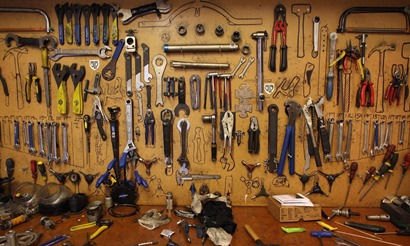
Bike repair tools1_webTaking possessions to be repaired, be it bicycles, clothes, shoes, or anything else, instead of throwing them out and replacing them is green gold. But reuse and upcycling should and must also be and become part of this economy. For it is not “just” repair that we must be looking at.

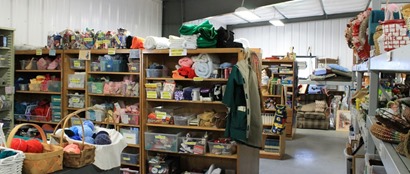
In the reuse sector we would have the secondhand stores, charity shops and even flea markets and car boot sales. While in the upcycling sector all those that rework – upcycle – items of waste of all kinds.

The little unassuming repair shop on the high street may not look like a major disruptive force. However, being able to extend the lifespan of your possessions by getting them fixed is one of the most effective green direct actions that are available. The problem is though that often neither the shops nor the repairability of the products are available.

Repair shops are often few and far between and those that there are, such as some of the so-called “shoe & boot menders” are not very capable in that department when it comes to things that cannot be done by the machines that they have, such as sewing back a midsole to leather uppers, for instance.

In addition to that there is the problem that many goods cannot be repaired as they have actually be designed in such a way and furthermore that for those that may, possibly, be repaired the costs of repair is several times that of buying the same product new. Here we are faced and confronted with a dilemma that needs to be overcome.

Making all the stuff that we buy requires raw materials and energy. Across the European Union now, recycling and recovering energy from waste when it is burned, only captures around 5% of the value of the original raw material used to make all the products in the first place. But consumption in 2030 is predicted to be twice that of 2010. A very troubling prospect given that it is already responsible for between 50% and 80% of total land, material, and water use.

The cycling community is at the forefront of the repair economy. An increase in people using their bikes and an abundance of independent bike retailers offering repair services (there are 2,500 retailers across the UK) means repair is booming. The reason for that is, though, that bicycles can be repaired and that, theoretically, quite easily.

When it comes to the bicycle much of the repairs and more can be done by the user with a little knowledge, including rebuilding “new” from old. But again here often the cost of spares is astronomical. And properly adjusting, say, Shimano gears, can, even at a repair shop, take several hours and thus the labor charges here can make getting a new (cheap) bike almost cheaper than the repair. I have been quoted more than once – I was just checking really – around £75 for that job. That is one of the reasons that I have converted all my bikes (yes, plural, but most are rebuilds from abandoned bicycles that have been found in parks and open spaces) to single speed by simply removing the gears and setting the chain onto one of the cogs in the back cluster.

What is missing sadly, is proper repair services for clothing and also for shoes and other goods. The few small attempts by certain sectors do not make up for the lack of the repairers we once used to have, in both clothing, shoes, boots, and leather goods.

Neuroscience research claims to have shown that our consumption of low-cost consumables, including fashion, activates dopamine receptors in the pleasure region of the brain and it is difficult to compete with our hard-wiring. Repair needs to not only make environmental and moral sense, it needs to make us feel good, too. But that is just what it should do, anyway.

Personally, unless I am hard-wired in a different way, and that is why I do not buy into the neuroscience research, find it much more pleasurable to be able to extend the life of something that I have rather than buying new. But then, I am strange.

In addition to repair, as said, we need to also accommodate the other parts, that is to say reuse and upcycling, into the economy and also, maybe, the teaching of repair, reuse and upcycling as part of that economy.

Repair, in some way, is also reuse as you continue to use the item repaired, while reuse can be secondhand, and that's where the particular stores and shops come in, but also reusing things found and items of what generally might be considered waste directly by us as individuals and households.

Upcycling is going a step above simple reuse, as far as items of “waste” are concerned, as it may come in a couple of forms. The first one is the simple reuse of something for a higher purpose, such as, say as glass jar becoming a drinking vessel. The next level is the transforming an item into something new, without, necessarily, destroying the shape and such while the third, which still is not recycling (though that word is always, erroneously, used there) but is close to it, is taking the material and reworking it into something new, combining elements from more than one items, and such.

The simple reuse, as mentioned earlier, like reusing a glass jar that had some produce in in as a storage jar, and that of the upcycling such as glass jar into drinking vessel (and those are just examples) is something to that most can do at home in the way that our parents, grandparents and their parents did. While it is not part of the economy – so to speak – it is a way for us to save money that we can circulate into the economy in another way.

The other upcycling, reworking, etc., again is part and must be part of the economy. This is what is done my craftspeople, artisans and such who make things from waste and material that others have declared to be waste.

But, as far as repair is concerned, the first thing that needs to happen is that industry actually starts producing again goods that can be repaired and for which spare parts (and repair) do not cost more than a new product.

Just by way of an example allow me to tell you this true story: Some years ago I was using an Epsom PC printer that cost then £35 to buy. It lasted about six months (well within the warranty period of a year). When I contacted Epsom I was told: “The waste ink reservoir is full. You are printing too much with it, Sir.” They were not going to honor any warranty because of that claim from them and as to repair I was told: “Yes, can be done. Part will be £70 and labor, not counting sending it back and forth, £75”. When I told the person from Epsom that I could buy more than four new printers of that make for that money I was told: “Well, I would suggest anyway that you buy a new one.”

That kind of attitude from manufacturers has to change first of all and products, all products, must become repairable, at a reasonable cost, again, though ideally they should also be repairable by a user who likes tinkering around. It once was that way with most things, today though it is exactly the opposite. Often goods cannot be opened even without specialist tools, if even then.

Only when that happens again and when repair is actually economically will we also see the return of the repair shops of all kinds to the High Street, and the not so high one, and the true repair economy, that we once had, will return.

In addition to that a change of mindset amongst the people is required and it has nothing to do, in my view, with any hard-wiring the neuroscience research claims, but with the fact that people have been brainwashed into a perpetual consumption mode, to buy everything new. Then again, as long as repair is not possible or simply not economical what else is one to do when something breaks?

But the mindset is a problem. We can see that every time a new iPhone, or whatever, hits the market. People will queue for hours and hours to be the first to get this new model even though they still have the previous one – in some cases less than a year old and still working perfectly – simple because they have to have it.

Well, that shall be all in the food for thought department on this subject for this time. I have talked enough, I think.

© 2017

The reuse economy or reuse sector

by Michael Smith (Veshengro)

reuse_fabrics-940x400New York City Department of Sanitation Commissioner Kathryn Garcia thinks, as does the department, that the reuse sector, both the nonprofit and the for-profit sector, are key to moving forward with regards to a New York City's “zero-waste” drive.

Compared to the heavy duty world of urban waste collection in New York, the reuse sector can seem quite esoteric. Now, the city is looking to make it a mainstream operation.

Because reusable items are generated more sporadically than the steady streams of refuse, recyclables and organics, the systems to handle them can be less organized. Due to a lack of awareness or access, it’s often easier for many residents to just put their old couches and dusty guitars out on the curb. In many places, one has to add, such systems are not – at least not on an official level – even existent.

So, let's look at what this “new” or “newish” sector of the economy, this reuse thing, actually is. Well, to have said new or even newish is rather incorrect for it is neither of it; it is quite old, only it was not called reuse or even an economy back then.

It was what the rag and bone man and others did, namely pick up things that could either be sold for scrap, refurbished, reworked or whatever, and secondhand shops, once upon a time, were very common. Now they have gone upmarket and are called charity shops. Often the same difference. And those charity shops are, obviously, the nonprofit part of the sector, although, considering that the items are donated to them, and even bought to them, they do make quite a bit of profit from the sale of them.

To bring about a more or less zero waste situation the reuse economy must also include and incorporate the repair, rework and upcycling economy, like those artisans and and other workers who will make goods, ideally usable goods and not just art, for sale, as a business, out of items of waste.

It it made to appear as if the reuse and remake economy is something new, recently invented by the green movement, but it has existed for ages. And even upcycling is not a new thing at all. It too has existed for almost ever and a day. Only it was not called upcycling. It was just what one did, and especially what those that did not have the financial resources to buy did. But it also was an economy in that people repaired, restored and upcycled for sale.

Fact is though that over the last number of decades it fell out of fashion and that was as much due to the fact that people just wanted to appear affluent pretending that they could buy new all the time as with the fact that products became, almost all, non-repairable.

The latter especially led to the demise of the repair economy and repair businesses, large and small, fell by the wayside and died a death. Yes, we still have the so-called shoe repairers, for instance, who often also operate the dry-cleaners and key cutting, but you try to get those franchisees to sew back leather upper to a leather midsole. They can't do it “because they haven't got the machine for it”, as I was told when wanting it done. They are not cobblers, the are just machine operators and if there is not a machine with which to do it they cannot do it. Anything that would involve sewing by hand, where a machine cannot be used, they cannot do. Basically all they can do it put a new heel or sole onto a shoe or boot and that is about it. And the latter obviously only if the shoe or boot has a sole that can be removed and a new one put on and with many shoes and boots today that no longer can be done today.

Before every manufacturer – or almost every one – jumped on the bandwagon of built-in obsolescence, following the likes of Osram in the mid-twentieth century and other US firms after World War II, the repair economy was everywhere because everything could be fixed, at least almost everything.

In countries such as the GDR – often referred to as (communist) East Germany – there were entire small enterprises as well as state combines dedicated to repair. The combines were like a department store where you could bring anything to be fixed, even bed sheets and such, though many things people just fixed themselves.

When the built-in obsolescence “hit the shelves”, so to speak, it was the death knell for the repair businesses, large and small, under capitalism, as almost nothing could be fixed anymore or was and still is too expensive to fix with repairs costing many times that of a new one. And we are surprised that our landfills are overflowing and that we have a waste problem.

That is not to say that people are not a problem here either as many seem to treat everything as disposable even if it is not. It begins with cutlery and other reusable things at picnics in parks where those items are, once soiled having been used for eating with, are tossed out just like disposable items. It carries on with clothes where a button has come off, even though they still have the button in their possession, and so on and so forth.

The reuse sector could really have its work cut out nowadays with people's waste alone to clean, rework and all that, and then bring it back into circulation. And if we add to that upcycling then we would really be motoring and a good thing it would be too.

© 2017

Reuse Economy

by Michael Smith (Veshengro)

This is not about reusing the economy but about an economy of reuse rather. Reusing what we have and this reuse can, does and will take many different forms.

It will, however, stifle the economic growth – and a good thing that will be too – that the powers-that-be keep telling us we must have in order to prosper; they that is, not us, the ordinary man and woman.

The economy today, the one that they promote, is an obsolete model. It is not broken, however. It was designed this way. It is, however, not fit for any purpose on a finite Planet and is only designed to exploit both man and beast and the Earth.

Douglas Rushkoff has said that we are living in an economy where productivity is no longer the goal, employment is. That's because, on a very fundamental level, we have pretty much everything we need. America is productive enough that it could probably shelter, feed, educate, and even provide health care for its entire population with just a fraction of us actually working.

That is what is called overproduction and has nothing to do with making things that are needed but with keeping “slaves” employed – and only that to some degree – and thus built-in obsolescence in products, graveyards for newly produced cars, etc.

Industry keeps producing things that no one buys, because they do not have the money to do so, to make it appear as if the economy is booming. In the case of cars they go even so far as to register those – even though those new cars are destined to be scrapped as no one buys them – to themselves and their agents to make it appear that x-amount of new cars have been bought.

In the main the reuse economy will operate at home and in the community and it is about what it says on the tin; reusing. Reusing what we have and extending the life of everything that we have as well as and especially making use of all those “free” things such as waste materials in form of packaging, such as glass jars, tin cans, cardboard boxes, etc. and also about repairing the goods we have. (More repair in the “repair economy”).

Reusing what we have got instead of buying new and passing on to others those things that still work well and that are good but which we no longer use so that someone else can make use of them.

But, it does not end there!

There are different kinds of reuse that form part of the reuse economy.

The first is reuse per se which means actually to keep using what you already have got instead of buying new simply because it is new (and has more bells and whistles you never will use in a lifetime). The old American adage “If it ain't broke don't fix it” would apply here with but to read “If it ain't broke don't toss it out”. And before you toss it out because it no longer works also see as too whether it can actually be fixed and then kept going. That is the first part of the reuse economy.

The second part of the reuse economy is, as far as I see it, reuse of waste, predominately packaging waste, to repurpose for another, “higher”, use. This is often also called nowadays upcycling. When I was a kid no such names were available and it was just something you did and glass jars became storage containers and even drinking vessels, to substitute glasses; shoe-boxes became filing boxes; tin cans were used also for all manner of things, and the list could go on.

If you would see my kitchen cupboards and counters you would know that I do not just preach it but that I practice it too. There are drinking glasses that are repurposed glass jars, cutlery bins that are tin cans, containers made from milk jugs to hold cleaning materials and tools, and so on. I do not believe in buying something when I can make it myself for nothing, or almost nothing. Why should I throw those glass jars and other things out. After all, indirectly and theoretically, and also practically, I have paid for them when buying the good which were packaged in them.

The reuse economy, so to speak, on a third level is still very active when people, neighbors, pass children's clothes, for instance, that their children have grown out of to others whose children and younger and the same for toys. And then there is the other level of “freecycle” and similar Internet sites and places, and also places in the real world, where items no longer in use in one home (or office) find another good home elsewhere and will continue to be used.

This also goes for the reusing of perfectly good furniture, or items of furniture that may need a little TLC and tuning, and mix and match for furnishing the home was once the way and it is becoming a trend again with some. And why not?

But, as said, the powers-that-be do not really like this kind of economy as it does not help the GDP and the corporations. Tough luck to them. Let them call me a terrorist and yes some government people have just done that some time back when they accused all those people who are thrifty and are reusing and such as equal to domestic terrorists as they – we, as I include myself, thank you – are not spending to grow the economy, the one that they are promoting.

We need to change the economic model to one that benefits both man and Planet and not the big corporations and in fact there is more than one economic model that we must combine to make things work in the right way. Reuse is part of this, as is repair.

© 2014