Showing posts with label climate change. Show all posts

Recycling helps us avoid tackling Climate Change

by Michael Smith (Veshengro)

Climate change and environmental destruction are contentious and disputed topics.

Recycling helps us avoid tackling Climate ChangeIn the US, for instance, there is a powerful faction of Republican politicians who flat-out deny that climate change even exists. In Britain, the former Environment Secretary, Owen Patterson, under David Cameron, is also a climate change skeptic, oddly enough. The current one, under Theresa May, does not appear to be much better in that department either. And it has become worse in the USA under Donald Trump. That is not to say that it was good under Obama.

These denials go against science: carbon emissions have increased by 35 per cent since 1990, and climate change is responsible for over 300,000 deaths a year, a figure that could rise to half a million people by 2030.Or so, at least, we are being told. It is blindingly obvious that we are heading towards environmental destruction and any failure to admit this is negligent and dangerous.

The climate is changing though – and I am swaying that rather carefully – whether all is down to CO2 emissions is another thing altogether. I would actually say that the entire thing of focusing on “carbon emissions” is also making us fail to look at other culprits, for which we, as humans, are also responsible, such as pollution, exploitations of soil and forests, etc., ad infinitum. Ever since they but the word carbon in front of emissions we have failed to look at the other contributing factors that used to go by the name of pollution, from air pollution, to pollution of soil, water and land. But that kind of pollution cannot be traded in the form of carbon certificates, those modern day indulgences.

The international system has set numerous targets to resolve the crisis, such as the UN Millennium Development Goals on the environment, but they are rarely, if ever, met. The many environment summits which regularly take place also fail to produce tangible results, with the big powers failing to agree on terms. On top of that they emit more pollution than almost anything else as those leaders keep jetting around the globe, together with entourage and journalists in tow. And let's not even talk of all those eco-organizations whose people also do this.

On the micro level, people tend to make quite an effort. We are often told to monitor our carbon footprint and in many countries, recycling has become normalized, a part of people's daily routine. These micro-level changes are theoretically somewhat reducing our environmental crisis. Or so we are led to believe.

A greener approach is encouraged by the governments, for both businesses and ordinary citizens. Despite this, the environment is not really improving. When we take our small green steps, we tend to assume that we are solving the problem, and that we do not have to worry about it anymore. This veneer of “action” misleads us and essentially pulls the wool over our eyes, stopping us from asking deeper questions about the environment and what truly contributes to climate change and wider environmental degradation.

We recycle our waste, but do not link it to the consumer society we live in. The media and advertising industries are constantly telling us to buy things we don't need, yet we rarely, if ever, link this to climate change. Our efforts to recycle nullify us and prevent deeper thought. In addition to that there is “greensumption”, the believe that we make a change when we buy “green” products. Hello!! We are still consuming and in that department often things that are greenwashed rather than anything else.

Debates surrounding the environment seldom link the problem to capitalism, and they are too often seen as separate issues. Capitalism is the elephant in the room.

Our capitalist world encourages and ingrains a consumerist mentality that is driving us to environmental ruin. It has been estimated that if everyone consumed at the same rate as your average American, then the world would only be able to support 1.4 billion people.

Capitalism, however, needs that kind of mentality to exist in order for corporations to thrive, and doing the recycling is not going to change our consumerist habits. Therefore what is really needed is a change of system not a change of habits. That, though, the powers-that-be (but really shouldn't be) are hardly going to tell us now, are they.

It is precisely this ideology that is behind the extraction of resources meant to facilitate our lifestyles. The environmental damage done by extractive industries far outweighs what we can achieve as individuals on a micro-level.

The United Nations Environment Program a while ago released a report highlighting how environmental damage caused by Shell in Ogoniland, Nigeria, could take more than 30 years to be reversed. Still, we don't make the link between what happens in places like Ogoniland and our consumer lifestyles at home. There is a huge disconnect there and environmental NGOs are often closely linked to big business, so they can't act as whistleblowers anymore. In other words, very few can do so, nowadays and it is up to us, the people, to make a noise.

Extractive industries have a huge influence in the policy making sphere, particularly in the US. It has been estimated that 94% of US Chamber of Commerce contributions went to climate denier candidates, with the oil and gas industries' lobby worth almost $1.5 billion per year.

It is, therefore, not difficult to see who is shaping policy and why our environmental crisis has only worsened in recent decades. As long as there are powerful interest groups influencing the EU and the US governments, it is unrealistic to expect international conventions to ever make a difference.

Big business has more say than local groups, such as indigenous people, who often have a powerful environmental message to share, but who are persistently ignored. It is beyond irony that the richest most powerful countries in the world are racing towards disaster while the so-called primitive societies are the ones at the forefront of trying to avert it.

There is definitely merit in reducing our individual environmental footprints, but in the grand scheme of things, it is unlikely to make any difference to the Planet's environmental outlook; at least, not as long as capitalism reigns supreme.

Encouraging micro-level changes and giving money to green NGOs merely serves as a smokescreen to prevent real in-depth analysis. It almost facilitates a system whereby corporate-made environmental degradation can continue, while we keep on recycling and forget about the problem.

In order to truly make a change we must begin to ask deeper questions about the society in which we live in and start trying to operate outside of the status quo capitalist framework. Thus we must change the system and no, social democracy will not make one iota of a difference here either the politicians in this often refer to themselves as democratic socialists.

But, as long as we are going to be lulled to sleep by the recycling message, and to believe that we can make a great and significant difference if we but separate our waste properly, etc., we will never get the idea to call for a change of system. Unless, however, the system is changed we – and our children and children's children – are not going to have a Planet on which to live. It is as simple but also as crass as that.

See for this also my article “Fighting climate change and poverty in the Third World at the same time?

© 2018

A warmer world may bring more local, less global, temperature variability

by Michael Smith (Veshengro)

20424118_10209854490866312_555979097128336310_oMany tropical or subtropical regions could see sharp increases in natural temperature variability as Earth’s climate warms over coming decades, a new Duke University-led study suggests.

These local changes could occur even though Earth’s global mean surface air temperature (GMST) is likely to become less variable, the study shows.

“This new finding runs counter to the popular notion that as the climate warms, temperature variability will increase and weather will get more volatile everywhere,” said Patrick T. Brown, a postdoctoral research scientist at the Carnegie Institution for Science, who led the study while he was a doctoral student at Duke’s Nicholas School of the Environment.

“Our research suggests a different scenario: Global unforced temperature variability will actually decrease, not increase, as Earth warms, but local decade-to-decade variability could increase by as much as 50 percent in some places,” Brown said.

Unforced, or natural, temperature variability can be caused by interactions between the atmosphere, ocean currents and sea ice. These fluctuations can either mask or exacerbate human-caused climate change for a decade or two at a time, he noted.

Because billions of people live in tropical or subtropical regions that may experience increased temperature variability, and because these regions are critical for biodiversity, food production and climate regulation, “it’s vital that we understand the magnitude of unforced decade-to-decade variability that could occur there, and the mechanisms that drive it,” he said.

Brown and his colleagues published their peer-reviewed paper Sept. 4 in the journal Nature Climate Change.

To conduct the study, they first inspected a climate model run under pre-industrial conditions. The model, which was developed at NOAA’s Geophysical Fluid Dynamics Laboratory, simulates climate under perpetual atmospheric conditions similar to those experienced on Earth before the widespread emission of industrial greenhouse gasses. This allows scientists to get a clearer picture of the forces that cause variability in the absence of human drivers.

“To isolate unforced variability, we looked at the model’s output without changing any of its environment parameters, such as atmospheric carbon dioxide levels, solar radiation or volcanic activity, over a theoretical 900-year timespan,” Brown explained.

On the second run, the scientists doubled the model’s atmospheric carbon dioxide levels to simulate projected future conditions.

“In the doubled-CO2 run, we saw a 43 percent decrease in global temperature variability, but with local increases of up to 50 percent in many land regions of the tropics and subtropics,” Brown said.

Consistent results were obtained using similar experiments on other climate models.

What’s happening, Brown said, is as Earth warms because of increasing CO2, there is less ice at high latitudes, which means less albedo – the less reflection of solar energy back into space.

“Albedo feedback is a large contributor to decade-to-decade unforced variability. When Earth’s atmosphere naturally gets a bit warmer, more of the reflective sea ice at high latitudes melts. This exposes more water, which absorbs solar energy and amplifies the initial warming, enhancing the GMST variability,” he explained. “But we found that when you double the CO2 levels in a climate model to mimic future conditions, the sea ice melts so much that this albedo feedback can no longer play a large role in amplifying natural temperature variability.”

The end result is less variability globally – especially in the high latitudes – but more variability in the tropics.

“This suggests that the pre-industrial control runs we have been using are not ideal for studying what unforced variability will look like in the future,” said Wenhong Li, associate professor of climate at Duke’s Nicholas School. “But it might inspire more modeling groups to run models under perpetual conditions that reflect what we expect in the future.”

Yi Ming of Princeton University and NOAA’s Geophysical Fluid Dynamics Laboratory, and Spencer A. Hill of UCLA and the California Institute of Technology co-authored the new paper with Brown and Li.

Funding for the research came from the National Institutes of Health, the U.S. Department of Defense the National Science Foundation.

However, there are, more than likely, also other events and happenings that can and must be blamed for what is happening. The tilt of the axis of the Earth, which occurred somewhere around two years or so ago and which also the Inuit in Alaska have observed and reported, from celestial observations, and the change in the Earth's magnetic field, also play a part here.

Furthermore the Earth has, through the ages, gone through natural changes in climate or why does anyone think that the Danes, aka Vikings, called Greenland Greenland? No, they were not colorblind. When they arrived there the place was covered in forests and meadows.

When the Romans were in the British Isles they grew grapes for wine all the way to Hadrian's Wall but when they left – finally – around the 6th century they did so not just because the Empire was falling apart but also and especially because the climate was getting rather cold and damp. But not half a century later Leif Eriksson landed in Newfoundland and was, according to Viking Sagas, presented with sweet lack grapes by the Natives there. Sweet black grapes in Newfoundland? Well, apparently so.

Whatever the reason, the climate of our Planet is in flux – not that it has not always been – and undergoing changes at the present which will, more than likely, lead to serious weather extremes the pinpointing and predicting of which will be almost impossible.

Instead of huffing and puffing we must, aside from seeing as to whether we can mitigate and even reverse it, though if at least some part of it is natural then that we won't be able to change, prepare for any event. But preparing for a possible – or even inevitable – change no one seems to want to do.

The Earth, has trough time, gone through cataclysmic climate events and changes and it could just be that the Great Flood, of which is talk in the Bible and the Scriptures of other religions, which befell the Earth more than likely is one of those.

While such events were catastrophic then it would and will be more so today with the amount of people on the Planet and our dependence of infrastructure and all. But, as said, it would appear that no one, especially no one in government, will want to admit this possibility and that we need to make preparations. Noah's Ark, more than likely, tough, is out of the question.

© 2017

Happy Birthday to the bicycle; 200 yeas old

by Michael Smith (Veshengro)

Laufmaschine.jpgThe old girl has reached the ripe old age of 200 and is looking as good as ever. Actually, let's face it, over the years the old girl has changed and improved, and thus looking even better. Though, when we see today's so-called balancing bikes for young children, the Draisine is back, even in wood, with some improvements.

June 12, 2017 marked the 200th anniversary of the date on which Karl Drais (although he had an aristocratic title he renounced the “von” and the title Freiherr, that is to say, Baron later) took his new invention out for a ride and the modern bicycle was born.

On that day Drais rode his two-wheeled invention, the first Velocipede, five miles from the centre of Mannheim and back in less than an hour, at an average speed of 9.3 mph. It was basically a bicycle without pedals that one pushed along the ground but it was still much faster than walking. He called it a Laufmaschine (running machine in German) but the press named it a Draisine after the inventor.

The reason for the invention was not just for the fun of it. It was in response to an environmental crisis. Two years earlier in April 1815, Mount Tambora exploded and changed the world. This put so much ash and sulphur dioxide into the atmosphere that it turned 1816 into "the year without summer", causing world-wide famine. Most of the horses were slaughtered because there was nothing to feed them or their owners, so they became dinner.

But Drais needed a means of inspecting his tree stands that did not rely on horses. Drais discovered that, by placing wheels in a line on a frame, one could balance through dynamic steering. Thus a narrow vehicle capable of maneuvering on his land and the Laufmaschine became the immediate precursor of the bicycle.

As the bicycle became more popular, people found riding in the streets was uncomfortable due to the deep ruts left behind in surfaces of the roads by coach and cart wheels. This lead to cyclists sharing the sidewalks with pedestrians, which, in turn, led to the first conflicts. The penny-farthing, a bicycle with a huge direct-drive front wheel and tiny rear wheel accelerated fears for the safety of riders and passers-by alike and bicycles bans became common.

The invention of the "rover safety cycle" put the rider's feet back within reach of the ground, and helped this mode of transportation to return to the streets of cities around the world, introducing the rear chain drive in the process. Further important breakthroughs included the invention of ball bearings, the pneumatic tire, and the freewheel. Though some have, today, gone back to the fixed back wheel and please do not ask me why.

Today the bicycle is the most energy efficient and pollution free means of transportation on the planet, aside from walking. It is seen by many as a major player in the solution to climate change given that they are emission free. They could also be the answer to urban congestion as they take up so much less space than a car, and especially to urban pollution.

As in Drais' day, bikes are controversial. Motorists hate them when they are sharing the road and hate them even more when bike lanes are built and take away space for driving and storing cars. As in the days of Drais road conditions are often so awful and dangerous that cyclists sometimes take to riding on the sidewalk, alienating and endangering pedestrians. Though, it has to be said, neither of that is necessary if the cyclist remembers that he or she, theoretically, and often legally, is not meant to be there and that it is the domain of the pedestrians.

The way some cyclists ride and their attitude – and I am a cyclist myself – it is no wonder that people are often not very fond of them, and it seems to be getting worse.

I cannot understand why one has to race along the sidewalk – where one is not supposed to be in the first place though, I admit, I ride there myself but at slow speed (I am in no hurry ever) – or park paths, and such, where pedestrians have priority, weave in and out of motor traffic, undertake cars and trucks, etc. What's the hurry, what's the rush?

But two hundred years ago the skies cleared and a normal climate returned, and soon people were back to being pulled around by horses and the bicycle almost was forgotten. But in our the environment and climate, more than likely, is not going to return to normal, and our cities cannot hold any more cars.

As we enter an era when new pressures encourage everyone to swap their car for alternative transportation, it makes sense to celebrate the birthday the bicycle. So, once again, Happy Birthday old Girl! Let's ride!

© 2017

System change not climate change

by Michael Smith (Veshengro)

18671227_1512636235435117_4603586090297904153_nWould any sane person think dumpster diving would have stopped Hitler, or that composting would have ended slavery or brought about the eight-hour workday; or that chopping wood and carrying water would have gotten people out of Tsarist prisons; or that dancing around a fire would have helped put in place the Voting Rights Act of 1957 or the Civil Rights Act of 1964?

Then why now, with all the world at stake, do so many people retreat into these entirely personal “solutions”? Why are these “solutions” not sufficient? But most importantly, what can be done instead to actually stop the murder of our Planet?

While “personal solutions” have some effect, even the smallest things, but they will not really change anything unless we are, all together, prepared to change the system. It does not matter how “green” and environmentally-friendly you may make your lifestyle capitalism will still remain unsustainable. Thus system change that is required for the world to become a better place where people and the Planet count and not (just) money.

When it comes to climate change the question we also have to ask ourselves if why is the emphasis placed so much on the word “carbon” and everything almost is, even when it is pollution in the form of soot, and such, all called carbon, in the latter instance “brown carbon”. So, why? Because carbon has become a tradeable commodity, so to speak, with modern day indulgences, called carbon certificates and such. That does not make it right; the opposite rather. So, in other words, are we being sold somewhat of a falsehood or at least a half-truth?

The Hippies, who often today are being belittled, warned us already in the 1970s about pollution and what we were doing to the Planet by doing what we were doing. The message still stands for it is pollution that has been the culprit and is the culprit, industrial pollution and the pollution from vehicles, from the burning of fossil fuels, coal, oil and gas.

Many people today seem to forget that in around that same time of the Hippies scientists were telling us that the world was going to be hit by a new ice age and that we were going to end up with glaciers all over the place and to some extent the very same signs that then were claimed to be the signs of global warming were cited; the expansion of the Sahara and the Sahel, and books were written about it and movies made.

Fact is that the Earth is going through some kind of climatic upheaval but despite the fact that everyone – or almost everyone – is jumping up and down in triangles claiming carbon-dioxide and other “greenhouse” gasses being the culprit such changes are not something new. And, no, the last changes did not happen millions of years ago; they happened around a thousand years ago, and it would appear as if there is an almost 500 year cycle from cold to warm to cold, etc.

When the Romans were in Britain they grew grapes in this country, apparently almost as far north as Hadrian's Wall, for the making of wine. Then, and more for reasons of climatic change than anything else, in the early fifth century they just packed up and left.

Some centuries later the Vikings settled on a large island that they called Greenland and unless they were all seriously colorblind the “green” part of the word should be a giveaway. The island was covered in forests and meadows.

In the tenth century the son of the Viking chieftain of Greenland, one Leif Eriksson, arrived on the Labrador coast and, according to records, was presented with sweet black grapes by the local inhabitants. But less than hundred years later the Vikings seem to have abandoned Greenland for climatic reasons.

In the sixteenth century frost fairs were held on the Thames with the river, apparently, frozen to almost its total depth. The cold time seems to have then carried on, more or less, as far as winters are concerned, because some of the summers seem to have been very hot and dry at some times during King Henry VIII time, until about the beginning of the Industrial Revolution when it started to get warmer, incrementally, to where we are today.

While some of the climatic upheaval, or climate change, today is due, no doubt, to what we have been doing, in the name of progress and profit, to the Planet, some of it, probably around fifty percent, or even more, is due to the cycles the Earth seems to be going through on a more or less regular basis.

What we are facing at this very moment also is an Earth axis shift, which the powers-that-be claimed to be a shift of the magnetic north pole, and this will impact on the changes even more than anything. The magnetic north pole, by the way, cannot shift or move, at least not according what we were taught when I was a little younger, as it is located, according to what were taught, on an island off the north coast of Canada. In know that Wikipedia and other “sources” today claim it to be different but I am not buying that.

If the Earth axis is tilting, or even if it is that the magnetic field of the Planet is changing, this will have an impact on the likes of the Gulf Stream, the Jet Stream and many other weather and climate phenomena, and no matter how much we cut “carbon” it will not make much of a difference. That is not to say that we should not reduce or eliminate pollution of the air, the water and the soil, etc. we should and we must. But we must, along with this, also prepare to adapt to the changes and prepare.

But this is not going to happen in the current political and economic system where everything is run by some hidden agendas that just do not make sense to anyone who is prepared to think for him- or herself. The great problem is, though, that many, the great majority in fact, it would appear, are not prepared to think for themselves and want to leave that all to the politicians, the very same who have gotten us into much of the mess in the first place in many instances.

We have to be and create the changes that we want and need and the models for a new society, community by community and area by area and while there are many things that can be done on a individual basis others may and do require a community to do them.

There are some things, as said, that we can do on our own, and those can also be done on a larger scale, such as withdrawing our support for the current system; refusing to partake in the wild consumerism that we are being encouraged to partake in; and others. Creating the new models of the society that we would want, however, can only be done in a group, in a community, in a village, and therefore we must find like-minded folks to work together with.

© 2017

Is mankind in danger of backsliding into pre-industrial times?

by Michael Smith (Veshengro)

spoon_carving_Russia-cottage_industryThe Club of Rome says yes and according to some predictions due to the rise in the world's pollution and the ever decreasing non-renewable resources humanity is threatened to relapse into pre-industrial times.

Modern civilization is dependent on oil (and to some extent still on coal) and (natural) gas, rare earth and phosphate – but soon it won't be able to afford those raw materials. Those are the conclusions the Club of Rome, an association of researchers and scientists, arrived at in the report “The Plundered Planet”, which also includes a detailed inventory and appraisal of the raw materials of the Planet.

The researchers warn in their report of a scarcity of raw materials and the collapse of the ecosystems. Long before the world is going to be running out of raw materials it will no longer be able to continue with the exploitation of them, the Italian author and chemist Udo Bardi said.

Soon it will be necessary to invest more energy for the extraction of oil and gas than they will bring in return and already new the mining industry is using up ten percent of all in the world produced Diesel fuel. Investment in the extraction of energy will soon no longer be profitable. It is obvious that no one will be extraction oil at the cost of one to one or even two to one, that is to say when input and output is equal or when two units of energy are required to extract one then no one is going to do it.

Most raw materials are only to be found, nowadays, in small concentrations for which one has to drill deeper and deeper or, as in the case of hydraulic fracturing, commonly known as fracking, expensive – and dangerous – technologies have to be used.

The Earth will drastically change

At this moment there are around seven billion people on this Planet. The number is estimated to rise within the next four decades to 9.3 billion. Whether this number is sustainable is, obviously, a question but the greatest problem is the destruction of the ecosystems caused by man's exploitation of the Earth and this will change the Planet, more than likely, in an extreme way.

We are making ourselves to the inhabitants of a new Planet – almost. A Planet with totally different climatic conditions and far fewer resources and raw materials, as far as non-renewable raw materials are concerned.

Should people fail to respond to this new situation in a positive way mankind is in danger, so the report also, to be backsliding and relapsing into pre-industrial times.

If it would be possible to create all our electrical energy from renewables such as solar, wind, etc., the new system would have to forgo motorways and aviation but not the Internet, robots, communication over long distances, and food security.

The energy transition and the exit from nuclear and fossil-fuel energy, as both is equally necessary though, alas, not understood by the powers-that-be, especially not in the UK and the USA, is and can only be the preliminary stage of a change of resources use. Already now are so many raw materials are used that a zero growth cannot even guarantee sustainable development.

This means that our entire system has to be changed where we get away from non-renewable resources and raw materials and based our economy and whatever else on renewable resources and on reclaiming more and more of the non-renewable ones in the form of so-called secondary raw materials. Mining our landfills may not just be an option but, I believe, may actually become a necessity. While iron and steel, in many cases, may by now have rotted away in such facilities, other metals, such as aluminium, copper, gold, and silver will still be recoverable.

The authors of the report stated that mankind is in danger of backsliding into pre-industrial times and while for many, if not indeed all of us, alive today it would mean some serious changes in our attitude and serious adjustments as to how we live and where we live and the work that we do, and so on, the question is to whether this is all such a bad idea. Maybe it is not even so much a backsliding into a pre-industrial era but an advancing into a post-industrial one.

We cannot, however, really backslide into pre-industrial era with the knowledge that we have today and some of the things but rather move forward to a post-industrial time. Though that new era will very much be like the old era though with knowledge, etc., that was not available then. Mankind will, especially in the currently highly industrialized nations, also have to relearn a lot of skills and technologies that were used then.

© 2017

UK government pledges bold ambition for electric cars

DfT logoGovernment reaffirms UK’s commitment for almost all cars and vans to be zero emission by 2050 at Paris COP21 conference.

by Michael Smith (Veshengro)

On December 3, 2015, the UK government has continued to lead global efforts to cut vehicle emissions at the international climate conference in Paris.

The UK was one of 13 international members of the Zero Emission Vehicle (ZEV) Alliance to sign a commitment to promote cleaner motoring and slash transport emissions, alongside Germany, Holland, Norway and California. It includes an agreement to make all passenger vehicle sales zero emission vehicles by 2050.

Transport Minister Andrew Jones said: “The UK already has the largest market for ultra-low emission vehicles in the EU, and the fourth largest in the world and today’s pledge reaffirms our commitment to ensuring almost every car and van is a zero emission vehicle by 2050.

“Electric cars are greener and cheaper to run and we are making them more affordable, spending more than £600 million between 2015 and 2020 to support the uptake and manufacturing of ultra-low emission vehicles here in the UK.

“By leading international efforts on this issue, we are playing our part in helping achieve greenhouse gas emission reductions of more than 1 billion tonnes per year across the world by 2050.”

The ZEV Alliance formed in September this year with the ambition to increase the global uptake of greener vehicles through international co-operation.

As well as the UK, members include Germany, the Netherlands and Norway in Europe; California, Connecticut, Maryland, Massachusetts, New York, Oregon, Rhode Island and Vermont in the United States; and Quebec in Canada.

All very nice words and ambitions but no one seems to even look at the problems actually facing electric vehicles. One of them is the rarity of the materials from which the batteries are made and two the fact that fossil fuels will still be needed for the manufacture of the vehicles, as well and especially for the extraction of the rare earths and other raw materials. Thus to actually call them zero-emission vehicles is also rather misleading in the extreme.

None of the governments, NGOs, and what-have-you are, unfortunately, willing to state that motoring, especially the personal motoring with the private motorcar, whether infernal combustion engine or electric motor, is not going to be able to continue and also that electric vehicle technology will not make tractors, combine harvesters, and road haulage trucks feasible. While it does work for small delivery trucks running around our towns and cities the large road haulage of 35 or even 50 tonnes as now envisaged for trucks just is not possible with electric battery-powered motors.

The future of transportation, private, agricultural, and haulage will actually be a re-visitation of the past and I am sure the reader will well know what I mean. However, maybe I must spell it out for the government agencies and NGOs... it is the horse and the bicycle.

If it would not be that sad the way governments and NGOs are being affected by the ostrich syndrome and trying to keep the masses in the dark it would actually be funny and laughable but, alas, it is not.

© 2015

You’re obsessing about the wrong home energy uses

light-switches

Keeping an eye on your own energy use is the “duh” approach to a smorgasbord of environmental problems, up to and including climate change. As a reporter, I can obsess over research funding for renewable technology, or streamlined permitting for solar installations, or more public transit, or better roads for cyclists and pedestrians, or how much fuel is burned in schlepping and refrigerating my food before it gets to me. But if I actually want to feel like I have control over one small corner of the world, I turn off the lights when I leave the room. When the downstairs neighbors in my apartment building turn all the lights on in the basement, because they are little weenies who are afraid of the dark, I go downstairs, turn them off myself, and generally think uncharitable thoughts about them and their various lifestyle choices.

In all this light-switch obsessing, I am a textbook illustration of a phenomenon explored recently by the Journal of Environmental Psychology. Chris Mooney over at the Washington Post does a good job of summarizing the study:

People generally weren’t very good at estimating how much total energy use the different categories consumed. For one, they didn’t realize that the biggest energy users — home heating and driving “private motor vehicles” — were dramatically more energy intensive than many other smaller energy users, such as computers or dishwashers.

You know what this means: I have been judging my neighbors for all the wrong reasons. This is pure tragedy.

Read more here.

James Cameron: Eating meat-free to save the planet

Canadian filmmaker James Cameron discusses the importance of a climate change deal between China and the U.S.

“We can just change what we eat,” explains Cameron. “Just eat less meat and dairy and your carbon footprint drops way down.”

When U.S. President Barack Obama visited Beijing last November, he and Chinese President Xi Jinping announced a landmark joint agreement to fight the effects of climate change. It committed the two nations to reducing planet-warming carbon emissions and cemented a first-ever pledge by China to stop its emissions from growing by 2030.

The accord was widely hailed as a crucial first step toward prompting other nations to make their own greenhouse gas cuts. This as a new global agreement on curbing climate change is expected to be signed this fall, by every nation around the globe, at a United Nations summit in Paris.

Read more here.

RECYCLING HELPS US AVOID TACKLING CLIMATE CHANGE

Climate change and environmental destruction are contentious and disputed topics.

In the US, for instance, there is a powerful faction of Republican politicians who flat-out deny that climate change even exists. In Britain, the Environment Secretary, Owen Patterson, is also a climate change sceptic, oddly enough.

These denials go against science: carbon emissions have increased by 35 per cent since 1990, and climate change is responsible for over 300,000 deaths a year, a figure that could rise to half a million people by 2030. It is blindingly obvious that we are heading towards environmental destruction and any failure to admit this is negligent and dangerous.

The international system has set numerous targets to resolve the crisis, such as the UN Millennium Development Goals on the environment, but they are rarely met. The many environment summits which regularly take place also fail to produce tangible results, with the big powers failing to agree on terms.
The 2011 Durban Climate Change Conference is a case in point – we’re three years later and no agreements have been reached. All these meetings are mere rhetoric aimed at duping the public into thinking that our leaders are taking action.

Read more here.

Stop burning fossil fuels now: there is no CO2 'technofix', scientists warn

Researchers have demonstrated that even if a geoengineering solution to CO2 emissions could be found, it wouldn’t be enough to save the oceans

German researchers have demonstrated once again that the best way to limit climate change is to stop burning fossil fuels now.

In a “thought experiment” they tried another option: the future dramatic removal of huge volumes of carbon dioxide from the atmosphere. This would, they concluded, return the atmosphere to the greenhouse gas concentrations that existed for most of human history – but it wouldn’t save the oceans.

That is, the oceans would stay warmer, and more acidic, for thousands of years, and the consequences for marine life could be catastrophic.

The research, published in Nature Climate Change today delivers yet another demonstration that there is so far no feasible “technofix” that would allow humans to go on mining and drilling for coal, oil and gas (known as the “business as usual” scenario), and then geoengineer a solution when climate change becomes calamitous.

Read more here.

Here’s How Climate Change Will Make Food Less Nutritious

A new study suggests that having more CO2 in the atmosphere will cause levels of zinc and iron in important staple crops to drop.

There are two things you want to get from a harvest. First there’s yield, the amount of grains, beans, or fruit you pull from the fields—and that’s where the focus is placed much of the time, both from the farmer’s perspective and in terms of plant breeding and global development conversations. The other, which isn’t so apparent on the farm, is nutrition. A study published this week in Nature suggests that as CO2 levels in the atmosphere increase in the coming decades, yields may increase. But even as farmers have more wheat, rice, and beans to harvest and eat, the nutrition levels in those staple crops—namely, zinc and iron—are going to drop.

Just last year, the world crossed the dubious threshold of 400 parts per million of carbon dioxide in the atmosphere. By using CO2 jets placed around test plots, the study created growing conditions that approximate a future in which those levels creep upward of 500 parts per million. The grains and legumes grown in this environment had anywhere between 5 and 10 percent less iron, zinc, and protein too. The increase in nutritional deficiencies these drops could cause “represents the most significant health threat ever shown to be associated with climate change,” according to a Harvard press release.

Read more here.

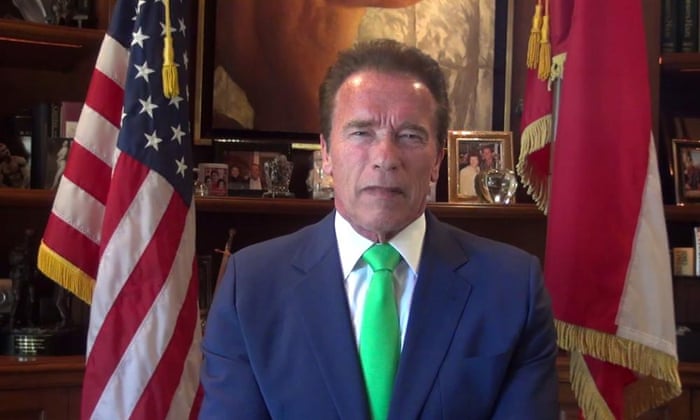
Arnold Schwarzenegger: climate change is not science fiction

Terminator star calls global warming a ‘battle in the real world’ that’s bigger than any movie, at the first summit of conscience for the climate in Paris

Arnold Schwarzenegger has been chosen by the French government to join Nobel prizewinners, philosophers, UN secretary generals, spiritual leaders and theologians to make the moral case for the world to act urgently on climate change.

Talking at the world’s first summit of conscience for the climate on Tuesday – ahead of the crucial UN climate change meeting in the city in December – the Terminator star and former California governor declared the science debate over, saying planetary catastrophe could only be avoided with ethical action:

“I’ve starred in a lot of science fiction movies and, let me tell you something, climate change is not science fiction, this is a battle in the real world, it is impacting us right now.

“I believe the science is in. The debate is over and the time for action is now,” he told an invited audience of intellectuals and spiritual leaders from all faiths. “This is bigger than any movie, this is the challenge of our time. And it is our responsibility to leave this world a better place than we found it, but right now we are failing future generations.”

Read more here.

Climate change should be top foreign policy priority, G7 study says

Global warming ‘ultimate threat multiplier’ posing serious risk to world security, says report urging governments not to see it simply as a climate issue

Tackling climate change risks must become a top foreign policy priority if the world is to combat the global security threat it poses in the 21st century, according to a new study commissioned by the G7 countries.

Multiple conflicts have taken the government systems for dealing with them “to their limits”, according to one of the authors of the report, which was launched at the Foreign and Commonwealth Office (FCO) on Tuesday.

Written by an international consortium including peacebuilding NGO International Alert and the European Union Institute for Security Studies, it calls climate change “the ultimate threat multiplier” in fragile situations.

Read more here.

Citing conflicts in Syria and Mali and land grabs in Ethiopia, it warns that problems exacerbated by climate change – such as food insecurity, competition for water and land, migration and displacement – could leave fragile states unable to provide for their citizens.

Speaking at the launch, Baroness Anelay, the UK’s minister of state for the FCO, agreed that climate change should become a top foreign policy priority.

“Climate change is not only a threat to the environment but to global security and economic prosperity. That therefore makes it a top priority not only for environment ministers but foreign ministers too. It’s a cross government issue – and if it’s not, it should be,” she said.

No punches pulled in Climate Change Encyclical

by Michael Smith (Veshengro)

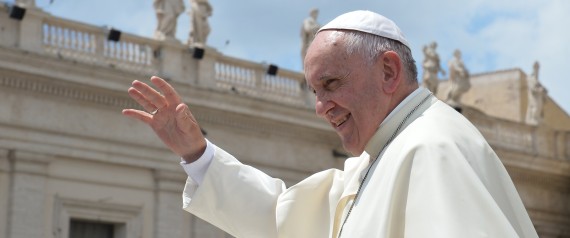
Pope Francis pulls no punches in Climate Change Encyclical

The care of the Planet is at the heart of The Holy Father's attention in this Encyclical

1533868_838329846249672_1185197550952132137_n“Praised be You, my Lord, for Brother Sun and Sister Moon, for Brother Wind and Sister Water, for Brother Fire; praised be You, my Lord, for our Sister Mother Earth, our common home, which sustains and governs us.” (Adapted from the Canticle of the Creatures by Saint Francis of Assisi.)

“What kind of world do we want to leave to those who come after us, to children who are now growing up?” is the question that is at the heart of Laudato si’ (May You be praised), the Encyclical on the care of the common home by Pope Francis.

“This question does not have to do with the environment alone and in isolation; the issue cannot be approached piecemeal”. This leads us to ask ourselves about the meaning of existence and its values at the basis of social life: “What is the purpose of our life in this world? What is the goal of our work and all our efforts? What need does the earth have of us?” “Unless we struggle with these deeper issues – says the Pope – I do not believe that our concern for ecology will produce significant results”.

laudato_si

“The economic powers shall continue to justify the current world system, in which speculation and and the aim for financial returns to prevail that tend to ignore each context and the effects on the environment and on human dignity. So clearly it reveals that environmental, human and ethical degradation are intimately connected,” the Holy Father also wrote in this letter to the faithful.

“Authentic development includes efforts to bring about an integral improvement in the quality of human life, and this entails considering the setting in which people live their lives. These settings influence the way we think, feel and act. In our rooms, our homes, our workplaces and neighbourhoods, we use our environment as a way of expressing our identity. We make every effort to adapt to our environment, but when it is disorderly, chaotic or saturated with noise and ugliness, such overstimulation makes it difficult to find ourselves integrated and happy.”

This Encyclical takes its name from the invocation of Saint Francis, “Praise be to you, my Lord”, in his Canticle of the Creatures. It reminds us that the earth, our common home “is like a sister with whom we share our life and a beautiful mother who opens her arms to embrace us”. We have forgotten that “we ourselves are dust of the earth (cf. Gen 2:7); our very bodies are made up of her elements, we breathe her air and we receive life and refreshment from her waters.”

Now, this earth, mistreated and abused, is lamenting, and its groans join those of all the forsaken of the world. Pope Francis invites us to listen to them, urging each and every one – individuals, families, local communities, nations and the international community – to an “ecological conversion”, according to the expression of Saint John Paul II. We are invited to “change direction” by taking on the beauty and responsibility of the task of “caring for our common home”. At the same time, Pope Francis recognizes that “there is a growing sensitivity to the environment and the need to protect nature, along with a growing concern, both genuine and distressing, for what is happening to our planet”. A ray of hope flows through the entire Encyclical, which gives a clear message of hope. “Humanity still has the ability to work together in building our common home”. “Men and women are still capable of intervening positively”. “All is not lost. Human beings, while capable of the worst, are also capable of rising above themselves, choosing again what is good, and making a new start”.

Pope Francis certainly addresses the Catholic faithful, quoting Saint John Paul II: “Christians in their turn “realize that their responsibility within creation, and their duty towards nature and the Creator, are an essential part of their faith”“. Pope Francis proposes specially “to enter into dialogue with all people about our common home”. The dialogue runs throughout the text and in ch. 5 it becomes the instrument for addressing and solving problems. From the beginning, Pope Francis recalls that “other Churches and Christian communities – and other religions as well – have also expressed deep concern and offered valuable reflections” on the theme of ecology. Indeed, such contributions expressly come in, starting with that of “the beloved Ecumenical Patriarch Bartholomew”, extensively cited in numbers 8-9. On several occasions, then, the Pope thanks the protagonists of this effort – individuals as well as associations and institutions. He acknowledges that “the reflections of numerous scientists, philosophers, theologians and civic groups, all […] have enriched the Church’s thinking on these questions”. He invites everyone to recognize “the rich contribution which the religions can make towards an integral ecology and the full development of humanity”.

While the Holy Father is, in this Encyclical, primarily, obviously, addressing the Catholic faithful, and those of other Christian traditions also, the message is for all of us, whether of a faith or none, and also and especially for those who think themselves in power to lord it over us.

In the light of the message of his Encyclical the Holy Father has already been declared the most dangerous person on Earth by a great many of American politicians, especially in the Republican Party. No surprise there that they do not like the Pope's message as (1) they are climate change deniers to the hilt and (2) they see the Holy Father as the Antichrist (and I kid you not there).

Several main themes run through the text that are addressed from a variety of different perspectives, traversing and unifying the text:

*the intimate relationship between the poor and the fragility of the planet,

*the conviction that everything in the world is connected,

*the critique of new paradigms and forms of power derived from technology,

*the call to seek other ways of understanding the economy and progress,

*the value proper to each creature,

*the human meaning of ecology,

*the need for forthright and honest debate,

*the serious responsibility of international and local policies,

*the throwaway culture and the proposal of a new lifestyle.

"Laudato si' – Pope Francis' Encyclical on care for our common home can be downloaded as a PDF file here...

© 2015

Fox News Pundit Calls Pope Francis 'The Most Dangerous Person On The Planet'

Fox News Pundit Calls Pope Francis 'The Most Dangerous Person On The Planet' For Suggesting Climate Change Is Real

POPE FRANCIS

Pope Francis's newly released papal letter on outlining the moral imperative of protecting the environment has upset some Catholics and conservatives who say the pontiff should stay out of the "political realm." But one conservative pundit went a step further by calling the pope "the most dangerous person on the planet."

Pope Francis earned such a title in Fox New pundit Greg Gutfeld's eyes for "seeking strange new respect" from his "adversaries" -- among whom, Gutfeld presumes, are liberals who might disagree with the pontiff's more conservative perspectives on gay marriage, women's ordination and contraception.

The pope opened the leaked draft of the encyclical by saying climate change is the Earth’s way of protesting “irresponsible use and abuse of the goods that God placed in her.”

“We have grown up thinking that we were her owners and dominators, authorized to loot her,” the draft read, according to a translation by The Guardian. “The violence that exists in the human heart, wounded by sin, is also manifest in the symptoms of illness that we see in the Earth, the water, the air and in living things.”

Read more here.

Paris climate summit must be start of frequent carbon reviews, says IEA

Pledges on curbing carbon emissions by countries at UN conference this December should be revised every five years, says energy watchdog

The crunch climate change conference to take place in Paris later this year must be the beginning of a new process of five-yearly meetings, rather than a one-off, the world’s energy watchdog has warned.

Fatih Birol, chief economist of the International Energy Agency, and its incoming executive director, said: “The pledges in Paris need to be renewed every five years. That is because circumstances change, the costs of technology go down, and so on. We need to take account of that.”

In Paris, this December, the governments of 196 countries will meet to try to forge a new global agreement on climate change, with all countries taking on targets on their future emissions. For developed countries, this will mean absolute cuts; for developing nations, curbs on their future carbon output. These commitments would kick in from 2020, when current commitments will run out.

But, currently, there are no plans for a process of future revisions of the Paris pledges, which run to 2025 in some cases and 2030 for other countries.

Read more here.

Brazil faces the worst drought in 80 years

Young boy carries water to his home in northeastern BrazilUnless the desperately needed rain arrive, São Paulo residents are being warned to "prepare for a collapse like they've never seen before."

Brazil is a country with 12 percent of the world’s fresh water supply and just 3 percent of its population, but it is at risk of running dry. Brazil is currently in the midst of the worst drought it has seen in eighty years, and there’s no sign of it letting up.

In the southern state of São Paulo, where 44 million people live, at least 14 million have been affected by the lack of water. There are days when people come home from work, turn on their taps, and nothing comes out.

Flávia de Souza Carvalho told the Washington Post, “We can’t shower, wash dishes, do laundry. I have a sink full of dishes because there’s no water coming out of the tap.”

Water has been scarce in the south for the past ten months, ever since the last rainy season produced only 40 percent of the usual amount of rain and failed to replenish adequately the rivers and reservoirs on which São Paulo depends. Satellite images from NASA show the significant difference in the depth of water reservoirs from August 2013 to August 2014.

Read more: http://www.treehugger.com/climate-change/tbd-drought-brazil.html

The 14-Year-Old Voice of the Climate Change Generation

Xiuhtezcatl Martinez, 14, is on a crusade to stop climate change. (Photo: Xiuhtezcatl Martinez)When other kids were experiencing the travails of first grade, 6-year-old Xiuhtezcatl Martinez was concerned about threats to the world’s ecosystem. Martinez, now 14, is the youth director of the nonprofit environmental organization Earth Guardians and one of the youngest people to speak on a United Nations panel.

Martinez, a resident of Boulder, Colorado, credits his worldview to the Aztec teachings of his father and the environmental activism of his mother.

In October, in his keynote address to the 2014 National Bioneers Conference in San Rafael, California, he told the assembled crowd, “In the light of a collapsing world, what better time to be born than now? Because this generation gets to rewrite history, gets to leave our mark on this earth.… We will be known as the generation, as the people on the planet, that brought forth a healthy, just, sustainable world for every generation to come. … We are the generation of change.”

In December, HBO will debut the music video “Be the Change,” by Martinez’ hip-hop group, Voice of Youth.

In These Times spoke to Martinez about how to stop climate change.

You gave your first speech at a climate change rally when you were 6. At age 12, you were among the youngest speakers at the Rio+20 United Nations Summit. How is it that you became an environmental activist?

Martinez: One factor was the indigenous teachings passed on to me by my father and ancestors: that all life is sacred and connected to each of us; that as people on earth we have a responsibility to be caretakers of the world. I also watched Leonardo DiCaprio’s documentary, The 11th Hour, when I was 6. I was devastated. I saw that my world — the world that my and future generations will be left with — is being destroyed by our lifestyles. There’s such a lack of consciousness on our planet. We’re overusing our resources to an extent that every living system on earth is dying.

Read more: http://billmoyers.com/2014/12/05/14-year-old-voice-climate-change-generation/

A Young Generation Sees Greener Pastures In Agriculture

Marya Gelvosa, 29, didn't grow up dreaming of being a farmer — in fact, as of a few years ago, she'd never even lived in the countryside. Now she and her partner Josh Gerritsen raise Highland cows and pastured eggs for a living.America's heartland is graying. The average age of a farmer in the U.S. is 58.3 — and that number has been steadily ticking upward for more than 30 years.

Overall, fewer young people are choosing a life on the land. But in some places around the country, like Maine, that trend is reversing. Small agriculture may be getting big again — and there's new crop of farmers to thank for it.

Fulfilling Work, Noble Work

On a windy hillside just a few miles from Maine's rocky mid-coast, it's 10 degrees; snow is crunching underfoot. Hairy highland cattle munch on flakes of hay and native Katahdin sheep are mustered in a white pool just outside the fence. Not far away, heritage chickens scuttle about a mobile poultry house that looks a bit like a Conestoga wagon.

Read more: http://www.npr.org/2015/01/03/374629580/a-young-generation-sees-greener-pastures-in-agriculture

After Irene, Vermont shows us what climate resilience looks like

Three years after Tropical Storm Irene turned their fields into lakes and their cows into swimmers, the owners of Liberty Hill Farm are planting sunflowers, creating beauty where they once saw devastation.

Beth Kennett’s eyes still flood with tears as she and her husband, Bob, recall the volunteers — strangers, mostly — who streamed into town during the late summer of 2011 to help save its last remaining dairy farm. With well over a million dollars’ worth of damage, “our farm wouldn’t exist” without volunteer labor, Beth says.

With its iconic red barn and the graphic punch of black and white cows against kelly green fields, Liberty Hill Farm is everything you envision when you picture a family farm. Nestled between steep hills along the White River in central Vermont, the 240-acre property is home to 270 Holstein cows. Everyone helps: the Kennetts’ grown sons, Tom and David, their daughters-in-law, and their five grandkids, including 2-year-old Ella, who trots after her father in her little bright pink rubber boots.

The simple pleasures of rural life — fresh air, clean water, honest labor, proximity to nature — are at their seductive best here, right down to the tire swing that hangs from the maple tree and the rhubarb coffee cake that cools on the stove.

But for the Kennetts and the 1,137 others in Rochester and countless communities like it — remote places with abundant beauty and meager resources — the outlook is clouded at best. In its most recent report released earlier this year, the National Climate Assessment (NCA) devoted an entire chapter to the increasingly detrimental effects of climate change on rural America: its infrastructure, economy, and overall quality of life.

Read more: http://grist.org/climate-energy/after-irene-vermont-shows-us-what-climate-resilience-looks-like/