Showing posts with label environment. Show all posts

British festivals are utter rubbish!

by Michael Smith (Veshengro)

festival rubbish1The UK's biggest festivals churn out over 1,600 tons of all kinds of rubbish. Put into perspective that is as heavy as:

2500 cows, 250 T-Rex, 200 elephants, 20 Space Shuttles, or 15 Blue Whales. That is rather heavy, isn't it? And a load of rubbish that does not have to be.

June 2017 – An 800-strong clean-up crew descended on the Glastonbury site following the exit of 200,000 revelers, to tackle around 1,650 tons of waste – the most extensive cleanup effort in history!

Those 1,650 tons of waste include:
- 5,000 abandoned tents
- 6,500 sleeping bags
- 400 gazebos
- 54 tons of cans and plastic bottles
- 41 tons of cardboard
- 66 tons of scrap metal
- 3,500 airbeds
- 2,200 chairs
- 950 rolled mats

But it doesn't need to be this way:

For campers & attendees, why not consider the following:

  • Only pack what is absolutely essential - Remember to only take the bare minimum
  • Take home the tent - clean it up and save it for another festival, recycle it or donate to a homeless or refugee charity.
  • Put your rubbish in bins and recycle points
  • Bring reusable cutlery, crockery and cups
  • Share transport or use public transport

Food & drink providers can support the environment through:

  • Use biodegradable cups and food containers
  • Implement recycling rewards for customers such as half price drink in exchange for 20 recycled cups
  • Bring compost bins and recycling facilities
  • Give discount to those carrying and using their own reusable cups

While the festival season is slowly coming to an end for this year with the next two big ones being the Reading and Leeds festivals which will be finishing off this summer of music, I would like to ask both attendees and merchants to actively consider their impact on the environment, by making small changes. Together we can all make a big change. It is not rocket science.

© 2017

System change not climate change

by Michael Smith (Veshengro)

18671227_1512636235435117_4603586090297904153_nWould any sane person think dumpster diving would have stopped Hitler, or that composting would have ended slavery or brought about the eight-hour workday; or that chopping wood and carrying water would have gotten people out of Tsarist prisons; or that dancing around a fire would have helped put in place the Voting Rights Act of 1957 or the Civil Rights Act of 1964?

Then why now, with all the world at stake, do so many people retreat into these entirely personal “solutions”? Why are these “solutions” not sufficient? But most importantly, what can be done instead to actually stop the murder of our Planet?

While “personal solutions” have some effect, even the smallest things, but they will not really change anything unless we are, all together, prepared to change the system. It does not matter how “green” and environmentally-friendly you may make your lifestyle capitalism will still remain unsustainable. Thus system change that is required for the world to become a better place where people and the Planet count and not (just) money.

When it comes to climate change the question we also have to ask ourselves if why is the emphasis placed so much on the word “carbon” and everything almost is, even when it is pollution in the form of soot, and such, all called carbon, in the latter instance “brown carbon”. So, why? Because carbon has become a tradeable commodity, so to speak, with modern day indulgences, called carbon certificates and such. That does not make it right; the opposite rather. So, in other words, are we being sold somewhat of a falsehood or at least a half-truth?

The Hippies, who often today are being belittled, warned us already in the 1970s about pollution and what we were doing to the Planet by doing what we were doing. The message still stands for it is pollution that has been the culprit and is the culprit, industrial pollution and the pollution from vehicles, from the burning of fossil fuels, coal, oil and gas.

Many people today seem to forget that in around that same time of the Hippies scientists were telling us that the world was going to be hit by a new ice age and that we were going to end up with glaciers all over the place and to some extent the very same signs that then were claimed to be the signs of global warming were cited; the expansion of the Sahara and the Sahel, and books were written about it and movies made.

Fact is that the Earth is going through some kind of climatic upheaval but despite the fact that everyone – or almost everyone – is jumping up and down in triangles claiming carbon-dioxide and other “greenhouse” gasses being the culprit such changes are not something new. And, no, the last changes did not happen millions of years ago; they happened around a thousand years ago, and it would appear as if there is an almost 500 year cycle from cold to warm to cold, etc.

When the Romans were in Britain they grew grapes in this country, apparently almost as far north as Hadrian's Wall, for the making of wine. Then, and more for reasons of climatic change than anything else, in the early fifth century they just packed up and left.

Some centuries later the Vikings settled on a large island that they called Greenland and unless they were all seriously colorblind the “green” part of the word should be a giveaway. The island was covered in forests and meadows.

In the tenth century the son of the Viking chieftain of Greenland, one Leif Eriksson, arrived on the Labrador coast and, according to records, was presented with sweet black grapes by the local inhabitants. But less than hundred years later the Vikings seem to have abandoned Greenland for climatic reasons.

In the sixteenth century frost fairs were held on the Thames with the river, apparently, frozen to almost its total depth. The cold time seems to have then carried on, more or less, as far as winters are concerned, because some of the summers seem to have been very hot and dry at some times during King Henry VIII time, until about the beginning of the Industrial Revolution when it started to get warmer, incrementally, to where we are today.

While some of the climatic upheaval, or climate change, today is due, no doubt, to what we have been doing, in the name of progress and profit, to the Planet, some of it, probably around fifty percent, or even more, is due to the cycles the Earth seems to be going through on a more or less regular basis.

What we are facing at this very moment also is an Earth axis shift, which the powers-that-be claimed to be a shift of the magnetic north pole, and this will impact on the changes even more than anything. The magnetic north pole, by the way, cannot shift or move, at least not according what we were taught when I was a little younger, as it is located, according to what were taught, on an island off the north coast of Canada. In know that Wikipedia and other “sources” today claim it to be different but I am not buying that.

If the Earth axis is tilting, or even if it is that the magnetic field of the Planet is changing, this will have an impact on the likes of the Gulf Stream, the Jet Stream and many other weather and climate phenomena, and no matter how much we cut “carbon” it will not make much of a difference. That is not to say that we should not reduce or eliminate pollution of the air, the water and the soil, etc. we should and we must. But we must, along with this, also prepare to adapt to the changes and prepare.

But this is not going to happen in the current political and economic system where everything is run by some hidden agendas that just do not make sense to anyone who is prepared to think for him- or herself. The great problem is, though, that many, the great majority in fact, it would appear, are not prepared to think for themselves and want to leave that all to the politicians, the very same who have gotten us into much of the mess in the first place in many instances.

We have to be and create the changes that we want and need and the models for a new society, community by community and area by area and while there are many things that can be done on a individual basis others may and do require a community to do them.

There are some things, as said, that we can do on our own, and those can also be done on a larger scale, such as withdrawing our support for the current system; refusing to partake in the wild consumerism that we are being encouraged to partake in; and others. Creating the new models of the society that we would want, however, can only be done in a group, in a community, in a village, and therefore we must find like-minded folks to work together with.

© 2017

It's the Planet Stupid!: Capitalism and The Destruction of the Commons

There is a war going on right now between those who are working to protect the commons and the hard-core capitalists, who are working to privatize our economy, culture, ecology, environment and government.

The stakes are high. The outcome will determine whether we live in a dystopian chaos, or a civil society; whether we preserve our natural life support system, or live on life support.

At the moment, it’s a rout. The capitalists are winning, and those very few who speak for the commons are ignored, marginalized or ridiculed.

To understand this conflict, we need to understand what is meant by the commons. Here’s a typical definition:

The cultural and natural resources accessible to all members of a society, including natural materials such as air, water, and a habitable earth. These resources are held in common, not owned privately.

I would propose a slightly broader definition, one in which “cultural resources” includes the laws, regulations and norms designed to assure an equitable, just, prosperous and sustainable world. These too are under assault from the capitalists.

Growth, GDP, Wealth and Other Non-sequitors

Ask any good capitalist what an economy is for, they’ll say something like “maximizing wealth,” or “growing GDP.”

Folks have pretty much figured out that GDP isn't synonymous with wealth or welfare, but this still begs the question: what is wealth?

Most definitions offered by economists go something like this: those material things which are produced by labor, can satisfy human wants, and must have an exchange value.  And of course, the medium of exchange we all know and love is money, moola, cash, bucks – in short currency.  But as Chris Martenson points out, currency is merely a claim on wealth, not real wealth. It has no intrinsic value.

Read more here.

David Suzuki: Aboriginal people, not environmentalists, are our best bet for protecting the planet

David Suzuki: Aboriginal people, not environmentalists, are our best bet for protecting the planet

Using DNA to track the movement of people in the past, scientists suggest our species evolved some 150,000 years ago on the plains of Africa. That was our habitat, but unlike most other animals, we were creative and used our brains to find ways to exploit our surroundings. We were far less impressive in numbers, size, speed, strength or sensory abilities than many others sharing our territory, but it was our brains that compensated.

Over time, our numbers increased and we moved in search of more and new resources (and probably to check out the Neanderthals with whom we crossbred before they went extinct). When we moved into new territories, we were an alien creature, just like the introduced ones that trouble us today.

George Monbiot of The Guardian makes the point that we can trace the movement of our species by a wave of extinction of the big, slow-moving, dim-witted creatures that we could outwit with even the simplest of implements like clubs, pits, and spears.

Our brains were our great evolutionary advantage, conferring massive memory, curiosity, inventiveness and observational powers. I can’t emphasize that enough. Our brains gave us a huge advantage and it did something I think is unique — it created a concept of a future, which meant we realized we could affect that future by our actions in the present. By applying our acquired knowledge and insights, we could deliberately choose a path to avoid danger or trouble, and to exploit opportunities. I believe foresight was a huge evolutionary advantage for our species. And that’s what is so tragic today when we have all the amplified foresight of scientists and supercomputers, which have been warning us for decades that we are heading down a dangerous path, but now we allow politics and economics to override this predictive power.

Read more here.

Nightingale Site Destroyed For New Homes in Hampshire, Southern Ecological Solutions Reports

logoses25 May 2015 : Leading ecological and arboricultural consultancy, Southern Ecological Solutions, have commented on the recent news regarding a landowner who has been accused of ‘destroying’ a habitat for rare birds.

Local residents and conservationists in the local area of Romsey have claimed that the destruction of a former gravel pit will be bad news for nightingales. The rare birds are due to return to the UK this month to breed after spending the winter in central Africa. The landowner has removed scrubland from the site and is seeking planning permission for the construction of 16 homes on the land. There has been some dispute as to whether the land has any agricultural value and if it is polluted.

Conservationist Andy Lester has stated that the landowner knew that the site was a stronghold for nightingales, but they still ordered bulldozers to clear the land. This was done before an ecological survey was carried out in order to establish what wildlife was living on the two-acre site. Lester stated: “The site contained the last two breeding pairs of nightingales in Romsey. This is very bad news for Romsey because the nightingale is our rarest local breeding bird species and this was one of its last strongholds, and the site has been destroyed.”

Mr Lester also believed that the scrubland contained the invasive Japanese Knotweed plant. “It only needs a piece of knotweed the size of a thumb nail and it will grow. It’s now a sterile site. It had slowworms on it but he’s got rid of them as well.” Tony Wright, who is also objecting to the scheme, discussed the matter with the borough planning officials. He stated: “I do not believe that anybody who carries out such wilful destruction of an area of land prior to an ecological survey being conducted should be given consideration for planning permission.”

As experts in ecological surveys and consultancy, Southern Ecological Solutions took a keen interest in the story. A spokesperson from the company made the following statement: “Typically, an ecological scoping survey is the baseline of ecological information. It will identify the need for further survey and assessment should potential ecological constraints be identified. It’s often the minimum requirement of the local planning authority when determining or registering planning applications.

The surveys are compulsory in order to identify any potential ecological constraints such as legally protected species or habitats. Working on a site without conducting a survey could not only seriously damage the habitats of protected species, but could also jeopardise the future of any construction project.”

Southern Ecological Solutions (SES) is a multidisciplinary independent business that provides ecological and arboricultural consulting services throughout the UK.

N.B. This press release is presented without editing for your information only. The GREEN (LIVING) REVIEW received no compensation for any component of this article. Nor do we make any claim here to recommend, approve or endorse the products and/or services offered, as we have no direct knowledge of them.

Pollution, not carbon emissions

by Michael Smith (Veshengro)

Already in the 1970s the Hippies (of the day), who had developed a link with Mother Earth, warned us about environmental pollution, about the fumes from cars, factory and power station chimneys, and also about the waste created which we were, and still are, dumping wholesale into holes in the ground. “Acid Rain” was then a topic and all the “rage” but that was and is not the only problem. Now the only talk is about carbon emissions, which obscures all the rest.

Brown carbon has become the new term for soot, which is affecting the glacier in the Himalayas and other mountain regions and causing their melt. But why not call it soot, that is to say by its real name? Why not? Simple...

Because you can trade carbon certificates nowadays, the new indulgences, thus everything has to be carbon and if it is not carbon or can be made into carbon we do not talk about it, in the hope that it might go away. If it cannot be made into carbon we also do not – at least the powers-that-be and industry – do anything about it.

Carbon certificates and carbon trading is all, it would appear, what the powers-that-be and industry are interested in. Waste reduction and the real cutting of air pollution is something to be swept under the carpet. Mind you, under that rug it is getting almost as overfull as in our landfill sites.

Britain has jut gotten a rap over the knuckles from the EU as to the missed target for air pollution clean up in London with the Mayor, Boris the Buffoon, just making light of the matter despite the fact that that very pollution being the cause of the increase in asthma, especially among children (and the elderly).

When the Con-Dem coalition regime got in they claimed that they were going to be the greenest government ever. Green with envy, maybe, or with rage – enter the Incredible Hulk – but green as far as the environment is concerned certainly not. More the opposite.

The term emissions has replaced the word pollution in the political speak vocabulary and with that they can play around. However, pollution is the problem and not just carbon emissions and even particle emissions; it is pollution of air, water and soil that we have to fight.

© 2015

Hands off Britain's buddleias!

It's a fragrant favourite and butterflies love it, says NIGEL COLBORN. So why has the Government got it in for the buddleia?

article-2702210-1FE378AA00000578-271_634x422With its purple, golden-eyed flowers full of fragrant glory looking their best at this time of year, buddleia  is undoubtedly Britain’s prettiest and most popular late-summer shrub.

Also known as the ‘Butterfly Bush’ because its nectar attracts so many insects, you can see it flourishing in parks and gardens all over the country.

But perhaps it is flourishing a little too well, for the plant has  just been given a black mark by the Government.

Officials at the Department for Environment, Food and Rural Affairs (Defra) consider buddleia an ‘invasive alien’. What a pejorative term for such a beneficial plant. The phrase conjures up man-eating space monsters or foreign tanks roaring up our beaches.

Read more: http://www.dailymail.co.uk/debate/article-2702210/Hands-Britains-buddleias-Its-fragrant-favourite-butterflies-love-says-NIGEL-COLBORN-So-Government-got-buddleia.html

Solar and Wind Energy Start to Win on Price vs. Conventional Fuels

For the solar and wind industries in the United States, it has been a long-held dream: to produce energy at a cost equal to conventional sources like coal and natural gas.
That day appears to be dawning.

The cost of providing electricity from wind and solar power plants has plummeted over the last five years, so much so that in some markets renewable generation is now cheaper than coal or natural gas.

Utility executives say the trend has accelerated this year, with several companies signing contracts, known as power purchase agreements, for solar or wind at prices below that of natural gas, especially in the Great Plains and Southwest, where wind and sunlight are abundant.

Those prices were made possible by generous subsidies that could soon diminish or expire, but recent analyses show that even without those subsidies, alternative energies can often compete with traditional sources.

Read more: http://www.nytimes.com/2014/11/24/business/energy-environment/solar-and-wind-energy-start-to-win-on-price-vs-conventional-fuels.html?_r=0

Local activists are paying with their life to protect their forests in Peru

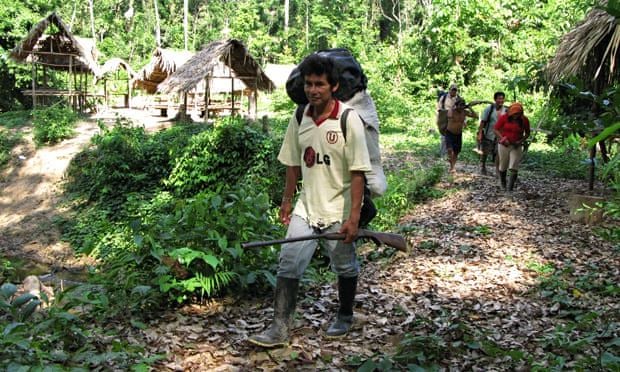
Peruvian anti-logging activist Edwin Chota, Saweto, PeruEdwin Chota was killed in the forest he had fought to protect.

The Peruvian environmental activist had appealed to his government for help after receiving death threats from the illegal loggers that plagued the area around his village, deep in the Amazon rainforest. And yet, in September, he and three other prominent members of the Peruvian Ashéninka community were ambushed and shot on a jungle trail as they travelled to meet fellow activists from neighbouring Brazil. Chota’s widow journeyed six days by river to the regional capital to report their deaths.

Chota’s death is a reminder of the price that local activists in some of the world’s most remote areas are paying as they fight to defend their communities from exploitation and industrialisation. Global demand for natural resources is growing, and indigenous people are receiving little protection from those who would destroy their land, forests, and rivers. Instead, they are being murdered with impunity at an alarming rate, sometimes with the complicity of government authorities.

Peru is a prime example. It ranks fourth in the world for murders of environmental activists (after Brazil, Honduras, and the Philippines), with 57 activists in the country killed from 2002 to 2013, according to campaigners Global Witness. More than half of the country is still covered by rainforest, but those forests are being cut down at an accelerating rate to satisfy voracious international demand for timber and related products.

Sadly, this phenomenon is not confined to Peru. According to Global Witness, from 2002 to 2013, more than 900 people in 35 countries died defending the environment or fighting for the right to their land. The death toll has risen sharply in recent years. Worldwide, activists are murdered at an average rate of two per week. Given that such deaths tend to go unreported, the real number could be even higher. In only 10 cases have the perpetrators been brought to justice.

Read more: http://www.theguardian.com/environment/2014/nov/17/environ

One Weird Trick to Fix Farms Forever

Does David Brandt hold the secret for turning industrial agriculture from global-warming problem to carbon solution?

CHATTING WITH DAVID BRANDT outside his barn on a sunny June morning, I wonder if he doesn't look too much like a farmer—what a casting director might call "too on the nose." He's a beefy man in bib overalls, a plaid shirt, and well-worn boots, with short, gray-streaked hair peeking out from a trucker hat over a round, unlined face ruddy from the sun.

Brandt farms 1,200 acres in the central Ohio village of Carroll, pop. 524. This is the domain of industrial-scale agriculture—a vast expanse of corn and soybean fields broken up only by the sprawl creeping in from Columbus. Brandt, 66, raised his kids on this farm after taking it over from his grandfather. Yet he sounds not so much like a subject of King Corn as, say, one of the organics geeks I work with on my own farm in North Carolina. In his g-droppin' Midwestern monotone, he's telling me about his cover crops—fall plantings that blanket the ground in winter and are allowed to rot in place come spring, a practice as eyebrow-raising in corn country as holding a naked yoga class in the pasture. The plot I can see looks just about identical to the carpet of corn that stretches from eastern Ohio to western Nebraska. But last winter it would have looked very different: While the neighbors' fields lay fallow, Brandt's teemed with a mix of as many as 14 different plant species.

"Our cover crops work together like a community—you have several people helping instead of one, and if one slows down, the others kind of pick it up," he says. "We're trying to mimic Mother Nature." Cover crops have helped Brandt slash his use of synthetic fertilizers and herbicides. Half of his corn and soy crop is flourishing without any of either; the other half has gotten much lower applications of those pricey additives than what crop consultants around here recommend.

But Brandt's not trying to go organic—he prefers the flexibility of being able to use conventional inputs in a pinch. He refuses, however, to compromise on one thing: tilling. Brandt never, ever tills his soil. Ripping the soil up with steel blades creates a nice, clean, weed-free bed for seeds, but it also disturbs soil microbiota and leaves dirt vulnerable to erosion. The promise of no-till, cover-crop farming is that it not only can reduce agrichemical use, but also help keep the heartland churning out food—even as extreme weather events like drought and floods become ever more common.

Read more: http://www.motherjones.com/environment/2013/09/cover-crops-no-till-david-brandt-farms

92% of Britain is undeveloped says Lord Wolfson

Therefore we must develop at least some of the the countryside into garden cities.

by Michael Smith (Veshengro)

Lord WolfsonObviously the noble Lord does not eat and thus does not need farms nor does he breathe and thus does not need air purified by trees. Assuming however that he does eat it is the countryside whence the food cometh and we cannot carry on assuming that someone else can provide the food, as seems to be the believe also of some ministers. Some of them, not so long ago, stated that we do not need farming in Britain as we can buy all our food from abroad and yes, it was a member of the Conservative Party.

The countryside provides food, employment, housing and environment and while you can improve all of those it does not mean that you substitute one for the other.

Lord Wolfson, head of the clothing retailer Next in the UK and a major contributor to the Conservative Party says that we need more new garden cities and they must be built on countryside land as the countryside is underdeveloped and empty.

We trapped ourselves in tight urban areas giving ourselves the impression that there is no countryside left, he said, and continued to say that the reality is that 92% of Britain is undeveloped but we don't just see it.

Lord Wolfson then further stated that there is an enormous amount of land that could be developed into beautiful garden cities, not urban jungles. According to him those areas of the countryside are empty and unproductive and of no use. I would say he needs to get out more and get a life.

Those areas would be more bio-diverse than the agriculture that they would be replacing.

Lord Wolfson is offering a quarter of a million Pounds to whoever comes up with the best plans for a new garden city (or should that, maybe, read cities) in Britain.

Whilst the majority of the country may be undeveloped that does not mean that it should all be developed,. But that appears to be something that Lord Wolfson has in mind.

A lot of the agriculture and the countryside management that goes on in the countryside is a good use of land and we must away from the feeling that just because there is no development going on there.

Lord Wolfson does seem to be alluding also that the 92% of the underdeveloped countryside is available to be exploited for development which is a total fallacy and as stupid as the people who he showers money upon.

Garden cities could have a lot to offer as far as housing is concerned as long as they are planned and developed in line with the needs of the countryside and the environment. Otherwise you just create another block of unsustainable housing.

However, when it comes to housing we do NOT need more homes. We have more than enough empty homes and properties that could be turned into homes all over the country. In fact, there are enough homes to house the homeless of this country, those of Eire and of one or two other smaller EU nations and still have room to spare.

The idea of garden cities fail in the provision of housing as they would be built to the detriment of the existing settlements, no doubt, and thus the existing settlements would be left – as derelict often and with all the problems that they have – that is to say as they are in favor of new developments and this is not sustainable in the same way as the idea that the last Labour government floated of Eco-Towns was another one of those silly ideas that would have benefited builders and developers and no one else.

Instead we must redevelop our existing settlements and make them more livable. We must build viable communities and while garden cities are one way a much better way is to actually turn our existing settlements into such viable communities. Build on what we already have rather than design and build new settlements in the middle of nowhere with the need for all the infrastructure and everything else that goes with it. Making the existing communities more sustainable and making them into places where people actually want to live (and work).

We have already once had so-called garden cities but some of them were basically Legoland of the real world designed on the drawing board and then plonked into the countryside with little or no consideration of the people in the countryside and also for the people that were moved to those new cities.

The problem with garden cities or so-called eco-towns plonked into the countryside is that they also need infrastructure, such as water, gas, electricity and roads leading to them and would add even more to the commute that we are – I thought – want to get rid off.

In order to do the latter, however, we must either move the jobs to where people live or have people move again to where the jobs are and, while living in the country is great, if you work in the city that's where your home should be also. Leave the countryside and the living therein to those who actually also work there.

Britain does not have a housing crisis. That is utter baloney. Britain has an empty homes crisis and many of those homes are, in fact, local authority ones that are being earmarked for destruction and “redevelopment”, as in the case of the Ocean Estate in Stepney and the Robin Hood Estate in Poplar. And those are but two examples of many that could be listed.

Thus we do not need new garden cities and ideas such as those – except in order to make money for the builders – but we need to have the existing homes refurbished and the areas in which they are located made more livable and improved. A much better and cheaper option and also a much more environmentally friendly one.

It is very worrying that some of the members of our government have absolutely no idea as to the way things are in real life and that also includes the one who, when challenged as to the ancient woods that are threatened with destruction in the path of HS2 states that there is nothing to worry about. The government would just move the woods. In which parallel universe do those people actually live?

© 2013

Be Zero Waste - Join Brixton (2011)

by Michael Smith (Veshengro)

A documentary of 10 minutes duration by Chocolate Films that can be viewed in full online. Directed by Ben Clough and produced Rachel Wang for Lambeth Council.

This short documentary produced by Chocolate Films features local Brixton residents on their journey to a zero-waste lifestyle. Participants were trained in film making and how to use lighting, camera, and sound kits. They also share their tips on being zero waste by demonstrating easy ways to recycle and reuse.

It is a film that belongs up there with others that were made on the subject of stuff and waste and green living and being just ten minutes in duration it is not much time that one has to spend watching it.

Everyone is down to earth and very much to the point and the film is very well made and presented.

© 2011

Food Waste

The beginning of November 2007 saw the launch of the “Love Food Hate Waste” campaign by the Waste & Resources Action Programme (WRAP). The mission of the “Love Food Hate Waste”campaign is to get us, the people in general, to reduce the amount of food – which is rather horrendous – that we waste at home.

But, I would like to ask, what about the food, perfectly good food, that is being thrown away before it ever leaves the farm, often by other of the powers that be – and I am not talking about meat from animals with Foot & Mouth Disease (FMD), which is safe for human consumption (yes, folks, it is, and much of the beef that comes from Argentina in fact is full of the stuff) – to keep prices artificially inflated, especially in times of glut.

Some years ago apple growers in Kent were forced by the government to dump “overproduction” – maybe someone should have had a word with the trees to stop producing so many apples that year – didn't they known there is a quota? – in holes, huge holes, dug for that very purpose, on their farms. Those farmers were livid as there were not even allowed to give those perfectly good apples away free to people in need.

What was the reason for such an outrage of wanton destruction of perfectly good food?

Simply the fact that there was a glut of English apples – and what is the problems with that, I am sure, some readers may now ask – and the “Intervention Board”, as I believe it was called then, stepped in to keep the prices artificially up in the shops. The people who benefited from this action were not the farmers or the ordinary people, the consumers; the only ones who did were the middlemen, not even the retail traders. In addition to price fixing the “Board” intervened as a glut of English apples would have meant a reduction in the share of the market for apples from other European Union countries, such as France.

We also must here consider those fruits and vegetables that do not make it to the shelves of the stores and to our tables because the middlemen decide that the consumer does not like misshapen fruit and vegetables, or those with slight blemishes. The truth is that many consumers indeed do not want apples with slight natural blemished or misshapen carrots or the like. In addition to that there are those that never make it and get destroyed because the EU bureaucrats in Brussels, so we are being told, have deemed them not to be the right size or shape. It appear that only apples, pears, tomatoes, etc. of a certain size and shape are, according to those Eurocrats, proper and therefore only those sizes may be sold to the consumer. Come on, a pound (yes, I talk Imperial) of carrots is a pound of carrots whether they are huge (and then rarely have taste) or small and crooked.
Maybe someone needs to tell those that sit in ivory towers, whether in Brussels, Strasbourg or in Whitehall, that, unlike manufactured goods, fruit and vegetables do not come in uniform shapes and sizes and do not, generally, grow in a mold. Apples, pears, peppers, tomatoes, when left to grow naturally, are all different sizes and shapes, some large, some small, some with little blemishes, some not; that is Nature's way.

With waste like that we have to start as regards to reducing food waste before we have a go at we, the consumer.

While it is indeed true that too many of us waste about half of the food that we buy in the stores every week because we buy too much and it does not get eaten or leftovers are simply thrown into the garbage instead of using them the next day – waste no want not – in order to reduce the food waster per se the start must be made at the beginning of the chain. This may mean that the consumer will have to learn to accept, once again, misshapen fruit and veg, the way they naturally grow, and also the little blemishes that are there naturally and only are not generally found in the boxes at the food stores because they are removed by the packing houses and, more often than not, are being destroyed there.

We are seeing the return of blemished apples and other fruit and veg and those of different sizes and shapes like, for example, in the Basics range of produce at Sainsbury's.

Food for thought, I hope...

© Michael Smith (Veshengro), December 2007