Showing posts with label UK. Show all posts

Europe drowning in plastic waste

by Michael Smith (Veshengro)
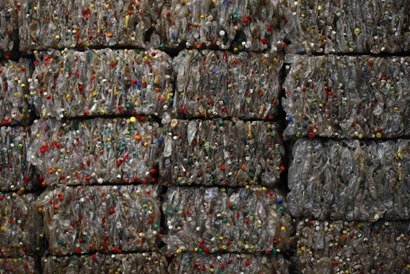
Plastic bottles at a Chinese recycling plantNow that China has closed its doors, from January 1, 2018, to (plastic) waste for recycling from Europe (and elsewhere) the countries of Europe are beginning to drown in (plastic) waste and many are now looking for other developing countries, such as Vietnam, to take this waste for recycling, Britain among them.

Instead of actually reducing waste, especially, though not restricted to, plastic waste, and secondly building our own facilities for recycling the countries are, yet again, looking for places with lower environmental standards to where to dump the waste rather than doing the other.

Obviously, considering the high environmental legislations in the home countries it would be too expensive for the capitalists to do it at home and hence other countries, with lower and fewer environmental laws and legilations have to be found where our waste can poison the unsuspecting workers. Couldn't possibly have those recycling plants properly operated in our own countries now, could we. But that is exactly what we should be doing.

Before even thinking about recycling we should, properly, work on reducing the amount of waste, plastic and otherwise, that we generate and that is where all, but for starters industry and legislators, come in.

Now that China declines to take any more of our garbage we should be doing our own recycling, after reducing as much as we can, of our waste and by doing so lead the way and we would also create jobs.

When, however, we talk about recycling then recycling it really should be rather than, as in the case of most glass recyclables, downcyling said glass into a road aggregate akin to sand. That is not recycling.

As far as single-use plastic is concerned this needs to be eliminated once and for all as it cannot, properly, be recycled, at least not into decent objects and while there is nothing, per se, wrong with good solid, for lack of a better word, plastic that will and can be in use for a long time, we should phase out plastic more and more over time till we are almost, once again, free of the stuff.

As far as other waste, including and especially E-waste is concerned, industry has to come into play and design to once again – yes, we were there once already – to make products that actually last not just for a year or three but for decades and more. Oh, yes, sorry, I forgot that that does not give huge profits to the capitalist shareholders.

Instead of solving the problem at home our respective governments are looking for other developing – we used to call those Third World – countries which we can contaminate, and their unsuspecting residents, with our waste, by having them recycle the stuff that we don't want to recycle at home, in bad conditions. The new colonialism.

We should be doing the recycling – after looking at all the other options of reuse and so on prior to recycling – at home, in good conditions for the workers and the environment, as dictated by law. This would also create jobs, from collecting, to sorting, to the actual recycling. But, alas, that cannot be as that would be expensive.

© 2018

Tories Victorian values bring the return of Rickets & Co

by Michael Smith (Veshengro)

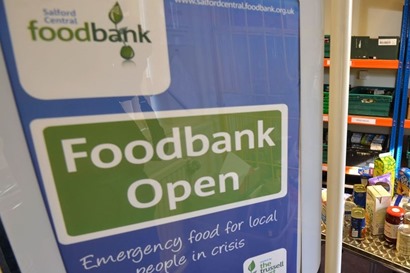
foodbank1Children are suffering malnutrition and Victorian diseases as poverty tightens its grip

In Salford, Greater Manchester, UK, the number of malnutrition cases has doubled – with many of the victims children.

Victorian illnesses such as rickets and beriberi – thought to be long eradicated – are on the rise due to food poverty according to a shocking new report with the number of people being admitted to hospital with the condition doubled over a four year period.

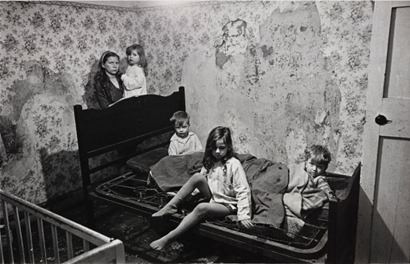
These shocking pictures show what poverty was like in Manchester in the 60s and 70s and although health conditions are often a primary cause, Salford council leaders believes that poverty is also to blame.

The number of people being admitted to hospital with malnutrition increased from 43 in 2010 to 85 in 2014. Although an exact breakdown of those admitted was not available, many of them are believed to be children. 50,000 emergency food supplies given to struggling families across Greater Manchester in past year. This was significantly higher when compared to Greater Manchester overall.

In addition, just alone in Salford, there were other signs that household poverty was increasing. The number of homeless people rose from 40 in 2010/11 to 356 in 2014/15.

In 2013 the number of children deemed to be living in poverty was 12,175, as measured by households in receipt of work benefits and tax credits, which equated to 26 per cent of children in the city. The figure for the North West was 21 per cent and for England 18 per cent.

Anecdotal evidence has suggested that some children in the city are being fed when they arrive at school as they have gone without breakfast and nearly 12,000 unwanted tinned meals given to foodbanks across Greater

Manchester.

But, if the Tories are to be believed, we have never had it as good as we are having it now in Britain. In Germany the government is using the self-came mantra, a country that has also seen a serious increase in poverty and homelessness levels.

We are seeing a drastic rise in in-work poverty, foodbank usage and homelessness. In 2014 the Faculty of Public Health said conditions like rickets were again becoming more apparent because people could not afford quality food in their diet. Forgotten forms of poverty and diseases associated with it are becoming standard again.

It would appear that this was the standard that the Tory regime in Britain has been aiming at by promoting a “return to Victorian values” forgetting to tell people that what they really meant and mean with it is a return to Victorian conditions.

But neoliberal “conservative” regimes in other countries of Europe (and elsewhere) are, it would appear, working towards the same aim. There seems to be an agenda there somewhere.

© 2017

Thank You for voting Tory

by Michael Smith (Veshengro)

500534084Thanks for voting Tory. Everyone who did has really done well.

Due to the actions of the Conservative government of the “United Kingdom” it has been estimated that 120,000 children will wake up homeless this Christmas and many, many more in dire poverty. Hope you are proud of yourself. But, I guess, as long as it is not you and your children why should you care.

The Tories have been talking about getting Britain back to Victorian values but what they really aim to do is turning back the clock and bringing us all back into the Victorian era and if we are not careful back further still.

10446715_10205374118698472_1392947066675936283_nVictorian values were not, necessarily, the greatest thing either but the era definitely was no good for the common man, woman or child. Homelessness was rampant and dire poverty and we are on the best way to that kind of situation again.

It won't be long, if we allow the Tories to remain in power, that we will have workhouses and child labor again, but, no doubt, that is also something that the Tories would not mind, as long as it is not their children but only those of the working class.

The most worrying part is that such a great number of working class people actually vote Tory (or even further right-wing) and thus are causing misery for their class and the children of their class. But it seems to be the attitude of “I am alright, Jack” in the same way as Gypsies in the West are not prepared to do anything to help those of the same race persecuted in Eastern Europe, for instance. But, when the shoe is on the other foot they are the first to complain.

I do not even want to start to talk about the other things that are being destroyed, dismantled and sold off to the highest bidder for private gain, by the Tories, such as the NHS and other aspects of the welfare state. You really have done well keeping those parasites in power.

© 2017

Staycations up by a quarter this summer, research suggests

by Michael Smith (Veshengro)

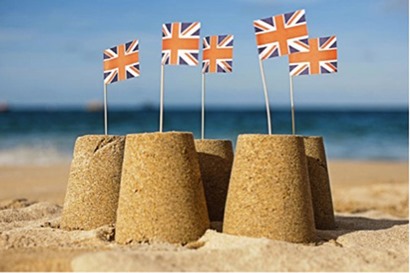
staycation_uk1The number of British people opting to take domestic holidays this summer is up by as much as quarter over last year, research reveals.

The unfavorable exchange rate and unpredictable political landscape have attributed to the rise in staycations, it is suggested. To that we should also add that there are still many who literally cannot afford to go abroad as they have not had a pay rise for many years.

A 23.8% rise in British holidaymakers planning UK stays for summer 2017 was identified based on searches and bookings made between October 2016 and January 2017 to depart from June to August this year.

UK trips are getting shorter too, as the data indicated that more than half of domestic holidaymakers are planning a break of three days or less – up 8.8% from last year.

A notable decline of 5.2% was found in the number of UK travelers planning a staycation of 12 days or more, however this group still accounts for 16.6% of the total. The top five UK destination cities this summer are London, Edinburgh, Belfast, Glasgow and Manchester.

While staycation bookings are up, Spain remains the top summer destination for UK holidaymakers, followed by with Italy, Greece and Portugal, though France has dropped out of the top five this year despite being the third most popular destination for Britons in 2016.

With Sterling plummeting 13% against the US dollar and dropping 9% against the euro since the EU referendum vote last June, we are seeing a notable uplift in UK tourists opting to holiday at locations at home. Others will be vacationing at home at home, so to speak, in that they are not going to any resort or anything of that nature.

We have seen that stay-at-home staycations have become very popular over the last couple of years ever since the Great Recession and austerity in Britain and this could be seen in the local Parks with a serious increase of visitors.

We have seen an almost a 25% year-over-year increase in people opting for staycations in the UK this summer rather than going abroad and over half the people are planning shorter trips for less than three days. That trend has seen an increase of almost 10% over the previous year.

For some, as mentioned, opting for a staycation at UK destinations (and even altogether at home) is closely tied to the unfavorable exchange rate between Sterling and Euro since the Brexit vote but, in my opinion, it has also a great deal to do with lack of cash flow, so to speak, as many workers who would have traveled to destinations on the European mainland just cannot really afford to do so.

Other concerns, no doubt, are those of security and the ever increasing restrictions of what you can and cannot take with you on an aircraft nowadays, with regards to terrorism concerns. Check-in rimes are getting longer and also the check-out, so to speak, on the other end. And on the way back you have a repeat performance creating hassle and stress which almost requires another holiday to get over it.

Personally I cannot think of any better kind of holiday, vacation, than staying at home and spending it there.

© 2017

Poverty is now a way of life for many again

The scourge of modern day poverty in Britain

by Michael Smith (Veshengro)

The Tories have for a long time, under various administrations, intended to bring the country back to Victorian values; to the Victorian era more like. And to all intents and purposes they are succeeding.

We have today an epidemic in the Britain, a scourge in our communities, and this epidemic and scourge is called poverty. Taboo, however, does make it difficult for sufferers to admit that this epidemic affects them. Millions are being condemned by a food poverty that has reached the level of a ‘health emergency’ while Government policy merely fans the flames of this national scandal. At least 1.3 million people, adults and children, in Britain live in poverty and this is a national disgrace for a nation that is rated as the 11th richest country in the world. A country with a GDP of $2,375 trillion.

The poverty that we see today differs somewhat from poverty from the past. We may not see the squalor and hardship as yet that was seen prior to the creation of the welfare state but the effects of poverty still hit extremely hard. One definition of poverty is: “People are said to be living in poverty if their income and resources are inadequate as to preclude them from having a standard of living acceptable in the society in which they live.”

Poverty has a horrendous effect in the UK but this is exasperated by a Government that has no interest in combating poverty, in fact, it is near fatal to appear poor as it makes the Government want to kick you.

Today’s Government has a mantra of ‘making work pay’. They tell a story of shirkers vs. skivers, a narrative that informs us that people living in poverty do so due to them being feckless, workshy individuals languishing in the bed all day watching repeats of the Jeremy Kyle show. But the rhetoric doesn’t match the stats.

In 2011/12 there was 1.3 million people living in poverty in the UK and over half of these people were in employment. How in the name of the Big Man above did we end up in a situation where so many people in our fantastically rich country are living in poverty while in employment?

One of the reasons is Income Inequalities. The UK’s Gina coefficient, a method to measure income inequalities between nations, is now higher than at any time in thirty years.

This is reinforced by data showing that, in the last decade, the poorest 10% of our nation have seen a fall in their ‘real income’ after deducting housing costs which is in sharp contrast to all other sections of our population.

In layman’s terms, it means that after adjusting for inflation, the poorest 10% of the UK have had less income that they did 10 years ago while everyone else has seen a rise in their income.

What makes matters worse is the Government’s attack of the welfare state which is removing the protection that people had from the blight of poverty. Their attacks, under the auspices of reforms, has linked to the rise in the use of foodbanks and homelessness. Their system of unwarranted and senseless sanctions has literally take food from the tables of our children which an extra 600,000 children being thrown into absolute poverty by Governmental policy.

So what do the Conservatives do when they are confronted by the facts? Kent Council commissioned an official report which concluded that the rise in foodbanks and a rise of homelessness being linked to the Government’s welfare reforms. After looking at all the evidence the report concludes that these rises were due to ‘welfare reform as no other alternative explanatory factor is yet apparent’.

Did the ruling Conservatives at Kent council at Kent Council act on this report? No, they attempted to suppress this report as they did not like the report’s conclusion.

So we live in an unequal country where the poorest become poorer and the wealthy become richer. But there is an alternative. There is a better way so that we can have a democratic nation based on equality and fairness which I will write about in future post.

It has to be said, however, that there is poverty and then there is poverty. And while this may sound a little too cryptic I will try to explain.

What is perceived by many today as “poverty” is a reduction of what they have been used to and the problem is that many, I am afraid to say, are not prepared to forgo some things that are not necessities and needs but only wants. Many also are unable to manage the money that they have and spend it unwisely.

Do you really have to have cable TV (pay for) or TV at all? Do you have to have take out meals almost every day of the week? And the list of questions could go on and on. Fact is that that is exactly, I am afraid to say, the way some of the poor behave.

I am not trying to lessen the fact that, according to the way the index is used, people are poor and some are even poorer than that, but there are times when people also must blame some of their own actions for the fact that they are short of money and not try to shift the blame onto others, onto circumstances and especially the government, even though the latter has a great deal to answer for.

© 2015

UK government supports solar for Africa, slashes subsidies at home

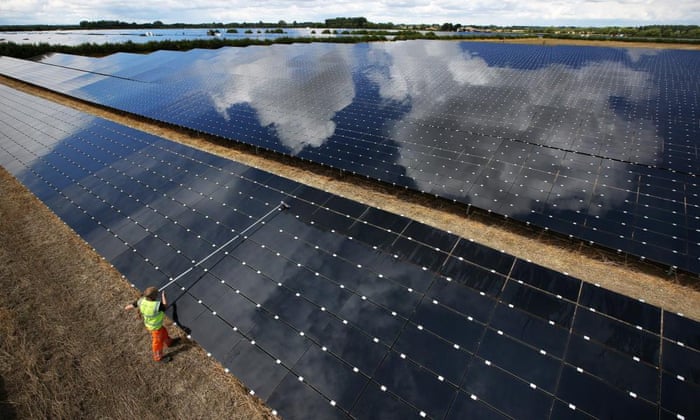
solar-tiles-uk-photo

I received two interesting press releases over the weekend.

The first, from Power for All—a campaign aiming for universal energy access through renewables—was jubilant: Power for All receives UK support for Africa's poor to achieve energy access through distributed renewables. The second, from UK solar installer Solarcentury, not so much:Government’s proposed £7m budget for solar equivalent to subsidising Hinkley Point for just two days (Hinkley Point refers to anew, massively subsidized and Chinese-built nuclear reactor in the works for South West England).

With the UK's Department for International Development throwing its weight behind solar for rural communities in Africa, you'd think the government would also be pushing renewables as the wave of the future at home too. After all, from Morocco targeting 50% renewables within the next 5 years and the world's biggest utility breaking up with fossil fuels, there does appear to be increasing momentum behind a decarbonization of the world's energy system. What government could possibly want to be left behind?

Read more here.

Labour's demise in British 2015 General Election

by Michael Smith (Veshengro)

The reason Labour did so badly is down to at least three reasons.

One being that they made a mistake backing the No Campaign in Scotland

Two that they have moved so far away from the true values of the original Labour party that the working class no longer feels them to be their home

Three that they have refused to entertain a referendum on UK membership in the EU (NO2EU has been part of some of the Trade Union message for some time now and Labour has completely lost it there) claiming that – and openly saying that – that the people of the UK cannot be trusted with that question and that it is up to politicians to make that decision.

But there are also a number of other reasons and one of those is that people are selfish in the extreme in Britain nowadays, ever since the Thatcher era.

Time and again I hear some people say “What has Labour ever done for me?” or when one suggests to them to join a Trade Union “What have the Unions ever done for me?” without stopping once to think what Labour under Clement Attlee did in creating the welfare state, the National Health service, and the unions by bringing them the five-day working week, paid holidays, and such like. Some even go as far as to say “Oh well, I get those benefits even if I am not in a union”.

The problem is selfishness in the extreme and people also vote according to which party promises them personal benefits. But in the words of J F Kennedy we should not ask what our country can do for us but what we can do for our country. Instead of looking out for only what we can gain from this or that personally it is time that we looked out also for those less fortunate for we could be the next one losing out job and thus our home and be dependent on the no longer existent, if the Tories get their way, welfare state.

However, the truth be told, the Labour Party no longer is the party of the working class even though, unfortunately, many of the working class still seem to believe that. There is almost not a single MP left from that party who has ever done an honest day's work at the coal face, in a factory, a shipyard, or in the fields and forests.

Those that are now being put forward for leadership are also no better in that respect. None of them have a clue as to the working class and its problems, coming from privileged backgrounds and in the main having been privately educated. Furthermore they are drifting further and further to “the right” and are becoming just pink Tories.

The British working class (and in all honesty not only the working class of Britain) needs new leadership and the Labour Party or the Social Democratic Party (in the case of Germany, etc.) does not cut the mustard.

It is also time that the Unions cut their ties with the Labour Party. The Unions do not need Labour but Labour the Unions. Without the Unions the Labour party is nothing. Labour, however, has forgotten that and the very fact that the Unions gave it life.

To the majority of the working class in Britain the Labour Party is but the other side of the Tory coin and that seems to be a fact, unfortunately, which can also be seen in that they were prepared to use basically the same austerity measures proposed by the Tories and also were hellbent to continue the British Independent Nuclear Deterrent (may I laugh) in the form of the Trident submarines. The cost for the renewal of those alone could pay is more than the proposed austerity measures but no, it has to be kept. Sure it has to be kept because the master, the USA, who actually command that “independent” nuclear deterrent, says so.

It is time for the British working class to wake up and – one – understand that they are not millionaires or even billionaires in waiting but simple wage slaves as long as they do not have control over the means of production and – two – that the Labour Party was only intent on creating capitalism with a human face and no socialism, where the workers do own the means of productions, etc. And today Labour does not even want to know the word socialism in any shape or form. They have become a party for the bourgeoisie and now longer – if ever they did – represent the proletariat.

Furthermore it is time for the British working class to take matters into their hands and to rise from their prisons of starvation into which the Tory “masters” intend to toss them, once again, and overturn the tables of the moneychangers.

But, alas, the British working class has been lulled to sleep by promises of being able to aspire. Aspire to what? We can all aspire but getting there in the current climate to fulfill our aspirations, whatever they may be, is all but a dream.

The Labour Party is dead and has been on its deathbed for some time and now it is time for the working class and with the Trade Unions in the lead, maybe, to bury the poor thing and give birth to a proper organization of the working class, by the working class, for the working class, and bring about a system where all will be the winners, including the Planet.

© 2015

UK solar growth stalls following government subsidy cuts

Large solar power farm development largely stopped following April cuts, new figures show, and smaller farms will be hit next

The amount of solar power being installed in the UK has largely flatlined since the closure by the government of a subsidy scheme in April, even before a new round of subsidy cuts has taken effect.

Official figures released on Thursday show that large-scale solar farm developers rushed to connect to the grid in March to get in before the government excluded farms larger than 5MW, enough to power 2,500 homes, from its renewable obligation (RO) scheme.

But installations largely trickled to a halt after April, when the payments were stopped for new farms.

Read more here.

This should come as no surprise to anyone and was the aim of the game of the Tory regime under David Cameron. Having said that we must also consider that large solar farms, in the same as large wind farms, will not cut the mustard as to getting off fossil fuel and nuclear energy. Renewables themselves will not permit us to continue with “business as usual” and hoping that we can grow the economy – a stupid idea anyway – at the same time. We must reduce our electricity consumption and also have every home and building to be a power generating plant. But they don’t want that either. Their agenda is more nuclear power. Ed.

Will by 2025 over half of the UK population be dead?

by Michael Smith (Veshengro)

In the time between 2015 and 2025 just under half of Germany's population is estimated to die and more than half of that of Britain, according to forecasts by Daegel.com.

The US-Information Service DEAGEL.COM, which has a rather military appearance, has on its website pages with forecasts for the population of most of the countries in the world and in their 2015 forecast they predict a fall in population numbers for the USA in the next ten years, that is to say up to the year 2025, from 319 million to 65 million. For Germany it is a drop from 81 million to 48 million and for Britain a drop from almost 64 million to less than 23 million, which, in the case of the UK is a drop by 65%.

Demographically can this not be explained by the normal aging process and subsequent loss of people through the common way of dying of old age and that of emigration. Such drastic reduction in population historically only came about in conjunction with long periods of war and the diseases that occurred under the population that was ravaged by such wars.

If we are to look at the forecast for the GDP the figures they also are rather alarming, where for the UK the forecast is a fall from USD 2,855,000 Million to just under 255,000 million, a drop of 91%, which would make the UK worse in GDP than Peru.

Either Daegel.com has a strange and maybe faulty crystal ball or they know something that most of us don't know and that the powers-that-be, but should not be, want to keep from us all.

http://www.deagel.com/country/forecast.aspx

© 2015

UK government plans for ancient woodlands get the axe

by Michael Smith (Veshengro)

European Beech1lowIt is a great relief to learn from the Independent that Ex-Environment Secretary Owen Paterson's proposed biodiversity offsetting scheme has been dropped by the Government.

The scheme would have allowed developers to build on ancient woodlands provided that they plant new trees elsewhere.

As most of us know, I am sure, a newly planted woodland would take hundreds of years to mature into a biodiverse area, so this was a ridiculous proposal from the outset.

This was the selfsame Minister of the Environment who also stated that there was no problem with the HS2 high-speed train line cutting through ancient woodlands as the government would simply move those woods to elsewhere.

This also, once again, brings to the fore the uselessness of the Forestry Commission for it should have immediately advised the then Secretary of State that his idea was absolutely ridiculous in the same as way his statement about moving woodlands. But they did nothing. Another proof that Britain needs a Ministry of Forests whose task it is to protect and oversee the proper management of forests and woodlands.

© 2015

Cameron predicts new economic crisis

by Michael Smith (Veshengro)

In mid-autumn 2014 the British Prime Minister David Cameron stated that the Euro zone is teetering on brink of new third recession and he may, in fact, not be far off this. The fact is that, despite what they are telling us, the economy is not doing very well at all and also not in Britain.

It is being suggested to us day in day out that the economy is on the up – in Britain at least – and that we have lower rate of unemployment for decades. That may look fine on paper but the reality, alas, is somewhat different. Many of those that have “found” jobs and are off the unemployment register are in part-time or very low-paid employment only and thus have very little purchasing power.

The only way, and they are hard at work on that one, to grow the economy, is to have another lovely big war or why does anyone think has NATO started a new cold war against Russia?

The austerity drive to “reduce” public spending definitely is not helping the economy to grow one bit. In fact it is having the exact opposite effect especially as so many public sector employes have faced job losses and those that retained their jobs pay freezes, which actually amount to loss in income due to other costs rising, and now, after a year or two having been given a miserly one percent increase in their wages the talk is of yet more cuts and more pay freezes.

At the same time they, and not just Britain, waste Billions on armaments and new aircraft carriers (that will not have any aircraft for them as the one that is supposed to fly from the, the new US-made F-35 has still got problems even getting off the ground properly, literally), a Trident replacement and also a ring-fenced foreign aid budget of Billions upon Billions. All of this could get the economy at home working nicely. Then again the perpetual growth economy is (1) not sustainable and thus (2) has to be abandoned. On the other hand such monies would do nicely for the health service and social housing.

What, as it would appear if we look at it without blinkers on, we are really heading for is not just a little third recession, and not just the Euro zone but all of us, but a full-blown Depression more likely greater than that so-called Great Depression of the 1920's/1930's but the powers-that-be do not dare to even suggest such a thing openly, not even by way of a warning.

Why not?, you may ask, but the answer to this is very simple. It would put the proverbial feline amongst the columbidae and cause panic because, unlike in the 1920s when the Great Depression struck, and even though it was bad for people, they knew, in general, how to make do and how to make and do things for themselves. Not so people in today's entitlement culture who believe that government – or someone – has to do this or that for them and that the government – or someone else – is responsible if they have problems.

Our parents, grandparents and their parents were much more capable of handling many of such things and problems as they did not have the entitlement mentality that the powers-that-be have brainwashed the population with. They knew how to look after themselves, their families and also others in the community and in turn everyone looked after one another. Today most people do not even know their neighbors and often do not want to get to know their neighbors either. Sharing and helping each other, thus, is no longer being done, in most cases, and community does not exist in all but name.

The next Great Depression is coming and it, more like than not, will be worse than the one in the 1930s and it is time – high time, in fact – that we all got back to some sense in our lives and got to know one another and learned to help where help is needed once again without expecting a reward in return.

© 2014

Welfare reform reinforces growing class prejudice reminiscent of Victorian era

Welfare reform reinforces growing class prejudice reminiscent of Victorian era• Study finds people believe work is plentiful and unemployment is a lifestyle choice
• Evidence of an alarming intolerance towards disabled people, with questions over legitimacy of benefits
• Government rhetoric on ‘scroungers’ likely to reinforce these attitudes

British society is becoming increasingly intolerant of unemployed people and other disadvantaged groups, according to academics at the Sheffield Political Economy Research Institute (SPERI).

A study by the University of Sheffield has found there is a growing sense that unemployment is caused by individuals’ personal failings, rather than by structural problems in the economy.

People tend to believe that work is plentiful, and that unemployment was therefore a lifestyle choice, rather than an imposition, and that poverty therefore results from moral deficiencies.

The research also highlighted an alarming intolerance towards disabled people, with participants questioning the legitimacy of benefits for disabled people deemed incapable of working.

It is clear that the derogatory term ‘chav’ remains in popular usage. Middle class research participants tended to identify and condemn ‘chav’ culture so as to validate and re-affirm their own superior social position. Working class respondents were more likely to identify and condemn ‘chav’ culture in order to distinguish themselves from it.

We appear to be witnessing the re-emergence of traditional distinctions between the ‘deserving’ and ‘undeserving’ poor, associated with the Victorian era.

This research identifies contemporary attitudes to the unemployed by drawing on a series of case studies conducted in Leeds, in Northern England. The evidence presented here is based on 90 interviews which were conducted with participants from a variety of different social classes and ethnic backgrounds.

The Coalition government’s welfare policies are in part a response to the kind of popular prejudices identified in the research. However, government rhetoric on welfare ‘scroungers’ is likely to reinforce these attitudes – focussing blame for poverty on individuals rather than on wider structural problems in Britain’s increasingly low-pay, low-skill economy.

There is in fact a danger that misplaced fears and prejudices relating to welfare claimants will present a threat to social cohesion, potentially legitimising policies which might exacerbate, rather than alleviate, social inequality.

Professor Gill Valentine, Pro-Vice-Chancellor for the Faculty of Social Sciences at the University of Sheffield and author of the report, said: “The evidence is mounting that the coalition government’s austerity agenda has been targeted at the poorest groups in society rather than the most affluent.

“This research shows that this is reinforcing prejudicial and intolerant attitudes towards the most disadvantaged members of society, as the government has been successful in individualising the causes of poverty and unemployment, and marginalising the socio-economic determinants of hardship.”

The full report can be viewed at http://speri.dept.shef.ac.uk/publications/speri-briefs/ .

Today’s publication is the eight in a new series of SPERI British Political Economy Briefs. Through this series SPERI hopes to draw upon the expertise of its academic researchers to influence the debate in the UK on sustainable economic recovery.

Sheffield Political Economy Research Institute

The Sheffield Political Economy Research Institute (SPERI) is an academic institute based at the University of Sheffield. The institute aims to bring together leading international researchers, policy-makers, journalists and opinion formers to develop new ways of thinking about the economic and political challenges posed for the whole world by the current combination of financial crisis, shifting economic power and environmental threat.

The University of Sheffield

With almost 26,000 of the brightest students from around 120 countries, learning alongside over 1,200 of the best academics from across the globe, the University of Sheffield is one of the world’s leading universities.

A member of the UK’s prestigious Russell Group of leading research-led institutions, Sheffield offers world-class teaching and research excellence across a wide range of disciplines.

Unified by the power of discovery and understanding, staff and students at the university are committed to finding new ways to transform the world we live in.

In 2014 it was voted number one university in the UK for Student Satisfaction by Times Higher Education and in the last decade has won four Queen’s Anniversary Prizes in recognition of the outstanding contribution to the United Kingdom’s intellectual, economic, cultural and social life.

Sheffield has five Nobel Prize winners among former staff and students and its alumni go on to hold positions of great responsibility and influence all over the world, making significant contributions in their chosen fields.

Global research partners and clients include Boeing, Rolls-Royce, Unilever, AstraZeneca, Glaxo SmithKline, Siemens and Airbus, as well as many UK and overseas government agencies and charitable foundations.

Source: University of Sheffield

How combat the possible power cuts

by Michael Smith (Veshengro)

London, UK, November 2014: The National Grid in the UK has warned that this year's capacity of power generation this winter will be lower than that of previous years, so it is vital that people are prepared to keep warm should a blackout occur.

While the government is trying to assure people that the companies will keep the lights on – for households at least – we have to be prepared that this may not always be the case and that companies may not even wish to do so. Oh, aren't I nasty again!

How to keep calm and carry on during a power cut.

Keeping yourself warm will be the priority should a blackout occur, and some people have stated that hands and feet being at the top of the list. However, the greatest heat loss occurs through the top of the head and thus, first the priority, and even though it may look strange indoors, is a wooly hat to prevent that heat loss. Followed by socks and gloves to keep feet and hands warm.

If blackouts last through the night, extra body layers may be essential.

The worrying part is that not only are our heating systems, in most homes, dependent on the electricity grid as with heating pumps and all that, but almost anything and everything else is too. So, unless you have an alternative heat source heating the home could be a problem.

During a power cut try not to open the refrigerator or freezer too much; ideally not at all.

While some people may think that having a gasoline or diesel powered generator on standby in the case of a power outage is the answer the problem is that (1) in a town home it is more than likely not feasible to run one without problems and (2) there is no way of feeding it into the house mains in general.

What I am saying now may sound a little conspiracy theorist to some but I am rather concerned that the energy companies have another agenda as regards to letting us all know that the lights might go out and the way I see it it is to make the consumer pay more in order so they can “invest in better infrastructure” and such and also to force the hand of the government to permit them to build new controversial nuclear power stations.

On the other had if the government would make it easier for people to have alternative ways of electricity generation at the homes, such as photovoltaic panels on the roofs, small wind turbines and also sterling engines, and others without the need for the lengthy and costly planning process many homes and even communities might actually be rather hardened against such problems and could create their own resilience.

OK, but back to the issue in hand.

In preparation for the possibility of the power failing this winter do have an alternative way to cooking and have food storage in place in the form of canned goods and dry goods rather than frozen foods or others that require refrigeration. And also foods that do not require cooking.

The keeping warm issue we have, basically, already discussed and it may be advisable to, if necessary, stay in one room, also over night, that can be kept warmest.

Most of this is, to some degree, common sense but in some instances common sense is no longer all that common and thus there are times when one does see to have list the obvious, and that also is to not leave doors open to keep the heat in the room and the house.

For lighting in the event of a power outage while candles may be to some the obvious choice and they are rather romantic they are not the ideal option. One of the reason is that they are an open flame and thus could cause a fire they are also, secondly, mostly made of an oil-based material the burning of which is not really healthy.

The best choice if flashlights and battery-powered lanterns, as well as and especially the hand-cranked lanterns that work via a dynamo changing internal batteries and thus are not dependent of bought alkaline or similar batteries or the charging of rechargeable batteries via a battery charger which, in turn, is dependent on the electricity working.

You also want to have a battery-powered radio available or more than one and, if possible, also at least one that can be operated via the same hand-cranked mechanism as the already mentioned lanterns.

Keep warm, well fed, and hopefully the light will stay on.

© 2014

UK opposition could doom EU efforts to curb plastic bag use

UK is leading opposition to a proposal for an 80% cut to the 100bn single-use plastic bags used each year in Europe

Plastic bag use in UK : Autumn leaves floating in water with Tesco bag and a duckA bid by the European parliament to impose an 80% cut in the 100bn plastic bags used by Europeans each year could be scuppered by several states opposed to Europe-wide action, and a European commission that increasingly views targets as an unnecessary distraction.

‘Single use’ plastic bags are light, convenient and easily thrown away but their very disposability creates an environmental threat. As many as a million seabirds and 100,000 sea mammals – including large numbers of seals and turtles – are killed each year by ingesting plastics or becoming entangled in the growing number of plastic islands that gloss large swathes of the world’s oceans.

But several countries led by the UK and Croatia are opposing EU-wide mandatory pricing or product restrictions for plastic bags. France and Spain are more supportive but the commission’s first vice president Frans Timmermans on Wednesday said that he was “not sure” whether the proposal reflected the previous commission’s original intent.

The Guardian has learned that the commission’s secretariat-general is currently discussing whether to reject the proposal in a final negotiating round on Monday, sending it back to a council of EU ministers where it would likely be blocked by the need for unanimity.

“I fear that although the member states agree that we have to act, they do not want us to tackle it at the European level altogether,” said the Dutch Liberal MEP Gerben-Jan Gerbrandy. “It is extremely worrying as this is the fundament of EU environmental legislation.”

“Plastic bags are a huge environmental problem that can be very easily solved, and that doesn’t happen very often anymore in the environmental field,” he added.

Read more: http://www.theguardian.com/environment/2014/nov/13/uk-opposition-could-doom-eu-efforts-to-curb-plastic-bag-use

No quick fix: Fracking shale gas won’t make UK energy self-sufficient, says study

Reuters / Gareth FullerGovernment researchers claim politicians have “overhyped” the energy potential of the shale gas industry, claiming it would not necessarily result in the UK’s energy self-sufficiency.

Research from the Imperial College based group UK Energy Research Centre (UKERC) found shale gas was unlikely to become a primary resource within the next 10 years, and that the UK was unlikely to follow in the footsteps of America, whose shale gas industry has contributed to increasing energy self-sufficiency.

A second report from UKERC claims that by 2025 global gas consumption will have peaked. That will in part be due to strict limits imposed by the 2050 goals of an 80 percent reduction in global carbon emissions.

The results suggest that, given the predicted timescale for the implementation of shale gas drilling in the UK, the resource will not provide the ‘quick fix’ it has been publicized to be.

The coalition government has promoted fracking in the UK, with Prime Minister David Cameron saying in January 2014 that Britain is “going all out for shale.” However, reports indicate there is a limited capacity for the effective use of shale gas.

Professor of Energy Policy at the University of Sussex and author of the report ‘The UK’s Global Gas Challenge’ claimed that government ministers and industry professionals had “overhyped” the impact shale would have on the UK’s energy security.

Read more: http://rt.com/uk/204751-fracking-overhyped-uk-research/

Forced adoption and forced foster care of (Gypsy) children in UK

by Michael Smith (Veshengro)

London, UK, June 8, 2014: Gypsies steal children people have always been told as children and that was not that long ago. In fact, however, it is not the Gypsy People stealing children but it is their children that are being stolen from them, by the state.

Much like in the days of Pro-Juventute in Switzerland when the children of the Yenish and Sinti were taken from their families by this “charity” in their program “children of the country road” (Kinder der Landstrasse) the governments in the UK (and other EU members states) has embarked on removing Gypsy children from their families and having them forcibly adopted.

It is, however, not only Gypsies and their children this is happening to. The children of others are also being taken away and given away for adoption, without the parents being accorded any rights, but it would appear that the targets are primarily Romani children, and more often than not with no real reason for doing so.

But with fostering and adoption now becoming privatized and thus a business you have to get the kids from somewhere so that people, more often than not childless couples, can adopt those.

In addition to that what easier way of destroying a People and a Culture than taking away the children and placing them away from the influence of the Culture and Traditions of the People you wish to remove from the face of the earth as a people. It is so simple.

In most instances there is a total news blackout on any of those cases and thus the media cannot report on what is happening while in other instances the media chooses to ignore what is happening as it does not fit with the image of the particular people that it wants to portray. In the same way that some papers in the UK have only reported and headlined a very small segment of the statement of Pope Francis I during a recent meeting of the Catholic Church's Mission to the Gypsies in Rome.

And where are the Romani political representatives, or at least the organizations that make such claims, such as the International Roma(ni) Union? As usual very conspicuous by their absence, and the same goes for the ERTF. Their silence speaks volumes as does that of other human rights organizations.

© 2014

'Parliament makes decisions, not the people'; Peers say

by Michael Smith (Veshengro)

Parliament1This is the way the British government, the Commons, the Lower House – also thinks. The people cannot be trusted with referendums, whether on the EU or other, or with anything else. Parliament, the master, knows what is best for the slaves.

Just by way of explanation Peers is a term used for collectively for the members of the House of Lords, Britain's Upper House in Parliament and Members of Parliament are those in the House of Commons, the Lower House or Lower Chamber.

Therefore we can see that the British system is not a democracy, and that not even by a long shot. In a democracy the people rule or, if there is a parliament, which there should not be, then all power emanates from the people, and neither is the case here and nor do the parliamentarians in Britain think that it should be so.

As far as they are concerned is that as they are elected we, the people, have thus surrendered to them our power and after they are “in office” we must shut up for the next four or five years, depending on the length of the parliamentary term.

In fact, this is very well laid out in the German term for voting, that of “Stimme abgeben”, which could be translated as it should be, and not into casting one's vote, as “to cede one's voice” or to “give up one's voice”, and that is exactly the way it is being seen by our so-called representatives, namely that once we have taken part in the game of elections we have given our voice to them and have to remain silent as now they have the say on our behalf.

Make no mistake, folks, that is exactly how it is and pans out and it is for that very reason that they do what they had planned anyway, regardless of what they stated in their election manifesto. They know that the voters have abdicated their power, their voice, to them in the election process. The only ones who do not know that fact are the voters, the electorate. They have no idea as to what games are being played and that so-called democratic elections are but for show to keep them, the people, quiet and in the belief that they have a choice of how they are being government, while being told that they are free people.

And don't think that it is any different in other so-called democracies. Not one iota except, maybe, in Switzerland being an exception where plebiscites have to be held for any major decision, almost, to be taken by government. But in all cases there is still the state and the government and that is where the problem lies.

© 2014

Government council cuts are punishing the most vulnerable

by Michael Smith (Veshengro)

Unite_logo_for_webMass scale cuts to council budgets will lead to the death of local government and heap punishment on the most vulnerable, as ministers announce a further 2.9 per cent cut in funding for 2014/15, warns Unite, Britain and Ireland’s largest trade union.

Many of the country’s most deprived councils will bear the brunt, with Liverpool city council facing a 62 per cent cut in funding between 2010 and 2017. Local government workers, who have already suffered a £3,544 cut in pay since 2010, will be pushed deeper into poverty as they are forced into a jobs versus wages tussle.

Unite, Britain’s biggest union, fears that by 2015 there will be little local government left after a 43 per cent real terms cut in funding in the five years since 2010. Cuts of this scale will lead to the complete demolition of services including care for the frail and elderly, children services, support for vulnerable families and youth services.

Despite the huge pressures faced by councils, Unite appeals to councils not to slash before thinking, but to work with unions to find savings and to protect service quality.

Responding to the government’s provisional local government financial settlement, published on December 18, 2013, Fiona Farmer, Unite national officer, said: “This government is presiding over the complete meltdown of local services. Ordinary hardworking people are, again, the ones being battered by the loss of the services they rely on to educate and care for their families.

“This is a shamelessly political settlement which rewards wealthy Tory councils and punishes the less well off.

“In some of the country’s most deprived areas, including the prime minister’s Oxfordshire constituency, services such as care for the frail and elderly, support for vulnerable families, children’s centres, sexual health services around teenage pregnancy and Connexions services, have already been shut or are threatened with closure. The wealthy Tory shires continue to escape relatively unscathed.

“The government will be gambling on the public blaming local councils for service cuts, but it is wrong; the public understand where the real blame lies - at the door of the communities and local government secretary, Eric Pickles.”

Unite is Britain and Ireland’s largest trade union with 1.4 million members working across all sectors of the economy. The general secretary is Len McCluskey.

In spite of warnings such as this by the leaders, so to speak, in the labor movement the British Labour Party has stated that it will continue, should it win the 2015 elections, which cannot come too soon, with the austerity measures and cuts.

While it is true that the finances of the United Kingdom are rather in disarray and the country is heavily indebted to the bankers of the world there are savings and cuts that can be made elsewhere and which would be real cuts in expenditure and not to vital services.

Alone abandoning the stupid idea of a nuclear deterrent which is laughable in the extreme would save billions upon billions which could be better used elsewhere and that is just for starters. Abandoning ideas of wars in countries where we have no business of being would be another great saving that could be made, not that the generals and warmongers would like this idea and neither the industries whose “vital interests” might be abandoned if we did.

The brief of our armed forces is the “defense of the realm” and the realm, last time I checked, does not include Iraq, Afghanistan, Syria, or any other country. It also does not include Bosnia and such like. It ends with the territorial waters of the United Kingdom and may, if we so want, include Gibraltar and the Islas Malvinas and other so-called dependents.

Let's look at savings there and to creating a peaceful country that regards the sovereignty of other countries and to a green economy which could create masses of jobs and give us energy and food security and much more.

© 2013

Walking the breadline - the scandal of food poverty

by Michael Smith (Veshengro)

britain-isnt-eating-posterIn 2012 half a million people in the UK depended on emergency food aid. The single most common reason for people to need food aid is that their benefits have been changed, delayed or stopped.

The explosion in food poverty and the use of food banks is a national disgrace. It undermines the UK's commitment to ensuring all its citizens have access to food – one of the most basic human rights – along with access to water, not that the Con-Dem coalition regime under David Cameron would know anything about human rights.

We urgently need action to stop our benefits system making people destitute. We need a national investigation into how this is happening but first of all we need to give people enough money so they can feed themselves and their families and on top of that we must ensure that basic foods are at an affordable price. In other words, basic healthy food stuffs need to be at a price that everyone, even those with a low income. From everyone according to his or her ability and to everyone according to his or her need, but then again that is not something that the British government would understand, and not even a Labour one.

The poster that is going with this campaign is already, it would appear, upsetting Number 10 and Ian Duncan Smith and this is a good sign that it is hitting the points it should.

It is an absolute scandal that in Britain, the country that is number eleven of the richest places in the world with a GDP of over $ 2 trillion food poverty, and poverty in general, is allowed to be so prevalent.

PLEASE read, share & download the report produced by Church Action on Poverty http://t.co/AmiUsO5NFb

Watch the VIDEO: http://t.co/lxMx6CLR8K

© 2013

Plastic bag 'tax'

by Michael Smith (Veshengro)

In October 2013, after the gods only know how long, it was announced that the government has at long last decided to follow the lead of some other countries by introducing a charge, albeit a paltry 5 pence, which is about 8 cents Euro and about the same in US money, for plastic bags from 2015. Better late than never I suppose but one can but asked what (a) has kept them that long and (b) why will it almost two years before the levy will be introduced.

plastic-bagsNow, in a way that only politicians can, they appear to have completely confused a simple issue by – firstly – making biodegradable bags exempt, which will clearly do nothing to prevent bags littering our environment, and – secondly – by exempting retailers with fewer than 250 employees.

The problem with biodegradable shopping bags is that they are still plastic and the biodegradable part to this is rather a questionable one as well. Very much in the same way that we keep hearing abut bio-plastic, that is to say, yes, plastic made from bio-matter. And even if it is so-called compostable and biodegradable (only in commercial composting plants, however) it is still plastic and much of the plant-based plastic in fact is neither compostable nor anything else but PET. But, according to some in the recycling industry, cannot be recycled in the same way as oil-based PET.

But back to the issue of the plastic one-time shopping bags. The first thing is that the bags should be at least charged at 10 pence at least in order for people to remember to bring their own reusable shopping bags and secondly, as said before, I cannot understand why (a) so-called biodegradable bags are exempt and retailers with fewer than 250 employees. I am totally lost as to what difference the number of employees of a retailer makes to the use of shopping bags.

Once again inconsistency, incomprehension and confusion reign! In fact, I believe the government has, once again, lost the plot (if ever they had any).

© 2013