Showing posts with label woodland management. Show all posts

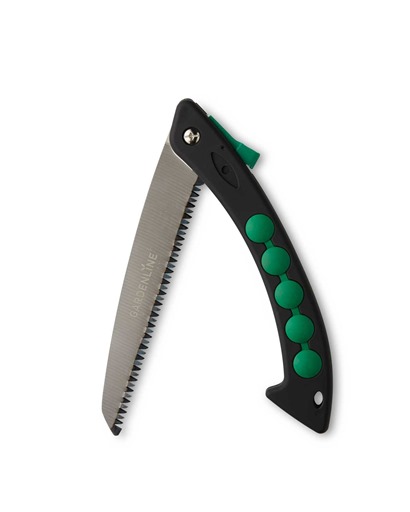
ALDI Gardenline Foldable Saw – Product Review

Review by Michael Smith (Veshengro)

Gardenline-Garden-and-Camping-Saw-AALDI Gardenline Foldable Saw
Length approx. 18cm
Carbon steel saw blade with 3-sides ground teeth, ABS handle with TPR grips
Thickness: 1.2mm (Blade)
Price (when available) £ 4.99

I purchased this saw, more or less, to try it out as to how it would perform and not, like often, given this as a review sample. Having used it on both old and green wood, including rather hard cherry, I must say that it performed if not as well then at least almost as well as some rather expensive makes of saws of this kind, at a fraction of the cost.

Gardenline-Garden-and-Camping-Saw-CI would certainly say that this saw is ideal for gardening, pruning, camping, clearing trails, hiking, tree trimming and light coppice work.

Blade safety lock with a safety locking mechanism that double locks, so to speak, as it also locks the blade once on the way down, thus making the closing of the blade safer reducing the risk of closing it on the hand.

Unfortunately, as with all ALDI special buys offers, these saws are always only available now and then and then only as long as stocks last which, at times, may last for a couple of days or a couple of weeks depending on demand.

Obviously, the question is now as to how this saw holds up in sharpness and other things in comparison to other, more expensive ones of brands that I am not going to mention here.

© 2018

Sycamore tree and Sycamore wood

by Michael Smith (Veshengro)

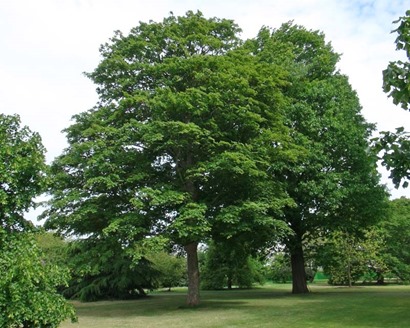
Acer-Pseudoplatanus-2When we are talking here about the Sycamore we are talking about Acer pseudoplantanus, the “European” Sycamore and not the American one, which is Platanus occidentalis.

Sycamore (Acer pseudoplantanus) (in the USA called Sycamore maple) is a very underrated and undervalued tree and wood in Britain where it is continuously referred to as a non-native species and some call for its eradication.

While it is true that in the UK, Sycamore frequently suffers from sooty bark disease (further citation) to all intents and purposes, however, is – fingers tightly crossed it remains that way – otherwise very resilient. Sooty bark is, however, fatal for the tree once it has been affected. Having said that, however, it would appear that Britain has just managed, probably, to import a plant disease, Xylella fastidiosa, from the European Union that, unfortunately, does attack Sycamore, along with Oak and Bird Cherry.

In my opinion Sycamore if one of the best woods for treen, and that not only because of its high antibacterial and antiviral properties, though it may be rather plain and lack interesting grain feature rater, in comparison to other hardwoods.

On the European mainland, especially in Germany, where it is called “Mountain Maple”, Sycamore is regarded as a noble timer tree and highly valued.

With Ash Dieback (ADB) making itself rather felt in woodlands across Britain UK forestry bodies are looking abroad for foreign replacement completely disregarding the Sycamore and, still more often than not, rejecting any suggestion of looking at that tree, which does so well, bar for sooty bark, in the UK where it tends to grow like a weed, with the comment that it is not a native tree. But Southern Beech, and other suggested replacements, also from the USA, obviously are. I rest my case here, as it is getting rather heavy (the case that is).

Personally, but then this is me, and I love Sycamore, I cannot see why the Forestry Commission and the Royal Forestry Society, and others, are looking at American maples, for instance, as a possible replacement for Ash, when we already have a, more or less, perfect specimen of the maple family in our midst that also likes living and multiplying here. Anyone who has seen how that tree multiplies will know what I mean.

German forestry sources refer, as said earlier, to Acer pseudoplantanus as a noble timer tree, or even as Edelholz, meaning precious wood, and there, apparently, it tends to only grow in mountainous regions and not so well in the lower areas. Maybe they need some British Sycamore seed... just jesting. So why the permanent rejection of Sycamore in Britain as a “non-native” tree, especially considering that it once, before the last ice age, apparently, was native here but did not return on its own steam.

© 2018

Keeping A Tidy Wood: Yes or No?

by Michael Smith (Veshengro)

The answer should definitely be yes. It has been so in the past and should be so again.

Debris and such left lying around the forest create nothing but a fire ladder and a hazard, for both fire and biological in that such material is a haven for the bark beetle and other pests that gladly will attack your standing timber as soon as they have finished their first lifecycle in the old dead and decaying timber.

The environmentalists who insist that we, the foresters, woodsmen and woodland owners should leave debris such as the cut tops of tress and branches in place out in the woods “for the wildlife”, in my view, do now know what they are talking about and that is also the same as regards to those that insist that we need to leave out old coppice woodlands unattended so they can revert to proper wildwoods as they were hundreds of years ago, and such baloney, in order not to use a rather harsher word.

The only “wildlife” that will take up residence in old branches, tops, and the like are, in general, with a few exceptions, pests that will destroy standing trees as much as they will eat their way thru dead wood. And allowing ancient and not so ancient coppice woodlands to “revert back to wild woods” does not work because as soon as coppice stools are left unmanaged for too long they will break apart, the trees will fall and that is the end of the woodland as most of those trees will break apart virtually at the same time, seeing they more often than not are of the same age. It would appear, however, as if the environmentalists do not want to listen to that as they keep on about that we are only interested in making money out of the woods. Those who say that have no real knowledge of what actually drives a true forester and woodsman in his work. But I digressed. I shall come back to this, however, at some other occasion.

In the days of old and even in the not so distant past very little if any branches were left littering the forest floor; it was all used for crafts such as walking stick making, bodging, heating, etc. and there was still plenty of wildlife – more than today in actual fact – but very little on forest pests.

Today with our mono-cultures of whatever wood – I am not just talking about the often ugly regiments of conifers where they should never have been planted – despite leaving cutting litter everywhere, often rather higgeldy-piggledy there is less proper wildlife but many more pests set to ravage our trees. Combining that with the lack of bio-security when it comes to imports of stock, for instance, and the rather daft practice of collecting seeds here and then sending the very same seeds abroad to be grown on and reimporting them, the result of which is Chalara dieback of ash caused by the fungus Hymenoscyphus fraxineus (and probably other tree diseases) and we have a recipe for absolute disaster.

Many of the pests affecting woods and forests nowadays seem to have been virtually – in their current strengths and numbers – unknown in the past when woodlands and forests were much more intensively managed and kept clean & tidy but which were, also, generally not single species mono-cultures.

In my childhood fallen branches were cleared away rather rapidly and that not by forests staff only who used them for heating their homes but also by people who had permits to collect firewood in the form of fallen branches from the woods and forests.

Might it just be that the so-called management of our woods and forests today is the wrong kind of management? It very much would appear to be the case and much of the blame may have to be, aside from the mono-cultures, laid at the door of the heavy machinery that it used nowadays for felling and timber extraction, especially the so-called timber harvesters.

The weight of those machines and their special wheels seems to churn up the woodland and forest floor to such an extent that it may – and I say may as we do not have proof for that – destroy the mycelium that is the communication network between trees and plants and also all small wildlife, as in invertebrates and other small creatures that live in and on the woodland floor.

It is time to reactivate the old management methods for our woods and forests, with coppicing at the top of the list, to rebuild the woodland communities, the ones of trees and soil, as well as those of people and not try to apply a band-aid on the damage we keep doing by our modern practices of mono-cultures and heavy machinery use.

© 2015

For more on coppicing and why, etc. see “Managing our Woods”, a small book that explains the whys and wherefores of managing our woods in this way and calls for us to return to that way.
Making local woods work

by Michael Smith (Veshengro)

29_Making_Local_Woods-300x180

Making local woods work for community enterprises

by Michael Smith (Veshengro)

Fifty communities across the UK will receive support to transform unmanaged woodland into opportunities for jobs, leisure, education and services and to improve the health and wellbeing of local people.

The Big Lottery Fund is awarding £1,151,111 to the Plunkett Foundation for its Making Local Woods Work project. The pilot project, due to launch later this year, will help people to create social enterprises in local unmanaged woodlands so they can grow into sustainable businesses, creating new areas of employment and training to benefit their communities. The opening up of much-needed access to the natural environment will not only provide opportunities for economic growth, but better engagement with the outdoors will result in better health and wellbeing for those involved.

According to the Forestry Commission, 47 per cent of woodland are unmanaged or under-managed* which can threaten the variety of plant and animal life. Many bird and plant species have been in decline in recent years**. Active woodland management could preserve and increase the biodiversity of these habitats and increase wood fuel production.

Woodland social enterprises are beginning to emerge as a way of tackling a wide range of issues and there is growing evidence of local people successfully using their skills and ideas to set up businesses which have been effective in improving communities.

One example is Hill Holt Wood in Lincolnshire which provides training for young people who have been referred by agencies because they are excluded from school or are unemployed. The woodland also attracts more lone visitors, particularly women, due to the presence of volunteers performing activities including coppicing, woodcraft and charcoal manufacturing. Revenue is also achieved through its cafe and green burials. A further example is Blarbuie Woodland Enterprise in Argyll which has provided residents of the Bute long stay hospital, access to the adjacent woodland, activities such as arts and crafts, wildlife walks, training and employment opportunities.

Making Local Woods Work will provide training, volunteering and employment opportunities to 500 people tackling unemployment, social isolation and poverty. It will support, advise and train 50 groups across the UK to become woodland social enterprises involving study visits, training in asset transfers, financing, asset acquisition, land brokerage, woodland management and business planning. It will also deliver training and knowledge sharing events to 200 groups looking at setting up their own woodland social enterprises.

The project will be delivered in partnership with the Forestry Commission, The Woodland Trust, Grown in Britain and other partners.

Improving the availability and quality of knowledge to such a large body of people will help to bring about wide-scale improvements in the ability of groups to set-up local woodland social enterprises. Evidence of the project’s impact and sharing of the learning will be used to influence future practice of woodland social enterprises and also woodland management in general.

Peter Couchman, Chief Executive of the Plunkett Foundation, said: “We are absolutely delighted to announce that, thanks to the Big Lottery Fund, we will be able to support 50 woodland social enterprise pilot projects across the UK over the next three years. This important work will help to support a range of social enterprises to bring woodlands into active management, increase their use and ultimately help more people to enjoy and benefit from woodlands. We’re excited to be working with both new and familiar partners on this project.”

Peter Ainsworth, Big Lottery Fund UK Chair, said: “There aren’t many woodland social enterprises around yet, but where they do exist they have a great record of promoting skills and employability. It’s exciting to be able to support this initiative which aims to improve the quality of life of those directly involved and also make woodlands more accessible and better looked after for the benefit of all.”

*Forestry Commission Sustainable Forest Management spatial data.

**The population of willow tits in the British Isles declined by 91 per cent between 1967 and 2010, the pearl bordered fritillary butterfly recently declined 42 per cent over ten years, and 56 of 72 woodland ground flora species declined between 1971 and 2001. RSPB.

Making Local Woods Work is a project led by the Plunkett Foundation involving partners the Woodland Trust, the Forestry Commission, Hill Holt Wood, the Community Woodland Association, Llan y Goedwig, the National Association of AONBs, Locality and Shared Assets. The partnership has a range of skills and experience including social enterprise development, community ownership and management of assets and woodland management.

The term “about time” does very much come to my mind with regards to things like this finally happening but we need more of this. In fact we need all unmanaged and under-managed woods in this country (and not just this country alone, that is for sure) to be brought (back) into proper management and wherever possible this should be coppice management.

So far we are seeing way too little of this happening and often this is due to the opposition from certain people in the environmental movement who suffer from cognitive dissonance when it comes to woods and trees and the management of woods. They believe that cutting any tree, for whatever reason, harms the trees and the environment, which is not the case, especially not as far as coppicing is concerned. In fact coppice management benefits all sides.

Further reading:

© 2015

For more on woodland management and especially coppicing and why, etc. see “Managing our Woods”, a small book that explains the whys and wherefores of managing our woods in this way and calls for us to return to that way.
Management of council woodlands

by Michael Smith (Veshengro)

Wood-bluebellsThe management of such woodlands, whether in town, in parks, open spaces, cemeteries, etc., or in the countryside, whatever the size, should be handed over to groups of citizen foresters and coppice worker cooperatives.

Let's face it, most councils, whatever the size, do not have the financial means, nor the wherewithal, as to managing such woods and trees and thus generally just leave them to get on with it.

The cooperative movement in the UK in early 2015 basically asked government to have all those unmanaged and undermanaged council woods (and others) to be given over to cooperative management by groups of coppice workers and such.

The great majority of all woods that are owned by the municipalities and the counties in Britain are either not managed at all, at least not in any proper manner, or are undermanaged. This is neither beneficial for the environment and wildlife nor for the local economy.

Generally council woods seem to just have tree surgeons and such contractors sent in on an ad hoc basis to fell trees that may be dangerous or such and then they are either chipped and sliced and then the chips and wood is taken to landfill or, on other occasions, the contractors are told to just leave the wood laying there. Neither is a good choice; not for the woods, nor for the local economy, and also not for the environment.

Allowing the woods to me managed by a variety of groups of citizen foresters and coppice worker cooperatives and such will bring many benefit to the woods, the local economy, and the environment even further afield than the pockets of woodlands that will be then under proper management.

All too often any attempts of woodland management in council woodlands and woods, whether owned by the county councils or the local ones, are hampered by vociferous members of the environmental movement who have a case of cognitive dissonance when it comes to trees and woods and the management of woods. The other issue, as far as the councils themselves are concerned, is the lack of funds to do it themselves. Thus those woodlands, or at least the management of them, should be handed over to people willing to manage them to the high standards that are required to bring them back to health while at the same time being able to create an income for themselves and even employment opportunities for local people.

The woods and woodlands in question are found in a variety of different settings, as already mentioned, and they all should be brought into management for the good of the wood, the environment and the local economy and it can be done.

Obviously standing mature trees should not be cut unless they are a problem in one way or another but overstood coppice must be tackled and sycamores that all too often would be regarded as useless should be cut and copses created from them and they should be managed in the appropriate rotation to harvest timber from them for a variety of wood products that they are suitable for. Those are just ideas and examples, for sure, and each and every area will have its own management requirements and to theorize about them would be a waste of time and effort here.

Suffice to say, however, that, as most councils do not have the funds and often also not the wherewithal to carry out this much needed management of the woodlands that are in their portfolio it would be best that this management be given over to the right interested individuals or groups and the sooner this is being done the better.

© 2015

For more on woodland management and especially coppicing and why, etc. see “Managing our Woods”, a small book that explains the whys and wherefores of managing our woods in this way and calls for us to return to that way.

We need more trees

by Michael Smith (Veshengro)

More woodlands, properly managed – oh dear, the dreaded “m” word, as far as many misguided environmentalists are concerned, I know – is what we needed, and also more trees in other locations.

But mention the word management and those those above mentioned environmentalists will scream blue murder and dare you say that trees will be cut, even under proper coppice management, they call it slaughter.

We need trees where people live and even well managed coppice woods in towns and cities; anywhere where there is space for them, from parks to cemeteries and anywhere else between. In some places this is beginning to happen but we need more of it, much more. In fact, we need it to happen everywhere.

The problem being encountered with establishing and especially managing woods in parks and cemeteries by way of coppicing and making use of the wood time and again runs foul of interfering misguided and misinformed environmentalists who believe that cutting down a tree and that management of woods is bad for the environment. They jump up and down and make a hullabaloo and frighten the authorities to abandon such schemes quite frequently. It is almost impossible to reason with such folks who suffer from cognitive dissonance as they will not even listen to even the most learned men and women in the field, and not just “ordinary” foresters and woodsmen, if it does not conform to their beliefs.

However, regardless of their beliefs and their cognitive dissonance, we need to first of all bring all our woods, whether in the countryside or in our parks wherever they may be, including the city, and the woods and trees of cemeteries, into production through proper management, and then we need to plant more trees and woods, including and especially where people live. And we need to start it the day before yesterday, not tomorrow or even today. But as today really is the possible option today it has to be.

Let us start, before even getting into planting new woodlands, to look at properly managing our existing woods and woodlands, however large or small, private or “public”, and do that is such way that benefits the ecology and the local economy. It can be done. We have done so for many thousands of years in this country, by coppicing and pollarding trees and managing the trees and woods in a way that benefits all.

The great majority of our woods and woodlands, private and “public”, in the British Isles today have not seen any proper management for around half a century or even more because people rather bought plastic – as it was cheaper – than products made from homegrown sustainably cut wood.

*While plastic products that replaced those traditionally made from (coppiced) wood have led to the deterioration of our woods nothing has done more damage as the already mentioned misinformed and misguided self-styled and self-proclaimed “environmentalists” who vociferously insisted that the woods be left to fend for themselves and often interfered, by direct action even, with any management attempt.

The tide needs turning and the neglect of our woods and woodlands reversed by, once again, taking them in hand through proper management though, alas, this will, to some extent will look rather drastic and may cause some more complaints from certain quarters. Restarting coppice management will throw wide open areas, especially if they are of overstood coppice, which many of them will be, that previously have been full of rather large, though more often than not multi-stemmed, trees and this will look rather strange to start with.

But, in order to revitalize our woods and woodlands and make them healthy and productive again this is something that we must accept. It also does not last for very long and the prolific regrowth, general, of everything that before was in the dark on the woodland floor will soon make up for this change in scenery and especially the amount of butterflies and other insects and birds that will, suddenly, conquer those opened up areas.

Once we have done this, have restarted the proper management of our woods, then we must think about, and not just think about it but do it, planting more trees and woods wherever at all possible, and this must include parks and cemeteries, but also roads and other places in towns and cities. Agricultural land that does not grow crops well and that may thus not be is use should also be converted to woodland. In this way areas of woods should and would be created around the towns and cities and also the villages everywhere.

While such newly established coppice woods will require time to establish themselves, even with the most intensive management, and can never replace the ecosystems that are ancient woods, they will, over time, become valuable habitat and a source for raw materials for the new wood culture. Thus they are good for the (local) environment as well as local industry. At the same time they will be good for all of us for, as scientists have discovered, not that it should have taken much of an effort, living near and around trees makes us feel better and also act better.

© 2015

For more on woodland management and especially coppicing and why, etc. see “Managing our Woods”, a small book that explains the whys and wherefores of managing our woods in this way and calls for us to return to that way.
Protecting coppice regrowth

by Michael Smith (Veshengro)

Protecting the regrowth of any coppice trees, be they Hazel, Ash, Sycamore (yes, that tree often so maligned for being non-native but ever so useful), or whatever else, is important if we want to see a a return for our labors.

In the British countryside there are a number of deer species roaming about; some of which are native, such as Roe and Red deer, while others, such as Sitka and Muntjac deer, have been introduced (unfortunately, one might say).

Deer pose quite a threat to a coppice system as they have a tendency to munch off the for them rather tasty new seasons regrowth, and if this is left unchecked those stools of whatever tree species will eventually die out, which would completely destroy a coppice woodland. However, deer are not the only “grazers” that pose a threat to coppice regrowth; rabbit (coney) and hare do too.

Deer may be beautiful to watch – and I do love to see them in the wild – but one of the reasons why deer are not popular amongst foresters is the amount of damage they can do to woodland. In late winter/early spring the males use trees to rub the velvet off their antlers, causing great damage to whole stands of trees. For this reason it is often necessary to control numbers of males. Though controlling of numbers – and not just of males – is also necessary, in the absence of predators, in order to preserve health and viability of the herd. Deer can also decimate, as already indicated, an unprotected area of coppice by stripping off all the new buds from the regrowth.

In a stable, fully functioning eco-system the population densities of grazing species are maintained at a sustainable level by top predators and in the past this would have been the case in the British Isles with species such as wolves, bears and lynx that would also have been roaming our countryside.

Now that we have lost those species it is important that we take measures to protect any coppice regrowth to ensure the survival of coppiced woodlands, which in some cases are also classified as ancient woodland.

There are several methods which can be used to protect coppice growth. One of them is to cover up the coppice stools with brash wood from the trees that have been coppiced (brash wood is the twiggy branches from the crown of a tree).The theory is that the brash wood would allow the re-growth the opportunity to grow woody enough so that it is unpalatable to deer. That, at least, is the theory. I have not tried it in practice (as yet). In places where it has been tried the success was not a very good one which could have been due to the brash not being high enough above the stools or the brash piles do not provide a high enough barrier.

Another method is to weave brash wood into a basket-like structure around the coppiced stool. The principle is similar to the previous method; the baskets should provide the new growth protection until they grow over the baskets. By which time they should be woody enough to be left alone.

Large scale coppicing projects often use of temporary electric fences. This is perhaps the quickest and most efficient method if a large coupe has been coppiced. The idea is that deer are completely excluded from the freshly coppiced coupe, hopefully providing complete protection to the new re-growth. Obviously this method will only be suited to certain circumstances where the presence of an electric fence is not a problem, and where there is no problem with interference by vandals.

Other kinds of temporary fences could, I am sure, also be employed, such as those plastic fences that are used often around building sides, road works, and such like and there is also a version available in black if one does not wish to use the more common orange colored fencing.

Perhaps the oldest and most traditional method of deterring deer from browsing a freshly cut coppice coupe is simply the presence of humans and this may have been one of the reasons why woodsmen would traditionally live in the wood for extended periods of time, sometimes full time even, near the woods they were working.

A method that is said to have been used on the European mainland, especially in Germany, to protect coppice regrowth or newly planted trees was a “fence” of rope into which were tied rags every foot or so that had been soaked in some evil smelling liquid. But, much like electric fencing, this will only work where there is no danger of interference by vandals or such. The idea here is that the smell will deter the deer entering the “fenced off” area.

In general forestry operation new plantations of trees are protected by so-called deer fencing, which is just a stronger and taller kind of stock fencing really, though there are also some that have added protection against hares and rabbits entering. But if Mr Bunny wants to get in he might decide to burrow under the fence. Not much that will stop him except for a fence that is dug quite a way into the ground.

As coppice regrowth, in general, does not require a long exclusion period temporary fencing of one kind or the other, and aside from the previously mentioned plastic fencing there is also the split chestnut type that is often used on woodland operations and also in agriculture for penning in or out small livestock.

While it may not look as pretty as a woven basket structure around a coppice stool both the orange or black plastic fencing and the split chestnut type are reusable and quick to erect and remove and thus might be the best option in the book. Split chestnut fencing may not require any stakes, though they do help, while the plastic fencing can be put up with road pins, for instance.

© 2015

For more on coppicing and why, etc. see “Managing our Woods”, a small book that explains the whys and wherefores of managing our woods in this way and calls for us to return to that way.

Coppicing is vital to our woods and our economy

by Michael Smith (Veshengro)

Coppicing, the ancient woodland management practice, is vital to the woods and to the economy, especially the local economy.

In many parts of our country, if you happen to go down to the woods, you may well encounter an enthusiastic group of people from all walks of life reviving a tradition that is as ancient as the managed woodland itself, and it is a revival that is not before its time.

Coppicing, which is the cutting of hazel, and other deciduous trees, to produce usable timber products and encourage animal and plant life to thrive, is making a comeback. This is reckoned to be due to a throwaway remark from a master thatcher about the difficulty of sourcing British made thatching spars. However, there is more to that for not only thatchers are asking for local thatching spars, tool manufacturers also have commented on the lack of British ash for the making of handles for such tools, whether for garden tools or for hatchets, billhooks and axes.

For far too long have we allowed our woodlands to fall into disrepair because we have not managed them in the age-old fashion, by coppicing. Much of this is due to two reasons. One of them being that we have seen imports to be easier to obtain than actually dealing with our own woodlands but the second one, and one that has done the greatest of damage here, is the attitude that has come about by the opposition from the side of many “eco-warriors” who have read the wrong books that the cutting of trees is bad and thus must not be done.

When it comes to sustainability wood for building and for products is hard to beat and many people are well into buying wooden products (again) nowadays, including woven baskets, for the reason that wood is sustainable and carbon neutral and that, at the end of its life, it whether it is but into the ground or is burned, it only releases the amount of carbon that it absorbed during its life. However, most of the wooden products, whether it is kitchenware, baskets, tool handles, etc., do not come from indigenous woods but from woods far afield and often are made for cheap in countries such as China, Vietnam, etc., and then need to be shipped to our shores. The sustainability scale their drops off drastically.

Homegrown wood, from sustainably managed coppice woods could tick a lot of boxes here, although the products might have to cost a little more than the machined ones though wooden that come from abroad in order to be able to give the coppice worker and the producer an income from which they can live.

Thatching alone in Britain is a significant business consuming an incredible 25 to 30 million hazel spars a year which are used to hold the thatching straw, or reed, in place on the roof and at around 10p each that could generate a business worth a potential of £3 million nationally.

As with so many coppice products, though, the price for such spars, as much as for other products, be those beanpoles, walking sticks, etc., are often far too low priced to give the coppice worker an income. Those products take time to make, and the more elaborate the more time is involved, and we need to reconnect the time it takes to make a product with the price if we want local woodland industries to exist and thrive.

While coppicing is not only or even primarily about making money it does have to come into it if we want our woodlands and our woodland industries to exist, to thrive, and new ones to be established, both coppice woodlands and woodland industries.

Coppiced woodlands are part Britain's cultural heritage and thousands of years their management has provided a wide range of habitat for wildlife as a useful by-product to the original primary task which was that of providing essential raw materials for agriculture, housing, industry, and much more.

The surviving copses across many parts of the country are reminders of the local history that has moulded landscape and communities and provide yet more evidence that even what appear to be our wildest places have been managed by man for centuries. And, lest we forget, if we do not take up this management again we will lose those woods for once managed management will have to continue.

And far from compromising wildlife and the natural world, coppicing allows light and warmth into a wood, helping woodland flowers to thrive and, as time goes on, encourages sometimes endangered species to keep a foothold in the countryside, from the dormouse to the rarer kinds of butterfly, like the silver wash fritillary and several species of woodland birds.

Coppicing ticks more or less all the boxes for anyone looking for an outdoor activity that is 100% sustainable, especially if the majority of the activities are carried out in the ancient way by using human- and animal-powered tools and equipment only.

Correctly managed an area of coppice is ready to supply its next crop of rods, poles and other timber within five to 30 years of the first 'harvest', though there is also a great deal to be said for simply getting out in the woods, and creating something useful and beautiful from the natural materials.

Aside from revitalizing and reestablishing coppice woodlands and managing them properly we also must set up the appropriate “industries” and markets for those forest products. And those products must be more than just thatching spars, beanpoles, pea sticks, tent pegs, walking sticks, firewood and charcoal. And we also must take care that little to none of the wood “produced” is wasted.

© 2015

For more on coppicing and why, etc. see “Managing our Woods”, a small book that explains the whys and wherefores of managing our woods in this way and calls for us to return to that way.

Woodlands

by Michael Smith (Veshengro)

Throughout history trees have formed an intrinsic and vital part of our cultural landscape. Our woodlands, and woodlands in general, have been managed and worked by woodsmen since antiquity supplying lumber, the most noble of building materials, and firewood for heating homes and cooking food, as well as wood from which to make the majority of products that were being used, from tools and tool handles, to kitchenware, including spoons, plates, and everything else in between.

Growing trees and using their wood is increasingly recognized as one of the most environmentally sustainable land uses. Yet, in recent decades our relationship with our trees and woodlands has waned, with the UK importing an estimated 80% of its timber, whilst only 20% of the country's woods are actively managed.

The Department of Land Economy of the University of Cambridge has been running a long-term study investigating trends in the management of private woodlands on traditional estates in England and Wales. The study commenced in 1963, continued through the 80's and 90's and the findings from the latest survey in 2006, strongly suggested that there has been a deterioration of the financial performance of many estate woodlands to the point where management has been reduced or even suspended.

It is not just the deterioration of the financial performance of the estate woodlands that we must be concerned with but the deterioration of them in general due to the reduction or even suspension of management. And it is not just the private estate woodlands that are thus afflicted. The same goes, maybe even more so, for council owned woods and woodlands. They are all in dire straights.

Wystan Hugh Auden wrote in one of his works “a culture is no better than its woods” and if we look around us today I would say many of our cultures are not worth much, considering the way we treat our “native” woodlands. However, thankfully, a revival of our “woodculture” seems to be on its way and this is to be more than encouraged; it is the way forward, for the new age, the coming age, is the age of wood, or the Wood Age. We have had the Stone Age, the Bronze Age, the Iron Age, though, theoretically we are still in that one, even though some insist to call the current age the Technology Age.

Wood, however, is the way forward, once again (we have been there once before, I know) for many of the things that today we use plastic, for instance, and what better than that wood being home-grown, coming from a woodland near you. This would benefit not only the local economy and the local woods – and the woods in this country per se – but also the environment and the Planet.

Wood from local forests and woodlands also cuts down on the so-called “woodmiles” and keeps those to the absolute minimum, and this even more so if the sawmills and other wood-using businesses and craftspeople are local and the products sold on markets as local as possible.

The majority of woods in Britain, whether privately owned or owned by local and county councils are in dire straights and lack of market is but one small reason for this lack of proper management which has caused a multitude of problems. Lack of vision and lack of finance is another big part here as is the fact that there are a multitude of misguided “environmentalists” who believe – and are very vocal about this – that cutting any tree is bad for the environment.

Coppicing, the age-old and time-honored and time-proved method of managing hardwood woodlands, in which trees are cut at a certain age and then allowed to naturally regrow from the root stock, the stool, is not harmful to the environment at all. The opposite rather. It benefits both the woodland and the wildlife. In addition to that bringing our woodlands back into production, primarily by means of coppice management, not only benefits the woods and the wildlife but also the local economy as it will create employment and products. It is a total win-win situation. Realizing it though in the right quarters is an entirely different story.

© 2015

For more on coppicing and why, etc. see “Managing our Woods”, a small book that explains the whys and wherefores of managing our woods in this way and calls for us to return to that way.

Weed your woods

by Michael Smith (Veshengro)

It may sound silly at first, but, if you want to make your woodland (more) productive, just treat it like a big vegetable garden. You will grow the best crop if you cut the weed trees, thin the thick spots, and harvest the crop trees before they get too "ripe" to use.

But, let's start where we always should start, namely at the beginning.

A wood, even a forest, is to the forester the same as a field is to the farmer or a garden to the gardener and all of them need management if they are to thrive. The only difference between a gardener or farmer and a forester is that the latter often does not, except in coppice management, ever sees the harvest. He harvests often what others, long before him, have planted, and he manages and plants for the future, for harvests that are carried out by others, often after he is long gone.

Alas all too often there are people about who believe that Mother Nature does a better job than we could ever do and there are time when that is true. If the woodland, however, is to be of use to us and to wildlife and be a thriving ecosystem then management by man is required and this even more so if the woods have been managed before by the hand of man for our use, and this even more so if the produce of such woods are also to benefit us.

Even when managing a coppice woodland weeding certain trees out and doing selective cutting here and there is required and in stands where large trees are to be the result then thinning is a must and it must be repeated every couple of years and, if permitted, over time those cut trees may actually turn into coppice stools and a so-called coppice with standards will result and a good result that is too.

Your goals will greatly affect your management decisions and your management decisions will greatly affect the outcome and the produce. Of course, the existing conditions of your woodland may have an equally great effect on your decisions and the outcome.

A mature stand of timber may dictate a heavy cut to stop further decline while a mixed-age or middle-aged stand of timber is a likely candidate for a selective cut. Any young stands can be like a recently sown bed of carrots, nothing will prosper without a little thinning. When it comes to a woodland of mixed-age or middle-age stands of timber then, if it is hardwood, or deciduous woods, which, hopefully it is, of native trees then one of the best options is to create a coppice with standards and if it is a coppice woodland that was previously managed as such then you may find many an overstood coppice stool that needs immediate attention.

Once you've decided your motives, you need to find out just how saleable your timber is. Become “wood-wise” and learn to recognize the potential in a tree or a stand of coppice. Also the species that you have growing and which are due for cutting and then research the market. The original task of the professional forester was that of recognizing what every tree or part of a tree could become by way of product and use and this “eye” you, as a woodsman, will also have to develop. Once you know all that research your potential market and not, necessarily, people such as sawmills and the like but look at what you, actually, could make out of the wood yourself that could be sold to end-users rather than processors.

Selling to a sawmill or any processor will greatly reduce your income from your woods. On the other hand if you go into production of wooden goods yourself you will have to have the time for doing so, the tools and then a way of marketing them to the end-users. It is all a case of horses for courses. A sawmill or other processor may give you x for the whole tree but processed by yourself into a variety of products, and the same is true for coppice stems, will give you x4 it is obvious that you can make more, in financial terms, from processing most of the wood yourself. But, as said, it requires time, effort, and tools to do so.

When it comes to the felling, especially of larger trees, and you have not used a chainsaw before and/or felled large trees then please do not do it without any training even if it is your land and in all theory you can use a chainsaw there to your heart's content. Chainsaw take no prisoners and are extremely dangerous, as are trees falling. We are talking several tons in weight coming crashing down at a rate of knots. So, I say it again, learn felling of trees or get an experienced lumberjack to do the work for you. Do not take any chances.

Now, what are the weeds and what are the crops?

Well, a crop tree is any reasonably mature tree worth harvesting, or one that has the potential to grow into such a tree. Weed trees may just be species of low value, or may be damaged by rot, fire, lightning, wind, insects, etc. They could also be trees excessively lean or that are rather crooked. Removing those, and those that otherwise interfere with the growth of the other trees, is called thinning, and is much like thinning out a bed of carrots.

In any woodland for trees to develop to the full potential it is important that each of them has enough space to grow and develop. It is a little different in a pure coppice as compared with coppice with standards and a lot different in a stand of timber where all are meant to be single stems growing to maturity.

Thinning (weeding) is a valuable exercise even in a pure coppice where I have begun to referring to it as selective coppicing for here we can do it in two ways. We can either remove stems that are already harvestable for a variety of products and leave other, smaller ones, to grow to a decent size or removing those small stems that are and never will be of any use but which interfere with the growth of those we want to harvest in a year or four, those that are spindly, deformed, or otherwise of no use.

Our main aim, with hardwood trees, is to create, when working to rejuvenate a woodland, a sustainable coppice woodland, either as a pure coppice or a a coppice with standards, and the former is easier to maintain than the latter, in all honesty.

But the latter will make for the production of timber in size that cannot be achieved in a pure coppice and thus often that is the one to go for.

In that case weeding, aka thinning, will be required on a regular basis especially also as you will want to bring on new growth, natural regeneration, and encourage those young trees to grow to mature standards to eventually replace those that you will cut in time.

In order to help them grow, however, the area around them in the woods will need not just thinning but also in this case really weeding. But unlike in the garden you don't have to remove dandelion and such like but brambles and bracken and such vegetation that might encroach and smother the saplings or otherwise impede their growth. Protection from grazers too may be required and some wire-mesh or the chicken-wire variety held by some stakes will, more often than not, suffice. And then there is more weeding and thinning.

© 2015

For more on coppicing and why, etc. see “Managing our Woods”, a small book that explains the whys and wherefores of managing our woods in this way and calls for us to return to that way.

The need for a return to coppice management

by Michael Smith (Veshengro)

The high timber forest consisting of so-called standards, with no small growth trees and coppice beneath, has its place and especially in areas where coppicable deciduous trees do not and cannot grow, and also for some end uses. In general, however, we must return to coppice management in most if not indeed all of our woodlands wherever it is possible in order to bring homegrown wood back into the economy and especially in order to rebuild local woodland industries.

For far too long the old woodland management practice of coppicing has fallen into disuse in favor of growing pine, spruce and fir – relatively quick-growing conifers and others such as larch, as standards (there is no other way as conifers simply do not coppice) to supply lumber, often for low-quality use, rather than hardwoods from full coppice woods and from coppice with standards, the latter which can be used to produce much higher quality products.

A great many of the products that once were made from coppiced wood nowadays are made from plastic or machined from wood in countries far away, or from bamboo, and carried around the globe at a high cost, especially to the environment, that is to say the Planet.

A return to coppicing our woods and using the timber harvested could bring a return of home-grown timber products made to high standards by local craftspeople and though those products would be more expensive than the current imports and those made from plastic they would be hundreds of times more sustainable.

At the same time the woods and the wildlife will benefit and so will the local economy also. The woods and the wildlife both benefit under coppice management because biodiversity is increased once the canopy is opened up every couple of years when sections of the woods are harvested and also because, in comparison to pine, spruce and fir, in broadleaf copses there is a complete set of layers to the woods. In the dark coniferous forests of standards those are generally non-existent due to lack of light penetrating the forest floor.

Coppice woods, while also dark in summer when growing and in leaf, this scenery changes, however, every seven to fourteen years when the stems are harvested. The canopy then is open for a couple of years and the everything changes on the woodland floor and coppice woods, especially coppice with standards, exhibit the entire range of the levels of the forest, benefiting the biodiversity of the woods and representing the healthy balance of a wood.

Die Notwendigkeit zur Rueckkehr zur Niederwaldwirtsschaft

Hochwald hat seinen Platz und ganz bestimmt dort wo Niederwald aus den richtigen Laubbaeumen nicht funktioniert. Aber im Grossen und Ganzen muessen wird zurueckkehren zur Niederwaldwirtschaft in der Grosszahl wenn nicht sorgar allen unsere Waelder (wo immer moeglich) um selbstgezogenes einheimisches Holz wieder zuerueck zu bringen in die Volkswirtschaft und besonders auch um die heimischen Waldindustrie wieder aufzubauen.

Fuer viel zu lange ist die Niederwaldwirtschaft bereits das Steifkind in der Waldwirtschaft und dem Anbau von schnell wachsenden Nadelhoelzern wurde Vorrang gegeben als Hochwald um Holz, oft fuer niderwertige Verwendungszwecke, zu produzieren, an Stelle von Hartholz aus dem Niederwald und dem Mittelwald.

Viele der Produkte die frueher hergestellt wurden aus dem Holz aus dem Holz das aus dem Niederwald und dem Mittelwald kam, oft in Heimarbeit und kleinen Werkstaetten, sind duch Plastik “ersetzt” worden und durch Holzartikel die von Maschinen hergestellt werden, oft im Ausland, im Fernen Osten, oder aus Bambus, und dann um den Erdball transportiert werden, zu hohen Kosten, besonders fuer die Umwelt und unseren Planeten. Das Holz selbst, fuer diese Produkte, oft stammt auch aus dubioesen Quellen.

Einen erneute Hinwendung zur Niederwaldwirtschaft und die Verwendung des auf diesem Wege produziertem Holzes koennte eine Rueckkehr von einheimisch gewachsenen Holzprodukten von hoher Qualitaet, hergestellt von einheimischen und ortsansaessigen Handwerkern, auf dem Markt sehen.

Waehrend solche Produkte, da handgefertigt, teurer sind als die momentanen Importe und Produkte aus Plastik sind sie aber hunderte Male mehr nachhaltig und halten auch laenger.

Zur gleichen Zeit wird sich eine solche Rueckkehr zur Nieder- und Mittlewaldwirtschaft positiv auf unsere Waelder und auf die Pflanzen- und Tierwelt auswirken wie auch auf die heimische Wirtschaft. Waelder und Flora und Fauna profitieren von kirrekter Niederwaldwirtschaft da die biologische Vielfalt sich erhoeht sobald das Blaetterdach des Waldes alle paar Jahre gelichtet wird wenn Holz in bestimmten Abteilungen des Waldes geerntet wird. Und auch weil in Gegensatz zum Hochwald, besonders dem Nadelwald, in Laubwald unter Niederwaldwirtschaft all Schichten des Waldes vorhanden sind, und besonders so im Mittelwald. In den dunklen Nadelwaeldern sind diese jedoch generell nicht vorhanden da wenig Licht auf den Waldboden durchdringt.

Waehrend Nieder- und Mittelwald auch dunkel sein koennen im Sommer wenn die Baeume wachsen unbd im Laub stehen, aendert sich dieses Bild jedoch alle sieben bis vierzehn Jahre wenn naemlich die Staemme geerntet werden. Dann ist das Blaetterdach fuer mehrere Jahre offen und auf dem Waldboden erwacht das Leben.

Im korrekt bewirtschafteten Nieder- und besonders im Mittelwald finden wir das gesammte Spektrum der Schichten des Waldes wieder was wiederum der Biodervisitaet grosse Dienste leistet und das gesunde Gleichgewicht des Waldes darstellt.

Erlaerung:

Mittelwald ist in Englisch “coppice with standards”, d.h es ist Niederwald in dem man bestimmte Baeume zur Hochwaldgroesse empor wachsen laesst.

© 2015

Why coppice?

By Michael Smith (Veshengro)

Were it not for the question mark this could be mistaken for the name of a woodland but while it is not about woodlands and their management it is.

Managing our woods by coppicing is almost – I did say almost – as old as the hills. It has probably come about when humans discovered that some – in fact many – species of trees regrow when cut and that rather vigorously and almost in perpetuity.

In the British Isles, and probably also in other parts of Europe, our woods have been managed in this way since more or less neolithic times, and we have managed them well and they thrived under this care.

Coppicing continued from the early times in its growth, and by the mid 13th century, most of our woodlands in the British Isles, and probably elsewhere, were managed as coppice.

Coppicing remained an important rural industry in Britain until its decline started in the 1850s, when a decrease in the demand for traditional products came about.

This decline increased dramatically after the First World War when major industry started to manufacture products that were once supplied from the woods by coppice workers and went further and deeper into decline after about the Second World War and especially with the advent of (cheap) plastic goods for the kitchen, etc. Products made from coppiced wood just could not compete any longer on price.

Then emerged the false idea (among environmentalists especially) that cutting any tree was bad and the demand misguided quarters to let the wild woods be wild woods.

This has allowed our woods to fall into a serious state of disrepair to the point of total destruction almost. The problem is that if a coppice stool, a tree that once has been coppiced, is not continued to be managed in this way, will eventually, as the trunks emanating from a single rootstock, the stool, break this root, this stool, apart because their weight, as they become “top heavy”. This will destroy such a coppice stool permanently and others, over a short time, in the same plot, are going to follow, which means the end of that particular woodland.

Woods (and forests) do not manage themselves, especially not those that have been coppiced before, despite what some have been led to believe, and if all, the woods, wildlife and we are to have a benefit and use of and from those woods and its products then we have to manage them and manage them well.

Coppicing is the finest management system for our woods and one – probably the only one – under which they thrive and here not just the trees but the entire ecosystem.

The cutting of the trees in rotation of so many years – between about seven to fourteen, depending on what the wood is to be used for – opens up the canopy, in some areas at least as never the whole area is cut, allowing light to reach the woodland floor. This in turn allows seeds that have lay dormant to germinate and emerge and the area will soon we covered in wild flowers of all kinds and the air be resounding to the sound of bees and butterflies will be everywhere. Birds or prey will be able to hunt and soon also tree seeds that have been covering the floor will germinate an new life will start, and not only from the coppice stools who also will begin shooting again. Don't worry, no flak jacket required.

The wood that has been harvested during the cutting will be put to use to benefit humans in many ways, from charcoal and beanpoles to other coppice crafts, including treen ware, such as spoons, spatulas, baskets, and much more.

Most of the wood that our ancestors used, bar the huge beams for building houses and ships, came from woods that were coppiced and very little wood was ever wasted. It heated their homes, provided their furniture, their eating utensils, including bowls and trenchers, tool handles and in some cases the tools themselves, such as pitchforks. The latter were often made all from wood and in a variety of ways, but some were just simply wooden poles that had a natural fork of two or three (sometimes more) tines.

Even in Britain wooden bowls and spoons, even for eating, were still in daily use in the countryside well into the 20th century but after World War One things began to change and wood was less and less used in that kind of daily life and after the Second World War it ceased virtually all together. In some parts of Europe the use of wood for everyday objects continued much longer and in some cases continues to this day and the coppice worker's products are still in demand, such as in some areas of Poland, the Czech Republic, Slovakia, Romania and Bulgaria.

Russian soldiers and partisans carried personal eating spoons from wood still during the Great Patriotic War but then again, someone might say, it was a country that was still rather backwards. Yes, maybe, but it still beat the Nazi war-machine.

The British and European coppice woodlands did and still could produce most of the wood needs of our countries, with the exception of really wide boards, which are not possible to achieve from standard rotation coppice, even if a tree is left for twelve to fourteen years to grow before being cut. Almost anything else, however, can be made from this wood; after all it used to be done before.

For more on coppicing and why, etc. see “Managing our Woods”, a small book that explains the whys and wherefores of managing our woods in this way and calls for us to return to that way.

© 2015

Encouraging planting trees will sequester carbon and conserve habitat

by Michael smith (Veshengro)

Oh my G-d! They have needed a university study again to “discover” something that every proper forester has known for ever and a day. They, however, needed a study for it again. Talking about stating the obvious.

Rewarding landowners for converting farmland into forest will be key to sequestering carbon and providing wildlife habitat, according to a new study by Oregon State University and collaborators.

Current land-use trends in the United States will significantly increase urban land development by mid-century, along with a greater than 10 percent reduction in habitat of nearly 50 at-risk species, including amphibians, large predators and birds, said David Lewis, co-author of the study and an environmental economist in OSU's College of Agricultural Sciences.

"One of the great challenges of our time is providing food, timber and housing, while also preserving the environment," said Lewis. "Our simulations show our growing appetite for resources could have cascading effects on wildlife and other vital services provided by nature."

"Policymakers have tools to increase tree cover and limit urban sprawl, such as targeted taxes, incentives and zoning," he added.

Paying landowners $100 an acre per year to convert land into forest would increase forestland by an estimated 14 percent and carbon storage by 8 percent by mid-century, the researchers say. Timber production would increase by nearly 20 percent and some key wildlife species would gain at least 10 percent more habitat, they added.

Yet this subsidy program would also shrink food production by 10 percent and comes with an annual $7.5 billion price tag, said Lewis.

Another policy option — charging landowners $100 per acre of land that is deforested for urban development, cropland or pasture — would generate $1.8 billion a year in revenue. More than 30 percent of vital species would gain habitat. Yet carbon storage and food production would shrink slightly, according to the study.

What is worrying in our age is that we seem to need a scientific study, conducted by some researchers, to “discover” the things that we have, actually, known for a long time already; in some cases for ever and a day.

Foresters through the ages have known the importance of trees and their habitat for the Planet, even though they may not have expressed it, or been able to express this, in a scientific way. But is that really necessary. We need more trees, period! It is that simple. And we need them not just for carbon capture (carbon sequestration) but also for raw materials. After all wood is made by trees and not in some factory.

© 2015

For more on woodland management, especially coppicing and why, etc. see “Managing our Woods”, a small book that explains the whys and wherefores of managing our woods in this way and calls for us to return to that way.

British beanpoles beat bamboo

by Michael Smith (Veshengro)

workerConsidering buying bamboo beanpoles for your runner beans? Well don't! Buy British beanpoles instead which are sourced for local coppice woodlands and your purchase will help those woodlands to thrive.

Slowly but surely, and not before time, our woodlands are being managed, in some places, in the old and time-proven way of coppicing and beanpoles are but one of the products that can be made from those woodlands managed in this way.

We need all to get reconnected with the natural world of wood and its endless possibilities.

Coppicing is a management system – probably the only management system – for our woods that benefits the woods, the wildlife and us and this system has been used in the British Isles since, probably, neolithic times and under this management the woods have thrived as did the wildlife and, to some extent, also the people making a living from such woods. Yes, there was a time when it really was possible to make a living working the woods and selling the produce from them, and it was not just beanpoles, hurdles and charcoal.

At the beginning of the 20th century in many rural places in Britain and elsewhere wooden spoons were still used for eating and wooden bowls and those, in general, were all made by local craftsmen from the wood from local coppice woods.

When it comes to beanpoles, and let us return to them, while they may be more expensive (yes, in fact, they are) than bamboo poles the environmental impact and footprint of them it, however, a very small one, especially if the poles are harvested locally.

Many people seem to believe that such bamboo poles last almost for ever but I have found that a season is about all that they can handle before they become brittle and I must say that I have had hazel poles that have lasted two or even three seasons.

This year's National Beanpole Week runs from the11th to 19th April 2015. Support your local events and buy some British beanpoles for your gardens. For more details see http://www.beanpoles.org.uk/.

© 2015

For more on coppicing and why, etc. see “Managing our Woods”, a small book that explains the whys and wherefores of managing our woods in this way and calls for us to return to that way.

Is it time for the Forestry Commission to be stood down?

by Michael Smith (Veshengro)

European Beech1lowIs it time for the Forestry Commission, maybe, to be stood down and that our woodlands (and our forests) be placed into cooperative – I did say cooperative not corporate – management? I certainly do think so and so does the cooperative movement. At least they do think so as far as cooperative management of our woodlands is concerned.

I am not saying that the British Forestry Commission is not fit for purpose; it has had its time and purpose and its original purpose, when founded just after World War One, has been fulfilled, and that already a long time ago. Thus the Commission is, to all intents and purposes, obsolete; both the purpose and the Commission.

The original brief of the Forestry Commission was to produce timer for the trenches for another possible way (in the end World War Two was different and did not require that much on timber for trench fortification) and for the pits, the mines, and that was the very reason for pine and spruce plantations. Today, however, our woods (and forests) require a different kind of direction and management and the Commission, in fact, seems to be almost incapable of providing that, and our industry is asking for more hardwood than softwood.

While we might need in Britain, a Ministry or Department, of Woods and Forests, that has an advisory role and a legislative one and one especially that ensures that our forest cover is increased rather than diminished and that the appropriate trees are planted and that woods are managed in the age-old ways that have served us and the woods so very well over previous millennia, and that also has a hand in research, and quasi-quango such as is the Forestry Commission is surplus to requirements.

Our country's woodlands especially, and here in particular those that are in “public” hands, for starters, should be handed over to be managed by interested community groups, but also by individuals and small cooperative enterprises, to be run for the good of the wood and the nation.

While the Commission talks much about the need of bringing all the woods in Britain back into production it does very little to actually facilitate this and often seems more of a hindrance.

The Forestry Commission, to a great degree, despite its many words, has become focused on the amenity use of its – actually the nation's – forests and far too many resources are pumped into the creation of “play grounds”, be those mountain bike trails, or whatever, and treat the forests more and more like a leisure enterprise and nature “reserves”. Wrong approach. Period!

The Commission keeps talking about the need of bringing more, ideally all, of our woods back into production but still does not seem to understand how this is too happen while at the same time pandering to leisure and recreation and creating trails for this and that.

The brief of the Forestry Commission from its founding was the production of timer for the War Department and the mines and not for furniture manufacturing and even building in Britain. The majority of the hardwood for furniture came from abroad, from the Empire, with but a little home-grown.

What is needed today is timber for British industry, including the building industry, from local sources, and the predominately conifer plantations of the Forestry Commission cannot supply that.

In years gone by our woods and forests had greater biodiversity and wildlife in spite little debris being left on the forest floor. Is our modern management to blame? I certainly do think so and so do others.

If we want state forestry, and national forests, in the United Kingdom it would be best to have a proper Ministry of Forests and a Forest Service but by far better would it be to have proper cooperative community-based management of our woodlands and forests – all of them.

The Forestry Commission is, basically, the law maker – or maker of the rules governing forestry (granting felling licenses, for instance) while it is also the biggest producer of timber. Thus it is almost like putting the fox in charge of the hen house. We need a Ministry of Forests or a Department of Forests that governs – where needed – operators and not a quango like the Forestry Commission.

© 2015

Managing our Woods (Advert)

Managing our Woods
Old management systems for the future of our woods
A call for the return to the old methods of woodland management for the good of the woods and the Planet

by Michael Smith (Veshengro)
RFA, RFS, EcoFor

This book has been a real labor of love and a long time coming but it is finally finished and available via this website under “Books”.

Having worked in all aspects of of woodland management and forestry since childhood woods and forests and their proper management are my passion and the old management systems, especially that of coppicing.

Often people who have been influenced by those with little to no understanding of woodlands and forests believe that the cutting down of a tree is bad for the environment and a disaster, even if replanting is carried out, though that is not the case. Trees, like everything, have but a limited lifespan, some shorter than others, and their healthy life, before they become active CO2 producers and also useless for our use, ends between 30 to 130 years, in the temperate climates. Coppicing extends the lifespan of the tree, in the form of the root stock, however, for up to thousand years and more, while timber is harvested in a rotation cycle.

To learn more read this book (I would say that wouldn't I, as, after all, I wrote it).

ManagingOurWoodsManaging our Woods: Old management systems for the future of our woods by Michael Smith (Veshengro) is a small 80 pages A4 e-book in PDF form on the whys and wherefores of proper woodland management by managing our woods again in the ways that our forefathers did for thousands of years, namely predominately by coppicing.

While coppicing does not work with coniferous trees that the British Forestry Commission and others have planted as woods and forests in the last century or so it does with most broadleaved trees and that is what our woods were ones made up of mostly and that is also what they must be returned to once again.

The author has worked in all aspects of woodland management and forestry since childhood and writes from the heart as much as from the head.

Price: £9.95 PDF (sent per email attachment)

© 2014

Landowners urged to restore ancient woodland

restoration-press-releaseThe UK’s leading woodland conservation charity has embarked upon a new scheme aimed at restoring ancient woodland in a number of areas across the UK.

It is now looking for woodland owners to make small changes to how they manage their woodland, and make a big difference to the protection of this irreplaceable habitat.

The Woodland Trust would like to work with private woodland owners to restore areas of ancient woodland affected by the presence of non-native or invasive species, such as plantation conifers or rhododendron respectively. The charity is offering advice and support to help people re-establish habitats affected by such planting so the conditions for species that rely on ancient woodland to survive can be strengthened and conserved for future generations.

Ancient woodland is the richest land habitat for wildlife in the UK that has evolved over many centuries. Its irreplaceable characteristics are identified by specialist species of plants, fungi and insects that are rarely found in younger woods.

Unfortunately much of this has been degraded over the years, and now ancient woodland covers just two per cent of the UK’s landmass. The Woodland Trust hopes to protect and restore existing and damaged ancient woodland by working with landowners across the UK and assisting them to carry out sympathetic restoration programs.

This project has been launched after the Woodland Trust was awarded £1.9m from the Heritage Lottery Fund to restore 52,000 hectares of ancient woodland in ten regions across the UK, ranging from Surrey to Scotland.

Peter and Brenda Tebby are currently restoring areas of their 44 acre woodland complex in Newdigate, Surrey. Peter said: “Knowing we are helping protect and restore a fragment of ancient woodland means a great deal to us. We were complete novices before we started but it hasn’t held us back. We’re lucky to have excellent support from family, friends and neighbours as well professional organisations, and our partnership with a local sustainable energy company provides a useful income from thinnings gathered during our work.”

Dean Kirkland, the Woodland Trust’s Ancient Woodland Restoration Operations Manager, said: “The productive use of land is an essential part of a sustainable future – but so too is the protection of irreplaceable elements that have formed its cultural and biological inheritance. As part of this project, we hope to bring a priceless part of our natural heritage back to life whilst building in resilience for the future.”

Mr Tebby continued: “With the right advice and guidance, a project like this is not just possible, it’s positively enjoyable – especially when you see nature responding and life returning to the areas you’ve worked on.”

Landowners who would like to restore their own woodland, can contact the Woodland Trust by emailing restoration@woodlandtrust.org.uk.

Source: Woodland Trust

AUTHOR AND JOURNALIST ROB PENN TELLS US WHY BRITISH WOODLANDS ARE SO IMPORTANT

heathlandAuthor, journalist and TV presenter Rob Penn tells Grown in Britain what makes British woodlands so important

I am writing this at my new desk. Andy Dix, a local furniture maker, made it from an ash tree felled near my home in the Black Mountains, South Wales. It is both exquisite and functional. It would have been easier to go to IKEA, or buy a new desk on-line but I felt the need to make a point: the pleasure we take from things made from natural materials is an extension of the pleasure we take from nature itself. In a generation, we seem to have forgotten this.

I’m particularly interested in the European ash (Fraxinus excelsior). It is arguably the tree with which man has been most intimate in temperate Europe over the course of human history and it is now under serious threat. Ash has been used for wagons, ploughs and, of fundamental importance from the Iron Age until the middle of the 20thcentury, the rims of wooden wheels. The unique combination of vigorous strength, durability and elasticity meant ash was used to make tool handles, ladders, hay rakes, hop-poles, hockey sticks, hurley sticks, walking sticks, tennis rackets, looms, croquet mallets, crutches, coracles, cricket stumps, oars, cups, spars, paddles, skis, sledges, cart shafts, the best blocks for pullies, tent pegs, snooker cues, musical instruments, car bodies and even the wings of airplanes. This list is far from comprehensive, and ash is just one of our native tree species. Yet in just half a century, we have almost entirely forgotten how to use ash timber. Mention ash today and the majority of people think only of firewood.

Read more: http://www.growninbritain.org/rob-penn/

Time to use the wood and plant new trees

by Michael Smith (Veshengro)

European Beech1lowTime to use the wood and plant new trees as young trees... new growth... absorbs more carbon that old growth. This, however, is something, I know, that certain people do not want to hear. The truth is, though, that when a tree gets to a certain age it become a net producer of carbon dioxide and also of methane, as it is already decaying from within and the older it gets the more this happens. This is the very reason why forestry fells trees of certain ages – and the felling times depend on the species of tree – and replants.

Many in the green movement, who have been “brainwashed” into believing that you must never ever cut down a tree, will scream blue murder if one suggests the proper management of woods and forests, which includes felling and restocking. Their argument, time and again, is that woods do not need to be managed and that Nature does it perfectly well.

As I have discussed and explained in my book “Managing our Woods” this is not really the case if the woods are to be of use to both man and the environment, especially when we are talking about (previously) managed woodlands and forests.

When woodlands (and other open spaces) that were once, long ago, managed places, are allowed to run wild, to “return to wilderness”, as it is often referred to, brambles and bracken take over and smother everything below thus giving neither rise to new tree growth nor is such a place any good for wildlife, as it lacks light.

However, before any misunderstandings come up, I am not talking about clear-felling but I am talking about making use of our broadleaved woodlands and forest areas and (re)turning them to and into coppice woods, where there trees are cut in certain time span rotations in order to provide timber and then be allowed to regrow, thus creating a perpetual wood that is alive and thriving and that is good for wildlife and all.

Aside from being good for the woods and the wildlife it is also good for the local economy and the environment.

As far as the local economy is concerned the management of those woods and harvesting of the timber is being done by local coppice workers and the wood worked and sold locally (as much and far as possible). This means work for a local person or a group of people and money from any sales remaining in the local area and circulating in the local economy. A win-win situation for all, not at least the woods.

© 2014

New report highlights threat to future of forestry industry

by Michael Smith (Veshengro)

Confor LogoThe future of the forestry industry in Scotland is under serious threat unless urgent action is taken to secure the long-term supply of timber, a leading industry figure has warned.

Stuart Goodall, Chief Executive of Confor: Promoting forestry and wood, said action had to be taken now to protect the 40,000 jobs supported by the forestry sector in Scotland, many of them in rural communities with few other large employers.

Speaking after the Forestry Commission (FC) produced its first-ever 50-year and 100-year timber supply forecasts, Mr Goodall said Confor had analysed the figures and concluded that a ‘trough' in supply of 60 million cubic metres of timber could cost Scotland more than 1000 jobs and mean that a chance to cut carbon emissions by 55 million tonnes would be missed.

Mr Goodall said: "Action has to be taken now to safeguard a Scottish success story and ensure our industry continues to thrive in in the long-term. That means hitting existing targets to plant 6000 hectares of commercial forestry every year until 2022 - and then maintaining that through to 2042. We cannot wait until it is too late. A failure to act will see a damaging drop in investment, inevitably leading to job losses - and will make it exceptionally difficult for Scotland to meet its carbon reduction targets."

He added: "The regular 25-year FC forecasts were really helpful - but the life cycle of a softwood tree is more like 35-50 years, so we needed a longer view of where timber supply was heading. Confor feared a falling away of supply in the 30-40 year timeframe, which is why we asked for a 50-year and a 100-year forecast to be prepared. Security of supply is everything in a long-term industry like forestry - that's what the big companies in Scotland, like James Jones, Norbord and Glennons, look at when deciding on future investment."

Currently, the sector is confident, with timber supply at a record high - but Mr Goodall added: "Beyond the 25-year forecast, a gentle rise in availability gives way to a steeper fall - as a result of the falling of commercial planting in the last few years. That's why we analyzed the long-term figures and their impact - and our findings are a serious cause for concern."

Mr Goodall called on the Scottish Government to fulfill its commitment to plant 60,000 hectares of commercial forestry by 2022 - and to further commit to planting 6,000 hectares a year until 2042: "If that happens, we have estimated that 1000 jobs will be secured and 55 million tonnes of carbon can be saved - and the virtuous cycle of economic and environmental benefit will continue. Forestry is an exceptionally important business sector - as well as 40,000 jobs, it adds around £1.7 billion in value to Scotland's economy every year. Increasing domestic planting can also make a hugely positive impact on the balance of payments by reducing imports."

Tom Bruce Jones, a Confor board member and joint Managing Director of Scotland's leading sawmiller James Jones & Sons, said: "The fall-off in supply might seem far away, but we have to act now to secure a successful industry for the future. There is a big problem coming over the horizon - and it wasn't covered by the existing forecast. By the time the traditional cycle of 25-year forecasts had identified this problem, it would have been too late to do anything about it."

Mr Bruce Jones, whose company has substantial operations in Lockerbie, Moray and Angus, added: "We have to start tackling the challenges that are affecting planting rates and to ensure more trees are going into the ground right now. We also need to ensure we are replanting our forests after they are harvested. That will give businesses like ours confidence to keep investing.

"Forestry in Scotland is currently a great success story - so let's to keep it that way. A sustainable timber supply creates long-term investment, which is good for the economy and jobs, good for the environment - and good for Scotland."

Confor has already campaigned successfully in a number of areas: securing a fair balance of grants for planting commercial and non-commercial woodland; speeding up applications for new planting; securing additional Scottish Government funding for new planting; and ensuring existing woodlands removed in the event of disease or for wind farms are re-planted elsewhere.

But Mr Bruce Jones said there was still much to do: "We have to commit to keep planting - it's a simple as that. The industry is in great shape but a failure to act now means that by the time the problem is staring us in the face, it is too late."

The report, the ‘50-Year Forecast of Softwood Availability', is part of the National Forest Inventory. (NFI) It can be downloaded from the Forestry Commission website: www.forestry.gov.uk/inventory

While softwood is one thing, as far as forestry and timber is concerned, what we must look at much more, however, in the UK, and elsewhere, is to bring broadleaved hardwood production back into our woods and forests and especially the practice of coppicing.

But, then again, the Forestry Commission was never designed and created to do that. Its job was the creation, originally, of timber for pits and the war effort and not much seems to have changed in their way of thinking, as softwood is still the main concentration point for their work, it would seem.

Softwood, though not in the regimented plantations either, is fine and good on grounds where other trees may not grow too well but a good mix must be created rather than the monocultures that not only look ugly and are almost devoid of life on the forest floor but which also are susceptible to all manner of diseases.

What forestry and woodland management needs in Britain, including Scotland, is a serious rethink and a new way of doing things which, in fact, is not a new way but a very old one.

© 2014