Showing posts with label Forestry Review. Show all posts

Grey squirrels – the biggest risk to our woodland heritage say woodland owners and managers

The Royal Forestry Society (RFS) is calling on the Government and Forestry Commission England to put control of grey squirrels on a similar level of importance to that of tree diseases. It is pressing for more research, effective support for woodland owners and managers, and for a programme to increase public awareness of the threat to the health of our broadleaved woods caused by grey squirrels.

210114

Grey squirrel damage to the bark of pendunculate oak

The call by the RFS – the longest-established membership organisation for woodland owners and managers in England, Wales and Northern Ireland – follows its online survey which asked woodland owners and managers to rate the danger of grey squirrels to woodlands, share their experiences of controlling grey squirrels and suggest what support they need.

The survey was completed by 750 people; 60% of survey participants were woodland owners and 40% managers, consultants or agents who clearly said: Grey squirrels represent the greatest threat to broadleaf woodlands, marginally ahead of tree diseases and well ahead of deer.

Read more: http://rfs.org.uk/news/2014/1/grey-squirrels-the-biggest-risk-to-our-woodland-heritage-say-woodland-owners-and-managers/

Managing our Woods (Advert)

Managing our Woods
Old management systems for the future of our woods
A call for the return to the old methods of woodland management for the good of the woods and the Planet

by Michael Smith (Veshengro)
RFA, RFS, EcoFor

This book has been a real labor of love and a long time coming but it is finally finished and available via this website under “Books”.

Having worked in all aspects of of woodland management and forestry since childhood woods and forests and their proper management are my passion and the old management systems, especially that of coppicing.

Often people who have been influenced by those with little to no understanding of woodlands and forests believe that the cutting down of a tree is bad for the environment and a disaster, even if replanting is carried out, though that is not the case. Trees, like everything, have but a limited lifespan, some shorter than others, and their healthy life, before they become active CO2 producers and also useless for our use, ends between 30 to 130 years, in the temperate climates. Coppicing extends the lifespan of the tree, in the form of the root stock, however, for up to thousand years and more, while timber is harvested in a rotation cycle.

To learn more read this book (I would say that wouldn't I, as, after all, I wrote it).

ManagingOurWoodsManaging our Woods: Old management systems for the future of our woods by Michael Smith (Veshengro) is a small 80 pages A4 e-book in PDF form on the whys and wherefores of proper woodland management by managing our woods again in the ways that our forefathers did for thousands of years, namely predominately by coppicing.

While coppicing does not work with coniferous trees that the British Forestry Commission and others have planted as woods and forests in the last century or so it does with most broadleaved trees and that is what our woods were ones made up of mostly and that is also what they must be returned to once again.

The author has worked in all aspects of woodland management and forestry since childhood and writes from the heart as much as from the head.

Price: £9.95 PDF (sent per email attachment)

© 2014

Landowners urged to restore ancient woodland

restoration-press-releaseThe UK’s leading woodland conservation charity has embarked upon a new scheme aimed at restoring ancient woodland in a number of areas across the UK.

It is now looking for woodland owners to make small changes to how they manage their woodland, and make a big difference to the protection of this irreplaceable habitat.

The Woodland Trust would like to work with private woodland owners to restore areas of ancient woodland affected by the presence of non-native or invasive species, such as plantation conifers or rhododendron respectively. The charity is offering advice and support to help people re-establish habitats affected by such planting so the conditions for species that rely on ancient woodland to survive can be strengthened and conserved for future generations.

Ancient woodland is the richest land habitat for wildlife in the UK that has evolved over many centuries. Its irreplaceable characteristics are identified by specialist species of plants, fungi and insects that are rarely found in younger woods.

Unfortunately much of this has been degraded over the years, and now ancient woodland covers just two per cent of the UK’s landmass. The Woodland Trust hopes to protect and restore existing and damaged ancient woodland by working with landowners across the UK and assisting them to carry out sympathetic restoration programs.

This project has been launched after the Woodland Trust was awarded £1.9m from the Heritage Lottery Fund to restore 52,000 hectares of ancient woodland in ten regions across the UK, ranging from Surrey to Scotland.

Peter and Brenda Tebby are currently restoring areas of their 44 acre woodland complex in Newdigate, Surrey. Peter said: “Knowing we are helping protect and restore a fragment of ancient woodland means a great deal to us. We were complete novices before we started but it hasn’t held us back. We’re lucky to have excellent support from family, friends and neighbours as well professional organisations, and our partnership with a local sustainable energy company provides a useful income from thinnings gathered during our work.”

Dean Kirkland, the Woodland Trust’s Ancient Woodland Restoration Operations Manager, said: “The productive use of land is an essential part of a sustainable future – but so too is the protection of irreplaceable elements that have formed its cultural and biological inheritance. As part of this project, we hope to bring a priceless part of our natural heritage back to life whilst building in resilience for the future.”

Mr Tebby continued: “With the right advice and guidance, a project like this is not just possible, it’s positively enjoyable – especially when you see nature responding and life returning to the areas you’ve worked on.”

Landowners who would like to restore their own woodland, can contact the Woodland Trust by emailing restoration@woodlandtrust.org.uk.

Source: Woodland Trust

AUTHOR AND JOURNALIST ROB PENN TELLS US WHY BRITISH WOODLANDS ARE SO IMPORTANT

heathlandAuthor, journalist and TV presenter Rob Penn tells Grown in Britain what makes British woodlands so important

I am writing this at my new desk. Andy Dix, a local furniture maker, made it from an ash tree felled near my home in the Black Mountains, South Wales. It is both exquisite and functional. It would have been easier to go to IKEA, or buy a new desk on-line but I felt the need to make a point: the pleasure we take from things made from natural materials is an extension of the pleasure we take from nature itself. In a generation, we seem to have forgotten this.

I’m particularly interested in the European ash (Fraxinus excelsior). It is arguably the tree with which man has been most intimate in temperate Europe over the course of human history and it is now under serious threat. Ash has been used for wagons, ploughs and, of fundamental importance from the Iron Age until the middle of the 20thcentury, the rims of wooden wheels. The unique combination of vigorous strength, durability and elasticity meant ash was used to make tool handles, ladders, hay rakes, hop-poles, hockey sticks, hurley sticks, walking sticks, tennis rackets, looms, croquet mallets, crutches, coracles, cricket stumps, oars, cups, spars, paddles, skis, sledges, cart shafts, the best blocks for pullies, tent pegs, snooker cues, musical instruments, car bodies and even the wings of airplanes. This list is far from comprehensive, and ash is just one of our native tree species. Yet in just half a century, we have almost entirely forgotten how to use ash timber. Mention ash today and the majority of people think only of firewood.

Read more: http://www.growninbritain.org/rob-penn/

India Man Plants Forest Bigger Than Central Park to Save His Island

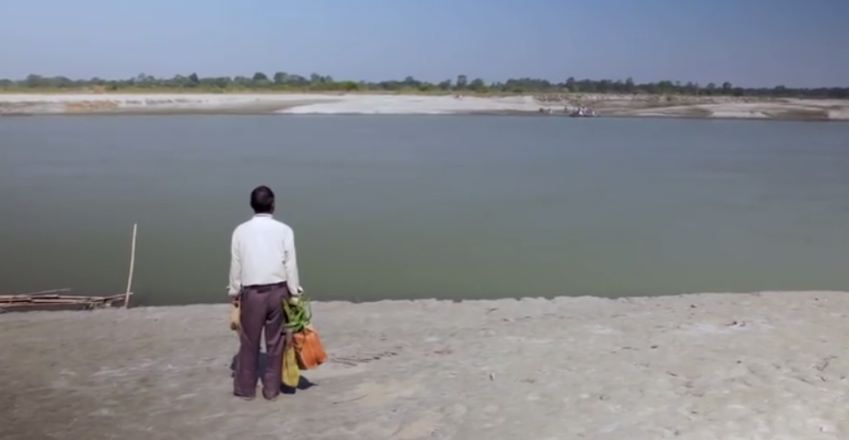
Forest_Man-film-YouTube-screenshotAt the age of 17, after witnessing hundreds of snakes dying from drought on his island in India, Jadav Payeng started to grow trees on what was barren land devastated by erosion.

35 years later a jungle of almost 3000 acres (1200 hectares) — larger than Central Park — has grown in the wasteland, thanks to his daily careful cultivation. Diverse animals, including Elephants, now enjoy his lush oasis.

A documentary, Forest Man, shows how one person can change the course of nature.

Watch video here: http://www.goodnewsnetwork.org/forest-man-of-india-film/