Showing posts with label wood. Show all posts

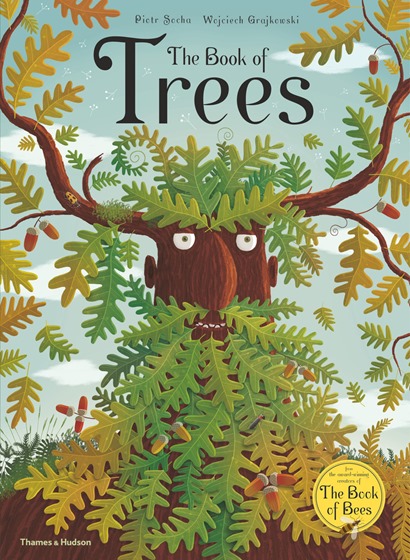
The Book of Trees – Book Review

Review by Michael Smith (Veshengro)

The Book of Trees
by Piotr Socha  (Author), Wojciech Grajkowski (Author)
Published by Thames and Hudson (Big Books) (13 Sept. 2018)
Hardcover: 80 pages
Size: 15 x 2.2 x 21 cm
ISBN-13: 978-0500651698

The Book of Trees

Why are trees so important? How many types are there? How do they benefit the environment and wildlife?

This book, by the award-winning author Piotr Socha, answers these questions and more, tracking the history of trees from the time of the dinosaurs to the current day.

A very nice and informative, and beautifully color-illustrated book, that should especially be interesting for younger readers.

The one thing that is, unfortunately, missing as far as the uses of trees and wood are concerned is wood for kitchen utensils and much more. But then there is only so much one can get into an 80-page book, even a large format one as this.

A well written – and well translated – book with an easy text that should appeal to any reader, but one that is also easy enough to be understood by younger ones and with great double-page illustrations.

A very nice and informative book.

© 2018

Sycamore tree and Sycamore wood

by Michael Smith (Veshengro)

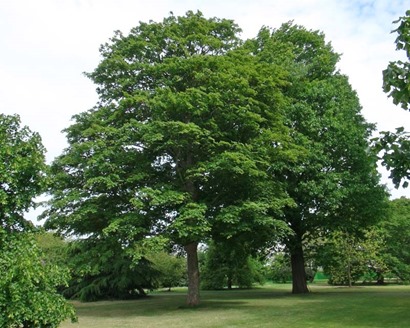
Acer-Pseudoplatanus-2When we are talking here about the Sycamore we are talking about Acer pseudoplantanus, the “European” Sycamore and not the American one, which is Platanus occidentalis.

Sycamore (Acer pseudoplantanus) (in the USA called Sycamore maple) is a very underrated and undervalued tree and wood in Britain where it is continuously referred to as a non-native species and some call for its eradication.

While it is true that in the UK, Sycamore frequently suffers from sooty bark disease (further citation) to all intents and purposes, however, is – fingers tightly crossed it remains that way – otherwise very resilient. Sooty bark is, however, fatal for the tree once it has been affected. Having said that, however, it would appear that Britain has just managed, probably, to import a plant disease, Xylella fastidiosa, from the European Union that, unfortunately, does attack Sycamore, along with Oak and Bird Cherry.

In my opinion Sycamore if one of the best woods for treen, and that not only because of its high antibacterial and antiviral properties, though it may be rather plain and lack interesting grain feature rater, in comparison to other hardwoods.

On the European mainland, especially in Germany, where it is called “Mountain Maple”, Sycamore is regarded as a noble timer tree and highly valued.

With Ash Dieback (ADB) making itself rather felt in woodlands across Britain UK forestry bodies are looking abroad for foreign replacement completely disregarding the Sycamore and, still more often than not, rejecting any suggestion of looking at that tree, which does so well, bar for sooty bark, in the UK where it tends to grow like a weed, with the comment that it is not a native tree. But Southern Beech, and other suggested replacements, also from the USA, obviously are. I rest my case here, as it is getting rather heavy (the case that is).

Personally, but then this is me, and I love Sycamore, I cannot see why the Forestry Commission and the Royal Forestry Society, and others, are looking at American maples, for instance, as a possible replacement for Ash, when we already have a, more or less, perfect specimen of the maple family in our midst that also likes living and multiplying here. Anyone who has seen how that tree multiplies will know what I mean.

German forestry sources refer, as said earlier, to Acer pseudoplantanus as a noble timer tree, or even as Edelholz, meaning precious wood, and there, apparently, it tends to only grow in mountainous regions and not so well in the lower areas. Maybe they need some British Sycamore seed... just jesting. So why the permanent rejection of Sycamore in Britain as a “non-native” tree, especially considering that it once, before the last ice age, apparently, was native here but did not return on its own steam.

© 2018

A move back to our roots: more wood and clay and less plastic

by Michael Smith (Veshengro)

23213129_1845303528843664_4872651655123413633_oBefore plastic became ubiquitous, many kitchen items were made from wood or pottery, that is to say clay, and also from metal. Predominately the material was wood and pottery; metal in the form of copper, lead, bronze and then finally iron, from whence came steel, including stainless steel, came into the equation much later.

The anti-plastic movement is gaining strength as more people realize the folly of using a material that not only leaches chemicals into our bodies, food, and environment, but also does not biodegrade. The movement has taken many shapes and forms, from no-straw campaigns to the zero waste lifestyle to more natural-fiber clothing.

But there is plastic and there is plastic in this context and while, yes, predominately, though not entirely anymore, plastic is made from oil and thus not very sustainable and all that, some plastic is better than other. The main concern, in the general context of getting away from plastic, is the disposable kind, the stuff that really no one needs and that ends up in our countryside, rivers and the seas.

Children are the key to the future so it is the children, therefore, first and foremost that we must educate about the “back to our roots” way of using natural materials. Once kids’ habits change (through education), they will influence their parents to change, while holding them accountable.

To this end teaching children the making of things from natural materials, such as making a wooden spatula or even a spoon, and in that case an eating spoon just right for them, and making a piece of pottery, would be the order of the day.

There was, once, a time when all schools were teaching handcrafts, especially woodwork and pottery but today that is all but gone.

When a child makes something him- or herself, for personal use especially, this product will have a special value for them – and thus we should teach them to aim for the best they can do.

But it should not stop at wood and clay (pottery) but include also the making of products from other, ideally natural materials, by hand and schools – and other places – must be at the forefront again for children – and not just children – to learn again the skills and the joys of making. Textiles, leather, and also metals, should be included.

While in regards to wood, pottery, and even textiles, the entire process can become part of the learning process with leather and metals it is somewhat of as different story. Working with wood and clay for pottery the process goes from natural to made product easy. With textiles it is a little more complicated. Wool needs to be shorn off the sheep, then made into yarn and then worked either by knitting, weaving or otherwise. Even more work is involved in the making of cotton, canvas and linen. And metals are getting even more complicated.

Having said that, however, does not mean that the skills of working those materials should not be taught; they should, as they once were. They should also be taught to both genders, as far as schools are concerned. Boys and men should know how to sew as well, not just girls and women, and the same goes for mending. We must remember that traditionally in the past the tailor was male. Also the cooks – chefs – in inns and hotels were (and often still are) predominately male, so both cooking and sewing is not (just) something that girls and women do. But I digressed somewhat.

We must become makers again instead of being (just) consumers (and learning again to appreciate the handmade efforts of ourselves and our children – proficiency comes with time) and this making can take many forms.

And making “by hand” may not always mean absolutely without any machines. As long as your hands are still involved in the work, and your skills, and it is not an automated process you are still making whatever you are making “by hand”. The potter who uses a powered wheel rather than a kick wheel still shapes the clay by hand into the object that he or she is making. The wood-turner who is using a powered lathe rather than a foot-operated pole lathe or such, still, like the potter, shapes the object, using his hands. I am just saying.

© 2017

Which cutting board is best, wood or plastic?

by Michael Smith (Veshengro)

wooden cutting boardWhen it comes to cutting boards which is the more sustainable and healthy choice; plastic or wood?

The good old cutting board is one of our most durable household goods and it has proven its worth through times and ages, especially when made from good wood. Properly cared for it will go through generations without complaining of breaking.

As a refresher, it is generally considered advisable to have at least two cutting boards, kept separate, so to speak, in your kitchen. One of those should should be designated for raw meat, seafood, and poultry, and kept for that purpose only and the other board(s) for everything else. This helps avoid cross-contamination for purposes of health (keeping bacteria from sneaking into our produce, bread, and other non-fleshy items) and for purposes of hospitality (vegetarians and vegans will thank you).

In fact, this question of bacteria helps answer your question about plastic vs. wood. Plastic gained favor for a while because it is non-porous and dishwasher-safe, two qualities that made it seem like a healthier, cleaner choice. But it seems this was just another PR coup by the plastics industry.

According to research, including a study at the UC-Davis Food Safety Laboratory, wood wins the bacteria battle hands down. While bacteria such as salmonella and listeria are easy to clean off brand-new plastic boards, these boards become, so say the researchers, “impossible to clean and disinfect manually” once damaged by knives. In other words, the sneaky little bacteria hide out in the cracks and crevices. Wood cutting boards provide a home for bacteria too, but only for a very short time, and the little critters actually scoot down under the surface and die.

Many woods, in fact, have very high antibacterial and antiviral properties, such as the much maligned Sycamore, for example, which has one of the if not indeed the highest. Maligned, in Britain, for the fact that it is not a “native” tree and that is spreads somewhat like a weed. It has been in Britain for almost 2000 years, having brought here by the Romans and thus, I should think, we really should give it citizenship.

This makes wood more or less magical and if you buy a cutting board made from sustainably harvested sources – sorry, but forget the bamboo notion – it is definitely a greener choice than oil-based old plastic.

Once there are too many cuts showing on the surface of your wooden cutting boards or they have become excessively worn or have developed hard-to-clean grooves there still is no need to throw them away, even though the food safety people may say so. All you have to do is sand them smooth again or, if need be, planed down a bit, and they are ready to roll and entirely safe again.

So, if you have old wooden cutting boards rejuvenate them with some sanding and giving them a coat of vegetable (or mineral oil) and they will be yours to use, safely, and will last for many generations to come. The reason I put mineral oil in brackets is for the fact that – personally – I do not like using it simply because it is oil-based, as in the black stuff coming out of the ground. Some people claim that vegetable oil goes rancid but I have not found this to be a problem.

© 2017

Forked branch boot jack

by Michael Smith (Veshengro)

A boot jack is a device that allows a person to pull off muddy or tight fitting boots without having to sit down and fight a wrestling match with them.

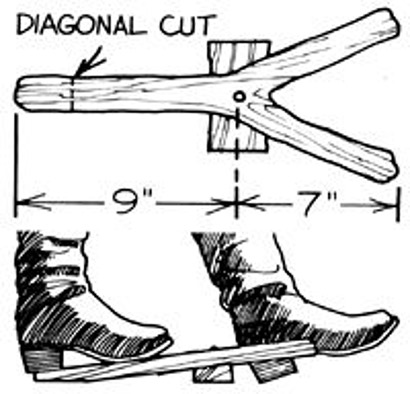
forked-branch boot pullerThere was a time when no farm yard, let alone stables, did not have at least one boot jack of sorts. Some were made simply of wood while others were of wrought or cast iron.

They also came in different designs as to the boot removal “slot”. Some where simple V-shape notches cut into a board, while others were much more cut out and such. The V-shape notch, in my view, however, is probably the best version as it allows for more than just one size of boot to be removed.

Today those handy devices are seldom seen and found, with the exception at riding equipment stores and in catalogs of Amish-type mail-order companies and the odd general hardware store in the boonies.

But if you happen to work in muddy conditions, or mucking out stables or, generally wear boots such as Wellingtons, aka rubber boots, then having one of those boot puller conveniently sited by your back door (or the door that you would generally come in via with such boots) might be one of the best things that you ever do.

In lieu of going to the stores and spending good money on such a device or even spending some time in the workshop making some from board wood we shall be knocking up a fully serviceable boot jack from a bit of a branch.

First, find a stout green hardwood branch with a fork that's just a little bigger than one you would use to make a slingshot. Try the notch out for size by fitting it around the heel of your boot; the "V" should grab the back of the foot gear snugly.

After you have found the correct tree limb, cut the two prongs of the "wishbone", by means of a saw, to a length of about seven inches each.

Then make a diagonal cut across the other end of the stick, at a point nine or so inches from the crotch.

Now, find a scrap block of 2 X 2 hardwood (a short, sturdy piece of another branch would work, too) to use as a brace, which will be attached underneath the Y-shaped piece of tree limb.

Fasten the "step" to the tail of the limb slightly below the fork, using a screw or a nail (it's best to make a pilot hole to avoid splitting the wood) or by lashing the components securely together. The riser should elevate the device just enough so that when the boot jack is placed on the floor you can get a boot heel into it easily.

Voila, one totally serviceable boot jack for virtually no money and made in little time.

In order to use your natural boot jack, stand with one foot on the tail of the jack, insert the other foot into the fork, lean back, and ease off that boot, without getting your hands dirty.

© 2017

Spōn by Barn the Spoon – Book Review

Review by Michael Smith (Veshengro)

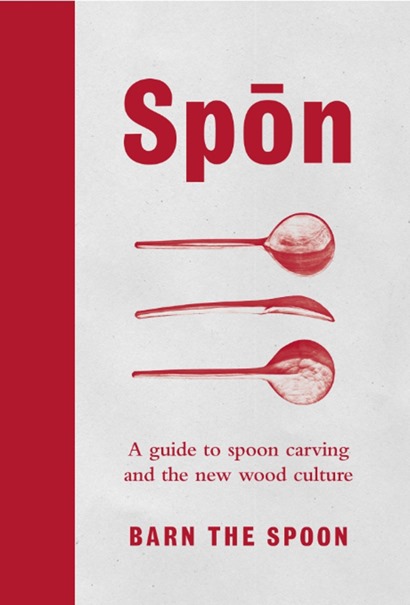
Spon coverSpon: A Guide to Spoon Carving and the New Wood Culture
by Barn the Spoon
224 pages, Hardcover, 16.5 x 2.2 x 23 cm
Published by Virgin Books (25 May 2017)
Language: English
ISBN: 978-0753545973
Price: £20.00

I was send this book by the publishers upon my request having just learned of the publication of it. Knowing of Barnaby Carder, better known as Barn the Spoon, I was most interested to have a look at it and I was in no way disappointed.

The book itself is a spoon carving guide but also introduces the reader to the new wood culture, or wood renaissance, and that being right up my street being a forester by original trade, and a carver of wooden things, including spoons as well.

Spōn is not really a technical manual like, for example, Willie Sundqvist's 'Swedish Carving Techniques', but instead takes the reader through a personal journey that Barn himself has taken, though it does give the reader many instructions, hints, and tips.

In his book Barn the Spoon explains to the reader the how and why as regards  to certain woods, tools, and techniques that he has found best suited for carving usable spoons and he then explains it all in more detail and shows the reader some of his favorite spoon designs to try.

Aside from that he walks the reader through every aspect, from choice to tools and how to keep them sharp and well maintained. Personally, though, I have different ways of sharpening knives, including hook knives and I believe that too much emphasis is placed on certain ideas, such as the supposed Scandi grind not having a secondary bevel. But I have only been a professional knife grinder for almost my entire life and have never encountered such a grind, not even on Scandinavian knives.

Spōn is a lovingly written book, with many color illustrations, that is full of the passion of someone who really appreciated wood and its properties and what can be made from it, though Barn mostly touches on wooden spoons only.

As a Romani-Gypsy by birth I very much enjoyed and appreciated the fact that the “Roma Spoon”, as Barn calls it, the traditional one of the Roma of Romania, in included. It is more a serving spoon that for any other purpose; the eating spoons are often different.

But that spoon, however, is only one of many different Romani spoon designs that used to be and are still carved by Gypsies in Eastern Europe (and beyond), such as by those in Poland where the bowl is the egg shape, reversed, and not as pronounced in the reverse.

In Russia the Romani carve spoons that are akin to those of the Doukhobors which are similar to the Welsh Cawl Spoon though without the pronounced crank in the handle and a handle that is almost round. But I digressed.

As I said before, Spōn is not really a technical manual but a book that, while teaching the reader about spoon carving, leads you more on a personal journey of the way the author does things and why and also introduces the reader at the same time to the new wood culture, or wood renaissance. I hope that readers will discover the joy of carving spoons and other treen objects from reading this book but also be encouraged to connect without our woods and trees and to value the handmade wooden kitchen utensils and such like. Handmade goods are so much different to factory and machine produced and thus are also higher priced. A good wooden spoon is not tuned out in five minutes flat. It often takes hours and the price does then often not even reflect an hourly minimum wage. Let that sink in.

A very good book that I can most certainly recommend.

© 2017

Wood-based computer chips could be the answer to the electronic waste crisis

rtr3ucfb

Wood-based computer chips are a reality, and they could make the recycling of electronics a much simpler task.

Developed at the University of Wisconsin by a group led by engineering professor Zhenqiang (Jack) Ma, the wood-derived computer chip is made by processing wood into nanocellulose paper, which is then used as a substitute for a silicon. Unlike the rigid silicon wafer that serves as a plate for transistors in most computer chips, Ma’s chip uses a translucent, bendable plate made of highly processed wood. According to a piece in the MIT Technology Review, using nanocellulose in lieu of conventional silicon requires just a tiny fraction of the semiconducting material otherwise needed in the process, and doesn’t sacrifice performance:

In two recent demonstrations, Ma and his colleagues showed they can use nanocellulose as the support layer for radio frequency circuits that perform comparably to those commonly used in smartphones and tablets. They also showed that these chips can be broken down by a common fungus.

The military, the MIT publication notes, has had an interest in electronics that could rapidly decay to avoid leaking sensitive information; but Ma’s ambition for biodegradable chips is mainly to help combat electronic waste.

Read more here.

Abundant Living – Book Review

Review by Michael Smith( Veshengro)

Abundant Living in the Coming Age of the Tree
by Kathleen Jannaway
Published by Movement for Compassionate Living 1991
44 Pages A4

This book is available as a free download from http://www.mclveganway.org.uk/Publications/Abundant_Living.pdf

abundant_living-1Kathleen Jannaway's classic text sets out the practical and philosophical basis for ecological veganism – that we can feed the world healthily and compassionately and protect the planet with a diverse, mostly home grown, plant-based diet that includes tree crops – from the Movement of Compassionate Living http://www.mclveganway.org.uk

“We are faced with the challenge”, they say, “of providing for the needs of a rapidly increasing world population from the diminishing resources of a finite and endangered planet. Fundamental changes in the values and practices of the dominant world system, which has created a situation in which millions of people and animals already suffer extreme deprivation and die prematurely, is essential. What is needed is a trend towards compassionate living the vegan way, with the emphasis on the use of trees and their products. As people face the challenge of environmental crises, as the supreme importance of using awesome intellectual powers with compassion for all sentient beings is realized, an evolutionary leap will be achieved. An era of truly abundant living will dawn in which humans, at peace with themselves, with each other and with all living creatures, will reach heights of creativity as yet unimagined.”

While the principal point of the book is that of promoting veganism the book does, however, not just deal with veganism but with the importance of trees and wood and the many products and food that can be had from trees, and that line of thought can surely not be faulted.

There are a few things in this small volume one can and maybe even must disagree with such as some claims as to the vitamin B12 issue but more importantly the production of Rayon from frees, as it is still a chemical production path and thus a man-made fiber and products from Rayon are not biodegrabale. The use of flax, hemp and nettle for plant fibers from which to make clothing and other cloth products would be a much better choice.

When the author makes mention of the use of human excreta for fertilizer on crops it is not a new approach and this has been done by gardeners in many countries, including China and also Germany, without any ill effect. While it may be good to “carefully treat” it, as she puts it, but it has been used untreated in China and years ago in Germany. In those cases, however, it was from the pits of the outhouses though rather than from today’s sewage system. In actual fact we may entirely change the way we deal with our bodily wastes, and use composting toilets as a rule. Still in the early part of the 20th century night soil was collected and it was indeed spread as fertilizer on farms.

Though with reference to forest and woodland management the author could have done with doing a little more research, especially with regards to the ancient system of coppicing and the benefits of the same for woodland health and a continuous supply of wood for all manner of things, without the need to ever having to fell and replace trees as, in rotation coppice, the felled trees regenerate into more stems and a stool, as that is what a coppiced tree is called, can live for a thousand and more years. For more information on this kind of woodland management “Managing our Woods” (Michael Smith (Veshengro), 2014).

© 2015

I make no apologies for advocating paper

by Michael Smith (Veshengro)

paper products in the officeUsing paper is an anathema for many in the green environmental movement but there is nothing wrong with paper, nothing whatsoever. Not even with paper made from wood pulp.

There is nothing wrong with paper for books or with using it for communications whether as letter or memo. In the same way as there is nothing wrong with wood in the form of products whatsoever. Better than using plastic by a long shot. Wooden kitchen utensils are way more hygienic than are plastic ones as the woods used for making them contain high amounts of antibacterial, antiseptic and antiviral properties.

When it comes to paper we are all being lied to left, right and center by people who either do not know what they are talking about and thus know no better or who have some other vested interest. Paper is not made from (tropical) rainforest trees. They are hardwood and the hardness of the wood simply makes them unsuitable for paper pulp, period!

Most paper is produced from spruce and other conifers specifically grown for this purpose and which are replanted after each felling and thus the entire operation is sustainable. And that ad infinitum. Most of those forests are owned by the paper industry and would not exist were it not for us using paper.

In fact, reducing the use of paper or doing without it all together would mean that the industry would no longer have any use for those forests and they would, in the end, be clear cut and turned over to some other use. And the size of those forests going in the hundreds of thousands of hectares if not more and they would be lost as forests without paper being produced and used. In addition to that millions of jobs would also be put in jeopardy if the industry would cease to exist or even would have to scale down significantly.

Then, when using paper as opposed to computer and the cloud there is the added security factor that, as long as the document is in your possession, in your filing cabinet or safe, or whatever, it is secure. The same cannot be said when held on a computer and especially not when held “in the cloud”.

It is for that reason that the Russian intelligence community is returning to the use of typewriters and paper for sensitive documents and a paper-based circulation list.

It is true that paper can be made from pulp other than wood pulp, such as from hemp – it used to be made from this plant until the early part of the 20th century, as well as from rags, as long as those are from natural fibers. In fact the Chinese, who invented paper, did make that paper from just that stuff, that is to say from rags. And that was all the while the Europeans still used vellum made from animal skins.

However, today most paper is being made from wood-pulp, predominately from coniferous trees such as spruce and fir with the occasional deciduous ones in the form of poplar and birch. Most other deciduous and even coniferous woods are too hard for the creation of pulp for the making of paper.

It is true, however, that acre for acre hemp is much more productive for fiber for the making of paper as is wood but, alas, the growing of hemp (Canabis sativa) is outlawed in most places, or strictly controlled because of the hallucinogenic properties of hemp due to its contents of Tetrahydrocannabinol (THC). In times past, however, it was compulsory – yes, compulsory – for farmers to give over part of the farm to the growing of hemp for making of sails and other canvas products as well as and especially for the making of paper.

The New York Times in 2012 had a great article entitled “In Defense of the Power of Paper” http://www.nytimes.com/2012/09/09/jobs/pen-and-paper-still-practical-in-the-office-workstation.htmwhere even Joel Makover of the Green Business Group says that while he uses paper not that much he still prints out reports for proofreading as he finds it easier to read things on paper than on the screen and this, in fact, goes for many people.

© 2014

Wood

by Michael Smith (Veshengro)

wood350_5182b67755242Wood is a most important raw material and the best part of it is that it is growing naturally and therefore is always renewable.

Wood was most important once as almost everything was made from wood and the wood came – primarily – from coppice operations, the most sustainable woodland management system known to man.

Today plastic has replaced wood for many products once made from this raw material much to the detriment of not only forest industries but also the forest itself.

On the positive side, however, slowly people are, once again, coming back to value wood and treen goods and that also and especially goes for wood in the kitchen. In fact, wood is more hygienic and much healthier to use in the kitchen and in conjunction with food than plastic will ever be.

But plastic was made out to be a material of almost magic value, properties, qualities and much more though nothing could be further from the truth.

Alas the woodsman himself often falls for this looking for the handles of his tools to be of fiberglass and plastic rather than of wood believing them to be stronger. Another fallacy.

All too often we find axes, hatchets and billhooks with plastics (ABS) or carbon fiber handles which – one – also can break and – two – the way tools are made to join with the handles means that, should the handles break the tools themselves have to be – more often than not – thrown away as no new shafts can be fitted to the head. But I digressed.

Wood, while indeed often heavier, is a much superior choice and not just in the kitchen and for tool handles over plastic (or other materials).

Walking sticks and hiking staffs crafted from wood will outperform and outlast those newfangled plastic or aluminum ones each and every time. Having had more than one kind of those – even an expensive brand – collapse and break on me in use, I can vouch for that, as my wooden ones stood up to the same use and even more without any problems.

Going by the amount of those newfangled high-tech hiking staffs that end up broken in the litter bins on mountains, hills and in parks it would appear that I am not the only one who has had bad experience with those.

Coppice management of woodlands actually enhances biodiversity and creates new growth with much higher carbon sequestration than that of old trees that have reached the end of their productive lives.

A single standard tree lives – productively – for between 30 to 140 years – depending on the species – while a coppice stool, properly managed, renewing itself depending on the management cycle between 7 to 20 years will live – productively – for thousands of years. Trust me, I am a forester. But back to wood as a material.

As a raw material from which to make things wood is – more often than not – superior to man-made materials and the fact that it is natural and at the end of its life can go back into the cycle of Nature is but one, though important, point.

Wood can also be fashioned into so many objects and products with often but simple hand tools and that is the reason it was so extensively made use of in the days of old, aside from the fact that plastics, for instance, did not exist back then.

The advent of plastics saw the decline of many of the products that were previously made from wood (and other natural materials) such as baskets, as they could be produced much cheaper in plastic than could be wooden hand-made ones and the same goes for other products too, such as kitchen utensils, garden trugs, etc.

Britain's industrial revolution was not fueled by coal dug from out of the ground but by charcoal from coppice woodlands and almost all wood products bar the ships of the navies, both Royal and merchant, were made predominately from wood that came from those woodlands. Depending on the rotation cycle of coppicing even large beams and planks can be milled from the trunks of the trees.

Wood is – obviously – a natural material that, unlike man-made ones, such as plastic, is biodegradable even in an ordinary compost heap when the product has come to the end of its life. Until such a time, however, any wooden product keeps the carbon dioxide locked up that the tree has absorbed during the time that it grew.

The best way to dispose of wood – a wooden product – at the end of its (useful) life, unless it is possible to reuse the wood for something else, is to burn it, ideally in a stove for heat. Burning only sets free the CO2 the wood has absorbed while the process of composting it also releases methane, on top of carbon dioxide, during the decaying process, and methane is a greenhouse gas that is between 20 to 40 times more dangerous than CO2.

I love wood and wooden products but then, as said before, I could be seen very much as biased being a forester, a woodsman, by original trade. Wood is extremely tactile, as is leather, and most pleasing to the eye.

Wood and leather, though the latter is not really the subject matter here, are seen by many in the “green movement” as something rather not to use as the former “harms trees” and the latter “harms animals”. The alternatives, however, are materials which in themselves, in the production and in their disposal, harm the Planet.

© 2014

Is wood more hygienic than plastic?

by Michael Smith (Veshengro)

The lie about plastic

We have been told, including by the so-called experts, that plastic is by far more hygienic than wood as wood being a natural material. It is hardly surprising seeing how man-made materials and especially plastics of all kinds were and are feted as the be all and end all.

cutting-boardsAs far as plastic chopping boards and kitchen utensils are concerned it is very difficult indeed to get them to go moldy or such but does that really mean that they are better? No, for this is about the only advantage of a plastic chopping board compared to a wooden one. But then again you do not have to leave your wooden chopping board laying about in the damp. After you clean it you hang it up, as people used to do it.

As said, and here ends the good part of plastic as to chopping boards and other things in the kitchen. At least since Plastic Planet and other criticism as regards to plastic and especially the noxious chemicals that it contains that constitute a risk to health plastic has lost its celebrity status.

Wood is more hygienic and environmentally friendly

While it is true that there are some woods that should on no account come into contact with foods during chopping and cutting – as fruit bowls many of those will be fine – such as Yew and Horse Chestnut and a few others as they are poisonous most woods, however, have very high antibacterial and antiseptic properties and the leading one here is the much maligned Sycamore (Acer pseudoplantanus) and the heartwood of the Pine (Pinus silvestris). Other woods too exhibit the same antibacterial properties, though some to a somewhat lesser extent.

Wood, in comparison to plastic and also stainless steel, which often contains heavy metals such as chromium and nickel – that's why using cast iron for cooking pots and pans is so much better than anything else – is biodegradable in that wooden utensils can be simply put onto the compost heap at the end of their life to return to the Earth (or burned). Plastic, as we all know, does not biodegrade and cannot be composted (regardless of what industry is trying to tell us) and even stainless steel needs to be recycled in an energy intense process.

Some decades ago all the butchers and catering establishments have been forced, by law, to throw out all their wooden blocks and boards but some clever souls decided to carry out a test – so I have been told – and they dumped a culture of salmonella each onto a wooden butcher's block and onto a plastic block and left them overnight. The ones on the plastic one apparently had read Genesis and had gone forth and multiplied while the ones on the wood were all rather dead. Killed by the tannin in the wood and the fact that wood, be water absorbent, had deprived them of their growing medium, namely moisture.

There you have it. Not only does wood look good, it also is good, and especially in the kitchen. You can now, with a clear conscience, dig out those wooden chopping and cutting boards that you put way, clean them gently, sand them down and oil them and use them again.

© 2014

Wooden chopping boards vs. plastic

by Michael Smith (Veshengro)

For as long as the gods only know wooding cutting and chopping boards have been in use in domestic kitchens, the kitchens of the big houses and palaces, and in food business.

cutting-boardsIn the latter part of the 20th century, however, hygiene people insisted that wood was bad and that plastic cutting and chopping board and blocks must be used instead, especially in food businesses. All butchers' blocks and wooden boards – in commercial catering and food environments – were, by legislation, basically, replaced with plastic ones.

Plastic-Non-Slip-Cutting-BoardGreat claims of hygiene benefits, etc. were made until some food scientist decided to conduct a test using salmonella cultures on plastic – cleaned with disinfectant – and on wood – just scrubbed the old-fashioned way – and found the next morning that the bacteria on the wooden board were dead while the ones on the plastic one had gone forth and multiplied and were very much alive. It was then wooden boards and blocks were exonerated and deemed safe (again).

Some hardwoods – conifer softwoods are not suitable for use in the kitchen in any case because of their resin content – have higher anti-bacterial properties than others while some are not suitable at all due to tannins or saponins or other toxins.

Sycamore (Acer pseudoplantanus) – yes, the wood of the often as “non-native” maligned tree in Britain – is one of the best woods – if not indeed the best wood – for chopping and cutting boards, and other kitchen utensils in general, as it has the highest anti-bacterial properties. Also sycamore is extremely taste-neutral, as it lacks tannins.

Maple then follows in the list – in fact sycamore is in the maple (Acer) family – and then beech (Fagus sylvatica) and then Ash and Birch. This is at least the case in Northern and Central Europe. Woods in other countries and areas will be different ones, for sure, but wood will always be the best choice over plastic and that also with regards to the environmental footprint.

Hazel is also a good choice for treen products in the kitchen but, as predominately worked – or should be worked – in rotation coppice may not produce pieces of trunk large enough for chopping boards.

For thousands of years we have used wood in the kitchen and it is doubtful that anyone ever got sick from the use of it. From chopping and cutting boards over utensils for cooking to serving spoons and eating utensils everything was made of wood. Everyone used to, once upon a time, have his or her own personal wooden eating spoon. That was before the arrival of cheap metal utensils and the latter caused more grief than wood, especially the metals the use of which is not that good for us.

When you see the grooves you create by cutting on plastic and the depth of them you will realize how they can and will harbor all manner of nasties. This does not happen in the same way with good hardwood. Considering then that wood kills the germs more than likely with its anti-bacterial properties without the need of impregnating it with, as done with some many plastics, Microban, which is but Triclosan under another name. A chemical which is not all that good for us and in fact has been linked to the emergence of the super bugs.

Thus, chose wood over anything else for chopping and cutting boards, as well as for breakfast boards, in the kitchen. It is a safe and healthier choice than plastic. Ensure, however, that the surface is not lacquered, varnished or painted. It should be oiled only. You would not want bits of PU varnish or paint ending up in your food.

© 2013

Forest and wood are protectors of the climate

by Michael Smith (Veshengro)

Within the framework of photosynthesis trees extract carbon dioxide from the atmosphere and thus reduce the CO2 content.

wald-klimaschützerIn order to produce one ton of wood trees extract from the atmosphere around 1.9 tons of carbon dioxide (CO2) detrimental to the climate and lock up 500 kg carbon in the wood. Thus our woods and forests perform a critical and crucial contribution to the protection of the climate. The proper utilization and development of our woods and forests together with a reduction in carbon dioxide emissions form an important measure in the fight against the greenhouse effect.

Woods and forests give us air to breathe and raw materials for our life. Without forests and woods there would be no life possible on Earth for every human and every animal requires oxygen in order to be able to breathe. A single say 100 year old beech tree produces every year about 4,600 kilograms of oxygen; enough for one adult to breathe for 13 years..

For trees oxygen is sort of a by-product in the production of timber and foliage. By means of photosynthesis the tree absorbs carbon-dioxide and together with water and the energy from the sun turns this into sugar molecules, required for the production of wood. The oxygen left over during this process the tree exhales into the atmosphere while it locks carbon up in its biomass.

Different to most plants trees do not just grow upwards but also outwards as far as the trunk is concerned. Responsible for the growth of the girth of the tree trunk is the so-called cambium, a material that created the cells of the wood. During winter it takes a little break and this can be seen by the growth rings of the tree.

Carbon-dioxide storage with triple effect

Alone in the forests and woodlands of Germany are currently around 2.6 billion tons of carbon fixed in the wood of the trees. This is equal to a sequestration of 9.5 billion tons of carbon-dioxide.

Woodlands and forest play an important role in combating the effects of the greenhouse effect and climate change and in relation to that directly threefold. First they remove carbon-dioxide out of the atmosphere and stores it in the wood. This storage is extended, secondly, when the wood is used in new buildings, renovations of old buildings and for the production of furniture where the carbon stored in the timber is then locked in for as long as the timber remains timber and is neither burned or disposed off in the waste stream.

A low energy house built to a great extent from wood, for example, relieves the atmosphere of around 80 tons of carbon-dioxide.

And thirdly does wood, when used in building, replace other energy intensive materials such as steel and concrete which are produced on the basis of finite raw materials.

This means that – and this is the case in Germany and other countries – if our woods and forests are managed in a sustainable manner, that is to say that never more timber is being harvest than regrowth available, the resource wood never going to be exhausted and permanently renewable. The ratio between harvest and regrowth is always regarded to be at least a 1:3 that is to say one felled tree is replaced by at least three new ones, either already growing as natural regeneration or being planted. In fact, the ideal scenario is to plant, in addition to the natural regeneration existing.

Sustainably managed woods and forests make an enormous contribution towards combating the greenhouse effect and climate change through their ability of reducing the carbon-dioxide content of the atmosphere and they are thus protectors of the climate.

We need to manage our woods and forests properly so that not only do they do the job as they do now but to increase the CO2 sequestration by means of trees. The more trees the greater this absorption and at the same time we get wood as raw material.

© 2013

Woods and forests are my most favorite natural environment

by Michael Smith (Veshengro)

One of the many reasons that woodland is my favorite natural environment is because it is ever-changing and there is always something new to see, experience and enjoy.

woodland1-1The changes can be subtle like the shoots of new flowers, the forming of new buds, the appearance of fragrant blossom or a sudden burst of short-lived fungi, or they can be dramatic like the transformation caused by mist or snow or a storm.

Whatever time of year woodland is either full of life or the signs of life to come. It is also a world cut off from the endless hustle and bustle of modern society.

It is as though, by entering a wood you have passed through a portal into another world. It is just endlessly fascinating.

And trees like oak, yew and elder are so entwined with our history and our folklore and what makes us what we are that we have a special spiritual connection with woods that we do not have with any other environment.

Most importantly though to me a woodland is a source of materials for making products and one that provides, when properly managed, this resource, those materials, for ever.

A walk in the woods or days working in the woodlands also leads to new finds from which to craft this or that. There is a sapling that either now, or in years to come, will make for a great walking stick; there are the branches that need to be removed from a tree that render another load of “branch hooks”, and so much more.

You will never find me happier than when walking or working in woodland. And my greatest passion is to manage our woods in one way or the other and management many of our woods today need more than anything.

The biggest “problem” I encounter when walking through some woodland is that my mind is always active seeing the management problems or better the lack of management in those woods and I am always thinking as to how those woods could be made productive again and to benefit wildlife and man.

© 2013

Human-powered DIY wood splitter

Ingmars klyv II, Human-powered DIY wood splitter

Yes, the splitting maul and axe also are human-powered but this is a machine that appears to be doing it with a lot less effort and much safer.

Human-powered DIY wood splitter

The machine does most of the work, but the operator is in total control, with no fuel, no noise (except the wood cracking), and pretty low budget, both on funds, and labor.

The wood splitter is entirely created from scrap that the maker seems too have had laying around his property and thus it has cost him very little to any in funds.

The walking stick

by Michael Smith (Veshengro)

Walk softly and carry a big stick someone, I believe it was a US President, once said and this is a very valid adage.
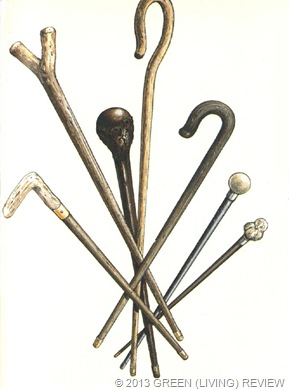
Walking SticksHowever, there is no need to look at a walking stick primarily as a weapon for defense, though that it sure is and very effective can be too ion this department.

Primarily the walking stick is a truly functional thing and well worth having at hand, pardon the pun. A good walking stick provides that extra bit of support we sometimes seek and need when crossing a raging torrent, traversing shale or loose soil on precarious slopes, or staggering homeward, late at night, from the pub. And, as said, a good walking stick is an excellent weapon when needed.

Walking sticks come in a many different styles, and are made from a wide variety of materials, though all the most pleasing and proper are crafted of close-grained woods. And among these many varieties, though, the penultimate walking stick to a great many is the honorable Irish walking stick, the true Shillelagh, usually crafted of Blackthorn wood, and with a fine hard knot of hardened root at the gripping end.

Having said this, however, with walking sticks, as with so many other things, it is often a case of horses for courses and other hardwoods are also great, and one of my favorites is Hazel, cut from well-managed coppice stools.

It does not have to be Blackthorn, not even for a Shillelagh. The fact is that many a Shillelagh in Eire was, in fact, not made from Blackthorn at all in the olden days but from Bog Oak.

Many people believed, falsely, and still do, that a Shillelagh was and is an Irish cudgel, shorter than a walking stick, crafted of blackthorn wood and featuring a knob or head of root wood.

It turns out that, what many have mistakenly called a Shillelagh all these years, and what is a popular tourist item sold in shops in the town of Shillelagh, after which the stick is named, was once a very popular weapon in 19th-century London. Very handy to have – but not something that the Irish would have used at that time, or earlier.

Their weapon of choice would have been a cane made from oak, blackthorn, ash or holly. An English writer who, on seeing an oak cane and knowing where it came from (the Shillelagh Forest in County Wicklow), coined the term Shillelagh. Eventually, it became synonymous for any Irish walking stick.

Blackthorn is looked upon by some as the best wood for the shaft of a cane. It is a very hard, close-grained wood and if growing from the trunk of the tree or bush, is covered with very sharp, vicious spines.

Those spines are also indicated in Blackthorn's Latin name of Prunus spinosa with the spinosa indicating the spines. Those spines are not thorns at all but hard wooden spines and other varieties of prunus also tend to have those spines.

The most notable features of blackthorn wood are the deep reddish-black bark and often numerous knots. The bark is left on for added toughness and often a metal ferrule is secured at the end opposite of the knob.

While at some time the wood was crafted green and thus to keep the wood from splitting during the drying process, sticks were often buried in a manure pile, or smeared with butter and placed in the chimney to cure, I would recommend, although that makes for harder work, to cut the shank long enough and to also leave wood on in other areas and allow the stick to season gently out of the wet but outside.

If you don’t have good walking stick yet and consider getting one, please bear in mind that the quest to find the right one may take some time.

If you can't find one to buy, though there should be enough good makers about, make your own. Keep your eyes peeled, and when the time comes the right stick will call for you and you will have found a lifelong companion.

Aside from being able to be used for defense a walking stick is, as earlier indicated, a walking aid, a third leg, that can and will give support in a variety of situations.

There are many other types of walking sticks than just the knobkerrie, as the Shillelagh one would be called in Southern Africa. There are thumb sticks, there are the ones with the bent handle, caned with antler and bone handles, and then there are the large staffs, akin to a quarterstaff, used by serious walkers and hikers and by wizards, such as Gandolf in Lord of the Rings.

All those sticks have their uses and the thumb stick, for instance, was, with a large(r) fork originally used as a rest for a musket and later a rifle and many a deer hunter still uses such a stick to rest his rifle for a more accurate and steady aim.

As far as a walking stick as aid in walking is concerned I would never ever put my trust in any of those non-wooden contraption called hiking sticks, hiking poles, or whatever their names and titles may be. They break, as I have found out testing a couple. Only a wooden stick can give the needed support. And as a defensive weapon those modern – often telescopic ones – are entirely useless. Again here only a wooden stick will do.

The shank should be chosen from sustainable managed woods, ideally coppice operations, making it thus a very green choice. Aside from Blackthorn, which coppices well and can be grown for the purpose of making stick, Hazel and Ash are also great choices as woods for sticks, whether you buy your stick or make it yourself. Other countries, obviously, have other woods for sticks, such as Osage Orange, Hickory, etc., in the USA, or Red Mopani Wood in Southern Africa, as an example.

My personal favorite wood from which to craft walking sticks, whichever kind, is Hazel and Ash, taken from coppice woods or as saplings when they are in the wrong place, as far as forestry operations are concerned, such as during thinning.

© 2013
Managing Britain's Wild Woods

by Michael Smith (Veshengro)

The truth is that there are no wild woods anywhere in Britain but only once managed woods that have gone wild. Those latter woods cannot become “wild woods” again; Nature does not work that way despite what some people believe, some are made to believe and many misguided environmentalists would like everyone else to believe.

woodland2__sml_webFor thousands of years the woods and forests of the British Isles have, all basically, been managed, and for most of the time we have managed them very well indeed. Those woods provided our needs, until such a time that we were importing more from abroad, and fueled our industry. In the latter case it was the charcoal produced in our coppiced woods.

Only since about the end of WWII have our woodlands become really neglected and this very neglect is not helping them one bit. The opposite rather. It is also not beneficial to the ecosystem. Brambles and bracken crowd out everything else, allowing no light through.

The same goes for a canopy that is too dense, which is one of the many reasons that our Forestry Commission lands planted, as is often the case, with conifer plantations, are often so devoid of life, especially on the forest floor.

Old coppice stools of once managed woods slowly decay and then break apart, destroying the entire tree, often then not regrowing, as would be the case would the stool have been coppiced. And in this way, over a short period of time, an entire wood becomes an environmental and ecological disaster zone.

Less than ten percent of stools, if even that many, will thrive whether they continue to be coppiced or not. The great majority will decay and fall apart.

Only by working, once again, our woods in the time-honored fashion of coppicing will we ensure the survival of those woods and not by misguided beliefs that Nature will take care of it itself.

We need healthy woods and not just for woodland products, though they are important for the rural economy and for sustainability. Our very life depends on healthy woodlands and thus it is all of our interest that the gauntlet, if I may put it thus, that the Forestry Commission and other have thrown down is being taken up and we put all of our woodlands back into management, including the woods that are part of the public open spaces, such as parks.

This will not only improve the health of our woods but also will reduce our dependency on imported woods and woodland products, such as charcoal, for instance.

Ninety percent of all charcoal consumed in Britain comes from tropical hardwood sources and this is not sustainable. Neither is that charcoal comparable in quality to the one that can be produced at home by means of coppicing.

Aside from charcoal coppice management of woodlands also produces other timber products which give an income to local wood workers and a boost to the local economy.

Localism in woodland products is supporting those that try to make our woodlands healthy again by managing them in the time-honored ways.

Many products of great value and use can be produced from coppice woodlands and often all that people, sometimes even the underwoodsmen managing the woods, can think of, is charcoal, hurdles, beanpoles, and firewood. But there is a lot more that this wood can be used for; products that add much more value to the wood than would any other ones.

Our woods and the health of them is important to us and we must revitalize them and the only way this can be done is by means of proper management.

© 2013

Traditional woodland crafts are, once again, becoming a growth industry

Finally traditional woodland crafts are being regarded as valuable again and not before time

by Michael Smith (Veshengro)

They are a source of food, fuel, building materials, artistic inspiration and stress-relief, and thus is is hard to believe that the link between Britain's people and its woodlands was ever in any doubt. But it was so.

In the years following the Second World War, traditional woodland jobs such as wheel-wrights and bodgers, clog-makers and other woodland workers, were becoming obsolete as, apparently, synthetic materials were far more exciting to have in your home than boring old wood, and the Forestry Commission was busy creating Sitka spruce plantations.

We must, however, not forget that the Forestry Commission was never tasked with woodlands and woodland jobs and -crafts but to be producing timber for the mines and the trenches.

Within a generation, or less even, the relevance of woodlands to the daily lives of most people had become vague. Most products that ones were made of wood had become replaced by plastics and other synthetics.

However, and thank the gods, in the beginning of the second decade of the twenty-first century our woodlands are beginning to enjoy somewhat of a renaissance.

Our woodlands, which have existed for thousands upon thousands of years and have been managed for that time also, and that predominately through coppicing, need to ALL come under that management again as, otherwise, they will not survive.

In many parts of England there are old coppice woods that have not been worked now for fifty years and more and if they are not dealt with very soon and efficiently then those coppice stools that are presently standing will break apart and that will be the end of those woods.

The resurgence of interest in using woodlands and woodland culture has attracted a very diverse range of people, from hobby foresters and entrepreneurs to some very skilled crafts people but what they all need is support from us, as consumers, to buy their goods, and from government as those woodlanders are the custodians of our future.

The new woodlanders cannot make a living from the woods if we will not buy the goods that they provide, from firewood and charcoal to treen goods of all kinds.

The New Woodlanders include not just those of the ancient crafts but artists who work with wood, furniture makers, basket weavers and specialist producers, including those who make wooden jewelery, etc.

When Herbert Edlin wrote his classic book Woodland Crafts in 1949 he was sure that many of the crafts he had recorded would not survive the ravages of the Second World War and in a few cases he was right, but in actual fact many of the woodland crafts have persisted or been revived including the skills of chair-makers, turners, charcoal makers, basket weavers, horse-loggers and herb gatherers.

In economic terms, woodlands can offer income to both groups and individuals. However, the consumer has to get behind those that are reviving the use of our woodlands and buy the products that they produce.

A Forestry Commission survey found that nearly a quarter of people questioned had gathered wild plant material from woodlands or forests in the past five years (the most popular things to collect were berries, mushrooms and firewood).

While the economic recession may have taken the main focus off the environment and on to the economy, I believe that it will not halt the great resurgence in woodland culture that is taking place at present

In fact there may be more of us looking for ways of supplementing our income or diet, or reducing our fuel bills, by returning to the woods and there will certainly be more stressed-out folk seeking the solace they can find in the forest.

Over the years, ever since about World War Two, we have forgotten the value of our woodlands (and forests) other than, maybe, for recreation and this could be seen very much during the protests against the proposed “sell off” of Forestry Commission lands.

But, aside from the amenity value of the woods, we must come to understand, and especially many misguided environmentalists, that we must work and manage our woodlands once again in order for them to survive.

Coppice woodlands that are not being worked in the traditional way will die. It is as simple as that. The stools will become top-heavy and, literally, break apart and that will be the end of the trees and thus of the woods.

© 2012

Wood – A professional in the Kitchen

by Michael Smith, RFA

Cooking is on the up. Kitchens and utensils made from wood are easy to care for and are antibacterial.

Cooking is everywhere. On the TV and in the home. Cooking has become a pastime rather than just a means of creating a meal for the family. It has become a lifestyle and a creative expression and also an expression of creativity.

For this very reason the kitchen has now become functional workplace and an object for design at the same time. In the kitchen of today there is not just roasting a frying and generally cooking being done. This is where one meets, sits together and talks over a glass of wine. A bit of trip back-to-the-future for we have been here once before, in the days when out kitchen were large and useful, and where the family gathered, while the parlour, the room that we refer to today as “living room”, was used only on very special days and occasions. It was the kitchen were everyone gathered and listened to the radio and talked about the day. The kitchen table served as a desk for the children's homework in the same way as it was used for the eating of meals, or the mending of clothes.

Because of the fact that kitchens are, once again, more living space than just the area where the food is being cooked, the designers of kitchen furniture are once again reverting to the age-old material of wood. Wood is natural and warm and a great material.

Wooden kitchens with properly sealed surfaces are easy to clean and as wood has antibacterial quality they are much more hygienic than other materials, even stainless steel. But, I guess, I would say that as someone deeply rooted in commercial forestry.

In addition to the furniture in the kitchen being of wood again wooden kitchen utensils too are making a genuine comeback. Wooden spoons, spatulas, cutting- and chopping boards, and such, all once again are seen in kitchens. Wooden utensils are taste neutral and are easy to care for. They also do not absorb any foreign tastes. As they are wood we have the same antibacterial properties and hence they are much more hygienic than other materials and one can but wonder if we should not carry, once again, a wooden eating spoon, as people did in ages past, instead of relying on throwaway flatware.

As wood, as said, has antibacterial properties it is enough to wipe a chopping board clean between uses. This also satisfies hygiene because even salmonella has little survival chance on wood. This was proven already in 1993 by the University of Wisconsin. Especially pine, larch and oak have some of the best antibacterial and virus killing properties.

© M Smith (Veshengro), September 2008
<>

East Tennesseeans switching to firewood to save money

In order to save money this winter, some residents of East Tennessee are switching to firewood for their heating

by Michael Smith

One resident of the State who decided last year to switch solely to firewood instead of using propane gas to heat his home says that it cost him about $350 for the wood to warm his three-bedroom, two-bath house and with energy prices even higher this year, it is something he certainly will continue. He reckons that with the rate then it has saved him $600 and with the ever increasing prices it will be even more so. Others are looking into the old-world energy source as well.

Aside from the fact that it is, more than likely and especially if one has access to a cheap source of wood, a cheaper way to heat a home (and whatever else) than using gas or oil and even coal, it is also much more environmentally friendly. Burning wood is, basically, carbon neutral for the only carbon released is that that the wood used in order to grow and mature.

Many, like the Tennessee resident mentioned, in that State and elsewhere, and not in the USA alone, made and are making the switch to heating and even cooking with wood because of the
skyrocketing prices for gas and other sources of heat and cooking source.

Having said before that the saving that was made by this particular resident was $600 and that with the increasing costs of gas and oil it may be even more in the future we can, though, of that I am sure, be certain that the price of firewood is going to go us as well as demand increases.

Soaring energy costs and threatened scarcity of some fuels like home heating oil this year have led more homeowners to seek alternative sources for heat, and as a result, both seasoned firewood and some supplies of wood-burning stoves are expected to be in short supply.

The demand for wood-and-pellet burning stoves has caused local sales to increase this year, and already firewood sales have taken off about a month early.

The owner of Ben's Firewood in Knoxville said that while they normally start the winter season around October this year it has already started. People are apparently so worried that things are going to get worse, so they are lining up before it gets too bad.

The push for alternative home heat has largely been driven by the Northeast, where the price of heating oil, still the primary method for home heating, has soared. The average household is projected to spend more than $2,500 this winter, according to the Energy Information Administration, a 30 percent increase from last year. And even with crude oil prices - which factor largely into the price of heating oil - falling to a six-month low recently, the price of heating oil was still just under $3 a gallon, its lowest price since early March. Prices once were projected to hit as high as $4 a gallon.

The Knoxville wood- and coal-burning cook stove company already is backlogged on its most popular item, the Torridaire coal heater, a stove that requires no electricity. Stove sales are typically higher after natural disasters, such as Hurricane Katrina, and when economic times are a little rough.

Sales also are up for many firewood dealers - business is up 40 percent in many cases - and the true firewood season has not even begun yet.

But the seasoned wood, or wood that has been dried naturally for about eight or nine months, is quickly becoming in short supply, since it has to be cut around March in order to be ready for winter months.

Kiln wood, or wood that is accelerated through the drying process by sitting four or five days in a 190-degree oven, also is limited based on how much that kiln can produce.

There are, on the other hand, woods that can also be burned green and some burn better and hotter green than seasoned and those are beech and birch. Where they are in ample supply things should not be too bad.

A full cord of seasoned wood will replace about 300 gallons of diesel fuel for heating a home while green wood would only replace about 225 gallons. The difference is water content - the more water that's in the wood, the more water you have to burn off before you get any heat. But even burning green wood is still cheaper than any other energy source.

The most important part in all of this is, however, and this must be observed, that the wood comes from well managed and renewable sources and that it is replanted.

In the UK, if would go back to firewood, and in many places we certainly could and even should, nay, let me rephrase that, must, the coppice woodlands could, once again, come into their own and new ones can and must be planted.

Coppicing, I am certain, could also be done in other countries and environments, such as in the United States.

Wood shortages will, no doubt, occur, especially in the places where it is more used such as in the rural areas of the USA and elsewhere, especially shortages of seasoned wood. Another source of firewood that should not and must not be overlooked for those that need to watch pennies is waste lumber from building sites. The only worrying aspect here could be the release of certain chemicals that were used in the wood, as some building lumber, even if only used for shoring up, is treated.

There is a lot to consider when deciding to switch to alternative heating, such as buying a wood- or coal-burning stove, but many of them do burn more efficiently and cleanly than they did in the 1980s. While there will be more cost up front for a stove, most mid- to lower-level priced stoves should pay for themselves in about two or two and a half years.

As for firewood, it is recommended buyers check references of dealers and be sure to have their chimneys swept at least once a year.

If you have got any amount of land or access to land, and a chain saw, you have basically an inexpensive fuel. A lot less expensive than fuel or gas or electricity.

© M Smith (Veshengro), September 2008
<>