Showing posts with label skills. Show all posts

Technology-addled children have trouble holding a pencil

by Michael Smith (Veshengro)
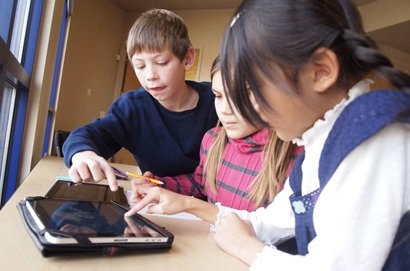
Technology-addled children have trouble holding a pencilChildren have been found to have trouble holding pencils, due to so much time on iPads and other such devices

Experts say that children lack the muscle strength required to write.

All number of things – from intricate finger movement to hand-eye coordination – have to go right before someone can actually write.

Children spend so much time swiping iPad screens that they cannot hold a pencil anymore. Senior paediatricians in the United Kingdom say that many children start school lacking the muscle strength to grip a pencil, which affects their ability to learn how to write properly.

Technology-addled children have trouble holding a pencil2Sally Payne, head pediatric occupational therapist at the Heart of England foundation NHS Trust, told The Guardian: "Children are not coming into school with the hand strength and dexterity they had 10 years ago. Children coming into school are being given a pencil but are increasingly not able to hold it because they don't have the fundamental movement skills."

"To be able to grip a pencil and move it, you need strong control of the fine muscles in your fingers. Children need lots of opportunity to develop those skills."

I would also say that they haven't got the faintest idea what a pencil or pen is in the first place having spent probably several years already playing around on their parents' and probably even their own iPads or such devices.

Developing finger, arm, and shoulder strength is something that happened naturally in the past, when children drew, colored, cut paper and did crafts for entertainment and participated more actively in household chores. But the spread of handheld devices has changed the nature of play.

As Payne said, "It's easier to give a child an iPad than encouraging them to do muscle-building play such as building blocks, cutting and sticking, or pulling toys and ropes. Because of this, they're not developing the underlying foundation skills they need to grip and hold a pencil."

And the ability of proper finger skills and hand-eye-coordination is not just important for writing by hand but also and especially for so many other tasks.

While some may say that handwriting belongs to an antiquated education system and is no longer relevant to today's texting, typing generation, this problem goes beyond not being able to form words on paper. This shows that kids' actual physical development is being stunted by too much sedentary screen-swiping, and that's very alarming. If a child's hand isn't strong enough to hold a pencil, imagine how weak their entire body must be, if the child has spent that much time sitting still, rather than running around the backyard or climbing trees.

While cursive, aka joint-up, writing might not be too important – I never got on with it myself – learning to write by hand and actually doing so is very important indeed, also for note-taking in class, as that action transfers the knowledge better than typing.

We should not be too quick to write off handwriting as a useless skill. Even if we do not write on paper as much as we used to, subjects like math and geography and art will always require the use of one's hand, particularly in early years. And who knows what schools will be like by the time today's kindergarteners reach university. Some lecture halls are banning laptops from classrooms, not only because they are distracting, but also because students are known to retain information better if it is copied down by hand. And that is because this “copying down by hand” is actually more a case of rewriting the words of lecturer into the student's own, thus already taking the material on board without even thinking about it.

We are doing our children a great disservice by handing them an electronic device (too early) before they have mastered other much more important skills than typing or swiping a finger across a screen. They also will not always be able to have a device handy later when needing to write something down, or the device may be out of power, etc. So what then?

On the other hand being unable to hold and push a pencil due to lack of muscle strength and coordination ability may also impede other activities, including the proper use of cutlery and using a knife for cutting tasks. I dread to think what kind of generation we are creating.

© 2018

Learn a new skill every week

by Michael Smith (Veshengro)

OK, a little late as a New Year's resolution but...

self-reliance-skillsFor anyone wanting to become more self-reliant – notice that I rarely use the word self-sufficient, as true self-sufficiency just is not possible – skills are what count and not a huge amount of supplies, even not in the event of an Apocalypse and such. It is skills that will see you through when everything else fails and has failed. And, for goodness sake, don't believe the idiots trying to sell you silver and gold coins as something that will get you buy in such events. Then again it is not – just – for those events you should learn skills and perfect your skills.

If you would try to learn one new skill per week then that would make fifty-two per year and even if it is not one every week but one every fortnight or even if only one a month, but then thoroughly. Skills – and knowledge – are what is going to get you and yours through a crisis or simply making your life better where you are by being able to do things that otherwise you may have to pay for.

It is true that you can and will unlike become a master every skill that you may need but at least you can become a master in a couple and proficient in a fair number more.

One of the most important skills, and so many no longer seem to be capable of it, is cooking from scratch. I know to many reader that would be obvious but for some people simply boiling an egg seems rocket science nowadays let alone cooking anything else that isn't just ready to go into the microwave. Some cookery programs not so long ago actually stated with teaching people how to – no, not a joke – boil water, followed then by how to boil an egg. When people need to be taught how to boil a saucepan with water then the world definitely has lost the plot and relearning of skill definitely is called for.

Another important skill, if I may call it that way, is, in my opinion, making do and mending, and just simply making do with what one has, and making things one may need from scratch and scrap. Into that category should also fall reusing, repurposing and upcycling of waste materials, such as glass jars, tin cans, plastic bottles, etc. While some of it should come natural, with some imagination, it would appear that many today, however, need instructions for anything in that department, though.

Obviously, there are many skills that you may want to have and learn but starting easy is the best option and the skills themselves are legion so listing all of them would fill a book, without even going into detail.

Woodworking on a number of levels, from making simple items, over carving spoons and other treen, to making furniture if a valuable skill set to have but it is not learned over night.

Textile crafts: Now this encompasses anything really from mending clothes up to and including of making your own clothes and even your own cloth. It also includes crochet and knitting.

Metal working: This could be anything from sheet metal working – a great way of converting tin cans into something new – to full blacksmithing and anything and everything in between.

Leather working: This is another one of those skills that you may, more or less, definitely want to learn as the making of leather items are not only useful for you as useful things but those items can also become an income. In the main it is akin to sewing only with a difference but if you can sew running stitch then you can also work in leather. Theoretically the stitch is a different one but, personally, I just use the running stitch, then reversed, and the process repeated.

This list could go on ad infinitum (almost) as there are so many skills that would and could be worth learning and learning to do them is one thing, mastering them an entirely different story, though. So, let's go and try to learn as many skills as possible and then go onto trying to master them as far as possible.

© 2018

Teaching children skills that are really important

by Michael Smith (Veshengro)

Instead of worrying whether we should give gold stars for participating or for being the best we should involve children in real world activities where the end result of the activity itself is the reward.

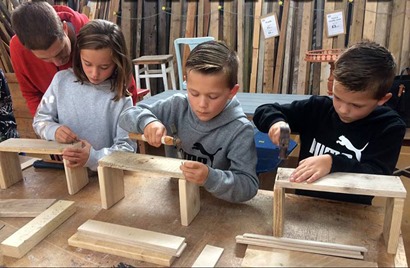
children-making-boxes1Teaching them gardening, woodworking, repair skills, fiber arts, sewing, leatherwork, cooking, and so on. Those are important skills that are useful. I am not saying that reading and writing and being able to do sums and such are not. Those are essential for self-directed learning but so very many subjects and things that are taught in public schools today are not necessary, let alone essential, for later life. Those subjects are just taught because they are used for the passing of tests and many are as useful in later life as the proverbial bits on a hog.

Getting them out hiking somewhere with gorgeous views. Teach them to raise animals and care something other than themselves. Have the help out an elderly relative or elderly neighbor. Give them age appropriate chores to do in the home, garden, etc. and making them feel important when they have done so.

When they help you in the garden (I know that to begin with such help can be more a hindrance than help) don't give them plastic or cheap “tin” gardening tools but invest in the small version of the real thing. They can be had. Or, with a little ingenuity, make the bigger tools smaller, and suitable for them.

The same goes for woodworking and such like activities. Years ago one could get real woodworking toolboxes, for instance, for children with real, small, saws, planes,, chisels, hammers, etc. Today, alas, they no longer seem to exist. The fear that kids could hurt themselves with those has done away with this, it would appear.

Our society has lost what is truly important in life. It is time to find it again. It teaches the young ones things – in school – that are more or less unimportant and those things that are important for life and in life it tends to neglect. In fact, often the school system makes those things that are not part of the “curriculum” out as unimportant and actively discourages the pursuit of those despite the fact that those are the things that are important in and for life.

The school system, and no doubt not just in Britain, “teaches” children to pass tests rather than teaches them things for life. Good test results put schools in front in the league tables but it does nothing for the students. The only way to change that is if we either demand the system to change, are able to change it ourselves – and I do not think that those two will happen – or take maters into our own hands, as many people do already, and homeschool or even unschool our kids.

© 2017

Matching neighborhood skills

by Michael Smith (Veshengro)

20139988_1539078376130193_5453055660688507791_nThere was a time when everyone knew their neighbors and that not only in a village and they all knew who did what for a trade or who was good in this or that and, even more important, everyone was prepared to help one another.

Today, however, we barely acknowledge our neighbors let alone know them or know who in our community – what community? – we can go to for help in this or that matter.

There was a time when everyone knew that “Uncle” Erik just down the road was a barber, though he may be working in some other job now, and would be prepared, at his place or at your home, to cut the hair of the family. Or there was Old Bill (no, not the police) who did all manner of woodworking, or James, the mechanic, who would be prepared to fix this or that, including a car, on the weekend.

The community that government so often speaks of no longer exists and in many cases the very destruction of it, such as in the working class areas and the villages, was aided and abetted by the very government that keeps harping on about it and, more often than not, throws every conceivable spanner in the works when people want to bring community back into their areas. Obviously people that do things for themselves are a threat to the powers-that-be (but should not be, the powers I mean) on a local as much as on a central level.

If we, the people, want really and truly resurrect the community in our areas where we live then it is up to us to do it. Government is not going to do it. It will more than likely do its damnedest to prevent it, although in a clandestine and subtle manner.

Get to know your neighbors. Most of them are not going to bite. Start by acknowledging their existence. Smile, say “good morning”, “good day”, or whatever. Some may blank you initially but do persist. The day will come when they don't just reply but may actually engage in conversation. And then the ball starts rolling.

There is no community and can be no community if and when we do not know our neighbors and engage and interact with them.

When I was a youngster we had real community in our villages and even in especially the working class districts in the towns and cities. The drawback of that was though that when you got home of an evening your parents already knew what you had been up to during the day, good or bad. Everyone popped in and out of each others' homes, even if only for a natter, a cup of tea, to borrow some sugar, or whatever and everyone looked out for everyone else's children as if they were their very own.

You knew who had this tool or that you could borrow, who could fix your bicycle if you could not do it yourself, or who had a long ladder. You knew which skills everyone had in the community and also how prepared they were to help out, either for a fee or on a barter trade basis. People swapped garden produce and seeds, books, you name it and all the children called the adults uncle or aunt.

In the working class areas of the towns and cities it was, as already mentioned, equally the same and they were like little villages in that respect. Then again, those districts arose from villages and many still had that feel, to a degree, and definitely as far as community was concerned. That many of the men (and later also the women) working in the same factories and workshops probably also helped to cement this community and community spirit. And then, in Britain and elsewhere, came the redevelopments to improve the areas which was, more often than not in fact, social cleansing, and in London it is really in full swing more today than ever. Communities have been and are being broken up and people dispersed far and wide, as nuclear families and not as a whole community.

But it is up to us to build and rebuild our communities into real living and thriving ones, whether or not the powers-that-be like it or not. Attempts of this building and rebuilding of community are growing in many places, such as via the Transition (Town) Movement or their German equivalent, the Kietzwandler. But those are but a few of many. This aside from those that create alternative communities and even entire towns and villages on a new model, or new models.

As far as Transition Towns in the UK are concerned, aside from its small town of Totnes in Devon, where the movement sort of, started, it would appear that the greatest successes are had, for some strange reason, in the more urban areas, including and especially in inner London, such as Transition Town Brixton. In the more affluent areas, such as rural and semi-rural Surrey, etc., this ideas, and others of this nature) seem to be getting nowhere and are falling on deaf ears.

So what do I mean by matching neighborhood skills and why it is a good idea?

It means matching the skills, trades and what-have-you to the needs, so to speak, that members of the community may have. Need a plumber? Joe at No.10 is a professional plumber, so give him the job instead of calling in an outsider. Thus the money stays in the community. Need you PC fixed? Call on young Richard just a round the corner who knows how to do it and who builds his own systems. And this goes for every job – well, almost – that someone in the neighborhood may need doing and even the almost is with a great caveat for there may be more skilled people out there in our neighborhood, or people with skills, than we may be able to guess until we actually find out.

If we all use local skilled people to do the jobs that we may need doing the money stays in our community or it may even be done on a barter trade and thus does not go into the pockets of some boss somewhere. It is the same if you get your vegetables, eggs, etc. from local farms rather than the supermarkets or purchase other things from local makers.

Not only do those who perform the tasks benefit but we may actually get the job done cheaper and better that if we would go to an “outside” firm and at the same time we get to know those in our neighborhood and create some form of community cohesion (which can serve as the foundation for a real community).

One of the biggest problems today is that people have become very insular and shut themselves off from those around them. We hardly, if at all, know our neighbors and often do not even acknowledge them when we see them, out an about. But we can all change that in that we act differently. A smile, a “good day”, and such cost you nothing and if the other person does not reply still keep doing it. There will come the day when – suddenly – they will respond and the first steps to getting to know one another and to building some neighborliness and community are taken. That is the first step to Community Building. But, as said, it is just the first step. The rest really follows on from that. A blueprint for building community to give I do not think to be possible but a Community skills database for the purpose of sharing and caring but also allowing people to make some income is a great step in this direction also.

Such a database would match skills with needs and vice versa and can go a long way to bringing people together through mutual beneficial actions and thus can lead – and we should surely hope so – to real community where we go to our neighbors, close or not so close, to get things done or to learn skills rather than calling in outsiders.

But, in order to set up such a database and to match neighborhood skills with possible neighborhood needs requires that we get to know our neighbors first of all, at least the organizer(s) of such a database and matching service. So, let's go and do some matching and through this build communities in our neighborhoods.

© 2017

Older people teach young ones traditional skills at GrandFest

by Michael Smith (Veshengro)

GrandFest2017Older people led masterclasses in skills such as dressmaking and bread-making at GrandFest, a one-day festival in east London.

Thousands of people came together for GrandFest on June 18, 2017 to celebrate the knowledge held by older people and to learn skills that organizers say are becoming less common.

Now in its third year, the event hosted more than twenty classes at restaurants, pubs and shops around Spitalfields Market. Each class was run by a festival GrandMaker – all of whom are over 70 – and skills included quilting, wood turning and cider making.

It is very important to pass on the older traditional skills that are disappearing and there are so many old and traditional skills that are going that way and which also may be needed more than ever in the future, in the post-carbon world.

Even cooking from scratch, let alone brad making, including and especially sour dough bread, are skills that are fast disappearing. Others have almost gone entirely and many are going if they are not being passed on. That is why festivals such as this one are so very important.

Often such events are held in rural locales and while they need to be held and taught there as well for even in the countryside the old countryside skills are being slowly lost they also must be held in towns and cities and that also more often.

It is extremely important to pass on the older skills to a younger generation, and especially the young generation, as most are rapidly disappearing (the skills, not the younger generation) and many are already lost or almost lost.

In a time not so long ago those skills would have been, automatically almost, passed on from father and grandfather to son and grandson, and from mother and grandmother to daughter and granddaughter. But this has all but disappeared. Not because the young people are not interested but because the older folks think that they are not interested, or that the skills are no longer of any (practical) use.

The festival was hosted by older people's charity the Royal Voluntary Service, which helps more than 100,000 people each month connect with others and keep active.

As I said already, however, we need more of those festivals, fairs or whatever we may wish to call them, and that everywhere, as much as in towns as in rural locales. Even in the countryside many of the old skills are diminishing and are becoming lost as the old practitioners die and have no one to pass the skills on to.

And, in addition to that, we need grandparents to pass skills on to their grandchildren. Young children are generally very receptive and willing to learn and it will be much better for them to learn such skills that may come in rather handy, especially in the post-carbon world into which we are headed, than to play around on their PC, tablet or smartphone, engaging in useless games and other activities.

Introduce them, for instance, to gardening and you will be surprised how eager they will be to do it and to learn. The same goes for cooking, for woodcarving, leather working, and many other old – and not so old, even – skills and crafts.

© 2017

Traditional crafts deserve a revival

by Michael Smith (Veshengro)

In today's increasingly virtual world, there is something appealing about making things by hand, using centuries-old techniques and many traditional crafts definitely deserve a revival. In fact, many will have to be revived for the coming post-carbon and post-industrial age and, yes, it is coming.

There are in fact many traditional crafts and trades that deserve a revival and also traditional skills in general. Aside from the danger of them becoming lost they will be, as I have already said, needed again in the not so distant future when oil is becoming more and more expensive and even may be gone for good, at least cheap and abundant oil, and this includes skills of maintaining old-fashioned tools such as sharpening and setting crosscut felling saws, sharpening and peening scythes and sickles, and many more. And do not get lulled into a false sense of security by the fact that in early 2015 the price of a barrel of oil is at more or less rock bottom. This price drop is not due to more oil having come on stream but due to the OPEC nations wishing to put a stop to fracking.

So, here are a few traditional crafts to, maybe, try your hands on and learn or vice versa.

Blacksmithing

Blacksmiths use fire, hammers and an anvil to hot-forge iron and steel, shaping and joining the metal to make every thing from gates and staircases to chairs, fire irons, curtain poles, doorknobs, jewelery and sculptures. You need a small forge to heat the metal up to 1,000C (1,832F), an anvil complete with the various cutting and bending tools that slot neatly into it, a pair of pliers, a vice, and a selection of hammers and punches. The skills need learning, and can take years to perfect, but it's well worth it.

Smithing produces metalwork of unique character, very different from cut-and-weld manufacturing. And this is true for all handmade goods really.

Aside from the above mentioned goods a blacksmith also produces, or used to, knives, axes, sickles, scythes, billhooks and much, much more, and when the post-carbon world arrives handmade will be the way to go once again.

And, in fact, making cutting tools, especially knives, from scrap is a good way of learning the craft of the blacksmith and you do not need much in the way of tools. I have made many a small knife that way by using the head of an old sledgehammer for an anvil, and only a small ball-peen hammer, aside from a pair of pliers and a fire, and I mean a fire and not even a forge.

There are also ways of cold-forging steel for the making of knives and tools and using the heat later for tempering the steel.

Pole-lathe turning

Apart from a brief conversion to pottery thanks to the Romans, people largely ate and drank from wooden plates and bowls in Britain until the early 18th century and in many countries that went on even much further. In Russia wooden spoons for eating, for instance, and also wooden bowls, were still in use in the military even and in some cases until – especially the wooden spoons – the early part of World War Two.

Every village had its wood turner with his pole-lathe, a simple homemade assembly of timber beams and posts using as its driving power a springy sapling, anchored at the base. From the sapling's free end hangs a length of cord wrapped once around a spiked chuck, called a mandrel, hammered into the block of wood you are turning. If chair legs and other such rounds are being turned, including dibbers, truncheons, and such, the string is, in fact, wrapped around part of the peace being worked.

When you push down on a foot treadle attached to the other end of the cord, the chuck revolves. Release the treadle and the block spins back again. On each downward stroke, a chisel or hook tool shapes the wood. It's highly skilled work, and hugely rewarding. The Association of Polelathe Turners and Greenwood Workers has a list of courses: www.bodgers.org.uk

Spoon carving and general wood carving

In times past spoons – especially of the lower classes and those used for work in the kitchen – were all carved from wood by means of gauges and the crooked knife. And even bowls were made like that and not just turned on the pole-lathe.

Most of what we had, bar the iron tools, textiles, etc., in the days of old were made of and from wood and using wood is also a green, pardon the pun, way to go as products made from wood keep the carbon locked up in this product for the rest of its life.

Working with wood, in which ever way, is extremely rewarding as an occupation and also very relaxing. The skills will also be very important in the days when our technology is going to let us down and when we finally have to rethink how we make things for our daily needs, wants and use.

WoodRecycledProductSamples_webWhile pole-lathe turning and wood turning in general is a good skill it is not always necessary to make treen goods, as I have discovered making rolling pins (for the making of tortillas) just simply by carving it from a piece of relative straight piece of coppice wood by using just knife, glass shave, and surform rasps and working entirely by eye. Also a more or less copy of an old style British Detective truncheon was done in the same way (see top piece in photo).

For spoon carving and so-called green woodworking and especially for inspiration see some of the Facebook pages and groups: https://www.facebook.com/groups/GreenWoodWork/, https://www.facebook.com/groups/greenwoodworking/

Basket making

Willow baskets, and baskets from other woods, for carrying vegetables, laundry, logs and coal, fruit, bicycles, shopping, letters and such were fixtures of British life until plastic arrived in the 1950s.

The craft of basket making hasn't changed in thousands of years. You require very few tools: knives for pointing the ends of the willow or hazel, for this is another common wood used, rods and trimming the finished basket; a bodkin to make openings in the weave; a cleave and shave to split rods into three or four finer skeins; a beating iron to hammer the weave down. The base is made first: a round or rectangular frame of sturdier stakes interwoven with finer willow rods. Then you insert the upright stakes to form the side frame, and lay the first weave. Then you start weaving, in one of a range of styles: randing, slewing, fitching, waling. Finish with a border around the top. You need strong hands, a good eye for straight lines, and lots of patience. The Basketmakers' Association lists courses: www.basketassoc.org

In years gone by the itinerant traders, the hawkers, more often than not carried their goods in woven baskets on their backs and those kinds of baskets can be found all over Europe and also in the Americas. They are the forerunner the the rucksack and the backpack but are much better for the carrying of goods, such as carved wooden spoons and other such things, that ever would be a rucksack or backpack.

There are, obviously, many other crafts and trades that deserve a revival and revitalization and that also for the fact that we may, rather sooner than later, also require them again in order to live comfortably in the post-fossil fuel age, and the coming Wood Age.

© 2015

For more on coppicing and why, etc. see “Managing our Woods”, a small book that explains the whys and wherefores of managing our woods in this way and calls for us to return to that way.

Old skills, crafts and trades for the new age

by Michael Smith (Veshengro)

The new post-fossil fuel age will require the skills, crafts and trades of the old ones, in many aspects, especially those of working with one's hands and with hand tools.

Despite the fact that shale oil and shale gas are now being extracted by means of the most controversial method of “fracking” we are coming to the end of cheap and abundant oil and gas.

In 2011 the world used 40% more oil than it produced and the forecast, though dampened by the Great Recession, was that in 2012 over 60% more than produced would be consumed.

For a while now already various countries have put oil from strategic reserves on the market in order as not to frighten the populous with rocketing prices at the pumps. Sooner rather than later, however, those reserves are going to run out and the pigeons are then coming home to roost for sure.

And when that happened and the reality of the fuel going beyond what can be borne by the people and industry, much of how we work now is going to change; change back to the way the old people did things way back when.

This will mean a return to working with hands and hand tools and human-powered machines, be this a treadle or hand operated sewing machine, a treadle lathe, or the billhook, axe and crosscut saw in forestry.

It is, however, not only the use of those tools and the ways of using them that we will have to learn (again). We also must learn how to maintain them and keep them in good order, and also how to bring old, neglected ones back to life and into use again.

Many of the tools for those old skills, crafts and trades that we will need for the new age are often no longer made and thus we must, aside from making them again, refurbish the old ones that we can still obtain. Those old tools will be more valuable after the even than any gold or silver.

The skills, crafts and trades required for the new post-carbon age are, in fact, legion and they are those that many of our ancestors mastered, more or less, themselves. Many knew a large number of them as to be as little dependent on others as possible.

It is true that no person can master all those skills and can be entirely self-sufficient but we all will have to become as self-reliant as it is at all feasible.

You may not be able to produce your own leather from scratch but you should be able to make your own leather goods and growing at least some of your own food must become second nature as it was to our grandparents and their parents.

Getting hold of some old how-to books from publishers such as Odhams is a good idea and another good source is the Foxfire series of books, and then practicing many of those sills until you master them. The Odhams books were published in the 1930s and 1940s or thereabouts in Britain and can today, almost exclusively, only be found on flea markets, yard sales, trunk sales, and such like, and maybe, but then probably expensive, in secondhand antiquarian bookshops.

Nothing, however, beats learning from the old masters, and I am not referring to painters such as Rubens and such, but there are today few and far between. Many of those old masters, alas, have gone by now and those few that are lest are difficult to track down. If you can learn from a practitioner of the arts count yourself very lucky indeed, learn all you can and then go and teach others.

For the great majority of the needed old skills, etc.,, you will have to, I should guess, resort to (old) books and then learn them – the skills not the books – by trial and error and of both there will be many until the stage of more or less perfection.

Aside from old books there are also new ones, even videos, to be had that show the how-to of many of those old skills, trades and crafts, etc. In most cases, though, the old books are a great deal better.

The most important skills is, however, your mindset and no one can teach you that one. The mindset of which I speak is the one of seeing a way of making things from almost nothing; reusing, repurposing and upcycling.

When we have to make do with less, and that is also that we will have to learn again, and can't buy everything (immediately) at the stores – because of costs – being able to reuse what we have is a great skill though it may not, necessarily, bring in any income as some of the others may.

Learn all that you can while you can...

© 2013

We need skills again for the future

by Michael Smith (Veshengro)

The future, the post carbon, post oil, future we are facing, and which is not at all far off, will make new and different demands on us than does the present.

We will need skills again for this future, the new era about to be upon us, and those skills are many of the old ones that our parents, grandparents and and their parents were so very familiar with.

Those are the skills of making things for our needs with our own hands, of repairing things without own hands and of growing things, to indicate but a few.

SEWING is one of many of those skills. Sewing means not just a little mending here and there, sewing on a button or such, but the whole hog, from mending clothes to make them last (longer) – very important in the future – to altering clothes to making clothes from scratch. I don't expect, though, that you'll make your own cloth; not necessarily. Sewing also includes making other textile things from old clothes and working leather, though sewing leather is somewhat different from sewing cloth.

The making of clothes is going to be a rather important skill to have, to know and to employ, for not everyone wants to become a nudist, I am sure.

Aside from sewing and the making of clothes and other things created by this skill there are hundreds of skills, literally, that are needed and many of those we'd do very well to acquire to be able to to as many things for ourselves as at all possible.

Most of us in our present state depend on others to make our clothes – I know I do – and also many, if not indeed most, other things. Many cannot even think – and I am arriving at my “favorite” subject once again – of how to reuse something, or rework and upcycle something so that they do not have to go to the shop for it. Even among many in the eco-movement this can be found only too frequently. But I digressed somewhat.

Working with wood in many different ways is another complete set of skills that well be required and in demand in the new era and it should be one that we should have in our armory. The same goes for the ability to be working in metal, especially the smithing, the making of, tools.

In fact, there are so many skills that we, as individuals, and as groups and communities, will need that it would require a book almost to be written in order just to list all or even the majority of them.

Our mindset, however, is our most important asset, skill and tool as that will enable us to think and to acquire skills and ideas. The most important part here will be of being able to get away from the “buy in store” mentality.

The right mindset is the most important asset for the coming new age when we will have to make most things ourselves once again, as once was common for most folks. The ability to buy everything as and when we want and that cheaply is only a very recent phenomenon and once the cost of everything is going up due to resources and especially oil and thus transportation fuel drying up we will have little choice but to change our ways and to apply again the ways of our grandparents and their parents.

Aside from all the practical skills required one of the most important will be the one of seeing the reuse potential and possibilities in what people (now) regard as waste and to turn such things into items for personal use and even for trade, whether against money or on barter.

Growing your own food and preserving your harvest, as well as knowing what is edible in the wild, including weeds, is probably the one skill of the utmost importance. Furthermore the knowledge of healing herbs and other plants for, once we enter this new era drugs of the current kind may also be few and far between if not even history altogether.

Acquire as much knowledge as you can about every possible skill and craft, etc., that you may need and get as many as possible old DIY, homesteading, farming, gardening, etc., book as you can get as quasi manuals.

Being prepared is the only way to weather the storms that are coming...

© 2012