by Michael Smith (Veshengro)

Today, however, we barely acknowledge our neighbors let alone know them or know who in our community – what community? – we can go to for help in this or that matter.
There was a time when everyone knew that “Uncle” Erik just down the road was a barber, though he may be working in some other job now, and would be prepared, at his place or at your home, to cut the hair of the family. Or there was Old Bill (no, not the police) who did all manner of woodworking, or James, the mechanic, who would be prepared to fix this or that, including a car, on the weekend.
The community that government so often speaks of no longer exists and in many cases the very destruction of it, such as in the working class areas and the villages, was aided and abetted by the very government that keeps harping on about it and, more often than not, throws every conceivable spanner in the works when people want to bring community back into their areas. Obviously people that do things for themselves are a threat to the powers-that-be (but should not be, the powers I mean) on a local as much as on a central level.
If we, the people, want really and truly resurrect the community in our areas where we live then it is up to us to do it. Government is not going to do it. It will more than likely do its damnedest to prevent it, although in a clandestine and subtle manner.
Get to know your neighbors. Most of them are not going to bite. Start by acknowledging their existence. Smile, say “good morning”, “good day”, or whatever. Some may blank you initially but do persist. The day will come when they don't just reply but may actually engage in conversation. And then the ball starts rolling.
There is no community and can be no community if and when we do not know our neighbors and engage and interact with them.
When I was a youngster we had real community in our villages and even in especially the working class districts in the towns and cities. The drawback of that was though that when you got home of an evening your parents already knew what you had been up to during the day, good or bad. Everyone popped in and out of each others' homes, even if only for a natter, a cup of tea, to borrow some sugar, or whatever and everyone looked out for everyone else's children as if they were their very own.
You knew who had this tool or that you could borrow, who could fix your bicycle if you could not do it yourself, or who had a long ladder. You knew which skills everyone had in the community and also how prepared they were to help out, either for a fee or on a barter trade basis. People swapped garden produce and seeds, books, you name it and all the children called the adults uncle or aunt.
In the working class areas of the towns and cities it was, as already mentioned, equally the same and they were like little villages in that respect. Then again, those districts arose from villages and many still had that feel, to a degree, and definitely as far as community was concerned. That many of the men (and later also the women) working in the same factories and workshops probably also helped to cement this community and community spirit. And then, in Britain and elsewhere, came the redevelopments to improve the areas which was, more often than not in fact, social cleansing, and in London it is really in full swing more today than ever. Communities have been and are being broken up and people dispersed far and wide, as nuclear families and not as a whole community.
But it is up to us to build and rebuild our communities into real living and thriving ones, whether or not the powers-that-be like it or not. Attempts of this building and rebuilding of community are growing in many places, such as via the Transition (Town) Movement or their German equivalent, the Kietzwandler. But those are but a few of many. This aside from those that create alternative communities and even entire towns and villages on a new model, or new models.
As far as Transition Towns in the UK are concerned, aside from its small town of Totnes in Devon, where the movement sort of, started, it would appear that the greatest successes are had, for some strange reason, in the more urban areas, including and especially in inner London, such as Transition Town Brixton. In the more affluent areas, such as rural and semi-rural Surrey, etc., this ideas, and others of this nature) seem to be getting nowhere and are falling on deaf ears.
So what do I mean by matching neighborhood skills and why it is a good idea?
It means matching the skills, trades and what-have-you to the needs, so to speak, that members of the community may have. Need a plumber? Joe at No.10 is a professional plumber, so give him the job instead of calling in an outsider. Thus the money stays in the community. Need you PC fixed? Call on young Richard just a round the corner who knows how to do it and who builds his own systems. And this goes for every job – well, almost – that someone in the neighborhood may need doing and even the almost is with a great caveat for there may be more skilled people out there in our neighborhood, or people with skills, than we may be able to guess until we actually find out.
If we all use local skilled people to do the jobs that we may need doing the money stays in our community or it may even be done on a barter trade and thus does not go into the pockets of some boss somewhere. It is the same if you get your vegetables, eggs, etc. from local farms rather than the supermarkets or purchase other things from local makers.
Not only do those who perform the tasks benefit but we may actually get the job done cheaper and better that if we would go to an “outside” firm and at the same time we get to know those in our neighborhood and create some form of community cohesion (which can serve as the foundation for a real community).
One of the biggest problems today is that people have become very insular and shut themselves off from those around them. We hardly, if at all, know our neighbors and often do not even acknowledge them when we see them, out an about. But we can all change that in that we act differently. A smile, a “good day”, and such cost you nothing and if the other person does not reply still keep doing it. There will come the day when – suddenly – they will respond and the first steps to getting to know one another and to building some neighborliness and community are taken. That is the first step to Community Building. But, as said, it is just the first step. The rest really follows on from that. A blueprint for building community to give I do not think to be possible but a Community skills database for the purpose of sharing and caring but also allowing people to make some income is a great step in this direction also.
Such a database would match skills with needs and vice versa and can go a long way to bringing people together through mutual beneficial actions and thus can lead – and we should surely hope so – to real community where we go to our neighbors, close or not so close, to get things done or to learn skills rather than calling in outsiders.
But, in order to set up such a database and to match neighborhood skills with possible neighborhood needs requires that we get to know our neighbors first of all, at least the organizer(s) of such a database and matching service. So, let's go and do some matching and through this build communities in our neighborhoods.
© 2017

 My two kids and I head to the library every week and it's one of my favorite things. I love getting a huge bag of books and feeling the excitement to get home and read them and see where they take us. It's a strong memory I have from my own childhood and I cherish getting to repeat it with them, but the more time I spend at the library with my family, the more I realize its benefits go beyond just a bag of new books to read.
 These days every city claims to be a “smart” city, or is becoming one, with heavy investments in modern information and computing technology to attract businesses and make the city competitive.
 This post aims to explore the opportunities that may arise with the spread of the collaborative economy on a given territory. It is based on the work of
  Pieter van de Glind and Harmen van Sprang are the co-founders of
  BERLIN — Fresh from a bracing workout at the gym, Anton Kaiser gazed hungrily into a refrigerator, considering arugula, pineapple jam, salted butter and two bags of green grapes before reaching for a white bread roll, baked that morning. “I haven’t eaten all day,” he said, “so it’s great.”
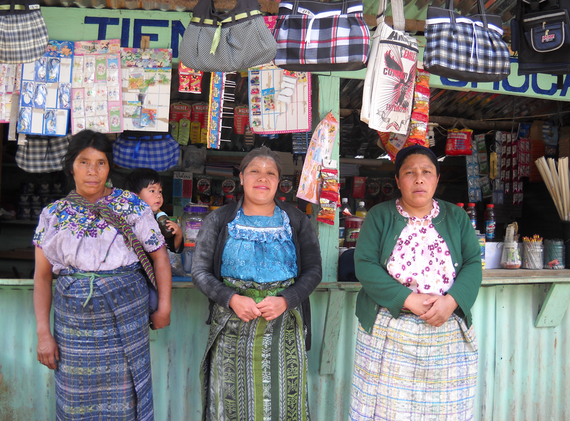 Why is it that despite new technologies and widespread innovation, today's financial sector provides such ill-fitting products and services to so many people and leaves so many more entirely unserved? We are missing a huge opportunity for business, policy and society alike - a missed opportunity with lasting negative effects.
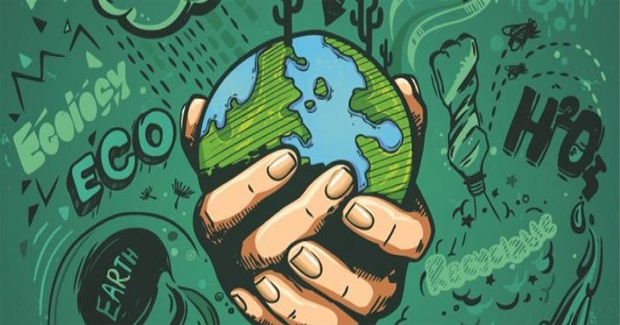 Almost everywhere we look, there is an emerging debate on the importance of sharing in relation to the grave challenges of our time. This conversation is most apparent in the sharing economy movement that has now taken the United States and Western Europe by storm, opening up a new set of questions about how sharing – that most simple human value and ethic – can really serve the needs of all people and the planet. For many, the practice of sharing represents a global cultural shift towards empathy, trust and generosity, and holds the greatest source of hope for economic and social transformation. For others, the idea of integrating the principle of sharing into economic relations is vitally important and invigorating, but toothless as a strategy for resolving the world’s crises if it remains beholden to corporate interests and the growth imperative.