Showing posts with label school. Show all posts

Teaching children skills that are really important

by Michael Smith (Veshengro)

Instead of worrying whether we should give gold stars for participating or for being the best we should involve children in real world activities where the end result of the activity itself is the reward.
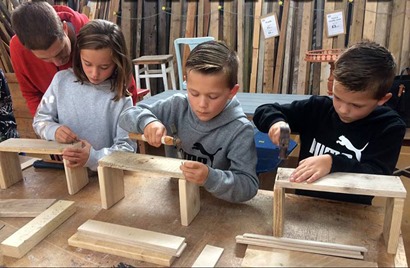
children-making-boxes1Teaching them gardening, woodworking, repair skills, fiber arts, sewing, leatherwork, cooking, and so on. Those are important skills that are useful. I am not saying that reading and writing and being able to do sums and such are not. Those are essential for self-directed learning but so very many subjects and things that are taught in public schools today are not necessary, let alone essential, for later life. Those subjects are just taught because they are used for the passing of tests and many are as useful in later life as the proverbial bits on a hog.

Getting them out hiking somewhere with gorgeous views. Teach them to raise animals and care something other than themselves. Have the help out an elderly relative or elderly neighbor. Give them age appropriate chores to do in the home, garden, etc. and making them feel important when they have done so.

When they help you in the garden (I know that to begin with such help can be more a hindrance than help) don't give them plastic or cheap “tin” gardening tools but invest in the small version of the real thing. They can be had. Or, with a little ingenuity, make the bigger tools smaller, and suitable for them.

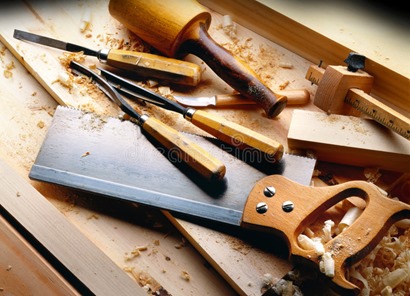
The same goes for woodworking and such like activities. Years ago one could get real woodworking toolboxes, for instance, for children with real, small, saws, planes,, chisels, hammers, etc. Today, alas, they no longer seem to exist. The fear that kids could hurt themselves with those has done away with this, it would appear.

Our society has lost what is truly important in life. It is time to find it again. It teaches the young ones things – in school – that are more or less unimportant and those things that are important for life and in life it tends to neglect. In fact, often the school system makes those things that are not part of the “curriculum” out as unimportant and actively discourages the pursuit of those despite the fact that those are the things that are important in and for life.

The school system, and no doubt not just in Britain, “teaches” children to pass tests rather than teaches them things for life. Good test results put schools in front in the league tables but it does nothing for the students. The only way to change that is if we either demand the system to change, are able to change it ourselves – and I do not think that those two will happen – or take maters into our own hands, as many people do already, and homeschool or even unschool our kids.

© 2017

The most important school subjects

by Michael Smith (Veshengro)

Handwerk1The most important school subjects are not reading, writing, arithmetic, etc. even though they are important, especially for self-directed learning, as I can ascertain. However, “viewed scientifically the most import school subjects would be music, sports, dramatics, art and handicrafts, the latter is what the Scandinavians would call sloyd”. This is what the brain researcher Manfred Spitzer says and, as far as child development, especially in elementary school children, is concerned that is exactly what is needed.

Children who spend much of their childhood playing (for play is an important aspect of learning), drawing, painting, doing sports, dramatics, and such, are in a much better position later to be taught, to study and to be trained in order to be able to follow a useful profession and calling. Much more useful than learning in Kindergarten already Chinese or having to be worried in elementary school about tests and passing them in order to progress up the ladder, so to speak.

Some may say that this does not do the economy any good and that it is only that which counts, in other words productivity and growth, and training obedient wage slaves.

But today's economy no longer needs untrained docile workers at production lines but highly flexible, stress resistant multi-taskers who are prepared to learn new things to the end of their life. No one needs what the schools of today churn out in the way of unripe non-adults. Nor will the children, as children and later as adults, ever need most of what they have been “taught” in school – generally only in order to pass the tests and exams – in later life.

Yes, reading, writing and some other things are important, as I have already said in the beginning, but you do not have to go to the brainwashing institution called “school” to learn those.

As far as handicrafts, aka sloyd in Scandinavia, and such like are concerned getting hands dirty and learning about traditional trades is what it is all about – kids will be having a ball as long as they are not just be shown how to but are actually allowed and helped to make things.

Also teach them gardening and the growing of food and involve them in this, to the extent of letting them have their own plots where to experiment with growing this or that.

Maybe the best thing would be for children to be taught at home (or other similar setting) rather than in the formal setting of the brainwashing facilities that we call schools where children are but trained to pass tests and regurgitate information in order to pass them.

Many kids are measured on their intelligence base solely on regurgitation of information. Many grow up thinking they are worthless and stupid because they do poorly. This is one of the many factors that contribute to social burden and decay. No matter what anyone says you are not stupid, just a different kind of smart. Also and especially children develop and mature in different stages regardless of age so any standardized tests actually prove nothing and all they do is make some believe that they are failures and will never amount to anything.

That is why self-directed learning, as often is the case with homeschooling, where the kids decide what they want to learn, research, etc., rather than following a set of guidelines, is so much better than any other way.

© 2017

11 Steps to Starting an Agricultural Education Program in Your School

According to The National FFA Organization (formerly Future Farmers of America), creating a proposal and getting started is easier than you think.

Agricultural-Education ProgramWith a little motivation and determination, you too can start an agricultural-education program in your high school.

1. Assess your community’s needs.

  • Why does your community need an agricultural education program?
  • What will your program’s philosophy be?
  • How much interest is there in your projected program?

To find out why your community needs an agricultural education program, look at other schools’ and programs’ descriptions of their programs and talk to their teachers and program directors. The more information you have regarding how the program will help the community, the better start you will have.

Your goals will reflect your program’s philosophy. What will students achieve and what experiences will they have? Here is an example of a program philosophy.

Surveys are an excellent way to get some real numbers on how much interest there is in an agricultural education program. Remember, the program is for the community, so a successful program rides on whether the people involved actually want it.

2. What happens after students finish the program?

  • What careers will be available?
  • Are the jobs local or national?
  • Is class credit available to local colleges?

Find out through the FFA what careers are available, and where, after graduation by visiting here.

3. Gain community support.

  • Which community members have an interest?
  • Survey local businesses.

It’s as easy as a few internet searches or a drive around your town or city to find out which businesses are involved in environmental services, food processing, animal health service, greenhouse and landscaping services, and humanitarian and charity services. These local businesses can be involved by donating money or items that can help you get the ball rolling.

Read more: http://www.urbanfarmonline.com/sustainable-living/urban-community-building/ag-program.aspx

Creating the good worker and obedient citizen of tomorrow

The brief of the public school system

by Michael Smith (Veshengro)

“If you or your child does not fit the current educational model, this entails that they will not be a good fit for the mass work force”. That, at least, is the premise and a statement from the SCANS report.

How in any shape, way or form is that helpful, freedom, or even make sense is rather questionable. This, however, is the aim of public education, let no one believe otherwise.
So where is it coming from, where is the driving force?

A report called The SCANS and was not written by the Secretary of Education or anyone in the Department; it was written by the secretary of LABOR.

This is not being driven by education but it is being driven by the big, big industries. It is industries and government (remember they need obedient citizens) that are driving those changes.

When one reads the SCANS all it talks about is how to have the proper “worker of tomorrow”. And children are not referred to as children (in this report) but as “human resource material”, and as “human capital”. This is business telling education what business needs or wants in a worker of tomorrow.

Some teachers believe that they are being taught to teach children to think... but that only while they are in teacher college. When they get into the schools they will see the world of the education system is different and that their job, as the authorities see it, is to create obedient citizens and good workers of tomorrow. Teaching children to think and to question the system is not going to be on the curriculum and the agenda.

The US system, and that of so many other countries, are based on the same Prussian system that was used and still is in Germany and which also makes attendance at public school compulsory. All in order to create, by means of brainwashing, the obedient citizen and wage slave.

The aim of (compulsory) schooling, under government curricula, is not to create people who can think for themselves and to think critical but people who do as they are told and who go into the jobs they are told to go into (more or less in the latter case).

The Prussian system in fact did the latter. Companies used to have their own schools for the children of the workers where they created obedient slaves to the state and the business.

Krupp in Germany did that until about the time of the Second World War and also still during it. But also the Victorian school system in Britain was one that indoctrinated kids into being obedient subjects and, as far as the working classes are concerned, that their station in life was nothing but that of a worker. Any thought of becoming a doctor or such was suppressed, with beatings even.

The modern school system is nothing different, just a little more subtle than those previous incarnations.

Wake up and act...

© 2013