Private electricity grids fueled by renewable energy the future for communities
UK government supports solar for Africa, slashes subsidies at home

I received two interesting press releases over the weekend.
The first, from Power for All—a campaign aiming for universal energy access through renewables—was jubilant: Power for All receives UK support for Africa's poor to achieve energy access through distributed renewables. The second, from UK solar installer Solarcentury, not so much:Government’s proposed £7m budget for solar equivalent to subsidising Hinkley Point for just two days (Hinkley Point refers to anew, massively subsidized and Chinese-built nuclear reactor in the works for South West England).
With the UK's Department for International Development throwing its weight behind solar for rural communities in Africa, you'd think the government would also be pushing renewables as the wave of the future at home too. After all, from Morocco targeting 50% renewables within the next 5 years and the world's biggest utility breaking up with fossil fuels, there does appear to be increasing momentum behind a decarbonization of the world's energy system. What government could possibly want to be left behind?
Read more here.
Aspen is third U.S. city to reach 100% renewable energy
Aspen is one of three U.S. cities to run on 100 percent renewable energy, according to members of the city’s environmental and project departments.
The shift to energy that is generated from natural resources — including wind power, solar power and geothermal heat — follows a “decade-plus” city goal, said city Utilities and Environmental Initiatives Director David Hornbacher.
“It was a very forward-thinking goal and truly remarkable achievement,” Hornbacher said. “This means we are powered by the forces of nature, predominately water and wind with a touch of solar and landfill gas.”
The first two U.S. cities to reach the goal were Burlington, Vermont, followed by Greensburg, Kansas.
Aspen’s transition to 100 percent renewable occurred Thursday after the city signed a contract with wholesale electric energy provider Municipal Energy Agency of Nebraska, in order “to achieve this final leg of our goal,” Hornbacher said.
Read more here.
Low-income Woodland farming families go solar

Like many Americans, Alex Hernandez lost his home and his job in the aftermath of the recession. The former contractor, now truck driver, has four kids, and his paycheck goes to them.
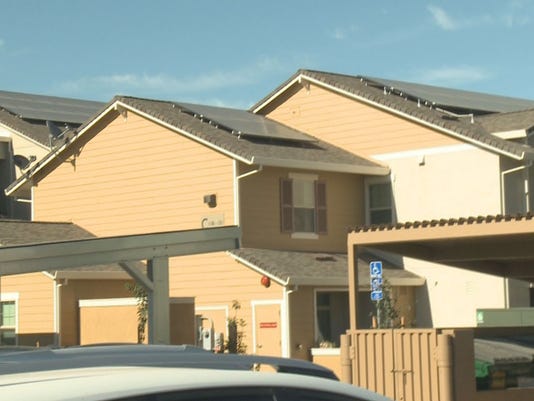
Hernandez lives in a four-bedroom apartment with his family in a Woodland complex, but it's not like the other apartment buildings -- this one is 100 percent solar powered.
That means big savings for Hernandez and everyone else who lives here.
"I went from 257 bucks a month to $7," Hernandez said. "And, I have my A/C on all day!"
Sounds too good to be true, but it's not. It's called Mutual Housing at Spring Lake. It's a community built specifically for low-income farm workers and their families. Their rent is reduced, and so is the utility bill thanks to solar panels built on the rooftops.
Read more here.
Harvesting hill streams of Wales for hydropower
Thousands of untapped streams pouring off hillsides hold the promise of generating clean energy and income for local farming communities

The little stream bubbling off the Black Mountain and tumbling 300ft down to the river Towey in the Brecon Beacons has no name and is far too small to feature on most maps. But for Welsh hill farmer Howell W illiams , over whose 290 acres of steep and boggy pasture land it flows, it is an unexpected pension and a simple way to keep rural Wales populated.
Directing just some of his stream’s water down a six inch pipe and into a turbine all constructed for about £50,000 generates nearly 18 kilowatt hour (kWh) of electricity at peak times, and earns him £10-15,000 a year.
Williams has dubbed his stream “Try dwr” – or “electricity from water”. “You work long hours on the farm and do not earn much at all, but my small stream works 24 hours a day, even when I am sleeping. The price of lamb is down this year and the European grant has decreased so these are difficult times,” he says.
Helping to harvest Wales’s abundant rainfall should be a priority for any government, he says, because there are thousands of untapped streams like his pouring off hillsides in the Brecon Beacons, Snowdonia and the Berwyns.
“I would say micro-hydro beats farming. This is the best pension we could possibly have. Most farmers put all they earn back into the farm but have to leave when they cannot go out in all weathers ... Now I get paid to do nothing!”
Read more here.
Maasai women are the new solar warriors of Africa

The Maasai are a semi-nomadic pastoral tribe spread across Kenya and Tanzania, and globalization has not been kind to them. Vulnerable to wildlife that steal their livestock and powerless after the sun goes down, many Maasai often have to walk many kilometers just to charge their phones. But a new project spearheaded by Green Energy Africa has brought solar energy to 2,000 homes in Naiputa county alone, and put new power into the hands of women who sell affordable solar installations.
Green Energy Africa started the 7-month Women Entrepreneurship in Renewable Energy Project (WEREP) in September 2014 with a goal “promote inclusive participation of women and youth in development through solar energy” while bringing much needed energy to people living in Kenya’s Kajiado and Makueni counties.
The group reports only 23 percent of Kenyans have access to the national electricity grid, while only 5 percent of rural communities are connected. To make up for this energy shortfall, people like Jackline Naiputa, who was featured in a Reuters story about the program, have to rely on expensive kerosene or cut down trees for fuel.
Naiputa heads the Osopuko-Edonyinap group, one of the five women’s groups who purchase solar installations from Green Energy Africa at a discount and then transport them by donkey across villages and sell them for a 300 Kenyan Shillings or $3 profit. The proceeds are then stored in a fund which is used to purchase more solar panels, batteries and lights.
Read more here.
Clean tech is better for economic growth than fossil fuels (take that, Big Oil!)
Anti-greens often try to make economic arguments against the big spring-cleaning that our civilization is going through. How dare we invest in clean technology? Don't we know that it's bad for the economy! That all these green things will always be expensive, etc, etc...
Sorry, did I spill some knowledge?
Well, it turns out that investments in clean tech can actually be quite good for the economy. Not every bet can be a winner, but on average, clean technologies are good for economic growth thanks to an effect called "knowledge spillover", says a recent study coming out of the Business School of the Imperial College in London, UK. The general idea is that clean technology as a whole is a lot less mature than the old dirty industries that it aims to replace, and so there's more innovation low hanging fruits to be harvested, and advances by one lab or company can more easily spillover to others. One way to see this in action is with patents; the authors of the study found that clean tech patents were being cited 43% more than 'dirty' patents, and that knowledge spillovers from clean technologies are "comparable in scale to those observed in the IT sector."
This means that a new technical breakthrough or a new business model makes much bigger waves in this young industry. Coal power plants might be getting incrementally better over time, but they are pretty mature. On the other hand, if you look at electric cars or solar power, the past decade has brought dozens of breakthroughs and game-changing change (in price, performance, quality, availability). For example, batteries developed for electric cars can have a big impact on grid storage, one company's solar breakthrough can be rapidly adopted by the rest of the industry, etc. All of this snowballs and ends up being good for the economy, according to the study.
Solar and Wind Energy Start to Win on Price vs. Conventional Fuels
For the solar and wind industries in the United States, it has been a long-held dream: to produce energy at a cost equal to conventional sources like coal and natural gas.
That day appears to be dawning.
The cost of providing electricity from wind and solar power plants has plummeted over the last five years, so much so that in some markets renewable generation is now cheaper than coal or natural gas.
Utility executives say the trend has accelerated this year, with several companies signing contracts, known as power purchase agreements, for solar or wind at prices below that of natural gas, especially in the Great Plains and Southwest, where wind and sunlight are abundant.
Those prices were made possible by generous subsidies that could soon diminish or expire, but recent analyses show that even without those subsidies, alternative energies can often compete with traditional sources.
Abundant Clean Renewables? Think Again!
Although "renewable" energy is growing faster than ever before, it is neither carbon neutral, "clean" nor sustainable. We need to transform into low-energy societies that meet human - not corporate - needs.
Renewable energy is growing faster than ever before. Sure, some countries are lagging behind, but others are setting widely praised records.
Germany has installed over 24,000 wind turbines and 1.4 million solar panels, and renewables generate 31 percent of the country's electricity on average - and as much as 74 percent on particularly windy or sunny days. According to the German government, 371,400 jobs have been created by renewable energy. Norway generates 99 percent of its electricity from renewable energy. Denmark already generates 43 percent of electricity from renewables and aims to phase out fossil fuel burning by 2050.
Many view such news as rays of hope in a rapidly destabilizing climate. We all need some good news - but is renewables expansion really the good news people like to think? Can we really put our hopes for stabilizing the climate into trying to simply replace the energy sources in a growth-focused economic and social model that was built on fossil fuels? Or do we need a far more fundamental transition towards a low-energy economy and society?
Here's the first problem with celebratory headlines over renewables: Record renewable energy hasn't stopped record fossil fuel burning, including record levels of coal burning. Coal use is growing so fast that the International Energy Authority expects it to surpass oil as the world's top energy source by 2017.
Read more: http://www.truth-out.org/news/item/27392-abundant-clean-renewables-think-again
Poor Countries Tap Renewables at Twice the Pace of Rich
Emerging markets are installing renewable energy projects at almost twice the rate of developed nations, a report concluded.
A study of 55 nations -- including China, Brazil, South Africa, Uruguay and Kenya -- found that they’ve installed a combined 142 gigawatts from 2008 to 2013. The 143 percent growth in renewables in those markets compares with an 84 percent rate in wealthier nations, which installed 213 megawatts, according to a report released today by Climatescope.
The boom in renewables is often made for economic reasons, Ethan Zindler, a Washington-based Bloomberg New Energy Finance analyst, said in an interview. An island nation like Jamaica, where wholesale power costs about $300 a megawatt-hour, could generate electricity from solar panels for about half as much. Similarly, wind power in Nicaragua may be half as expensive as traditional energy.
“Clean energy is the low-cost option in a lot of these countries,” Zindler said by telephone. “The technologies are cost-competitive right now. Not in the future, but right now.”
Climatescope was developed two years ago by Bloomberg New Energy Finance, the Multilateral Investment Fund of the Inter-American Development Bank Group and the U.K. Government Department for International Development to track clean energy in 26 Latin American and Caribbean nations. This year’s report includes 19 African nations and 10 in Asia, research supported in part by the U.S. Agency for International Development.
Man Facing Jail Time For Having a Windmill on His Own Property, Just Bucked the System!
This summer, we reported on the story of a Minnesota man named Jay Nygard, who was risking jail time because he refused to remove a wind turbine from his property.
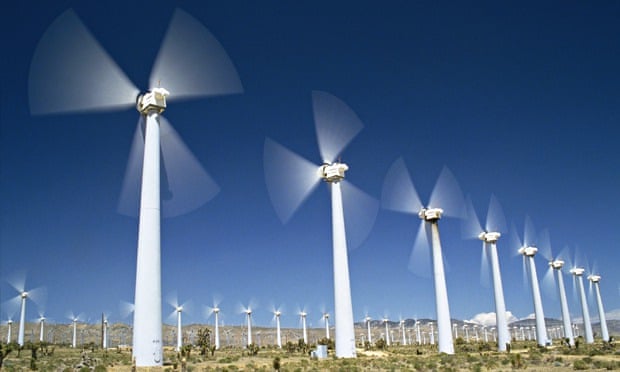
Jay owns a company called Go Green Energy, which sells wind turbines in other areas of Minnesota, but he isn’t able to do so in Orono where he lives because of permit and licensing laws. These are the same laws that are preventing Nygard from building on his own property.
The local government and a few nosy neighbors had been disputing the construction of this turbine for over 4 years, since it was built in 2010.
Recently, Jay reached out to us to share some good news about his case.
Jay has finally won the battle against his local government, and can now operate wind turbines on his property without the fear of being arrested.
In a statement to The Free Thought Project, Nygard said that “I am happy to announce that the Hennepin County District Court has chosen to honor MN state law and overturn the City Of Orono’s complete ban of wind turbines. This is a big victory for Green Energy, and my company, Go Green Energy, in it’s long standing push to bring Micro Wind Turbines to the Minnesota market. I am personally thrilled to see that the district court has affirmed my position of the importance of Green Energy in our society. I am also pleased to see clearly stated in the order the property rights that I have been denied during my continued litigation with the City of Orono.”
Unfortunately, this rule does not change the law entirely, but gives Nygard the right of way to build and operate wind turbines in this specific case.
Read more: http://thefreethoughtproject.com/man-wins-fight-local-government-build-wind-turbines-property
Power storage group Alevo plan 1bn US battery plant
Swiss-based group launch new battery technology that they claim will be a breakthrough for storing excess clean energy, and create 2,500 jobs in the US
Could a long-vacant cigarette factory in North Carolina build the rechargeable battery that will unlock the future of the clean energy economy?
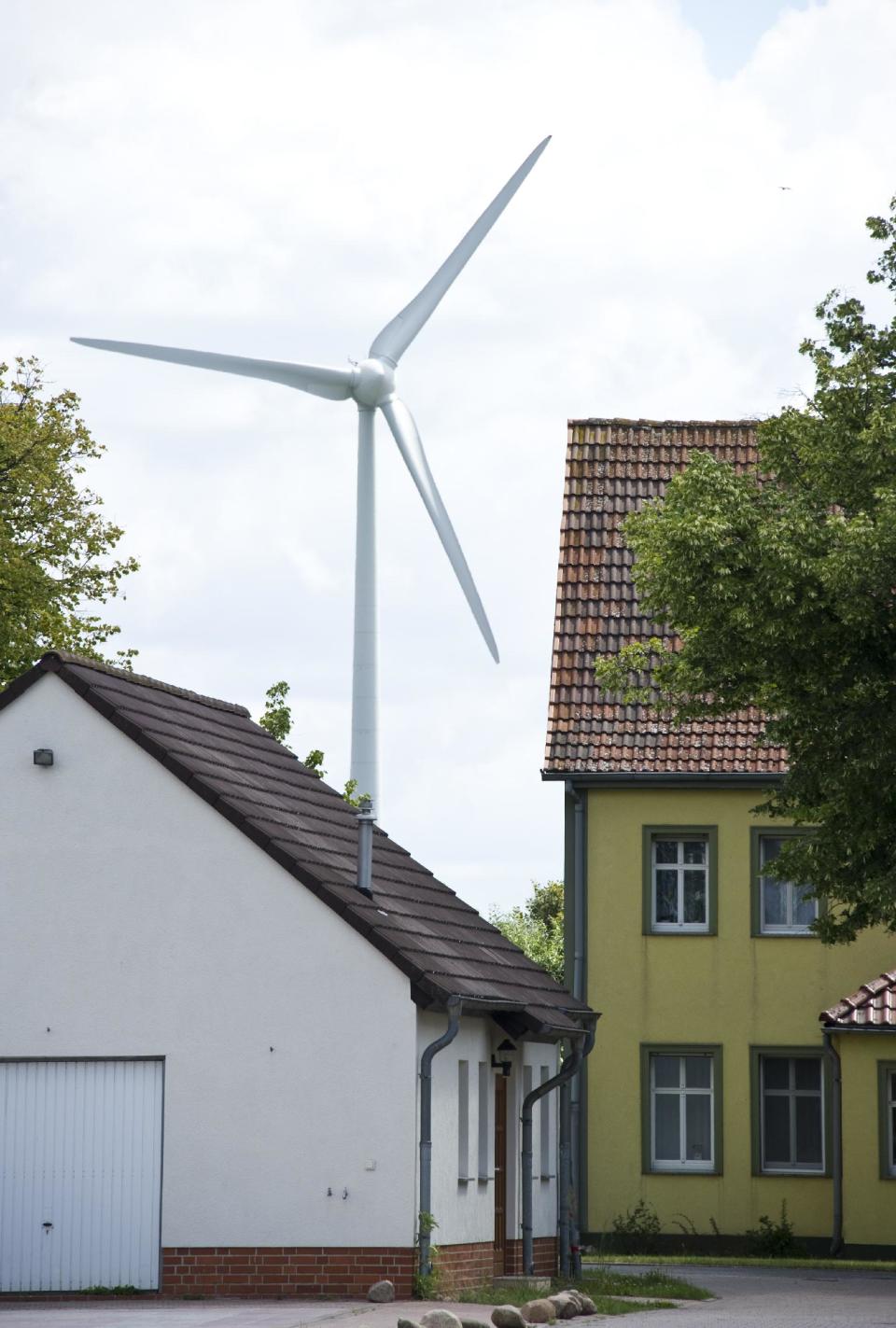
The Swiss-based Alevo Group launched the new battery technology on Tuesday. After spending $68.5m (£42.5m) for the factory, the group said it would spend up to $1bn to develop a system that would get rid of waste on the grid and expand the use of wind and solar power.
The project, a joint venture with state-owned China-ZK International EnergyInvestment Co, aims to ship its first GridBank, its patented battery array, to Guangdong Province this year, going into production on a commercial scale in mid-2015.
The container-sized arrays store 2MW and would be installed on-site at power plants.
Jostein Eikeland, Alevo’s chief executive, said in an interview that the company had an agreement with the Turkish state power authority, and was in discussions with US power companies.
Off-grid German village banks on wind, sun, pig manure
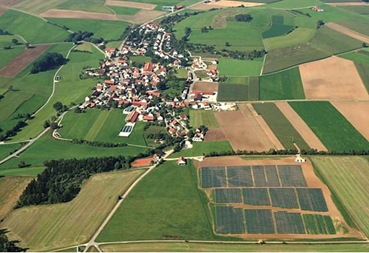
Feldheim (Germany) (AFP) - If Germany has taken a pioneering though risky role in shifting to renewable energy, then the tiny village of Feldheim -- population 150 -- is at its vanguard.
The hamlet near Berlin is Germany's first to have left the national grid and switched to 100 percent local, alternative energy, swearing off fossil fuels and nuclear power decades before the rest of the country plans to near the same goal.
Electricity now comes from a wind park towering over its gently rolling fields and reaches homes through Feldheim's own mini smart grid.
More than 99 percent of the wind power is sold into the national system, along with electricity from a solar park on a former Soviet military base.
As winter nears, people here will heat their homes from a biogas plant powered by local pig and cattle manure and shredded corn, while on the coldest days a woodchip plant will also burn forestry waste.
The villagers took bank loans and state subsidies to build the system, in partnership with green power company Energiequelle, but say it is paying off as electricity and heating bills have been slashed.
Read more: http://news.yahoo.com/off-grid-german-village-banks-wind-sun-pig-133137765.html
Germany kicks our butts, again, at clean energy
Germany has hit a new clean energy milestone: So far this year, the country has gotten more electricity from renewables than from any other single source, 27.7 percent. That (just barely) beats the 26.3 percent of power generated by lignite coal, according to Agora research organization.
“This is a real success and watershed moment,” said Famke Krumbmuller, an analyst at Eurasia Group.
Wind accounted for 9.5 percent of the power fed into the country’s grid in the first nine months of 2014, biomass for 8.1, solar for 6.8 percent, and hydropower for less than 4 percent.
Read more: http://grist.org/list/germany-kicks-our-butts-again-at-clean-energy/
Burlington, Vermont is Now 100% Powered by Renewable Energy
Burlington, Vermont, already considered to be one of the United States’s most environmentally progressive cities, has added another line to its impressive green resume. Just recently, the city finalized its transition to relying 100% on renewable resources for its energy.
Burlington is Vermont’s large city, though that in itself is no big feat – the city has a population of just 42,000. Then again, very few communities of even this size have managed to disassociate themselves from fossil fuels. In order to adequately tackle climate change, cities – big and small – need to prioritize finding and utilizing alternative energy solutions.
Burlington had expressed a desire to commit to 100% renewable energy for more than a decade, but it became a real possibility when analysts discovered that it was not only a smart environmental choice, but financially viable, too. In the long run, both the city and residents will not be paying more for clean energy than they were when buying fossil fuels.
The 100% mark was made possible when the Burlington Electric Department bought hydroelectric technology stationed on the Winooski River near Burlington’s border. The power created by water supplements the city’s existing wind technologies, as well as a biomass facility that harvests energy from leftover woodchips supplied by the region’s logging industry.
Vermont on the whole, however, intends to follow Burlington’s lead in adopting more renewable energy. The state has declared a goal of having renewable resources provide 90% of the energy before the year 2050. Residents are so supportive of this effort that utility companies are going out of their way to accommodate alternative energy to their customers.
Read more: http://www.care2.com/causes/burlington-vermont-is-now-100-powered-by-renewable-energy.html
100% Renewable Energy as Centerpiece of a Climate Action Plan
Climate Change is back on the political agenda. On 23rd of September, Heads of States are meeting in New York to pledge climate action. This is good news as it is about time. The rising economic, health-related, and environmental costs of burning fossil fuels, combined with the accelerating impacts of climate change repeatedly emphasize the urgency for transitioning to 100% Renewable Energy (RE). Those ready to lead the fossil fuel and nuclear phase-out and a 100 % renewable energy transition must speak up in New York and inspire the world.
From North America, to Europe, Africa, Asia and Oceania: Local, regional and national governments demonstrate that 100% RE is technically possible, economically advisable, socially imperative and environmentally inevitable. They also highlight that the decision to phase out fossil fuels is solely dependent on political will.
100% RE is already reality today…
In Germany, a network of 100% RE regions includes 74 regions and municipalities that have already reached 100% renewable energy targets. One of them is Rhein-Hunsrück District. As of early 2012, the District of Rhein-Hunsrück with about 100.000 inhabitants officially began producing more than 100% of its electricity needs, crossing an important milestone on the way to creating a truly 100% renewable energy system. In early 2014, it is estimated that Rhein-Hunsrück already produced over 230% of its total electricity needs, exporting the surplus to the regional and national grid, or re-directing it into local transportation, hydrogen or methane production. Through improvements in energy efficiency and the extension of renewable energy, the district has converted energy import costs into regional jobs and added value. Within 15 years, Rhein-Hunsrück District`s CO2 emissions were reduced by 9.500 tons, the cost savings amount to € 2 million.
Read more: http://www.filmsforaction.org/articles/100-renewable-energy-as-centerpiece-of-a-climate-action-plan/
‘Community is the cornerstone of our energy future’
Local people taking control of energy generation in their area is the key to a sustainable future, argues Clare Martynski
Whether it’s headlines about rising energy bills, statistics revealing the near rock bottom levels of trust the UK population has in our energy providers or evidence that more families are in fuel poverty than at any time for a decade, it’s clear that our current energy system is under strain and increasingly unfit for purpose.
Transforming this essential system is critical if we are going to shape a brighter, sustainable future. But to do so is also very complex and will require a number of big shifts to occur across the system. Without doubt, there will need to be big, centrally-directed overhauls of infrastructure, and large investment from pension funds and big business will be essential.
But there is another more exciting aspect of this transformation, which is beginning to take hold, and that has captured the imaginations of people across the UK.
Originally driven by a few pioneers with a vision of a more local, cleaner energy future, community energy – local people coming together to generate, own and save their energy – is growing in scale and impact. Since 2008, there have been more than 5,000 UK communities working to transform how they use energy, from owning generation technologies, such as wind turbines and solar panels, to increasing the efficiency of community buildings or local housing stock. And with the recent launch of the government’s Community Energy Strategy, more and more communities are set to receive help and advice on getting projects off the ground.
So, when the level of change required is so huge, why is community energy such an important part of the transformation in the UK?
Read more: http://positivenews.org.uk/2014/community/16163/community-cornerstone-energy-future/
UK landfill sites to become solar farms
A couple of key players in the UK's waste and renewable energy sectors have agreed a deal to transform large landfill sites into solar power farms, generating energy for the National Grid.
National recycling and waste management firm SITA UK has partnered with Somerset-based British Solar Renewables to make best use of capped landfill sites that are no longer accepting waste material.
"Following the tendering process, we're very pleased to be able to announce that BSR have been selected to pursue these exciting projects, which will help us to extract the maximum energy value from our capped landfill estate," said SITA's general manager for landfill Geraint Rees.
"This renewable energy technology will complement the existing energy plants operated on a number of our landfill sites, which contribute a significant amount of sustainable energy to the National Grid by capturing landfill gases."
SITA already generates sustainable energy from its capped landfill sites by extracting methane gas. But with this partnership, BSR will now conduct a comprehensive assessment of SITA's landfill estate over the coming months and will shortlist a number of sites that it considers to be suitable for potential solar farm development.
Energy crisis
BSR's business development director Giles Frampton said: "I am delighted that a company of the stature of SITA UK chose BSR to pursue these renewable energy projects on its portfolio of brownfield development sites.
"We look forward to working closely with SITA UK over the coming months and ensuring that, jointly, we help to mitigate the looming energy crisis that is currently facing the UK."
Once the suitable sites have been selected, development on the individual sites will be subject to planning permission from the relevant local authorities and consultation with any local residents where applicable. Any future planning applications will be pursued directly by BSR.
Source: http://www.edie.net/
Biogas: Supermarkt läuft mit Strom aus Lebensmitteln
![]()
Eine Supermarkt-Filiale in Großbritannien produziert mit einer Biogas-Anlage ihren eigenen Strom. Für die Energieproduktion werden nur Lebensmittelabfälle der Kette verwendet. Das Projekt ist nicht nur umweltfreundlich, sondern auch kosteneffizienter als die herkömmliche Abfallbeseitigung. Es bleibt sogar noch Strom über, der ins öffentliche Netz eingespeist wird.
Ein Lebensmittelmarkt der Kette Sainsbury’s im englischen Cannock ist laut einem BBC-Bericht das erste Lebensmittelgeschäft auf der Insel, das unabhängig vom staatlichen Stromnetz seinen Elektrizitätsbedarf in Eigenregie deckt. Möglich macht dies eine Biogas-Anlage, die in anderthalb Kilometern Entfernung zum Laden von der Firma "Biffa" betrieben wird. Das Bio-Kraftwerk wandelt organische Abfälle in einem mehrstufigen Prozess in ein gasförmiges Gemisch aus Methan und Kohlendioxid um. Dieses kann wie herkömmliches Erdgas mit Hilfe einer Dampfturbine oder eines Verbrennungsmotors in elektrische Energie umgewandelt werden. Betrieben wird die Anlage aber nicht mit Landwirtschaftsabfällen oder sogenanntem "Energiemais". Einzig und allein die Lebensmittelabfälle der im Vereinigten Königreich weitverbreiteten Supermarktkette "füttern" die Anlage in Cannock mit frischer Biomasse. "Sainsbury’s bringt seine Abfälle nicht auf die Müllkippe. Wir suchen stets nach neuen Wegen der Wiederverwertung und des Recyclings", sagte Paul Crewe, Chef der Nachhaltigkeitsabteilung des Unternehmens, der BBC. Noch haltbare Lebensmittel, die sich nicht mehr verkaufen lassen, spendet das Unternehmen an gemeinnützige Organisationen oder stellt sie Landwirten als Futtermittel zur Verfügung. Trotz solcher Maßnahmen bleiben viele Lebensmittelreste ungenutzt. In Deutschland wirft jeder Bürger im Schnitt 82 Kilogramm Nahrungsmittel und Essensreste pro Jahr in die Mülltonne.
GENUG ENERGIE FÜR 2.500 HAUSHALTE
Vom Biogas-Kraftwerk in der Grafschaft Staffordshire führt eine direkte Stromleitung zu der Sainsbury’s-Filiale. Auch mit dem nationalen Netz ist die Anlage verbunden, in dieses speist sie den zusätzlich erzeugten Strom ein. Insgesamt produziert das System genug Strom, um 2.500 Haushalte zu versorgen. Der Betrieb der Müllverwertungsanlage ist für die Lebensmittelkette sicherlich ein willkommenes PR-Projekt. Doch auch wirtschaftlich lohnt sich das Bio-Kraftwerk für den Konzern - die Umwandlung der verdorbenen Esswaren ist für Sainsbury’s in Kombination mit der Nutzung des erzeugten Stroms günstiger, als die vergammelten Speisen auf althergebrachte Weise zur Müllkippe zu fahren. In großem Stil betrieben, kann die Wiederverwertung von Lebensmittelresten zu einer deutlichen Reduktion bei der Nutzung klassischer Energieträger wie Kohle und Erdgas führen, was gut für die Umwelt ist. Und eine Biogas-Anlage vor der Haustür ist für viele Menschen sicherlich ein schönerer Anblick als einAtomkraftwerk. /cb
Over 50% of Germany's renewable energy is owned by citizens & farmers, not utility companies
by Michael Smith (Veshengro)
Sometimes, while not liking them for other reasons, I must wonder as to whether Germany and the Germans are some of the only ones, if not indeed THE only ones, who actually get green and eco properly.
Germany's promotion of renewable energy rightly gets singled out for its effectiveness, most often by me as an example of how to do things well versus the fits and starts method of promotion common in the USA and even the UK.
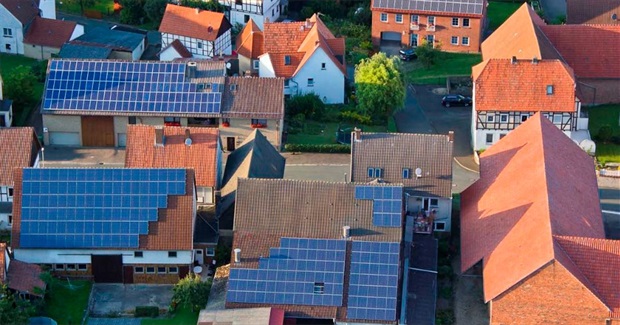
There is another interesting facet of the German renewable energy saga: 51% of all renewable energy in Germany is owned by individual citizens or farms, totaling $100 billion worth of private investment in clean energy.
When one breaks that down into its components, that is to say, solar power and wind power, then the figures are that 50% of Germany's solar PV is owned by individuals and farms, while 54% of its wind power is held by the same groups.
While the UK has a serious load of wind turbines most of them, however, are not privately or farm owned but are owned by the electricity generating companies, with only a few farms holding such as private possession. Private wind and solar PV installations are rarely coming up in calculations, especially not the individual homes and farms.
In total there's roughly 17 GW of solar PV installed in Germany – versus roughly 3.6 GW in the US (based on SEIA's figures for new installations though the third quarter of 2011 plus the 2.6 GW installed going into the year) and recent figures for the UK are just a little above 6 GW (given by Renewables UK in January 2012). This is for a country which, I am sure, has more wind than Germany, though still, considering our sizes, better than the USA.
Germany now produces slightly over 20% of all its electricity from renewable sources and proves that those things can be done. The real stupid thing is that every time that countries, such as Germany, and their achievements in the real of renewable energy as well as recycling, etc., are pointed out the British government goes into turtle mode, pulling its head into its shell and proclaiming that that cannot work in Britain and Britain is different to all those other countries where it can be done.
The main thing though, other than the huge lead in solar PV installations Germany has over the US, thanks to good policy, and the fact that so much wind power isn't owned by utilities, is what slightly over half of renewable energy being owned not by corporations but by actual biological people mean. Namely an obvious democratic shift in control of resources and a break from the way electricity and energy has been produced over the past century.
This is a good thing indeed and is leads to decentralized power generation, more re-localization and re-regionalization of economic activity, the world getting smaller while more connected and therefore in a way bigger at the same time... taking a step backwards, and perhaps sideways, while moving forwards.
In “Small is beautiful” small power stations for every village were being advocated rather than large corporation owned ones and we must get down to that level.
It is also a much more resilient system in that the entire grid cannot be knocked for six by this or that incident when the entire country has small, personal or community owned power generating plants, whether wind, PV, or biomass.
© 2012