Showing posts with label woods. Show all posts

Spōn by Barn the Spoon – Book Review

Review by Michael Smith (Veshengro)
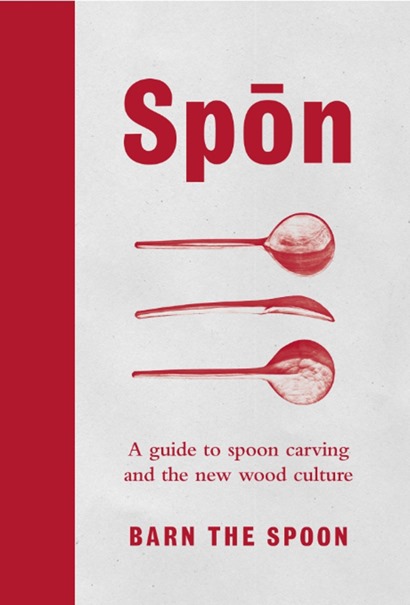
Spon coverSpon: A Guide to Spoon Carving and the New Wood Culture
by Barn the Spoon
224 pages, Hardcover, 16.5 x 2.2 x 23 cm
Published by Virgin Books (25 May 2017)
Language: English
ISBN: 978-0753545973
Price: £20.00

I was send this book by the publishers upon my request having just learned of the publication of it. Knowing of Barnaby Carder, better known as Barn the Spoon, I was most interested to have a look at it and I was in no way disappointed.

The book itself is a spoon carving guide but also introduces the reader to the new wood culture, or wood renaissance, and that being right up my street being a forester by original trade, and a carver of wooden things, including spoons as well.

Spōn is not really a technical manual like, for example, Willie Sundqvist's 'Swedish Carving Techniques', but instead takes the reader through a personal journey that Barn himself has taken, though it does give the reader many instructions, hints, and tips.

In his book Barn the Spoon explains to the reader the how and why as regards  to certain woods, tools, and techniques that he has found best suited for carving usable spoons and he then explains it all in more detail and shows the reader some of his favorite spoon designs to try.

Aside from that he walks the reader through every aspect, from choice to tools and how to keep them sharp and well maintained. Personally, though, I have different ways of sharpening knives, including hook knives and I believe that too much emphasis is placed on certain ideas, such as the supposed Scandi grind not having a secondary bevel. But I have only been a professional knife grinder for almost my entire life and have never encountered such a grind, not even on Scandinavian knives.

Spōn is a lovingly written book, with many color illustrations, that is full of the passion of someone who really appreciated wood and its properties and what can be made from it, though Barn mostly touches on wooden spoons only.

As a Romani-Gypsy by birth I very much enjoyed and appreciated the fact that the “Roma Spoon”, as Barn calls it, the traditional one of the Roma of Romania, in included. It is more a serving spoon that for any other purpose; the eating spoons are often different.

But that spoon, however, is only one of many different Romani spoon designs that used to be and are still carved by Gypsies in Eastern Europe (and beyond), such as by those in Poland where the bowl is the egg shape, reversed, and not as pronounced in the reverse.

In Russia the Romani carve spoons that are akin to those of the Doukhobors which are similar to the Welsh Cawl Spoon though without the pronounced crank in the handle and a handle that is almost round. But I digressed.

As I said before, Spōn is not really a technical manual but a book that, while teaching the reader about spoon carving, leads you more on a personal journey of the way the author does things and why and also introduces the reader at the same time to the new wood culture, or wood renaissance. I hope that readers will discover the joy of carving spoons and other treen objects from reading this book but also be encouraged to connect without our woods and trees and to value the handmade wooden kitchen utensils and such like. Handmade goods are so much different to factory and machine produced and thus are also higher priced. A good wooden spoon is not tuned out in five minutes flat. It often takes hours and the price does then often not even reflect an hourly minimum wage. Let that sink in.

A very good book that I can most certainly recommend.

© 2017

Keeping A Tidy Wood: Yes or No?

by Michael Smith (Veshengro)

The answer should definitely be yes. It has been so in the past and should be so again.

Debris and such left lying around the forest create nothing but a fire ladder and a hazard, for both fire and biological in that such material is a haven for the bark beetle and other pests that gladly will attack your standing timber as soon as they have finished their first lifecycle in the old dead and decaying timber.

The environmentalists who insist that we, the foresters, woodsmen and woodland owners should leave debris such as the cut tops of tress and branches in place out in the woods “for the wildlife”, in my view, do now know what they are talking about and that is also the same as regards to those that insist that we need to leave out old coppice woodlands unattended so they can revert to proper wildwoods as they were hundreds of years ago, and such baloney, in order not to use a rather harsher word.

The only “wildlife” that will take up residence in old branches, tops, and the like are, in general, with a few exceptions, pests that will destroy standing trees as much as they will eat their way thru dead wood. And allowing ancient and not so ancient coppice woodlands to “revert back to wild woods” does not work because as soon as coppice stools are left unmanaged for too long they will break apart, the trees will fall and that is the end of the woodland as most of those trees will break apart virtually at the same time, seeing they more often than not are of the same age. It would appear, however, as if the environmentalists do not want to listen to that as they keep on about that we are only interested in making money out of the woods. Those who say that have no real knowledge of what actually drives a true forester and woodsman in his work. But I digressed. I shall come back to this, however, at some other occasion.

In the days of old and even in the not so distant past very little if any branches were left littering the forest floor; it was all used for crafts such as walking stick making, bodging, heating, etc. and there was still plenty of wildlife – more than today in actual fact – but very little on forest pests.

Today with our mono-cultures of whatever wood – I am not just talking about the often ugly regiments of conifers where they should never have been planted – despite leaving cutting litter everywhere, often rather higgeldy-piggledy there is less proper wildlife but many more pests set to ravage our trees. Combining that with the lack of bio-security when it comes to imports of stock, for instance, and the rather daft practice of collecting seeds here and then sending the very same seeds abroad to be grown on and reimporting them, the result of which is Chalara dieback of ash caused by the fungus Hymenoscyphus fraxineus (and probably other tree diseases) and we have a recipe for absolute disaster.

Many of the pests affecting woods and forests nowadays seem to have been virtually – in their current strengths and numbers – unknown in the past when woodlands and forests were much more intensively managed and kept clean & tidy but which were, also, generally not single species mono-cultures.

In my childhood fallen branches were cleared away rather rapidly and that not by forests staff only who used them for heating their homes but also by people who had permits to collect firewood in the form of fallen branches from the woods and forests.

Might it just be that the so-called management of our woods and forests today is the wrong kind of management? It very much would appear to be the case and much of the blame may have to be, aside from the mono-cultures, laid at the door of the heavy machinery that it used nowadays for felling and timber extraction, especially the so-called timber harvesters.

The weight of those machines and their special wheels seems to churn up the woodland and forest floor to such an extent that it may – and I say may as we do not have proof for that – destroy the mycelium that is the communication network between trees and plants and also all small wildlife, as in invertebrates and other small creatures that live in and on the woodland floor.

It is time to reactivate the old management methods for our woods and forests, with coppicing at the top of the list, to rebuild the woodland communities, the ones of trees and soil, as well as those of people and not try to apply a band-aid on the damage we keep doing by our modern practices of mono-cultures and heavy machinery use.

© 2015

For more on coppicing and why, etc. see “Managing our Woods”, a small book that explains the whys and wherefores of managing our woods in this way and calls for us to return to that way.

Woodlands

by Michael Smith (Veshengro)

Throughout history trees have formed an intrinsic and vital part of our cultural landscape. Our woodlands, and woodlands in general, have been managed and worked by woodsmen since antiquity supplying lumber, the most noble of building materials, and firewood for heating homes and cooking food, as well as wood from which to make the majority of products that were being used, from tools and tool handles, to kitchenware, including spoons, plates, and everything else in between.

Growing trees and using their wood is increasingly recognized as one of the most environmentally sustainable land uses. Yet, in recent decades our relationship with our trees and woodlands has waned, with the UK importing an estimated 80% of its timber, whilst only 20% of the country's woods are actively managed.

The Department of Land Economy of the University of Cambridge has been running a long-term study investigating trends in the management of private woodlands on traditional estates in England and Wales. The study commenced in 1963, continued through the 80's and 90's and the findings from the latest survey in 2006, strongly suggested that there has been a deterioration of the financial performance of many estate woodlands to the point where management has been reduced or even suspended.

It is not just the deterioration of the financial performance of the estate woodlands that we must be concerned with but the deterioration of them in general due to the reduction or even suspension of management. And it is not just the private estate woodlands that are thus afflicted. The same goes, maybe even more so, for council owned woods and woodlands. They are all in dire straights.

Wystan Hugh Auden wrote in one of his works “a culture is no better than its woods” and if we look around us today I would say many of our cultures are not worth much, considering the way we treat our “native” woodlands. However, thankfully, a revival of our “woodculture” seems to be on its way and this is to be more than encouraged; it is the way forward, for the new age, the coming age, is the age of wood, or the Wood Age. We have had the Stone Age, the Bronze Age, the Iron Age, though, theoretically we are still in that one, even though some insist to call the current age the Technology Age.

Wood, however, is the way forward, once again (we have been there once before, I know) for many of the things that today we use plastic, for instance, and what better than that wood being home-grown, coming from a woodland near you. This would benefit not only the local economy and the local woods – and the woods in this country per se – but also the environment and the Planet.

Wood from local forests and woodlands also cuts down on the so-called “woodmiles” and keeps those to the absolute minimum, and this even more so if the sawmills and other wood-using businesses and craftspeople are local and the products sold on markets as local as possible.

The majority of woods in Britain, whether privately owned or owned by local and county councils are in dire straights and lack of market is but one small reason for this lack of proper management which has caused a multitude of problems. Lack of vision and lack of finance is another big part here as is the fact that there are a multitude of misguided “environmentalists” who believe – and are very vocal about this – that cutting any tree is bad for the environment.

Coppicing, the age-old and time-honored and time-proved method of managing hardwood woodlands, in which trees are cut at a certain age and then allowed to naturally regrow from the root stock, the stool, is not harmful to the environment at all. The opposite rather. It benefits both the woodland and the wildlife. In addition to that bringing our woodlands back into production, primarily by means of coppice management, not only benefits the woods and the wildlife but also the local economy as it will create employment and products. It is a total win-win situation. Realizing it though in the right quarters is an entirely different story.

© 2015

For more on coppicing and why, etc. see “Managing our Woods”, a small book that explains the whys and wherefores of managing our woods in this way and calls for us to return to that way.

Forest and wood are protectors of the climate

by Michael Smith (Veshengro)

Within the framework of photosynthesis trees extract carbon dioxide from the atmosphere and thus reduce the CO2 content.

wald-klimaschützerIn order to produce one ton of wood trees extract from the atmosphere around 1.9 tons of carbon dioxide (CO2) detrimental to the climate and lock up 500 kg carbon in the wood. Thus our woods and forests perform a critical and crucial contribution to the protection of the climate. The proper utilization and development of our woods and forests together with a reduction in carbon dioxide emissions form an important measure in the fight against the greenhouse effect.

Woods and forests give us air to breathe and raw materials for our life. Without forests and woods there would be no life possible on Earth for every human and every animal requires oxygen in order to be able to breathe. A single say 100 year old beech tree produces every year about 4,600 kilograms of oxygen; enough for one adult to breathe for 13 years..

For trees oxygen is sort of a by-product in the production of timber and foliage. By means of photosynthesis the tree absorbs carbon-dioxide and together with water and the energy from the sun turns this into sugar molecules, required for the production of wood. The oxygen left over during this process the tree exhales into the atmosphere while it locks carbon up in its biomass.

Different to most plants trees do not just grow upwards but also outwards as far as the trunk is concerned. Responsible for the growth of the girth of the tree trunk is the so-called cambium, a material that created the cells of the wood. During winter it takes a little break and this can be seen by the growth rings of the tree.

Carbon-dioxide storage with triple effect

Alone in the forests and woodlands of Germany are currently around 2.6 billion tons of carbon fixed in the wood of the trees. This is equal to a sequestration of 9.5 billion tons of carbon-dioxide.

Woodlands and forest play an important role in combating the effects of the greenhouse effect and climate change and in relation to that directly threefold. First they remove carbon-dioxide out of the atmosphere and stores it in the wood. This storage is extended, secondly, when the wood is used in new buildings, renovations of old buildings and for the production of furniture where the carbon stored in the timber is then locked in for as long as the timber remains timber and is neither burned or disposed off in the waste stream.

A low energy house built to a great extent from wood, for example, relieves the atmosphere of around 80 tons of carbon-dioxide.

And thirdly does wood, when used in building, replace other energy intensive materials such as steel and concrete which are produced on the basis of finite raw materials.

This means that – and this is the case in Germany and other countries – if our woods and forests are managed in a sustainable manner, that is to say that never more timber is being harvest than regrowth available, the resource wood never going to be exhausted and permanently renewable. The ratio between harvest and regrowth is always regarded to be at least a 1:3 that is to say one felled tree is replaced by at least three new ones, either already growing as natural regeneration or being planted. In fact, the ideal scenario is to plant, in addition to the natural regeneration existing.

Sustainably managed woods and forests make an enormous contribution towards combating the greenhouse effect and climate change through their ability of reducing the carbon-dioxide content of the atmosphere and they are thus protectors of the climate.

We need to manage our woods and forests properly so that not only do they do the job as they do now but to increase the CO2 sequestration by means of trees. The more trees the greater this absorption and at the same time we get wood as raw material.

© 2013

Woods and forests are my most favorite natural environment

by Michael Smith (Veshengro)

One of the many reasons that woodland is my favorite natural environment is because it is ever-changing and there is always something new to see, experience and enjoy.

woodland1-1The changes can be subtle like the shoots of new flowers, the forming of new buds, the appearance of fragrant blossom or a sudden burst of short-lived fungi, or they can be dramatic like the transformation caused by mist or snow or a storm.

Whatever time of year woodland is either full of life or the signs of life to come. It is also a world cut off from the endless hustle and bustle of modern society.

It is as though, by entering a wood you have passed through a portal into another world. It is just endlessly fascinating.

And trees like oak, yew and elder are so entwined with our history and our folklore and what makes us what we are that we have a special spiritual connection with woods that we do not have with any other environment.

Most importantly though to me a woodland is a source of materials for making products and one that provides, when properly managed, this resource, those materials, for ever.

A walk in the woods or days working in the woodlands also leads to new finds from which to craft this or that. There is a sapling that either now, or in years to come, will make for a great walking stick; there are the branches that need to be removed from a tree that render another load of “branch hooks”, and so much more.

You will never find me happier than when walking or working in woodland. And my greatest passion is to manage our woods in one way or the other and management many of our woods today need more than anything.

The biggest “problem” I encounter when walking through some woodland is that my mind is always active seeing the management problems or better the lack of management in those woods and I am always thinking as to how those woods could be made productive again and to benefit wildlife and man.

© 2013

Managing our woods

by Michael Smith, RFA, RFS, EcoFor

Britain, for thousands of years, had one of the finest woodland management systems; one that is hardly known and used elsewhere, namely coppicing.

Many misguided people honestly believe that woods and countryside need not to be managed but they do in order to be beneficial to both man and wildlife. And in Britain we have done a great job in doing so, especially as far as woodlands are concerned, for thousands of years. However, since World War Two neglect has set in and that for a number of reasons.

One being cheap imported wood, often tropical hardwoods, hazel beanpoles being replaced by cheap bamboo canes or even plastic ones, and the aforementioned misguided environmentalists what have insisted that trees and woodlands must remain unmanaged as 'Nature manages itself'.

But Nature does not manage Herself and besides we need and want wood for many things and if we replace handles of tools and utensils with plastic we are using a non-renewable resource, predominately oil.

Wood, properly managed, is a resource that continually renews itself and especially if and when the wood is harvested from sustainable coppice operations, and this wood is not just for firewood.

Firewood should never be the first consideration in woodland management when it comes to woodland products as there are many more things that can be created from the timber of much greater value, in more than one sense, than simply firewood or beanpoles.

Using the wood harvest for firewood should be the last resort although it is often seen as the primary one and as an easy way to make some income from a woodland. But it is far better to put the thinking cap on and ass a higher value to the timber produced by turning into other, longer lasting, products that into something that just goes up in smoke, literally.

In the first instance, when the management of a (long) neglected wood begun the timber may, unfortunately, be suited for little else than firewood or charcoal. But even in such cases of neglected woods thought come into play as to whether there is not more that can be made out of the timber; as in value-added products.

A large tree that is felled in the opening up of a neglected wood, be this sycamore, beech, ash oak, hornbeam, birch, or whatever, or a large stemmed coppice stool, has definitely and definitively more uses that just firewood. Marketing the wood, though, may at times be a chore and that is why many shirk from it.

Our woods produced the timber for all our needs centuries ago and most of those woods were managed as one or the other form of coppice. And those woods supplied all, or at least almost all, of our timber needs and they can again, or at least to a large extent.

The wood for tools and tool handles came from our woods, as did the wood for our kitchen- and eating utensils. Also for our fencing, our farm and garden gates, for our wattle and daub walls, and much more.

Today, because of the decline and lack of proper management of the British woodlands, small and large, the wood for our tool handles and sports equipment is, almost all, imported from abroad, such as American Ash for tool handles and cricket stumps, etc. And, despite the fact that English or British Ash is superior and preferred. Lack of wood from British sources, however, forces manufacturers to source timber from abroad.

The same, it has to be said, even applies to firewood and in 2011 Britain imported logs from afar afield as Poland, Western Russia and the Ukraine. Certainly not a sustainable way to go about it and that all because (no, not “because the lady loves Milk Tray”) in Britain the (proper) management of our woods has fallen by the wayside.

Time for a change and to bring our woods, small and large, privately owned or in public hands, including those in parks, back into production. Wildlife and the Planet will thank us for it.

© 2013

Coppice management

by Michael Smith, RFS, RFA, EcoFor

The management of woodlands and forests by means of coppicing – Niederwaldbewirtschaftung in German – is often, especially elsewhere in Europe, but also in the UK, only seen as a means to produce firewood and, maybe, beanpoles and some charcoal.

CoppiceHowever, the products that can be made by means of coppice management of woods and forests is far greater and, in fact, this was the way that we managed our woods and forests in Britain for thousands of years, and that very well and successfully. The woods and forests thrived under this case more and better than under any other form of management.

While other countries used this form of woodland and forest management also in the great majority of European countries it has now been abandoned, and has been thus already for many, many decades, in favor of a management that can be done with more mechanized means than coppicing.

The abandonment of coppicing in British woodlands has cost us dearly in terms of almost destroyed woods. In some areas the old coppice stools are almost beyond redemption and this could result in the loss of the entire or almost the entire wood.

The Forestry Commission never did much in that department but then it was not its brief. Its job was the production of timber for the mines and some other applications, including the war effort.

After the Second World War coppicing in our woods started to decline drastically and dramatically, much due to plastic products, and bamboo canes for beanpoles and such rather than wood.

Wooden tent pegs, which were one of the products from coppice woods, were replaced, even by military and scouts with metal and plastic and the same went for so many other products that were once produced from the wood from our coppiced woodlands.

Baskets, once woven from willow from coppicing and pollarding operations, and some other pliable woods, were replaced by plastic and the same for the trugs and such used by bakers and others.

Now, with the revival and renaissance of wood stoves firewood is in great demand but our neglected native woods cannot even provide a small proportion though they could provide it all (at current demand levels) if they would but be managed and we import firewood from as far afield as Poland and Western Russia. Not very sustainable at all.

The same goes for charcoal and most of the charcoal on sale in Britain today, and barbecuing is very much the in thing, also in restaurants, has to come from abroad and, in that case, it comes, primarily, from tropical hardwoods.

The problem, aside from an environmental one, is that that kind of charcoal does not, unlike the local one, light easily and requires chemical accelerants in the form of barbecue fire lighters. Those, however, leave a residue and not just on the coal.

Before the “advent”, so to speak, of coal, charcoal fired the Industrial Revolution in Britain and while it, probably, caused some deforestation, most of it was sourced from coppice operations.

Wooden spoons, spatulas and other wooden kitchen utensils were once made by local craftsmen from local coppiced timber but from a certain time onwards those were made from often imported woods by factories and now the great majority of those utensils are made, in fact, abroad, in the main, nowadays, in China.

In times past almost everything wood came from local woodlands, with the exception of some furniture, that were under coppice management and the woods and the craftsmen prospered.

Coppicing is one of the best ways to maintain the health of woodlands and this system of management has great benefits for the environment. In addition to this this old way of woodland management also will benefit the local economies and that is too very important indeed.

Our woodlands and forest must be brought back under this age old management system in order to restore them to health and for the local economy of craftsmen and -women to be revitalized.

Unfortunately misguided environmentalists for years have been working against this as they, having read only those books that back up their own beliefs, believe that no tree should ever be cut down, for any reason.

In fact many have vehemently campaigned and forced, for lack of a better word, local authorities, woodland and forest owners and managers to leave woods in their “natural” state or allow them too “return” to a wildwood state. But there is no wildwood in the British Isles and has not been any for at least a millennium or more. Not that that has interested those.

Woodlands, many of them state with venom in their voices, do not need to be managed. Nature will do it all itself. Which is a false notion as, alas, left to their own devices those, formerly managed woods, will decay and that will the end of them.

Coppice stools that are not cut will, in the end, break apart and that often almost simultaneously and thus the woods are no more but just a piece of useless “wilderness”.

As soon as brambles and bracken take over – and this is very soon if a wood is not managed – and then not controlled the loss of habitat follows in a very short space of time. Brambles and bracken stop light getting to the woodland floor, and the same is true when the woodland is not being thinned, and anything of value will die and be smothered. But, they keep claiming, Nature will manage it all itself; it just takes a while.

This is not true, however, and man has to keep the regime of management that our forefathers began many hundreds of years ago if we wish to retain those woods and forests.

For thousands of years we have managed our woodlands and forests, more often that not by coppicing, and they thrived under our care and if we want them to thrive again we must bring those woods and forests that have been neglected back under this management regime and it must be done now, before it is too late.

© 2013

Let the woods be wild woods

by Michael Smith (Veshengro), RFA, RFS, EcoFor

Time and again this call is heard from misguided and misinformed self-styled experts on the environment and other individuals when woodland management programs are instigated.

wildwood1They will state that the woods should be left wild and that woodlands do not need to be managed which is, obviously, entirely wrong as there are no wild woods, where Nature “manages” the affairs anywhere in Britain and most of Europe. All our woods have been managed before at some time and thus, in order to thrive, require continuous careful management to benefit wildlife, the community and also the local economy.

The woods in Britain have been managed for thousands of years and until just after World War Two we did manage them well on a proper basis. However, ever since that time the management of our woods, small and large, has gone into serious decline and the woods have seriously suffered from this neglect in management.

If left to its own devices a woodland will become useless, not only on an economical term but also and especially on an environmental term. Brambles and bracken will take over, cut out all light to the woodland floor and thus there will be, in the end, no diversity. All that will be left is a tangle of brambles and other such plants and bracken.

Trees growing too close together will damage each other, create a dark forest floor with no life and, in the end, will destroy each other and die.

For trees to grow properly and thus being beneficial to all they need to be thinned out and good growth encouraged. This is a laborious task but one that benefits the woods and can also be of benefit to the local economy as the wood that has to be removed can be used by a variety of woodland- and wood workers.

Trees, and this is something that many of people also do not wish to understand, who all the time protest against the cutting of any trees, have a limited lifespan and some trees one that is shorter than that of others.

When a tree goes over the peak and begins the slow march towards death it stops becoming a carbon sequester and actually becomes a net producer of carbon dioxide. In addition to that the process of decay that also starts at about this time, rotting the heart wood, which the tree no longer requires, also releases methane; the latter being a greenhouse gas forty times more dangerous to the environment than carbon dioxide, and thus itself contributes to climate change.

Well managed and maintained woods, on the other hand, where there trees that need to are “culled”, if we may call it thus, are beneficial on all levels, and especially in regard to biodiversity.

Allowing, for instance, the once coppiced woods of Britain to return to “Nature”, as it is often demanded, will result, in a very short time, in the coppice stools breaking apart, for lack of management, and the woods turning into a wilderness that has is of no benefit, not even to wildlife.

That is why woods are managed, lending Nature a helping hand. Not by fighting Nature but by working with Her, and thus keeping and even creating a healthy balance to benefit all.

For thousands of years we have managed the woods in Britain (and in other parts of Europe) and we have managed them well. Only in the last half to three-quarters of a century have they been allowed to fall into serious neglect and disrepair and we must manage them once again, including those of our parks and open spaces, as our forefathers did if we do not want to lose them and the habitat that they provide.

The very biodiversity of the British woodlands is a result not of Nature alone but of people working with Nature to maintain a healthy balance to benefit all; wildlife and the community. Left alone those woods will become an impenetrable wilderness that even animals will shy away from.

When there still were wild boar and other animals now no longer in the British woods in our woods and forests brambles and bracken, and other such invasive vegetation, was kept in check. Today this is no longer the case and any woods, as can be seen so very often, allowed to return to “wilderness” turns into nothing but a wilderness devoid of almost anything bar those species.

A wood the trees of which form a closed canopy also does not allow for natural regeneration as the young saplings, if the seeds at all germinate, do not get enough light to thrive and without it they will simply die. In most cases the seeds do not even germinate for lack of sunlight and thus the floor will be devoid of anything, almost.

Only a well managed wood is a productive wood in all senses of the word and that is the reason that our woods everywhere must come back into proper management, a management that woks with Nature and not against Her and a good forester ensure just that.

For the good of the environment and the community all our woods need to managed again and managed well.

© 2013

Managing Britain's Wild Woods

by Michael Smith (Veshengro)

The truth is that there are no wild woods anywhere in Britain but only once managed woods that have gone wild. Those latter woods cannot become “wild woods” again; Nature does not work that way despite what some people believe, some are made to believe and many misguided environmentalists would like everyone else to believe.

woodland2__sml_webFor thousands of years the woods and forests of the British Isles have, all basically, been managed, and for most of the time we have managed them very well indeed. Those woods provided our needs, until such a time that we were importing more from abroad, and fueled our industry. In the latter case it was the charcoal produced in our coppiced woods.

Only since about the end of WWII have our woodlands become really neglected and this very neglect is not helping them one bit. The opposite rather. It is also not beneficial to the ecosystem. Brambles and bracken crowd out everything else, allowing no light through.

The same goes for a canopy that is too dense, which is one of the many reasons that our Forestry Commission lands planted, as is often the case, with conifer plantations, are often so devoid of life, especially on the forest floor.

Old coppice stools of once managed woods slowly decay and then break apart, destroying the entire tree, often then not regrowing, as would be the case would the stool have been coppiced. And in this way, over a short period of time, an entire wood becomes an environmental and ecological disaster zone.

Less than ten percent of stools, if even that many, will thrive whether they continue to be coppiced or not. The great majority will decay and fall apart.

Only by working, once again, our woods in the time-honored fashion of coppicing will we ensure the survival of those woods and not by misguided beliefs that Nature will take care of it itself.

We need healthy woods and not just for woodland products, though they are important for the rural economy and for sustainability. Our very life depends on healthy woodlands and thus it is all of our interest that the gauntlet, if I may put it thus, that the Forestry Commission and other have thrown down is being taken up and we put all of our woodlands back into management, including the woods that are part of the public open spaces, such as parks.

This will not only improve the health of our woods but also will reduce our dependency on imported woods and woodland products, such as charcoal, for instance.

Ninety percent of all charcoal consumed in Britain comes from tropical hardwood sources and this is not sustainable. Neither is that charcoal comparable in quality to the one that can be produced at home by means of coppicing.

Aside from charcoal coppice management of woodlands also produces other timber products which give an income to local wood workers and a boost to the local economy.

Localism in woodland products is supporting those that try to make our woodlands healthy again by managing them in the time-honored ways.

Many products of great value and use can be produced from coppice woodlands and often all that people, sometimes even the underwoodsmen managing the woods, can think of, is charcoal, hurdles, beanpoles, and firewood. But there is a lot more that this wood can be used for; products that add much more value to the wood than would any other ones.

Our woods and the health of them is important to us and we must revitalize them and the only way this can be done is by means of proper management.

© 2013

A single tree will absorb one ton of carbon dioxide over its lifetime

by Michael Smith (Veshengro)

A single tree, it is reckoned, will absorb one ton of carbon dioxide over its lifetime and the shade provided by trees around a home can also reduce your air conditioning bill by ten to fifteen per cent.

While this is true we have to remember, however, what lifetime and absorption here means.

Only while the tree actually is of a good age will it absorb carbon. After a certain age a tree, actually, becomes a carbon producer and a methane producer too. Namely when it begins to decay on the inside, after its true productive life.

It is for that reason that trees are felled by proper foresters just before that time. Coppicing, on the other hand, makes for trees that are continually absorbing carbon.

Thus simply saying that a single tree will absorb one ton of carbon dioxide over its lifetime is misleading to some extent for one has to remember that not every tree has the same operational lifespan and some live longer than others.

Conifers, such as pine and spruce, have an active life of about forty years after which they begin to die off from the inside and thus becoming a producer of the decay gas methane. At the same time the amount of foliage is being reduced reducing the efficiency of carbon sequestration and not long after the tree will, in fact, become a net carbon producer.

Deciduous trees, aka broadleaved trees, have a longer active life but again it depends on the species. An oak has about eighty to a hundred years maximum before it becomes a carbon producer, other broadleaved trees have a shorter span, birch being one of the lowest.

While a tree is growing it, actually, absorbs more carbon than when it has come to the final stages of its life and thus making use of the trees and then either replanting or encouraging natural regrowth, as in the finest woodland management system known to man, coppicing, will ensure continuous carbon sequestration.

Alas, this factor is something that the “we must not cut down any trees” brigade does not like to talk about and no, Nature does not regulate it itself. Not in woodlands that have been managed before at least.

Leaving woodlands unmanaged creates death and not new life, regardless of what some in the environmental movement like to believe, and therefore the simple statement of “a single tree will absorb one ton of carbon dioxide over its lifetime” is rather misleading to the uninitiated.

Foresters, even and especially commercial foresters, are not the enemy of the woodlands and the trees; they are their custodians. They are farmers who plant a crop but will never, in general, harvest this crop. They create for a future that they will never see. They have been doing it for centuries.

Britain was once an island of trees and our woodlands have been managed by coppicing for several thousands of years by now and they have served us well.

The charcoal produced in British coppice woods was what fuelled the industrial revolution and not until the arrival of coal and oil did that change.

The furnaces and the smithies of the country were fuelled by British charcoal from British woods (predominately). Other industries too used the resources of those well managed woods and wood and wood products were everywhere. But that is a story for another time.

© 2013

Traditional woodland crafts are, once again, becoming a growth industry

Finally traditional woodland crafts are being regarded as valuable again and not before time

by Michael Smith (Veshengro)

They are a source of food, fuel, building materials, artistic inspiration and stress-relief, and thus is is hard to believe that the link between Britain's people and its woodlands was ever in any doubt. But it was so.

In the years following the Second World War, traditional woodland jobs such as wheel-wrights and bodgers, clog-makers and other woodland workers, were becoming obsolete as, apparently, synthetic materials were far more exciting to have in your home than boring old wood, and the Forestry Commission was busy creating Sitka spruce plantations.

We must, however, not forget that the Forestry Commission was never tasked with woodlands and woodland jobs and -crafts but to be producing timber for the mines and the trenches.

Within a generation, or less even, the relevance of woodlands to the daily lives of most people had become vague. Most products that ones were made of wood had become replaced by plastics and other synthetics.

However, and thank the gods, in the beginning of the second decade of the twenty-first century our woodlands are beginning to enjoy somewhat of a renaissance.

Our woodlands, which have existed for thousands upon thousands of years and have been managed for that time also, and that predominately through coppicing, need to ALL come under that management again as, otherwise, they will not survive.

In many parts of England there are old coppice woods that have not been worked now for fifty years and more and if they are not dealt with very soon and efficiently then those coppice stools that are presently standing will break apart and that will be the end of those woods.

The resurgence of interest in using woodlands and woodland culture has attracted a very diverse range of people, from hobby foresters and entrepreneurs to some very skilled crafts people but what they all need is support from us, as consumers, to buy their goods, and from government as those woodlanders are the custodians of our future.

The new woodlanders cannot make a living from the woods if we will not buy the goods that they provide, from firewood and charcoal to treen goods of all kinds.

The New Woodlanders include not just those of the ancient crafts but artists who work with wood, furniture makers, basket weavers and specialist producers, including those who make wooden jewelery, etc.

When Herbert Edlin wrote his classic book Woodland Crafts in 1949 he was sure that many of the crafts he had recorded would not survive the ravages of the Second World War and in a few cases he was right, but in actual fact many of the woodland crafts have persisted or been revived including the skills of chair-makers, turners, charcoal makers, basket weavers, horse-loggers and herb gatherers.

In economic terms, woodlands can offer income to both groups and individuals. However, the consumer has to get behind those that are reviving the use of our woodlands and buy the products that they produce.

A Forestry Commission survey found that nearly a quarter of people questioned had gathered wild plant material from woodlands or forests in the past five years (the most popular things to collect were berries, mushrooms and firewood).

While the economic recession may have taken the main focus off the environment and on to the economy, I believe that it will not halt the great resurgence in woodland culture that is taking place at present

In fact there may be more of us looking for ways of supplementing our income or diet, or reducing our fuel bills, by returning to the woods and there will certainly be more stressed-out folk seeking the solace they can find in the forest.

Over the years, ever since about World War Two, we have forgotten the value of our woodlands (and forests) other than, maybe, for recreation and this could be seen very much during the protests against the proposed “sell off” of Forestry Commission lands.

But, aside from the amenity value of the woods, we must come to understand, and especially many misguided environmentalists, that we must work and manage our woodlands once again in order for them to survive.

Coppice woodlands that are not being worked in the traditional way will die. It is as simple as that. The stools will become top-heavy and, literally, break apart and that will be the end of the trees and thus of the woods.

© 2012

Managing your woodlot

by Michael Smith

In this current climate in Europe with the demand for firewood being at an all-time high anyone who has the slightest idea how to manage the woodlots on his property can make quite some money.

Many people in Britain and also elsewhere do have their own little or even not so little woodlots on their property but have no idea as to how to mange it for their own benefit and also for profit, as far as firewood and such are concerned.

In addition to that there are farms that have quite a bit of woodland, even to such an extent that those plots of woodland are being used for shooting and such like. Very often, however, the tress are left to their own devices, so to speak, and no real management is being undertaken.

The same, in a way, is true for wooded parks, municipal or otherwise, where trees that have fallen are, unless the pose a danger, left where they have fallen to just rot away.

In other cases, where trees are cut in countryside management and municipal and public parks the trees are often cut into lengths and then left as “habitat piles” laying about higgldy-piggledy piled up. This is lazy forestry practice in fact despite the claims that it is “for the wildlife”.

In years gone by when people has Estovers rights and such like and even when it was no longer used in such ways woods and forests – including parks – did not have any of such debris left laying about and neither were logs left, and still wildlife thrives. More at times, it would seem, that today with the “habitat piles”.

Many forestry authorities are now advising against such “habitat piles” and that for more than one reason. The main reason being that those higgledy-piggledy left piles cause diseases to spread amongst the trees and therefore the advice is no to build proper “habitat piles” where the logs are sunk into the ground some way. That, however, requires time and effort.

The other reason is that trees left to rot in the woods and forests are a CO2 hazard, do to speak, for int heir decaying process the wood that is left to rot releases the CO2 that it has absorbed during its growing process. Fart better, therefore, to use the wood, even if it is just for firewood. The release of CO2 if the same but the heating with wood is carbon-neutral.

Also to be considered is that during he decaying process of the wood left laying about not only CO2 is set free but also a much more dangerous greenhouse gas, namely methane. This does not occur when the wood is burned.

So, instead of leaving the wood to die out there in the bush it is time to bring it in and turn it into an income, even if it be just a small one, whether for a farm or a municipal and public park or those that manage the countryside areas.

With the current demand for firewood for homes and – it could soon be – power stations we cannot afford to leave wood too rot out there.

If the right methods be applied some of the country's heating needs and those of power stations could be met by that wood which no one wants for anything else or which has no other market.

The issue of the Dutch Elm Disease in Britain could also be solved – to a great extent if not entirely – by removing all dead and dying elm trees and burning the wood in homes or better still power stations. The reason I recommend power stations here is because the wood then is not going to sit on someone's porch or in someone's yard at home for the beetle to mature and swarm and infect further trees with the pathogen that the, inadvertently, carry about.

Within less than a generation, if done correctly, the Dutch Elm Disease could, I am convinced, be overcome, if the above be employed. Other diseases too could be dealt with in this way, e.g. felling the diseased trees and burning the wood.

This is a case of killing two birds with one stone: removing – hopefully – the disease and providing carbon-neutral energy.

From the woodland owner's side this, obviously, does require some more work than just leaving things to fall and then in situ as they are. It requires the active cutting and bringing in of the wood and then preparing and selling it. The reward, however, could and should be grater here than the outlay, in finances and time.

It can be done because it used to be done. We have but become lazy in our management of woods over the years as, to some extent, the market for firewood was not there and the demand was rather low, and also as we were told in woodland management by certain people with little knowledge who thought that they knew it all to leave the wood as “habitat piles”. This, however, has caused more problems than that it did good; something that anyone with just half and ounce of brain could and should have seen coming.

If you leave diseased wood out there to rot down then you will spread the disease to other trees. This is so obvious but those misguided environmentalists who thought that they knew it all did not care about the trees and the possible income from those; all they cared about was invertebrates and such like needing a place to be.

What did they think those creatures did before when all woods and forests were managed properly, including for firewood and very little debris was lost? They lived quite well on the forest floor without human interference of giving them piles of wood to chew.

We cannot afford this practice, and in fact never could, for it caused disease to spread. Today, however, we can afford this even less for it is not beneficial for anyone, not at least the environment, that we import firewood from as far field as Poland to satisfy the need in Britain, especially as we here waste such wood.

It is most urgent that we manage our own woodlots, whether on farms or elsewhere, in such a way that they benefit us all.

The use of firewood is, as I have said before, carbon neutral as the wood only releases the amount of carbon that it accumulated during its growth. The same carbon is also released while the wood is a “habitat pile”. So not all that good for the environment, is it now.

Much better, therefore, to burn the wood and to have carbon neutral energy rather that to waste it by letting it rot in the woods.

Managing woodlots for firewood, especially if only dealing with dying and fallen timber, is not rocket science and the market is out there, at least presently, for firewood, and if we keep on at the right people the market may even get bigger as time goes by, especially when everyone realizes the facts about carbon neutrality of firewood.

This does only, though, really work, as to locally harvested firewood and not too that that has been imported from nearly as far afield as Russia. That is not a sustainable way to go. Using homegrown wood, on the other hand, is.

While I have been addressing here the British market, the lesson applies also for other countries. I do know that in other countries this seems too be understood far better than in Britain, such as in those of Europe and especially in the USA and Canada, but still there are some people who have little idea of how to get people to buy firewood because some see the smoke as an issue, as far as being “green” is concerned. However, the carbon neutrality of firewood is what should be considered by all of us; the smoke is something that is secondary and negligible, especially as far as untreated natural wood is concerned.

So, let's hear it for local firewood.

© M Smith (Veshengro), February 2009
<>

Bringing forests and woodlands “back into production”

by Michael Smith

For far too long have woodlands and forests, especially many of the smaller, privately owned ones, been doing nothing and have not been bringing in the money that they, really, should be able to.

Too many small woods have been also left to their own devices, so to speak, simply because no money could be made, often for lack of understanding as to the marketing of woodland and forest products by their owners.

The problem with leaving woods and forest to their own devices, especially woods and forests in our developed countries is that they are not natural forests or ancient forests and woodlands. They have, more often than not, been planted to be used and often there are or have been coppice woodlands. Coppice that is not being worked for anything loner than but a decade or two is in danger of collapsing and disintegrating; meaning that there will, suddenly be nothing but fallen trees and root stocks that are broken apart. Our woods need to be worked and worked for profit as well, if possible. That does not mean that they have to be exploited.

This bring me to a little subject by way of digression: we will be on track again in a second... however, it is often claimed that is we use less paper we will have less trees and forests cut down. The fact is if we did not have the paper industry and the need for wood pulp many woods and forests that we have today in Europe, for instance, would not exist and many areas would not b e having trees at all.

I know that there are many amongst the environmental activists that think they know better and who claim that if woods and forests would be left to their own devices and if we did not use paper from trees our forests and woodlands would be better but this is not the case. In fact it is a lie and most of them know that too. Why they continue to perpetuate such falsehoods I cannot say but they do do that.

If it would not bee for some of the forest product industries we would have less woods and forests, of that we can be sure, and much more of the land that is currently in wood would be either used for this or that crop – today more than likely for bio-fuel crops – or even be built upon.

Wood is also a bio fuel; in fact the most natural of all bio-fuels. Wood has been used to keep us warm, cook our food, heat the metal in our forges, and so on and so on, for centuries, nay millenniums even, well before coal and oil, and it can save us yet again.

The burning of wood, for instance, releases only the amount of carbon dioxide that the tree has absorbed and converted during its lifetime and probably less even. With the right clean burning technology and all that wood can be more efficient today than coal and oil and wood could even be gasified and vehicles run on it. Then again vehicles be best run on the fuel that old Tin Lizzy Ford designed then to run on in the first place, namely methane gas. Yes, gas from sewerage, for instance. Same as the first electrical power plant was run on as well. But, alas, I once again digressed.

Wood has so many uses that it is amazing that so many woodland owners have no idea what resources they have and how to actually make them pay and enable them to increase their forests' productivity by ploughing back resources into it that came from the woods in the first place. Owning and managing a woodland or forest is a two-way affair and not just a one-way affair of taking only and not giving back and any good woodland owner is a husbandman, a steward of the land and will always plant anew and always replenish the trees.

Coppicing has been a system that has been in use in the British Isles – and other places where suitable trees are about and abound – for the managing of woodlands and forests and it is a system that keeps a woodland nigh on indefinitely productive.

Unfortunately much of the skills of proper coppicing is getting lost and in addition to that too many of the misguided environmentalists have been ranting and raving against the rotation coppice operations.

Proper professional woodland and forest management continuously improves those environments and ecosystems in a way that benefits everyone and everything, and it is such a shame that commercial forestry has such a bad image amongst the environmental lobby.

Without commercial forestry and commercially managed woodlands our planet would be far less green, regardless of what some, who, I am afraid to say, have no real knowledge of the subject b but think that they happen to know everything just because they have read this or that book, think and say, often way to vociferously.

While woodlands and forest might still exist in their ancient form had the hand of man not touched them, in most places of the world woods and forests have been worked my man for many thousand years if more more and here is virtually no forest that has not been worked.

The truth is that the management of woods and forests – and the word forests, by the way, means different things to different countries - is what has, in most cases, preserved woods and forests rather than the opposite, as is, so often, being claimed by the misguided ones in the environmental movement.

Without commercial forestry and woodland management for profit there would be none of those woods and forest in the prime condition that they are in presently. Commercial forestry, at least the true kind of commercial forestry not only extracts timer from the woods and forest; nay it also replants and that in a large scale.

Any professional forester knows that he does not work for the immediate gain and for the present or even a year or ten hence; he knows that he works for the future generations. Most foresters will never see the tree they they plant now or the ten year or so old trees they care for now to grow to maturity. This is for others in the future.

Without that kind of woodland and forest management, however, most woods and forests that there are today would not, as I said already, exist.

Urban forestry too can play a great role and here too the woods and forest could and indeed should be manageable for income. Whether or not then the income is wholly or partly used to replenish is another question but the income can be used to do so. Any forester in his or her right mind would also do just that.

Woods and forests are are source that can and must be managed for sustainable use in that the timber must be cut as when when ready – why else would such woods be managed otherwise. At the same time any such managed woods and forests, whether privately owned or publicly owned, in whichever way, need to have replanting schemes in operation at all times and also, as and where possible, should be expanded.

We need more woods and forests and that not only in the United Kingdom though the British Isles definitely need more woodlands. They are one of the less wooded countries in Europe.

Trees are the lungs of the planet and – while some have claimed otherwise – are what can keep the CO2 balanced to some degree.

So let's plant more trees and properly manage them, for the benefit of the planet as well as for income and, dare I mention it, profit. But then, some will say, he would say that seeing that he comes from the commercial forestry sector.

© M Smith (Veshengro), January 2009
<>