by Michael Smith (Veshengro)
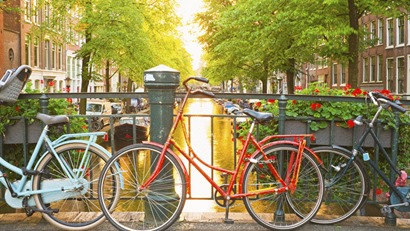
On June 12, 1817 the bicycle saw the light of the world, in the form of the Laufmaschine (Draisine), by making its maiden voyage under the captainship of its inventor, Karl Drais. It has come a long way since and today is more needed than ever.
It was born out of the need for a replacement – albeit temporary – of the horse as very few horses were left in Germany at that time due to a climate event which brought about “the year without a summer”.
Today not just a climate event but climate change makes the bicycle even more important, and in this case as a replacement for the modern horse, the motorcar.
While the climate event of 1817, “the year without summer”, went away, the climate and weather returned to normal. Horses came back into use as they could be fed again and there was food for people again too. The bicycle, therefore, descended into obscurity for some time. With climate change this is, more than likely, not going ever be a return to normal and we will have to look to the bicycle as a low-carbon alternative for travel.
Today's bicycles are about as far removed from the original concept of the running machine, the Draisine, as is the ox cart from the modern car, with the exception of the balancing bikes for children nowadays which are almost a Draisine, having no pedals.
Bicycles do not, that is true, do not achieve the speed of a car and neither can they travel the same distance in a day as can a motor vehicle. On the other hand though most cars are not used daily for long distances but mostly for short trips (with the exception of those that may use them indeed for long commutes) for which a bicycle would not only be more efficient and cheaper but also faster.
By the time you have the car ready to go on the road, especially if it is kept in a garage, have buckled up and all that, you would already be half way there with a bicycle. Then at your destination, say the high street, you have to find a place to park the car, and more than likely that will take some time and may even cost you money to boot. The bike, on the other hand, you can just “chain” to the nearest lamppost or such and you can do what you want and need to do.
The bicycle is also one of the most energy efficient vehicles for public transportation. Instead of burning fuel and money and making you fat it burns fat and keeps you fit. Though as a cyclist I do realize that in many countries the infrastructure is not there for cycling, at least for safe cycling, and drivers of motor vehicles, from cars to trucks, see the cyclists as someone, more often than not, who should not be on the road with them. That needs to change.
While we are seeing a year by year increase in bicycle use in Britain, including for commuting, no real serious change will come about until the political will is there to change the status of cycling infrastructure by creating safe paths for cyclists (and pedestrians) alongside every, or at least almost every, road, that are separate from the road itself. What can be done in other European countries can be done in the UK and no one can tell me different.
© 2017