by Michael Smith (Veshengro)
 Bio-fuel nor electric vehicles can help us continue the way things are today. The car, whether gasoline, diesel, or even electric, does not have a future.
Britain would be, in theory, well and ideally placed as regards to the production and use of bio-diesel with public transport, that is to say buses, and delivery and public service vehicles considering the number of Fish and Chips Shops throughout the country that have masses of waste cooking oil to dispose off on a daily basis which could be easily converted.
One can but wonder how many gallons or even tons per day are actually discarded around the country.
However, bio-fuel, be this kind of diesel or ethanol cannot sustain the amount of personal motoring in Britain and in the rest of the world and neither can electric vehicles.
It will, therefore, be necessary that we reconsidered our ways and that we ALL woke up to this fact including and especially those greenies that keep advocating bio-fuels and electric vehicles instead of a real change; a change from the car, of whatever kind, to a real sustainable alternative.
Personal motoring is very much yesterday and has had its day. Like one of the people said in the movie documentary “The Power of Community”, the car was but a blip in the history of mankind and we need to go back to the ways and methods we used to use before motoring became cheap and was regarded as a right for all, a human right almost.
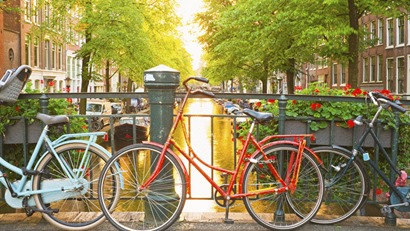
We still have one of the best means of personal transportation that does not rely on either an engine or animal power – aside from walking but it is equally human-powered – and that is the humble bicycle, it burns calories instead of fossil fuel and keeps you fit.
The electric car has be touted, even by many greenies, as the answer to the internal combustion engine motorcar but it is doubtful as to whether, as far as purchase cost, it will ever be truly affordable by the masses. The production of such high-tech vehicles and their batteries also use up valuable resources, much better employed elsewhere, and that entirely aside from the pollution the mining for those rare earths and metals causes.
The mining for and production of gold in many places is almost as destructive as the Canadian tar sands and the same is true as regards to the extraction of rare earths and other components required to make electric cars. This make electric vehicles as unsustainable as ordinary motorcars, maybe even more so.
The humble bicycle is a proven technology, uses steel or aluminium for frames and wheel rims, etc., the metal for which can come from recycled sources and can be recycled again at the end of life almost ad infinitum.
A cared for bicycle, however, has a fairly long lifespan and some bikes of 60 or more years ago are still with us today and still perform as well as they day they were made.
We must stop and think and reconsider our options for personal transportation which, admittedly, are not great without the personal motorcar and leave but a few, most of them powered by self.
Looking at the electric car, aside from not being carbon neutral at all, it will also be costly. Costly to buy in the first place and costly to run as we all know that the batteries have a limited recharge cycle and thus lifespan and will need replacing every couple of years and that to the tune of about two-thirds of the price of a new car.
When industry, governments and environmentalists sing the praises of electric vehicles in how they will reduce CO2 emissions the CO2 and other pollutants emitted in the production of the cars and their batteries almost never enter the equation.
Industry is interested in the continuation of motoring and if people can be made to believe that electric vehicles will make for a clean Planet they are prepared to perpetuate this myth.
Governments are not prepared to tell the people the truth for fear of a backlash as people have come to believe that owning and driving a car or even three is their G-d-given and even human right.
And many environmentalists themselves – the very same that keep jetting off to all those many UN and other conferences in far flung countries – also want to keep the status quo of personal motoring and thus are on the bandwagon unquestioning.
However, the fact of the matter is that electric cars are as bad for the environment as are their ICE counterparts only that the emissions and environmental destruction happens elsewhere.
To say that the motorcar has served us well one definitely can not. The horse and the bicycle on the other hand have and will do so again.
Regardless of what the powers-that-be, the oil- and the car industry are trying to tell us and our governments cheap oil is coming to an end – in fact, it has done so already – and motoring for everyone is about to rung into a very solid rock face.
And this crash is going to be very much a shock to the system of people who believe that the current way of life of motoring will go on for ever.
The ever escalating – and doesn't it just – cost of fuel in Britain has already led to an increase in cycling including and especially for commuting but it is still nowhere close to where it is in other European countries and still miles away from the Netherlands and Denmark.
In the movie documentary “The Power of Community”, which is about Cuba's enforced peak oil after the “collapse” of the Soviet Union and how this Caribbean island dealt with the aftermath, one scientist expressed the truth plainly when he said that the motorcar has just been a blip in the history of mankind and that we have to return to other ways of doing things. And that indeed we must, and not only because we are running out of (cheap) oil, but also and especially for the sake of the Planet (and not just in regards to climate change).
We have to find an alternative to motoring as far as personal transportation (for the masses) is concerned and neither the electric car not ICE cars on bio-fuel will cut it here. But there is no need to reinvent the wheel. That alternative already exists. It is cheap and reliable, can be maintained with a little skill and tools by the user, and it is none other than the humble bicycle and the simpler the better.
Believing that we can carry on motoring ad infinitum is but an illusion and the sooner we woke up from this dream the better.
The future of personal transportation (for the masses) is human-powered and the very same that our grandparents and their parents used and not electric or bio-fuel and has been a reliable technology ever since Forestry Superintendent Karl Dreis invented it and Pierre Michaux improved upon it by adding pedals (and then the chain drive) and the rest, as they say, is history.
While the horse (and carriage) is also an alternative, and the Hanson Cab may make a comeback in the cities, it is not a practical alternative for everyone and, in addition, the bicycle is much cheaper to buy and does not require feeding, watering, vets bills, etc.
© 2013