Showing posts with label secondhand. Show all posts

The repair, reuse and upcycling economy

by Michael Smith (Veshengro)
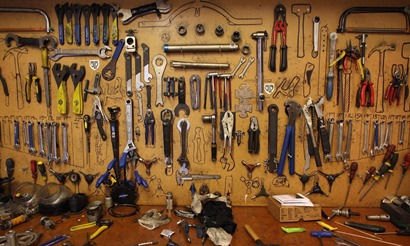
Bike repair tools1_webTaking possessions to be repaired, be it bicycles, clothes, shoes, or anything else, instead of throwing them out and replacing them is green gold. But reuse and upcycling should and must also be and become part of this economy. For it is not “just” repair that we must be looking at.

In the reuse sector we would have the secondhand stores, charity shops and even flea markets and car boot sales. While in the upcycling sector all those that rework – upcycle – items of waste of all kinds.

The little unassuming repair shop on the high street may not look like a major disruptive force. However, being able to extend the lifespan of your possessions by getting them fixed is one of the most effective green direct actions that are available. The problem is though that often neither the shops nor the repairability of the products are available.

Repair shops are often few and far between and those that there are, such as some of the so-called “shoe & boot menders” are not very capable in that department when it comes to things that cannot be done by the machines that they have, such as sewing back a midsole to leather uppers, for instance.

In addition to that there is the problem that many goods cannot be repaired as they have actually be designed in such a way and furthermore that for those that may, possibly, be repaired the costs of repair is several times that of buying the same product new. Here we are faced and confronted with a dilemma that needs to be overcome.

Making all the stuff that we buy requires raw materials and energy. Across the European Union now, recycling and recovering energy from waste when it is burned, only captures around 5% of the value of the original raw material used to make all the products in the first place. But consumption in 2030 is predicted to be twice that of 2010. A very troubling prospect given that it is already responsible for between 50% and 80% of total land, material, and water use.

The cycling community is at the forefront of the repair economy. An increase in people using their bikes and an abundance of independent bike retailers offering repair services (there are 2,500 retailers across the UK) means repair is booming. The reason for that is, though, that bicycles can be repaired and that, theoretically, quite easily.

When it comes to the bicycle much of the repairs and more can be done by the user with a little knowledge, including rebuilding “new” from old. But again here often the cost of spares is astronomical. And properly adjusting, say, Shimano gears, can, even at a repair shop, take several hours and thus the labor charges here can make getting a new (cheap) bike almost cheaper than the repair. I have been quoted more than once – I was just checking really – around £75 for that job. That is one of the reasons that I have converted all my bikes (yes, plural, but most are rebuilds from abandoned bicycles that have been found in parks and open spaces) to single speed by simply removing the gears and setting the chain onto one of the cogs in the back cluster.

What is missing sadly, is proper repair services for clothing and also for shoes and other goods. The few small attempts by certain sectors do not make up for the lack of the repairers we once used to have, in both clothing, shoes, boots, and leather goods.

Neuroscience research claims to have shown that our consumption of low-cost consumables, including fashion, activates dopamine receptors in the pleasure region of the brain and it is difficult to compete with our hard-wiring. Repair needs to not only make environmental and moral sense, it needs to make us feel good, too. But that is just what it should do, anyway.

Personally, unless I am hard-wired in a different way, and that is why I do not buy into the neuroscience research, find it much more pleasurable to be able to extend the life of something that I have rather than buying new. But then, I am strange.

In addition to repair, as said, we need to also accommodate the other parts, that is to say reuse and upcycling, into the economy and also, maybe, the teaching of repair, reuse and upcycling as part of that economy.

Repair, in some way, is also reuse as you continue to use the item repaired, while reuse can be secondhand, and that's where the particular stores and shops come in, but also reusing things found and items of what generally might be considered waste directly by us as individuals and households.

Upcycling is going a step above simple reuse, as far as items of “waste” are concerned, as it may come in a couple of forms. The first one is the simple reuse of something for a higher purpose, such as, say as glass jar becoming a drinking vessel. The next level is the transforming an item into something new, without, necessarily, destroying the shape and such while the third, which still is not recycling (though that word is always, erroneously, used there) but is close to it, is taking the material and reworking it into something new, combining elements from more than one items, and such.

The simple reuse, as mentioned earlier, like reusing a glass jar that had some produce in in as a storage jar, and that of the upcycling such as glass jar into drinking vessel (and those are just examples) is something to that most can do at home in the way that our parents, grandparents and their parents did. While it is not part of the economy – so to speak – it is a way for us to save money that we can circulate into the economy in another way.

The other upcycling, reworking, etc., again is part and must be part of the economy. This is what is done my craftspeople, artisans and such who make things from waste and material that others have declared to be waste.

But, as far as repair is concerned, the first thing that needs to happen is that industry actually starts producing again goods that can be repaired and for which spare parts (and repair) do not cost more than a new product.

Just by way of an example allow me to tell you this true story: Some years ago I was using an Epsom PC printer that cost then £35 to buy. It lasted about six months (well within the warranty period of a year). When I contacted Epsom I was told: “The waste ink reservoir is full. You are printing too much with it, Sir.” They were not going to honor any warranty because of that claim from them and as to repair I was told: “Yes, can be done. Part will be £70 and labor, not counting sending it back and forth, £75”. When I told the person from Epsom that I could buy more than four new printers of that make for that money I was told: “Well, I would suggest anyway that you buy a new one.”

That kind of attitude from manufacturers has to change first of all and products, all products, must become repairable, at a reasonable cost, again, though ideally they should also be repairable by a user who likes tinkering around. It once was that way with most things, today though it is exactly the opposite. Often goods cannot be opened even without specialist tools, if even then.

Only when that happens again and when repair is actually economically will we also see the return of the repair shops of all kinds to the High Street, and the not so high one, and the true repair economy, that we once had, will return.

In addition to that a change of mindset amongst the people is required and it has nothing to do, in my view, with any hard-wiring the neuroscience research claims, but with the fact that people have been brainwashed into a perpetual consumption mode, to buy everything new. Then again, as long as repair is not possible or simply not economical what else is one to do when something breaks?

But the mindset is a problem. We can see that every time a new iPhone, or whatever, hits the market. People will queue for hours and hours to be the first to get this new model even though they still have the previous one – in some cases less than a year old and still working perfectly – simple because they have to have it.

Well, that shall be all in the food for thought department on this subject for this time. I have talked enough, I think.

© 2017

Make Do and Mend

by Michael Smith (Veshengro)

18557251_1397913886914578_1270310445997979841_nMake do and mend is a basically philosophy and mindset that I grew up with as a child, as much as I grew up in hand-me-downs whether this were clothes, bicycles, or what-have-you, and it is something that has stayed with me to this day. I still practice this philosophy – which nowadays is often known as practical recycling, reusing and upcycling – in various forms to this very day.

Already as a small boy I developed the habit, which was actively nurtured by our parents and other elders, and it has – unfortunately, some of my friends would say – stayed with me too, of picking up anything from the streets, the woodland paths, the hedgerows, and so on that might just come in handy. Old nails and screws; nuts and bolts; tools that have been lost or thrown away; even “old” knives; and much more are in that category.

Among the knives that I have found there have been knives for the re-working into sheath knives, as well as pocketknives with nothing wrong with them; there have been spanners and wrenches, screwdrivers, and many other tools, including a Leatherman Wave, in its holster, that was almost new and only required deburring the two knife blades. It had been deliberately thrown into the trash in a Park and had not just been lost accidentally. Some people simply seem to have too much money to know what to do with it, it appears, and more money than sense, that's for sure.

The habit of making do and making things also stretches with me to making use of everything that can be, in one way or another, re-worked into something else, whether this be old and worn Jeans into Ditty/Possibles bags or other things; old kitchen and butcher’s knives into “new” sheath knives. The leather of old boots, shoes and bags will be made into the sheath for such knives and/or into other items such as belt pouches for folding-knives, compass, pocket-watch, and so on.

There is only one severe drawback to such a habit and that is the need for a fairly large storage area in your home for all the things ”that might come in handy some day”.

During WWII in England booklets galore were published by the Ministry (and there was a shortage of things but they seemed to have enough paper to produce those official booklets) on the very subject of “Make Do & Mend” telling people, for instance, of how to change adult clothes into underclothes for children; to convert Dad’s old cotton shirts into nightshirts for the boys, and so on.

The philosophy and attitude of making do also applied in those days to digging up one’s flowerbeds and “digging for victory” by growing vegetables there instead of flowers in one’s garden. That could also still be a very valuable philosophy today too – instead of filling the garden up with grass and flowers, which may be esthetically pleasing to the eye and all that don’t feed no-one. Growing at least some of one’s own vegetables and such could give one some more cash in one’s pocket. Vegetables can – in actual fact – grown behind say a flowery border in a garden and look quite nice as well. The trees in one’s garden should not be ornamental this or that but fruit trees such as apples, pears, cherries, walnut and hazelnut, and anything else in that league and the ground beneath such trees should be utilized by vegetables and soft fruit such as strawberries. Also grow your own culinary and medicinal herbs in your garden, including such beneficial plants as Aloe Vera. If the climate isn’t suited for growing the latter out-of-doors than grown those in pots in the house. The same can also be done with many other herbs and spices.

And if you have no garden to speak of to grow your own vegetables and such then you can use various forms of containers such tubs made of various things such including old bathtubs even. Almost everything can be grown in containers, fruit trees even. Hanging baskets of all kinds also can be employed for growing fruit and vegetables. Strawberries do well there, and even beans and peas can be grown in such containers.

But back to the make do and mend philosophy per se.

While make do and mend seems to be coming back into fashion to some degree many people still have the disposable attitude and seem to have to have the latest in fashion, be this with regards to clothes or anything else.

Among children and young people peer pressure may have something to do with it in that clothes from a charity shop don't, in their minds, have much street cred and all that. Years ago it had to be Adidas, then Fila, then Nike, and the wheel keeps turning in that department. But what makes them better then non-brands? The name only, not necessarily the quality, and the price is often astronomical. The same goes for other things. And ordinary cell phone doesn't cut it; it has to be an iPhone, and ideally always the latest.

All need to learn, and the children and young people have to be taught, that it does not have to be the latest and that the latest and most expensive is not always the best, especially not for the Planet and the wallet.

Staying with what we have, making things ourselves even from things considered “waste” in the common perception, and generally making do and mending, buy secondhand, and so on, must be the way to go. The latter also and especially keeps money in the local economy, though only if we are using local secondhand shops, thrift stores and charity shops. And, if things can be repaired and you cannot do it yourself then use local repair shops to do it. Keeps the money local and also work.

© 2017

Support SecondhandFirst Week

Tomorrow marks the first day of #SECONDHANDFIRST Week, 17-23 November 2014.

The week aims to encourage people to commit to sourcing more clothing and other resources second hand. It is organized by TRAID, the charity doing tireless work to ensure sustainable and ethical practices in the clothing chain and it is hoped that this will become an annual event.

TRAID is launching #SECONDHANDFIRST Week, 17 – 23 November 2014, to encourage people to commit to sourcing more of our clothes and other resources second-hand, rather than buying new.

There are lots of ways for everyone to get involved including taking the #SECONDHANDFIRST Pledge to source more of your wardrobe second hand, keeping clothes and other resources in circulation for longer by lending, swapping, mending and donating, visiting your local charity shop, running your own clothes swap and lots more.

TRAID will run events in our 12 charity shops throughout the week celebrating all things second-hand including a Darn Good workshop with master mender Tom of Holland, providing free in-store styling appointments to help TRAID customers make the most of their second-hand purchases, a late night opening at TRAID Shepherd’s Bush, special window displays and lots more.

Plus our reuse, educational, ethical fashion and development partners will be running their own initiatives under the #Secondhandfirst flag during this special week.

Maria Chenoweth-Casey, CEO of TRAID said, “Second-hand has the power to create a more sustainable society. The garment industry makes huge demands on scarce and diminishing resources, like water, land and oil while unwanted and still wearable clothes are sent to landfill. #SECONDHANDFIRST Week reminds people to use what we already have as a way to reduce waste, landfill, carbon emissions and consumption bringing major benefits to our increasingly fragile environment.”

We are appealing to all our supporters to donate their unwanted clothes to TRAID and help us collect an extra seven tonnes of textiles for reuse during this special week. This includes encouraging our charity shop customers to donate their unwanted clothes, helping workplaces run their own collection schemes or, for the ultimate in eco-convenience, to book a free home collection from TRAID.

Full details of TRAID and partner events are available on our events page and will be regularly updated. Confirmed events highlights below:-

  • Tuesday 18 November, Book an appointment with Sustainable Fashion Stylist Marta Krolewicz, 10am – 2pm at TRAID Shepherd’s Bush
  • Wednesday 19 November, The Clothes Club Swap for Food Cycle and TRAID
  • Thursday 20 November, Late Night Shopping and Junky Styling Up-cyling Workshop at TRAID Shepherd’s Bush, 154 Uxbridge Road
  • Friday 21 November, Knitwear Repair Workshop with Tom Holland at TRAID Dalston
  • Friday 21 November, Book an appointment with Sustainable Fashion Stylist Marta Krolewicz, 10am – 2pm at TRAID Shepherd’s Bush

Source: http://www.traid.org.uk/