Showing posts with label preparedness. Show all posts

A warmer world may bring more local, less global, temperature variability

by Michael Smith (Veshengro)
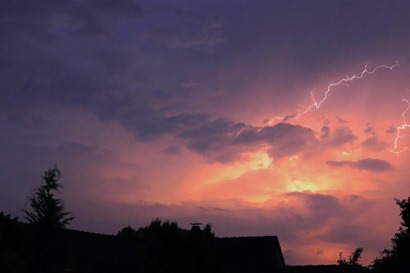
20424118_10209854490866312_555979097128336310_oMany tropical or subtropical regions could see sharp increases in natural temperature variability as Earth’s climate warms over coming decades, a new Duke University-led study suggests.

These local changes could occur even though Earth’s global mean surface air temperature (GMST) is likely to become less variable, the study shows.

“This new finding runs counter to the popular notion that as the climate warms, temperature variability will increase and weather will get more volatile everywhere,” said Patrick T. Brown, a postdoctoral research scientist at the Carnegie Institution for Science, who led the study while he was a doctoral student at Duke’s Nicholas School of the Environment.

“Our research suggests a different scenario: Global unforced temperature variability will actually decrease, not increase, as Earth warms, but local decade-to-decade variability could increase by as much as 50 percent in some places,” Brown said.

Unforced, or natural, temperature variability can be caused by interactions between the atmosphere, ocean currents and sea ice. These fluctuations can either mask or exacerbate human-caused climate change for a decade or two at a time, he noted.

Because billions of people live in tropical or subtropical regions that may experience increased temperature variability, and because these regions are critical for biodiversity, food production and climate regulation, “it’s vital that we understand the magnitude of unforced decade-to-decade variability that could occur there, and the mechanisms that drive it,” he said.

Brown and his colleagues published their peer-reviewed paper Sept. 4 in the journal Nature Climate Change.

To conduct the study, they first inspected a climate model run under pre-industrial conditions. The model, which was developed at NOAA’s Geophysical Fluid Dynamics Laboratory, simulates climate under perpetual atmospheric conditions similar to those experienced on Earth before the widespread emission of industrial greenhouse gasses. This allows scientists to get a clearer picture of the forces that cause variability in the absence of human drivers.

“To isolate unforced variability, we looked at the model’s output without changing any of its environment parameters, such as atmospheric carbon dioxide levels, solar radiation or volcanic activity, over a theoretical 900-year timespan,” Brown explained.

On the second run, the scientists doubled the model’s atmospheric carbon dioxide levels to simulate projected future conditions.

“In the doubled-CO2 run, we saw a 43 percent decrease in global temperature variability, but with local increases of up to 50 percent in many land regions of the tropics and subtropics,” Brown said.

Consistent results were obtained using similar experiments on other climate models.

What’s happening, Brown said, is as Earth warms because of increasing CO2, there is less ice at high latitudes, which means less albedo – the less reflection of solar energy back into space.

“Albedo feedback is a large contributor to decade-to-decade unforced variability. When Earth’s atmosphere naturally gets a bit warmer, more of the reflective sea ice at high latitudes melts. This exposes more water, which absorbs solar energy and amplifies the initial warming, enhancing the GMST variability,” he explained. “But we found that when you double the CO2 levels in a climate model to mimic future conditions, the sea ice melts so much that this albedo feedback can no longer play a large role in amplifying natural temperature variability.”

The end result is less variability globally – especially in the high latitudes – but more variability in the tropics.

“This suggests that the pre-industrial control runs we have been using are not ideal for studying what unforced variability will look like in the future,” said Wenhong Li, associate professor of climate at Duke’s Nicholas School. “But it might inspire more modeling groups to run models under perpetual conditions that reflect what we expect in the future.”

Yi Ming of Princeton University and NOAA’s Geophysical Fluid Dynamics Laboratory, and Spencer A. Hill of UCLA and the California Institute of Technology co-authored the new paper with Brown and Li.

Funding for the research came from the National Institutes of Health, the U.S. Department of Defense the National Science Foundation.

However, there are, more than likely, also other events and happenings that can and must be blamed for what is happening. The tilt of the axis of the Earth, which occurred somewhere around two years or so ago and which also the Inuit in Alaska have observed and reported, from celestial observations, and the change in the Earth's magnetic field, also play a part here.

Furthermore the Earth has, through the ages, gone through natural changes in climate or why does anyone think that the Danes, aka Vikings, called Greenland Greenland? No, they were not colorblind. When they arrived there the place was covered in forests and meadows.

When the Romans were in the British Isles they grew grapes for wine all the way to Hadrian's Wall but when they left – finally – around the 6th century they did so not just because the Empire was falling apart but also and especially because the climate was getting rather cold and damp. But not half a century later Leif Eriksson landed in Newfoundland and was, according to Viking Sagas, presented with sweet lack grapes by the Natives there. Sweet black grapes in Newfoundland? Well, apparently so.

Whatever the reason, the climate of our Planet is in flux – not that it has not always been – and undergoing changes at the present which will, more than likely, lead to serious weather extremes the pinpointing and predicting of which will be almost impossible.

Instead of huffing and puffing we must, aside from seeing as to whether we can mitigate and even reverse it, though if at least some part of it is natural then that we won't be able to change, prepare for any event. But preparing for a possible – or even inevitable – change no one seems to want to do.

The Earth, has trough time, gone through cataclysmic climate events and changes and it could just be that the Great Flood, of which is talk in the Bible and the Scriptures of other religions, which befell the Earth more than likely is one of those.

While such events were catastrophic then it would and will be more so today with the amount of people on the Planet and our dependence of infrastructure and all. But, as said, it would appear that no one, especially no one in government, will want to admit this possibility and that we need to make preparations. Noah's Ark, more than likely, tough, is out of the question.

© 2017

Crisis Preparedness

by Michael Smith (Veshengro)

krisenvorsorgeWhen we look at the world today we can see that preparedness, being prepared and equipped to deal with any kind of crisis, is very important. The world in which we live today, being overly dependent on technology, especially the electronic kind, can easily be brought out of its equilibrium.

The next financial crash is only around the corner especially considering the way that many banks are back playing the same ponzy schemes that they played last time round and there are many economists and others who predict that the next crash is already on its way – probably just a year or a couple away – and that it will be worse than the last and probably worse than the Great Depression even.

But, unlike when the Great Depression hit, the majority of the people today live a life that is so far removed from reality that they do not have the skills and also not the mental frame to do things for themselves. They have to learn this from scratch and while today we have all the knowledge we – the majority at least – do not have the practical skills. Some cannot even cook from scratch let alone be capable of growing their own food, know where to get wild food, or now to make this or that they need or want for themselves.

Many people who are more or less self-appointed and self-acclaimed experts in the field of preparedness always suggest that people should have gold and silver coins as means of cash/currency. That is utter baloney as nowadays gold and silver, unlike in the days of the Great Depression and even still after WW2 are not recognized (as currency) and thus are absolutely useless. They offer no means of and for barter whatsoever. Gold and silver in whatever kind of coins are just a way for you to waste your money. In addition to that if those coins are not old currency coins how can you be sure, if they come from some “wild” mints, that they actually have the gold or silver content that is being claimed?

Your best bet is not gold and silver coins but skills and tools to perform jobs or produce goods that other want and need. Knowledge and skills are the key here. And knowledge must be more than just theory.

In times gone by people always prepared for the unexpected and for lean times and that not just by having some cash under the mattress or such place. They canned, the preserved food in other ways, and they knew how to make things from almost nothing. Today most do neither and do not have the skills either.

Cash under the mattress is not going to be an option anymore today where the coins and notes are changed in design every five minutes – well, almost – and the old version being no longer legal tender within a short space of time. All done in order to make us dependent on the state and its agencies. Therefore it will have to be other supplies – and especially skills – that you have to make it possible for your to live well enough after such an event and which also provide a means of barter with other, perhaps.

Theoretically, properly prepared there is no reason to fear a crisis nor is there any need to get into a panic and tiswas, when it happens. I did say theoretically, for the world today is not the world of the 1920s and 30s when people still had proper community and also knew how to do things.

Books on the various subjects of preparedness, homesteading, gardening, survival, and the many crafts and whatever, are good to have as a reference library but they are not something that you would want to go to when the proverbial already has hit the air moving device but you want to learn from them, and ideally also from live teachers, and acquire the knowledge and especially the practical skills well before well before any such event.

In the event of a crisis, which, more than likely will be a global one, you cannot rely of the state or other body for help. You have to know how to help yourself and you can only rely on yourself.

You may have the skills, the knowledge, and the provisions. Others that don't, however, are the danger; a danger to you, your loved ones and your survival. In a crisis you also cannot rely on the state and its agencies to protect you from any marauders; in fact the state and its agencies themselves will become a threat to you and your freedom.

So, thus, when it comes to protection from marauders it would appear that you will be, in the event, more or less on your own. The agencies of the state, as I have just said, will not (be able to) protect you and therefore you will have to do that yourself and you may also need to protect yourself and your loved ones from the very agencies of the state.

© 2017

No more sun in 2012 predicted... people preparing for winter already.

People are predicting that 2012 will see barely any sun and as a result temperatures will begin to plummet even earlier in the year than normal

by Michael Smith (Veshengro)

Several experts have so far predicted that the current ‘rainy season’ that we are experiencing in Britain is entirely down to global warming; whilst others are pinpointing these climate shifts and dramatic seasonal changes on other phenomena. Regardless of the cause, most reckon that the sun won’t make a dramatic appearance for the rest of 2012 and as a result, winter and a drop in temperature will come much sooner than the UK is used to.

The other phenomenons that experts blame for these climate shifts and seasonal changes are, amongst others, the fact that this summer the jet stream did not arrive at the British shore and instead has been heading further south, giving temperatures in the high 40s Celsius in the Mediterranean areas.

The shift in the jet stream can be as a result of geomagnetic changes brought about by a continental shift, resultant from the earthquake off the shores of Japan that cause the Fukushima reactor meltdown, according a to a source at the USGS and also due to the relocation of the magnetic north pole in relation to true north due to a possible change Earth axis' tilt.

If it is the case that we won't be seeing much, if any, of the sun in any significant measure, in the coming months then the best advice to people can but be to prepare now and those that have to buy in additional heaters and especially winter fuel in the form of heating oil, propane gas, or firewood, should do this now before the prices with rocket later.

Even if the weather predictions are wrong for the rest of 2012, you won’t have lost out on anything. Winter will eventually come around in one way or another and when the cold temperatures set in

When winter eventually arrives, as it will, though it could be an entirely different scenario than we expect, even if we do not end up with freeing temperatures for much of the time a prolonged spell of cooler and colder than normal will mean that we will have to heat our homes and if you can buy your fuels, such as firewood now, at a lower rate than you may have to pay later, and the same for those who heat with oil or propane, the better.

Remember, be prepared. No matter how unlikely something seems, nothing’s impossible when it comes to the weather... especially in the UK.

© 2012