It's a train! It's a bus! It's the Cambridge guided busway!

Cambridge busway

The longest guided busway in the world

Friend of the site Clarence has the perfect introduction for this very interesting idea: "Sometimes just when you really think you have seen or heard of just about everything in the transportation world you come upon something that went under your radar. That happened to me while on a infrastructure tour with cycling advocates in Cambridge, UK. when we came along what is called a Guided Busway." Like Clarence, I had never heard of guided busways before, but now that I've seen it, I can't help but think that they could make sense in many places around the world as a cheaper alternative to rail and a faster alternative to buses that have to share congested public roads all the time.

Read more here.

The Rag and Bone Man

by Michael Smith (Veshengro)

800px-Rag_&_Bone_ManThe rags collected by members of this occupation were used for what, you may ask. Well, not to be recycled into new clothes but to be made into rags for cleaning, primarily in industry, for gun cleaning patches, and also for making paper. And yes, the Rag and Bone Man also collected bones. The latter where made into fertilizer, before the advent of petro-chemical ones, namely bone meal, often mixed with fish and blood.

But rags and bones where not the only things, despite the title, that the Rag and Bone Man collected. His main target would have always been scrap metal of all kinds, as that is where the money was, although he, obviously, also got paid for the rags and the bones that he collected from households and other premises.

The Rag and Bone Man performed a vital function for the economy and in keeping valuable (secondary) raw materials out of the waste dumps, that is to stay stopping them from becoming waste in the first place.

In spite of this he was looked down upon by most members of society and today his activities are being curtailed by more and more restrictive local and central government legislation. This despite the fact that his activities nowadays are more important than ever as to preventing valuable resources from becoming waste.

Today we need a modern version of the old Rag and Bone Man and rags (and maybe even bones) should once again be on the collection menu also. As should, possibly, be plastic bottles and aluminum and steel cans, plus a variety of other things.

© 2015

Nationalism is an infantile disease

by Michael Smith (Veshengro)

“Nationalism is an infantile disease. It is the measles of mankind." ~ Albert Einstein

Nationalism and even the nation state are obsolete, in fact they have been thus for ever and a day, and both have been the cause for many of the wars throughout history while others, that is true, were for prestige, resources and such.

While it is good and fine to be “proud” of one's heritage and origin to stand there and claim that one's nation or one's ethnicity is better than all the others and similar is what is the cause of so much strife in the world.

As Einstein has said, nationalism is the measles of mankind there is, alas, no vaccine against it and it can only be overcome by us all growing up, finally. But this growing up does not seem to be happening. In some instances it would appear that people are going back to infancy in their attitude. This is a dangerous development and this nationalism generally ends in fascism.

Ever since around November 2014 we are seeing more and more of this regression to infancy in many countries around the world, from Ukraine over Germany to many other countries in the European Union and outside of it.

In many countries, including Britain, right-wing fascist parties, have made serious inroads in recent elections and at times popular uprisings against previous regimes have been hijacked by right-wing neo-fascist groups and parties, such as in the case of the Ukraine. Though in the latter case it would appear as if the fingers of others are very much implicated in this.

When one should have hoped that the world had grown up by now, and especially countries that have had a brush with fascism in the past, it would appear that rather than advancing and becoming adult many have decided to get back to the toddler age and behave like kindergarten kids again with the “my daddy is better than your daddy”.

Time that everyone really grew up and threw off those infantile and childish ways and things.

© 2015

Weed your woods

by Michael Smith (Veshengro)

It may sound silly at first, but, if you want to make your woodland (more) productive, just treat it like a big vegetable garden. You will grow the best crop if you cut the weed trees, thin the thick spots, and harvest the crop trees before they get too "ripe" to use.

But, let's start where we always should start, namely at the beginning.

A wood, even a forest, is to the forester the same as a field is to the farmer or a garden to the gardener and all of them need management if they are to thrive. The only difference between a gardener or farmer and a forester is that the latter often does not, except in coppice management, ever sees the harvest. He harvests often what others, long before him, have planted, and he manages and plants for the future, for harvests that are carried out by others, often after he is long gone.

Alas all too often there are people about who believe that Mother Nature does a better job than we could ever do and there are time when that is true. If the woodland, however, is to be of use to us and to wildlife and be a thriving ecosystem then management by man is required and this even more so if the woods have been managed before by the hand of man for our use, and this even more so if the produce of such woods are also to benefit us.

Even when managing a coppice woodland weeding certain trees out and doing selective cutting here and there is required and in stands where large trees are to be the result then thinning is a must and it must be repeated every couple of years and, if permitted, over time those cut trees may actually turn into coppice stools and a so-called coppice with standards will result and a good result that is too.

Your goals will greatly affect your management decisions and your management decisions will greatly affect the outcome and the produce. Of course, the existing conditions of your woodland may have an equally great effect on your decisions and the outcome.

A mature stand of timber may dictate a heavy cut to stop further decline while a mixed-age or middle-aged stand of timber is a likely candidate for a selective cut. Any young stands can be like a recently sown bed of carrots, nothing will prosper without a little thinning. When it comes to a woodland of mixed-age or middle-age stands of timber then, if it is hardwood, or deciduous woods, which, hopefully it is, of native trees then one of the best options is to create a coppice with standards and if it is a coppice woodland that was previously managed as such then you may find many an overstood coppice stool that needs immediate attention.

Once you've decided your motives, you need to find out just how saleable your timber is. Become “wood-wise” and learn to recognize the potential in a tree or a stand of coppice. Also the species that you have growing and which are due for cutting and then research the market. The original task of the professional forester was that of recognizing what every tree or part of a tree could become by way of product and use and this “eye” you, as a woodsman, will also have to develop. Once you know all that research your potential market and not, necessarily, people such as sawmills and the like but look at what you, actually, could make out of the wood yourself that could be sold to end-users rather than processors.

Selling to a sawmill or any processor will greatly reduce your income from your woods. On the other hand if you go into production of wooden goods yourself you will have to have the time for doing so, the tools and then a way of marketing them to the end-users. It is all a case of horses for courses. A sawmill or other processor may give you x for the whole tree but processed by yourself into a variety of products, and the same is true for coppice stems, will give you x4 it is obvious that you can make more, in financial terms, from processing most of the wood yourself. But, as said, it requires time, effort, and tools to do so.

When it comes to the felling, especially of larger trees, and you have not used a chainsaw before and/or felled large trees then please do not do it without any training even if it is your land and in all theory you can use a chainsaw there to your heart's content. Chainsaw take no prisoners and are extremely dangerous, as are trees falling. We are talking several tons in weight coming crashing down at a rate of knots. So, I say it again, learn felling of trees or get an experienced lumberjack to do the work for you. Do not take any chances.

Now, what are the weeds and what are the crops?

Well, a crop tree is any reasonably mature tree worth harvesting, or one that has the potential to grow into such a tree. Weed trees may just be species of low value, or may be damaged by rot, fire, lightning, wind, insects, etc. They could also be trees excessively lean or that are rather crooked. Removing those, and those that otherwise interfere with the growth of the other trees, is called thinning, and is much like thinning out a bed of carrots.

In any woodland for trees to develop to the full potential it is important that each of them has enough space to grow and develop. It is a little different in a pure coppice as compared with coppice with standards and a lot different in a stand of timber where all are meant to be single stems growing to maturity.

Thinning (weeding) is a valuable exercise even in a pure coppice where I have begun to referring to it as selective coppicing for here we can do it in two ways. We can either remove stems that are already harvestable for a variety of products and leave other, smaller ones, to grow to a decent size or removing those small stems that are and never will be of any use but which interfere with the growth of those we want to harvest in a year or four, those that are spindly, deformed, or otherwise of no use.

Our main aim, with hardwood trees, is to create, when working to rejuvenate a woodland, a sustainable coppice woodland, either as a pure coppice or a a coppice with standards, and the former is easier to maintain than the latter, in all honesty.

But the latter will make for the production of timber in size that cannot be achieved in a pure coppice and thus often that is the one to go for.

In that case weeding, aka thinning, will be required on a regular basis especially also as you will want to bring on new growth, natural regeneration, and encourage those young trees to grow to mature standards to eventually replace those that you will cut in time.

In order to help them grow, however, the area around them in the woods will need not just thinning but also in this case really weeding. But unlike in the garden you don't have to remove dandelion and such like but brambles and bracken and such vegetation that might encroach and smother the saplings or otherwise impede their growth. Protection from grazers too may be required and some wire-mesh or the chicken-wire variety held by some stakes will, more often than not, suffice. And then there is more weeding and thinning.

© 2015

For more on coppicing and why, etc. see “Managing our Woods”, a small book that explains the whys and wherefores of managing our woods in this way and calls for us to return to that way.

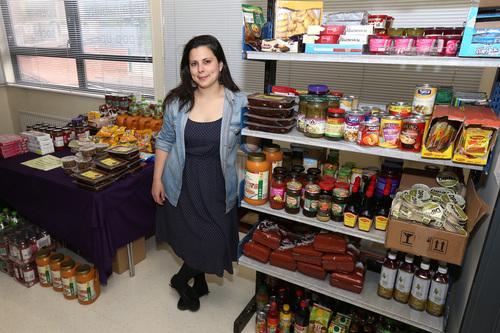
FRP and Best Before Project open food waste pop up shop in Leytonstone

FRP and Best Before Project open food waste pop up shop in Leytonstone

Forest Recycling Project is delighted to announce the opening of a food waste pop-up shop at the old Leytonstone Police Station.

In partnership with the Best Before Project, the initiative involves distributing food that is past its best before date for free. Customers are allowed to take as much food as they want and are invited to donate as much or as little as they want towards the project.

Almost 50% of the total amount of food thrown away in the UK comes from our homes. We throw away 7 million tonnes of food and drink from our homes every year in the UK, and more than half of this is food and drink we could have eaten.

Manager Voytek Stando, 48, said: “People just don’t think, they just throw food away because of a date on the label without even checking if its okay, when there are some places even in this country where people are starving.

“We want to start a new fashion about not wasting food that’s edible; we want to influence people’s opinions.”

Read more here.

The village of the city block

by Michael Smith (Veshengro)

Upon reading the headline I am sure some folks will think that I probably have lost it as most will associate the village with the countryside and rural idyll. 

However, a properly designed city – or redesigned one – can create the village, even in an apartment block.

In fact, this is exactly what must be done and each of those village have to be self-governing and self-reliant, being interdependent but also independent, running their own affairs. 

In some places such villages have already been created even in apartment buildings where the lower floors are businesses and the upper ones are dwellings, with the balconies and green spaces gardens – in some instances even the roofs – for the growing of food for the residents of this “village”.

Some of the old housing estates in Britain, in their design, would make for great little villages where the central courtyard just asks to be made into a community garden where food for all could be grown by all. 

Every town and city has grown out of the village or villages and, in order for us to get back to a proper society and way of living, the village has to return into the towns and cities, street by street and block by block. Every block can be a self-governing and self-sustaining village within the greater unity. 

Growing the food needed, at least to the great extent is also possible in such environments despite the fact that many may think it not so. Paris, until just after World War One was almost self-sufficient in food due to the market gardens (and farms) within the city and just outside the city walls. And, if we go without too much meat or without meat altogether then all our food can be grown, almost, locally. 

Villages of this nature also do away with the need for commuting as it is a case of walking down the stairs to the workshops or stores (or office) where one works (or just to the next village). Though the latter would be rather the exception than the norm.

The industry in those villages will no longer be of the kind that we have grown used to that produce for a global market using large machines and needing lots of energy but the market will, predominately, be the village or the neighboring ones within the city or town and not some foreign country. 

Utopian this may sound but doing it we must in order for sanity to be brought back into this world and into our lives and for a new and better society than what we have been dragged into by the “elite”. 

Schools, kindergartens and everything else will be within the same block and everyone will, once again, look out for each other, and this will come about simply more or less automatically as that is our nature. Human beings are not, necessarily, competitive but like to work together and cooperate with one another. Well, most of them most of the time, and when the right environment is given it will be more often than not. A village environment, be this in the countryside or elsewhere, with 150 souls or thereabouts, being the maximum number, this interaction comes more or less automatically. 

The downfall of the Hippie communes, who tried something similar by way of co-housing in some location, whether an old village or in a building, was that often they got too big or more often than not there was a “leader” who took upon himself the wrong kind of authority. However, learning from such mistakes is possible and there are, on the other hand, also tried and tested methods that can be adopted and adapted. 

We cannot, however, wait for the power-that-be, as they currently are, to come along and do those things for us and create this new society. They are incapable of doing so and neither is it in their interest to do so. So, it is up to us to create the kind of society or societies that we want so that they are ready when they are needed to replace the old structures and therefore we must begin with the creation of the new about yesterday.

© 2015

Nightingale Site Destroyed For New Homes in Hampshire, Southern Ecological Solutions Reports

logoses25 May 2015 : Leading ecological and arboricultural consultancy, Southern Ecological Solutions, have commented on the recent news regarding a landowner who has been accused of ‘destroying’ a habitat for rare birds.

Local residents and conservationists in the local area of Romsey have claimed that the destruction of a former gravel pit will be bad news for nightingales. The rare birds are due to return to the UK this month to breed after spending the winter in central Africa. The landowner has removed scrubland from the site and is seeking planning permission for the construction of 16 homes on the land. There has been some dispute as to whether the land has any agricultural value and if it is polluted.

Conservationist Andy Lester has stated that the landowner knew that the site was a stronghold for nightingales, but they still ordered bulldozers to clear the land. This was done before an ecological survey was carried out in order to establish what wildlife was living on the two-acre site. Lester stated: “The site contained the last two breeding pairs of nightingales in Romsey. This is very bad news for Romsey because the nightingale is our rarest local breeding bird species and this was one of its last strongholds, and the site has been destroyed.”

Mr Lester also believed that the scrubland contained the invasive Japanese Knotweed plant. “It only needs a piece of knotweed the size of a thumb nail and it will grow. It’s now a sterile site. It had slowworms on it but he’s got rid of them as well.” Tony Wright, who is also objecting to the scheme, discussed the matter with the borough planning officials. He stated: “I do not believe that anybody who carries out such wilful destruction of an area of land prior to an ecological survey being conducted should be given consideration for planning permission.”

As experts in ecological surveys and consultancy, Southern Ecological Solutions took a keen interest in the story. A spokesperson from the company made the following statement: “Typically, an ecological scoping survey is the baseline of ecological information. It will identify the need for further survey and assessment should potential ecological constraints be identified. It’s often the minimum requirement of the local planning authority when determining or registering planning applications.

The surveys are compulsory in order to identify any potential ecological constraints such as legally protected species or habitats. Working on a site without conducting a survey could not only seriously damage the habitats of protected species, but could also jeopardise the future of any construction project.”

Southern Ecological Solutions (SES) is a multidisciplinary independent business that provides ecological and arboricultural consulting services throughout the UK.

N.B. This press release is presented without editing for your information only. The GREEN (LIVING) REVIEW received no compensation for any component of this article. Nor do we make any claim here to recommend, approve or endorse the products and/or services offered, as we have no direct knowledge of them.

Personal transportation of the future: The Bicycle

by Michael Smith (Veshengro)

bicycle12.1_webWell, this is a little a case of back to the future, I know but despite all the hype the electric vehicle of whatever kind is not going to cut it for personal transportation for the masses. Keeping a horse and using horse and cart also is not an option for everyone, especially not those that live in towns and cities, that's for sure.

We are being told that battery technology is advancing on an almost daily basis but what no one who advocates the car in the form of electric vehicles (EVs) is the fact, and they don't even seem to consider it, that the manufacture of those and of those batteries requires energy and lots of it. It just will not work, period!

But still we are being sold the story that the electric vehicles, the battery car, is the future for personal transportation. It is not; the bicycle is, as it once was. I am sorry to shatter many illusions but the truth must be told.

And, the truth is that battery technology is not anywhere near what would be required to have all electric personal transportation and even less so freight transport.

The biggest problem remains the cost of the batteries and their components, both in monetary terms and in environmental terms and above that the fact that any of those batteries have a limited lifespan. They only have so many recharge cycles before they have to be replaced.

The future of all transportation, personal and freight, is going to be, once again, human and animal powered and not internal combustion engine or electric. As I said, I am sorry to shatter many illusions but we have to face reality and when the post-industrial area arrives, which it will, then those vehicles and their batteries will either no longer be produced due to lack of facilities or become so expensive as to be out of the reach of most mere mortals.

We have to leave the dream world that has been conjured up for us and wake up and face reality and reality is that things will, in the more likely not so distant future very different to the way we have known things to be. So, we better get used to the idea and start to prepare ourselves for this mentally.

The biggest problem is not that people in general are not prepared to face this reality but that industry and the powers-that-be are trying to blind everyone still with science and with smoke and mirrors. Everyone is in denial and believes government, industry and science will come up with a solution so we can continue to drive our cars, even if they are electric, that way we have done for the last half a century or so. Reality check: It is not going to work!

The reality is that, in the not so distant future, not only will oil be history, we will also simply not be able to continue to use it unless we no longer want a livable Planet and thus other ways must be found and employed and those other ways that those that were there before the world went mad, such as the bicycle, our feet, and also animal power.

The means of personal transportation for ordinary mortals with no way of keeping a horse will only be one option, aside from walking, and that is the iron steed, the humble bicycle.

Oh, and one little additional thought: It is not going to be the carbon-fiber road bike that we are talking about here but more the old-style single speed steel bicycle, produced in small workshops rather than in large factories in China.

But, for starters, there is no need to buy a new bicycle for transitioning to the “new” form of personal transportation. An old one, given some TLC will do just as well, if not even better, for you, your wallet and the Planet.

© 2015

The need for a return to coppice management

by Michael Smith (Veshengro)

The high timber forest consisting of so-called standards, with no small growth trees and coppice beneath, has its place and especially in areas where coppicable deciduous trees do not and cannot grow, and also for some end uses. In general, however, we must return to coppice management in most if not indeed all of our woodlands wherever it is possible in order to bring homegrown wood back into the economy and especially in order to rebuild local woodland industries.

For far too long the old woodland management practice of coppicing has fallen into disuse in favor of growing pine, spruce and fir – relatively quick-growing conifers and others such as larch, as standards (there is no other way as conifers simply do not coppice) to supply lumber, often for low-quality use, rather than hardwoods from full coppice woods and from coppice with standards, the latter which can be used to produce much higher quality products.

A great many of the products that once were made from coppiced wood nowadays are made from plastic or machined from wood in countries far away, or from bamboo, and carried around the globe at a high cost, especially to the environment, that is to say the Planet.

A return to coppicing our woods and using the timber harvested could bring a return of home-grown timber products made to high standards by local craftspeople and though those products would be more expensive than the current imports and those made from plastic they would be hundreds of times more sustainable.

At the same time the woods and the wildlife will benefit and so will the local economy also. The woods and the wildlife both benefit under coppice management because biodiversity is increased once the canopy is opened up every couple of years when sections of the woods are harvested and also because, in comparison to pine, spruce and fir, in broadleaf copses there is a complete set of layers to the woods. In the dark coniferous forests of standards those are generally non-existent due to lack of light penetrating the forest floor.

Coppice woods, while also dark in summer when growing and in leaf, this scenery changes, however, every seven to fourteen years when the stems are harvested. The canopy then is open for a couple of years and the everything changes on the woodland floor and coppice woods, especially coppice with standards, exhibit the entire range of the levels of the forest, benefiting the biodiversity of the woods and representing the healthy balance of a wood.

Die Notwendigkeit zur Rueckkehr zur Niederwaldwirtsschaft

Hochwald hat seinen Platz und ganz bestimmt dort wo Niederwald aus den richtigen Laubbaeumen nicht funktioniert. Aber im Grossen und Ganzen muessen wird zurueckkehren zur Niederwaldwirtschaft in der Grosszahl wenn nicht sorgar allen unsere Waelder (wo immer moeglich) um selbstgezogenes einheimisches Holz wieder zuerueck zu bringen in die Volkswirtschaft und besonders auch um die heimischen Waldindustrie wieder aufzubauen.

Fuer viel zu lange ist die Niederwaldwirtschaft bereits das Steifkind in der Waldwirtschaft und dem Anbau von schnell wachsenden Nadelhoelzern wurde Vorrang gegeben als Hochwald um Holz, oft fuer niderwertige Verwendungszwecke, zu produzieren, an Stelle von Hartholz aus dem Niederwald und dem Mittelwald.

Viele der Produkte die frueher hergestellt wurden aus dem Holz aus dem Holz das aus dem Niederwald und dem Mittelwald kam, oft in Heimarbeit und kleinen Werkstaetten, sind duch Plastik “ersetzt” worden und durch Holzartikel die von Maschinen hergestellt werden, oft im Ausland, im Fernen Osten, oder aus Bambus, und dann um den Erdball transportiert werden, zu hohen Kosten, besonders fuer die Umwelt und unseren Planeten. Das Holz selbst, fuer diese Produkte, oft stammt auch aus dubioesen Quellen.

Einen erneute Hinwendung zur Niederwaldwirtschaft und die Verwendung des auf diesem Wege produziertem Holzes koennte eine Rueckkehr von einheimisch gewachsenen Holzprodukten von hoher Qualitaet, hergestellt von einheimischen und ortsansaessigen Handwerkern, auf dem Markt sehen.

Waehrend solche Produkte, da handgefertigt, teurer sind als die momentanen Importe und Produkte aus Plastik sind sie aber hunderte Male mehr nachhaltig und halten auch laenger.

Zur gleichen Zeit wird sich eine solche Rueckkehr zur Nieder- und Mittlewaldwirtschaft positiv auf unsere Waelder und auf die Pflanzen- und Tierwelt auswirken wie auch auf die heimische Wirtschaft. Waelder und Flora und Fauna profitieren von kirrekter Niederwaldwirtschaft da die biologische Vielfalt sich erhoeht sobald das Blaetterdach des Waldes alle paar Jahre gelichtet wird wenn Holz in bestimmten Abteilungen des Waldes geerntet wird. Und auch weil in Gegensatz zum Hochwald, besonders dem Nadelwald, in Laubwald unter Niederwaldwirtschaft all Schichten des Waldes vorhanden sind, und besonders so im Mittelwald. In den dunklen Nadelwaeldern sind diese jedoch generell nicht vorhanden da wenig Licht auf den Waldboden durchdringt.

Waehrend Nieder- und Mittelwald auch dunkel sein koennen im Sommer wenn die Baeume wachsen unbd im Laub stehen, aendert sich dieses Bild jedoch alle sieben bis vierzehn Jahre wenn naemlich die Staemme geerntet werden. Dann ist das Blaetterdach fuer mehrere Jahre offen und auf dem Waldboden erwacht das Leben.

Im korrekt bewirtschafteten Nieder- und besonders im Mittelwald finden wir das gesammte Spektrum der Schichten des Waldes wieder was wiederum der Biodervisitaet grosse Dienste leistet und das gesunde Gleichgewicht des Waldes darstellt.

Erlaerung:

Mittelwald ist in Englisch “coppice with standards”, d.h es ist Niederwald in dem man bestimmte Baeume zur Hochwaldgroesse empor wachsen laesst.

© 2015

Buy less, make more

by Michael Smith (Veshengro)

DIY is not dead, just asleep for the moment with many.

In today's world we are constantly bombarded with advertisements telling us to buy more, more and still more. A little bit like the recycling admonition by governments that basically say recycle, recycle more and then recycle still more. The more seems to be the key to everything, it would appear, as far as some are concerned.

We are living in a constant perpetual growth economy which is not sustainable, neither financially, for us, nor ecologically for the Planet, and we, as “consumers” are the only ones that can make a difference here through our actions.

Reuse-Pro Alex Eaves recently wrote on Facebook: “Our votes for the kind of progressive, positive world that we want are in our back pocket. So, do we support something enough to spend our money on it? And equally as important, are we against something enough to not spend our money on it? Our world can be better. And we can make that happen. - Let's do this.” One cannot add much more to those words and sentiments. It is exactly thus.

Instead of buying more and more and then still more, of things that we do not need, let’s make things again by reuse and upcycling.

All too often, and even if I am in danger of repeating myself here, what we perceive as needs are all but wants suggested to us by clever advertising as something that we desperately need in order to be happy, more productive, and whatever else may be the case. And this goes for so many things, I am afraid, including things that, if we do “need” them, we could and can make ourselves for no or little money and (virtually) zero impact on the environment and the Planet's resources. But we have been so brainwashed towards consumption, to buying, that we cannot, it would appear, even thing about making those things ourselves.

Simple reuse, dare I say it again, of things that otherwise end up in the waste stream or, if we are lucky, are recycled, or downcycled, by being broken up and then made into something else, is one way of making – often ready made – things we may want (or even need). An empty glass jar becomes a drinking vessel, a storage container, a vase, or even a wind light. A clean empty tin can becomes a pencil bin or whatever else. The back of envelopes notepaper and so on. And that is just simple reuse.

Then there is upcycling – though some of the reuse mentioned above already fits that category – in that you makes something of greater from a piece of waste material and that is followed by “proper” DIY when you make things from scratch, though the raw materials can still be items of waste.

When it comes to making things ourselves wood is often the raw material that comes most handy and useful and wood has been the material that our ancestors have used. But aside from that there are all those things that normally would go into the waste stream that also have a use in the making of things for ourselves instead of falling into the consumption trap.

It is true that we cannot make everything that we may need and especially want but we should make as much as we can ourselves, by any possible means, rather than falling for all those advertising messages that we are bombarded with on a daily basis. Start small and do a little more every day and soon you will no longer want to buy everything as making things is so rewarding.

© 2015