Showing posts with label water. Show all posts

In the heat do not drink (ice) cold water

by Michael Smith (Veshengro)

psa-squareWater, yes, lots of it, but (ice) cold no...

We have all heard, and often assumed it to be an old-wives-tale and thus even discarded this warning, not to drink really cold water in hot weather conditions. Turns out though that it is good advice.

Apparently, if you are too hot and chug a bottle of cold water, it can send your body into shock. The body thinks that the stomach is suffering from hypothermia and so it takes the warm blood from your hands, your feet and head and sends it to the stomach. You will lose consciousness. And, in certain circumstances, that could be fatal.

Cold water is good, but only in sips. Room temperature water is better if you need fast rehydration. So, when (over)heated don't grab the ice cold water but the slightly warmed up one instead.

© 2018

Take back the tap

by Michael Smith (Veshengro)

Take back the tap: Let's put and end to the big business fraud of bottled water

Take back the tapCorporations like Nestlé are wasting your money, and not just Nestlé. All bottled water is a scam and to a great extent the water actually comes from the same source that you have in the kitchen, the faucet, the tap. At times it may have been filtered to remove chlorine and the taste of it but it is still nothing but tap water and you pay hundreds of times as much for a bottle than you would if you fill up your own at home.

Industry marketing from corporations like Nestlé, and others, means that more people are buying bottled water than ever – even though about 64 percent of the bottled water comes from municipal water systems. That means that people buying bottled water are paying much, much more than they would for that same water from the tap. Bottled water is literally more expensive than gasoline – and about 2,000 times more expensive than tap water.

Bottled water companies profit from misleading advertising. People and the environment lose and this advertisement targets people of color, women, mothers, children and lower-income groups.

Industry marketing strategies designed to promote the safety of bottled water to people who historically lack access to safe tap water (especially recent immigrants) prey upon those who may mistrust tap water and communities concerned about obesity and sugary beverages.

The truth, however, is that tap water, generally, is more rigorously tested for safety than is any kind of bottled water and many of the bottled water that is marketed as “spring water” actually sprung forth from the same source as the water in your kitchen, namely the tap.

While it has to be said that in some areas in the USA, one of the richest countries in the world, the municipal water is not very good (and also not very safe when one considers some areas) but in general tap water is safe and a great deal cheaper – and safer – than bottled water.

The abstraction of water for bottling, often from municipal sources, prior to going into the general consumer stream, put a great strain on often already overstretched water resources and in some places, where the abstraction happens from aquifers, it puts water for people, animals and crops at risk but still Nestlé even is permitted to abstract water in times of drought in places such as California. They would otherwise sue the state for damages. Industry comes always first in capitalism.

Companies such as Nestlé also greatly benefit from public disinvestment in water infrastructure, as the chairman of Nestlé Waters stated in 2009: “We believe tap infrastructure in the US will continue to decline. People will turn to filtration and bottled water for pure water needs.” Well, that is definitely what they hope, aided and abetted by the senators and other politicians that they have paid off.

According to the CEO of Nestlé in a statement some years ago water is not and should not be a human right but should be for the corporations to make profits from. That is how callous those capitalists are. Every bit of Nature and human need is there only for their exploitation and profit.

On the water from we can fight them by refusing to fall for their tricks and filling up our own reusable water bottles at home – and at refilling stations, where they exist, and more and more are coming “on stream” – and thus not giving them our hard-earned money and making them rich.

Then we must demand from the powers-that-be in our countries, powers that often better would not be – that water infrastructure, including waste water, as much as other utilities, are taken (back) into public ownership and if that means outright expropriation. Vital utilities and services such as water, energy, health, transportation, and many more, should never be in the hands of private business, but in the hands of the people as a whole, either as co-operatives or in the hands of the state.

© 2018

Unlock the untapped potential of your faucet

by Michael Smith (Veshengro)

plastic-in-ocean-670x388Drinking tap water might be the simplest solution to ocean plastic pollution (oh dear, and this even rhymes).

The solution to plastic water bottle pollution could be as simple as educating the general masses that (their) tap water is safe to drink. While it is not the case everywhere – the safety of the tap water, that is – and unfortunately also in many places in the US, in most places in the more civilized countries it is the case. Also, tap water undergoes far more rigorous testing for purity and safety than does any bottled water.

Bottled water, for anyone who does not know it as yet, is also one of the greatest scams ever created by industry. In the great majority of cases the water is nothing more than tap water filled into plastic bottles – the latter which then end up polluting the environment – and while it is true that in some cases that water went through some additional “filtration” treatment to remove chlorine, for instance, it still is tap water.

And for a bottle of that, which as tap water would cost you just a fraction of a cent, you end up paying hundred times as much and more. That sure does not make sense. Not only are we hurting the environment with the plastic (bottle) waste, we are also hurting ourselves in our own pockets.

The pollution of those bottles, which more often than not are not recycled in any way, shape or form, pollutes the environment even if they are properly disposed off into the waste stream.

In 2017 about 480 billion bottles of plastic will be produced and less than 10% of them will be recycled. The remaining 90% will end up somewhere – whether discarded in nature or in landfills – where the plastic then breaks down into microplastic and ends up in our groundwater, rivers and eventually lakes and oceans. In addition to plastic pollution, bottled water also has an enormous carbon footprint from production and transportation.

And the problem is getting worse as bottled water consumption is growing, all while households may already have access to a clear and present solution, namely their kitchen tap.

Unfortunately, some people are afraid to drink from the tap. A survey of 1500 households in the US and Europe found a growing mistrust in tap water. The concerns are based on a myriad of factors including multiple water crises like the one in Flint, Michigan, the water database by EWG and microplastics reported in tap water by Orbs, preference in taste, health expert opinions, bottled water advertising, and urban myths.

There is also a misconception around recycling, mineral water, and everything else related to bottled water. And so more people are turning to bottled water.

While there are some issues here and there the fact is that, generally, tap water has gotten better in both Europe and the US over the last ten years. More importantly, there is no scientific evidence that bottled water is healthier than tap water.

So here are a couple of recommendations:

1. Drink tap water. It is almost free and in most places in Europe and North America it is as healthy and clean, if not even more so, as bottled water.

2. Anyone worried about the quality of the tap water or who does not like the taste can use a water filter, such as a filter jug even, costing very little to buy and “run”.

3. Always bring a refillable water bottle to stay hydrated.

4. Ask for tap water in restaurants and bars. This, alas, may not always be successful.

It is time to stop polluting the environment with plastic and to clean up the oceans. This way our children and grandchildren can enjoy clean oceans full of life and plastic free sand beneath their feet on the beach. We also must not forget that, if we eat fish, those tiny particles of plastic find their way into the food chain – they already have done so – and end up in the fish that we eat and thus in us.

© 2017

The wasteful toilet flush

by Michael Smith (Veshengro)

toilet-cisternNo, I am not taking the proverbial though about it we have to talk, in a way.

The primary use of water in many Western homes is flushing the toilet and it is reckoned that in the US 18.5 gallons (US gallons not Imperial gallons) are used per person per day, which equates, for the US, in US terms again, 5.7 billion US-gallons of clean drinking water going down the drain, literally wasted.

There is an old saying that goes: “If it's yellow, let it mellow. If it's brown, flush it down” and that could be a start to save water in this department. If your water usage is metered and you pay according to how much water you and your family use then thinking along those lines not only saves clean drinking water from being wasted but also stops you flushing money down the drain, literally.

Aside from that there is another option or one could even say two. If you have a garden then you do not want to waste this fantastic source of nitrogen, phosphorus, etc. that you tend to flush away. You want to use it beneficially for your plants. Saves too in the garden fertilizer department.

This is, if you have a garden, have the males of your family pee on the compost heap or, alternatively, have them pee into a plastic bottle, such as one of those that you buy your milk in, and then, every evening or such, empty this onto the compost heap. It acts as a compost agitator – you see, something else you don't have to buy then – and (one) helps to speed up the composting process and (two) makes a very nutrient rich compost.

If you don't have a garden then still do the bottle thing and only once a day flush the contents of the bottles (all of them together). That way you only flush once. But, if possible, urine should be utilized in the garden, ideally as a compost agitator. While it is a “plant food” it should never be applied to plants directly nor the soil around them even, as it will burn plants and roots when still “fresh”.

© 2017

America’s growing love affair with the most wasteful thing to drink there is

Once an occasional indulgence, bottled water is quickly becoming America's drink of choice.

The average person in the United States now consumes more than 35 gallons of bottled water per year, according to data from market research firm Beverage Marketing Corp. That's about 270 bottles, and more than twice as many as people drank 15 years ago. And that number is only going to go up: By 2017, the average American is expected to drink almost 300 bottles annually.

For perspective, consider that over the next two years, bottled water is expected to eclipse soda as the most consumed packaged drink in the United States.

Read more here.

Conservation Solutions Can Improve Water Quality For Millions of Britons

New scientific findings indicate that Bristol and Glasgow could achieve a ten percent reduction in sediment from its water supply by investing in watershed conservation
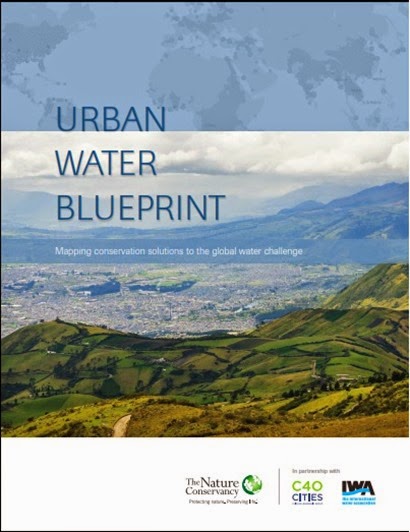
UrbanWaterBlueprintArlington, VA — Britain’s water quality is under unprecedented pressure from high nutrient and sediment levels due to increasing populations, climate change and environmental degradation. With urban water use on the rise, securing an adequate and clean water supply is an urgent challenge.

The “Urban Water Blueprint” released today by The Nature Conservancy, in partnership with the C40 Cities Climate Leadership Group and the International Water Association, provides an in-depth analysis of 2,000 drinking sources (rivers, forests and other ecosystems from which water comes from) serving over 500 large and medium sized cities. This includes the 100 largest cities in the world, representing nearly 1 billion people. Collectively, these cities represent $21.8 trillion in economic activity, or 48 percent of the global urban GDP.

Preventing water from becoming polluted can often be more cost-effective than treatment. The analysis finds that one in four cities would see a positive return on investment from investing in watershed conservation.

Bristol and Glasgow have been identified in the “Urban Water Blueprint” as cities that could reduce sediment and nutrients from their water sources by ten percent through incorporating conservation solutions and subsequently lowering their water treatment costs by an average of five percent.

“This analysis answers for the first time, the fundamental questions of what investments can be taken to incorporate nature in the delivery of clean water and the quantitative value of these actions for water managers,” said Giulio Boccaletti, The Nature Conservancy’s global managing director for water.

“Cities that invest in watershed conservation can no longer be the rare exception; rather such investments need to become a regular part of the toolbox for water managers. For this to happen, people living in cities need to understand where their water comes from so that city and water managers can support measures that will often be implemented outside of metropolitan areas.”

The “Urban Water Blueprint” not only identifies the water risks facing large cities around the world, but analyzes the potential for five conservation strategies that have proven performance and wide applicability across natural and working (agricultural) landscapes. The strategies include Forest Protection; Reforestation; Agricultural Best Management Practices; Riparian Restoration; and Forest Fuel Reduction.

Each strategy is evaluated on how effectively it reduces sedimentation and nutrient pollution in the 2,000 watersheds that were analyzed.

Forest protection and reforestation have been identified as the best conservation strategies for both British cities. The analysis identified that Glasgow has the highest potential for sediment and nutrient reduction from its watersheds and Bristol a medium potential on sediment reduction.

“We found that watershed conservation can be both an economical viable and environmentally sound investment for developed and developing cities alike,” said Robert McDonald, senior scientist at The Nature Conservancy and one of the lead authors of the report. “What’s so exciting is that cities that embrace both the engineered and natural solutions to securing adequate and clean water supplies can not only meet future demand, they can literally reshape surrounding landscapes for the better.”

“IWA sees the growing strategic importance of connecting cities to their watersheds, and water utilities as pivotal players in making the various inter-dependencies work. Watershed conservation solutions will increasingly need to become mainstream options for water utilities and cities for enhancing water security” Tom Williams, director of programmes, at The International Water Association.

"Access to clean and adequate water supplies is a critical issue facing global mayors, and one made more pressing as cities grapple with the impacts of climate change. The research released today shines a spotlight on the need for urban watershed conservation strategies, and paves the way for cities around the world to share knowledge and implement viable solutions," said Seth Schultz, director of research, measurement & planning at C40.

About The Urban Water Blueprint

The “Urban Water Blueprint – Mapping Conservation Solutions to the Global Water Challenge” was made possible through generous contributions from Ecolab through its Foundation, Starwood Hotels and Resorts Worldwide Foundation, and 100 Resilient Cities – Pioneered by The Rockefeller Foundation.

The “Urban Water Blueprint” has an accompanying website as a tool for city and water managers to evaluate the condition of drinking watersheds and the potential impact that conservation strategies, such as reforestation and agricultural best management practices, can have on water quality.

Displaying new information on more than 2,000 watersheds and 530 cities, the Blueprint provides science-based recommendations on where these strategies are most cost-effective. This data, along with detailed case studies of cities that have successfully adopted watershed conservation, can serve as a guide for city and water managers planning future infrastructure investments that include both engineered and natural infrastructure, as well as a learning tool for the one billion people living in the featured cities.

The Nature Conservancy is a leading conservation organization working around the world to protect ecologically important lands and waters for nature and people. To date, the Conservancy and its more than one million members have been responsible for the protection of more than 119 million acres worldwide. Visit The Nature Conservancy on the Web at www.nature.org.

The Cities Climate Leadership Group (C40) is a network of large and engaged cities from around the world committed to implementing meaningful and sustainable climate-related actions locally that will help address climate change globally. C40 was established in 2005 and expanded via a partnership in 2006 with President William J. Clinton’s Climate Initiative (CCI). The current chair of the C40 is Rio de Janeiro Mayor Eduardo Paes; the 108th Mayor of New York City Michael R. Bloomberg serves as President of the Board. To learn more about the work of C40 and our Cities, please visit www.c40.org, follow us on Twitter @c40cities and like us on Facebook at http://www.facebook.com/C40Cities.

The International Water Association (IWA) is a global reference point for water professionals and a source of knowledge, experience and leadership for sustainable urban and basin-related water solutions. IWA members come together from across the water profession to share knowledge, experience and know-how that deliver solutions to the most pressing global water challenges. The strength of IWA lies in the professional and geographic diversity of its members: we are represented in 130 countries through 10,000 individual and 500 corporate members, including scientists from across many disciplines, economists, accountants, social scientists, and managers and leaders among those professions. www.iwa-network.org

Source: The Nature Conservancy

11 Reasons Dehydration Is Making You Sick And Fat

http://themindunleashed.org/wp-content/uploads/2014/09/11-reasonnnsss-1050x603.pngAdverse effects from not drinking enough water include digestive, skin, bladder and kidney problems, fatigue, and even headaches. We need water as much as the air we breathe in! Keeping your body hydrated is not a joke.

Did you know that dehydration actually sets in just before you start feeling thirsty? Sipping water throughout the day is the best way to handle it. Always have a bottle or a glass of water handy! If you’re not a morning person, having two glasses of water right after you wake up will boost up your blood pressure to normal levels, and it’s way healthier than having your first coffee on an empty stomach.

Many of us believe that merely drinking fluids like sweetened juices, soda or tea will hydrate you as well as water does. This is not true. It’s actually the opposite! To deal with the excess sugar and salt you are taking in your body wastes immense amounts of precious water just to clean it out from your system. And if you love your coffee, make sure to drink one extra glass of water for every cup you have.

Read more: http://themindunleashed.org/2014/09/11-reasons-dehydration-making-sick-fat.html

Diet Water

by Michael Smith (Veshengro)

What advertising gimmick are they going to come up next?

10645287_10152729462893641_4235486364517954553_nWater, is water, is water. It contains no calories, no sugar, and, if you discount the added chlorine, it contains nothing, period.

So how can you have “diet water”? The term “beam me up, Scottie” very much comes to mind here because I think everyone seems to be going crazy and it is time I got myself out of here.

If anyone actually believes that kind of advertising hype then they must seriously get their heads examined for there is something very much wrong with them then.

OK! let's do the reality check again: Water = H2O, that is to say, two atoms of hydrogen and one atom of oxygen and that makes this wet stuff that we can drink, that we call water, wasser, aqua, pani, and so on, depending on the language... Simple, with, at source, no additives.

But, as water, especially bottled water, is fast becoming a commodity nowadays they have to sell the stuff at ever higher prices and thus they have to create, now, also “diet water” and the claim, probably, is that it helps weight loss. Well, water does. Any potable, that is to say, drinkable, water. Period! Dosta! Basta! There is no such thing as “Diet Water”. It is a made up advertising gimmick and we do well not to fall for it and rather let them fall (into the abyss, where they belong).

© 2014

Stash this collapsible water bottle in your pocket and turn back to the tap

Ohyo collapsible water bottlesIt's time we made water bottles part of our every day carry (EDC) gear, just like our keys and our phone. This handy little bottle squishes down small enough to go everywhere you do.

It's great that we're a lot more conscious of drinking water these days, and not just sodas and coffee and sports drinks, but that water consumption comes at a pretty hefty environmental cost, at least if we buy bottled water all the time. It's estimated that getting one liter of bottled drinking water into our hands requires seven liters of water and a quarter liter of oil, so there are a huge amount of wasted resources tied up in our bottled water habit, as well as an enormous plastic trash problem from all of those bottles and packaging.

It's quite silly to my way of thinking, as while there may be some appropriate times and locations for bottled water (emergency relief, sporting events, caching and reserves for if/when the SHTF), the majority of the time we can do just fine without it. After all, water is a basic human need, and we know we'll be thirsty at some points during the day, every day of our lives, so why would we NOT have a water bottle with us all the time, just as we wouldn't ever forget to have our keys or our phones or our wallets with us?

In addition to having a container for our water, we can also turn back to the tap and away from the fancy bottled water advertising. If you live in a modern city with an appropriate water treatment and delivery infrastructure, the water that comes out of your tap may be exactly the same as that in the bottles at the corner store, except at a huge markup in price. By choosing to refill your bottles and cups from the tap or a water fountain, instead of buying bottled water, it's not only much cheaper, but it's also more convenient and easy to drink more water.

Read more: http://www.treehugger.com/gadgets/stash-collapsible-water-bottle-your-pocket-and-turn-back-tap.html

Man was charged £75 for three bottles of water

by Michael Smith (Veshengro)

san-pellegrinoI know that water is getting rather scarce but £5.50 per small bottle (250ml) of sparkling mineral water really takes the biscuit.

London business man, Edward Heaton, was charged this stately sum for three – repeat three – bottles of mineral water at the five star Wellesley Hotel in Knightsbridge.

Because it was hot he and his two business contacts opted to sit on the terrace and ordered three small bottles of San Pellegrino sparkling water.

While Heaton expected to pay a little more for the hotel's service he never expected what the charge would be.

After the meeting concluded and Mr Heaton requested the bill and was dumbfounded when he saw it.

He was charged not only the exorbitant sum of £5.50 per bottle. Nay the hotel also added a minimum charge of £50.17 plus a service change of £8.33, bringing the total to £75 (or $125).

Rip off, I think, is not the word. Extortion more like. Mind you, the cost for bottled water is extortion and exorbitant anyway and is a rip off to start with, regardless of what name may be on the bottle.

Not that, I am sure, you could even ask for a carafe of tap water in that kind of establishment without also being charged some silly fee for it.

© 2014

Stay hydrated (this summer), but best avoid drinking from plastic water bottles

by Michael Smith (Veshengro)

dedopperWater in plastic bottles can cause all sorts of health and environmental problems – so rather use tap water and use a refillable bottle instead. If you do not like the taste of tap water or are concerned about the chlorine and possibly even fluoride in the water then use a (charcoal) filter.

The weather this summer has been (mostly) glorious, but the heat means we all need to drink more water to stay hydrated. A fact many people forget and then get sick.

As water makes up about 60 percent of our weight keeping well hydrated is vital for proper functioning as every system in the body depends on water. Dehydration can lead to all manner of ills, including kidney failure and death.
Water helps with alertness and performance in sports, it controls appetite, and it also keeps symptoms like fatigue, headaches and dry skin at bay.

In the summer heat, we perspire more and need to drink more. Also, perspiration causes us to lose salt which we have to replenish and for that reason the military issues soldiers with salt tablets in hot conditions.

But in the summer, drinking water from a plastic bottle – which we all know is an expensive way to get water1, and is never great from an environmental point of view2 – means that the exposure to chemicals such as BPA and phthalates3 which leach from the plastic into the water is made worse by the heat. (BPA and phthalates can cause a whole host of problems to the immune system, the brain and the prostate.)

When we talk here about plastic bottles it refers to those made from PET primarily and those made from polycarbonate material of the old style. There are plastic bottles that do not leach BPA and other nasty stuff and thus are usable.

So, follow these guidelines to stay hydrated, healthy and cut down on waste:

On the move: If you're out and about: drink tap water using a refillable, re-usable bottle and you have a number of choices in that department. The best choice is glass, but that is breakable. The next best is stainless steel but there are also some BPA free plastic bottles to be had such as the Ohyo, which is a collapsible water bottle, the Brita with even a built-in charcoal filter, or, last but not least, De Dopper. Plastic is not always bad in all three cases they are BPA free.

About 1.5 million tons of plastic are used to make water bottles each year around the world, and the processing itself releases toxic compounds like nickel, ethylbenzene, ethylene oxide and benzene. Not to mention the health problems that plastic water bottles can cause.

There are many public fountains and refilling places for reusable bottles that can be found on the Internet in and around London and possibly also elsewhere. Unfortunately many pubs and such like are very reluctant to fill up people's bottles and this is rather a shame. Everyone is seeing Pound signs in front of their eyes all the time instead of being community and environmentally minded.

At home: Drink tap water at home instead of buying water and, as said, if you don't like the taste or are concerned about impurities as well as chlorine or even fluoride then use a charcoal filter and filter your water. The same goes for being out and about.

You could also invest in a distiller which guarantees total safety as far as your water is concerned distillation will remove (almost) everything. I never say 100% as it simply is not possible.

You can use filtered water to drink at home, or fill up a refillable bottle to take around with you. But avoid, as much as possible, buying bottled water which, aside from the fact that the plastic bottles may leach chemicals, and thus the stuff is not good for your physical health, it is also not good for your financial health and that of the Planet.

Who, in their right mind, would pay $2 for less than a quart of bottled water which, in a great majority of cases, is but tap water which may, or may not, have been filtered and, maybe, undergone “reverse osmosis”.

In Britain and many other countries tap water is perfectly safe – safer in fact than bottled water as municipal water undergoes much stricter testing than does bottled water – to drink as it comes and even better so if filtered or distilled and then left to settle for a couple of hours.

Please remember also that hydration is not just important in the summer heat. Also in the cold of winter dehydration happens fast, only you do not realize it as easily and often it can be too late. So, remember to stay hydrated at all times with your own refillable water bottle and tap.

Give me tap...

© 2013

1 Typically bottled water retails at up to 500 times more than the price of tap water. ETC, University of Nottingham.

2 Bottled water also has considerable environmental costs, including the energy costs of production and transport, and the environmental costs of disposing of (or, very rarely, recycling) the bottles. Sustainweb

3 Studies have shown that phthalates, which are known to disrupt testosterone and other hormones, can leach into bottled water over time. NDRC

America's new found beverage love... Water

by Michael Smith (Veshengro)

bottled-waterIt was not all that long ago that America had a serious love affair with all things soda. Now, a new drink, which is in fact an old flame, is taking the country's heart by storm.

As New York City grapples with the legality of a ban on the sale of large cups of soda and other sugary drinks at some businesses, one thing is clear and that is that soda has run as the nation's beverage of choice has fizzled out like a flat Coca Cola. In its place we find a favorite for much of history, namely plain old H2O, also known simply as water.

But, while this is a great move, no doubt, the problem is that in most cases this water still has an enormous impact on the environment as it is, more often than not, bottled water, drunk in the belief that it is healthier than tap water, this is but a myth. This myth is, however, being perpetuated by the bottled water suppliers, including soda companies such as Coca Cola and Pepsi.

For more than two decades, soda was the No. 1 drink in the U.S. with per capita consumption peaking in 1998 at 54 gallons a year, according industry tracker Beverage Digest. Americans drank just 42 gallons a year of water at the time.

But over the years, as soda increasingly came under fire for fueling the nation's rising obesity rates, water quietly rose to knock it off the top spot.

Americans now drink an average of 44 gallons of soda a year, a 17 percent drop from the peak in 1998. Over the same time, the average amount of water people drink has increased 38 percent to about 58 gallons a year. Bottled water has led that growth, with consumption nearly doubling to 21 gallons a year.

It was not too far back in history that tap water was the top drink but then in the 1980s, carbonated soft drinks overtook tap as the most popular drink, with Coca-Cola and PepsiCo Inc. putting their marketing muscle behind their colas with celebrity endorsements from the likes of pop star Michael Jackson and comedian Bill Cosby and, I guess, that everybody thought that if those people endorse it then it must be good. Not considering that the main ingredient in both of those colas is phosphoric acid, an industrial cleaning agent and one which, when mixed with chlorine bleach, turns into phosgene gas. Lovely stuff, eh?

The problem with the new found love affair of the American nation is that the water that they are consuming predominately is not tap water but bottled water that the advertising agencies suggest to them to be purer and cleaner than tap. And who are the greatest water bottlers? Coca-Cola and PepsiCo Inc., and their best-selling waters are, wait for it, from municipal sources; in other words nothing more than tarted up tap water. And the consumer pays a hundred times more for it per liter than for tap. Nice marketing ploy.

There is no “smartwater” or “vitaminwater”... it is water, period and if you do not like the taste of your tap water – and the chlorine can be tasted at times – then use a Brita filter or similar and if you want to really go the whole hog as to safety then use a water distiller such as the Megahome Water Distiller. But go for tap and use a reusable water bottle. Your wallet and the Planet will thank you.

© 2013

Saving water

Saving water, during a drought and in general

by Michael Smith (Veshengro)

“Don't rush to flush if it's only a pee” was the water saving eco-advice given in a booklet produced by the office of the Mayor of London under Ken Livingstone and this is a good advice.

Using less water in our homes (and elsewhere) is not only good environmental practice, it also makes financial sense, especially if you are on a water meter. If you are not than, in financial terms, there is no benefit but in the long run you too will benefit as there remains enough water to go round.

Once again we have seen how our water resources are stretched, especially in the South, South East and East of England where several dry winters in a row have given us another, though by now rather wet, drought and hosepipe bans are in place and the there was the threat, almost, of also other restrictions.

How a country such as Britain where it rains a great deal though, as said, the last couple of winters have been rather dry, bar some snow the year before last and the one before, ends up having water shortages confuses most of our European neighbors. The problem is that unlike most of the Britain does not have a national water grid and makes every excuse under the sun for not putting one in place.

The other problem, especially for the Southern Counties and the Home Counties, is that there are simply too many people living there and too much industry situated there; both of which impacts seriously on the water resources.

Furthermore the water infrastructure is so old, in many places dating from the Victorian era, with little to no investment having been made into it for at least three quarters of a decade. Pipes are so porous that one could almost say that they appear to be resembling a sieve in many places and the water companies seem to be incapable or unwilling to actually get on top of that problem and plug the leaks.

When it comes to saving water, and not only the householders need to think about that; business need to also, there are a number of things that can be done and using the flush on the toilet only when needed is but one.

When it comes to using water a home it is a case “when not necessary don't run the tap” also and that means especially when brushing your teeth. Way too many people – and the reason for this beats me – leave the tap running when cleaning their teeth. Use a beaker as we always did and I still do to rinse. Much better anyway than sticking your head under the tap.

Take a four-minute shower instead of a bath. That saves a great deal of water especially considering how many gallons of pure clean water is being used with each and every bath.

Get a rainwater butt – or more than one – for use in the garden. Rainwater is also much better for use with your plants, be those flowers or vegetables, than is tap water. The chlorine is what cause the problem of leaf burn when watering is done during the day (though watering during the day when the sun is high is not a good idea as the water will evaporate) as chlorine is, basically, a salt.

More water savings could be achieved if you use gray water in the garden, for instance, or for the flushing of your lavatory. Gray water is that kind of water that you have been using for washing your hands, during a shower and such. With the right tools it can be captured and used another time. The only gray water I would not suggest using is the one from washing the dishes as that may, aside from detergent which would not be all that good for watering plants, grease which would cause a problem also when used for flushing the lavatory.

Gray water use requires a little forethought and diverters where certain types of water are used for specific applications, such as the water from your washing machine for use only to flush the lavatory and not to go for watering the garden, for instance.

Those are but a few suggestions that could save you money, if your water use is metered and you pay according to that, and which, and that is most important, can help conserve precious water resources.

© 2012

Bottled Water - A Scourge to the World

by Michael Smith (Veshengro)

Even though people in the US and Britain, and other places in Europe, have access to clean water from their taps, they drink an average of 200 bottles of water per person each year (in the US). Over 17 million barrels of oil are needed to manufacture those water bottles, 86 percent of which will never be recycled.

But, and people always think that I, and others, are on about the bottles that are not bein g recycled and being plastic and having BPA in them, and then some clever one will always try to tell me that there are biodegradable bottles now. Fine, but the bottles are not my primary concern.

The primary concern is that fact that all that bottled water depletes the resource of water in our own countries and around the globe. Please note, if you have not noticed already, that there is now bottled water shipped all the way from Fiji to the US and the UK.

In the last 10 years, per-capita consumption of bottled water in the U.S. has doubled and Americans now drink an average of 200 bottles per person per year, and while I have no figures available at present for the UK and other European countries, I would say that Britain probably just lags behind a little bit and about 100-150 bottles per person are the norm.

So, while millions of people across the world don't have access to clean water at all, Americans and Europeans, the overwhelming majority of which, have safe and cheap tap water flowing freely, still are choosing to shell out tons of money for bottled water. And the industry is making a killing off of it. It does not make sense.

What most people do not seem to realize is that a great many of those brands of bottles water, that cost at least around $1 to $1.50 a bottle, contain nothing more than filtered or reverse-osmosis treated, if lucky, tap water. Both Pepsi-Cola's Aquafina and Coke's Dasani are nothing but tap water, basically, and Pepsi, unlike Coca Cola, have actually admitted and now state that the water is from public sources.

Aside from the rip off this bottling of water from public water sources also puts a great strain on the municipal and otherwise public water net and in fact we, the public, who, through our water rates pay for the public water infrastructure pay twice, and often thrice, if we buy bottled water. Make mine Tap! Thank You!

As I have said already, what many consumers don't know is that at least a third of bottled water in the USA is actually from the same source as tap water. In some other countries it is as much as half.

Companies like PepsiCo, Coca-Cola and Nestle, the big three water bottlers, are actually sucking municipal water systems for the product they bottle and sell back to us for hundreds and even thousands of times the cost. Additionally, Nestle has been mining groundwater in rural communities – many of which are concerned about their springs and streams going dry because of bottling operations.

The latter is also true as to bottled water from other companies where ground and spring water is being “mined” for the bottling process and causes water shortages.

Water is becoming more and more in short supply because we are using an d abusing in at an enormous rate, in our homes and our businesses and because the amount of water that goes back into the water courses and from there back into the seas, whether from flushing our toilets, from industry or whatever, the original water cycle no longer works. More water stays in the seas and less comes back to us in the form of rain and thus bringing us droughts even in countries such as Britain.

We must take a very close and serious look at how we use water and that includes also our use of bottled water.

What is a very sad thing is to see how many bottles are thrown away daily that have only had a few sips taken out of then and have then been chucked into the litter bins. At times we see two liter bottles having gone that self-same route with, maybe, a cup of water having been drunk.

It is time to get the public drinking fountains back where then people can fill up their own water bottles, of whatever material, for use and for free. Alternatively a small charge for filling a bottle could be made, say ten pence, which would then go to charities working to provide safe water facilities for the Third World.

A quick recap to conclude: It is not so much about the plastic bottle, whether compostable (in a composting facility, for they don't do at home), that are the problem but the very fact that we put water in bottles in the first place and the extraction of the water, the mining of groundwater.

Water is the next oil and a substance that wars will be fought over and in some places wars are being fought over it already and in some places such wars have always been on the agenda. However, if we do not think and act positively now it will become worse.

© 2010

Get ready for the water wars – and not just in the Southern USA or the dry areas

If the 19th century was about land, 20th century was about oil, the 21st century will be about water

by Michael Smith

There are more of us and if we all drink, wash, flush, generate, irrigate, manufacture, etc., and continue to use and especially abuse and waste water the way we currently do we are going to be in dire straights.

This is not primarily because of droughts in say the Southern USA or in Australia but simply because of the way that we use water and the fact that we flush thousands of gallons of that previous resource down the drain daily, more often than not needlessly. We cannot continue to go on like this; no way.

A decaying highway, plunged deep underwater after Lake Hartwell was dammed in the 1950s, sits exposed once again across what remains of the bay outside Big Water Marina.

This is a depressing reminder of the toll from a stubborn Southern drought that only recently began to abate with replenishing rains this fall. Much of the region has recovered, but a ring stretching from northeast Georgia to the western Carolinas remains stuck in "extreme" drought.

However, it is not just the empty or part empty reservoirs in drought areas that must concern us. We all must think about the way we use water. In addition to that our immense consumption of bottled water, which removes so much of the spring water and other such from the source before it ever even reaches such reservoirs.

It is at times not due to drought that such reservoirs have run dry but because of the water extraction elsewhere for other purposes, and bottles water is one of those that does just that.

Neither is this, necessarily, a result of the so-called “Global Warming” or “Climate Change”, but more often than not bad water management and especially bad water usages and great water wastage.

When the UK had a couple of extremely dry and warm to hot summers and we were put under drought orders in several regions we were also told that it would take years of steady rainfall to refill the reservoirs and especially the aquifers.

Then came the wet summer of 2007 and after just a few days of nigh on continuous and also heavy rain, something that should not have, according to the experts, been filling up the aquifers, we suddenly heard on the news that, unless the rain abated rather soon all the aquifers would be overflowing. But, I thought it would take years of continuous steady rain for them to fill up again and heavy rain in only a few days would not do that. So, at least the experts told us.

Our water usages and the wastage of this precious resource is what is causing most problems. Cars are washed willy-nilly and lawns watered, even during droughts. What for? Toilets are flushed all the time even if it is only for a wee. Each and every time a toilet is being flushed that are about ten liters – 2.5 US gallons – of clean perfectly safe drinking water literally down the tube.

As regards to Hartwell, a massive 56,000-acre lake straddling Georgia-South Carolina state line, is near the epicenter. Even after a spate of recent downpours, its water line is nearly 18 feet below normal levels.

"We never thought we'd see it. We never thought the lake would go this far down," said Jane Davis, who built the marina from the ground up with her husband. "Everyone needs water, but Hartwell has finally given more water than it can take."

Some residents blame the U.S. Army Corps of Engineers, which sends millions of gallons of water from the lake each week downstream to the Savannah River to help supply Savannah, Augusta and other cities.

They also worry that the Corps and another federal agency, the Southeastern Power Administration, focus too much on generating electricity and too little on keeping the lake full.

"You're going to have to put lake levels on the priority list," said Mike Gray, a real estate broker in nearby Anderson, S.C., who has a growing list of unsold homes on the lake's banks.
The Corps, which has reduced water releases from Hartwell by 15 percent this month, said producing electricity is an "incidental" byproduct of sending water downstream.

Atttitudes like that are really the worrying thing, in my view, when it is more important for those like that real estate broker, that the lake is full so that people can have their big boats on their and go playing rather than whether people have water to drink or electricity.

This is a man-made lake, a reservoir, and it is there to be used for water for drinking, power generating and other uses, but not, primarily, for boating, however nice this may be for the residents around that lake.

Until such a time that the world gets its priorities right, and I mean here the people of the world, we are going to be a deep you know what. Too many with the money – they still have some it seems – are more concerned as to where they can play with their boats and impress their friends with having a boat at a marina, and such. Time for some changes, methinks.

Reservoirs are there to store water for times of needs and not whether some boats can be sailed on there, or whether there is great fishing. That all is secondary and should be thus. Time everyone woke up to this fact, whether at Hartwell or elsewhere.

Water is needed for people, wildlife and nature; the boats are not needed. It is time those that think they can do because they have the money get real. If there is no water to irrigate the fields then they have no food either. But, I guess, they'd simply reckon that they go an buy imported stuff. Brilliant – NOT!

I rest my case.

© M Smith (Veshengro), December 2008
<>

10 liters down the drain – every time

by Michael Smith

Each and every time that you flush your WC in the UK – and I assume that this is not much different in the USA and Canada, for instance – you flush about ten liters of good clean drinking water down the drain.

The advice that was given last year or so by the then Mayor of London, Ken Livingstone, or let's better say, by his office, of “don't rush to flush if it's only a pee” is something that we should take to heart.

Water, water to drink, is going to become more and more precious and rare if we do not stop flushing it down the drain and ultimately into the sea when it not all comes back to us as water, in the form of rain. In fact much of it is lost to us.

This is why we must make an effort to stop the wastage of water, and the flushing of the WC each and every time that we go for a pee, for instance, may be something that we must curb.

If we do not make every effort to reduce our wastage of water we will be facing a problem in the future.

Those 10 liters mentioned here is the amount of water that every flush of the lavatory sends down towards the sewerage works and then the sea, most of it never ever to be seen again on dry land. In addition to that there is the water that is wasted by taps left running while brushing teeth. It always beats me why people insist on having the tap running while they brush. It is just as easy to turn the taps off. Also, what is wrong for rinsing to use a beaker instead?

The way we treat water is as if it is just simply there. We have this “who cares” attitude about it, as if we are thinking that it will be there for ever. It may not the way we carry on.

The only way we get fresh water is through rain and that rain has to actually end up in the aquifers and not run out to sea, yet again.

However, due to the fact that we have so much of our ground concreted over and tarmacked over, the water, especially during heavy and prolonged periods of rain – if we have them – just runs into the rivers without going through the soil and ground first, causes flooding and then is off to the sea. Most of that water that thus heads that way is then lost to us for ever. The hydrological cycle that those of us that have gone to school have had explained does not actually work that way at all – at least not anymore. Hence we have to conserve water somewhat more, and this may and maybe should include rainwater harvesting.

For the use in the flushing of he lavatories gray water and harvested rainwater also could and should be used and many new housing developments in Britain, for instance, now have to have rainwater harvesting and gray water as standard, and a good idea this is, methinks.

There are, however, countries and areas where rainwater harvesting, even on a small rain barrel in he garden scale, is illegal, such as a number of States in the United States. There is it a felony to divert the rainwater away from its natural flow. Sorry, but methinks that is more that silly. In fact, I would say, it borders on the insane. Then again many statutes here and elsewhere appear to have been drafted and then passed by people who are, in fact, a few sandwiches short of a picnic.

Ii honestly sometime wonder as to whether it is a requirement to be a politician to be stupid and and imbecile, for the more I see of them and the more I observe the mammals of the genus “politicus grandicus” the more I believe this to be thus.

While we must not waste water, the opposite in fact; that is to say we must conserve it as much as possible, we should and must be able to capture and use the water that comes from the roofs of our homes in order to conserve the tap water, in that we can use it in our gardens and to flush the lavatories and such.

© M Smith (Veshengro), December 2008
<>

TAP LAUNCHES A REFRESHING ALTERNATIVE TO BOTTLED WATER

- Tap into the growing trend of re-usable bottles to save money and the environment -


A new ethical enterprise called Tap has entered the world of bottled water, with a sole mission of getting Brits to re-think bottled water and turn to tap.

Despite having some of the highest quality tap water in the world, Britain spends £1.5billion per year on designer label water, discarding over 3 million empties. Not only is this impacting on the environment, but it’s costing the nation too, with bottled water up to 10,000 times more expensive than tap.

We Want Tap has really launched the real alternative to bottled water, namely what we already have and that is mains water, that is to say, TAP.

In a bid to break the habit, Tap has launched its very own re-usable water bottles. Think of them as flasks for water. Set to become the ‘must-have’ item of the summer, the bottles are stylish and sustainable, and available in two sizes, making them the perfect fit for your handbag, gym bag or fridge.

More importantly, they are made from a new generation of Tritan plastic which is 100% recyclable and free from the polycarbonate chemicals, such as being absolutely 100% free of Bisphenol A, also known as BPA, found in most other re-usable plastic bottles. What’s more 70% of profits from each Tap bottle sold will go to water and sanitation projects in the developing world.

Bisphenol A (BPA), as most of us know by now, I am sure, has had some rather bad press as it is related to hormonal changes in humans and can affect children's hormonal development badly. Hence Canada has banned all BPA products, which meant 1,000s of baby feeding bottles had to be withdrawn and also Nalgene had to remove its old version bottled from the shelves.

Guaranteed to last a lifetime, Tap’s new re-usable bottles offer a practical alternative to unsustainable bottle water. Priced at just £6 for a 400ml bottle and £8.50 for a litre version, it’s a small price to pay to help save the environment, and people’s wallets in the long run. They can be purchased online at www.wewanttap.com.

Tap's founder, Joshua Blackburn, said: "Bottled water is simply a marketing invention, a brand – and one that is costing our nation both financially and environmentally. In a country where high quality water is literally on tap, we should be re-thinking the amount we spend as a nation on designer water.

"Tap water challenges undertaken across the country have repeatedly shown that tap is top. To encourage people to love their tap, we’ve engineered the ultimate re-usable bottle which can be used over and over again – designer water is set to become a thing of the past."

As Tap is also a consumer campaign, a range of stickers can also be purchased on the website to stick over existing empty bottles of bottled water – refilled with tap water - and raise awareness of Tap. Stickers cost £4 for a pack of 30 stickers – five large bottle labels, five small bottle labels and 20 fun size bonus stickers. It is advisable that ordinary water bottles are refilled only 10 times as most contain polycarbonate chemicals, such as BPA, to some extent. A Tap bottle, on the other hand, can be used for life.

The Tap enterprise has been launched by Provokateur, the ethical communications agency, in association with Belu, the carbon neutral water company.

The Centre for Innovation in Voluntary Action is responsible for the distribution of Tap profits to charity.

Log onto www.wewanttap.com for more information

by Michael Smith, August 2008
<>

Coke bottling despite water SCARCITY

Community water shortage concerns confirmed

January 18, 2008

BOSTON, MA – A report released on January 14, 2008 confirmed what communities across India have been saying for years – groundwater levels are dangerously low in areas near some Coke plants.


"The report was an attempt to hide certain facts and ‘whitewash’ the [corporation’s] operations," said R. Ajayan of the Plachimada Solidarity Council. "But the Coca-Cola corporation’s attempt to regain its lost credibility has once again failed."


Though Coke commissioned The Energy and Resource Institute (TERI) to conduct the 500-page study, the findings raise serious questions about Coke’s water use in India.


Of the six plants surveyed, three plants are located in areas where the stress on groundwater is increasing.


"…in Mehdiganj, the water tables have been depleting and the aquifer may move from a safe to semi-critical situation," the report found. “[I]n Nabipur, the state of the aquifer has already moved from critical to overexploited conditions.”


These findings stand in direct contradiction to earlier claims by Coke officials that water levels in the Mehdiganj area had actually risen since their plant began operations. Such findings also echo community concerns -- concerns that Coke has previously dismissed.


"[T]he basic focus of the Coca-Cola Company water resource management practices is on the business community – community water issues do not appear to form an integral part of the water resource management practices of the Coca-Cola Company," the report found.


What’s more, the report questions Coke’s wisdom in siting its Kaladera plant in an area where groundwater is ‘overexploited,’ saying the most practical option would be to close the plant.


Still, Coke is resistant. This week Atul Singh, the chief executive of Coke’s India division, is defending Kaladera, offering a strangely illogical explanation for keeping the plant running.


"The easiest thing would be to shut down, but the solution is not to run away," Singh told the International Herald Tribune.


The report surveyed only six of Coke’s 60 facilities in India. The findings indicate that Coke’s bottling practices may have much greater implications for India’s water resources as a whole.


"Reporters and officials need to be asking some very tough questions of this corporation,” said Patti Lynn, campaigns director for Corporate Accountability International. “We all need to be asking whether we should be allowing corporations to control community water resources, especially if this is the result."


# # #


Corporate Accountability International, formerly Infact, is a membership organization that protects people by waging and winning campaigns challenging irresponsible and dangerous corporate actions around the world. For over 25 years, we've forced corporations -- like Nestlé, General Electric and Philip Morris/Altria -- to stop abusive actions. For more information visit www.stopcorporateabuse.org


NYC Tap Water to be Served at Olympus Fashion Week

Well up to 25,000 plastic water bottles are, traditionally, given out during Olympus Fashion Week at Bryant Park. But this year, in an effort to "green" the show, participants will be given reusable liter-sized non-toxic aluminum water bottles which have been specially prepared backstage and hold nothing but New York City tap water.

Aveda, along with NY's most talented and influential designers, is trying to raise the fashion industry's collective environmental conscience (as if boycotting food wasn't a grand enough contribution). They also plan to eliminate the use of fur in shows, serve organic and locally-sourced food, and print programs and invitations on post-consumer recycled paper.

Michael Smith (Veshengro), Feb 2008

WARNING! - Do NOT Reuse Plastic Water Bottles

Refilling and reusing plastic bottles can release toxic cancer-causing chemicals and also cause bacterial infections

Most types of plastic bottles are safe to reuse at least a few times if properly washed with hot soapy water. However, how clean can we ever get plastic? I have used military water bottles of the plastic kind before but found that the plastic more often than not leaves a taste in the later and I am not sure how clean I can get them even in very hot water. The hotter they get washed, I found, the more the water tasted funny afterwards.

But recent revelations about chemicals in bottles of certain types of plastic, such as Lexan, are enough to scare even the most committed environmentalists from reusing them (or buying them in the first place).

Then again why anyone, unless there is no other option, buy bottled water in the first place beats me anyway, especially if we consider that a great deal of bottled water is nothing but packaged tap water in the first place. Why would you want to pay for something that you can get for “free”, even if you are out and about. In public parks and other places there you will find public drinking fountains and it should be possible to fill up your own, ideally proper safe plastic, such as the military canteens (I personally don't like the taste of them too much), or metal, water bottle.

Chemicals May Contaminate Food and Drinks in Reused Plastic Bottles

Studies have indicated that food and drinks stored in such containers – including those ubiquitous clear Nalgene water bottles hanging from just about every hiker’s backpack – can contain trace amount of Bisphenol A (BPA), a synthetic chemical that interferes with the body’s natural hormonal messaging system. How lovely – NOT! What next?

Reused Plastic Bottles Can Leach Toxic Chemicals

The same studies found that repeated re-use of such bottles - which get dinged up through normal wear and tear and while being washed - increases the chance that chemicals will leak out of the tiny cracks and crevices that develop over time. According to the Environment California Research & Policy Center, which reviewed 130 studies on the topic, BPA has been linked to breast and uterine cancer, an increased risk of miscarriage, and decreased testosterone levels. Well, I guess here is the answer to my “what next?” question.

BPA can also wreak havoc on children’s developing systems. (Parents beware: Most baby bottles and sippy cups are made with plastics containing BPA.) Most experts agree that the amount of BPA that could leach into food and drinks through normal handling is probably very small, but there are concerns about the cumulative effect of small doses.

Even Plastic Water and Soda Bottles Should Not Be Reused

Health advocates also recommend not reusing bottles made from polyethylene terephthalate, also known as PET or PETE, including most disposable water, soda and juice bottles.

According to The Green Guide, such bottles may be safe for one-time use, but re-use should be avoided because studies indicate they may leach DEHP - another probable human carcinogen - when they are in less-than-perfect condition.

In addition to that, e.g. carcinogens, the other problem is that such bottles cannot be 100% sterilized and bacteria may accumulate over use and time and could really seriously harm the drinker. This, in fact, is one of the greatest concerns about the reuse of PET bottles. If the water is too hot it may melt or deform the bottle and, although no study seems to have been conducted on that as yet, who is to say that there is not a further release of some chemicals occurring when such heat is applied.

Millions of Plastic Bottles End Up in Landfills

The good news is that such bottles are easy to recycle; just about every municipal recycling system will take them back. But using them is nonetheless far from environmentally responsible: The nonprofit Berkeley Ecology Center found that the manufacture of PET uses large amounts of energy and resources and generates toxic emissions and pollutants that contribute to global warming. And even though PET bottles can be recycled, millions find their way into landfills every day in the U.S. alone.

Incinerating Plastic Bottles Releases Toxic Chemicals

Another bad choice for water bottles, reusable or otherwise, is polyvinyl chloride or PVC, which can leach hormone-disrupting chemicals into the liquids they are storing and will release synthetic carcinogens into the environment when incinerated. Plastic Polystyrene or PS, has been shown to leach styrene, a probable human carcinogen, into food and drinks as well. Not that I have, I must admit, as yet seen water bottles made of polystyrene.

Safe Reusable Bottles Do Exist

Safer choices include bottles crafted from safer HDPE, low-density polyethylene (LDPE) or polypropylene (PP). Consumers may have a hard time finding water bottles made out of LDPE or PP, however. Aluminum bottles, such as those made by SIGG and sold in many natural food and natural product markets, and stainless steel water bottles are also safe choices and can be reused repeatedly and eventually, in the final end, recycled. The aluminum one, we must remember, must be coated on the inside with a special sealant, often this appears to be gold-based, to stop contamination by the heavy metal which aluminum is but aluminum is, as mentioned in the article on aluminum recycling, fully recyclable, as is, obviously, stainless steel. Such bottles, however, should last for many years if not generations even. Less environmental impact and another reason to invest in some of them.

Looks like all in all the best advice could be: bring your own bottle of aluminum or stainless steel and also bring along a stainless steel cup, for the polystyrene ones certainly cannot be recommended.

Michael Smith (Veshengro), December 2007

N.B. I hope to be able to bring you, the readers, in due course, product reviews on the SIGG bottle(s) and hopefully also on one or the others.