Showing posts with label pocketknives. Show all posts

Young people and knives in Britain and elsewhere

by Michael Smith (Veshengro)
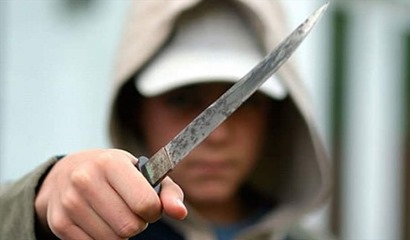
Young people and knives in Britain and elsewhereWe have had knives in our homes, etc., for how long? Boys used to carry a knife on them, in years gone by, and that is not really that long ago, more or less routinely, especially in rural areas, from the simple pocketknife to fixed bladed sheath knives. They also took those knives to school often and how many stabbings did we have among children and young people? Almost zero.

Boy Scouts from Cub Scouts upwards carried the traditional Boy Scouts knife – first in the form of the “official” pocketknife, later the sheath knife – on their belts, openly, and even the Scout hatchet. They attacked each other or others? No.

Now we have this so-called knife culture (sorry, the people who phrased that term have no idea of true knife culture) with all those stabbings and such. When did this phenomena appear? Around 30 years ago or so. And what happened at that time? The proper disciplining of children was outlawed, more or less. A correlation? I sure think so.

The same goes for guns, say, in the United States. People in the Unites States have had guns in their homes for 200 years and more. Mass shootings, including and especially those in schools, perpetrated by students, have only become a problem in the last 30 years or so. If you look closely enough you will sure see the correlation between gun shootings and the decline of and in disciplining our children. Children today believe that they can do as they like having to fear no consequences, as they no longer are permitted, by law often, to be spanked.

When the paddle and the cane were removed from home and school the trouble started. We had – virtually – nothing of this kind in the years until that time. And still people refuse to see the correlation between the two. In addition to that ever since then there seems to have been an increase, generally, in aggression and violence in children and young people, against one another and against other people.

Treating the kids today with Ritalin for supposed ADHD and ADD also is an additional problem for one of the side effects, apparently, of that drug, and of Prozac, is what? Hold on to your hat. According to some medical professionals the side effects are uncontrollable anger. So, while it may dull the kids down when they explode they really do and have – almost – no control of their anger.

Yes, admittedly, violent TV and cinema, computer games and especially virtual reality also have a great deal to answer for but when one looks close enough there seems to be only one real reason for all this malaise and that is that, today, parents and others may not guide their children by the use of proper methods of discipline and chastisement.

Any animal parent chastises their offspring and maybe some people would do well to observe the ways in which this happens but then, most of the do-gooder brigade have so much lost such a connection with reality and Nature, as have our nations' children, that they would not comprehend those ways.

In many other countries that, on one level, have higher cultural values and where the community, in raising kids, is more the focus than the individual, and especially those in the East, and where there is also a lot more focus – in the family and community – on disciplining of children, including physical chastisement, the problems that we, in the so-called liberal West have, seem almost non-existent. But when in those countries and cultures those old values are eroded or abandoned almost the same problems arise.

And still almost no one is willing – in the West – to see a correlation between the abandonment of proper chastisement of children and the rise of the issues that we are faced with, from lack of respect for people and property over general anti-social behavior and mindless violence all the way to knife- and gun crime and the rest.

Talking about rest... I am going to rest my case here; it is becoming rather heavy.

© 2018

Dead-simple pocketknife is the best

by Michael Smith (Veshengro)

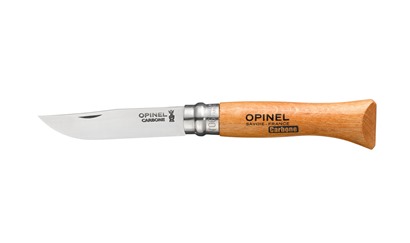
ndeg06_carbone_web (1)A dead-simple pocketknife is the best to carry, especially on a daily basis, and the Opinel fits that bill on all levels.

Over the years I have owned and used many different pocketknives, some of them not directly cheap, single and multi-bladed, but I have found none as good and reliable than the first kind that I ever owned (or one of the first ones, for my very first was a different one, if I remember, but I was given that as a rather small boy of five), the Opinel. The next one that I was given was an Opinel #6, about two years later, and an Opinel #6 or #8, the latter though rarely, has been a constant companion ever since.

Many of us, outdoorsmen, bushcrafters, and such, seem to be gadget lovers when it comes to knives and other things and many seem to believe that the bigger the blade(s) and the more of them the better. The bigger the better belief is also there as regards to size when it comes to fixed-bladed knives. I seem to be an exception as I don't run after all those gadgets and such and neither do I like knives that are too big, unless I want to use a machete.

However, the best blade is the one that is just big enough for the job and your knife, whether belt knife or pocketknife is not a hatchet or a machete; it is a knife; simple.

The Opinel #6 is my daily-carry-knife, and has been for very many years, and that for more reasons than one. The main one, nowadays, is that carrying any knife – even a folding one – with a cutting edge longer than 3-inches can get one into very hot water with the police. Another the fact that the knife is big enough for almost all jobs that require a knife; a bigger one is not, actually, needed on a day-to-day basis. Then there is the fact that is is light and handy and I just love the lock and the wooden handle.

I do have many other pocketknives as well – I have sort of got a few over the years – but when it comes to it my first choice is always the Opinel, but never bigger than the #8 to be very honest though. As indicated, the #6 is the one that is always with me.

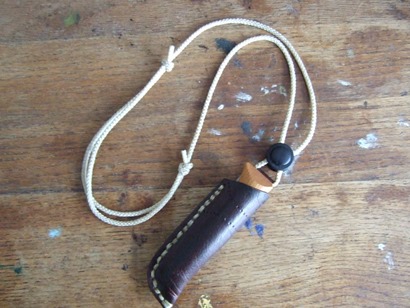
And to make sure that I have one definitely with me at all times I have, because there was not one available to buy – made my own sheath for it (see picture) that enables me to carry it around the neck. Well, I guess even if I could have bought a sheath of this kind I would have still made it myself, as I do love working with leather, as well as with wood. Not only do I make such and other leather goods for myself. Nay, I also make those and others to order.

Neck holster for Opinel #6As far as performance of this dead-simple pocketknife goes the Opinel is, in my opinion, though not just in mine alone, I understand, second to none. All Opinel from #6 upwards come with the rotating ring lock and I have yet to be able to break that lock. I have managed to break the handle at the lock before through misuse and abuse but not the lock itself, unlike with some, even expensive lock-back knives. And in the latter case(s) with very little abuse, so to speak.

The design of the Opinel is timeless and has changed little since its inception, with the exception of the introduction, in the mid-1950s, of the Virobloc rotating lock, and then at the beginning of the 21st century the redesign of this lock so the blade can also be locked in the closed position. Otherwise, generally, it has not change since almost day one. But then why change something that works and works well.

The KISS system is always best, especially when the tool is to be used in the great outdoors, or even not not so great one. It is because of its simplicity and reliability, I am sure, that the German forest schools use the smaller lockable Opinel knives, that is to say the No.6 and the No.7 versions, and that in the standard blade and not the child's version, and we are talking here about those blades being used by children between 4 and 6 years of age. That speaks volumes for the knives' safety.

The Opinel pocketknife embodies the KISS system in its design, reliability and simplicity, to its fullest and makes it the ideal day-to-day companion, and not just in the outdoors. I don't think that it can be beat and definitely not as far as quality and value for money is concerned, considering the relatively low price that it is being sold for. Generations of French mountain people can't be wrong to having stuck with the Opinel knife.

© 2017

Himalayan salt lamps

by Michael Smith (Veshengro)

salt_lampHimalayan salt lamps are not made with salt from the Himalayas for starters. They also do not release any negative ions or anything like that. They look pretty when lit by a light bulb or a candle, but that is about all.

Claims that salt lamps release any appreciable amount of negative ions have been shown to be untrue, and from a scientific point of view, not possible. You simply cannot alter the chemistry of salt using a light bulb or candle flame. But they can be quite pretty, so enjoy them for that reason, but don't get sold on any unproven therapeutic powers. http://www.snopes.com/salt-lamps-cure-everything/.

The so-called Himalayan salt is more than a bit of a misnomer as it does not actually come from the Himalayas but from the Pakistani Khewra Salt Mine in the Punjab region of Pakistan which is nowhere remotely near those mountains.

What goes for the lamps also goes for the so-called Himalayan salt that is claimed to have such great health benefits. Hello folks, it is just rock salt, only difference is that it is orange due to iron oxide, in other words "rust". This rock salt, aside from the color, is no different than any rock salt that you may buy in the shops, except that some cooking salt, as well as table salt, which is all rock salt unless it is sea salt, has iodine added.

While some self-proclaimed health experts will now scream that iodine is bad and should not be added, etc. ad infinitum, what is it that you would (hate to) take in the event of a nuclear accident or such? Yes, you got it, iodine. In fact, the iodization was done for health reasons. Iodised salt is table salt mixed with a minute amount of various salts of the element iodine. The ingestion of iodine prevents iodine deficiency.

So, just to recap on Himalayan Salt: it is rock salt that does not come from the Himalayas and is orange in color because it contains iron oxide, which is another word for rust. It has no negative ions and is not different to any other rock salt, such as you ordinary table or cooking salt, whether iodised or not. Don't fall for the clap-trap of the snake oil salesmen and -women.

© 2017