By Michael Smith (Veshengro)
Recycling is important, no doubt, but reuse is better. However, when it comes to paper, many people hesitate on what exactly to do with it. Should they throw the shiny junk mail in the trash? What about magazines, let alone books? How about paper filled with staples? These are some pretty common questions, and they shed light on the fact that paper is a huge part of our lives, perhaps more than we realize. Because of that, it deserves some much needed attention.
First, the best way to recycle paper is to, for lack of better words, not to. What do I mean with that?
The first this to do is to take as much paper out of the process as possible. To start with start you r subscriptions to magazines that you rarely read and which are of no real use to you. Instead of buying newspapers read your news online. Read books at the library or online, and only print when necessary.
Having said that, however, I am someone who does love books and also to have books at home, and I am not too great with reading too much online or even on screen. It is a proven fact that people can only concentrate on twenty or so paragraphs and that's it. After that no one takes anything in any further.
The idea is here, in not using much paper, is that if you haven't got anything to recycle that is the best form of recycling. But, we should also keep in mind that the paperless office and the paperless life is highly unlikely to ever occur.
If and when you print, try, as much as possible, to print double sided and, in order to save ink. Try to print, if it does not have to be in color and in the best print, to print only in black and in draft mode.
When it comes to the junk mail that you receive, I personally always check as to whether there is any usable paper in the envelopes and often the paper is printed only on one side. Those pages I reuse as notepaper in various forms. Other, non-gloss paper, gets shredded and used as bedding for animals. This bedding gets then, later, composted.
Shiny glossy paper can in most instances and location not be recycled and, unfortunately there is but one place for it to go; the landfill.
Also to be noted must be the fact that many paper printed with ink jet printers may cause problems for recycling in that, often, the ink is water soluble and thus can contaminate the batch for recycling.
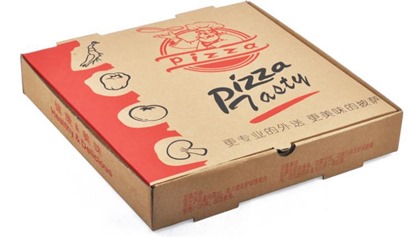
Here is a quick list of what to recycle: envelopes, plain printer paper, colored and glossy papers, phone books and books of the like, soft cover books, magazines and catalogs, newspapers, cardboard egg cartons, corrugated cardboard, smooth cardboard, cardboard food packages, construction paper, and copy paper.
And here is a similar list of what not to recycle: food wrapping that is contaminated (or soiled), hardcover books, plastic coated papers (laminated paper, milk containers), and soft paper products like toilet paper, tissues, paper towels, napkins, and tissue paper.
Get the most out of the paper and therefore, before you send it on its way to the recycling center, consider using it for home projects, scrap paper, note taking paper, and even packaging material. Believe it or not, but pre-Hallmark and corporate Christmas, presents where simply wrapped in a light tissue paper or plain newspaper. This was a great way to reduce the production of papers as well as a great way to keep existing paper in the cycle as long as possible.
What is wrong with wrapping gifts in newspaper or other wastepaper. It is, after all, the gift that matters and not the wrapping paper. I must day that I cannot, for the life of me, understand why people insist on wasting money on something that is going to get ripped off and the tossed; I am speaking here of the wrapping paper, the so-called gift wrap.
Rethink how you use paper and use it to its full potential, and that includes the junk mail that you cannot get stopped.
Despite the many lists you can go on to stop, supposedly, junk mail arriving in your mailbox, in Britain that just does not seem to work as the Royal Mail, the official mail carrier, is the biggest culprit here as to them it is advertising revenue and they will, despite what you may ask, deliver the garbage into your mailbox.
So, always check what's in there and then reuse what can be reused and shred the rest if it is usable for animal bedding and for composting.
Waste not, want not!
© 2011