Showing posts with label old technology. Show all posts

Old-fashioned handwork does a mind good

Using our hands for tasks such as handwriting and cooking keeps our minds sharp, studies show.

Using our hands for tasks such as handwriting and cooking keeps our minds sharp, studies show. Photo: Express-News File Photo / SAN ANTONIO EXPRESS-NEWSHave you stopped using your hands? Do your fingers struggle to sign your name? Is chopping an onion with a knife hard work? Must you call someone to fix a cabinet door off the hinges? Is it agony to sew on a button?

For many, computers and laziness have sapped our manual skills. This is not progress.

In a much-read essay, Maria Konnikova cites several studies revealing what's lost when people replace handwriting with a keyboard. At Indiana University, for example, psychologist Karin James showed preliterate children a letter on an index card and asked them to reproduce it by tracing, drawing on blank paper or typing on a computer.

The children were put under a brain scanner and shown the letter again. Those who had drawn the letter freehand, Konnikova writes, “exhibited increased activity in three areas of the brain that are activated in adults when they read and write.” Those who traced or typed were far less so affected.

James noted that the messiness in writing freehand yielded highly variable results. She believes the variability itself helped the children to learn.

In another study, older students taking notes by hand were found to process and remember information better than those using a keyboard.

The benefits of doing things manually could apply to a lot of things people once used their hands for but now do not much. Very often, the old-fashioned, hand-based activities also do a better job.

A friend tells me of his newfound preference for shaving with traditional instruments, as opposed to a plastic razor ripped out of the wrapping and soon disposed of. First, he must loosen screws on the razor holder. Then he inserts a double-edged blade and tightens the screws. He makes his shaving cream with an old-style shaving soap and applies it with a brush.

Read more: http://www.mysanantonio.com/opinion/commentary/article/Old-fashioned-handwork-does-a-mind-good-5565310.php

Old-fashioned ways for the modern age

by Michael Smith (Veshengro)

When speaking here of and referring to old-fashioned ways I do not – necessarily – mean in a Luddite way or in a way similar to the Amish who refuse – basically – to have anything to do with modern ways.
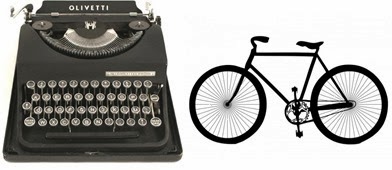
old-fashioned-waysIt is not those – per se – that I will be speaking of but of the ways of old that especially today would be good for us and the Planet if they be brought back.

The old-fashioned ways I shall be considering and speaking of here are those that society today more often than not thinks quaint and antiquated, like walking and cycling instead of using the car, using pen and paper instead of electronic means for writing, for instance. As well as speaking with people face-to-face or on the telephone instead of sending text messages. And also making do and mending and making things rather than buying them.

The motorcar, it has to be said is beginning to fall out of favor in the second decade of the twenty-first century and that especially with young people and that to such an extent that many are not even bothering, while making the driving license, to actually acquire a car themselves. Instead they take to cycling, including for the daily commute.

This is a good turn of events as it cuts down on pollution from motor vehicle traffic – the less of them on the roads the better – and is good not only for the Planet and the doers' wallets. It also keeps the doers fit and healthy, if they do not get knocked off their bikes by inconsiderate motorists who seem to believe that they own the roads. But safety can be found in numbers here (as in so many cases) and the more people who will take to the bicycle the better.

The cost of fuel and everything else associated with owning and sunning a car is one of the reasons that the old-fashioned way is becoming rather popular again, that is to say the walking and the cycling.

A bicycle is not just cheaper to buy and cheaper to run. It also can be (almost) entirely maintained at top condition by the owner and also repaired. The bicycle is, however, but one of those old-fashioned ways that is making rather a comeback. The humble typewriter is another.

TYPEWRITER

In late Spring 2013 the Russian secret service community announced that, in light of the electronic spying by the NSA and GCHQ disclosed by Edward Snowden, the services are returning to using typewriter, albeit electric ones, for sensitive documents and communications. Thus the announcement of the death of the typewriter has been very premature indeed.

The typewriter is far from being an old hat and dead even though it could have been thought so with the large use of computers and such nowadays.

To all intents and purposes, however, the typewriter is very much alive and is having rather a renaissance these days and that includes also and especially manual ones.

Manual typewriters, and here especially old working ones, are sought after once again and not (just) to put on display. They are intended and bought for use. Reports even suggest that young people especially, in places such as the USA and other hyper-modern countries, are looking at using and learning how to use typewriters again.

PEN & PAPER

Pen and paper is another old-fashioned way whose death has been announced very prematurely indeed. In fact pen and paper is having rather a revival if the amount of Moleskine and other notebooks that can be seen carried and used and here very much again by the younger generation, especially young professionals, is anything to go by.

head-medium_0For many years we have been told – brainwashed in fact – that computers would make pen and paper obsolete and also that we should reduce and even eliminate the use of paper and go “paperless” in order to save the (rain) forests.

The latter, as to the rainforests and paper, is a total fallacy at best and an outright lie at worst as paper pulp cannot be produced from (tropical) hardwoods.

Why we are thus being lied to in such a way I cannot say but what I can say if that pen and paper are still very much in use and, it would appear, are coming back in vogue.

Even the use of the fountain pen is coming back and many of those that have taken to using Moleskine, Leuchtturm1917 and similar quality notebooks also invest in good quality fountain pens to use with those notebooks. Here it is also mostly “real” fountain pens – filled from an ink bottle – rather than cartridge pens.

Slowly, it would seem, many people are coming back to the realization that not everything modern is what it is made out to be and that not everything that glitters is gold. There is a great amount of fools' gold around which has been mistaken for the real stuff.

Too many of the good old-fashioned ways are not, as yet, coming back into their own but in order to bring back sanity into all of our lives and for the sake of the Planet they must be revived.

MAKING DO & MENDING is one of those and while the mending with products today that are made to break down easily and designed so they cannot be repaired in most cases it is a bit hard – but we can change that too – the making do is what we all can do already now. Especially here as to making do with what we already have as long as it works (well) and does the job.

Making do is something that we can and must do (again) for the sake of sanity, our wallets, and especially for the Planet. We only have this one Planet, we only have one Mother Earth.

Our ancestors, and especially here those of the working class and the peasantry, were masters in the making do department and from their ways, some of which are recorded in books and other publications, we can surely learn a great deal and we also must.

© 2013

Who would have thought: Russia's FSB going back to using paper

Who would have thought this about paper in the modern electronic world. To avoid e-document theft, Russia turns to paper and type, even typewriters.

by Michael Smith (Veshengro)

1950_s_REMINGTON_QUIET-RITER_TYPEWRITER_w_CASE_MANUALMany of us, lots of us in fact, use paper towels to clean up leaks – but you will hardly have ever heard about the way that paper is being used by the Russian Secret Service to prevent leaks of a much more serious nature.

It was revealed earlier in 2013 that Russia’s Federal Protective Service (FSO) had budgeted 486,000 rubles – just under $15,000 – for new electric typewriters, along with ribbons and other accessories. By using typewriters and paper for sensitive or classified communications, the FSO, which is charged with protecting important government personnel including Russia’s president and prime minister, hopes to prevent the kind of electronic document leaks related to the recent WikiLeaks scandal.

The UK’s Telegraph newspaper quoted Nikolai Kovalev, former director of Russia’s Federal Security Service, speaking to Russian newspaper Izvestiya: “From the point of view of security, any means of electronic communication is vulnerable. You can remove any information from a computer. There are means of defense, of course, but there’s no 100 percent guarantee they will work. So from the point of view of preserving secrets, the most primitive methods are preferable: a person’s hand and a pen, or a typewriter.”

In addition to being safe from electronic theft or distribution, paper documents written by typewriters are easier to trace to their source. Each individual typewriter has its’ own unique “signature,” due to minute differences in type patterns and mechanical operation. Computer printers just do not exhibit this type of identifiable signature even though there have been attempts to create some sort of signature for printers and photocopiers.

Many new media around the world commented on this and The New York Post ran the headline, “Russian government goes back in time; will use typewriters to leak-proof sensitive classified documents,” which unfortunately (and unfairly) implies that paper documentation is somehow a thing of the past.

The truth is, electronic document vulnerability is a very real concern. In addition to government intelligence records, proprietary or sensitive business records (including financial records, vendor lists, or client information) can be targeted for theft, as can personal correspondences via email or text. Identity fraud (through appropriation of personal information, such as a credit card number, that has been stored or transmitted electronically) affects thousands of people every day; in 2010, more than 8 million Americans reported being the victims of identity fraud according to a Congressional Research Service report to Congress.

Paper a typewriters are far from dead and a thing of the past. Fact is that typewriters and paper documentation are still necessary for many specific uses. Many US states have laws requiring that permanent records, such as death certificates, must be filled out by hand or typed. Funeral homes, government agencies, and even prisons still rely on typewriters to create physical copies (that is to say, paper, not virtual) of permanent records.

Typewriters are also becoming increasingly popular among a demographic too young to remember a time before “key-stroking” had supplanted “typing” as a necessary skill and “old-school” typewriters didn’t even need electricity to run. It may be for that reason also that working old manual typewriters are fetching quite large sums on places such as e-bay and other auction sites.

I have only recently found that my old portable (it you feel like carrying around a case of several pounds) Remington Rand Quiet Riter from around 1953 that was bought for about $10 at a second-hand shop a couple of years ago can, in good condition, and mine certainly is, $100 or more. Well worth holding onto then alone for that reason.

Permanent, secure, and an elegant form of artistic expression, typed documents are still a necessary part of our world, even in this “digital age.” And, the way things are going, they might become much more a thing of the present again than we ever might have imagined and thus I am glad that I still have my old Remington Rand Quiet Riter. The only problem that remains is getting the ribbons for it.

© 2013