What's better than money in the city? Green space

park.jpg.662x0_q100_crop-scaleI'm a big fan of cities. I even went to graduate school for city planning. But I'm well aware that cities can be hard on people mentally. One of the most critical pieces of a healthy city, in my opinion, is a good number of parks. These are not just useful for superficial recreation and a premium view. These help residents psychologically and are worth a great deal.

In fact, a study from the University of Wisconsin has found that green space is more important than money. A poor person living near greenery was even more likely to have a self-reported higher level of peace and happiness than a wealthier person living in an area with less greenery.

To be specific, if someone lived in a neighborhood with 10% less tree cover, they were more likely to report signs of depression, anxiety, and stress.

Read more: http://www.treehugger.com/urban-design/whats-better-money-city-green-space.html

Many people just don’t seem to want to be free

by Michael Smith (Veshengro)
Many people, it would appear, just do not want to be free. The reason for this, even though they say they do want to be free, is because freedom means taking responsibility for your actions; it means taking responsibility for your failures and who wants to do that?

It might appear strange, but I believe that most people would rather be the victim of good intentions of someone else rather than to fail due to their own actions.

Freedom is a blow to the ego. It’s much more comforting to play the victim. It’s much more comforting to fail a test and blame the teacher for hating you instead of having to admit you failed because you were lazy or stupid. It’s much more comforting if one’s life isn’t the way he or she wants to say, “My life is the way it is due to racism and/or sexism and that’s why I don’t have the job I want, the money I want, the grades I want, etc.” than saying, “The reason my life isn’t the way I want is do to my own actions. It’s because I think more about satisfying my immediate whims instead of planning for the future. It’s because I’m lazy and incompetent.” In short, the reason so many people fear freedom is because in a state of freedom, if things in their lives go wrong they have no one to blame but themselves, and that is something they just do not want to do.

Read more: http://trutham.wordpress.com/2014/06/23/many-people-just-dont-seem-to-want-to-be-free/

In order to grow the economy we need to increase consumption

by Michael Smith (Veshengro)

“We need to increase consumption to grow the economy” is all the government “experts” seem to be able to say and they do not even realize the fallacy that this is.

First of all instead of growing the economy we need to align it to the resources and that means a different approach and secondly we already, in the developed world for sure, consume far too much and have far too much stuff.

GrowthWe only need to look at the cartoon that I have culled from the Internet as an illustration to realize how out of hand things have gone with consumption. Kids have too many toys and have no idea what to do with them and are whining all the time that they want yet another one and, in truth, the same goes for adults. They too want this new gadget and that one and then they find out that there is yet another one and if they but have that one then they will be happy. Chance would be a fine thing.

Advertising creates needs which are – more often than not – needs at all but wants that help no one bar the capitalists to make more money and the consumer parts with more of his hard earned cash.

Most of us, bar those that really have just about the funds for the bare necessities, have way too much stuff and too many things that we do not need, and often do not even use. It always beats me that people in one single family house have five cars on the driveway when there are only two adult and one teen-age kid of driving age live in the house.

Mist children have more toys that some toy libraries and have no idea what they have got and what to do with them either. But, as soon as a new one is shown in advertising on the TV they scream blue murder that they have to have that one. And the same goes for adults and their gadgets.

People are queuing round the block several times for the latest iPhone when they only got the previous latest one some half a year or so ago. Nothing wrong with the “old” one but they have to have the new one because – well – it is a new one. We have been brainwashed, methinks, ever since about the 1980s in believing that we have to have all the latest stuff even if we do not actually need it.

Instead of growing the economy we need to change the economy from a constant perpetual growth one to a resource-based one as we cannot have growth, perpetual growth, on a finite Planet, with finite non-renewable resources. And it is those finite resource, many of which are reaching or have reached peak, that we are using at a rate of knots for all those new products that advertising brainwashes us into believing will make us happier, more efficient and effective and so much more.

Alas, it is all but smoke and mirrors and a conjuring trick invented by the corporations, and the governments are in cahoots in this, to keep us buying and buying and that is also the reason why the products that are being made today have but a few years lifespan and can – in most instances – not be repaired or if they can be repaired it is several times more expensive to do so than buying new.

What we really must do is to bring well made products back and those must be, as they once were, repairable by simple DIY and, if and when needed, by professional repairers. Not only would that have less impact on the environment but it would, in fact, be good for the economy as it would create, once again, a new – though it isn't all that new really – sector in the economy, that of repair.

In the so-called Communist East Germany, the German Democratic Republic products were repairable and entire kombinats existed geared to repairing everything, from clothing, over bed linen to furniture and everything else. And a great many of the products made in that country many, many years ago were so well made that they still work to this very day, regardless of what the capitalist West may would like us to believe.

Also in the West products, not all that long ago, were made to such high standards that first of all they lasted and lasted and if anything did ever go wrong with them they could be fixed, some by the user with a little ability and in other cases by repairmen and -women. Today, if one can open the product with view to repairing it, and that is often not even possible, then the challenge is that it is, as mentioned before, often far too expensive to carry out the repair in comparison with buying new as the pares are more expensive than buying a new product. This is total madness and must end.

Having products again that last and that are repairable, and repair shops again, would be much better for the Planet, for us, and for the economy, as it would create a complete new, though not really new, as we have already once had it, sector of the economy. The so-called repair shops of today, in the main, cannot really repair, especially not the self-proclaimed shoe menders, for instance who, while they may be able to glue on new soles and such like are almost incapable of resewing the upper of a leather shoe or boot to the midsole (as they do not have a machine that can do it, as I was told). Hand sewing is required in this instance and they cannot do it. And this is just one example.

Let's recap! We cannot keep growing the economy at infinitum as the Planet cannot grow and all non-renewable resources are finite and also our consumption and over-consumption is a problem for the Planet, and that include geensumption, the consumption of green products.

What the we and the Planet need is not a perpetual growth economy but one that is resource-based and we need get back to basics are far as our needs and wants are concerned and learn that most of our perceived needs are nothing but wants artificially created by the advertising industry and the capitalist corporations who pay the advertising industry to brainwash us into believing that we need all those things that they want to sell us.

© 2014

The Urban Farmers of Cuba

Slow Food Almanac (Slow Food, 2013) argues that something valuable has been lost in this era of fast food and instant gratification. Humanity needs the pleasure meals made with love and attention, and from locally grown ingredients. A global, grassroots organization with supporters in 150 countries around the world, Slow Food International promotes the pleasure of good food with a commitment to their community and the environment. This selection highlights urban farmers on the island nation of Cuba.

Urbanismo y Comida

Necessity, possibility and will. With these three words, an urban farmer sums up the driving forces behind the Cuban “agricultural miracle” for his interviewer, Sinan Koont, author of the article “The Urban Agriculture of Havana”.

I visited Organiponico Vivero Alamar, a sustainable community food urban garden on the outskirts of Havana, on a May morning in 2012. The organopónico* was about half an hour’s drive from where we were staying, past old baroque mansions and Art Deco buildings, green parks and the blue sea along the Malecón.

Read more: http://www.motherearthnews.com/real-food/urban-farmers-cuba-ze0z1405zjhar.aspx#axzz35Tgja0mH

Collecting Rainwater From Your Own House Now Illegal?

It seems that with each new day, the government is banning something – raw milk, septic tanks, even vegetable gardens.

But a ban on collecting rainwater? It’s true, and it’s happening in some parts of America. And it’s the topic of this week’s edition ofOff The Grid Radio, as Seattle attorney Jeff B. Kray – one of the nation’s leading experts on rainwater harvesting laws – joins us. Kray has fought the good fight, defending homeowners in their battle against the government to collect rainwater legally.

Read more: http://www.offthegridnews.com/2014/06/19/collecting-rainwater-from-your-own-house-now-illegal/

How To Raise Boys to be Kind Men

What can we do to help young men respect women, recognize consent, and have healthy sexual relationships? Teach them kindness to others – and the courage to go against the crowd.

When Max was just a few months old, I sat cross-legged on the floor with him in a circle of other mothers. The facilitator for our “Mommy and Me” playgroup would throw a question out to the group, and we would each volley back an answer.

“What quality do you want to instill in your child? What personality characteristic would you most like for your son to be known for?” she asked.

One by one, the mothers answered. “Athletic”, “Good sense of humor”, “Brave”, “Smart”, “Strong”.

The answers blended together until it was my turn to speak. I looked down at the tiny human wiggling around on the blanket in front of me, his perfectly round nose, his full lips that mirrored mine. I stroked the top of his very bald head, and said with confidence: “kind”.

Read more: http://www.filmsforaction.org/news/no_more_steubenvilles_how_to_raise_boys_to_be_kind_men/

The people shall govern

Imageby Michael Smith (Veshengro)

This is often used as an excuse to create a supposedly democratic government that then operates a business as usual with professional politicians.

Nowhere can I read in any of those statements that say “the people shall govern” anything of a government and the US Constitution where it, apparently states a government for the people by the people of the people also does not mean that the people govern. The people shall govern means simply that, namely that it is the people and not a government. People governing themselves. Period!

The ANC Freedom Charter states clearly “the people shall govern” but what is happening is that the people are being governed by corrupt politicians who change the laws to make their corruption legal even, whether in South Africa under the ANC as it has become after Madiba or in the USA or Britain.

Read more: http://trutham.wordpress.com/2014/06/22/the-people-shall-govern/

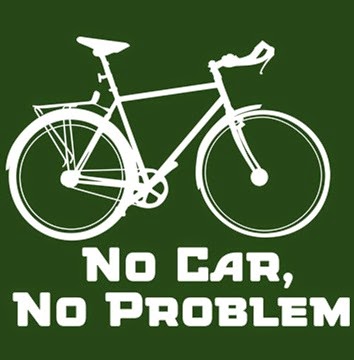
Living without a car

by Michael Smith (Veshengro)

A00026g_detailsIt has not totally been my free choice all together to live without a car and the license to drive, I have to admit right from the start.

The truth is that it is forced upon me by circumstance beyond my control, one of which is a medical condition, which means that the UK authorities will not let me have a permit to drive a motorized vehicle.

However, except for some instances, having now been without a car, or any motorized transport for that matter, for most of my life and having had to resort to walking, bicycle and public transport only I do not really feel disadvantaged.

This even more so when one considers, even aside from the price of fuel, the cost of running a car, such as annual tax, insurance, etc., and let's not even talk about the purchase cost of a car.

A bicycle does not need no gasoline or diesel and no tax or insurance is required. Furthermore a bicycle is easy to maintain, service and repair, even and especially by the user him- or herself. And this even more so if, like myself, you use a single-speed bicycle rather than one with the difficult to adjust and maintain Shimano derailleur gear shift system.

I use the bike but I also walk a great deal and if it is too far to walk or even cycle (or the weather is too inclement) I make use of bus, metro or train.

In the not so distant past, before cars became somewhat “affordable” even to the working class, cars were for those who had the money to buy and run them and the time will come again when affording to run a car, and not just the purchase cost, will put personal motoring once again out of the reach of many of not even the majority.

Now that it has become evident that motoring – even though the eco-friends of the 1970s already then told everyone about the pollution issue – is one of the main culprit of global pollution which may be the cause of climate change and the increase in the mean temperatures of the Earth, it is, for me, one more reason to reject, even if I could, owning and running a car.

My good old bicycles – most of them (yes, plural) – rescued and repaired, using other thrown away bikes, are non-polluting and burn far (mine) rather than oil. Using them keeps me fit and not fat.

Yes, there have been times when a car would have come in handy such as when wanting to pick up large items but otherwise I can quite well do without one and I am happy to be car-less.

I keep promising myself that one of these days I will get a bicycle trailer, a proper one and not those flimsy things that get fixed to the side of the bike, one that connects with a ball hitch to the saddle post. But, as said, I keep promising myself that though I have not found the right one as yet and nor have I spent much time looking.

With a trailer it will then be possible to haul a great deal more on the bike even if, at times, it will mean to push it more than to ride it.

It is fair enough to say that it is because I have never really had the use of a car I do not miss it and that is, more than likely true, and anyone changing from car to bicycle or walking (and public transport) would find it rather strange at first and for some time, I am sure.

However, we are seeing more and more people commuting by bicycle even in London and across London and I must say that I would not dare to do that.

Without the proper bicycle infrastructure, which London and most of the UK is still sadly lacking, unlike our neighbors on the European mainland such as the Netherlands, Belgium, Germany, Denmark, and France even, cycling is rather a dangerous undertaking on many of the main roads in British cities and towns and even in the countryside.

While my going car-less, so to speak, was, initially, not of my own free choice and maybe even will it is now something that I consider a good way of living as driving is, aside from industry and the way we generate power, one of the greatest polluters as far as air pollution is concerned and emissions of all kinds, including carbon-dioxide. And many people across the developed world, though we seem to see most of that still only in Europe and especially Germany and countries, especially where fuel is expensive, such as in Britain, are making the transition to living car-less or to using the car less.

There are people in the UK as well who are choosing to go entirely car-less because of the impact that driving has on the Planet and they are becoming more on an almost daily basis.

It is also something, going without a car or using it very occasionally only, that we will have to get used to as, sooner or later, cheap oil (and don't tell someone in Britain that gasoline or diesel is cheap) is going to be history and the alternatives simply do not exist, are worse for us and the Planet than are petroleum products, or, as in the case of the electric car, simply out of the reach of the “ordinary” man or woman.

Unless free energy suddenly will become available a la Tesla I do not think that we will continue to be motoring much in the future and thus I am happy to have been adjusted to this already by simply never having had a license and a car.

© 2014

Battling the Elements in Your Garden

storm jpgSometimes, despite our best efforts and intentions, Mother Nature seems to hold a grudge against our gardens. We can begin to feel like Goldilocks, waiting for the “just-right” conditions in which to thrive. Here are some tips on how to thwart the weather and encourage a healthy garden in spite of the elements.

Water

TOO LITTLE: In arid climates, water is precious. In drought conditions, there might be caps on how much water you’re allowed to use in your yard. To reduce water waste, water at night when it’s cool and the sun won’t evaporate it away. Also place your more delicate plants in a shady spot where you’ll see them every day; you’ll notice when they begin to wilt. For your planters, try using coco liners to better retain moisture in the soil.

But if you want to make your yard more amenable to dry spells, try embracing your climate by using native plants, particularly in desert areas like Arizona. One good option is xeriscaping: the practice of gardening using as little water as possible with strategic irrigation. Hardy plants like cacti and creosote do well in dry areas, require little to no irrigation, and can be quite beautiful.

Read more: http://www.motherearthliving.com/in-the-garden/battling-the-elements-in-your-garden.aspx#ixzz35NX1eb6n

What exactly is the "Sharing Economy" these days? Sometimes it smells like something else

sharing.jpg.662x0_q100_crop-scaleTreeHugger has been covering the sharing economy since before it got that name; Warren McLaren introduced the concept as Product Service Systems. In the decade since it has exploded.

I was thinking about the issue this past weekend when I used Uber for the first time to go to a wedding, and got into a fight with the groom over whether it is a good thing. I took the position that it was simply using technology to move from a hub-and-spoke model where a middleman controls access (and the drivers' income) to a peer-to-peer system where the driver can contract directly with the user.

He thought it was a return to "every man for himself", that only worked because it was new and there were not that many drivers yet, keeping prices high; that soon the lack of regulation would drive prices down so far that it would be slave wages. That it isn't sharing at all, just a different form of pay for service, but ultimately would end in abuse. That's why people got organized and formed unions. I asked the driver what he thought, and he told me that before Uber he sat around between scheduled rides at the company he drove for, and this way he makes a few extra bucks.

Read more: http://www.treehugger.com/economics/what-exactly-sharing-economy-these-days-sometimes-it-smells-something-else.html