The Community Gardening Handbook – Book Review

The Community Gardening HandbookThe Community Gardening Handbook
Plant & Grow Together
by Ben Raskin
Published by Leaping Hare Press in association with Big Dig and the Soil Association
February 2017
ISBN: 9781782404491
Price: £9.99

Join the community gardening revolution for a greener future!

Whether you are a budding grower setting up a new plot, or an experienced green thumb looking for new inspiration, The Community Gardening Handbook offers expert advice and insight on how to grow food, especially as a community. The authors clearly presents the unique workings of community gardens, covering everything from legality to land tenure, to skill shares and seed sowing, seed saving, and much more.

The book is divided into four chapters

  • An Introduction to Community Gardening

  • Extending Roots

  • Planning Your Site and Planting

  • Plant Directory

that again have subsections which tackle the bits that go with it.

The Plant Directory has all the information you m need to have about the plants listed as to planting how and where, and also how to grow them in containers.

Easy to read and follow. No lengthy waffle. Every point explained in short sections, with lots of illustrations.

Community gardening is a growing revolution that is taking root in towns and cities all over the world. Groups of like-minded people are transforming neglected plots of land into green, flourishing spaces for everyone to enjoy.

The “community gardens” mentioned for Germany in “An Introduction to Community Gardening” in this book are a very old institution and generally called Schrebergärten or Kleingärten. Akin to the Allotment Gardens in the UK but the individual plots are generally larger, with the minimum being about 400m2 while the standard allotment plot in the UK is just a little over half of that. They cannot, per se, and neither can the allotment gardens in the UK, seen and understood in the same way as community gardens as they are being understood in the USA and by those setting up such gardens, say on vacant lots as, in general, those are worked by all (no individual plots) and the produce being shared by all.

In The Community Gardening Handbook, Ben Raskin shares his keen expertise in an invaluable introduction to a new wave of collective self-sufficiency, encouraging a community audience to grow food and to garden together. A look into different types of inspirational community gardens from all over the world is followed by a practical guide: planning advice is laid out alongside essential etiquette tips for running a successful site and proven ideas for involving the whole neighborhood.

Ben says: "With a growing disillusionment with global capitalism and multinationals there is a desire to take back some control of our food system. What better way than to do it yourself!"

This is a very well presented book and very recommendable.

Ben Raskin is the Head of Horticulture at the Soil Association. He runs courses and training and launched the Soil Association's flagship Organic Apprenticeship Scheme in 2007. He also mentors and advises on organic growing. Ben got the gardening bug working on an organic vineyard in northern Italy, and has worked in horticulture for more than 20 years, including a stint as Assistant Head Gardener at the UK charity Garden Organic.

© 2017

GardenTags Takes The Fear Factor Out Of Gardening

98166dae-0264-4bec-b512-f3090899fd02The FREE social gardening community platform...growing well together

The UK's quickest growing social gardening platform, GardenTags, has a mission to take the fear out of gardening and turn it into the joy of growing.

It has been found that there may be a missing generation of gardeners, as some parents neglected to teach their children about growing plants and vegetables. The GardenTags team want to inspire this generation of 25 to 40 year olds to get outside and grow.

The desire for this missing generation seems to be growing for gardening however, especially in urban areas.  It has also been found that 40% of the 70,000 GardenTags members express an interest in urban growing this represents a significant opportunity to connect with UK urban growers.

Many young couples in the UK may have just bought their new house and are excited about growing their own vegetable and flowers In their new gardens, but simply do not know what to do and could feel silly asking at garden centres.  So with the GardenTags app this allows them to connect with other gardeners, from budding novices to expert botanists and everyone in between in an easy, comfortable way and to share knowledge of plants and gardening techniques.  And it's working, with 68% of users having more gardening knowledge as a result of using the app!

But how does GardenTags work?

It's simple! 

  • Download the app here www.gardentags.com/joinfree
  • Keep a photographic record of your entire plant collection and garden in one place so you can see how it has grown over the weeks, months and years
  • Tag your plants and take care of them using our community generated plant encyclopedia and plant care task list
  • Get planting inspiration and advice from 10,000's fellow gardeners. Let them help you identify unknown plants in your garden
  • Show off! We hope your gardening prowess improves and you'll share your planting success by taking more photos and uploading them to GardenTags. 
  • Watch our video here which will explain how to take the fear out of gardening https://www.youtube.com/watch?v=W0BseAERi3A

Launched in the UK in 2016 GardenTags is now the global social platform and garden management app exclusively for gardeners. The inclusive community is for budding novices through to expert botanists.  The growing community is encouraging more people into gardening with 63% of users enjoying gardening more as a result. Our members share photos and offer advice and inspiration to others which builds on our purpose to turn gardening fear into growing joy (see our explainer horror movie here: https://youtu.be/W0BseAERi3A ). Members also get regular automated care reminders to help them manage garden tasks. Some facts:

  • 100k+ downloads in 6 months
  • Over 40% users expressed an interest in urban growing
  • 1,000,000+ user comments and advice
  • 300,000 garden and plant photos shared
  • 14,000+ plants in the encyclopedia

We believe strongly in the power of the community - we give less experienced gardeners a helping hand when they join by recommending expert gardeners to them that we know love to share tips and advice. Over time these novice gardeners become expert gardeners themselves and help the next generation out. It’s a virtuous growing circle!
For more information please visit our website

This press release is presented without editing for your information only.

Full Disclosure Statement: The GREEN (LIVING) REVIEW received no compensation for any component of this article.

The GREEN (LIVING) REVIEW does not recommend, approve or endorse the products and/or services offered, as we have no direct knowledge if them. You should use your own judgment and evaluate products and services carefully before deciding to purchase.

This high-quality ink is made from air pollution harvested from vehicle tailpipes

Graviky Air Ink

What if the ugly, in this case air pollutants, could give birth to something beautiful?

One of our most common industrial outputs, soot, has a harmful effect on human and environmental health, but thanks to some resourceful thinking and innovation in pollution capture technology, combined with the development of a process for detoxifying and refining it, it can be 'recycled' into ink and paints.

An MIT Media Lab spinoff company is turning soot into an art supply, which at first glance seems to be working backward - after all, shouldn't we focus on reducing soot and other particulate emissions? However, like many issues, there is more than one way to skin an avocado, and perhaps by turning something harmful into something useful, it could be part of a potent message about the importance of addressing air pollution, by providing one of the tools for artistic expression and activism.

A device developed by Graviky, called Kaalink, can capture 95% of particulate matter from tailpipes and other air pollution sources, without inducing back-pressure (which can harm the operation of those sources), which is then refined and detoxified and turned into a high-quality black ink called Air Ink. According to Graviky, 45 minutes worth of vehicular emissions captured by the Kaalink device can produce 1 fluid ounce of Air Ink, and in essence, the device and its products could help to mitigate some of the world's most harmful emissions.

Read more here.

Costa goes nationwide with in-store coffee cup recycling scheme

Coffee shop chain Costa Coffee has taken a huge step forward in the war on waste coffee cups with the rollout of a pioneering cup recycling scheme to more than 2,000 of its stores across the UK.

Coffee cups will be collected by Costa staff and taken back-of-house to be stored upside down in racks, to ensure they are free from contamination

The Whitbread-owned retailer today (7 February) confirmed the full launch of the scheme, following a successful coffee cup recycling trial which took place across 45 Costa stores in London and Manchester last year.

Instead of using traditional front-of-house recycling bins, Costa is now encouraging customers to leave their coffee cups on the side or hand them into a barista, where they will be taken back-of-house by Costa staff and stored upside down on dedicated racks, to ensure they are free from contamination.

The cups are then backhauled by Costa’s logistics partner Kuehne & Nagel to be sent on to one of Veolia's commercial hubs. Here, they are baled up ready for treatment at paper pulping facilities, which recover the fibre and separate the polymer plastic liner from the cup. The cups are pulped and eventually turned into moulded fibre products such as coffee cup holders and egg boxes, completing the circular economy process.

Costa’s energy and environment manager Ollie Rosevear explained that the back-of-house recycling process will ensure that “any cup” from Costa or any of its competitors can be recycled, as it overcomes the critical challenge of contamination.

“From the trials, we found that many of the cups deposited by customers in front-of-house bins were contaminated,” Rosevear told edie. “Using the racks back of house, we can guarantee that the cups are drained out and well-presented so that they can be recycled properly.

Raising awareness

From the trial in London and Manchester, Rosevear revealed that around 14% of takeaway sales were being recovered and recycled – significantly higher than the less-than-1% average recovery rate across the UK. Costa’s environment manager expects this figure to be “much bigger” in the future as consumer awareness increases.

We now recycle ANY paper takeaway cup (yes, even ones from those other brands you’d never dream of visiting!) pic.twitter.com/Puak9WDfJu

— Costa Coffee (@CostaCoffee) February 7, 2017

Today’s announcement comes less than a year after the highly complex issue of coffee cup recycling was brought to light by celebrity chef-turned environmental campaigner Hugh Fearnley-Whittingstall in his Hugh’s War on Waste TV programme.

Costa was singled out by Fearnley-Whittingstall as one of the retailers that had been "misleading" customers when it came to their cups being recyclable, and Rosevear believes the programme has helped to encourage Costa and other retailers to step up their circular economy efforts.

“[Hugh’s War on Waste] highlighted the industry-wide issue that not enough cups were being recycled and it refocused the business to do more,” Rosevear said. “We had done a lot in the area of coffee cup recycling already, but the programme helped the business to refocus and make sure we’re recycling more, so it was a positive thing.”

Sustainability leader

Around the time that the Hugh’s War on Waste programme aired, Costa committed to replace the Mobius Loop symbol – the three arrows in a triangle – with the iconic ‘Tidy Man’ logo on its coffee cups, in a bid to encourage more consumers to responsibly dispose of their cups. This has ignited a series of pledges made by the retailer in the first quarter of 2017 as part of plans to "lead the industry" in the fight against coffee cup waste.

Costa is also now offering 25p off a hot or cold drink for customers that bring a re-usable cup into its stores; and in April it will begin selling a selection of own-branded, re-usable cups. Meanwhile, the chain has been conducting independent research with Sheffield University to further investigate cup recyclability, with the results expected next month.

Costa Coffee was among the winners of edie's 2017 Sustainability Leaders Awards, scooping the accolade in the energy management category.

Infographic: Costa's circular economy for coffee cups

Source

Make a Jacket With Milkweed Seed

Don't spend a lot of money for winter garments insulated with goose down. Make a jacket yourself and stuff it with milkweed seed.

059-make-a-jacket-milkweed-seed-04-finished-jacket.jpg

You don't have to spend $20 a pound for goose down—or even know much about the intricacies of stitchery—to make a jacket, an inexpensive, toasty parka. First, however, you'll have to locate a plot of land that contains a big patch of milkweed plants (genus Asclepias). Then—just before the first hard frost—gather a few grocery bags full of the perennials' seedpods. These will yield a pound or more of lightweight, water-resistant insulation to help protect you against the coming winters chilling snow, ice, and bluenose winds.

A Milkweed Primer

The value of milkweed seed as an insulating material has been recognized for a good many years. During America's colonial days, for instance, the silken fibers were used to stuff pillows and comforters. Yet with the exception of a brief period during World War II, when school children collected the pods for use in military life jackets, this nation's supply of the valuable plants has been largely ignored.

When you take a close look at the plant's tiny "parachutes," you'll see that they're very similar in structure to goose down. Both the vegetable and animal "fluffs" consist of numerous fibers that radiate from a central core And—while goose insulation tends to be the denser of the two materials—milkweed plumes are composed of longer filaments. Furthermore, once you've collected a small supply, you'll see that the "weed fiber" springs back after being crushed with much of the same resilience (also called "loft") which gives goose down its insulative quality.

Better yet, milkweed "cotton" is both free and a whole lot easier to come by than is goose down. The demand for the latter material has made it difficult to find, while milkweed plants can be located in any number of fields, fence rows, railroad right-of-ways, and vacant lots. Or—if you'd like a large supply of the seedpods and have a little extra land—you could even collect enough wild seeds this year to establish your very own milkweed farm!

However, most folks won't want to wait through another round of seasons to collect some free-for-the-taking jacket stuffer. Now's the time to get out and gather wild milkweed pods for both this year's projects and next spring's garden!

The first step, of course, is to locate your foraging grounds. It should go without saying that you'll want to seek permission rather than trespass on anyone's property. (Most landowners will be all too glad to let you gather their milkweed if you've been courteous enough to ask).

Should you happen to remember any areas where milkweed grew in the past, you can pretty much count on finding the hearty plants still present. Of course, you might have to share your harvest with wide-food enthusiasts who rejoice in the asparagus-like flavor of the tender shoots or the okra-ish tang of the young green pods. Milkweed is far from an endangered species, though, so there'll likely be more than enough plants to go around.

You'll have to keep a close eye on your "hunting grounds"—beginning a few weeks before the projected frost date—in order to pick the pods while they're still moist and green but just on the verge of drying out. Gather about four grocery bags full of pods in order to be sure of having enough insulation for one jacket. (Use paper rather than plastic bags, because the latter will trap moisture and, in a shot time, cause the milkweed to rot)

Gettin' Down

It's best to shell the pods—and separate the seeds from their gossamer filaments—immediately after gathering. Simply hold a pod so that its central seam is on top and the narrow end is facing you. Split the shell along the seam and scoop out the contents, then hold the plumes between your thumb and forefinger and rub your other thumb over the seeds to break them away from the still-damp fluff.

You'll find that the kernels will fall off of green-pod filler easily, while older and drier "fruits" will have fluffed up enough to make seed removal less efficient. Fortunately, however, any seeds that you miss at this stage can be shaken down to the bottom of the bag which will hold your drying down and removed as you stuff your jacket, vest, mittens, or other warm snugglies.

A Ready-Made Down Jacket

Once the bagged down is fully dried and has developed its "loft," you'll be ready to start sewin' up a jacket. This part of the operation should be a snap for any experienced seamster or seamstress whether working from scratch or using one of the parka kits that are commercially available.

However, if advanced stitchery is above and beyond your ability, you can (as I do) simply buy a lined nylon "trainer's jacket", open its bottom seam, and stuff the garment with milkweed down, enclosing the insulation in little sewn compartments as you go! (The lightweight, cotton-lined jackets are available in most clothing and sporting goods stores for somewhere between $6.00 and $8.00.)

Use large stitches for sealing the down in your "pockets" (the eight-stitches-to- an-inch setting on most sewing machines will work well) and stuff each pouch very full, as the down will settle a bit when in use. Be sure, too, that all the milkweed-filled compartments are sewn completely shut in order to prevent the fibers from leaking out of one section and into an adjoining pouch.

Read more here.

THE START OF A NEW DOWN: A COMMON WEED TAKES ON AN UNUSUAL PURPOSE

Is this what game-changing insulation looks like? [Photo] Nancy Hayden

Milkweed isn’t the first thing that comes to mind when considering insulation materials. But the Canadian Coast Guard has other ideas and is testing the pods as a potential environmentally friendly insulation.

The Coast Guard works in partnership with Encore3, a manufacturing company in Québec, to prototype parkas, gloves and mittens made with milkweed insulation. And the appeal of the pod is threefold: it’s roughly five times lighter than synthetic insulation, is hypoallergenic and helps out monarch butterfly populations—milkweed is the primary food source for monarch caterpillars.

Read more here.

Power to the EV: Norway spearheads Europe's electric vehicle surge

With ambitious emissions-reduction targets, support from government and the car industry, electromobility is on the verge of major expansion in Europe, reports Yale Environment 360

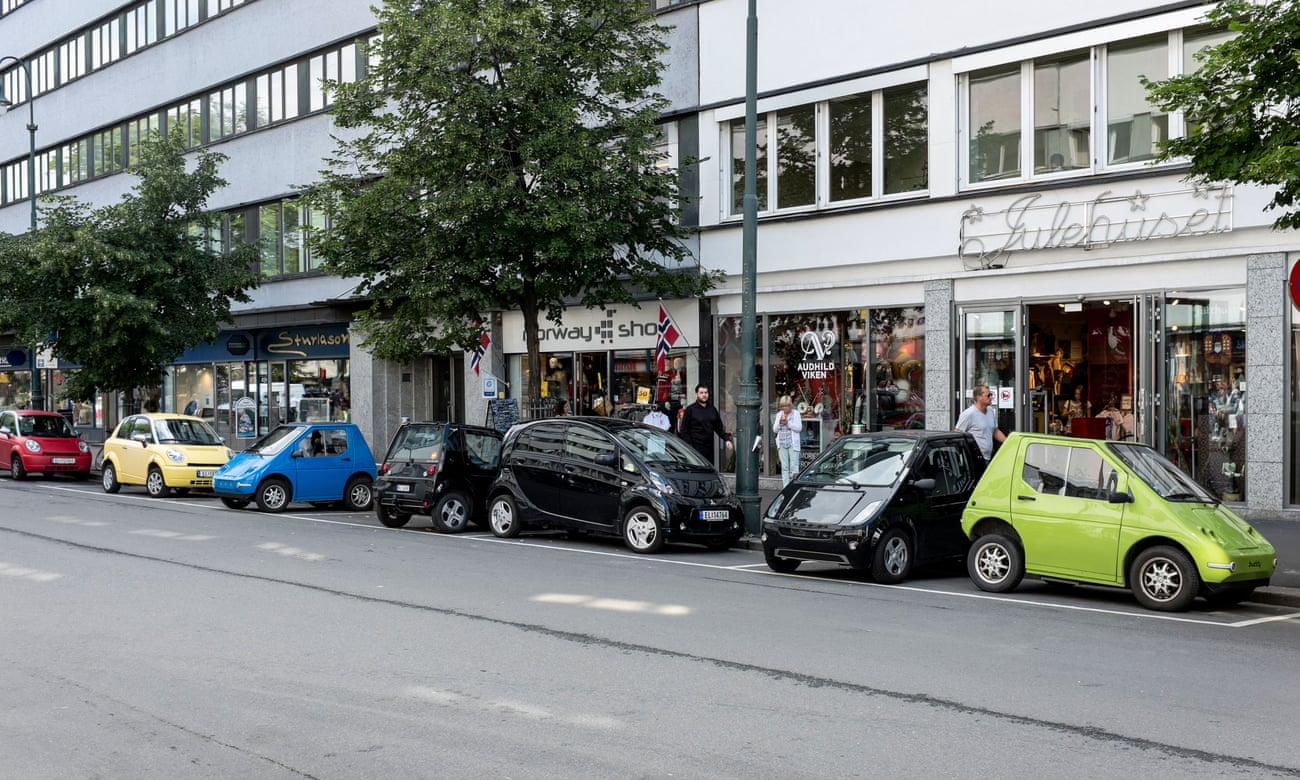
Oslo, Norway’s capital, like most of the Scandinavian country’s cities and towns, boasts bus-lane access for electric vehicles (EVs), recharging stations aplenty, privileged parking, and toll-free travel for electric cars. The initiative began in the 1990s as an effort to cut pollution, congestion, and noise in urban centres; now its primary rationale is combating climate change. Today, Norway has the highest per capita number of all-electric [battery only] cars in the world: more than 100,000 in a country of 5.2 million people. Last year, EVs constituted nearly 40% of the nation’s newly registered passenger cars.

And the Norwegian experiment shows every sign of accelerating. Earlier this year, Norway opened the world’s largest fast-charging station, which can charge up to 28 vehicles in about half an hour. The country, joined by Europe’s No 2 in electromobility, the Netherlands, intends to phase out all fossil fuel-powered automobiles by 2025. Elon Musk, CEO of the US electric car company Tesla Motors, responded to Norway’s goal by tweeting: “What an amazingly awesome country. You guys rock!”

Norway is the clear electric vehicle pacesetter in Europe, which now has about 500,000 electric vehicles. China leads the world in EV usage, with about 600,000 all-electric vehicles on its roads and an ambitious plan to deploy 5m EVs by 2020. The US ranks third globally, with fewer than 500,000 EVs. But electric vehicle momentum is picking up in the US, as evidenced by the 400,000 people who have paid $1,000 to be on the waiting list for Tesla’s $35,000 Model 3 car.

Read more here.

There used to be 4 billion American chestnut trees, but they all disappeared

The kings of the Eastern forest now die as shrubs

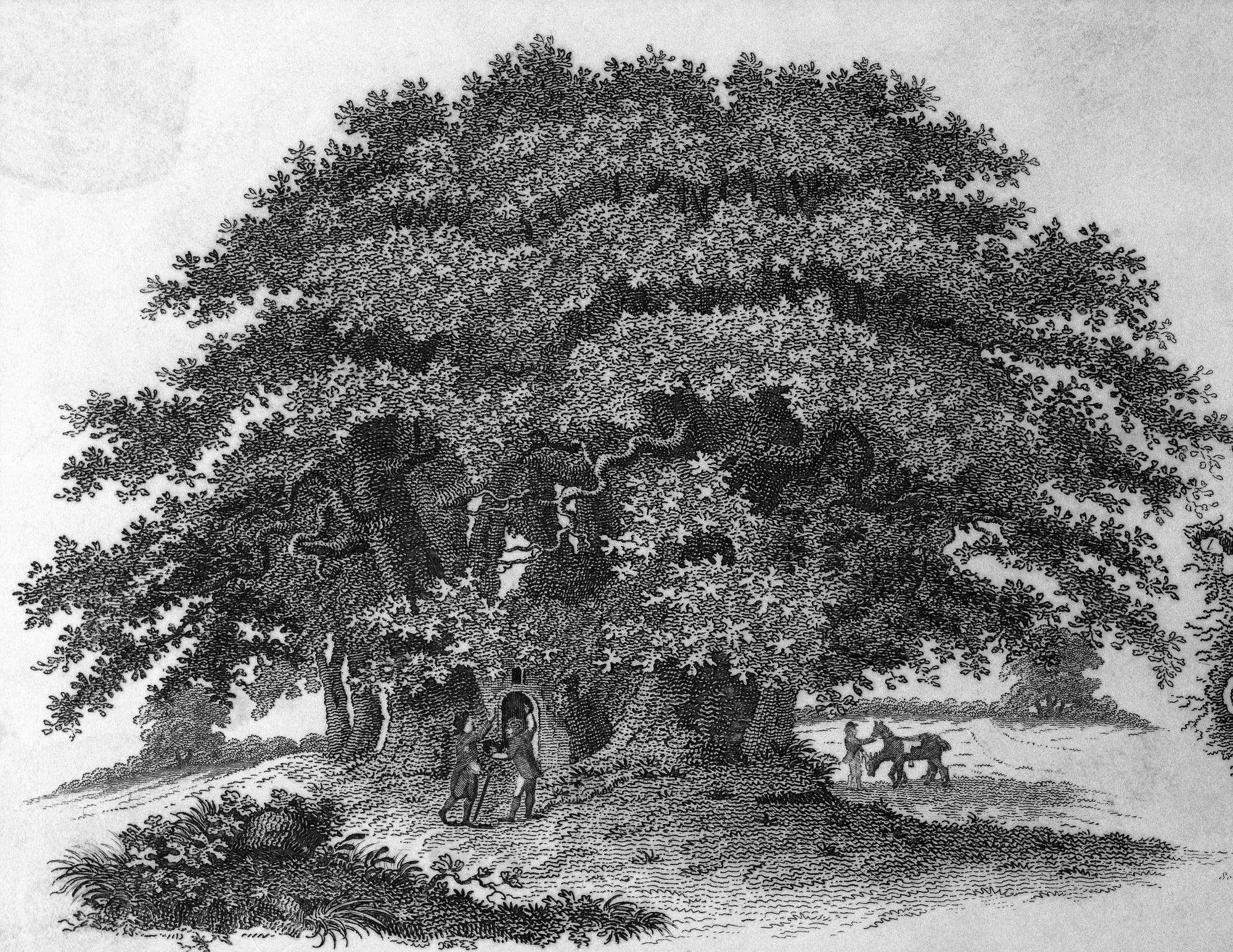
American chestnut trees once blanketed the east coast, with an estimated 4 billion trees spreading in dense canopies from Maine to Mississippi and Florida. These huge and ancient trees, up to 100 feet tall and 9 feet around, were awe-inspiring, the redwoods of the east coast, but with an extra perk — the nuts were edible. Chestnuts were roasted, ground into flour for cakes and bread, and stewed into puddings. The leaves of the trees were boiled down into medicinal treatments by Native Americans. The trees make appearances throughout American literature, like in Thoreau’s journal, where he considered his guilt over pelting them with rocks to shake the nuts loose while he lived in Walden woods, musing that the “old trees are our parents, and our parents’ parents, perchance.” Chestnut trees offered shade in town squares, were the wood of choice for pioneers’ log cabins, and were a mainstay of American woodcraft. In short, chestnuts were part of everyday American life. Until they weren’t.

Finding a mature American chestnut in the wild is so rare today that discoveries are reported in the national press. The trees are “technically extinct,” according to The American Chestnut Foundation. The blight that killed them off still lives in the wild and they rarely grow big enough to flower and seed, typically remaining saplings until they die. Essentially, the giant trees were reduced to shrubs by the 1950s.

The problem was a fungus imported from Asia that spread easily, attaching to animal fur and bird feathers. Spores were released in rainstorms and tracked to other trees through footsteps. The fungus infected trees through injuries to the bark as small as those created by insects. “It looks like a target filled full of small shot holes,” one Pennsylvania paper reported as the blight spread.

The first chestnut tree may have been infected as early as the 1890s, with blight first reported in 1904 when it was spotted on a tree in New York’s Botanical Garden. Panic over the blight was widespread by the 1910s. State commissions were formed. Farmers were implored to chop down trees with any signs of blight. “Woodman, burn that tree; spare not a single bough,” begged The Citizen, a paper from Honesdale, Pennsylvania, the heart of the chestnut tree’s range. Even the Boy Scouts pitched in to try and save the chestnuts, scouring forests for blighted trees as part of a multi-state effort to create an infection-free zone.

The combined powers of the public, scientists, and the governments weren’t enough to save the chestnuts. The loss was stunning, both financially and emotionally. “Efforts to stop the spread of this bark disease have been given up,” The Bismarck Daily Tribune resignedly reported in 1920. The paper estimated that the value of the trees was $400,000,000 as recently as a decade before.

Read more here.

Are European news media trying to incite a civil war in USA?

by Michael Smith (Veshengro)

truth-hate-speechIn the United States – so writes the German magazine Der Spiegel – people are faced with a dilemma: either to conform or to resist.

Dear Spiegel: the Unites States and the people have not been occupied by a foreign power, not by China, nor by Russia, nor by aliens from outer space. The American people have elected a new President, that is all. That he was not your choice, nor that of the European establishment and elite, may be the case, but that is also irrelevant. There is no question of either conformation or resistance, but the simple acceptance of the will of the US voters and the voters chose that man to be their President, at least for the next four years, and the Electoral College did so according to the Constitution of the country.

You are doing a very good job, I have to say, for the neoliberal establishment here in Europe and in the USA too, almost if not actually, calling on those that run about with the “not my President” attitude to rise up and resist. In fact what you are doing with such what you, more than likely, perceive as quality journalism, but which it is not, is incitement to civil war.

I know it worked so well in the Ukraine, in Egypt, in Libya, and in Syria, didn't it, to create failed states which can then be taken over by the neoliberal elite in Europe and elsewhere with one particular person and his organizations in the forefront. The Russian Federation took the right steps to ban that person and his organizations as enemies of the state.

© 2017

Pesticide Action Network UK welcomes new European Citizens’ Initiative to ban glyphosate

a7c53123-7a5b-4e69-a2bb-ec35b15bd683

Wednesday, 8th February, sees the launch of a European Citizens Initiative (ECI) calling on the European Commission to ban the controversial weed killer glyphosate, reform the pesticide approval procedure and set EU-wide mandatory reduction targets for pesticide use. And this is the opportunity for the people of the EU to show just how much they want to see those changes adopted.

An overwhelming majority of EU citizens want to see the controversial carcinogenic herbicide glyphosate banned from use.[1] And it nearly happened in late 2016 when the reauthorisation for 15 years was postponed and glyphosate was given a temporary 18 month approval whilst further toxicological tests are undertaken.

Glyphosate was classified as a probable human carcinogen by the World Health Organisation in 2015 – this led to huge debate in the EU about whether the herbicide should be approved for use. Pesticide Action Network International has also published a 100 page monograph that outlines all the harmful effects that glyphosate can have – not just its probable carcinogenic effects.[2] Despite the temporary 18 month approval several EU Member States have decided to enforce bans on its use and the EU has issued guidelines stating that its use should, for the time being, be restricted in areas used by the public.

But this does not go far enough. PAN UK, like the people of the EU, want to see a complete end to the use of glyphosate in agriculture, in the towns and cities where we live and in peoples’ homes and gardens, there is simply no place for this harmful chemical. PAN UK is already running a Pesticide-Free Towns campaign urging local councils to stop the use of glyphosate and other pesticides in the parks and playgrounds, streets and pavements of the towns and cities where we all live, work and play.[3]

PAN UK is therefore fully supporting the ECI to ban glyphosate and we are urging people to support the initiative by signing the petition at http://www.pan-uk.org/glyphosate/
We need 1 million signatures to make the European Commission take action and we believe that there are enough concerned citizens in the EU to make that possible.

“We do not need to rely on harmful chemicals to grow our food and we certainly do not need to be spraying a probable human carcinogen in the areas that we and our children frequent.

Glyphosate should have been banned in 2016, together let’s get it banned in 2017.” Nick Mole, PAN UK Policy Officer. 

Notes to editors:

  • PAN UK is the only UK charity that works on all issues relating to global pesticide use
  • The full text and supporting documentation for the ECI can be found at http://www.pan-uk.org/glyphosate/ from Wednesday, 8th February 2017
  • A European Citizens Initiative is an invitation to the European Commission to propose legislation on matters where it has competence to legislate, such as this
  • An ECI has to be backed by at least 1 million EU citizens from at least 7 of the 28 Member States
  • After the necessary signatures have been reached the Commission will examine the ECI and within 3 months issue a response.

[1]  “Two thirds of Europeans support ban on glyphosate” – The Guardian 11/04/2016 https://www.theguardian.com/environment/2016/apr/11/two-thirds-of-europeans-support-ban-on-glyphosate-says-yougov-poll

[2]  “The Glyphosate Monograph” PAN International, 2016 - http://www.pan-uk.org/publications-resources/glyphosate-monograph

[3] http://www.pan-uk.org/pesticide-free-towns-and-cities/pesticide-free-towns-and-cities

This press release is presented without editing for your information only.

Full Disclosure Statement: The GREEN (LIVING) REVIEW received no compensation for any component of this article.