The Christmas Tree

by Michael Smith (Veshengro)

no_christmas_treeIt is, once again, the time of year where young spruce and fir trees are being sacrificed on the altar of the festival of Saturnalia disguised as a Christian feast by being cut down and then placed for a couple of days in the living room or such, basically, to die.

I will not engage here in the discussion as to real tree vs. fake one. As far as I am concerned it is a no tree event. A fake tree has a very large environmental footprint in production and shipping and killing a real tree just in order to put it on display decked with tinsel, lights and all that jazz is, in my opinion, not a good idea.

But, millions upon millions of little trees – and not so little ones even – are being slaughtered at this time of year for people to do just that and they pay quite a bit of money for this “tradition” as well. Money, that I am sure, could be put to much better uses for more important things.

The tradition of the tree, first of all, has nothing to do with Christ and neither has the date, but that is neither here nor there except for the fact that it is the destruction of a living thing, as far as the real tree is concerned, simply for our dubious pleasure.

If you want to bring Nature indoors for this feast then do so by using branches from evergreen trees, ideally fallen in high winds, and pruning cuttings from the likes of holly (Ilex ilex) but do not sacrifice a living tree for this.

The tree you are killing could, in time to come, become a tree from, at the fullness of its life, your next notebook be made from or book for reading pleasure rather than expiring after a few days in your living room.

The most amazing part of this all is, in my experience, that there are many people who are vehemently opposed to woodland management for instance or to the use of paper for documents and such, who will, without giving it a second thought, it would seem, go out and buy a young spruce or fir that has been sacrificed and put it into their living room.

Unless it is potted a tree has no place in the house and especially not dressed up tradition or no tradition.

© 2013

Packaging Waste

by Michael Smith (Veshengro)

The greatest scourge, as far as waste is concerned and the amount of it, is packaging waste and much of it, because of the way that it is made – the packaging, not the waste – is also not recyclable.

MW DDR TaschenmesserSimple East German packaging (in this case for a pocketknife)

Industry is over-packaging almost everything that is put onto the market for us to buy and often it is a question of why in the mind of any normal and rational thinking person.

One of my favorite example are the replacement brushes for the Braun electric toothbrush. Each brush is individually encased in a plastic bubble with paper backing and the two or four little brushes are then encased in a hard plastic bubble that it is huge in comparison to the two or four small brushes. Waste of resources for starters and then, well, waste.

The packages are that size, so I have been told, so that – one – people, shoppers, can see them and – two – so they cannot be stolen easily.

Now, if I want and need those replacement brushes I buy them regardless of packaging size yelling at me “I am here” and a simple cardboard box would do equally well, as it was done some fifty or so years ago. And we can especially learn as regards to packaging and reduction of waste of same from the minimal packaging that was used in places such as the Soviet Union and the German Democratic Republic (East Germany).

There have been, over the years, attempts by makers of some products to encourage reuse of the packaging, noticeable some mustards, Nutella and also Classico pasta sauces, in that the jars were made as reusable drinking glasses or, as in the case of Classico sauces where real Atlas Mason canning jars are used, which can be reused for canning by just buying the replacement rims and lids. And, to some extent this is still happening today. It is with the Classico sauces and also some mustards.

Good packaging design, however, could contribute greatly to a reduction in packaging waste generated if it would be – the packaging, not the waste – be conceived with a second use in mind and this reuse be obvious.

Another design alternative is where, as has been done with a media center some time back, the packaging becomes the stand for it or, as in the case of a recently unveiled new computer printer where the packaging becomes the case. It can be done and is not really rocket science.

Designing packaging with reuse and second use in mind (and instructions as to how to reuse the packaging incorporated) is not – or should not be – difficult as can be seen with regards to what has been done before.

On the other hand, as far as glass bottles (and glass jars) are concerned commercial reuse, not recycling by breaking up the containers, with a deposit scheme should be reintroduced and no, it does not, as is being claimed time and again by “our” politicians unwilling to do it, require pilot projects and lengthy studies. It does work and has worked before and yes, even in Britain. We only have not done it for decades now.

However, glass bottles and glass jars are but a small section of packaging waste. A far greater amount is made up by cardboard and plastic and here is where reuse design of packaging especially comes in and into its own.

Also here it can be done and some manufacturers of sweets already make mention on their “tins”, whether they be of actual tin or of plastic, that the packaging can be reused and how.

If designers could, together with their clients in industry, create containers and other packaging that “automatically” have an obvious second use our problem with all that stuff going into landfill might get solved somewhat.

This will, however, impact on other sales and the economy if people having packaging that they can reuse for something that they otherwise would have to buy and this may upset the “we have to grow the economy” brigade. But so be it! It is the Planet that is more important that the perpetual growth economy which is not sustainable and will destroy us all if we allow it to.

© 2013

Estimated impact of October 2013's St Jude storm

by Michael Smith (Veshengro)

storm1The Forestry Commission has at the end of November 2013 released figures for the estimated impact of the St Jude storm of October 2013, revealing that 64% of the 100,000+ woodlands across southern England (from Cornwall to Suffolk) were likely to have been affected in some way but that very few woodlands are expected to suffer long term damage. More damage was found between Wiltshire and Kent with little or no damage recorded at the south-west and north-east extremes of the survey area.

Most damaged trees are very likely to be left where they are and will turn in to valuable dead wood habitats for wildlife. The woodlands are expected to readily recover from localized damage without seriously affecting local woodland and timber businesses and there could even be a benefit to wildlife conservation as the dead and dying trees provide additional food sources and breeding habitats for flora and fauna such as lichens, fungi, invertebrates, birds and small mammals.

The Forestry Commission’s National Incident Management Team organized a survey of over 160 woodlands over two weeks, searching for trees blown over or snapped and looking at damage to their crowns to assess overall woodland damage. Although around 70,000 woods were affected by the storm, the level of damage within the vast majority of these woods is reported as being low, with crown damage the highest at 3.7% of all trees across the storm area, but these trees will recover from that damage. 1% of larger trees across the storm area were blown over, plus another 0.5% snapped around halfway up the trunk, amounting to approx 10 million (out of approx 660 million) trees 'lost' from the woodlands. The loss however will be more than compensated for by the younger trees that will benefit from the gaps created in the canopy. Woodland flowers will also benefit from the increased light getting to the woodland floor.

While leaving the fallen wood where it is to provide additional food sources and breeding habitats for flora and fauna such as lichens, fungi, invertebrates, birds and small mammals, “for the wildlife”, as some greenies always demand, it saddens me to see valuable wood being left to rot. We are rather, it would appear, importing wood and wood products from abroad than using such timber as our woods provide, even when it is but storm felled timber.

There is a case for leaving some wood to decay to benefit fungi and such but anything that is usable and reclaimable should not be left as it is not good for the environment, especially not as far as greenhouse gas release is, concerned. The wood dying releases not only the carbon (carbon dioxide) stored during the tree's lifetime but also and this is far more dangerous, methane in its decaying process with methane being many times (up to forty times) more dangerous a greenhouse gas than carbon dioxide.

In the last couple of years, because of lack of firewood from British sources, we have imported logs for firewood from as far afield as Poland, the Ukraine and Western Russia and this certainly does not for sustainable energy make. While, as the same time, we insist to leave wood too rot in British woods and forests to benefit the wildlife which, while decaying, actually is a greater hazard to the environment than would be the burning of the wood. This does appear to be a fact, however, that is very difficult to get into the heads of those opposed to the removal of timber from the woods and from parklands.

Important it is also to remember that if the fallen timber is large enough to be converted into wood products that will remain “alive” for many years, decades and maybe longer than that even, that the carbon originally sequestered by the tree will be locked up for as long as the product exists and this is a real benefit to the environment.

When I was a youngster at about eight years of age when I began my career in forestry there was a “clean forest floor” policy and all debris, bar the small twigs and branches, was used or burned and we had a greater diversity of wildlife, including fungi and lichens than we seem to have today with the about of timber being left to rot. The one thing we had less off of what we have too much today was tree diseases. Should that tell us, maybe, something?

The wood that has come down in the St Jude storm, in the same way as wood that comes down in any other storm, should, as far as possible be put to use, and if only as firewood. Ideally it should be made into wood products, however, that will keep any carbon locked in for long as the product exists.

Nowadays especially where people want to have, once again, wooden utensils in their kitchen and wooden products of all kinds in their homes (and elsewhere) it is important that we make use of as much home-grown wood as possible and that does include storm-damaged trees and timber.

Let's get back to some proper use and management of our woodlands and forests and maybe, just maybe, we will also conquer a few other things, including the tree diseases that have begun to spread. Bringing back our forests nurseries to raise trees at home also is part of that as is the removal of diseased wood.

© 2013

Plastic bag 'tax'

by Michael Smith (Veshengro)

In October 2013, after the gods only know how long, it was announced that the government has at long last decided to follow the lead of some other countries by introducing a charge, albeit a paltry 5 pence, which is about 8 cents Euro and about the same in US money, for plastic bags from 2015. Better late than never I suppose but one can but asked what (a) has kept them that long and (b) why will it almost two years before the levy will be introduced.

plastic-bagsNow, in a way that only politicians can, they appear to have completely confused a simple issue by – firstly – making biodegradable bags exempt, which will clearly do nothing to prevent bags littering our environment, and – secondly – by exempting retailers with fewer than 250 employees.

The problem with biodegradable shopping bags is that they are still plastic and the biodegradable part to this is rather a questionable one as well. Very much in the same way that we keep hearing abut bio-plastic, that is to say, yes, plastic made from bio-matter. And even if it is so-called compostable and biodegradable (only in commercial composting plants, however) it is still plastic and much of the plant-based plastic in fact is neither compostable nor anything else but PET. But, according to some in the recycling industry, cannot be recycled in the same way as oil-based PET.

But back to the issue of the plastic one-time shopping bags. The first thing is that the bags should be at least charged at 10 pence at least in order for people to remember to bring their own reusable shopping bags and secondly, as said before, I cannot understand why (a) so-called biodegradable bags are exempt and retailers with fewer than 250 employees. I am totally lost as to what difference the number of employees of a retailer makes to the use of shopping bags.

Once again inconsistency, incomprehension and confusion reign! In fact, I believe the government has, once again, lost the plot (if ever they had any).

© 2013

Turn Here Sweet Corn – Book Review

Review by Michael Smith (Veshengro)

Turn Here Sweet Corn: Organic Farming Works
by Atina Diffley
Published by University of Minnesota Press, August 2013
344 pages 1 b&w photo, 5 b&w plates, 29 color plates, 6 x 9
$18.95 paperback
ISBN 978-0-8166-7772-6

PaperbackTHSC_smlWhen the hail starts to fall, Atina Diffley doesn’t compare it to golf balls. She’s a farmer. It’s “as big as a B-size potato.” As her bombarded land turns white, she and her husband Martin huddle under a blanket and reminisce: the one-hundred-mile-per-hour winds; the eleven-inch rainfall (“that broccoli turned out gorgeous”); the hail disaster of 1977. The romance of farming washed away a long time ago, but the love? Never. In telling her story of working the land, coaxing good food from the fertile soil, Atina Diffley reminds us of an ultimate truth: we live in relationships—with the earth, plants and animals, families and communities.

A memoir of making these essential relationships work in the face of challenges as natural as weather and as unnatural as corporate politics, her book is a firsthand history of getting in at the “ground level” of organic farming. One of the first certified organic produce farms in the Midwest, the Diffleys’ Gardens of Eagan helped to usher in a new kind of green revolution in the heart of America’s farmland, supplying their roadside stand and a growing number of local food co-ops. This is a story of a world transformed—and reclaimed—one square acre at a time.

And yet, after surviving punishing storms and the devastating loss of fifth-generation Diffley family land to suburban development, the Diffleys faced the ultimate challenge: the threat of eminent domain for a crude oil pipeline proposed by one of the largest privately owned companies in the world, notorious polluters Koch Industries. As Atina Diffley tells her David-versus-Goliath tale, she gives readers everything from expert instruction in organic farming to an entrepreneur’s manual on how to grow a business to a legal thriller about battling corporate arrogance to a love story about a single mother falling for a good, big-hearted man.

Atina Diffley's book “Turn Here Sweet Corn” is a masterclass in organic gardening and farming without being preachy, a lesson in entrepreneurship, a love story and a legal thriller, all rolled into a memoir that is as easy to read as a good novel.

Reading the chapter “Endangered Species” I just wanted to scream at the developers as well as the people who regarded the vegetables growing in the fields as “just laying there being wasted”. The latter pointing to the fact that so many folks today do not know where the vegetables that they buy in the supermarkets come from and that, unless they are grown in a hydroponic way, they grow in soil, what they would regard as as “dirt”.

The developers, when they take over the Diffley land, you also want to scream at. We cannot eat houses and infrastructure and we need farms just like the Gardens of Eagan and others close to the cities. But seems to be something that escapes them and that all too many today do not understand and that includes many in our governments.

When reviewing books I tend to use Post-It notes for annotations which I leave sticking like flags out of the pages of the book. When a book has many such flags, as this one has, it means one of two things; it is either extremely good and those flags indicate references or bad and the flags remind me as to where the bad points are and that I will comment on these.

In the case of “Turn Here Sweet Corn” it is the former and not the latter. This book is a handbook for organic gardening and farming without being one.

The book is an absolute page turner that I found very hard to put down. And the reader will also learn something new about organic gardening and farming on almost each and every page. It is easy to read and teaches the whys and wherefores, and even the how-tos to some degree, of organic farming and gardening without being a boring manual.

Atina Diffley is an organic vegetable farmer who now educates consumers, farmers, and policymakers about organic farming through the consulting business Organic Farming Works LLC, owned by her and her husband, Martin. From 1973 through 2007, the Diffleys owned and operated Gardens of Eagan, one of the first certified organic produce farms in the Midwest.

Rating: Six out of five. I know that that is actually not possible but I am going to do it anyway.

© 2013

Enjoy a beverage... thank a farmer

by Michael Smith (Veshengro)

320px-Interesting_alcoholic_beveragesHow many of us, when partaking in a “jar”, as it is often referred to in working class areas of Britain, of beer, ale or whatever, consider how the ingredients came about and thank a farmer…

Let's look at a few:

Wheat or barley makes beer, together with hops

Corn, in the USA, makes Whiskey, while it is barley that makes Whisky (Scotch)

Grapes make wine

Sugarcane makes Rum

Agave makes Tequila

Potatoes make Vodka

Apples make Cider

Pears make Perry

Rice makes Sake

Get it yet? All those ingredients are grown on a farm or in an orchard, thus, when having a drink of this kind, thank a farmer. You probably can add a few more that I have not listed and when it comes to tea, coffee and others the same is true... thank a farmer.

© 2013

Climate change has pretty much fallen off the agenda of the organized left

by Michael Smith (Veshengro)

PolarBearSince the election of the Con-Dem Coalition Government in 2010 and the onset of vicious austerity, the issue of climate change has pretty much fallen off the agenda of the organized left. Some of this is understandable, because people tend to fight what in front of them, but in order to present a positive alternative for our economy, we must look again at how that economy might look in the future.

The Campaign Against Climate Change (CCC) was founded in 2001. In 2010, it produced a report, with the assistance of the CWU, PCS, TSSA & UCU trade unions to argue for the creation of one million climate change jobs to address the environmental and economic crisis which we face. CCC say: "One million climate jobs is a massively ambitious goal, we agree and at first sight it will look unrealistic to many. But we are facing an emergency and we need to start making the seemingly impossible - possible. What we are really talking about is a massive effort to transform the economy, along the lines, and on the scale, of what has previously been achieved in war time - in the US, for instance, in 1941 when car factories were transformed into tank factories inside a few months - and when the whole economy was turned around to concentrate solely on producing materials for the war effort in a very short time. We need something similar but this time it will be an economy focused on preventing catastrophic climate change rather than on waging war - and we will concentrate on achieving a low or zero carbon economy as soon as possible. This will need a lot of work done in a very short time and this will necessarily mean jobs - lots of jobs. Many in government will tell you we need to be making cuts - but the lesson of previous recessions is that it was not cuts but well targeted spending than lifted us out of recession. We need a massive investment in a green economy - and the planet we live on - now."

For more details on the campaign, what creating one million climate jobs means in practice and what benefits it would have for the economy, see the 'One Million Climate Jobs' pamphlet, available here online:
http://www.climate-change-jobs.org/sites/default/files/1MillionClimateJobs_2010.PDF

Those (of us) on the left of the political spectrum have to remember that climate change is as much a danger to all of us as is the oppression levied against all of us by the likes of the Com-Dem coalition and others of their ilk in the UK and other countries.

None of us stands a chance for a better life, even with a true revolution and a change of the system, if the Planet goes to pot and it no longer can support life and with life I mean hear all life and that includes you and me.

Yes, we must fight the austerity measures and the other measures against the poor and the working class by the parties of the right, and that includes the so-called Liberal-Democrats, the yellow bellies, in Britain, for they are in no way better than their Tory coalition partners, they only pretend to be, in Britain and elsewhere, but that cannot and must not come at the expense of neglect of the environmental issues that are also important. Both fights must go hand-in-hand as one, the fight against capitalism and environmental degradation and destruction.

What good would be a new world, so to speak, for all of us, free of capitalist exploitation when the environment ends up destroyed while we are busy waging the battle on one side only. We must do both and improve the environment and the lives of the people as a whole.

© 2013

Record High for Global Greenhouse Gas Emissions

1914New Worldwatch Institute report critically examines global greenhouse gas emissions

Washington, D.C.----The disappointing climate conference in Warsaw, Poland-which was intended to lay the groundwork for a global climate agreement in 2015-stands in sharp contrast to the continued growth in emissions of greenhouse gases. Negotiators and activists alike confront not only the fact that carbon dioxide (CO2) emissions reached the highest annual total to date, but also a shifting geographic distribution of emissions. The international community must take swift action, concludes a new Vital Signs Online trend released by the Worldwatch Institute (www.worldwatch.org).

According to the Global Carbon Project, CO2 emissions from fossil fuel combustion and cement production reached 9.7 gigatons of carbon (GtC) in 2012, with a ±5 percent uncertainty range, and may reach 9.9 GtC in 2013. The 2012 value is 58 percent higher than emissions in 1990, the year often used as a benchmark for emissions trends. Coal (43 percent) and oil (33 percent) accounted for the majority of these emissions, with natural gas (18 percent), cement production (5 percent), and flaring (1 percent) making up the remainder.

Recent U.S. government and World Bank moves to limit international financing for new coal projects signal a desire to shift away from this particularly carbon-intensive resource. For now, however, coal remains a major driver of CO2 emissions, accounting for 54 percent of the emissions increase in 2012. Coal use is rising in countries currently undergoing energy sector transitions. Coal-related emissions increased in Germany (4.2 percent) and Japan (5.6 percent)-both of which are phasing out nuclear power plants. Oil, gas, and cement accounted for 18 percent, 21 percent, and 6 percent of the global increase in 2012 respectively.

Although CO2 is the primary greenhouse gas emitted through human activities, it is not the only one with significant warming effects. Other major long-lived greenhouse gases include methane (CH4), nitrous oxide (N2O), and chlorofluorocarbons (CFCs). Each gas's contribution to climate change depends on such factors as the length of time it remains in the atmosphere, how strongly it absorbs energy, and its atmospheric concentration.

Fossil fuel combustion, together with deforestation and land use change, has pushed the mean atmospheric concentration of CO2 to approximately 393.9 parts per million (ppm) in 2012, an increase of more than 40 percent since 1750 and of 24 percent since the Scripps Institution of Oceanography began keeping detailed records in 1959. Scientists have suggested that the CO2 concentration will need to be reduced to at least 350 ppm if we hope to maintain a climate similar to that which has supported human civilization to date. Atmospheric CO2 concentration increased by 2.2 ppm in 2012 alone, exceeding the average annual increase over the past 10 years. And the Scripps Institution's measurements indicate an average of 396.2 ppm for the period of January to September 2013, implying an even greater increase this year.

Although the parties to the United Nations Framework Convention on Climate Change agreed in 2010 that the increase in average global temperature since the pre-industrial period must be kept below 2 degrees Celsius, many projections now put the climate on track for warming that is significantly above that. The Global Carbon Project foresees a "likely" increase in temperature of 3.2-5.4 degrees Celsius. A World Bank report projects an approximate 20 percent likelihood of exceeding a 4 degrees Celsius increase by 2100 if current mitigation commitments and pledges are not fully implemented.

Emissions data also highlight the shifting geographical and historical complexity that makes international negotiations so contentious. The global distribution of emissions in 2012 looked very different than it did in 1990, when the Kyoto Protocol was established. At that time, industrial countries accounted for 62 percent of emissions; by 2012, that figure had dropped to 37 percent, reflecting rapid industrialization and development in emerging economies and shifting patterns in production and consumption.

Additionally, although international climate negotiations have focused traditionally on the role and responsibility of nation states, new analyses point to the significant role of corporate entities in emitting greenhouse gases. According to painstaking work by Richard Heede of the Climate Accountability Institute, investor-owned corporations have been responsible for 21.7 percent of CO2 and CH4 fossil fuel and cement emissions since 1750, with state-owned corporations responsible for an additional 19.8 percent, highlighting potential new ways to frame responsibility for climate mitigation.

As climate negotiators, experts, and activists leave Warsaw and gear up to work on forging a global deal in Paris in 2015, they will have to grapple with these changing complexities.

Further highlights from the report:

  • CH4 is the third most abundant greenhouse gas in the atmosphere, after CO2 and water vapor, on a per molecule basis. Although atmospheric CH4 levels declined during 1983-99 and remained relatively constant during 1999-2006, they have been increasing since 2007.

  • China's emissions rose by 5.9 percent in 2012, an increase that accounted for 71 percent of that year's global increase. The United States and Australia, although both still major emitters, experienced reductions of 0.05 percent and 11.6 percent respectively.

  • In 2012, the top four emitters of CO2 were China (2,626 million tons of carbon, or MtC), the United States (1,397 MtC), India (611 MtC), and the Russian Federation (492 MtC).

Full Disclosure Statement: The GREEN (LIVING) REVIEW received no compensation for any component of this article.

The not so smart grid

by Michael Smith (Veshengro)

The, in the beginning of September 2013 broadcast, pilot of the Channel 4 series (?) “BLACKOUT” shows how vulnerable our electricity grid is and smart is not the word that I would use to describe it. Stupid would be more adept here.

pylons1It would not even require a (sophisticated) cyber attack to cripple the grid. All it needs is a solar flare of the right magnitude or the electromagnetic pulse (EMP) from an asteroid (or meteorite) exploding in the atmosphere. But still the powers-that-be want to make the grid “smarter” still. Sorry, I should really turn off my sarcasm but...

Instead of an ever more “sophisticated” electricity supply grid we must decentralize power generating and distribution down to a local level again – and not just as regards to electricity.

The national supply grid – especially with the reliance on computer control – is highly vulnerable to cyber attacks and to EMP. In fact, an EMP blast, whether from a solar flare of the right magnitude or other source, could cripple all the developed countries' electricity supply and could destroy the entire infrastructure.

We have become too reliant on so-called “smart” technology which is not smart at that smart at all; the technology and our reliance and dependence on it.

It is not a question “if technology fails” but rather “when” and when it happens we are all going to end up up the proverbial watercourse without a paddle.

As (almost) everything is dependent on electrical power when a collapse of the “smart” grid occurs – as it sooner or later will – we are all screwed. Everything will be affected by it; gas supply, water supply, and much, much more.

Smart grid and smart meters are not so much intended to make things easier; they are all designed as a way of control over the population. It has absolutely nothing to do with improving energy delivery or efficiency.

Smart meters are capable to monitor the energy use of every home and if a home, according to the powers-that-be, deemed to use too much power they can and will cut off the supply, for a a short time or for even longer.

It is also for this reason the of-grid energy independence is not being pushed, especially not as to households first and foremost keeping as much as energy as possible generated by themselves by means PVs and small wind, etc. People are always encouraged – pushed would be a better term here – towards feeding the electricity generated directly into the grid.

Only a decentralization of the generating of electrical power can give us security in this respect. Small is beautiful also and especially applies in this case and that is why the author of the book by that title, Fritz Schumacher, also advocated this.

With using renewables such as PVs (on every roof) and small wind also, and storing the generated energy in battery banks every home and building could be self-sufficient as far as electricity goes. Even more so if (1) we changed the current and the voltage that we use and (2) by using less on electricity.

Most of our devices and appliances, today, do not need mains voltage of the 240 V AC 50 Hz (110 V AC 60 Hz in the USA). They use transformers, in fact, to change that high voltage – and it is a very wasteful process – down to low voltage DC, in the region of 12 V or even lower and 12 V DC is the general output power (13.5 V DC nominal, in fact. The same voltage as that of a ordinary motorcar) of domestic PVs and small wind. Thus a lighting a lower power circuit could be created in buildings as only some of the so-called “white goods” require mains voltage. There are, however, fridges and freezers, designed for the caravaning and boating sector, that work directly from 12 V DC. So, there is no excuse.

But this, as so many other self-reliant steps, scare the bejesus out of the power-that-be as it would mean that they and their cronies in the respective industries would no longer have power – in some aspects at least – over the people and will go to any length to block any such attempts.

Only, however, if and when power generating is decentralized, ideally to the house and block level, will the problem that could be caused to the grid, as we know it, be mitigated and even averted. Time for a rethink, as in so many other ways and cases.

© 2013

92% of Britain is undeveloped says Lord Wolfson

Therefore we must develop at least some of the the countryside into garden cities.

by Michael Smith (Veshengro)
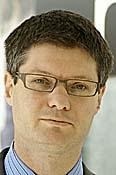
Lord WolfsonObviously the noble Lord does not eat and thus does not need farms nor does he breathe and thus does not need air purified by trees. Assuming however that he does eat it is the countryside whence the food cometh and we cannot carry on assuming that someone else can provide the food, as seems to be the believe also of some ministers. Some of them, not so long ago, stated that we do not need farming in Britain as we can buy all our food from abroad and yes, it was a member of the Conservative Party.

The countryside provides food, employment, housing and environment and while you can improve all of those it does not mean that you substitute one for the other.

Lord Wolfson, head of the clothing retailer Next in the UK and a major contributor to the Conservative Party says that we need more new garden cities and they must be built on countryside land as the countryside is underdeveloped and empty.

We trapped ourselves in tight urban areas giving ourselves the impression that there is no countryside left, he said, and continued to say that the reality is that 92% of Britain is undeveloped but we don't just see it.

Lord Wolfson then further stated that there is an enormous amount of land that could be developed into beautiful garden cities, not urban jungles. According to him those areas of the countryside are empty and unproductive and of no use. I would say he needs to get out more and get a life.

Those areas would be more bio-diverse than the agriculture that they would be replacing.

Lord Wolfson is offering a quarter of a million Pounds to whoever comes up with the best plans for a new garden city (or should that, maybe, read cities) in Britain.

Whilst the majority of the country may be undeveloped that does not mean that it should all be developed,. But that appears to be something that Lord Wolfson has in mind.

A lot of the agriculture and the countryside management that goes on in the countryside is a good use of land and we must away from the feeling that just because there is no development going on there.

Lord Wolfson does seem to be alluding also that the 92% of the underdeveloped countryside is available to be exploited for development which is a total fallacy and as stupid as the people who he showers money upon.

Garden cities could have a lot to offer as far as housing is concerned as long as they are planned and developed in line with the needs of the countryside and the environment. Otherwise you just create another block of unsustainable housing.

However, when it comes to housing we do NOT need more homes. We have more than enough empty homes and properties that could be turned into homes all over the country. In fact, there are enough homes to house the homeless of this country, those of Eire and of one or two other smaller EU nations and still have room to spare.

The idea of garden cities fail in the provision of housing as they would be built to the detriment of the existing settlements, no doubt, and thus the existing settlements would be left – as derelict often and with all the problems that they have – that is to say as they are in favor of new developments and this is not sustainable in the same way as the idea that the last Labour government floated of Eco-Towns was another one of those silly ideas that would have benefited builders and developers and no one else.

Instead we must redevelop our existing settlements and make them more livable. We must build viable communities and while garden cities are one way a much better way is to actually turn our existing settlements into such viable communities. Build on what we already have rather than design and build new settlements in the middle of nowhere with the need for all the infrastructure and everything else that goes with it. Making the existing communities more sustainable and making them into places where people actually want to live (and work).

We have already once had so-called garden cities but some of them were basically Legoland of the real world designed on the drawing board and then plonked into the countryside with little or no consideration of the people in the countryside and also for the people that were moved to those new cities.

The problem with garden cities or so-called eco-towns plonked into the countryside is that they also need infrastructure, such as water, gas, electricity and roads leading to them and would add even more to the commute that we are – I thought – want to get rid off.

In order to do the latter, however, we must either move the jobs to where people live or have people move again to where the jobs are and, while living in the country is great, if you work in the city that's where your home should be also. Leave the countryside and the living therein to those who actually also work there.

Britain does not have a housing crisis. That is utter baloney. Britain has an empty homes crisis and many of those homes are, in fact, local authority ones that are being earmarked for destruction and “redevelopment”, as in the case of the Ocean Estate in Stepney and the Robin Hood Estate in Poplar. And those are but two examples of many that could be listed.

Thus we do not need new garden cities and ideas such as those – except in order to make money for the builders – but we need to have the existing homes refurbished and the areas in which they are located made more livable and improved. A much better and cheaper option and also a much more environmentally friendly one.

It is very worrying that some of the members of our government have absolutely no idea as to the way things are in real life and that also includes the one who, when challenged as to the ancient woods that are threatened with destruction in the path of HS2 states that there is nothing to worry about. The government would just move the woods. In which parallel universe do those people actually live?

© 2013