by Michael Smith Veshengro)
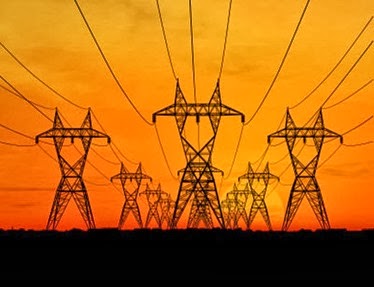 The infrastructure of industrialism is fragile and vulnerable, ripe for disruption and sabotage.
Weaknesses of security in the great majority of industrial control systems could allow hackers to create cataclysmic failures in infrastructure, according to researchers at the Black Hat security conference in 2013.
Our dependence on technology – fragile technology – to run everything from power stations and electricity grid, gas supplies, water supplies and even the transport system for supplies of food and good to the supermarkets and stores, might be the very undoing of the world as we know it today.
It does not require an EMP device detonated at altitude to knock out the infrastructure of nations. All it requires is hackers disrupting the system and making it crash and everyone is up the proverbial creek without a paddle.
The one this affects more than the big guys, however, is the average Joe on the street, so to speak for let's not believe for one moment that the powers-that-be will suffer. They will have their bunkers, their food supplies and their families taken care of.
Not only is the infrastructure of industrialism vulnerable to attacks by hackers and saboteurs, it is also vulnerable to solar flares and such like events. Such events, without even the need for any hacking, could send nations back into the stone age, at least for some time, by knocking out vital infrastructure, such as electricity, gas and water supplies, and the supply chains to the markets upon which people depend for their food.
We have become far too reliant on high-tech for almost everything and even our communications, not just telephone, whether ordinary or cell phone, are all dependent, on satellites and other high-tech means the breakdown of which, whether caused by hacking or other destructive force.
Considering also and especially the climate cataclysm and biosphere collapse being caused by global industry and its incessant greed, we must change how we live and how we work before it is too late.
We also have to consider that there is no factory or industrial production that is also sustainable as far as the environment and the Planet is concerned. That means that we need to return to less consumption and to products made by craftspeople and artisans, food from proper (local) farms and our own gardens and such, and making much more for ourselves, as was the way of our grandparents and their parents.
That does not, however, necessarily, mean that we have to return to the Dark Ages or even the nineteenth century for we do have means at our disposal, means that do not have to be polluting either in production, to generate electricity, to produce – yes, produce – gas for cooking and even heating, but we will have to make changes in how we use this electricity and gas and we will have to get away from the motorcar and get back to human-powered, and animal-powered, means of transportation.
When it comes to electricity and other energy consumption we simply use too much, and it is not (just) households that are at fault here but industry and businesses in general, as well as government, local and central.
Do office buildings really need to be illuminated all through the night when no one is home? Do street lighting have to be on all through the night? Do our motorways in Britain really have to be lit up at night? And government has the audacity to shout at households to stop wasting energy, even though we must stop wastage in the home too.
However, the stand-by setting and some other supposed power hogs are not at all and this becomes evident to anyone who uses a power meter in the home such as “The Owl” or similar. But the government and some agencies keep telling us that that is where most of the power is supposedly wasted while not looking at their own stoop first.
When it comes to where we live and work and how we live and work then, yes, we need to take a step back, even in time, and get back to some sensibility and normality.
We cannot continue to commute hundreds of miles to our places of work and then travel back to our dormitory towns and villages of an evening. We need to work again where we live and live where we work and, although this might be a little more difficult, under the same roof, well, almost.
Our towns and villages must become vibrant communities again where people not just sleep but actually live and work, and our cities must be repopulated again and made liveable. And electric power and other energy must be generated and created locally in close proximity too where people live and work and with renewables this is not a health issue as was the case with the coal-fired electricity plants in London in the early days.
We must decentralize power generation so that no event, man-made or natural, can knock out every bit of power from the entire nation, for instance. The Second World War and the attacks on power stations and especially the hydro-electric dams, by the Allied forces on German areas, such as in the Ruhr Valley, that managed to knock out a great deal of the area and further afield and crippling industry should be just one example as to the why of decentralizing power generation and energy production.
Decentralized power generation means that it is far harder to wreak such havoc and even more so if renewables are in play as in “every building a power plant” with solar, wind, etc. generation methods.
But we must also de-technify (sorry, just invented that word) the controls and the distribution so that no hacker or EMP event can knock the systems out and thus the lights.
While I am no Luddite and use computers to a great extent, thus not advocating that we got rid of everything computerized, I also know their vulnerability and not just to hackers and electromagnetic pulse and this includes lightning strike.
The talk is often as to “hardening the infrastructure” against such events but that is a great deal easier said that done and thus we need to cut ourselves off from the over-dependence on technological controls and return to a more manageable way of doing things. But with local power plants and such like this is extremely easy and easier still with electricity generation on each and every building for use by the building and with surplus going to the neighborhood.
Only by changing the way that we live and work and the way we do things can we prevent a breakdown and total destruction of the Planet.
Small is beautiful...
© 2013