by Michael Smith (Veshengro)
Why? Because it is dependent on a great deal of energy, especially of electricity and gas, and to all intents and purposes there is a very limited amount of oil and gas, upon which our energy production and on it industry depends, left to go around (despite the fact that the price of oil did fall quite significantly in the late part of 2014 and the early part of 2015 but that is a political ball game rather than oil and gas being abundant still) and renewable energies such as wind and sun just cannot provide the high voltages and wattage that are required by industrial production as we have now and the one that they are envisaging for the future.
The future of production will be small scale industry again – that is, at least, the way that I (and also others) – see it and much will be made more or less by hand again rather than by large machines, by production lines and robots. Without the power to do so it just cannot compute.
However, we keep being told that robots will take our jobs and that almost everything in the not so distant future will be performed by robots, many of them being what is referred to as “humanoid” robots. In the BBC Radio 4 program Analysis of March 2, 2015 entitled “When robots steal our jobs” this was very much being hinted at and also, it is claimed, that when this happens we all will have so much more free time to do what we want.
Hello! And what about money to live? Oh, some say, everyone will be given a basic universal income. Yes, sure, and pigs fly.
While the idea of a basic income is a great idea and one that should be supported and for which trial are now being carried out in some places, it will, probably, however, never come to pass in the capitalist system as we have it today. It will require a new system that has other ideals, a system where man and Nature are valued and stand in the center and not profit for corporations and shareholders. And one where no longer perpetual economic growth and the acquisition of wealth by business owners and others is the aim and name of the game.
This system will come about when capitalism collapses, as it must and will, and we return to a different way of production when also, as it must be, the means of production will be in the hands of the workers and not of the state. True socialism is not state capitalism and is the only system that abolishes and eliminates the distinction between the bosses and the workers.
But it has to be said here that in the post-industrial age production will be of a different kind and conducted in a different way than most of us have come to know and understand over the last century or more. The kind of production that we have known for so long ever since the “Industrial Revolution” will become a thing of the past and, like the motorcar, will be seen, later, as but a blip in human history.
Does anyone really believe that those robots, that are claimed to be taking jobs, can be made and run in a world where non-renewable resources are becoming scarce and where we need to get away from fossil fuel derived energy? I, for one, do not and that simply because of the fact that due to the restraints that will be forced upon us if we do not want the Planet to be destroyed entirely neither their manufacture nor their use will be feasible in due course. They will just remain ideas in the heads of the capitalists.
The new world will be very much like the old world before the industrial revolution and production (and other work) will be performed again in the ways of old. Sounds dreadful to many, I know, as the consumer goods will neither be abundant anymore nor cheap, cheap, cheap, as they are presently and as the consumers today demand them to be. That those products, that are so very cheap, come too us at a very high cost of exploitation of people and the Planet no one seems to want to know about. In addition to that those goods are not cheap in other ways as they are designed to break down in a very short space of time resulting in the fact that we have to buy new again, and again. But that is the way this present capitalist system has been set up, especially ever since the Second World War.
Before that time, and even for a while thereafter, especially in certain countries, products were made in a way that they lasted and that they could easily be repaired. However, the capitalist saw there profits disappear if they were to create new products that were better and learned from what had happened during the war where they were suppliers to the military. Products that get destroyed all the time would have to be replaced with the same products again and again and they basically put a self-destruct mechanism into the goods they made and sold. This mechanism is built-in obsolescence and non-repairability. If something breaks down after a short while, designed actually to do so, and then made in such a way that it cannot be repaired you do not have to invest all too much in research and development of new products; you can just sell your “old” ones over and over again. A total win-win situation for the capitalist and a total lose-lose situation for the consumer.
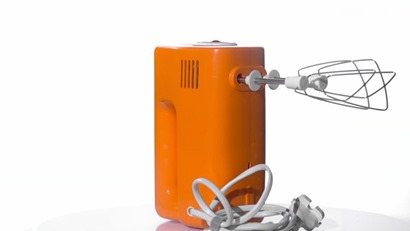
Years ago, and that will be the way again that things will be produced in the future, products, today often referred to as “durable goods” and given a lifespan of about three years, used to last for decades for they were made to last, and they were repairable and that is why they did last, for when something did break it could be fixed, often by the owner him- or herself. Those durable goods of today are not fit the name durable as they are rather the opposite. While that means that such products, like we once had, will be more expensive initially this cost, spread over the years that the product will actually last, coupled with repairability, will make them cheaper in the long run.
In the German Democratic Republic an entire repair sector existed in the economy, from small shops to industrial complexes almost that were geared to repair whatever the customer might bring along, from clothes and other textiles as well as, obviously, shoes and boots, over household appliances and such to vehicles. You could even get your knives, scissors and other cutting tools sharpened, reset and such, and all at a reasonable cost. But, to some extent, I digressed a little.
Industrial production in the new age of no-fossil fuels to power everything will, nay must, by virtue of lack of the amount of power required by the large-scale production we know today, return to much small scale and thus products will be made in a different way and must be made to last and be repairable as they will be more expensive.
But to be perfectly honest the cheap goods that come to us today more often that not are not made in a sustainable way and the fact that they are – predominantly – non-repairable makes them, in the long run, more expensive than the kind of products and goods that we had before that we, although more expensive, repairable. Personally, I don't think that such a change is a bad thing at all.
© 2017