Showing posts with label Russian Federation. Show all posts

Russian backyard agriculture

by Michael Smith (Veshengro)

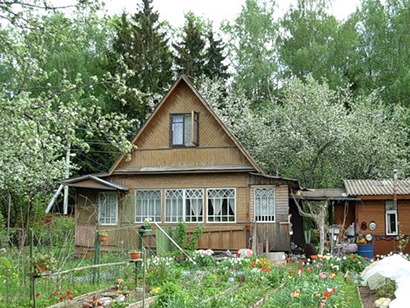
dascha russian homesteadAround 35 million backyard gardens are in private family possession in Russia and the government supports this with a legal right to a free, tax-free piece of land from 1-3 ha (in some regions even up to 6 ha).

In 1999 those backyard farms produced 50% of all the milk, 60% of all meat, 77% of all vegetables, 87% of all fruit, and 92% of all potatoes and all that organically and sustainably. The entire country can in this way be feed without any real problems.

According to information from Russia the situation has gotten better still even since that time as more and more of such small backyard farms are coming “on stream”. The surplus of what is grown and now used by the householders and their family and laid up for winter and for seed, is sold on the local markets. That is, actually, one of the obligations that comes with being given free land.

Apparently, however, neither in the EU, nor Britain, nor the USA, this system could be implemented, so the powers-that-be (but probably shouldn't be) claim. Honest now, let's face it, we can't possibly allow people to be able to grow their own food on free land with a small house that the government also pays for – more or less – as is the case in Russia, and then sell surplus on the local markets. That would way too much cut the profits of the corporations.

Just imagine what would happen if people could do that and be able to grow all the food they and their families could possibly eat and then sell surplus as well. The whole idea of neo-liberal people control by controlling their food – and what goes into it – would go out of the window and that just would not do.

© 2018

US and UK banning the use of Kaspersky anti-virus

by Michael Smith (Veshengro)

kaspersky-internet-security-21-700x393Not only the government agencies are on the bandwagon, even Barclay's Bank is advising its customers who got it free via the Bank to stop using it.

I am going out on a limb here now and say that this is because Kaspersky anti-virus is one of the best in catching Trojans and thus the government agencies want people to stop using it under false pretenses.

A little like the list of security software that the FBI published a while back where those that catch (almost) all viruses, malware, etc. were listed as bad performers.

Britain's main cyber security agency has warned British government agencies to avoid using anti-virus software from Russian companies, the latest in a series of moves targeting Moscow-based security software maker Kaspersky Lab.

In a letter to departmental permanent secretaries, the director of the UK National Cyber Security Centre, Ciaran Martin, said Russian-made anti-virus software should not be used in systems containing information that would harm national security if it was accessed by the Russian government.

He said his agency is in talks with Kaspersky Lab to develop a system for reviewing its products for use in Britain.

Kaspersky's anti-virus software was banned from U.S. government networks earlier this year on concerns the company has close ties to intelligence agencies in Moscow and that its software could be used to enable Russian spying.

Kaspersky has strongly denied allegations about the safety of its products or ties to the Russian government, saying it has become a scapegoat in the midst of rising tensions between Washington and Moscow.

British bank Barclays said on Saturday it had stopped offering Kaspersky anti-virus products to customers.

“Even though this new guidance isn't directed at members of the public, we have taken the decision to withdraw the offer of Kaspersky software from our customer website,” Barclays said in a statement.

This is (1) Russophobia gone over the top and (2), and I may be going out on a limb here, could just be that Kaspersky's products (and some others from Eastern Europe) recognize government Trojans and such like better than possibly those that the agencies wish to promote instead. Can't have government Trojans now recognized, can we.

Just thinking aloud...

© 2017

Alexei Navalny & the Anti-Corruption Movement in Russia

by Michael Smith (Veshengro)

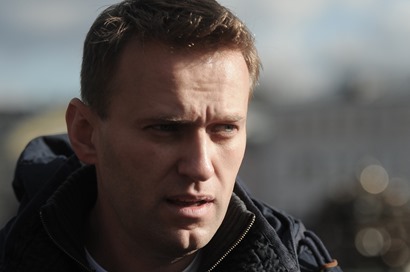
Alexey_NavalnyIf we remember that the Maidan “demonstrations”, which led to the problems, which is still expressing it mildly, in the Ukraine also started claiming to be an anti-corruption movement. Where it led to we have all seen.

Also what is being attempted in the Russian Federation has the same aim, namely to destabilize Russia and create there also one of those “colored” revolution, just like in the Ukraine and other places.

The players behind the scenes are definitely the same, and Navalny is nothing but a puppet in their hands. We can almost guarantee that one major player behind the scenes, and the main source of funds for Navalny and his “movement”, is the very same who has been behind the Ukraine issue and those color revolutions in many other countries. It certainly does not require a degree in intelligence work to figure that one out.

Thus regime change in the Russian Federation is the name of the game in which Navalny and his movement are a pawn, in the same was as regime change was the plan in the Ukraine and still is in other countries. The US even are being used, whether they know it or not, in this operation run by this particular person and his organizations. On the other hand it could be the US using that person and his organizations. You pays your money and you takes your choice.

© 2017

Meet Vladimir Putin, a new convert to the locavore movement

Russian supermarketWho needs Italian wine, English cheddar, and German sausages? Obviously not Russia.

Vladimir Putin is forcing Russians to become locavores, whether they like it or not. Last Thursday, his government issued a list of imported foods that will be banned for one year. This is an act of retaliation against those countries that placed sanctions on Russia following the attack on Malaysian Airlines Flight 17 in Ukraine. This includes the United States, Canada, Australia, Japan, Norway, Poland, Latvia, and the European Union.

It is an odd decision to make on behalf of a northern country that imports 40 percent of its food and is unable to boast about being “the breadbasket of Europe,” as it once was. That agricultural infrastructure is gone now, and it would take a long time and a rocky transition before local growers could fill that void.

Growth in domestic food production appears to be what the Kremlin ultimately wants and fits in well with its insistence on not needing the West to survive. Indeed, one acerbic Putinist seems to think it’s now or never for local growers. @EduardBagirov tweeted: “Our food producers now have the opportunity of a lifetime. If they screw it up now, they should stop complaining that no one buys their crap.” (Obscenities have been removed.)

Read more: http://www.treehugger.com/culture/putin-declares-hunger-strike-behalf-russians.html

Who would have thought: Russia's FSB going back to using paper

Who would have thought this about paper in the modern electronic world. To avoid e-document theft, Russia turns to paper and type, even typewriters.

by Michael Smith (Veshengro)
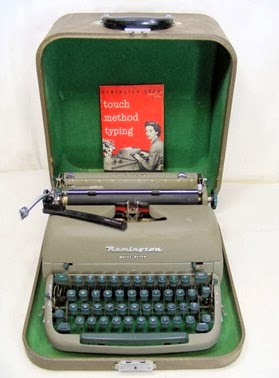
1950_s_REMINGTON_QUIET-RITER_TYPEWRITER_w_CASE_MANUALMany of us, lots of us in fact, use paper towels to clean up leaks – but you will hardly have ever heard about the way that paper is being used by the Russian Secret Service to prevent leaks of a much more serious nature.

It was revealed earlier in 2013 that Russia’s Federal Protective Service (FSO) had budgeted 486,000 rubles – just under $15,000 – for new electric typewriters, along with ribbons and other accessories. By using typewriters and paper for sensitive or classified communications, the FSO, which is charged with protecting important government personnel including Russia’s president and prime minister, hopes to prevent the kind of electronic document leaks related to the recent WikiLeaks scandal.

The UK’s Telegraph newspaper quoted Nikolai Kovalev, former director of Russia’s Federal Security Service, speaking to Russian newspaper Izvestiya: “From the point of view of security, any means of electronic communication is vulnerable. You can remove any information from a computer. There are means of defense, of course, but there’s no 100 percent guarantee they will work. So from the point of view of preserving secrets, the most primitive methods are preferable: a person’s hand and a pen, or a typewriter.”

In addition to being safe from electronic theft or distribution, paper documents written by typewriters are easier to trace to their source. Each individual typewriter has its’ own unique “signature,” due to minute differences in type patterns and mechanical operation. Computer printers just do not exhibit this type of identifiable signature even though there have been attempts to create some sort of signature for printers and photocopiers.

Many new media around the world commented on this and The New York Post ran the headline, “Russian government goes back in time; will use typewriters to leak-proof sensitive classified documents,” which unfortunately (and unfairly) implies that paper documentation is somehow a thing of the past.

The truth is, electronic document vulnerability is a very real concern. In addition to government intelligence records, proprietary or sensitive business records (including financial records, vendor lists, or client information) can be targeted for theft, as can personal correspondences via email or text. Identity fraud (through appropriation of personal information, such as a credit card number, that has been stored or transmitted electronically) affects thousands of people every day; in 2010, more than 8 million Americans reported being the victims of identity fraud according to a Congressional Research Service report to Congress.

Paper a typewriters are far from dead and a thing of the past. Fact is that typewriters and paper documentation are still necessary for many specific uses. Many US states have laws requiring that permanent records, such as death certificates, must be filled out by hand or typed. Funeral homes, government agencies, and even prisons still rely on typewriters to create physical copies (that is to say, paper, not virtual) of permanent records.

Typewriters are also becoming increasingly popular among a demographic too young to remember a time before “key-stroking” had supplanted “typing” as a necessary skill and “old-school” typewriters didn’t even need electricity to run. It may be for that reason also that working old manual typewriters are fetching quite large sums on places such as e-bay and other auction sites.

I have only recently found that my old portable (it you feel like carrying around a case of several pounds) Remington Rand Quiet Riter from around 1953 that was bought for about $10 at a second-hand shop a couple of years ago can, in good condition, and mine certainly is, $100 or more. Well worth holding onto then alone for that reason.

Permanent, secure, and an elegant form of artistic expression, typed documents are still a necessary part of our world, even in this “digital age.” And, the way things are going, they might become much more a thing of the present again than we ever might have imagined and thus I am glad that I still have my old Remington Rand Quiet Riter. The only problem that remains is getting the ribbons for it.

© 2013