Showing posts with label RHS. Show all posts

'The Moveable Feast Garden' – Let's Roll With It Baby!

by Michael Smith (Veshengro)

Bringing a touch of portable gardening to the brand new RHS Chatsworth House Flower Show

Tanya Batkin's 'Moveable Feast Garden', which will be on display at the RHS Chatsworth House Flower Show in June, will be showcasing the best in fruits, plants and well...wheels!

ac74d581-398b-4981-b500-1b91e64da39fThis garden will provide all the knowledge that 'generation renters' will need to produce edibles for seasonal recipes, a beautiful outside area to simply enjoy and all safe in the knowledge that even if they move property, they will be able to simply take their garden with them!

A stunning array of flowering plants, including Anemones, Brunnera and Geraniums will be provided by Hawkesmill Nurseries, and edibles such as DeliDahlias and Tiger Nuts will be supplied by Lubera.

'69ff7638-52d3-49ac-9253-283c1ca69529The Moveable Feast Garden' can be specifically reconfigured for moving and adapting to a new area. Natural materials such as the wood fencing which will be supplied by Zest For Leisure and the stone which has been supplied by Digby Stone, can be updated with paint finishes and semi permanent transfer colour, to ensure your garden keeps up with your fashion desires.
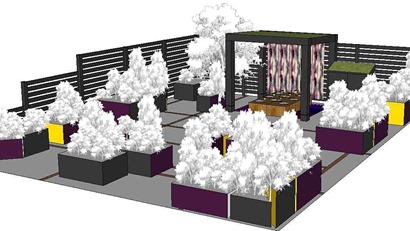
In keeping with the natural feel of the garden design, the shed and pergola will be topped with a green roof from Green Roofs Direct. 'The Moveable Feast Garden' planters will be handmade with wood from Gibbs & Dandy and the wheels ....finally lets talk about wheels, because every 'Moveable Feast Garden's' gotta have 'em and the bright blue beauties, which will be attached to the specially designed planters, have come from Castors Online.

So let the good times (and our garden) roll baby.

Tanya is the director of Vergette Ltd, Garden Design. Vergette Ltd – Garden Design can be found on the border of Hereford and Worcester in the fabulous Teme Valley. She design gardens in and around the UK as well as Internationally.

So, here ends the text from the press release. Now let's talk tacheles about this.

The problem, as with so many of the RHS show gardens, is, once again also with this one, that anyone wishing to replicate one would have to take out a second or third mortgage. We can see this once again with regards to the winning garden at the 2017 RHS Chelsea Flower Show; a garden that now one could financially be able to reproduce and, to be honest, I also don't think anyone would want to.

As to the “moveable feast garden on the other hand, if one does not want to be that ambitious and totally replicate a garden such as this then it can be done “on the cheap” without a problem though maybe not looking as beautiful but nevertheless, and that's what counts also and especially, functional.

Castors, of the right kind, can be put on (almost) any container and even shopping carts can be used for a moveable vegetable garden. And, while the latter definitely don't look very beautiful they make a statement of a different kind. No, they don't scream I am a cheapskate but more like “here is someone who cares about the environment and thinks laterally”.

© 2017

Wildflower meadow in a planter

by Michael Smith (Veshengro)

The RHS Hampton Court Palace Flower Show 2013 saw a number of planters designed – the content, so to speak, not the planters themselves – by garden celebrities. This was one of them.

Wild_flowers_contained_web

Designed with bees and pollinators in mind this planter design shows that every garden, however small, can have a small plot, as in pot, of wildflowers to attract bees and pollinators who then will also come and pollinate the crops, hopefully.

Designed by Jekka McVicar the planter is entitled “wild flowers contained” and it says that this planter was specifically designed to attract birds, bees and butterflies.

Such a wildflower planter will work in any stetting and would not look out of place in formal gardens, parks, and in towns.

The planter “Wild flowers contained” can be found in the Ecover inspire zone and inspirational it is – the planter I am referring to – as are a number of others.

© 2013

A Moveable Feast at RHS Hampton Court Palace Flower Show 2013

by Michael Smith (Veshengro)

A Moveable Feast. Designed by: Kate Turner. Sponsored by: Surrey Heath Borough Council. Summer Garden. Hampton Court Flower Show 2013.This edible garden has been inspired by the Army Wives and is designed to be transported wherever they get relocated, making use of inexpensive, colorful containers.

It was designed by Kate Turner, sponsored by Surrey Heath Borough Council, The Mall Camberley, and Cala Homes and built by Surrey Heath Borough Council Greenspace Team.

The planting scheme features the ingredients needed for a feast, whilst a river of yellow planting symbolizes the ribbon of hope used by military families when a loved one is away on active (combat) duty.

The garden is a representation of the Flourish Community Garden ‘Grow your own’ course, which combines a passion for growing edibles with encouraging community support. The garden reflects the constant relocation of military families and their need to feel uplifted and hopeful whenever a loved one is away. It is also the kind of garden that could be built at operating bases in foreign fields.

This was the first, and to some extent only, show garden that caught my attention and the Silver Medal it was awarded is well deserved indeed. It is an idea that can be replicated by anyone with almost anything anywhere and thus makes for a great example and show garden.

© 2013

The Changing Environment: Hampton Court Palace Flower Show

Our-First-Home-17_ROT1Destruction, regeneration and the impact of man on the environment are key topics represented in the Conceptual Garden category at this year's RHS Hampton Court Palace Flower Show.

With the impact and causes of our changing environment at the forefront of many recent debates, the 2013 Conceptual Gardens provide a forum for an artistic and innovative look at the consequences of waste and over-use of natural resources, natural disasters and nature's self-restoration process.

Hoping to stimulate people's imaginations and emotions, Caroline Tait and John Esling have designed a garden featuring a multi-faceted mass of fridges arranged to reflect the form of an iceberg. The garden is intended to provoke thought and make something beautiful from discarded building blocks of consumer society. The design recalls roadside ‘fridge mountains'; symbolic of society's wastefulness with resource, and conjures up an iceberg, cold and unwelcoming, but iconic of global warming and our role in promoting it.

Benedict Green makes his debut at the show with a garden that encourages the use of an alternative to water-worn limestone in garden settings. The rare habitats of British limestone pavements were heavily quarried for rock gardens until recent protection was put in place. Benedict's garden is a conceptual abstraction where the shapes are formed using concrete from more sustainable limestone aggregate. It demonstrates a sustainable alternative to bringing a limestone pavement into a garden setting.

Luc Arek will exhibit a rectangular garden, growing a selection of vegetables surrounded on three sides by climbing vegetables and trained fruit trees. One side of the garden will feature a seated human figure who is reflecting his/her work while breathing in the purified air created through plant photosynthesis. The garden is designed to emphasise how, by producing our own crops, we can be self-supporting, as well as contribute to purifying the atmosphere and drawing attention to the continued loss of allotment land for building.

‘The Desolation of Smaug and Beyond', designed by Catherine Macdonald, explores the effects of forest fire and the subsequent new growth. The garden features abstract use of forms, colours and structures to represent the desolation and regeneration phases of this devastating event.

Jon Tilley's garden design is based on a giant grass claw rising from the earth and gouging the ground. The idea being that at times of natural disaster such as earthquakes, volcanoes, floods and tsunamis it is almost as if the Earth self-harms and wounds herself. The claws, which are created out of sculptural dry stone, leave behind blood-red flowers and plants that seem to ooze from the soil.

Bruce Waldock's garden promotes the activities of The Conservation Foundation and in particular the major replanting programme ‘Great British Elm Experiment'. Cuttings have been taken from parent trees that have survived the various waves of Dutch elm disease, and the resulting saplings are being grown on and monitored by schoolchildren, community groups, farmers and private individuals across the UK. The garden portrays an apocalyptic scene, but from the devastation, a spiralling glade of new growth emerges.

Each garden will engage the curious minded and will display an innovative approach to horticulture.

Full Disclosure Statement: The GREEN (LIVING) REVIEW received no compensation for any component of this article.

Garden celebrities design planters for RHS Hampton Court Palace Flower Show 2013

Our-First-Home-17_ROT1Gardeners will have their chance to create their own designer planting plots, as eight gardening personalities have teamed up with Ecover UK to design inspirational planters for this year’s RHS Hampton Court Palace Flower Show (9-14 July). The plots will be on display at the show, and the exclusive planting plans will be available to download from http://www.rhs.org.uk/Ecover-Planters

Award winning garden designers including Annie Guilfoyle, Adam Frost, Anne Marie-Powell, growers Pippa Greenwood and Jekka McVicar as well as garden designers and broadcasters James Alexander-Sinclair, Toby Buckland and Matthew Wilson have designed a range of beautiful 1m2 and 2m2 planting plans, which will be planted up and displayed within the Inspire zone, sponsored by Ecover, Following the show, these planters will be donated to a number of community-based projects.

Each planter has its own unique style, with many using plants to attract wildlife, which is a prominent theme throughout this year’s show;

Ann-Marie Powell “I’ve designed a planter highlighting the diversity of plants. All the plants are edible perennials. Birds, bees, insects and even humans can feast not only their eyes, but their tastebuds too. I like to think of it as a forage-fest for the show”.

Adam Frost “All the plants in my bee-friendly planter have been chosen for their nectar-rich properties. The cardoon provides structure with its architectural leaves, while Dahlia merckii is a single-flowered type, which is easier for bees to feed from. Nepeta ‘Blue Cloud’ and Geranium ‘Rozanne’ provide softness to the planting and is a deep violet-blue, a colour that bees and butterflies find irresistible”.

Annie Guilfoyle “My planter consists of dark foliage shrubs as they provide such a wonderful backdrop for other strong colours. The combination of blue and brown plants is a personal favourite of mine”.

Pippa Greenwood “I've been growing veg since I was young and am keen to promote Grow Your Own, even in the smallest garden. My planter is filled with great veg that you can grow in a fairly small space, not only does it taste great but it looks stunning too”.

Jekka McVicar “I have specifically designed my planter to attract birds, bees and butterflies.  The flowers will appear from early summer through until early autumn; so providing nectar for many pollinating insects”.

Matthew Wilson “The inspiration for my planter is the grasslands around where I grew up, on the North Downs in Kent, but using garden plants to tell the story rather than wild species”.

Toby Buckland “My ‘Honey Pot' planter contains a blend of long-flowering herbaceous perennials that look good all summer and are loved by the bees. At the centre is a bespoke metal urn that doubles as a support for annual climbers”.

James Alexander-Sinclair “A planter can be subtle, sophisticated, blaring or productive but, whichever way you go it should always be joyful. My design, filled with grass and vibrant colours of pink, yellow and purple does precisely that”.

This year for the first time RHS Hampton Court Palace will be divided into three zones; Grow, Escape and Inspire featuring gardens, plants, food and shopping that reflect their individual themes. Keen gardeners will love Grow, where they will find nurseries, plants stalls, potting bench demonstrations, and stands selling the very best in gardening equipment. In Escape visitors will find the Country Living Magazine Pavilion, learn how to ‘grow their own’ fruit and veg, marvel at the show’s famous roses and floristry and sample the delights of the Artisan Food Producers in the Great Tastes Marquee. In keeping with the show’s reputation for breaking boundaries in contemporary garden design, the third zone, Inspire, sponsored by Ecover, focuses on innovation and making the most of outside space.

Within the Inspire zone is The Ecover Garden, by award-winning designer Matthew Childs, who won an RHS Gold medal for his Conceptual Garden at last year’s show. The Ecover Garden champions sustainability and highlights ways in which we can aid the recovery of our aquatic environments. Ecover has also commissioned artist Ptolemy Elrington to create a sculpture of a giant bee made from recycled metal and plastics. The sculpture made its debut at Glastonbury festival before becoming a focal point in the Inspire zone at RHS Hampton Court Palace Flower Show.

Full Disclosure Statement: The GREEN (LIVING) REVIEW received no compensation for any component of this article.

Pop ups, pollinators and reused products at RHS Hampton Court Palace Flower Show 2013

Our-First-Home-17_ROT1At this year’s RHS Hampton Court Palace Flower Show (9-14 July) many of the gardens are promoting the use of plants for pollinators, grow your own and the reuse of materials in a creative way, while others highlight the ‘pop-up’ trend bringing make-shift gardens to the show.

Planting to attract wildlife is a prominent theme at this year’s show with many gardens using plants as a food source for pollinating insects as a key element. Surrey Garden’s ‘Bugs in Boots’, for example promotes ecological gardening within the Low Cost, High Impact category. By using plants from the RHS Perfect for Pollinators list designer, Caspian Robertson, demonstrates how intelligent planting within a garden can provide both sustenance and a maintainable living environment for a wide range of insects.

Continuing the theme, Victoria Truman and Liz Rentzsch Garden Design have designed the ‘Hot Stuff Garden’ which, drawing inspiration from Christopher Lloyd’s sub-tropical garden at Great Dixter, encapsulates a planting palette for bees and wildlife. While the flowering annuals and herbaceous plants of the meadow in Mariko Naka’s Spirits of the Land garden provide a food source for pollinating insects and the range of grasses a habitat for insect and animal species to live in.

In addition to the gardens, the Show has a number of exciting wildlife features dedicated to bees and butterflies including the RHS Butterfly Dome with Eden, which contains 3,000 tropical butterflies, the largest exhibited collection in the UK, while an exhibit built especially for their native cousins will be situated outside. There will also be a ‘Bee Garden’ feature bursting with nectar and pollen-rich plants to entice bumble, honey and solitary bees.

Many designers are using simple, sustainable ideas, such as using recycled waste products in their garden features to highlight environmental issues. ‘The Ecover Garden’, designed by Matthew Childs will include strips of recycled plastic woven in with the garden’s planting to inspire consumers to consider the environmental impact of the products and plastics they use. Designer Bayley LuuTomes’ garden ‘The Native Shower’ uses recycled glass bottles to transfer water into the garden and provide irrigation while the ‘Tip of the Iceberg’ Conceptual Garden includes a collection of old fridges, some used as planters, arranged in the form of an iceberg to symbolise society’s wastefulness.

A number of this year’s gardens also contain edible planting ideas, demonstrating that growing your own products can be not only delicious and practical but also a stylish choice of garden feature. Examples of this include Kate Turner’s ‘Moveable Feast’, a garden inspired by the transistory lives of Army Wives, which will contain herbs, vegetables and fruits, including many interesting varieties such as cucamelons, tomatillos and quinoa and the ‘Jardin du Gourmet’ garden which includes a sunken area dedicated to harvesting food.

Both the ‘Jardin du Gourmet’ and ‘Moveable Feast’ gardens demonstrate that the pop up trend is spreading to the gardening world. Designed as reusable gardens, which can be assembled and dismantled with ease, they are built for purpose and allow gardens to be brought into any kind of space. Sophie Walker’s ‘A Valley Garden’ also follows this trend. A vibrant, green oasis inspired by John Rhys’ Wide Sargasso Sea, it is designed as a ‘pop-up’ installation that can feature a different planting scheme each time it is remade.

Full Disclosure Statement: The GREEN (LIVING) REVIEW received no compensation for any component of this article.

Britain’s threatened wildlife championed at the RHS Hampton Court Palace Flower Show

Gardens celebrated as key nature reserves

The RHS Hampton Court Flower Show, 9 – 14 July, will champion Britain’s threatened bees and butterflies and show gardeners how they can help support these vital insects.

Our-First-Home-17_ROT1Over the past 50 years many groups of British insects have been in decline, including some of the common butterflies, moths, hoverflies and bees. Part of the problem may be the reduction in the abundance of wildflowers in the countryside that has occurred over this period. With the loss of traditional sources of food, gardens are increasingly being recognised as an important habitat where insects can find sources of nectar and pollen.

RHS Head of Science, Alistair Griffiths, said: “Gardens are a massively important refuge for wildlife and we know that what we grow in our individual gardens and how we manage them can have a big impact on pollinating insects.

“To help gardeners understand the practical, everyday difference they can make to the plight of pollinators the RHS is introducing a major bees and butterflies area at the RHS Hampton Court Palace Flower Show with gardens to show visitors the impact they can make while celebrating these amazing insects.”

Highlights include:
Native Butterfly Garden – Butterfly Jungle
350 British butterflies will fly freely among a rich combination of pollinator friendly plants in Butterfly Jungle’s Native Butterfly Garden. The garden illustrates the ease with which gardeners can create mini-meadow reserves to help sustain butterflies.

Iconic British breeds, including Red Admirals, Peacocks and Painted Lady, will be housed in a purpose built transparent enclosure, so visitors can observe the butterflies at work.

The planting is specifically tailored to appeal to British, native butterflies including combinations of herbaceous plants, shrubs and wildflowers. Several varieties of Buddleja will be mixed with Black and Greater Knapweed, Red Clover, Verbena rigida, Echinacea purpurea ‘White Swan’ and more than 40 other plants.

Paul Allen from Butterfly Jungle says: “The aim of the garden is to encourage more people to integrate butterfly friendly elements within their gardens. We hope that by seeing butterflies close up we will capture the imagination of visitors and inspire them to create habitats for these wonderful insects.”

The Bee Garden - Rachel Parker-Soden
The plight of solitary, bumble and honey bees is the focus of the Bee Garden, which looks at the role those with very small gardens can play in the fight to save the bees.

The garden will illustrate the impact of planting a mix of nectar rich plants that not only flower in summer, but that also provide early and late food sources for bees, especially as some bumble bee species can now be seen foraging during winter. It will also demonstrate how gardeners can create essential nesting environments for the different types of bees by leaving an area with deadwood or by drilling holes in logs, or by putting out hollow plant stems such as bamboo canes, cardboard or paper tubes.

Bugs in Boots - Caspian Robertson
The ‘Bugs in Boot’s’ garden aims to create an ecological space for insects, birds and other wildlife, recognising extreme weather conditions and the impact they have on wildlife.

With events like floods having a serious impact on gardens and insect habitats, the centre of the Bugs in Boots garden is designed to flood in heavy rainfall before slowly releasing the water into the soil. By storing the water, rather than flooding other areas of the garden, this slow-release design reduces the strain on overburdened water systems during times of intense rainfall, and protects the rest of the garden environment.

Designer Caspian Robertson created his eco-garden by using a combination of plants drawn from the RHS Perfect for Pollinators list of nectar and pollen rich plants that can sustain insects.

The Bee House - The British Beekeepers Association
The British Beekeepers Association has teamed up with the Bumblebee Conservation Trust to raise the profile of managed honeybees and wild bumblebees and highlight the vital role gardeners can play in the battle to help pollinators.

Interactive activities will help visitors deepen their understanding of the mysterious life of bees and learn about the differences between honey and bumblebees. Practical advice will be available on the best bee-friendly flowers to plant to attract and sustain bees.

Products derived from bees, including honey and beeswax, will be on display and visitors will be able to try their hand at the age-old tradition of candle making.

Full Disclosure Statement: The GREEN (LIVING) REVIEW received no compensation for any component of this article.

Secret Meanings of Flowers Uncovered at the RHS Hampton Court Palace Flower Show

From the withered hope of an anemone, to the burning lust of a cactus, the RHS is exploring the hidden language of flowers in a new exhibition at the RHS Hampton Court Palace Flower Show, 9 – 14 July

Our-First-Home-17_ROT1Illustrated by works from the RHS Lindley Library’s collection of botanical art, the exhibition will chart the history of this influential craze through the literature, board games, greetings cards and other ephemera it spawned.

The concept of flowers having meanings has been established since Elizabethan times, with references in Shakespeare’s writing, but reached the height of its popularity in France, Britain and America between the 1820s and 1880s. Its influence can be seen in the literature, art and poetry of the period with the Brontës, Austen, the Romantic Poets, the Pre-Raphaelite Brotherhood and more using it in their works.

Fiona Davison, RHS Head of Libraries and Exhibitions, said: “The secret language of flowers is something which has intrigued society for centuries, and allowed messages to be passed between lovers without alerting prying eyes. In fact, some ‘meanings’ show a surprisingly passionate side, like the gift of a seemingly unromantic cactus concealing the message of ‘I burn for you’ as the spines of the cactus are as hard to remove from the skin as the flames of cupid are to extinguish from the heart.

“Despite its lasting influence however, this secret code has a rather dubious history. Many meanings differ wildly according to their source, so receiving a bouquet of hydrangeas could mean you are ‘heartless’ or ‘courageous’.

“Whatever its origin, the language of flowers still captures our imagination today and is now so rooted in the social consciousness that even the flowers chosen for the wedding bouquet of the Duchess of Cambridge were selected for their ‘meanings.”

This selection of flowers sends some surprising messages:

Positive messages
• Red rose: Love
• Tuberose: Voluptuousness, or I have seen a lovely girl
• Cactus: I burn for you
• Almond: Hope
• Hibiscus: Beauty, or Enduring
• Peach blossom: I am your captive, or Your charms are unequalled

Negative messages
• Anemones: Withered hope
• Rhododendrons: Beware
• Fig: Discord
• Passionflower: Superstition
• Pumpkin: Bulk, or Grossness
• Marigold: Mental anguish, or Indifference

Ambiguous messages
• Cattleya: Mature charms
• Calceolaria: I offer you pecuniary assistance
• Bindweed: Insatiability, Inconstancy, Extinguished hope, Obstinacy or Humility
• Blackberry: Jealousy, or Remorse

The Language of Flowers exhibition at the RHS Hampton Court Palace Flower Show will be accompanied by themed flower arrangements, each with their own hidden meaning. To book tickets, or for more information visit www.rhs.org.uk/hamptoncourt

Dr Brent Elliott, the RHS Historian, will also be giving a talk on the rise and fall of the language of flowers at the Lindley Library London at Vincent Square on 16 July. Tickets for the talk £7 RHS members, £10 non-members. Booking ref 10406.

Full Disclosure Statement: The GREEN (LIVING) REVIEW received no compensation for any component of this article.

RHS and Eden Project bring a butterfly-filled rainforest to the RHS Hampton Court Palace Flower Show

Our-First-Home-17_ROT1The Royal Horticultural Society and the Eden Project are to create the UK’s largest butterfly rainforest experience at the RHS Hampton Court Palace Flower Show (9 – 14 July).

The RHS Butterfly Dome with Eden is a re-creation of Eden’s world-famous Rainforest Biome in a 25m diameter, 9m high dome. Visitors will be plunged into the heart of a steamy jungle on an elevated walkway surrounded by tropical palms, trees, climbers and orchids.

While exploring this rich, diverse habitat, people will be able to spot the magnificent shapes and colours of 3,000 tropical butterflies - the largest exhibited collection in the UK including some unusual varieties such as the Blue Morpho and Owl butterflies.

There will be the chance to see the butterflies sipping from nectar plants and feeding stations throughout the garden. Visitors will also have the opportunity to witness young butterflies emerge from their chrysalises in a viewing cage.

Mandy Almond, RHS Hampton Show Manager, said: “Bringing the UK’s largest butterfly rainforest experience to RHS Hampton Court Palace Flower Show is an extremely exciting and challenging project, which will create a truly tropical spectacle for visitors at this year’s Show. The Dome will give visitors the chance to see the life-cycle of this remarkable insect and marvel at the astounding variety of shapes and colours they display.”

Paul Stone, Eden’s Landscape Manager and designer of the Dome, said: “The Dome will bring Eden to the biggest flower show in the world, offering visitors the opportunity to walk through a forest canopy, surrounded by butterflies. The garden champions important messages about plants and people, biodiversity and sustainable environments. Both Eden and the RHS are passionate about raising awareness of these issues”.

The Eden Project will also be bringing its popular Freaky Nature family activities including viewing the fascinating microscopic world of bugs and beasties, getting up close and learning about the insect world. There will also be a butterfly-making workshop, where children can make butterflies which will be used as part of a display at Eden.

The RHS Butterfly Dome with Eden will be created to celebrate the June launch of the Eden Project’s new Rainforest Aerial Walkway and the introduction of nearly 20 species of tropical butterfly into the Rainforest Biome this summer.

The exhibit will form part of a Butterflies and Bees Area at the Show where visitors can learn about native plants and insects as well as tropical ones. The Native Butterfly Garden, by Butterfly Jungles, will create the ideal habitat to encourage butterflies into UK gardens. The garden will be fluttering with Peacocks, Red Admirals, Small Tortoiseshells and Commas feeding from flowering shrubs, wildflowers and garden plants. Complementing this will be a garden for bees. The Bee Garden is a haven for pollinators, bursting with ideas to tempt honey and solitary bees with nectar and pollen-rich plants. Both of these exciting gardens showcase many of the plants and flowers from the RHS Perfect for Pollinators list*.

Mandy continued: “As well as creating amazing sights and experiences for visitors, the Butterflies and Bees Area is all about sharing ideas and ways to support British pollinators. As so many of us are concerned about our bees and butterflies we’re sure The Native Butterfly Garden and The Bee Garden will be popular with visitors and will encourage growing plants and flowers from the RHS Perfect for Pollinators list.”

About RHS Hampton Court Palace Flower Show

RHS Hampton Court Palace Flower Show (9 – 14 July 2013)

9 – 10 July RHS members only

11 – 14 July RHS members and non-members

9 – 13 July 10am – 7.30pm

14 July 10am – 5.30pm (sell off starts at 4.30pm)

Each full-paying adult may bring two children aged 16 and under free of charge to the show.

Tickets for the RHS Hampton Court Palace Flower Show are available in advance or on the gate. To buy tickets, visit www.rhs.org.uk/hamptoncourt or by calling 0844 338 7506.

*RHS Perfect for Pollinators

The RHS Perfect for Pollinators list identifies those plants that will benefit bees and other pollinating insects by providing pollen and nectar from early Spring to late Autumn. By planting a broad range of appropriate plants gardeners can encourage and sustain pollinating insects which, in turn, will attract other forms of wildlife, such as birds and hedgehogs, into gardens.

For the full list of Perfect for Pollinator plants, go to www.rhs.org.uk/perfectforpollinators

Full Disclosure Statement: The GREEN (LIVING) REVIEW received no compensation for any component of this article.

Ecover showcases sustainable plastics in garden design at 2013 RHS Hampton Court Palace Flower Show

Our-First-Home-17_ROT1The threat posed to UK coastal and inland waterways by the careless disposal of plastic has inspired the design of the Ecover garden at the RHS Hampton Court Palace Flower Show (9 – 14 July). Designed by Matthew Childs, the garden uses strips of sustainably sourced plastic, which are woven in with the garden’s planting, to highlight the need to save our rivers, lakes and oceans from pollution.

Created by Ecover, the world’s largest producer of ecological cleaning products, The Ecover Garden capitalises on new technologies to use sustainable plastics to encourage consumers to consider the environmental impact of the products they use. The recycled plastic in the garden represents Ecover’s pioneering spirit in the field of sustainability, using both plant based ingredients in their products and sustainable recycled plastic in their packaging.

Water is fundamental to the design of the garden both literally and figuratively. Plants are used to represent the colour and movement of water, as they meander around a gravel path and monolithic walls are inspired by coastal cliffs and river gorges. A plastic toilet cleaner fountain, bottle-handle bench and laundry cap lamp emphasise the role of Ecover’s work in helping to make a healthy and sustainable lifestyle an easy choice for consumers, which in turn aids the recovery of our water systems.

Research from the Marine Conservation Society reveals that plastic debris accounts for almost 60 per cent of all litter found on UK beaches, and the UN Environmental Programme estimates that more than 1 million seabirds and more than 100,000 marine mammals die every year from ingesting plastic debris. Nearly two million plastic bottles are used in the UK every day and, whilst UK recycling rates have significantly increased over the past few years*, around 40% of plastic bottles are sent to landfill.

Designer of the Ecover Garden, Matthew Childs says: “The fundamental principle behind this garden is that water is life. We depend upon our aquatic environments, but they are under threat from pollution, including waste plastic in the seas, and toxic residues in our rivers and lakes. It is vital that we act to protect these crucial resources. We want to encourage more people to think about the products and plastics they use and for them to see recycled and plant based plastics as a major contributor to the sustainable future of our waterways.”

“When we think of recycled plastic, we often think of reusing it in its current state, for example the use of plastic bottles as mini-greenhouses to get cuttings started. The Ecover Garden will show how recycled plastic can be a beautiful material in itself, formed into new, practical and sculptural features. We want to change the perception of recycled materials from worthy and limited, to sexy, beautiful and versatile.”

Ecover are sponsors of the Inspire Zone at the RHS Hampton Court Palace Flower Show, which champions cutting edge design and innovation. Thought-provoking Conceptual Gardens, inspirational Low Cost, High Impact Gardens, as well as practical advice, hands-on demonstrations and contemporary shopping stands make it a must for people looking to ideas for any modern garden.

*In 2000, just 3% of plastic bottles were recycled, Now 60% of all plastic bottles in the UK are collected for recycling.

Ecover is the world’s largest producer of ecological cleaning products, using sustainable plant and mineral-based ingredients to create highly effective cleaning products that achieve the lowest possible toxicity and the most rapid and complete biodegradability. Constantly innovating, Ecover continues to expand and improve its product range, including the development of a new eco-surfactant for use in its hard surface cleaners, meaning the range cleans as well as – or better than - the UK’s leading conventional brands. All of Ecover’s plastic bottles are made from Plant-astic – a 100% renewable, reusable and recyclable plastic made from sugarcane. Ecover was the first cleaning brand in the UK to use Plant-astic and has used it across its product range since 2011. For more information on this pioneering brand, visit www.the-splash.co.uk

Full Disclosure Statement: The GREEN (LIVING) REVIEW received no compensation for any component of this article.

This article is for your information only and the GREEN (LIVING) REVIEW does not (necessarily) approve, endorse or recommend the product, service or company mentioned.

Henhouses need new homes

Trendy sustainable living - see the celebrity henhouses at Hampton

Hens_LWThe RHS Hampton Court Palace Flower Show is home to a fun henhouse auction this year, promoting and reflecting the trend for sustainable living.

Celebrity designers and personalities such as Philippa Forrester and TV show Dragon's Den Deborah Meaden have created henhouses which will be on show at Hampton Court on Monday 8 July and will be available to auction on the website ebay. The auction starts when the show opens on 9 July and continues to Sunday 28 July when the RHS Flower Show Tatton Park ends.

The line up of henhouse creators are;

  • Sophie Conran

  • David Domoney

  • Philippa Forrester

  • Kate Humble

  • Deborah Meaden

  • Nikki Tibbles

Proceeds from the auction will go to the RHS Campaign for School Gardening which encourages and supports school gardens, and the Addington Fund which supports British farming.

To bid for a henhouse please visit www.ebay.co.uk from 9 July.

Source: RHS Press Office

Full Disclosure Statement: The GREEN (LIVING) REVIEW received no compensation for any component of this article.

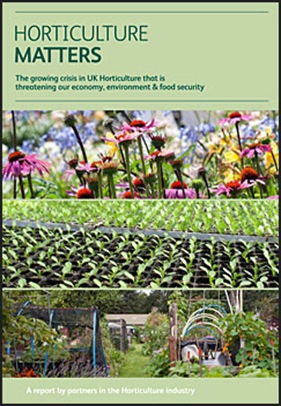
Horticulture Matters

'Urgent action needed to rescue horticulture' - RHS calls for government action

by Michael Smith (Veshengro)

The RHS on May 14, 2013 presented a report to the House of Commons calling for government action to urgently address the skills gap in the horticultural industry.

Horticulture-MattersA survey of 200 horticultural businesses conducted by the Society has demonstrated that more than 70% of horticultural businesses cannot fill skilled vacancies, nearly 20% are forced to recruit overseas and almost 70% claim that career entrants are inadequately prepared for work. This gloomy picture is outlined in the report, Horticulture Matters.

The report, commissioned by Britain’s leading horticultural organizations, including the Institute of Horticulture, British Growers Association, HTA (Horticultural Trades Association) and Lantra, concludes that a commitment to bridging the green skills gap is not only necessary but urgent.

The survey of 200 horticultural businesses confirmed an alarming shortage of skilled professionals in UK horticulture. The Horticulture Matters report, which will be presented to Government at the House of Commons, demonstrates exactly how this skills gap is threatening Britain’s economy, environment and food security.

Dwindling numbers of people with horticultural skills simply means that the industry cannot meet the growing demands placed on it. Horticulture contributes £9 billion to the British economy each year as an industry. It employs 300,000 people including crop growers, gardeners, scientists and turf specialists.

The survey also found that 10% of vacancies take at least one year to fill. More than 80% of the survey respondents cited a poor perception of horticulture in schools and colleges as the issue, and 90% said it was because horticulture lacks career appeal.

Sue Biggs, Director General of the RHS, has stated that growing concern across the industry about the skills crisis has galvanized this unified call for Government action. "We’ve brought together Britain’s leading horticultural organizations to create this report.

"We are unanimous in the belief that there must now be urgent action to save British horticulture and it must happen now. Our report calls on the Government, employers and those in the education system to take action to safeguard the critical role that horticulture plays in Britain today.

"Within the report there are solutions that both the horticultural industry and Government could embrace to safeguard the critical role that horticulture plays in Britain today and must continue to play in the future. We must act now to safeguard the critical role horticulture plays in Britain today and must continue to play in the future."

The report asks Government to prioritize horticulture within Research Council and other government research funding areas to equip Britain with the high level of skilled professionals the UK needs to tackle threats posed by pests and diseases and climate change.

The biggest problem does lie with the school system and that of targets for school in that, instead of allowing students their choice of careers, schools and career advisers withing them – led by targets – channel students towards more academic pursuits telling that the must go to university and discourage them to take up a path in the land-based industries.

It goes equally for horticulture as well as for silviculture, that is to say forestry where there is also a dire need for new blood in order for the industry, especially at roots (pardon the pun) level to continue.

Farming equally sufferers from this lack of new blood even though there are young people interested to take it up, in the same way as there are youngsters who want to go into horticulture and forestry. The problem, however, lies, as already indicated, with the schools and primarily with government not recognizing, despite all the great talk, vocational careers in the land-based sector.

The report can be downloaded from: http://www.rhs.org.uk/Media/PDFs/News/1016-RHS-Hort-Careers-Brochure-AW-low-res-spreads

© 2013

Reduced Fruit Crops This Autumn

RHS warns that the wet and cold April and May may cut crop yields.

The Royal Horticultural Society (RHS) is recommending a number of ways that gardeners can use to counteract the potential poor fruit crops expected this year. Fruit growers visiting RHS Hampton Court Palace Flower Show (3–8 July), sponsored by Ecover, will be able to talk to the charity’s advisors for free about best ways to keep yields up.

Although the warm start to the year initially raised hopes of a good harvest, frosts in April and cold rainy weather in May and June reduced pollination and led to losses of remaining fruitlets. This will mean poorer plum crops this summer and a dearth of apples and pears later.

The charity is suggesting that to preserve whatever crop is left it is even more important to keep down weeds around trees so that there is less competition for nutrients – especially important if there are dry spells. Careful control of pests and diseases will also help. And there will be little need to thin out the remaining fruit.

The RHS is advising gardeners that it will be necessary to summer-prune restricted forms of fruit trees such as cordons and espaliers. With few fruits to support it is expected that trees will grow too many branches and leaves.

“Because trees have dropped quite a lot of their developing fruits, gardeners should be wary about thinning fruits – and in many cases not thin out at all this year,” says Guy Barter, RHS Chief Horticultural Advisor. “This current warm, moist weather, in the absence of a heavy fruit crop, will also encourage lush growth so summer pruning will help direct nutrients to the fruit and promote productivity for 2013. Adding potassium (high potash) fertiliser to the weed-free area at the base of the tree can help harden growth and promote fruitfulness.”

Any gardeners needing more advice about getting the maximum from their crops, or who have any other gardening problem, can talk to the charity’s advisors for free at this year’s RHS Hampton Court Palace Flower Show, sponsored by Ecover.

RHS Hampton Court Palace Flower Show

Date: Tuesday 3 – Saturday 8 July 2012
2 July Preview Evening
3–4 July RHS members only
5–8 July RHS members and non-members

Time: 2 July 5.30pm – 10.30pm
3–7 July 10.00am – 7.30pm
8 July 10.00am – 5.30pm (sell off starts at 4.00 pm) afternoon tickets
valid from 2.30pm

Venue: Hampton Court Palace, Surrey KT8 9AT

To buy tickets: www.rhs.org.uk / 0844 338 7505
Ticket prices range from £14.50 – £32.50; each full paying adult may bring two children aged 16 and under free of charge to the show.

About the RHS
The Royal Horticultural Society is the UK’s foremost gardening charity, helping and inspiring millions of people to garden. We do this at our gardens and shows and through our scientific research, publications, libraries and our education and community programmes. We are entirely funded by our members, visitors and supporters.

About Ecover
Ecover, producer of innovative, effective cleaning products designed to make a healthy and sustainable lifestyle easy, is this year’s new headline sponsor for the RHS Hampton Court Palace Flower Show (3–8 July 2012).Ecover seeks to contribute to the process of creating economical, ecological and social change within our society for people today and future generations.

Full Disclosure Statement: The GREEN (LIVING) REVIEW received no compensation for any component of this article.

Grow Your Own at RHS Flower Shows

By Michael Smith (Veshengro)

Grow Your Own is more and more in evidence at the various RHS shows and not just this year.

While Grow You Own (GYO), in “speed mode”, has been around for some time now, it is getting more and more main stage at the shows now. This was certainly not the case some years back

That GYO is reaching the main stage of the shows could very much be seen by the RHS Edible Garden at the 2011 Hampton Court Palace Flower Show as well as by a similar RHS show garden at the show last year.

GYO is, we all know, not new at all but the interest and the phenomenon os how it is taking off nowadays certainly is.

Allotment gardens have been around for now some time and the Diggers were the first who were trying to archive the GYO already centuries ago.

Seed merchants, gardening equipment manufacturers and supplies, etc., all are gearing up more and more to this market, including the many books on the subject now being produced. Even gardening suppliers, such as Haxnicks and seed companies such as Marchalls have brought out “grow your own vegetables” guide books.

As said, the grow your own vegetable “movement” is not a new one. During the two world wars there were the “Dig for Victory” campaigns and many of those images are being used by seed companies and others to promote the growing of your own vegetables. The Mr. DIGWELL Seeds are but one example of using this kind of retro as regards of grow your own veg. It must be welcomed, however, as this is the way things should be, in order to also ensure some kind of food security for the nation as a whole.

© 2011

RHS Director of Horticulture picks tasty plants for Grow Your Owners

By Michael Smith (Veshengro)

JimGardiner To celebrate the abundance of 'Grow Your Own' inspiration at the Hampton Court Palace Flower Show this year Jim Gardiner, RHS Director of Horticulture, has picked his favorite herb, fruit and vegetable plants, which offer great results, to share with gardeners.

Jim compiled his list of choice plants from thousands of RHS Award of Garden Merit (AGM) fruit, vegetables and herb cultivars. The RHS AGM is the highest accolade a plant can have. They are the best plants for gardeners to grow and have been selected by experts on their merits of taste, yields, resistance to pests and diseases and performance.

Speaking about his favorite herbs, fruit and vegetable cultivars, Jim said: “We're passionate about getting people growing food and enjoying the best results when gardening, which is why I've pulled together a list of some of my favorite 'Grow Your Own' plants that have performed incredibly well for me this year. They offer great results and taste wonderful. I hope the lists helps people with their plant selections and that they get fantastic results too.”

Herbs

Lemon verbena – Aloysia citrodora AGM

The leaves of this herb smell of lemon sherbets. They not only make a refreshing herbal tea, but can also be used to flavor cakes and puddings. Grow this delicious shrub either against a wall to give added protection in the winter or in a container that can be brought into a cold greenhouse.

Please do not confuse Lemon verbena with Lemon balm. The latter is Melissa officialis and they are not related. Lemon balm does make a great calming tea though and also should not be missing, in my opinion, in a garden.

Rosemary – Rosmarinus officialis 'Severn Sea' AGM

Rosemary 'Severn Sea' not only tastes good in cooking and can be used all year round, but also has an attractive arching habit with very dark blue flowers so looks great in the garden or in a container.

Purple sage – Salvia officialis 'Purpurascens' AGM

The attractive purple foliage of this culinary sage is milder in flavor than the standard sage so it combines well with vegetables and some cheese. In summer it produces very beautiful flue flowers with when combined with the leaves makes it a very attractive herb for a sunny well drained part of the garden.

As luck would have it I managed to acquire a pot of those when they were on give away to us journalists on the Press Day of the Hampton Court Palace Flower show and I just must get the growing and care instructions for it.

Vegetables

Sweet pepper 'Gypsy' AGM

This is a F1 hybrid. It crops early and is easy to grow. It grows well both in the open ground and in the greenhouse. The sweet full-flavored fruit ripen from pale green to attractive bright red.

I guess I must get hold of some seed of this in order to give it a try next year and report on the findings as to how it worked for me.

Chard Bright Lights AGM

This plant can be grown for 'salad leaves' or as full sized plants for both leaves and chards – just steam for a delicious taste. It produces a good, colorful mix, including reds, yellows and whites; very ornamental and decorative. This chard is a colorful and versatile addition to the kitchen garden or potager. It is easy to grow; likes a sunny location and light soil. Good for successional sowing for long cropping season.

Kohlrabi 'Kolibri' AGM

This is such an under-rated vegetable – and I can but agree. The can be sown and eaten in eight weeks. This variety produces small purple-skinned white-fleshed bulbs on the soil surface. All gardeners have to do is to wash and slice or grate on your salad; leaves and stems and be added to salads as well. No waste. Absolutely delicious little vegetable.

Runner Bean 'Wisley Magic' AGM

One of the best selling vegetables. It was part of the RHS Bicentenary Plant collection in 2004 and still performs brilliantly.

Fruit

Pear 'Buerre Superfin' AGM

Lives up to its name; buttery, very juicy flesh, sweet yet balanced with lots of lemony flavor. A very reliable cropper.

Apple 'Ellison's Orange' AGM

Wonderful flavor – taste of aniseed develops after picking, juicy flesh; easy to grow.

Raspberry 'Tulameen' AGM

Best raspberry in the RHS Raspberry trial; excellent flavor; disease free, but vigorous, with tall canes.

While these are Jim Gardiner/s choices other folks, including gardening experts, may have their own favorites and if you are an experienced gardener you may also have others that you would recommend.

© 2011

The RHS Edible Garden

The RHS Edible Garden at Hampton Court Palace Flower Show 2011

By Michael Smith (Veshengro)

RHS-Edible-Garden The RHS Edible Garden, designed by Jon Wheatley and Anita Foy (this would not be a Wheatley related to Kevin, the actor, and thus to the former owner of the big house at Nonsuch Park and one of the ancestors being an expert in gardening?), formed the centerpiece of the 2011 Hampton Court Palace Flower Show.

The Edible Garden showcased the very best of Grow Your Own, with a fantastic range and array of beautiful, mainly edible, plants and it was a true feast for the eye.

Artisan, rather than commercial, products, production and uses were the focus of this exhibit and it ranged from beer production, over fruit and nut orchard, cider orchard, fruit, flower and vegetable garden to “food for free” and basically everything in between including a tropic hothouse and giant vegetables.

The RHS Edible Garden, like so many other Grow Your Own gardens, small and large, at the 2011 RHS Hampton Court Palace Flower Show, has shown that a vegetable garden does not have to be hidden away and, like it used to be, vegetables can be grown alongside flowers for bedding and for cutting.

In days of old cut flowers always used to be grown in the cottage garden right alongside the vegetables or amongst them. Or was it the case of the vegetables being amongst the flowers?
Whichever way, vegetables and flowers and bedding plants, some of which can be most beneficial to vegetable growing, can live happily side-by-side and can even benefit each other.

At the same time you can use every available space without having to worry how that might look to the neighbors and the council. Nicely arranged and grown such beds, planters, or what-have-you, look good out back or in the front.

Arranging such planting is not rocket science though it might be a good idea not to have one overpower the other too much in height and bulk. All plants need a little breathing space even though with the deep soil method things can get packed very tightly.

© 2011

Burgon & Ball 5-A-Day Garden

Burgon & Ball 5-A-Day Garden at 2011 RHS Hampton Court Flower Show

By Michael Smith (Veshengro)

5-A-Day-garden-2011_web The Burgon & Ball 5-A-Day Garden in the Small Garden category at the 2011 RHS Hampton Court Flower Show, designed and constructed by Burgon & Ball – which also won a Gold medal in that category – is a great example of what can be done, as regards to food growing, in small spaces.

This incredible small garden crams enough planting into just 10 square meters of planting space to produce enough fruit and vegetables to proved a person with their recommended 5 portions a day, every day, for a whole year.

The plants are packed in to the planters cheek by jowl in a way that defies the traditional spacing suggestions more often than not found on seed packets. Nevertheless they thrive and crop as if they had the luxury of their own expansive personal space which, indeed, they have, though not in surface area.

The secret is the “deep bed methods” as espoused by the late self-sufficiency expert and guru John Seymour. Growing in very loose deep soil encourages roots to grow straight down rather than sideways, thereby enabling increased planting density, with the resulting harvests of up to fourfold of that which could be achieved by traditional planting methods.

The Burgon & Ball 5-A-Day Garden at the 2011 RHS Hampton Court Flower Show is set in a typical small courtyard, part of a large scale urban development, assessed by the kitchen back door. There is very limited space and lots of hard landscaping. The garden shows how, by using off the shelf, crop specific sized, Burgon & Ball Home Allotment® Planters, it is possible to replicate the conditions of the deep bed method and become self-sufficient in fruit & vegetables.

It is, obviously, also possible to recreate this garden using other planters, especially homemade ones, and reused and upcycled ones, such as builders' bags and such like.

Every single plant in the Burgon & Ball 5-A-Day Garden is edible in some format and all surfaces have been considered for a productive use – including the chamomile rooftop recliner and the wall of herbs in Home Allotment® Vertical Planters.

One of the highlights of the garden is the salad table – a stunning hand crafted table with integral planting trough packed with salad leaves and edible flowers for diners to pick and enjoy at their very freshest.

The Burgon & Ball 5-A-Day Garden also features rainwater harvesting, via copper drainpipes into and under-deck series of water butts, additional water butts to catch falling rain and an attractive copper rain chain channeling further water into one of the butts. You can make rain chains yourself and there are instructions that can be found, I am sure, on the Web.

Space under the stairs is utilized to house a pull-out potting bench and tool store plus a compost bin.

Burgon & Ball Home Allotment® Planters are available from all good garden centers with recommended retail prices from £9.95 to £27.95 and full information can be found on Burgon & Ball's website www.burgonandvall.com and also www.5adaygarden.co.uk.

As I have said earlier, it is obviously possible to create your own version of this garden – tailored to your own space – with a lot of DIY and reusing and repurposing this or that item of waste. If, on the other hand, you want to do it the direct route then there are the planters that you can buy, obviously.

© 2011

Veg, vines & visuals at the RHS Edible Garden

The centrepiece of the Hampton Court Flower Show this year is the RHS Edible Garden. Created by the formidable team of Jon Wheatley and Anita Foy, who've had such success with these huge RHS displays in recent years, the garden brings together every aspect of growing your own. To round off the experience, the garden takes in drinking your own and also cutting your own flowers for the house.

Cabbage cultivars

Although new techniques and new ideas have taken hold in recent years, many gardeners rely on more traditional techniques – growing similar plants together and rotating them around the garden. But they can still look exciting. These brassicas make an attractive garden display, providing masses of food: purple curly kale at the back, then Brussels sprouts, more kales and other attractive cabbages complete the picture.

Crops for a shady spot

In the partial shade of a tall hedge of beans, both red and green lettuce, pak choi and other leafy salads that can take a little shade combine to create a very productive and yet attractive area. The key is choosing varieties that not only look good but which are also productive – like the runner bean 'Moonlight' which reliably produces beans in all conditions. Towards the back, where there's a little more light, the finely cut leaves of carrots add a contrasting texture.

Vines for all situations

The Romans grew grapes in southern Britain, and forty years ago before our climate changed there was a productive vineyard as far north as Sheffield. Now it's possible to grow good grapes for wine or for eating fresh all over the country. The older they get the better they look, as their stems become more gnarled. And to enhance the whole look of your row of vines, grow wildflowers alongside – just as they do in France and in California.

Luxurious lavender

Another Mediterranean crop that thrives in Britain is lavender. Popular for its fragrance, and increasingly for cooking, in recent years a vast range of new varieties has come on the market. If you plan to cut and dry more than just a few stems it pays to set aside a sunny area devoted entirely to lavender (unless you have a mature olive tree on hand). A few wild flowers can complete the picture or plant the spaces between the rows with spring bulbs.

Hard grafters

In recent years there's been a revolution in tomato growing as the old technique of grafting has been re-introduced. Driven by the fact that it's almost impossible to grow tomatoes in the same greenhouse soil for more than a year or two without disease wiping them out, the best fruiting varieties are grafted on to disease resistant roots. The result is early crops of the best varieties – on plants that never get diseased. Brilliant.

It's not just tomatoes that are grafted. Many greenhouse crops suffer from root diseases so grafting can also allow peppers, chilies, cucumbers and aubergines to be grown in greenhouse soil year after year. And there's more – even when grown in fresh soil they often perform better than non-grafted varieties. Some grafted varieties are also suited to growing outside in the open garden and here earliness is a valuable improvement.

Colour combinations

Harmonious colour grouping of crops and ornamentalsThe big idea in food growing in recent years has been growing them with ornamentals. And now that so many attractive forms of vegetables and herbs are being appreciated, plantings can look as good as they taste. Here purple-leaved fennel, purple perilla, silvery cardoons, lavender and the delicious lab lab beans are blended with garden pinks, achilleas and penstemons in a harmonious colour grouping.

Growing in harmony

A ribbon of ornamental sweet potato foliage threads through a tapestry of pinks and yellows, colour clashes calmed by the variety of foliage. Blue-green cabbages, fresh green French bean foliage and silvery cornflower leaves mingle with dahlias, antirrhinums, violas and a wide range of geraniums in various pink shades plus yellow daylilies and marigolds. As the food plants are harvested or the cornflowers are cut for the house their neighbours expand to fill the space.

It makes sense to grow cut flowers with other plants and integrating cut flowers with food plants and attractive perennials is a resourceful way of ensuring that when the cut flowers are cut there are no gaping holes in the border. Here lovely Gladiolus 'Debby Ann' is grown in clumps amongst penstemons, hostas, campanulas and even roses with the variegated foliage of hostas filling in underneath. When the gladioli are cut, the border will still look full.

Glasshouse exotics

In the greenhouse area of the RHS Edible Garden, the idea of edibles is stretched a little to include varieties that are more ornamental than productive. The red-leaved banana, Ensete ventricosum 'Maurelii' is grown for its stunning glassy rich red tinted foliage – it's one of the most dramatic plants in the garden but don't bank on any bananas. Alongside are coleus and Calamondin oranges, with fruits and fragrant flowers all year. The fruits are more like limes than oranges although they make good marmalade.

Source: RHS

Impressions from the 2011 RHS Hampton Court Palace Flower Show

By Michael Smith (Veshengro)

A great number of interesting and outstanding show gardens were in evidence, yet again, also at this year's show.

The one that stood out most in the Small Gardens category was the Burgon & Ball “5-A-Day” garden and it rightly, as far as I am concerned, been awarded a gold medal in the Small Garden category.

Second place, in the same category, must go, in my list, jointly to “An Urban Harvest” and “The Potential Feast”.

As my priorities, as far as gardening is concerned, lie with food growing and wildlife it is obvious that I would chose first and foremost food gardens.

In joint third place on my list in this category are “Wild in the City”, a wildlife garden, and “A Precious Warning”, which is concerned with sustainability.

When it comes to the Conceptual Gardens my favorite must be the “Enduring Freedom?” one and this is, in reality, also the only one in that category that really spoke to me.

EnduringFreedom_web2 The “Enduring Freedom?” garden, and the question mark is absolutely spot on as to whether we are bringing an enduring freedom or any kind of proper freedom to Afghanistan, spoke to me especially due to my background as a troop – though we weren't called that then – and my political views and interests in the situation in Iraq, Afghanistan and beyond.

We claim that we want to bring freedom and democracy to those countries and that we care about human rights and all that when, in fact, it is all about petroleum in the end.

The “Enduring Freedom?” garden is a poignant reminder that not all is the way as we are being told by the powers-that-be.

I will go into some greater depth about some of those gardens in the next couple of days or so.

When it comes to growing edibles then the RHS “Edible Garden” certainly must be mentioned and will so also in some greater depth.

Slug_Bell_in_Bed-web

Slug Bell in plant bed at RHS Edible Garden

A couple of new or fairly new products and seeds have come to my attention also ate the 2011 RHS Hampton Court Palace Flower Show, such as the Slug Bell; FIG, the flexible garden cane connector from Marshalls; and Kew Garden Botanical “Urban Garden Collection” range of seeds from Thompson & Morgan, which are developed for containers with the urban gardener in mind.

As I have some of those products to hand right now as I was kindly given samples by the suppliers reviews are to follow soon.

Marshalls also kindly supplied me with a copy of the Joy Larkom book “Grow Your Own Vegetables” and I shall try to get a review of this done as soon as. 

It looks as if I have chosen the right two days for my visit to the 2011 RHS Hampton Court Palace Flower Show, going Monday, July, 4 (Press Day) and Tuesday, July 5, as on the later afternoon of Tuesday the good weather broke and rain arrived.

© 2011

Hampton Court Palace Flower Show 2010 – Visit Report

by Michael Smith (Veshengro)

On Monday, July 5, 2010 (Press Day) I had the opportunity to visit, for the very first time, I would like to add, the Royal Horticultural Society's Hampton Court Palace Flower Show.

I really should have allowed myself two days for my attendance of this event as it is much larger than what I had anticipated. But this is something to bear in mind for next time.

Having never been to the Hampton Court Palace Flower Show before I cannot judge as to whether it is bigger or better in regards to previous years or worse, or the same. So, you will just have to bear with me on that one.

What caught my immediate attention upon arrival was the fact that many stall holders, amongst which are well-known companies in the field of garden tools – especially cutting tools – could not be bothered, so it would seem, for some were not even ready by 4:30pm, to be ready for visiting members of the media. This, in my opinion, is a very bad way to conduct one's public relations.

On the other hand, other companies, and Rollins-Bulldog, a great British tool maker, comes to mind here as one of them, were ready to talk and show what they have on offer.

The main target of my visit, so to speak, at the Hampton Court Palace Flower Show was for me the “Home Grown” Marquee and display area outside the big tent.

The “Home Grown” displays range from large-scale farming, though rescaled to fit in, over orchards, market gardening, growing cut-flowers to, basically, backyard food production and allotments.

On the other side of this marquee was a growing area, divided into quadrants, showcasing the growing of herbs and other plants for pharmaceutical uses.

The “Home Grown” definitely is worth a visit.

Many of the show gardens also were of interest and especially here the “Combat Stress Garden”, the “Playful Garden” by Southend-on-Sea Borough Council, and the one that stood out for me, the “Bangladeshi Allotment” (B9) in another section.

Some companies are using the Hampton Court Palace Flower Show 2010 as a launchpad for new products, amongst which is the “Upside-Down Patio Garden” by Flambeu. Hopefully I shall be able to review this product soon.

Flambeu also now owns the company that makes the “Cable Buddy”, a great little device to keep those trailing leads of electric lawn mowers, hedge trimmers, and such out of the way.

Burgon & Ball were represented with their range of high quality garden tools promoting especially this year their “Harvest” range of products, from tools used for harvesting produce, including the Potato Harvesting Scoop that I shall be reviewing shortly, to bags, sacks, etc. for storing your produce, including canning jars and everything you will need for that.

Burgon & Ball, together with the Royal Horticultural Society, also bring the visitor to the Hampton Court Palace Flower Show 2010 the “5 A Day” Garden where they showcase that from just 10 square meter lots of food can be gotten. The show garden, and the website that goes with it, should be visited by everyone who is thinking about growing their own food but think they haven't got enough space to do so.

The Hampton Court Palace Flower Show 2010 runs from July 6-11, 2010.

© 2010