Get A New Desktop Calendar Each Month—Free From Duncraft

Always looking for more ways to interact with their customers, Duncraft is now offering an ongoing feature on their website--a free desktop calendar. Duncraft customers can download a new desktop calendar each month with a beautiful bird image from Duncraft’s website, http://www.duncraft.com, and it’s absolutely free.
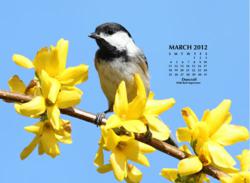
Desktop Calendar from Duncraft

Concord, NH, April 2012 : Duncraft customers love their birds and now they can download a new desktop calendar each month with a beautiful bird image from Duncraft’s website, http://www.duncraft.com, and it’s absolutely free.

In March, Duncraft offered two versions of their desktop calendar and both were hits! Customers could choose from images of a Red-winged Blackbird singing from a tree branch with spring-like buds or a beautiful chickadee perched on a colorful forsythia bush.

Each month’s calendar is seasonally appropriate and brings the outdoors in to anyone sitting at a computer screen instead of enjoying the great outdoors. Duncraft includes easy instructions on how to set the image as a desktop background.

April’s new calendar is choice of a lovely female cardinal or a colorful oriole, both of which Duncraft is sure their customers will love. And judging from the response they received for the March calendar, Duncraft is confident their customers will enjoy looking forward to their new calendars each month for years to come! Be sure to stop by Duncraft's site and check it out! Just scroll down the left navigation bar and click on Desktop Calendar.

Founded in 1952 and located in Concord, New Hampshire, Duncraft’s objective is to bring the joy of backyard birding to wild bird lovers all across the country. Mike Dunn, owner and CEO is constantly inventing and searching for innovative ideas in bird feeding—giving bird lovers years of bird feeding enjoyment, success and satisfaction.

Duncraft Wild Bird Superstore
102 Fisherville Road
Concord, NH 03303
Phone: 603-224-0200
Fax: 603-226-3735

This press release is presented for your information only.

Full Disclosure Statement: The GREEN (LIVING) REVIEW received no compensation for any component of this article.

This article is for your information only and the GREEN (LIVING) REVIEW does not (necessarily) approve, endorse or recommend the product, service or company mentioned.

Power generation in the future - compact, decentralized systems in urban environments

Weidmüller offers an extensive and innovative programme of products for regenerative, decentralized power generation

Compact, decentralized systems in urban environments represent an interesting possibility for generating power in the future. Weidmüller supports this vision with an extensive and innovative programme of products Detmold, April 2012: The German Federal Government has initiated a new energy policy. It now envisages that renewable energies will supply at least 35 percent of the country's energy needs by the year 2022: which means there will have to an increase in the output of solar power, wind power, biomass, geothermal and hydropower. As a consequence, not only will the composition of the energy mix change but so will its generation: in the coming years it will no longer just be large power stations that generate power, but increasingly farmers, business and private people - through the use of wind turbines, photovoltaic systems and cogeneration units in the cellar and by other means. It is possible to integrate small wind energy and photovoltaic systems into the building's architecture.

The "sun and wind" represent two climate-friendly energy sources available to users in urban environments - directly above their heads as it were. This form of energy recovery is both directly visible and appreciable. First class industrial components are indispensable to ensure regenerative power generation solutions remain fully operational at all times. Amongst others these components include current and voltage converter terminals, male and female connectors, relay modules, Ethernet modules and connectors including cables, lightning and surge protection, PCB connection components; for photovoltaic systems there are installation components, combiner boxes and inverters as well as components and systems to continuously monitor their performance. In addition, Weidmüller works closely with its customers to create and implement application-specific solutions.

Energy generation in conurbations

A strong wind blows above the roofs in many towns and cities, primarily in one direction. It is precisely the exposure to wind on the tops of high-rise buildings that will prove ideal as sites for smaller wind energy plants. As well as roofs, facades also represent ideal surfaces on which to install photovoltaic systems. Buildings in towns and cities are ideal sites for decentralized power generation solutions, with the advantage: the inevitable transmission losses incurred when transporting energy simply no longer exist. This would make it possible to significantly reduce the number of new transmission lines needed to be built to connect offshore wind energy plants with population centres. The combination of regenerative wind and photovoltaic sources of energy means there is more renewable energy available to the buildings than would be the case if harvesting just one of these sources.

Weidmüller offers reliable electrical components and electronics modules for wind energy plants. They combine long service lives with low maintenance requirements - and are precisely tailored to fulfil the requirements of the wind energy industry. The products are tested thoroughly and hold the requisite approvals for deployment in wind energy plant. They sustain reliable and trouble-free plant operations even under the harshest of environmental conditions.

Decentralized energy recovery through the use of photovoltaic solutions offers a huge potential for building and running sustainable, energy-efficient modern homes. Weidmüller contributes towards increasing the efficiency of photovoltaic systems with a broad spectrum of performance-guaranteeing components specifically designed for PV system requirements and solutions.

These include photovoltaic connection boxes equipped with "SunSniffer" technology to ensure 100 percent performance monitoring and safety shutdown functionality for each and every solar module. Moreover, photovoltaic connection boxes facilitate full automatic control during the production process and as a consequence accelerate the manufacture of photovoltaic modules. Components for lightning and surge protection as well as industrial Ethernet based communication modules further supplement the programme of products. Systems designed to permanently monitor the performance of PV systems round off Weidmüller's offer.

Conclusion: The vision outlining the integration of wind energy and photovoltaic systems into buildings may appear utopian at first glance; however, it can be achieved with the technologies available to us today. It would significantly reduce the emission of CO2 in town centres and conurbations. Weidmüller supports these systems with electrical and electronic components.

This press release is presented for your information only.

Full Disclosure Statement: The GREEN (LIVING) REVIEW received no compensation for any component of this article.

This article is for your information only and the GREEN (LIVING) REVIEW does not (necessarily) approve, endorse or recommend the product, service or company mentioned.

Get your own slice of paradise with a butterfly jungle

With an ever growing awareness of our declining Flora & Fauna, interest in conservation and attracting wildlife into our gardens is becoming more popular. Loss of habitat in the wild has caused a decline in our native butterfly species. Providing a predator free environment for native butterflies local to the area, which can then be released, will help boost the UK population.

Peacock Butterfly on a buddleja

Encouraging butterflies to breed in a garden is a tricky prospect; female butterflies can be very picky. A netted outdoor structure planted with Nectar Source and Caterpillar Food plants will enable native butterflies to breed in their natural habitat without the added danger of predators eating their pupae.

If you do not have room for an outdoor structure, getting butterflies into your garden is the first step, getting them to stay and breed and therefore build up the declining numbers is the second and important one. Butterfly gardens do not have to look messy or unstructured; many butterfly friendly plants can be grown beautifully within a current garden set up.

A garden planted with a variety of nectar rich flowers that provide food at different times of year is a perfect habitat for a butterfly. Plants such as Lavender, Aubrietia, knapweed, primrose, cowslip and scabious work wonderfully in a border backed by larger shrubs such as buddleja.

It is not just our native species that are in danger. With the destruction of the rainforest, many exotic species are also on the verge of dying out. By having a tropical environment for these species to thrive in, we can provide a sustainable living for the butterfly farmers and help to develop and protect the rainforests in which they live and work.

Most Conservatories and Greenhouses make excellent Indoor Butterfly Gardens for the Tropical Species. These are a great education tool as Children can observe the life cycle first hand and learn about the Environment and Ecology of the Rainforest habitats.

Could you imagine a future without butterflies?

Source: www.butterflyjungles.com

This press release is presented for your information only.

Full Disclosure Statement: The GREEN (LIVING) REVIEW received no compensation for any component of this article.

This article is for your information only and the GREEN (LIVING) REVIEW does not (necessarily) approve, endorse or recommend the product, service or company mentioned.
Employers rank personalities over degree type for jobs

Employers now place personal attributes above the importance of a degree among potential job candidates, a study has shown.

Research carried out among 2,000 business decision makers found most now believe a degree is 'a given' and so judge applicants on a string of key personality traits rather than qualifications.

Characteristics such as confidence, leadership and a good spread of outside interests are more likely to help a candidate land a job, it emerged.
Other key features which employers look for are involvement within the local community, and nearly a third said they liked to employ well-presented members of staff.

The insight was revealed in a study carried out by Aldi who is looking to recruit more than 100 graduates throughout 2012.

Richard Holloway, Head of Graduate Recruitment at Aldi said: "Strong personalities, work experience, hobbies and leading teams at university are key strengths. Although we look for candidates that can bring something else to the work place, there still needs to be an emphasis on if they can do the job well. We have recruited some fantastic graduates in the past and really look to see what else they can offer aside from education."

Just a fifth of employers thought that a degree made a potential candidate stand out with most saying that it is less impressive to them now than what it would have been ten years ago.

Instead 56 per cent said they wanted staff to have a range of interests outside of work and a good work life balance.

One in twenty like to employ staff that have travelled and see the world while more than half of potential employers said they look for someone that reminds them of themselves with men more likely to look to take on the role of 'mentor' to new employees.

Women meanwhile were less likely to hire anyone that had better qualifications than they did or greater experience because they worried they might eventually want their job.

Confidence was the number one attribute that employers looked in new staff just ahead of a positive attitude and experience.

A good work ethic, honesty and energy were also qualities that employers looked for in interviews while two thirds like someone to ask a lot of questions.

More than a quarter said they judged potential staff on whether they were polite to reception, security and cleaning staff while 27 per cent expected them to be respectful to them in the interview process.

Twelve per cent judge potential staff on their handshake while 30 per cent insist on them having good spelling and punctuation.

Men are more likely to hire someone good looking than women while women place more emphasis on hiring someone who is well spoken.
More than half say their hiring decisions are based on instincts more than anything else and two thirds said they have never regretted hiring someone.

Trick questions and riddles were used by a fifth of people in interviews and the research revealed some odd interviewing questions that employers ask from finding out which Spice Girl is a candidate's favourite and why to asking what type of biscuit they think they are.

Richard Holloway added: "A 2.1 degree qualification is required to apply for the Aldi Area Management Programme but we put a strong emphasis on non academic skills and natural born leadership as key criteria in our recruitment. Our graduate programme has 12 months of intense training followed by area management of three or more stores in the UK so a strong work/life balance is a must for our graduates."

http://www.graduates.aldirecruitment.co.uk/

This press release is presented for your information only.

Full Disclosure Statement: The GREEN (LIVING) REVIEW received no compensation for any component of this article.

This article is for your information only and the GREEN (LIVING) REVIEW does not (necessarily) approve, endorse or recommend the product, service or company mentioned.

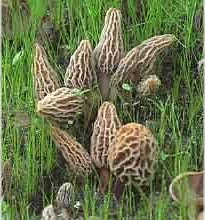
Grow Backyard Morel Mushrooms this Spring

Morel Habitat Morels

This spring, imagine finding Morel mushrooms in backyards. Gourmet Mushroom Products (GMHP) produces the Morel Habitat Kit™ - The first way people can grow morel mushrooms in their backyard. The Morel Mushroom is know by many names: Morchella, Merkel, Morrel, Sponge Mushroom, Dry Land Fish, Pine Cone Mushroom, Molly Moochers, Hickory Chicks… but no matter what you call them, each spring avid morel hunters struck by morel madness drive and hike for hours to fields and forests across the United States in hopes of finding the elusive morel mushroom.

Sebastopol, CA, April 2012 : Now, Gourmet Mushroom Products allows morel lover's to grow morel mushrooms in their backyard. Tired driving or hiking for hours and wading through poison oak or ticks searching for the highly elusive morel? Does a best friend refuse to tell you where their secret morel patches are? Raise morels in your backyard: "Just thought I'd post that we had our very first morel pop in our mushroom garden that I planted last spring using the Morel Habitat Kit from GMHP. This was planted in a tiny section of our back yard in the heart of the City of St. Louis. I followed the instructions contained in the kit to a 'T'..." -- The Great Morel Forum.

The Morel Habitat can supply an individual with pounds of morel mushrooms in a garden area as small as 4 - 5 sq. ft. GMHP developed The Morel Habitat Kit so everyone could enjoy growing their own morels, outdoors, in their own backyard and have a personal supply of fresh morel mushrooms to eat in the spring: Morchella esculenta the “good to eat”, large, late season white morel.

Morel Habitats are perennial and may be started any time your soil is workable - Spring, Summer, Fall and even Winter (in areas with a mild climate). Morel Habitats may be started in any type of soil and have produced morel mushrooms in all areas of the United States that have a definite transition from winter to summer.

The Morel Habitat is ecologically sound and actually improves the environment by recycling biodegradable material instead of adding it to already overburdened land and sea sites. Everybody with a yard has most of the materials needed to create and maintain the Morel Habitat. Complete instructions for preparing and maintaining your Morel Habitat are included.

This press release is presented for your information only.

Full Disclosure Statement: The GREEN (LIVING) REVIEW received no compensation for any component of this article.

This article is for your information only and the GREEN (LIVING) REVIEW does not (necessarily) approve, endorse or recommend the product, service or company mentioned.

Rowse lets consumer thank bees with free flowers

Consumers are being encouraged to say thanks to bees for their hard work in creating honey by a new campaign from UK honey brand Rowse.

As part of an integrated national campaign which will include the second television advertising campaign in the brand’s history, social media activity via Facebook and Twitter is encouraging consumers to submit their messages of thanks, which Rowse will then have handwritten on plant labels and planted alongside bee-friendly flowers.

The £3m integrated national campaign will play upon the idea of ‘Natural Fuel for Busy Bees’. The TV ad follows on from the brand’s successful first ever TV advertising campaign, which aired last year.

Featuring the Busy Bee Song by Arthur Askey, the ad is aimed at modern mums, with busy lives and even busier children. The commercial plays on the idea that Rowse Honey offers a delicious, natural source of slow release energy that children love.

On air for an eight week period, Rowse anticipates that over 5.5million mums will see the ad, which features a young boy going about his busy day fuelled by Rowse honey. The ad ends with the slogan “Rowse Honey. Natural fuel for busy bees.”

Helping to explode the ad’s strapline and raise further brand awareness amongst consumers, Rowse is launching a digital campaign on popular social networking sites Facebook and Twitter.

Honey fans will be directed to the social networking sites via the ad and will be encouraged to upload their messages of appreciation for the honeybees, which will be planted alongside ‘bee friendly’ flowers in community gardens across the country.

The chosen flowers follow research conducted by the Sussex University sponsored by Rowse, which identified plants that offer honeybees the richest and most consistent nectar. Lavender will be planted for the first 5,000 messages.

This press release is presented for your information only.

Full Disclosure Statement: The GREEN (LIVING) REVIEW received no compensation for any component of this article.

This article is for your information only and the GREEN (LIVING) REVIEW does not (necessarily) approve, endorse or recommend the product, service or company mentioned.

Make your own biodegradable seed-starting pots

by Michael Smith (Veshengro)

Now 'tis the season to start garden seeds indoors! In fact it is high time to do so. In some regions people have begun planting the likes of beans and such already straight outdoors.

SeedPotMaker(1) We can save tons of money by starting garden seeds indoors to transplant into our spring gardens, creating our own plug plants rather than buying them later, whether bedding plants or vegetables.

Most seeds require a few weeks to grow before it's time to set them out. Considering we're a few weeks out from the last spring frost date in many parts of the country, now really is the time to start those early seeds. Though that does not mean that there is not the possibility of some frost still hitting us later on so, when you have planted your seedlings out of doors, be prepared that you may have to cover them when the forecast talks of the possibility of temperature below 2C.

Instead of buying plug trays in which to raise your seedlings you can make your own biodegradable seed-starting pots using newspaper and a little wooden gadget walled the Paper Potter (available from Nether Wallop Trading in the UK and from other outlets and sources worldwide).

One word of advise is to follow the instructions that come with the Paper Potter and not make the pots too thick, as I have done before, as that could mean that the paper will not degrade properly and might hamper the growth of the plant. Been there, done it and got the T-shirt.

You can make newspaper pots also without buying a Paper Potter and using instead a soda can or any other kind of tin can. In my view, however, those pots will be far too large for the purpose, taking up far too much valuable compost too.

A couple of years ago I saw the so-called grow tubes for sale which were not cheap and really, though made of plant fiber, were nothing more than glorified toilet tubes.

Some people who use toilet roll tubes for seed-starting pots go to rather elaborate length to make them into pots but there is no need to do so. You can use them as they come or you could just cut them in half for making two shorter tubes.

I tend to just leave them as they are and by reusing those plastic punnets from strawberries or such, or plastic trays from packaged meat, arrange the tubes on them and then fill with compost, add the seeds and voila... ready. It really is that simple.

When the plants have reached the right size (use your own personal judgment) to go outside you just taken them as they are, in the tube, or paper pot, make a hole in the ground and pop them in, tube and all.

It could not be easier now, could it?

© 2012

Habitat for Humanity Equips Bay Area Homeowners With Solar Powered Hot Water Systems

Solar Source installs solar water heaters to help struggling families save money on their electricity bills.

Largo, FL : Solar Source recently secured their second contract with Habitat for Humanity of Pinellas County. The solar contracting company will install 15 solar water heaters on new homes in Pinellas County to help Habitat homeowners reduce their electricity bills.

This new contract will bring the total number of systems that Solar Source has installed for Habitat of Pinellas up to 30. In 2011, Solar Source installed 15 systems for the non-profit.

“It is a pleasure and an honor to help Habitat build homes with lower electric bills for these hardworking families,” said Wayne Wallace, President of Solar Source. “Solar water heaters are a cost-effective way to work toward their mission of building sustainable, energy-efficient, healthy housing.”

The homes will be outfitted with passive solar water heaters, also called domestic hot water (DHW). The system uses a solar collector to harness the sun’s energy to heat water, which flows into a storage tank. The pre-heated water greatly reduces the demand for electricity.

The solar thermal units are expected to save the homeowners up to 85% off the hot water portion of their electricity bills, or about $45.00 per month. Replacing a traditional water heater with a solar powered system will reduce more than 40,000 pounds of CO2 emissions over 20 years.

Solar Source (Constructive Resource, Inc. dba AAA Solar Source) is a licensed solar contractor (CVC056646) specializing in residential, commercial and industrial projects including Photovoltaic (PV), solar pool heating, domestic water heating (solar hot water), attic ventilation, and more. Solar Source installs systems for commercial businesses, government facilities and schools across North America and has over 30,000 residential customers in six counties across the Greater Tampa Bay area. Solar Source installed the first roof top megawatt PV system in Florida and a 1,200 panel solar array at Naval Station Guantanamo Bay. Solar Source completed a large domestic water-heating project for Walt Disney World in Orlando, FL and has heated the pools for the Olympic Games in Atlanta in 1996 and Athens in 2004. Solar Source is the founding entity of Solar Source Institute, a licensed educational facility that provides solar training for the construction industry.

Habitat for Humanity of Pinellas County is a non-profit organization that trains volunteers and homeowners to build simple, affordable homes. Volunteers and the future homeowners construct the homes, which are sold at no profit and financed with a zero-interest loan. Since 1985, Habitat for Humanity of Pinellas County has constructed 240 homes for struggling families in Pinellas County, using locally raised funds. Habitat Pinellas homeowner candidates earn 30 to 80 percent of area median income. For Pinellas County, that translates to as little as $17,800 a year for a family of four. Candidates must also demonstrate need for adequate shelter; ability to pay back a zero-interest loan and willingness to partner with Habitat Pinellas to invest 250 to 350 sweat equity hours. Mortgage monies are used to build even more homes, making each donation to Habitat a perpetual legacy to the community.

This press release is presented for your information only.

Full Disclosure Statement: The GREEN (LIVING) REVIEW received no compensation for any component of this article.

This article is for your information only and the GREEN (LIVING) REVIEW does not (necessarily) approve, endorse or recommend the product, service or company mentioned.

Van Beek’s Celebrates 50 Years in Top Soil

Van Beek’s Garden Supplies is proud to celebrate 50 years of providing quality top soil in Oakville and the surrounding areas. Over the past 5 decades Van Beek’s Garden Supplies has remained a family owned and operated business that owes its success to customer satisfaction and loyalty. Throughout the past 50 years “Van Beek’s Premium Original Mixed Soil” has become a household name. “Triple mix” top soil is now a famous soil mixture that is sold throughout the country. Congratulations to the Van Beek family and entire team at Van Beek’s Garden Supplies as they celebrate 50 successful years in business.

Van Beek's Celebrates 50 Years of Top Soil

Oakville, Ontario : What started as a small family business in 1962 focusing around top soil delivery and the creation of Van Beek’s famous “original triple mix” has blossomed into a growing garden centre in Oakville and Mississauga.

In 1962 George Van Beek filled a yellow school bus with a top soil mixture that he developed on his family’s farm and delivered it to gardeners and landscapers in and around Oakville. What George called “Van Beek’s Premium Original Mixed Soil” is now famously referred to as “triple mix” and is a household name when it comes to quality top soil.

A lot has changed over the past 50 years, but one thing that hasn’t changed is the Van Beek family’s commitment to offering quality garden supply products at fair prices. The family business has grown over the last 5 decades. In addition to adding a second location, Van Beek's now delivers to Oakville, Burlington, Milton, Mississauga, Etobicoke and other parts of the Greater Toronto Area. Due to their hard work and dedication the Van Beek’s name is still recognized as a garden supply leader in the area, 50 years later.

Dedication to customer service is the basis behind Van Beek’s continued success as a quality garden centre and garden supply business. Making every customer a repeat customer who is satisfied with the products, service and advice offered is really the key to the company’s success. In fact, whether it’s a custom top soil mix, mulch, firewood or aggregates and stones, clients have been relying on Van Beek’s for their garden centre needs since the business opened in 1962.

Many customers have grown with the Van Beek’s family and local residents appreciate the personalized service and unique family atmosphere that is so hard to find now a days. However, the links to the past that Van Beek’s is so proud of have not limited their ability to remain current and plan for the future growth of their business. Van Beek’s has undertaken an aggressive marketing campaign to bring their family name to new residents, families and businesses in the area.

A key challenge for Van Beek’s Garden Supplies is how to capitalize on the growth of the local area. Since Milton is Canada’s fastest growing community there are many new residents who are not familiar with the Van Beek’s family name. Synonymous with garden supplies in Oakville, Van Beek’s new challenge of keeping up with expansion in the area and remaining competitive is possible with new marketing techniques combined with superior customer service, quality products and competitive pricing.

The Van Beek family takes great pride in the success of their business and their hard work has paid off, as they are recognized as a leader in custom top soil mixes, interlocking products as well as rock and flagstones.

Congratulations to the Van Beek’s family as well as the entire Van Beek’s Garden Supplies team on their 50th anniversary, an amazing accomplishment for any business in this day and age.

Van Beek’s Garden Supplies cater to do-it-yourselfers and professionals alike, supplying residential clients in addition to garden centres, golf courses, landscapers and avid gardeners. Customers looking for top soil and other garden supply products can visit http://www.VanBeeks.com/ or call 1-866-778-5824.

This press release is presented for your information only.

Full Disclosure Statement: The GREEN (LIVING) REVIEW received no compensation for any component of this article.

This article is for your information only and the GREEN (LIVING) REVIEW does not (necessarily) approve, endorse or recommend the product, service or company mentioned.

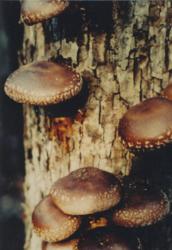
Shiitake ‘Shrooms Are Blooming Now – Grow Your Own At Home

It's Spring: The equinox, rain, warm temperatures and mushrooms. Shiitakes are pushing through the bark of the hardwood logs that are home to shiitake mushrooms at Lost Creek Mushroom Farm, where grow your own mushroom kits rule. With grocery store prices for shiitakes a whopping $8-22 a pound, a log kit can pay for itself in the second year, according to shiitake farmer Doug Williams. “It’s a lot of fun. And log-grown shiitakes are high quality, meaty, and more delicious than the store-bought shiitakes grown in sterilized sawdust.” Shiitakes contain compounds that create happy, joyful, feelings -- the way we feel when spring has sprung.

Perkins, OK : March is start of the spring “fruiting” season for the world’s second-most favorite mushrooms. They take their cue from warm days, cool nights, and plentiful rains. Lost Creek Mushroom Farm, where shiitakes have been growing on hardwood logs for over 25 years, boasts loads of shiitakes right now.

“Spring and fall are the shiitakes’ favorite seasons,” according to Lost Creek Mushroom Farmer Doug Williams. “We learned the hard way to cover the logs to keep them from sprouting thousands of mushrooms. We want to keep them from fruiting now, so they’ll pop out for our customers. Our grow-your-own log kits are budding as we ship them.”

Lost Creek Mushroom Farm has five kits under $50, starting at $18 for a 6” ‘Shroomie. Their most popular kit, a 9-10" log sells for $29.95. The Ma & Pa Kit – two 9-10” logs – is $49.95. The 14” logs with their own trays for soaking, fruiting, and resting are $45.95 and two for $80, a savings of $12. The newest kit, the Queen Anne, a 12" log in an attractive embossed-metal vase, sells for $48.00. Kits come with a ready-to-fruit log, directions, and recipes. Logs over 10” are guaranteed to produce. All prices include shipping and handling.

The logs are oak or similar hardwoods, cut in winter when the sap is down. Williams drills holes, fills the holes with spawn (mushroom seed material) and seals them with wax. The shiitake spawn is left to grow inside the log for 8-12 months, with Williams watering them every week. Inside the log, the spawn sends out tendrils, called mycelia, that grow together, forming a colony. When the mycelia all connect, the log is ready to bloom with shiitakes.

“Last spring’s logs are mature, going strong now,” Williams said. “It’s the perfect time to buy a kit and watch it grow. The mushrooms will be dark brown and meaty. They’ll grow every two months for 3-4 years or more. With two logs, you can harvest every month by alternating the fruiting log,” he added. The logs can live indoors like plants, outdoors in shade, or both. "Fruit it naturally outside in spring and fall, bring it inside summer and winter."

Soaking the log in ice water or putting it in the refrigerator starts the fruiting cycle. The mushrooms will bud, appearing as “pins” within a few days, and harvest begins in 6-10 days. After harvest, the log will “rest” for two months, with regular soaking in nonchlorinated water, as it builds up more mycelia for the next fruiting. A shiitake log will produce increasingly larger yields as it matures. After a couple of years, production peaks, then tapers off.

“We have been very fortunate in our business,” Williams said. “We’re using a portion of sales for our project, Mushrooms in Ghana, to help small-scale mushroom farmers in West Africa increase their production and profits. In 2011 we set up an experimental study to find wood species that would grow shiitakes there. More research has to be done to identify the optimal growth conditions.”

To order online, go to http://www.shiitakemushroomlog.com; call 800-792-0053, or mail the order to Lost Creek Mushroom Farm, PO Box 520, Perkins, OK 74059. Kits are also available at Amazon.com at slightly higher prices.

This press release is presented for your information only.

Full Disclosure Statement: The GREEN (LIVING) REVIEW received no compensation for any component of this article.

This article is for your information only and the GREEN (LIVING) REVIEW does not (necessarily) approve, endorse or recommend the product, service or company mentioned.