Showing posts with label agroecology. Show all posts

Agroecology is Working – But We Need Examples to Inspire Others

Using the wrong measure of success is certain to lead to the wrong solutions being adopted. In the economy at large, the narrow pursuit of GDP growth remains the primary tool used by policymakers to assess progress. This has motivated economic strategies that have delivered short-term GDP boosts, but in ways that have harmed the environment and disadvantaged many groups in society.

Food systems are no different. If the measures of progress are too narrow or too focused on the short term, the long-term outlook will suffer. In food systems, success is often reduced to increased yields, net outputs and net calorie availability on a global level. More is better and quantity trumps quality.

This allows many crucial factors to fall through the cracks. How resilient are yields in the face of environmental shocks and disease outbreaks? How much do they vary from year to year? Where and to whom is food made available, and with what nutrient content? How well do these systems preserve the natural resource base for the future? How much employment do they generate, and under what conditions? Do consumers know where their food comes from and how it was grown?

Though some proposals have been made to address this gap, there is no consensus yet on the metrics that can capture these factors comprehensively. But we do have emerging examples of food and agriculture systems that are capable of sustaining, stabilizing and improving yields, preserving the environment, providing decent employment and secure livelihoods, and delivering diverse, nutrient-rich foods – in the places where they are needed most.

Read more here.

The farmer who’s starting an organic revolution in Cuba

Fernando Funes Monzote’s theories of ‘agroecology’ bear fruit as he aims to inspire others to make the most of their land

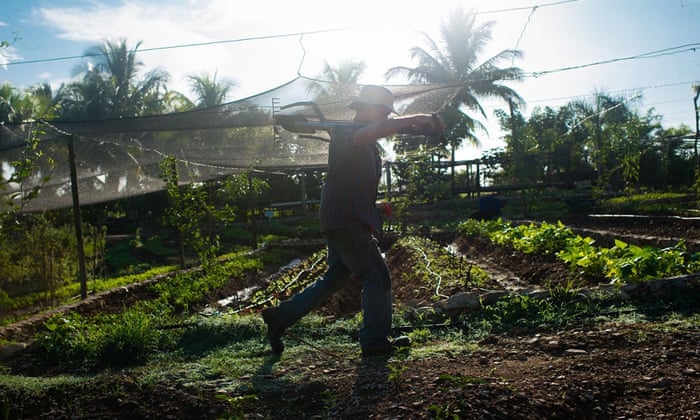
Like all homestead stories, Fernando Funes Monzote’s starts with an epic battle against harsh elements and long odds. Funes, a university-trained agronomist, settled on a badly eroded, brushy hillside outside Havana four years ago and began digging a well into the rocky soil. The other farmers nearby thought he was crazy, or worse – a dilettante with a fancy PhD whose talk of “agroecology” would soon crash into the realities of Cuban farming.

Funes had no drill, so he and a helper had to break through layers of rock with picks and hand tools. Seven months later and 15 metres down, they struck a gushing spring of cool, clear water. “To me, it was a metaphor for agroecology,” said Funes, 44, referring to the environmentally minded farm management techniques he studied here and in the Netherlands. “A lot of hard work by hand, and persistence, but a result that is worth the effort.”

Today Funes is one of the most sought-after figures in Cuban culinary circles. Finca Marta, the eight-hectare farm he named in honour of his late mother, supplies organic produce to many of Havana’s top-rated “paladares”, the privately owned restaurants that are transforming the island’s reputation for uninspired dining. Funes grows more than 60 varieties of vegetables, fruits and herbs in carefully terraced planting beds designed to conserve water. He’s planted woody shrubs to divide his cattle pastures with “living fences” that also provide habitat for birds. His beehives yielded 1.5 tonnes of honey last year. The farm and its irrigation systems run almost entirely on solar power, and Funes operates a “biodigester” that captures methane from manure and pipes it right to the kitchen stove where it burns clean and blue.

Read more here.

UN: only small farmers and agroecology can feed the world

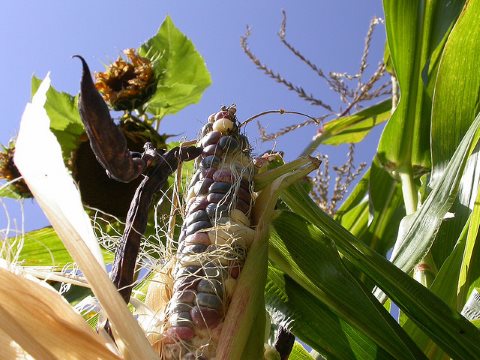
Agroecology in action: common bean, maize, and sunflower in UBC Milpa. Photo: J Hart via Flickr.Governments must shift subsidies and research funding from agro-industrial monoculture to small farmers using 'agroecological' methods, according to the UN's Special Rapporteur on the Right to Food. And as Nafeez Ahmed notes, her call coincides with a new agroecology initiative within the UN's Food and Agriculture Organisation.

Modern industrial agricultural methods can no longer feed the world, due to the impacts of overlapping environmental and ecological crises linked to land, water and resource availability.

The stark warning comes from the new United Nations Special Rapporteur on the Right to Food, Prof Hilal Elver, In her first public speech since being appointed in June

"Food policies which do not address the root causes of world hunger would be bound to fail", she told a packed audience in Amsterdam.

One billion people globally are hungry, she declared, before calling on governments to support a transition to "agricultural democracy" which would empower rural small farmers.

Read more: http://www.theecologist.org/News/news_analysis/2566719/un_only_small_farmers_and_agroecology_can_feed_the_world.html