Showing posts with label Green DIY. Show all posts

DIY watering can

by Michael Smith (Veshengro)

Transform a milk jug into a watering can
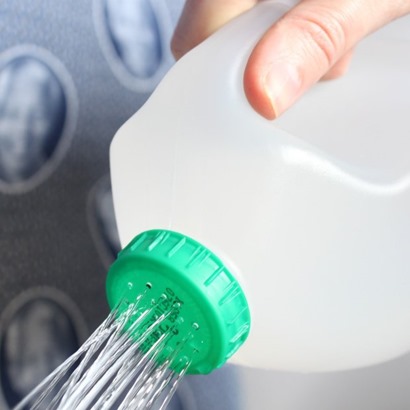
Milk jug watering canThis project will have you saving your milk container to create a kid- friendly watering can. But, obviously, it can also used by an adult.

Children love to water plants. Generally this is good news, and watering is a helpful chore the children can take on in the garden. Sometimes, though, overenthusiastic watering can be bad news – plants can become waterlogged and seedlings can rot away. Sometimes seedlings can be damaged in a deluge. For children the standard watering can with seven or more liters can be a little on the heavy side. This DIY watering can with a rose head could be the ideal solution.

Made from a plastic milk bottle or similar container, it is free and a great way to upcycle your junk into something practical. It is easy to make and holds just the right amount of water, so it is not too heavy for young children, as I said above.

Materials

2-3 liter (maybe 4 liter even if can be had) plastic milk or juice bottle with lid

Small drill bit (3-4mm), gimlet or bradawl

Instructions

1. Start by washing out your milk bottle.

2. Use drill with drill bit (you could use a gimlet instead, or even a bradawl) to make small holes in the bottle's lid. Make sure the holes are big enough to allow the water to come out freely.

3. Remove the bottle top to fill your new watering can with water, pop the lid back on, and you are ready to go. The handle on the bottle makes it comfortable to hold, and if necessary, a gentle squeeze can help the water come out.

© 2018

Green DIY

Making things from trash

by Michael Smith (Veshengro)

Making your own things from scratch and especially from what others regard as trash, as waste, is one of he greenest ways to go about.

When the right mindset is being employed, as was done, say, by the Bushmen of the Australian Outback it is amazing what can be fashioned from what, theoretically, is waste and would generally be something to get rid off.

Prior to the Australian Bushman the Gypsy already employed this mindset and not just for making items and tools for his personal use but even making good for sale on markets.

There are many items of so-called waste that do never need to enter the waste stream as they can be fashioned into usable and salable goods.

To be honest most of us today do not think of making our own things from scratch and especially scrap; often they can be gotten from stores far too easily and cheaply.

We have lost the mindset of the make do and mend and of making our own things from this or that, ideally, item of waste rather than buying them. It is too convenient to buy cheap Chinese products in stores than to make things for ourselves.

In the time of our parents and grandparents shoe boxes, for instance, at least in the not so affluent households, were never thrown out. Rather they were employed as storage containers for all manner of things. No one would have ever thought of throwing one away unless it was damaged beyond use. Today, however, most of those end up in the trash and the selfsame people who throw show boxes away then go out an pay good money for basically the same thing in a store as a storage box.

This wastage is going on with so many other things too. Things that would not in the old days and also should not today even end up in the trash and more often than not, ultimately, in some hole in the ground called landfill.

There are many ideas out there on the Internet alone – for anyone who has not enough imagination of his- or her own as to what to turn this or that item of waste into.

And many of those ideas, and those from the books about the Australian Bushmen too, can be adapted for many items of waste.

Many good things get thrown out into the trash simply because they are packaging, such as, say, feedbags, of the burlap or plastic weave kind but which could be transformed to a variety of different kinds of bags and such.

There are many more examples that could be mentioned and many more upcycling ideas that could be put forward here but that, in fact, shall be the subject of a book currently in work and hence I will not devote too much time here on ideas and such.

Just to conclude I would like say that with enough imagination on our side there would be about 90% of all items currently thrown in the trash that could be given another life.

Let's go and do it!

© 2009
<>