Polish law change unleashes 'massacre' of trees

New law allows private landowners to cut down any number of trees without applying for permission or even informing authorities

A controversial change to Polish environmental law has unleashed what campaigners describe as a “massacre” of trees across the country.

The new amendment, commonly known as “Szyszko’s law”, after Jan Szyszko, Poland’s environment minister, removes the obligation for private landowners to apply for permission to cut down trees, pay compensation or plant new trees, or even to inform local authorities that trees have been or will be removed.

The change came into force on 1 January and has led to a surge in tree-felling, with activists reporting newly cleared spaces in cities, towns and parts of the countryside all over Poland.

“The law allows any tree on private property to be cut down by the owner, even if it is 200 years old,” said Joanna Mazgajska of the Institute of Zoology at the Polish Academy of Sciences. “Many private citizens regard trees on their land as a nuisance. They don’t report, they just cut – it’s barbarism.”

Although the new law prohibits private landowners from engaging in commercial developments themselves on land that has recently been cleared of trees, it contains a loophole: there is nothing stopping them from selling the land to developers as soon as the trees have been cut down.

“A company can sell a plot of land to a private individual for a nominal fee, the individual cuts down the trees, and then sells it back to the company. Legally, there is nothing stopping them from doing so,” said Dagmara Misztela of the campaign group Gdzie Jest Drzewo (Where’s The Tree). “We used to advise local people on how to register an objection to trees being cut down in their area, but now there is no objection process at all.”

Read more here.

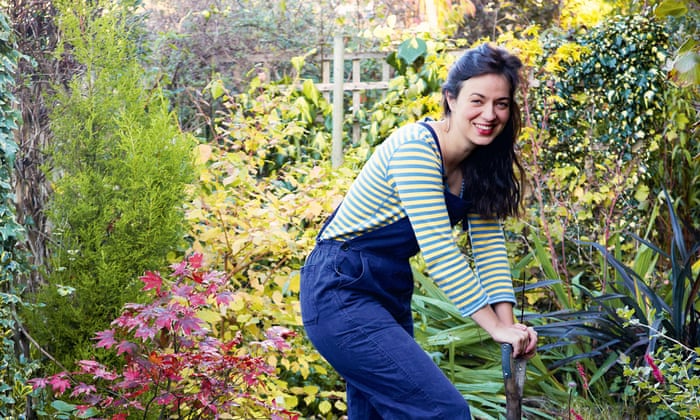
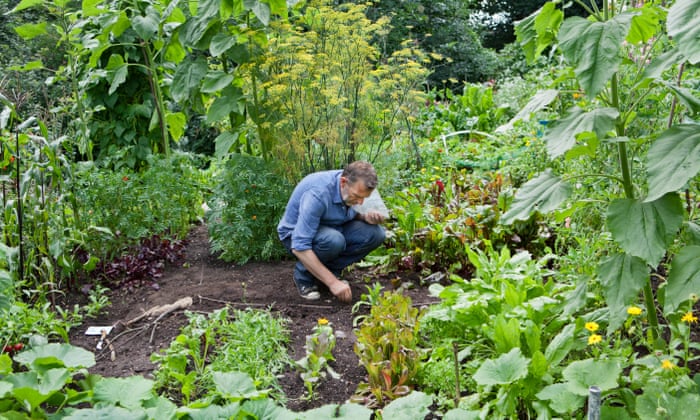
The experts’ guide to making your garden bloom on a budget

As many of us return to the garden and wonder how to make it flourish, we asked five of the country’s leading green-fingered experts how to avoid throwing away cash in a garden centre

‘Repurposed containers make a great statement’

Frances Tophill is a gardening TV presenter and author

However tempting they look, don’t buy spring bulbs. With the exception of snowdrops, which actually do need to be bought in a pot with compost, spring bulbs are best bought and planted in late summer or autumn when they are dried. If you buy flowering bulbs in a pot you will pay over the odds.

Bulbs from Poundland can be a great bargain, but don’t be duped into buying spring bulbs now. Only late-flowering plants, such as nerine, amaryllis or colchicums, should be planted at this time of year.

When you look for plants in a garden centre, never look for flowers. If a plant has a nice healthy clump at the base then there is nothing stopping you from dividing it. Spring is the perfect time to do this. Just break up the plant you’ve bought, making sure each clump has some roots, and plant them. By next year you’ll have two or three healthy plants for the price of one.

Keep on trend and on budget by cultivating succulents – I really like crassula and haworthia. Rather than buying individual plants, buy a bigger pot crammed full of plants and split them up. You can pot them in almost anything – an old picture frame, little terracotta pots, broken mugs. Just make sure the plants are in plenty of gravel and get lots of light.

While anything can be used for bringing on seedlings or cuttings, if you are planning more aesthetic features, upcycle things you may have lying around. Old boots, tin cans, suitcases, dustbins, buckets and basically anything else you can think of. Repurposed containers make a great statement as well as being completely free.

Reuse spent compost from seeds and put it on your veg beds. It all helps.

Read more here.

Square Mile coffee cup recycling challenge nothing but a stunt

by Michael Smith (Veshengro)
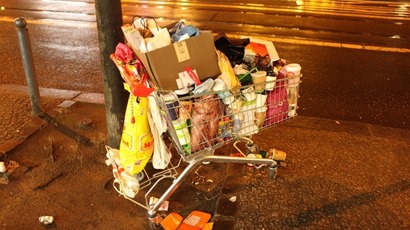
Square Mile ChallengeMajor coffee retailers and businesses in the London Square Mile have on April 3, 2017 joined forces to launch a scheme which aims to recycle half a million coffee cups in London this month, edie reports.

The problem is that it is greenwashing and edie is participating in this very act. The great majority of disposable coffee cups cannot be recycled – at least not as yet in the recycling facilities of today – due to the fact that they are a laminate or card and a liner, which in times gone by was a wax material but now is a plastic substance.

Square Mile Challenge bins in the shape of bright yellow coffee cups will be in place on the City's streets and while it makes for nice photo-ops it certainly does not much else.

The Square Mile Challenge will see more than 100 high street coffee retailers, such as Caffè Nero, Costa and Starbucks, offer recycling facilities and accept coffee cups in their stores, regardless of where they were purchased.

Meanwhile, the offices of 34 City-based companies, including the likes of Lloyd's and Deloitte, will be used to collect paper coffee cups, helping divert them in into a new waste stream.

Unless the organizers of this stunt, the environmental charity Hubbub, in collaboration with recycling company Simply Cups, know something that even the recycling facility operators don't know, then this is nothing but a stunt. The charity says that it is hope that through this “event” 5 million cups will be collected and recycled. Well, recycled where and how?

As I said, unless those people know something that even the experts and operators in the field of recycling know not, for they keep saying that, due to the composition of the material currently recycling is impossible and the only place where such cups go is the landfill, then this is a stunt at best and serious greenwash at worst.

London politicians are also in on this trying to bamboozle people. Only a few months back it was all over the news that it is basically impossible, at present, to recycle those takeout coffee cups and it was for that reason that a levy on them, a kind of tax, was to be introduced to encourage people to carry their own reusable cups. A message that is probably too hard to get across to the toffs in the City and hence we play at green.

© 2017

Mushroom tray to soil/compost riddle

by Michael Smith (Veshengro)

mushroom_tray_soil_riddle1_webThose trays, thrown out at a daily basis by greengrocers and caterers alike, have many uses, as far as I am concerned, such as in the garden shed and elsewhere but also, as in this case, in the garden itself.

In the shed they are very useful to hold small tools, such as trowels, hand forks, etc., and they can be stacked one upon the other, to maximize space. If we can make use of them by reusing and repurposing them we can keep them out of the waste stream and the landfill, the place where most of them will, inevitably, end up, as recycling is more a myth than a reality.

When using using soils for sowing and potting you do not really want it to be too lumpy and homemade compost often does still have woody bit in it as well that you don't want in it when sowing seeds in trays or when potting on seedlings. In the beds or containers for growing when the plants are bigger it does not really matter. To remove any such lumpy material a riddle or sieve is required, as most experienced gardeners will know.

Soil riddles or soil sieves, while, when made from plastic, are not the most expensive items for the gardener, such as when ALDI sells a small riddle and a scoop for less than £3, and dare I say you could probably get one at Poundland for, well, £1. But, if we reuse such trays for the same purpose we – one – do not have to spend any money at all, however little, and – two – we keep a tray or two of those out of the waste stream, at least for some time (eventually they will break and then they will go the way all of them go).

The great thing in this reuse and repurpose operation is that you don't even have to do any work to the item to make it work but you can just put it to work right away.

So get yourself a couple of those trays as they are useful in so many ways (sorry about the rhyme) and use one for a riddle.

© 2017

Scotland Yard has been accused of hacking campaigners' email accounts

by Michael Smith (Veshengro)

New_Scotland_Yard_sign_webThe police watchdog, the Independent Police Complaints Commission, is investigating whether Scotland Yard detectives used hackers in India to target campaigners, including Greenpeace organizers.

A claim, made in a letter from a purported whistleblower, who appears to be a Detective in the Metropolitan Police, talks of hundreds of email accounts were monitored without legal authority. The letter further claims that officers shredded documents to cover up the monitoring, despite being ordered to preserve them.

If the alleged whistleblower's allegations are true, the IPCC said, then the hacking would be unlawful if personal communications were intercepted for any other reason other than to combat major crime, terrorism or some other serious public need. Such monitoring must be approved by the home secretary.

This is the same unit, it would appear, that has been infiltrating protest movements over the years and undercover officers even went as far as to have sexual relations with some of the female members they were spying on, including fathering children, under fake identities. Often those fake identities were those of dead children.

It would appear that the police and intelligence services of this country – and not of this country alone – believe themselves to be entirely above any laws and our respective governments actually collude in their actions. Nay, they encourage them even. Everyone who in even the slightest way disagrees with the actions of the government and the corporations is being seen as a dissident and worse, a (domestic) terrorist. What has happened to government and its agencies being accountable to the people?

© 2017

The dark side of recycling

by Michael Smith (Veshengro)

dark_side_of_recyclingRecycling is not the most sustainable method to protect the biosphere from greenhouse gasses and other pollutants. In fact the green circular economy of plastics manufacturing and re-manufacturing impacts severely on the environment.

Plastic waste dominates in households. Some of this waste is transported by the scrap-Mafia illegally abroad, especially, E-waste, to Third World countries such as countries in Africa and places in India. Other is legally sent for processing and reprocessing to places abroad, including China. Only a small percentage is actually processed and reprocessed in the countries where it is generated.

Much of the plastic waste, at least in many countries of Europe, is not actually recycled in any way, shape or form, but instead sent to so-called waste-to-energy plants, as in Sweden, for instance, or just simple incinerators. That is also the very reason that Sweden keeps running out of waste, namely waste to burn in those energy plants, and not because they recycle so well in that country.

The problem, while better than putting the stuff in landfill, is that burning this waste, releases emissions. According to research in Germany, however, it is a very small amount only, of all emissions in that country, for example. But as the emitted steam, so to speak, contains a high amount of water and dioxins are water repellent the measurement of gases can be very misleading. Better would be to measure concentrations in the released dust and nano-particles.

The danger with incineration of plastic waste is that often the contents cannot be clearly defined. Different plastic products contain different harmful substances and it is often very difficult to ascertain how dangerous such elements are for the health of people, animals and the Planet.

In many places the asthma rate near such incinerators has risen dramatically but whether this can be attributed to those plants alone or whether it has also other contributing factors is still to be ascertained.

Every tonne of so-called residual waste being burned releases about one tonne of carbon dioxide, together with other gasses and pollutants. Per tonne furthermore there remain 300 kg slag and dust, after the poisonous smoke gasses have been filtered.

The mechanical recycling of plastics also is not without problems. Many of today's jogging suits and other sports articles, as well as jumpers (sweat shirts) are made from so-called fleece. Those fleece textiles are made from mostly recycled plastics. Those textiles through abrasion during wear and washing release small particles, so-called micro- and nano-particles, which end up into the waste water. At sewage plants those small fibers cannot be filtered out of the water and thus this micro-plastic ends up in the rivers, and the seas and, also, in the food chain.

Theoretically there is only one way to over come this dilemma and that is a significant reduction of the use of plastic and, as far as micro-plastic fibers and particles go, maybe also and especially the use of plastic – whether recycled or virgin – for use of fleece and microfiber cloths, and such.

Also, maybe, just maybe, plastic packaging, if it has to be, could be designed in such a way that it – automatically – could have a second use, obvious to the consumer, that could extend the life of those plastic products for many years or even decades to come.

I have one of such products – well, it did not have the second use written on it but it was obvious, to me at least – that has been serving me in my kitchen now for over 20 years. (http://greenreview.blogspot.co.uk/2017/03/jellied-eel-tub-reuse.html)

On the other hand we need to get away from the serious over-packaging of products, and especially here the multiple “wrapping”, as is often the case, and the overuse of plastic in wrapping and packaging fruit and vegetables as well.

Many of us out there think of how this issue of plastic pollution can be tackled and I shall be, in the virtual pages of this journal, be bringing the readers from time to time ideas and suggestion for reusing a variety of plastic packaging items to give those things a second life, and with it one that might be a great deal longer than intended by the original manufacturer. The small article on creating a dead-heading/forager's pouch from a 4pt milk just is but one of them. (http://greenreview.blogspot.co.uk/2017/04/harvestingdeadheading-tub-from-milk.html).

© 2017

Plot 29: A Memoir by Allan Jenkins review – childhood trauma and the solace of gardening

As he cultivates his London allotment, the journalist also digs into his troubled past – a brilliant grafting of haunting recollections on to a gardener’s diary

“We must cultivate our garden,” was the moral of Voltaire’s 1759 satire Candide. Faced with a world full of evil, uncertainty, bad luck, corrupt politics, natural disaster and torture, the best Voltaire’s hero can do is stay at home and look after the produce of his own garden, a small plot with pistachio nuts and citrons. Out in the world, Candide’s plans go horribly wrong. It is only in his small plot that he can lead a life that is productive, responsible and serene.

Something of the same spirit animates the wonderful Plot 29 by Observer journalist Allan Jenkins, which is half memoir, half thoughtful gardener’s diary. Like Helen Macdonald’s H Is for Hawk, this is a profoundly moving account of mental trauma told through the author’s encounters with nature. Jenkins sees his garden as a place where a person can try to escape from, and atone for, the darkness of human existence. Plot 29 is the shared London allotment where for 10 years, he has been growing an array of biodynamic flowers and vegetables, from Tuscan kale to courgette blossoms. In his daily life, Jenkins lives with a sense of hurt and loss from a childhood he feels he can never put behind him. Plot 29, by contrast, presents him with more consoling and immediate problems such as pigeons, weeds and snails who “lie in wait like bullies”. He describes the sheer grind involved, often at the crack of dawn before he goes to the office: the hours spent stirring cow manure into water by hand, or carefully weaving together hazel poles for beans to clamber up. For Jenkins, this labour is not just about producing delicious vegetables. What he is growing in this city garden, along with the marigold and sorrel, is a kind of “solace”.

Read more here.

Man creates mountains of compost from Dublin's waste—plus a storyteller's perspective on immigration

Dublin mountain of compost photo

"Hidden behind the the cobbled streets of Dublin, through a gate and up a hill, lies a mountain… of compost. Enter the world of Tony Lowth.

That's how the film makers and storytellers of The Perennial Plate introduce us to episode 162. In it, we see the how Tony—a Dubliner who describes himself as formerly broken and destitute—has transformed an abandoned parking lot into an incredible urban garden.

But that's not his only gift to the city. Tony also makes regular rounds of the city's markets, stables, stores and coffee shops. On these missions he collects food waste, coffee grounds and horse manure which he builds into gigantic mountains (he is not exaggerating) of compost that feeds the garden.

"I'm only giving back what I got from people, and I enjoy doing it," he says. I am certain they are grateful.

Read more here.

Harvesting/deadheading tub from milk container

by Michael Smith (Veshengro)

HarvestingTub1_webDepending how much milk you consume in your household those plastic bottles or jugs, or whatever we may like to call them, can create a lot of bulk in your bin (unless you put them out for recycling where collections are available). I am on my own but love milk and can go through at least three four pint jugs a week. That is three of those bulky thinks that fill the bin.

Well, there are so many useful things, as far as I am concerned that can be made from at least part of them that I rather think first as to what use I can put them before I toss them.

This tub, designed to be worn on a belt, for harvesting or deadheading in the garden – allowing for both hands to be free – is made from a four pint (British) plastic milk bottle/jug.

First you cut off the bottom part of the jug at that “line” that is just about visible as it is part of the molding process. That bottom piece you retain as the tub. Now cut a broad strip from what is left from the top part, fold this over and rivet it (or affix by whatever means you want) to the tub itself. And, voila, one belt-worn harvesting/deadheading tub that has cost you almost nothing and keeps some plastic out of the landfill (or the recycling).

This kind of tub also comes in handy – pardon the pun – for putting out, and taking in, the laundry in that it can be used to carry the clothespins. It is also suitable as a shell bag for use with shotgun shells, for instance.

No doubt there will be other uses that we can all find for something like this aside from the given. And, as making those costs virtually nothing we can always make a number of them for different uses.

© 2017

STIHL unveil new ultra-compact Cordless Chainsaw for 2017

Bonsai chainsaw

As the world’s leading manufacturer of chainsaws and garden power tools, we understand what our customers need to get the job done as effectively and easily as possible. For more than 90 years, new innovations from STIHL have shaped the industry, from the original petrol chainsaw to the incredible Compact Cordless MSA 120 C-BQ, we are always looking to push technology further.

For 2017, the STIHL range expands once again, although this time into new, unprecedented territory, with the launch of the new ultra-compact MSA 100 B-NS1 cordless chainsaw. This new product is perfect for maintaining smaller shrubs, and was developed after a meeting with the Bonsai Appreciation Society of Great Britain highlighted a small but important gap in the market.

Subsequently, extensive market research showed a lack of fit-for-purpose, precision tools were leaving Bonsai gardeners having to cultivate and maintain their gardens by hand. With one keen miniature gardener, Mr H. Prunier from Yorkshire, explaining the impact this has had on them:

The lack of adequate tools for Bonsai trees has had a major impact on my health. For years, I have been forced to try and maintain my trees with a range of objects that were less than perfect for the job. 40 years of using nail scissors to prune my garden has resulted in great sales for my local chemist, but a tiresome experience for me. Without specialist products, this problem will continue.

Launched at RHS Garden Wisley and tested extensively with their team in the Bonsai gardens, the new MSA 100 B-NS1 chainsaw features many of the same features as its bigger brothers, yet is the first chainsaw in history that runs on cell batteries, offering high power and long-life performance at an extremely low price.

Read more here.