Plastic 'nurdles' found littering UK beaches

Nurdles on a beach

A search of 279 beaches around the UK has found that almost three-quarters of them were littered with tiny plastic "nurdles".

Volunteers signed up to search their local shoreline, ranging between Shetland and the Scilly Isles, for the lentil-sized pellets, used as a raw material to make plastic products.

They can cause damage to such wildlife as birds and fish, which eat them.

The findings will be reflected in a government study into microplastics.

What's the problem?

Campaigners estimate that up to 53 billion of the tiny pellets escape into the UK's environment each year.

This happens during the manufacture, transport or use of plastic products.

The nurdles are often spilt accidentally into rivers and oceans or fall into drains where they are washed out to sea.

Experts warn nurdles can soak up chemical pollutants from their surroundings and then release toxins into the animals that eat them.

Read more here.

Obst- und Gemüsebeutel selber nähen

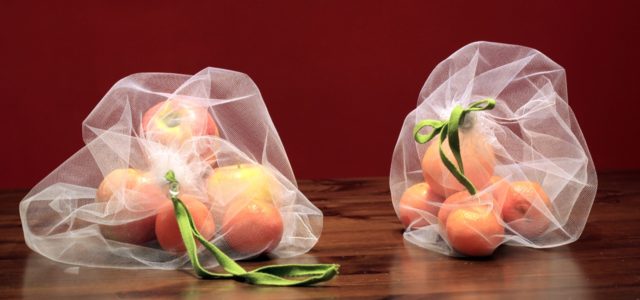
Obst- und Gemüsebeutel selber nähen: Beutel mit Obst

Im Supermarkt liegen kleine Plastiktüten für Obst- und Gemüse bereit, das ist praktisch aber nicht umweltfreundlich. Besser ist es, einen wiederverwendbaren Beutel zu nutzen und darin Tomaten, Champignons oder Nüsse abzufüllen. Diese Beutel musst du nicht kaufen, sondern kannst sie ganz einfach selber machen.

Sicherlich bist du schon über die nützlichen kleinen Beutel gestolpert, welche Plastiktüten für Obst und Gemüse im Supermarkt überflüssig machen: Aus dünnem Material, klein, faltbar und waschbar sind sie eine tolle und vor allem nachhaltige Alternative zu den Plastiktütchen aus dem Supermarkt.

Solche wiederverwendbaren Beutel brauchst du nicht zu kaufen, hier erfährst du, wie du sie ganz einfach selbst nähen kannst: Aus Materialien, die du bestimmt schon zuhause hast! Ob mit oder ohne Nähmaschine – dein Beutel ist im Handumdrehen fertig. Näh doch gleich mehrere Obst- und Gemüsebeutel, entweder für den eigenen Großeinkauf oder zum Verschenken: Gemeinsam Verpackungsmüll vermeiden macht noch mehr Spaß.

Hier weiterlesen.

Feeding the nation

by Michael Smith (Veshengro)
russian-dacha1The first and foremost job and task of a farmer is not to produce for the export market but it is that of feeding the nation. Export should never be (seen as) the first priority but, alas, with many, especially the large corporate farms, it would appear to be just that. One only needs to hear them when they talk about how this or that regulation might interfere with their ability to export their produce. Any surplus, after the needs of the nation have been satisfied, that is for export but growing specifically, as seem seem to be doing, for the export market is not in the brief. First feed the nation.

In order to produce more produce – no, it's not a typo – to feed the nation we have have to get more people back on the land to actually grow the vegetables, etc. that are needed in the country rather than to be producing for export. That would also mean reducing the grasslands and reduce beef production, grasslands that today are wasted – for some grassland pastures are not on marginal land. And as far as so-called “marginal lands” are concerned, if crops cannot be grown then let's plat trees there.

Prehistoric man did not settle to raise cattle. He settled in order to crow crops. It was arable mixed farming. He did domesticate animals as well; cattle, sheep, goats, horses – though even the nomadic ones did that. But predominately prehistoric man settled to grow a garden and a farm, crops for food, so he did not have to hunt and gather.

Once again, also in this regard, it would appear that we don't just need a system change but a full revolution. A revolution of land use and of agriculture. A proper land reform and agrarian reform.

Comments from our politicians such as one some time in 2016 or thereabout who said: “we don't really need farmers in Britain. We can get all the food we need from abroad” show what morons the people permit to rule over them.

In order to get to this new peasantry system, however, requires, a full about turn. Only a complete land reform and agrarian reform will make such proper agriculture for the people by the people, so to speak, possible.

The current system, ever since the Second World War, or thereabouts, is not benefiting the people of the country at all and despite the fact that the farmers grow a lot for export, and seem to be looking for export opportunities before they ever look to sell to the home market, they cannot – or so they try to tell the world – make ends meet without large subsidies, including payments from the European Union.

Vast areas of our countryside, of areas that could grow food (and trees) are not utilized properly and are, predominately, “sporting” estates in the hand of the so-called landed gentry and the aristocracy. It is time that the land and woods were (back) in the hands of people willing to live on the land and make a living from it and produce food, wood and wooden products for the nation.

On the farming side we need many small farms, as the dacha system in Russia has shown, rather than large agricultural factory farms. This is also the way forward as regards to biodiversity and protection of soil and water. We need a low impact and low input agriculture – low input as in little in the way of chemicals and such like for it will have a lot of input by way of labor – rather than high intensity agriculture that we have at present, which is destroying the very soil that all life depends on.

Let me recap once again: The job of the farmer is... feeding the nation and the job of the forester is... producing timber for the nation. Everything else is secondary. Export is for any surplus that may be but should never ever be the primary thought. Alas, though, it appears to be that at the moment and that needs to change.

© 2017

'Extraordinary' levels of pollutants found in 10km deep Mariana trench

Presence of manmade chemicals in most remote place on planet shows nowhere is safe from human impact, say scientists

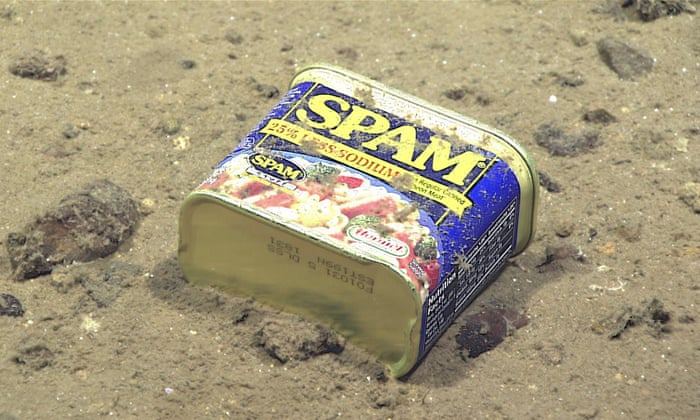
Scientists have discovered “extraordinary” levels of toxic pollution in the most remote and inaccessible place on the planet – the 10km deep Mariana trench in the Pacific Ocean.

Small crustaceans that live in the pitch-black waters of the trench, captured by a robotic submarine, were contaminated with 50 times more toxic chemicals than crabs that survive in heavily polluted rivers in China.

“We still think of the deep ocean as being this remote and pristine realm, safe from human impact, but our research shows that, sadly, this could not be further from the truth,” said Alan Jamieson of Newcastle University in the UK, who led the research.

“The fact that we found such extraordinary levels of these pollutants really brings home the long-term, devastating impact that mankind is having on the planet,” he said.

Jamieson’s team identified two key types of severely toxic industrial chemicals that were banned in the late 1970s, but do not break down in the environment, known as persistent organic pollutants (POPs). These chemicals have previously been found at high levels in Inuit people in the Canadian Arctic and in killer whales and dolphins in western Europe.

The research, published in the journal Nature Ecology and Evolution, suggests that the POPs infiltrate the deepest parts of the oceans as dead animals and particles of plastic fall downwards. POPs accumulate in fat and are therefore concentrated in creatures up the food chain. They are also water-repellent and so stick to plastic waste.

Read more here.

Move Over Cotton, Say Hello To Hemp – The ‘Forbidden’ Crop Taking The World By Storm…

Move Over Cotton, Say Hello To Hemp – The ‘Forbidden’ Crop Taking The World By Storm...

If domestic hemp use and cultivation were practiced and encouraged, we might just be able to change the world…

The cultivation of the plant would be a boon for small farmers, especially organic farmers. We’re talking about industrial hemp this time, not medical cannabis/marijuana, which continues to prove its merits and gain acceptance.

The worldly benefits of using hemp are in plain view and clear to see. But it’s a complex concoction of legal and bureaucratic nonsense even without THC – the psychoactive element found in cannabis – that holds the industrial revolution of hemp back.

Commercial hemp cultivation is legal in Canada but the US government pushed the industry to the side when industry monopolies were threatened when it appeared that a hemp boom may compete for the very products of their monopolist concerns.

Around 1937 the hemp industry was boosted by the introduction of the decoricator machine. It replaced hand shredding of hemp to glean its fibers, fibers that could be used for textiles, clothing, paper, and plastic.

With this new invention, hemp would have been able to take over most competing industries in areas such as  paper, textiles, fuel, and plastics. Growing hemp in abundance was easy, and it’s plant to harvest time was no more than six months.

Read more here.

GROW – Book Review

Review by Michael Smith (Veshengro)

9781782404514

GROW: A Family Guide to Growing Fruit & Veg
by Ben Raskin
Published Leaping Hare Press February 2017
(in association with the Soil Association)
Hardcover: 48 pages - 15 x 2.2 x 21 cm
Age Range: 8 - 11 years (or may be infinity)
ISBN: 9781782404514
Price £9.99

Have you ever wondered how plants work and how they get their food? Or why we eat the fruit of one plant and the leaf of another? What’s the big deal about growing things – and how do we decide what we need to grow in the space we have?

In Grow, Ben Raskin shares his expert knowledge, in this funky guide for families who are new to edible gardening, looking at the whole life cycle of food, from seed sowing and saving to planning and planting, and—most exciting of all – harvesting the food that you’ve grown. From planting your very own pizza toppings to becoming runner bean rivals!, and learning that a strawberry is actually lots of little strawberries, teach your kids that growing fruit and vegetables is easy and fun, and eating food that you have produced together is even better.

In GROW, you'll get all the inspiration and knowledge you need to get out there and start planting. It includes:

  • A visual guide to the world of plants – what they need, how to care for them and much more.

  • Grow your own pizzas! How to plant for a recipe, with fruit and veg in pots or a whole vegetable garden

  • Pull-out activities, including a temperature chart, a fruit pairs game, 'how long does it take to grow?' wheel, and a “runner beans and hose pipes” game (a gardening version of “snaked & ladders”).

This is a beautifully illustrated beginner's guide for parents who want to have a go at growing something with their family with easy to understand scientific info and instructions in a very accessible format.

In order so that the activities and stickers, and what have you, can be removed without damaging the book instead of being bound, as it the normal way, the pages are held in by screw posts.

Love the book and its design. But then, I guess, I am still a child at heart. Then again, what is age. It is but a number and in all honesty this book is equally well suited for parents wishing to garden with their children as for youngsters or older people just starting out in gardening.

Ben Raskin is the Head of Horticulture at the Soil Association. He runs courses and training and launched the Soil Association's flagship Organic Apprenticeship Scheme in 2007. He also mentors and advises on organic growing. Ben got the gardening bug working on an organic vineyard in northern Italy, and has worked in horticulture for more than 20 years, including a stint as Assistant Head Gardener at the UK charity Garden Organic.

© 2017

Ride out the crisis with homegrown veg

Blighty’s supermarkets are in crisis. Heavy rains and frost in Spain and Italy mean courgettes and iceberg lettuce are running low. The lesson? To cook with the bountiful produce of Britain’s cold climate: brassicas, roots and alliums

Rationing of any kind is always likely to make people sit up straight – the idea that we can’t buy as much of whatever we’d like causes instant consternation, even if it is iceberg lettuce. It causes some understandable confusion, too, in this case, as being only allowed three heads of the stuff prompts the question why you would ever want that many – of all the veg to pick from, iceberg has got to be up there with the least flavoursome items nature has ever come up with.

And therein lies the solution to the current supermarket vegetable shortage: the best approach to filling your fridge – and eating your fill – is to be guided by flavour. This means scouring the veg aisles for what looks most vibrant. Flavour stems from vibrancy, and locally grown, seasonal produce is always going to be where it’s at. As Jane Scotter of biodynamic farm Fern Verrow puts it: “Things only taste good when grown in the right conditions and climate. I never buy lettuce or tomatoes out of season because they just don’t taste that good.” And what is good in Blighty right now are brassicas, leeks and root veg – swede, potatoes, celeriac, beets … Spring greens are coming into their own and purple sprouting broccoli – infinitely superior in flavour, according to organic farm Riverford’s Guy Watson, to the calabrese variety that the Spanish frosts have depleted – is mere weeks away from hitting our shelves. So it’s all about making do and being creative. And we’ve got the goods for you right here.

Brassicas

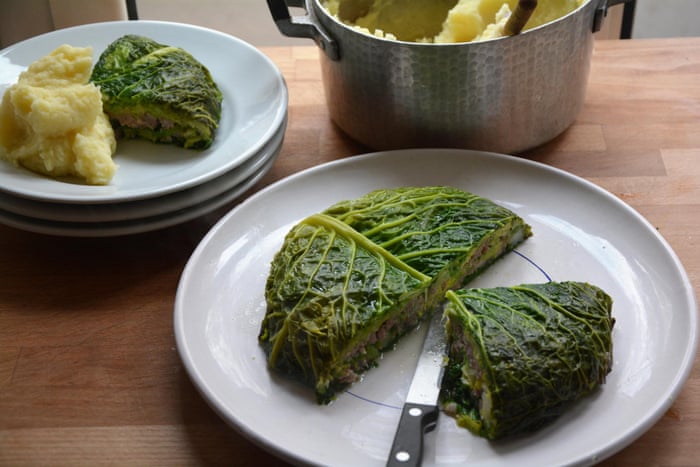
First up, there are many, many salads you can make with a good cabbage. “We probably have a raw cabbage salad at least three times a week at the moment,” says Scotter. Similarly, at Spring, which Fern Verrow supplies with fresh produce, Skye Gyngell has a brassica plant in nearly every dish on the menu, not that you’d know it from the variety of shapes and flavours she has wrought from them. Kale is the primary contender: serve it massaged with pear, pine nuts and crisp pecorino, warm with nduja or raw with lemon-baked ricotta. And you can’t wrong with a good slaw – the Hemsleys’ winter one combines cabbages with carrot, celeriac, celery, shallot and radish. Of course, you can bake, roast, braise, char and smother your brassicas, too. Then there’s this.

Read more here.

Hedging your bets on hedgerows

In addition to looking attractive, trees and hedgerows can help to sustain a farmer’s livelihood as well as the landscape, says Tim Field

Hedgerows

Restoring the patchwork quilt may be a guilty government’s attempt to repair the landscape or it could have great benefits for farm businesses. Tim Field decides whether new trees and hedgerows are sustaining farmers’ livelihoods.

Country types see hedgerows as opportunities: for a tricky jump, for a flushing point or for an excellent wild fruit jam. Follow the 7 best recipes for your hedgerow harvest for teas, tipples, sauces and jams.

TREES AND HEDGEROWS

The cynic in me looks at a young hedgerow, copse or shelter belt and thinks “subsidy”. It’s just a government’s guilt-ridden attempt to rectify the travesty of grubbing up tens of thousands of hedgerow miles in the destructive heights of the Green Revolution. Here we are, keeping the tax payer and tourists happy by restoring a quaint patchwork quilt over our green and pleasant land.

However, the countryman sees an opportunity: a hedge to jump; a larder to forage; a flushing point or a shelter from icy winds. Trees and hedgerows act as the natural corridors to connect on-farm habitats with neighbouring features and beyond. They have heritage value, with regionally distinctive architecture that creates an impenetrable barrier of uniformly laid hawthorn, blackthorn, hazel, dog rose or field maple. Hosting the Cotswold Hedgelaying Championship this winter has been a reminder for me of a farm’s affinity with trees and shrubs.

This is all very well but how do a few trees and hedgerows sustain a livelihood as well as a landscape? After all, the norm is to advise conventional farmers to refrain from spraying conservation headlands along field margins under the pretence they are the least productive zones of an arable field, suggesting hedgerows might inhibit rather than improve crop yields. Don’t get me wrong, headlands have been an excellent initiative but this attitude implies hedgerows are nice to have but not essential and we lose sight of their wider value in production.

Read more here.

Questions to ask yourself before buying something

by Michael Smith (Veshengro)

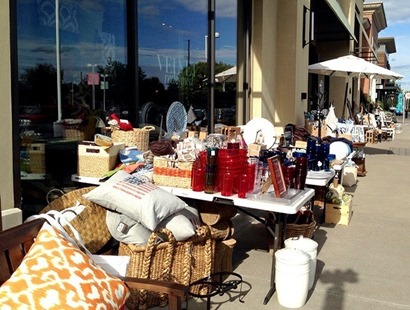
secondhand_shopAll too often we impulse buy because with think we are going to need or use this or that, or simply because we like this or that. Not that there is anything really wrong with this but often those purchases then are either never used in any way, shape or form. Been there and done it and have more than one white elephant to show for that. In fact those “white elephants” are not, actually, on display.

At this very moment – well, sort of, for not right now, as I am writing this article – I am sorting through a lot of my things and at times wonder what they heck and why the heck as to some of the things. That goes as much for clothes as for kitchen gadget and other things. I like to cook, yes, but found that the deep fat fryer that I bought (OK, it was cheap at Lidl) was a waste of money, though it was not all that much, as I have used it five times, if that. It just used too much oil and for one person making a few, what we in England call potato chips, and other may call French fries, is just silly. Oh, and then there is a juicer – also very well priced from Lidl – that has been used for while quite frequently but it is such a hassle cleaning that, to be honest, it is not worth the effort and also juicers are not really cost effective.

As far as the clothes are concerned they were all charity shop purchases and thus I don't, necessarily, feel overly guilty about those purchases only the question is how many trousers and how many shirts can one wear. So now I have definitely come to the decision to think twice buy once, and thus I am beginning to ask myself those questions – well, most of the time – before buying anything, other than essentials and tools for the various jobs that I do.

So, here are those questions:-

1. Do I really want to mess with this?

By “do I really want to mess with this, in this context, I mean take care of, such as in cleaning, maintaining, protecting, and/or restoring it. Am I willing to deal with the effort necessary to make this item worth the space and time it will take in my life? Good stewardship in my life means taking care of what I own. That goes as much for new as for secondhand purchases.

If the answer is yes, then that is a good sign it might be worth my money. If it is no, then it really is not worth the expense, even if it is “cheap”. You will more than likely happier without it.

2. Would I come back in 24 hours to get it?

I am not necessarily saying that you should wait a whole day and make the effort to head back for the item. The question is would I or you? If I were to set the thing down and walk away to think it over somewhat, would it still have that draw I am feeling right now? If the feeling is a no then leave alone.

At a car boot sales, fleamarket or such that option may not necessarily be there because as soon as you put it down someone else might pick it up and buy it. But, at least that's how I take it, if that is the case at such places, that is to say that I walk away a little to think it over and when I come back someone else bought the item then it was not meant for me (at that time) for whatever reason fate may have had in mind. I also do that with Special Buys at ALDI or Lidl. If I am not entirely sure I will not buy it and if there is still stock of the offer left over when I come back a coupl of days to a week later then, maybe then, I will buy.

3. How was this made?

It is not always easy to tell how it was made and under what conditions and what exploitation has taken place of Planet, of man and of beast. Often the things we buy cheaply so often come at a high price to the Planet and its inhabitants. Then again, having said that, even if something has certain certification, I have learned, often means nothing either.

That's why often – more often than not – I get my things from charity chops (a kind of thrift store in the UK) or from car boot sales, and then, depending on what I want to get, I look for old stuff, and ideally made in the UK, Germany, the GDR, the USSR, or the USA. And, whenever I can I make things myself from scratch or by reusing, repurposing or upcyling things that are already there and especially in this department items that are considered waste.

4. Could I get this secondhand?

We have already touched upon that subject in the previous paragraphs but it should become very much a conscious thought when we are looking at purchasing something we want or need.

As far as I am concerned with many things the first stop should always be to look for good secondhand rather than going to buy new and that for several reasons. The main one of them being that no new resources were required to make this item. The second one being that if it has already reached a certain age and is of a certain vintage and is still good and working then the quility is a great deal better – more often than not – than of anything that is being made today. I do that especially with regards to hand tools, be those for wood carving or whatever.

5. Could I make this myself or something that would do the job as well?

This is probably the question I ask myself more often than not when I need or want something and if the answer is yes to the question then I set about doing that rather than going to the shops – or on line – to buy something.

On the other hand there are times when, instead of actually making or building something, I go and restore something, be this old(er) tools or other things.

My philosophy is that if I can make something from almost nothing or make something old(er) work again that I may have gotten cheap or free then I will do that rather than buying something.

So, think about this all before going to buy something.

© 2017

UK's cash-starved parks at tipping point of decline, MPs warn

Slashed budgets risk the nation’s 27,000 parks becoming no-go areas, with negative effects on park-goers’ health and the environment

The UK’s cash-starved parks are at a tipping point of decline, MPs have warned, with severe impacts expected for park-goers’ health, community cohesion and the environment.

The nation’s 27,000 parks are highly valued by their 37 million regular users, but funding has plummeted in recent years as local authority budgets have been slashed. An inquiry by a cross-party committee of MPs found that the huge benefits that flow from green spaces are now at the point of being lost.

“Parks are treasured public assets, as the overwhelming response to our inquiry demonstrates, but they are at a tipping point, and if we are to prevent a period of decline with potentially severe consequences then action must be taken,” said Clive Betts, who chairs the communities and local government committee.

Over 92% of park budgets have been cut by local authorities, which have suffered an overall 27% budget cut in real terms since 2010-11. Some city councils, such as Newcastle’s, have cut park funds by 97%.

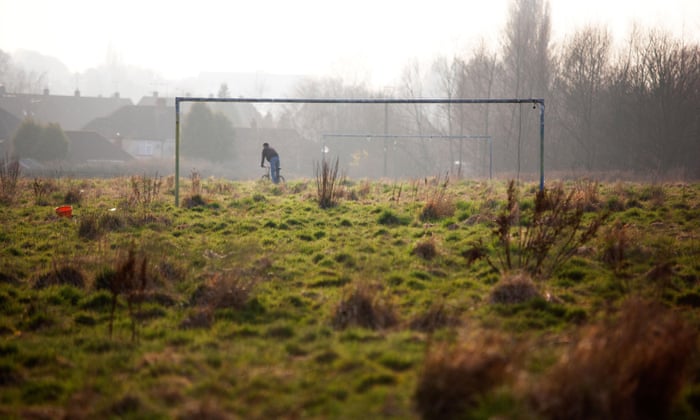
“Areas of parks are being downgraded and left to grow wild,” said Betts, while football pitches are being left unplayable and flower beds left unplanted. The committee’s report also found evidence of broken playground equipment going unrepaired and litter, vandalism and other crime rising.

Park managers warned in September that the neglect of parks was set to plunge them “into the disaster crisis of the 1980s and 1990s when they became no-go areas full of syringes and no park rangers.”

The report concludes that ministers and local authorities must find new ways to run parks that involve all the organisations that benefit from them, for example using funds aimed at cutting obesity to maintain parks as places to exercise.

Read more here.