Gloucester’s Euroflor urban meadow flower displays widely praised

Gloucester  displays of Euroflor Flanders poppies with Alliance and Hope flower mixes. www.rigbytaylor.com1GLOUCESTER City Council, working in partnership with Amey, has had great success with the planting of Euroflor urban flower meadows and World War One poppy mixes.

Now they are planning a dramatic scheme for the four-year period of centenary war commemorations, following wide praise from the public and neighbouring councils.

In the Abbey Ward area of the city, where this year’s Euroflor poppy mixes are in full bloom, Paul Sutlow, senior grounds maintenance supervisor for Amey, and his team - working in partnership with Gloucester City Council and Gloucester City Homes - have designed a fabulous garden for the public to enjoy.

The design is in keeping with the WWI theme and will be completed in three phases. During phase one, initially designed by Anthony Pyle, a grounds maintenance supervisor, there will be a number of pathways built to epitomise the trenches.

Long grass sections will signify ‘No Man’s Land’ along with a flowing brook which will symbolise the opposing trench and passage of time.

Phase two will represent the ‘Dig for Victory’ concept where native fruiting trees will be planted to form a community orchard. The plan for phase three is to plant rows of mixed native broadleaf trees alongside the fruit trees to create a woodland haven for the enjoyment of the public.

Paul Sutlow has been in Gloucester since 1976 and believes that Euroflor mixes from Rigby Taylor are saving money and have an increased impact for the public.

“We’ve had unprecedented numbers of comments about our various urban meadow plantings,” he says. “And other local authorities have taken an interest in the impact they have had.

“Urban flower mixes are low maintenance and have multiple wildlife benefits.”

Gloucester City Council and Amey initially started with sowing roundabouts in 2011. This evolved into a programme of meadows located beside the City’s primary roads, on verges and at junctions, providing maximum impact.

Andria Backhaus, Rigby Taylor local authority area sales manager, says: “We are delighted at the success Paul and his team have had. Euroflor poppy mixes have met with great success since their launch for the World War One centenary.”

DETAILS: For a Euroflor catalogue call Freefone 0800 424919.

www.rigbytaylor.com

Source: Oakfield Media

EXCITING NEW TOPICS IN SALTEX EDUCATION PROGRAMME OFFER SOMETHING FOR EVERYONE IN OPEN SPACE MANAGEMENT

SALTEX 2014 artcile picNew topics have been added to this year’s SALTEX (Sports Amenities Landscaping Trade Exhibition) education programme on 2-4 September at Windsor Racecourse which guarantee to offer sound advice and examples of best practice to everyone involved in open space management. Industry experts will be staging panel discussions, workshops, seminars and presentations covering the challenges of turf management and maintenance, and there will be focused sessions on UK parks, pest control, arboriculture and outdoor fitness equipment.

Included in the new, comprehensive SALTEX education schedule will be an open workshop on ‘The state and future of UK parks - exploring the public benefit of parks, new ways of using the spaces and alternatives to the traditional local authority parks service model’.

Presented by The Parks Alliance and chaired by Andrew Gill, president-elect, Institute of Horticulture, the debate’s panellists will include Heritage Lottery Fund parks consultant Peter Neal, author of the report ‘State of the UK’s Public Parks’.

Also in the Grandstand at Windsor Racecourse, a ‘Question Time’ style open debate will be held on ‘The control of pests, weeds and diseases in the amenity sector’. Chaired by John Moverley, chair of the Amenity Forum, the panellists will include Will Kay, Leo de Montaignac, Paul Singleton of BASIS Registration and Nick von Westenholz of the Crop Protection Association.

A series of ‘Tree planning and establishment’ seminars will be presented by Rhoderic Taylor, consultant and Fellow of the Arboricultural Association and Julie Sadler, Arboricultural Association member, Level 3 Arboriculture Examiner and a Local Government Arboricultural Officer, planning department.

Also, the daily seminar on ‘Outdoor Fitness Equipment Safety Standards’ will highlight the developing safety standard relating to permanently installed outdoor fitness equipment. EN 16630, due to be published and adopted by the UK early 2015, will be of critical interest to everyone involved in the likely purchase of such equipment, especially local authorities, parish councils and community operations.

This session will be presented by Rob Davies, committee member of TC/136/WG26 – the European Safety Standards Committee responsible for formulating EN 16630.

Consultant Peter Corbett will talk about spraying efficacy and efficiency in a presentation sponsored by Rigby Taylor – highlighting, for example, what is needed to ensure safer and more effective use of chemicals.

In addition, trade charity Perennial will each day be presenting a seminar entitled ‘Good for you, good for business and good for employees’ with guest speakers Nigel Payne, operations director, Sodexo Horticultural Services, Richard Gardiner, director Norris & Gardiner and BALI’s chief operations officer Wayne Grills.

Perennial has an excellent track record of responding quickly and efficiently to the needs of those working in or retired in the land-based sector. The session will present how Perennial can help you to provide additional pastoral care to colleagues, helping to boost productivity and morale, and reduce absenteeism.

These activities complement the extensive series of turf-focused panel debates on a live stage and FREE Ask the Expert advice sessions with key grounds professionals taking place daily in the IOG Hub at the centre of the showground.

Visit www.iogsaltex.com for full details.

SALTEX (www.iogsaltex.com), the Sports Amenities Landscaping Trade Exhibition organised by the Institute of Groundsmanship (IOG) and managed by Brintex Events, will be held on 2-4 September 2014 at Windsor Racecourse, Berks. Founded in 1938, the exhibition is attended by open space professionals and volunteers who design, construct, manage and maintain the UK's outdoor facilities – from sports grounds of every type to motorway service stations, and from stately homes to local council parks and schools. They visit SALTEX to meet suppliers of the machinery, tools, vehicles, turf, soils, seeds, aggregates, artificial or natural surfaces, playgrounds, landscaping equipment, street furniture, arboriculture, horticulture, safety, security, training and education services designed to help them do their jobs as effectively as possible.

Source: Wildish Communications Ltd

Strom für kubanische Bergdörfer

Phaesun installiert autarke Solarsystemen im Rahmen des Karen e.V. Hilfsprojektes

685667Das Memminger Solarunternehmen Phaesun hat zusammen mit dem gemeinnützigen Verein Karen e.V. die Stromversorgung in zwei kubanischen Bergdörfern mittels Solartechnik sichergestellt. Die Installation von über 50 Einzelsystemen konnte im Juli 2014 fertig gestellt werden.

Im Westen Kubas herrschte 2008 ein schlimmer Orkan, der unter anderem große Zerstörungen in den Dörfern El Toro und El Brujito in den Bergen der Provinz Artemisa im Westen Kubas anrichtete. 80% der Wohnhäuser, zwei Grundschulen und Ärztehäuser wurden zerstört. Die Bewohner, die geblieben sind, haben einen Großteil der Gebäude wieder aufgebaut, jedoch sind die Ortschaften vom Stromnetz abgeschnitten und Bestrebungen der Regierung eine Stromversorgung aufzubauen bestehen nicht. Mitglieder von KarEn e.V. waren im Oktober 2012 in beiden Dörfern, um sich mit den konkreten Bedingungen vertraut zu machen. Gemeinsam mit der Firma Phaesun wurde ein Elektrifizierungsplan für jedes Gebäude erarbeitet.

In einer ersten Phase im Februar 2014 wurden die Ärztehäuser, Grundschulen und einige Wohnhäuser in El Toro mit Solarsystemen ausgestattet, die nun für Beleuchtung und Kühlung sorgen. Jürgen Grosser, Techniker bei Phaesun, beaufsichtigte die Installationen und trainierte die lokalen Techniker, sodass diese weitere Installationen für zwei Waschstützpunkte, eine Tienda und einen Dorfclub selbständig durchführen konnten.

Gerda Daenecke, Projektkoordinatorin bei KAREN e.V. berichtet: "Es war eine echte Gemeinschaftsarbeit von vier lokalen Ingenieuren, drei Mitgliedern von KarEn, dem Techniker der Lieferfirma Phaesun, unserer Dolmetscherin Irsula und vor allem der Mehrheit der Bewohner der Dörfer. Das hat uns Mut gemacht, die zweite Phase zur Elektrifizierung von El Brujito noch in diesem Jahr durchzuführen."

Somit wurden im Juni die ersten Solarsysteme im Bergdorf El Brujito installiert. Trotz der erschwerten Bedingungen aufgrund des frühen Beginns der Regenzeit konnten bereits die ersten 13 von 39 geplanten Systemen unter Anleitung des Phaesun-Technikers Großer bis Ende Juni fertig gestellt werden. Mit den autarken Solaranlagen wird das Gemeindezentrum (Gemeinschafts- und Fernsehraum, Dorfladen) sowie Privathaushalte versorgt. Die restlichen Systeme wurden nun in Eigenverantwortung vom lokalen Team fertig gestellt. Jürgen Großer zeigt sich zufrieden: "Es gibt immer unvorhersehbare Ereignisse wie frühe Regenfälle oder Probleme bei der Einfuhr! Doch mit der Flexibilität und Erfahrung des gesamten Teams konnten wir diese Probleme überwinden. Nun freuen sich die Dorfbewohner über den Strom, der den Alltag erleichtert!"

Über Karen e.V.

KarEn ist eine Nichtregierungsorganisation (NGO) mit Sitz in Berlin, ein eingetragener gemeinnütziger Verein, der im Mai 1992 mit dem Ziel gegründet wurde, in den Ländern der Karibik, in erster Linie in Kuba, aber auch in Nikaragua und inzwischen auch in Südamerika, z.B. Venezuela und Bolivien, zur Energiewende - also zur Ablösung der fossilen Brennstoffe ohne den gefährlichen Irrweg der Kernenergie - beizutragen.

Electricity for Cuban mountain villages

Phaesun installs independent solar systems in the framework of the Karen e.V. aid project

685667The solar enterprise Phaesun which is situated in Memmingen has safeguarded the solar technological power supply of two Cuban mountain villages together with the non-profit making association Karen e.V. The installation of more than 50 individual systems could be completed in July 2014.

In 2008, the west of Cuba was haunted by a terrible hurricane which caused considerable damages among others in the villages of El Toro and El Brujito located in the mountains of the district of Artemisa in the west of Cuba. 80% of the residential buildings, two elementary schools and medical centres were destroyed. The inhabitants who stayed there have rebuilt a majority of the buildings, however these localities are cut off from the power grid and the government has no ambitions to build up a power supply system. Members of Karen e.V. visited the two villages in October 2012 to acquaint themselves with the concrete conditions. Together with Phaesun, they worked out an electrification plan including all buildings.

In a first phase in February 2014, the medical centres, elementary schools and some residential buildings in El Toro were equipped with solar systems which now provide illumination and cooling. Jürgen Grosser, a Phaesun technician, supervised the installations and trained the local technicians, so they were able to carry out further installations for two laundry camps, a store and a village club independently.

Gerda Daenecke, the Karen e.V. project coordinator reports: "This was a genuine team effort made by four local engineers, three members of Karen, the delivery firm Phaesun, our translator Irsula and mainly the majority of the village inhabitants. This encouraged us to carry out the second phase of the electrification of El Brujito still this year."

So the first solar systems were installed in June in the mountain village of El Brujito. Despite the aggravated conditions due to the early start of the rainy season, the first 13 of 39 planned systems could be completed already by the end of June, supervised by Phaesun technician Jürgen Grosser. The independent solar systems supply the village hall (recreation and TV room, village store) and private households. The remaining systems were now completed with the self responsibility of the local team. Jürgen Grosser was satisfied. "There are always unforeseeable events such as early rainfalls or problems with the import! Due to the entire team's experience and flexibility, however, we could get over these problems. Now, the village inhabitants are happy with the power supply which makes daily life easier!"

About Karen e.V.

Karen e.V. is a non-governmental organisation (NGO) situated in Berlin. It is a non-profit making association which was founded in May 1992 with the goal to contribute to the energy turnaround in the Caribbean countries, mainly Cuba, but also in Nicaragua and meanwhile in South America, e.g. Venezuela and Bolivia thus replacing fossil energy sources without following the dangerous wrong track of nuclear energy.

This Grocery Store Gave "Ugly" Fruit and Veggies Their Own Aisle. Watch What Happens.

It goes without saying that people waste way too much food, and food waste comes in many different forms.

Whether we’re throwing out fully-cooked meals from restaurants daily or tossing our produce out when it gets slightly brown, it seems like we’re always inventing new ways to waste food.

A shocking 1/3 of all food produced, or 1.3 billion tons, gets lost or wasted according to one major world study, and many of the world’s “ugliest” vegetables never even make it to store shelves.

Instead, they find themselves tossed into the garbage, never to see the light of day.

One French Supermarket chain, Intermarché, has taken it upon themselves to do their part to solve this problem, however, and so far it’s been a smashing success.

Read more and watch the video: http://eatlocalgrown.com/article/13306-this-grocery-store-gave-ugly-fruit-and-veggies-their-own-aisle-watch-what-happens.html?c=nsm

6 Strategies for Urban Vegetable Gardening

Living in the city, in an apartment, or in a small space? You may not have a yard to work with, but you can still grow lots of tasty vegetables.

urban gardening containersCity living has its ecobenefits: easy travel by foot and public transit, smaller homes that use less energy, and less living space in which to accumulate needless junk. But growing your own vegetables in an urban environment can be tricky when you don’t have a backyard. "Small-space gardening isn't simple," says Charlie Nardozzi, senior horticulturist for the National Gardening Association, "but it's not as difficult as some people might think." Nardozzi says that the introduction of miniature and dwarf vegetable varieties (you can find plants in most gardening-supply stores or order seeds from reputable companies) to your urban gardening program allows even the beginning gardener to grow tasty crops without the need for tons of space and soil.

Ready to start a plot of your own? Whether you’re an urban gardener with little or no outdoor space, or simply coping with limited lot size, read up on the following six small-space gardening methods to find the one that best suits you.

Container Gardening: Thanks to the wide variety of containers now available, you can grow fruits, vegetables, and herbs with relative ease in very little space (and without the extra work of planting in straight rows or weeding big beds!). Just choose clay, plastic, or terra-cotta containers of an appropriate size to hold your plants and their root systems, add dirt and compost, and get growing. Because most vegetables need plenty of sunshine and water, one major advantage of containers is that you can manage your plants’ environment by simply moving them into and out of the sun, and by bringing them indoors during periods of extremely hot or cold temperatures. And because containers come in a variety of sizes, you can keep them just about anywhere—on balconies, window ledges, rooftops, or decks. Be sure you check the weight restrictions for balconies or rooftop spaces, though, as an abundance of containers filled with wet soil and large vegetables can be surprisingly heavy.

Raised Beds: Think that small patch of poor soil on the side of your house isn’t fit for growing weeds, let alone a vegetable garden? A raised bed might be your savior. With raised beds, you start your garden above the level of the ground, on top of poor soil or even cement. By adding your own medium in which to grow your plants (you’ll need six to eight inches of dirt and compost if growing on top of poor soil, more when starting a garden atop concrete), you control the soil quality and conditions as well as improve drainage and compaction. Raised beds can be contained on all sides by wood or stones; you can save money by using scrap and found materials, or buy a kit at a gardening store. You may even be able to get away with just piling the soil into a mound and not worrying about containing it.

Read more: http://www.rodalenews.com/urban-gardening

10 Budget-Friendly Ways to Keep Your House Cool This Summer

Slash your energy bill with these simple cooling tips.

summer cooling tipsSummer is finally here, which means beach days, barbecues, and of course, hotter temperatures. Although it can be hard to resist cranking up the air conditioner during those 90-degree plus days, here's why you might want to think twice before you do.

According to the U.S. Environmental Protection Agency's ENERGY STAR program, the average homeowner spends $875 on cooling and heating costs alone.

Simple Changes
No Cost: Take advantage of your curtains! Shades and curtains will help prevent the sun from overheating your house.

No Cost:  Save money by using both a ceiling fan and air-conditioning (AC) unit. Try raising your thermostat by two degrees in combination with running a ceiling fan. This small change can lower costs by 14 percent. Turn off the fan when you leave the room.

No Cost: Raise your thermostat a few degrees (4 to 7 degrees higher) during work hours when no one will be in the house to save about $180 a year.

Low Cost: Use energy-efficient light bulbs instead of incandescent bulbs. ENERGY STAR lighting produces 70 to 90 percent less heat than incandescent bulbs.

Read more: http://www.rodalenews.com/summer-cooling-tips

13 Foods That Fight Sunburn

Soothe—or prevent—scorching sunburn with common kitchen ingredients.

The starchy compounds within potatoes may help to take the sting out of sunburns.No one sets out to get sunburned, but the pleasant distractions of summer—the long, sunny days, the beckoning beach, losing track of time in the garden—all make it easy to forget that extra coat of sunscreen, or the need to take a break in the shade. Of course, it’s best to avoid sunburn in the first place, given its ability to cause skin cancer and premature aging. Luckily, common foods in your kitchen possess sun-protection compounds to aid your current sun-protection routine. Others may not help prevent sunburn but offer surprising relief if you do accidentally catch too many rays.

Check out these natural food remedies to deal with—or prevent—summer sunburns:

1. Potatoes

Sunburn-fighting effect: Overindulging inpotatoes may be a no-no if you’re trying to lose weight, but keep a few on hand in case a sunburn strikes. The potato’s starchy compounds will help take the sting out of sunburn.

Utilize it! Cut a raw potato into slices and rub a piece on your most painful sunburned spots. For a more intensive treatment, grate a cold raw potato and apply it as a poultice.

Read more: http://www.organicgardening.com/living/13-foods-that-fight-sunburn

fair-handeln! Anstiftungen für zukunftsfähiges Handeln – Book Review

Review by Michael Smith (Veshengro)

fair-handeln!
Anstiftungen für zukunftsfähiges Handeln
 
Edited and published by Jaana Prüss
192 pages, with many illustrations, color and b/w
Softcover with flaps,
Price: 19,90 €,
ISBN 978-3-00-045409-7

fair-handeln_Buch_frontThe best translation for the title would be "acting fair" as "fair trading" would not fit even though some might translate it in that way. So, in other words “acting fair! Incitements for sustainable interactions” would be the best full English translation for it.

Talking of translations; presently the book is only available in German. However, an English translation of it is being planned, so I understand.

The book tries to give practical answers to may questions such as how is it possible to live well in today's affluent society without having to open every time the wallet in order to buy new and open the trash can regularly to throw old tings away?

What ideas and practical ways exist already with which one can participate in the far-reaching transformation process in which our western consumer societies are finding themselves in our present time?

How and where can one put something that one no longer needs at the disposal of others; how and where can one extend the use of resources? Or also: What are true values? When do I experience myself and my actions as meaningful?

Such questions and others this handbook and “participation manual” entitled “Fairhandeln! Anstiftungen für zukunftsfähiges Handeln” is trying to follow up and answer. It also presents to the reader innovative activities of the civil society – exemplary projects in which a new understanding of wealth is being lives whereby quality of live is not dependent on the amount of goods one has and owns.

Ordinary people who are doing the uncommon are given a voice in this book: lending instead of owning, do it yourself instead of buying, upcycling instead of throwing away.

Together they plant up empty spaces in the cities, keep bees, establish open workshops, Repair Cafes, practice barter or Share Economy, concern themselves with healthy regional diet or cooperative agriculture. They look for answers to the conflict of resources, for practical alternatives to our current throwaway society and demand involvement and participation, free access to knowledge, to water, energy and culture as fundamental rights, as commons.

The book is broken down into three parts:

Part 1 is a reading book with essays and portraits of the different authors, actors and experts, both male and female, which give an insight into and information about urban gardening, share economy, barter circles, upcycling, commons post growth economy, etc.

The second part is an action and participation manual with concrete methods beyond consumption and throwaway society. Practical instructions, construction guides, recipes, and much more.

And part three is an information book with many contacts, addresses, portraits of the actors in the field, and is designed as a collection, an index and information pool to the questions as to where can I find what, where can I lend this, repair that, participate and learn myself how to do things...

Everyone has individual talents, gifts, creativity and skills that need to be activated and put to use. This book would like to inspire the read and give him or her courage to become active themselves, to do things for themselves and to try out things in the various fields of society.

The book is written in a very easy and slightly quirky style which makes it great fun to read. The fact that the subjects are presented in short articles of often two or three pages maximum also makes for this and enables the book to be truly used as a manual being able to dip in and out as needed.

The editor Jaana Prüss works as a cultural activist, artist, curator and project manager in the realms of culture, art and sustainability. In 2004 she founded Morgengrün Kommunikation. Since 2013 she is the chair person of the und.Institut für Kunst, Kultur und Zukunftsfähigkeit e.V. in Berlin.

fair-handeln! came about as the result of a cooperation of the und.Institut with Morgengrün Kommunikation and many protagonists of change. The production was made possible through crowdfunding and was also supported additionally by the Heinrich Böll-Stiftung, Stiftungsgemeinschaft anstiftung & ertomis, GLS Bank, Naturstrom, and others.

I have very much enjoyed this book and regard it as one that is very much needed in today's world to get people active in society to bring about the changes that are needed for a better and healthier life for all. A new fairer society and world is possible and it is up to all of us to make it, together.

© 2014

Fair-handeln! Anstiftungen für zukunftsfähiges Handeln – Rezension

Rezension bei Michael Smith (Veshengro)

fair-handeln! Anstiftungen für zukunftsfähiges Handeln
Jaana Prüss (Hrsg.)
192 Seiten, mit zahlreichen Abbildungen, farbig und s/w,
Klappenbroschur,
Preis: 19,90 €,
ISBN 978-3-00-045409-7
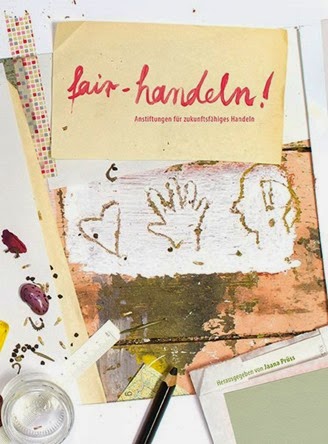
fair-handeln_Buch_frontWie ist es möglich, in der »Zuvielgesellschaft« gut zu leben, ohne permanent den Geldbeutel oder den Mülleimer öffnen zu müssen? Welche Ideen und Praktiken gibt es, um den tiefgreifenden Transformationsprozess, worin sich die westlichen Konsumgesellschaften derzeit befinden, in den konkreten Dingen des Alltags auf sinnstiftende Weise mitzugestalten? Wo und wie kann man etwas, das man nicht mehr braucht, zur Verfügung stellen, Wertstoffe weiternutzen? Oder auch: Was sind wirkliche Werte? Wann erlebe ich mich und mein Handeln als sinnvoll?

Solchen Fragen geht das »Hand- und Mitmachbuch« fairhandeln! Anstiftungen für zukunftsfähiges Handeln nach. Es stellt innovative Aktivitäten der Zivilgesellschaft vor – beispielhafte Projekte, in denen ein neues Verständnis von Wohlstand gelebt wird, wobei Lebensqualität sich nicht in Warenvielfalt erschöpft.

In diesem Buch kommen gewöhnliche Menschen zu Wort, die Ungewöhnliches tun: leihen statt besitzen, selbermachen statt kaufen, aufwerten statt wegwerfen. Gemeinsam bepflanzen sie freie Flächen in der Stadt, imkern, gründen Offene Werkstätten, Repair Cafés, praktizieren Tauschhandel oder Share Economy, kümmern sich um gesunde regionale Ernährung oder solidarische Landwirtschaft. Sie suchen nach Antworten auf die RessourcenKonflikte, nach praktikablen Alternativen zur Verschwendungs- und Wegwerfgesellschaft und wollen Beteiligung, freien Zugang zu Wissen, zu Wasser, Energie und zu Kultur als allgemeine Grundrechte, als Commons.

Neben einer Sammlung wegweisender Initiativen vermittelt fair-handeln! mit Handlungsanleitungen und Rezepten nützliches Wissen zum Handeln (auch ohne Konsum). In Essays kommen verschiedene Autor*innen zu Wort. Ein Index ist Adressen, Kontakten und Kurzporträts von Akteur*innen gewidmet. Auf ansteckende Weise regt dieses Buch dazu an, jenseits von bloß theoretisch Begriffenem aktiv das (all)tägliche Leben mit Herz, Hand und Verstand zu transformieren.

Das Buch gliedert sich in drei Teile:

1. Lesebuch: mit Essays und Portraits verschiedener Autor*innen, Akteur*innen und Expert*innen, die Einblick und Auskunft geben über Urban Gardening, Share-ökonomie, Tauschringe, Upcycling, Commons Postwachstumsökonomie etc.

2. Handlungs- und Mitmachbuch: mit anschaulichen Praktiken jenseits von Konsum und Wegwerfgesellschaft. Praktische Anleitungen, Bauanleitungen, Rezepte, Mitmachaktionen, Künstlerische Herangehensweisen, Stadtsparziergänge unter bestimmten Wahrnehmungsimpulsen, Experimente für eigene Handlungsmöglichkeiten, Anregungen etc. Hierfür stehen Seiten für persönliche Notizen und zum Weiterdenken zur Verfügung.

3. Infobuch: mit vielen Kontakten, Adressen, Portraits von Akteur*innen gewidmet als sammlung, Index und Informationspool: Wo finde ich was, kann ich was leihen, reparieren, mich beteiligen und selbst LERNEN wie es geht…

Jeder besitzt individuelle Talente, Gaben, Kreativität und Fähigkeiten, die es zu aktivieren, beleben und entfachen gilt. Dieses Buch möchte anregen und Mut machen selbst aktiv zu werden, Dinge in die HAND zu nehemn und in vielen gesellschaftlichen Feldern Angewandtes selbst zu erproben, mit- und nachzumachen und weiterzu denken und weiter zu entwickeln.

Selbstversuche und Experimente, Handlungsanleitungen, Essen von der Wiese, bookcrossing, Terra Preta für den Balkon, Heilkunde rund ums sogenannte Unkraut, Leben ohen GEld- Erfahrungsbericht, Baumscheiben richtig bepflanzen ohne Schaden für das Ökosystem, Was machen mit dem ZUVIEL unserer ZUVIEL-Gesellschaft, positive Beispiele sozialen Wirtschaftens, öffentliches Ernten gewusst wo und wie, Einmachrezepte, Resteverwertung in der Küche, alte Sorten kultivieren, die auf keinem Markt erhältlich sind, Artenvielfat ganz einfach erhalten, Nahrung für unsere lebendige Umwelt, das lebendige in uns lebendiger machen, Schenkkultur und vieles mehr.

Zur Herausgeberin

Jaana Prüss arbeitet als Kulturaktivistin, Künstlerin, Kuratorin und Projekt-managerin in den Bereichen Kultur, Kunst und Zukunftsfähigkeit. 2004 gründete sie Morgengrün Kommunikation. Seit 2013 ist sie Vorstandsmitglied des und.Institut für Kunst, Kultur und Zukunftsfähigkeit e.V. in Berlin.

Gestaltung und Illustration: Lena Ziyal und Tobias Morawski (in Kooperation mit anschlaege.de) Fotografien: Karsten Thielker, Tobias Morawski, Jaana Prüss u.a. Texte: Julia Engelmann, Thomas Dönnebrink, Maike Majewski, Christa Müller, Jaana Prüss, Sebastian Stragies, Robert Strauch, Nikolai Wolfert mit Johannes Dietrich, u.a.

fair-handeln! Ist aus einer Kooperation des und.Instituts mit Morgengrün Kommunikation und vielen Akteur*innen des Wandels entstanden. Die Produktion wurde mittels crowdfunding ermöglicht und zusätzlich gefördert durch die Heinrich Böll-Stiftung, Stiftungsgemeinschaft anstiftung & ertomis, GLS Bank, Naturstrom u.a.m.

Das und.Institut für Kunst, Kultur und Zukunftsfähigkeit e.V. initiiert und konzipiert interdisziplinäre Kooperationen mit Partnern aus Kunst, Bildung und Kultur, der Wissenschaft, der Wirtschaft und der Zivilgesellschaft.

Das Buch ist in einem sehr schönen Stil geschrieben und läßt sich deshalb sehr gut lesen. Der Fakt das die Themen in kurzen Artikeln von meist nicht mehr als zwei bis drei Seiten präsentiert werden ermöglicht es auch dieses Buch wahrlich als ein Handbuch zu benutzen indem der Leser order Leserin einzelne Themen angreifen kann ohne durch das ganze Buch blättern zu müssen.

Mir hat dies Buch sehr gefallen und ich sehe es als eines das sehr benötigt wird in der heutigen Welt um die Menschen zu aktivieren in der Gesellschaft um den Wandel hervorzubringen der benötigt wird für ein besseres und gesünderes Leben für uns alle. Eine neue fairere Gesellschaft und Welt ist möglich und es ist unsere Aufgabe diese zu erschaffen, zusammen.

© 2014