Unison claims overwhelming mandate for strike

Unison claims mandate for strike with 1 out of 5 members voting yes

by Michael Smith (Veshengro)

unison Unison leadership claims that members have given the union overwhelming support for strike action on November 30th and thus a mandate to proceed.

I admit that I am no mathematical genius but 1 out of 5 equals 20% and that is NO majority; not by a long shot.

While there may have been a majority of yes votes amongst the ballot papers returned the fact that about 70% of Unison's membership did not even bother to vote should tell the union and its leadership a thing or two. Namely that there is NO interest from the sides of members in a strike and thus NO mandate for any such action.

The message from the members is a loud and clear one that they – the majority of them – do not want a strike. Only Dave Prentis and his cronies in Unison and other public sector unions want one.

Unison's idea of democracy seems a rather strange one and not just in relation to this particular ballot.

The same is the case with a majority, from my questioning, of members not wishing their dues to prop up the British Labour Party.

And let's not even mention the fixed leadership elections even with people already “elected” to positions on the ballot papers without members given a say as to yeah or nay.

All women, all “Gay”, all Black, shortlists are NOT democracy and to appoint people to the board, whether national or regional, simply because of gender, sexual orientation, race or creed is NOT democratic. It is Stalinist fascism.

Time for Unison (and other unions) to rethink its ideas.

© 2011

Nick Clegg against EU referendum

Deputy Prime Minister stabs British public in the back

By Michael Smith (Veshengro)

nick-clegg While his opposition to any referendum is no surprise, considering the way the Lib-Dems are in love with the EU, his vitriolic attack on those MPs that voted for a referendum and against the people demanding one are those of someone who is getting to big for his boots.

Deputy prime minister says coalition will not take back powers from Brussels and calls EU debate a 'dangerous distraction'.

So, in other words, what he is saying is f*$& the wishes of the people. Government decides.

That means Nick Clegg does not care one iota as to what the people of the country want. Time politicians realized they owe us not we them.

To further his point and to scare the electorate he claims that there will be three million plus jobs at risk if the UK would pull out of the EU.

However, according to several sources, including research by Channel 4, this is not the case and all that Clegg is doing is engaging in scaremongering.

Those are the actions of a desperate man and also those of a churlish child and not those of a politician worth the trust of the people.

The entire British government, including Her Majesty's Opposition, do not care one single little bit as to the wishes of the people, which made clear their demand for a referendum on our continued membership in the European Union.

The British government, however, has decided that what the people ask is irrelevant and that they really are the masters and that the people are but serfs or children, to do as they are told and that's it.

It is time, I thing, that we, the people, may be made clear to the Members of Parliament that they are answerable to us, their electorate, or that they might become irrelevant.

© 2011

Canadian Farmers’ Almanac Forewarns of CLIME AND PUNISHMENT

by Farmers' Almanac Staff

Unusual Winter Weather, Floods, Record Heat, Now What?

LEWISTON, Maine – After a wild year of roller-coaster weather—record snowfalls, flooding, and extreme bouts of heat—the 2012 Canadian Farmers’ Almanac is rolling out its newest edition and its long-range winter outlook. According to the famous weather-predicting publication, the winter of 2011-12 will be one of “Clime and Punishment,” which means some parts of the country will get a very frigid winter; while others will be on tap for lots of rain and snow.

The Canadian Farmers’ Almanac, which bases its long-range weather forecast on a mathematical and astronomical (and top secret) formula,

The “punishment” will come from the precipitation. The 2012 Canadian Farmers’ Almanac predicts the winter of 2011–12 will bring unusually cold and stormy weather. For some parts of the country that means a frigid climate; while for others, it’s lots of rain and snow.

The 195-year-old publication is forecasting the upcoming winter will be cold to very cold, from Alberta east across Saskatchewan and Manitoba into western Ontario. Meanwhile, temperatures are expected to average above normal for much of Nova Scotia and possibly southern New Brunswick. Near-normal temperatures should prevail elsewhere. A very active storm track will bring copious precipitation through the Great Lakes into central and eastern Ontario, Quebec, and much of the Maritimes. Another active storm track over the Pacific Ocean will guide systems into southern and central British Columbia and western Alberta, giving them a wetter-than-normal winter.

But the Canadian Farmers’ Almanac isn’t just about the weather. It’s about living smart. The 2012 Canadian Farmers’ Almanac provides tons of tips, articles, and ideas on ways to get back to basics and live a more resourceful lifestyle. “The need for a more sustainable, healthy, and affordable lifestyle continues to grow as does the need for the Canadian Farmers’ Almanac to share its wisdom, tips, and ideals,” reveals Peter Geiger, Philom., Editor, adding “and in this crazy economy the need to live life a bit more wisely is not just a desire but a dire need.”

Some of this new edition’s must-read articles include: “How to Have a Nice Yard Without Going Broke,” “Learn How to Can and Freeze,” plus healthy living topics, such as natural itch relief and eating whole foods to beat the winter doldrums; and, of course, tons of the tips, trivia, and wit and wisdom that you can only find in the Canadian Farmers’ Almanac.

The 2012 Canadian Farmers’ Almanac has officially hit the store shelves August 29, 2011, and can be accessed online at www.FarmersAlmanac.com and on Facebook and Twitter.

This press release is presented without editing for your information only.

Full Disclosure Statement: The GREEN (LIVING) REVIEW received no compensation for any component of this article.

Britain’s Greenest Band The Phoenix Rose to Support Junior Marvin

Britain’s Greenest Band The Phoenix Rose to Support Junior Marvin of Bob Marley’s Wailers Live at Under the Bridge

ThePheonixRose_web Eco-warrior and front man of The Phoenix Rose, Jarvis Smith is delighted to announce their support of the legendary Junior Marvin at an exclusive gig to be held at London’s hottest live music venue, Under the Bridge on Thursday 24th November 2011.

The unmissable event promoted by Jambila Music in association with PEA Pod Sessions includes support from No-Maddz and promises an eclectic collaboration of Reggae and Rock music where for every ticket sold, a tree will be planted through PEA Pod Sessions.

The Phoenix Rose

Having performed this summer at Glastonbury with Junior Marvin, The Phoenix Rose’s music has been dubbed by double Grammy  winner Wayne Jobson as “the sound you would hear if The Police Clashed with Bob Marley”.  The band, fronted by Jarvis Smith including Jim Evans-Jones (drums), Rob Tree (bass), Fingers (guitar) and Reet on vocals was signed by the UK’s first and only green record company, Archangel Green.  Their contract has unique guidelines regarding carbon-offsetting reduced travel, utilisation of green energy and efficient CD production.  Their upcoming album 'Planet 2012’ which includes single 'Sick and Tired' produced by Pete 'mixmaster' Hammond and the album title track featuring Junior Marvin encourages people to realise their own capability to instigate positive change.

Jarvis Smith comments...“I’m thrilled The Phoenix Rose will be joining Junior to perform at this exciting and highly sought after venue. He and Bob Marley made the concept of ‘love and unity’ become an accepted philosophy, and he truly believes, as I do, that music can once again be used to encourage people to make positive changes to their lifestyles in order to save the planet”

Junior Marvin

The Jamaican born guitarist and singer previously formed his own band, Junior Marvin’s Hanson in the early 70’s before joining Bob Marley and The Wailers band in 1977. “Exodus” was his first album with them which was voted “Best Album Of The 20th Century’ by Time Magazine. He is on all Bob Marley and The Wailers Albums since that time. Since Bob Marley’s death in 1981, Junior has released four albums with The Wailers; “ID”, “Majestic Warriors”, “Jah Message” and “My Friends” (Live). Junior also featured on albums with Burning Spear, Alpha Blondy, Bunny Wailer, Israel Vibrations, Culture, The Meditations, Beres Hammond, The Congos, O.A,R. and SOJA.

In 1997 Junior left The Wailers Band and relocated to Brazil, where he formed a short-lived group called Batuka. Following his return to Jamaica he continued working as a session artist, more recently touring with Kaliroots and The Wailers Band. He has been touring with The Original Wailers since 2009 and his new single, ‘Where is Love’ as a solo artist is out now to buy on iTunes and vinyl.

Under the Bridge

Under the Bridge is a uniquely stylish west London music venue, purpose-built with the highest attention to detail, and featuring stunning, state-of-the-art sound and lighting. Designed in homage to the legendary venues in London’s rock history and the greats of British Isles music, it’s a new club that feels like it’s been around forever. This inspiring venue, holding up to 600 people, is perfect for gigs, press calls, showcases, fashion shoots, live broadcasts, warm-ups, after-parties, comedy nights, corporate events and much more.

Doors: 7pm – 1am

£15 in advance… £20 at the door

Tickets available from: www.underthebridge.co.uk/events

Under The Bridge

Stamford Bridge, Fulham Road, SW6 1HS

Nearest Tube: Fulham Broadway

The Phoenix Rose: http://thephoenixrose.com/

Junior Marvin: www.juniormarvin.com

Jambila Music: www.jambila.co.uk

No-Maddz: www.nomaddzja.com

This press release is presented without editing for your information only.

Full Disclosure Statement: The GREEN (LIVING) REVIEW received no compensation for any component of this article.

Forests of the future may actually soak up more CO2 than previously believed

Assumptions of the response of the ecosystem to rise in CO2 and pollution levels are incorrect

By Michael Smith (Veshengro)

North American forests appear to have a greater capacity to soak up heat-trapping carbon dioxide gas than researchers had previously anticipated.
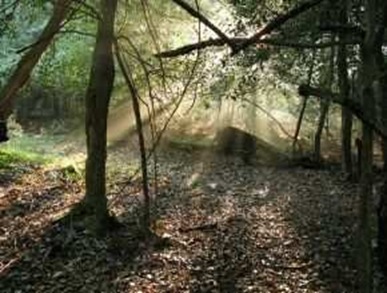
Forests CO2 absorbtionA s a result, they could help slow the pace of human-caused and human-induced climate warming more than most scientists had thought, a University of Michigan ecologist and his colleagues have concluded.

The results of a 12-year study at an experimental forest in northeastern Wisconsin challenge several long-held assumptions about how future forests will respond to the rising levels of atmospheric carbon dioxide blamed for human-caused climate change, said University of Michigan microbial ecologist Donald Zak, lead author of a paper published online this week in Ecology Letters.

“Some of the initial assumptions about ecosystem response are not correct and will have to be revised,” said Zak, a professor at the U-M School of Natural Resources and Environment and the Department of Ecology and Evolutionary Biology in the College of Literature, Science, and the Arts.

To simulate atmospheric conditions expected in the latter half of this century, Zak and his colleagues continuously pumped extra carbon dioxide into the canopies of trembling aspen, paper birch and sugar maple trees at a 38-acre experimental forest in Rhinelander, Wis., from 1997 to 2008.

Some of the trees were also bathed in elevated levels of ground-level ozone, the primary constituent in smog, to simulate the increasingly polluted air of the future. Both parts of the federally funded experiment - the carbon dioxide and the ozone treatments – produced unexpected results.

In addition to trapping heat, carbon dioxide is known to have a fertilizing effect on trees and other plants, making them grow faster than they normally would. Climate researchers and ecosystem modelers assume that in coming decades, carbon dioxide's fertilizing effect will temporarily boost the growth rate of northern temperate forests.

Previous studies have concluded that this growth spurt would be short-lived, grinding to a halt when the trees can no longer extract the essential nutrient nitrogen from the soil. But in the Rhinelander study, the trees bathed in elevated carbon dioxide continued to grow at an accelerated rate throughout the 12-year experiment. In the final three years of the study, the CO2-soaked trees grew 26 percent more than those exposed to normal levels of carbon dioxide.

It appears that the extra carbon dioxide allowed trees to grow more small roots and “forage” more successfully for nitrogen in the soil, Zak said. At the same time, the rate at which microorganisms released nitrogen back to the soil, as fallen leaves and branches decayed, increased.

“The greater growth has been sustained by an acceleration, rather than a slowing down, of soil nitrogen cycling,” Zak said. “Under elevated carbon dioxide, the trees did a better job of getting nitrogen out of the soil, and there was more of it for plants to use.”

Zak stressed that growth-enhancing effects of CO2 in forests will eventually “hit the wall” and come to a halt. The trees' roots will eventually “fully exploit” the soil's nitrogen resources. No one knows how long it will take to reach that limit, he said.

This is, however, once again but an assumption of the scientists and does not meant that that will actually happen, in the same way that they now have to rethink their previously held claims and beliefs that forests of the future would not be able to cope with increased CO2 (if that is happening even) and would become sources of CO2 themselves.

The ozone portion of the 12-year experiment also held surprises. Ground-level ozone is known to damage plant tissues and interfere with photosynthesis. Conventional wisdom has held that in the future, increasing levels of ozone would constrain the degree to which rising levels of carbon dioxide would promote tree growth, canceling out some of a forest's ability to buffer projected climate warming.

In the first few years of the Rhinelander experiment, that's exactly what was observed. Trees exposed to elevated levels of ozone did not grow as fast as other trees. But by the end of study, ozone had no effect at all on forest productivity.

“What happened is that ozone-tolerant species and genotypes in our experiment more or less took up the slack left behind by those who were negatively affected, and that's called compensatory growth,” Zak said. “The same thing happened with growth under elevated carbon dioxide, under which some genotypes and species fared better than others.”

“The interesting take home point with this is that aspects of biological diversity – like genetic diversity and plant species compositions – are important components of an ecosystem's response to climate change,” he said. “Biodiversity matters, in this regard.”

We do have to remember one thing, however, and that is that if those trees are “allowed” to stand over the maximum span they, themselves, in fact, will release CO2 rather than absorb it and it is here were forestry comes in.

I would say that, you might say, being a professional commercial forester by original trade, but it is the truth. There is a certain lifespan when a tree is actually “healthy”, so to speak, and is absorbing CO2 and then come the phase when the tree will actually exhale carbon.

Therefore it is important that forests are managed in a proper system and are not just allowed to stand there while we pretend that everything is hunky dory and fine. This is important especially when we want forests and woodlands to act as serious carbon sinks. At the same time we also benefit from the wood, though a strict regime of sustainable management and replanting is required.

Sustainable wood is more important today than ever before and we must replace a lot of the stuff that we use plastics for today with wood and wood products again, as used to be the case.

Wood for heating, whether in the form of split logs, chips or briquettes or pellets, is carbon neutral, as wood, when burned, only releases the amount of CO2 that the tree absorbed during its productive life.

Leaving wood to go into decay, as with habitat piles and such like, is harmful, as not only the absorbed CO2 is being released but also methane gas during the process of decay. The latter being a GHG that is said to be 40 times more dangerous than CO2 as regards to climate change.

In addition to that said habitat piles also harbor diseases and are a fire hazard in forests and woodlands, despite what misguided environmentalists may claim. During the old times when there was, basically, a clean forest floor policy with anything that could not be utilized burned on site, though enough litter was always there, there was more wildlife, including fungi and invertebrates, than there are today. But, there were fewer tree diseases.

© 2011

Proposed motorway speed limit based on fantasy economics

By Michael Smith (Veshengro)

Raising motorway speed limits to 80mph to boost the economy is based on fantasy economics and a flawed system for appraising transport policy and projects, says charity Sustrans.

Transport Secretary Philip Hammond has announced proposals for the introduction of 80mph limits to Britain’s motorways at the Conservative Party Conference, arguing that the increased limit will boost the economy by hundreds of millions each year, particularly by cutting journey times for workers.

But, Sustrans wants to see some robust evidence that supports this.

Jason Torrance, Sustrans' Acting Policy Director, says; “The decision-making behind this proposed increase in motorway speeds is based on fantasy economics that assigns big financial savings to small time savings. The idea that if five minutes is saved on a journey, then more time can productively be spent at work simply isn’t the case.”

Faster speeds are likely to hit people financially – cars use up to 9 per cent more fuel at 70mph than at 60mph – and won’t help the UK meet legal obligations to cut emissions - cars produce almost 10 per cent more emissions at 70mph than at 60mph. Indeed the UK Committee on Climate Change has recommended a reduction in motorway speed limits to 60mph.

Jason continues; “We urgently need the government to tackle the financial pressures that many people are facing in this country rather than penalising car drivers by suggesting that they use more fuel. We need a transport strategy that is supported by a fair and balanced appraisal system. This means the benefits of investment in public transport, walking and cycling need to be properly measured and valued, and all of the costs associated with car travel and increased speed need to be properly taken into account.”

What is it with our obsession with speed?

This is more stupid even than the proposed high-speed rail to Birmingham which is meant to get travellers to that city from London within 35 minutes or such.

Even those that are travelling this route daily almost for meetings and whatever else have said, in the same way as I have, that we don't need faster trains for Birmingham and elsewhere. What we need is a better and more reliable service that will get you there in an hour-and-a-half or such and where trains depart hourly.

The same is true for all destinations and had we a proper railway system that did work in such reliable fashion our roads would be faster simply by being less congested.

The minister must not be living in the real world – but then, it would appear, very few in the Palace of Westminster do – suggesting to put the speed limit up to 80mph. Where can you drive such speed, safely, unless in the dark of night when no one is using the roads.

The majority of our motorways do not even make is possible to use the current 70mph in general due to sheer weight of traffic.

I must say I have experienced roads that do not – or did not then – have speed limits, such as German motorways (Autobahnen) but even there high speeds can only be used really when the roads are clean, such as during the night.

Let's get back into the realm of reality and look at getting a proper public transport infrastructure sorted out and thus bring people from their cars into trains and buses. And that also means a proper, regular, bus and train service in the rural areas of this country, even if it means the equivalent of the rail bus, as found in Europe and South America, which is a single engine carriage running on the rails.

It is not rocket science; it has been done and is being done elsewhere. But 80mph on Britain's motorways is a recipe for disaster in more than one respect.

© 2011

Being frugal is not about being mean

By Michael Smith (Veshengro)

Being frugal is not about being mean; it is about making the best of your resources and getting the best from your life.

Being frugal is good for you, your wallet and for the Planet, and this especially so if you can and are prepared to to make things that you need and want from “nothing”.

OK, I admit, the “nothing” is not really nothing but is items of waste, or material from Nature, or what-have-you.

Our ancestors, especially those of the “lower” classes, were masters in frugal living and in making things to make their lives better from what others discarded or from what came their way in other ways, including natural materials.

Today we live in a society and world, however, where being frugal is being frowned upon and that even and especially by our very governments at times. People not going out and spending money during the Great Recession in the early part of the 21st century have been equated to terrorists. Yes, you read that right; terrorists.

The great majority of people today demand instant gratification in everything and instead of thinking about what they can reuse for something that they may want or need they just go out and spend money on something that they could make themselves, for nothing basically, from some items of waste. They want, however, instant fulfillment and DIY would just be way too much effort.

The frugal person uses a clean tin can for a pencil bin (and many another thing) or a glass jar from some produce for a storage container. The general 21st century citizen of the developed world, however, rather puts tin cans and glass jars into the recycling bin and goes to the shops to fulfill his or her needs and wants.

The frugal person also tries to stay with what he or she has for as long as possible – not made easy by the factored in obsolescence with almost everything nowadays – and does not buy the newest item and fad. This is good for the wallet and the Planet but may not be that good for economic growth.

© 2011

What a mad world

By Michael Smith (Veshengro)

The people have had to bail out the banks and corporations and when the people protest against it they are treated like criminals and terrorists and the real criminals, the corrupt bankers and CEOs, go free.

What a mad world!

Banks that have been, basically, taken into public ownership, through the bails outs via tax payers' money, are allowed to bestow huge pay awards and pay multi-million dollar bonuses to their executives and traders while people are told to tighten their belts and accept pay cuts, increases in this and that, including in taxes and contributions.

What a mad world!

When people peacefully demonstrate against what is going on in the “Occupy” movement in the autumn of 2011, as was the case with the “Occupy LSX” one, the police still goes in with force.

The authorities attack the people to protect the exploiters. Nothing new really there but one would have thought that those attitudes was left behind in the old feudal times of the last centuries. Obviously they were not and they seem to have been brought back in force even.

A mad world indeed! Time, high time, to put a stop to this madness and get back to some semblance of normality.

© 2011

Email etiquette

By Michael Smith (Veshengro)

Email = electronic letter. Think about it!

We seem to have, over the last couple of years with email becoming more and more popular and the norm, forgotten that it is an electronic letter and that letters require certain etiquette.

But, for some reason, in this modern age, which some people even predict to be post-email (and general letter), with Instant Messenger (IM), SMS, etc., we have dropped all courtesy and etiquette and out message are brash and without any real direction at times.

While IM and SMSs, obviously, have the place, email should be used as what it is; an electronic letter and should be written as would be a business or personal letter, depending on the n ature of the email.

IM, SMS, and such are NOT emails and should not be used to be replace email not should email be treated as if it be an IM conversation or and SMS. IM and SMSs are more like written telephone conversations, and much like a quick phone call, do not use much etiquette but even in a phone call there seems to be more etiquette than there is in today's emails.

When it comes to the email the more “formal” etiquette of a letter people should be used again but I am beginning to think the we have, actually, lost the skills of proper letter writing. Schools, I should guess, no longer teach it and neither, it would appear , does any workplace.

No one would dare send out a letter by mail in the way many do send emails. Why, then, is it done with emails in this slap happy way? An email is an electronic letter and not a post in some forum or chat program.

Let's rediscover the art and etiquette of letter writing also for the electronic letter. Our world is rude enough as it is.

© 2011

Afghanistan to back Pakistan if the would be a war with the U.S.

Afghan leader's stunning admission

By Michael Smith (Veshengro)

karzai Hamid Karzai says that in the unlikely event of a U.S.-Pakistan war he wouldn't support the Americans but would support Pakistan.

With friends like him who needs enemies...

Afghanistan would support Pakistan in case of military conflict between Pakistan and the United States, Afghan President Hamid Karzai said in an interview to a private Pakistani TV channel broadcast on Saturday.

Karzai, the Afghan president, which was put in power by the allies, is about to bite the US and its allies in the butt.

The remarks were in sharp contrast to recent tension between the two neighbors over cross-border raids, and Afghan accusations that Pakistan was involved in killing the chief Afghan peace envoy, former Afghan president Burhanuddin Rabbani, by a suicide bomber on September 20.

“God forbid, if ever there is a war between Pakistan and America, Afghanistan will side with Pakistan,” he said in the interview to Geo television.

“If Pakistan is attacked and if the people of Pakistan needs Afghanistan's help, Afghanistan will be there with you.”

Such a situation is extremely unlikely, however, some sources state, and that despite months of tension and tough talk between Washington and Islamabad. Apparently the two allies are working to ease tension.

But, we must not forget the term that is being used when it comes to the war in Afghanistan; it is called, in US military circles, the Af-Pak conflict or -war. Af-Pak in this context means Afghanistan-Pakistan. To the military it is inevitable that, sooner or later, they will have to act on Pakistani soil again Pakistan.

Pakistan is vital to America's aim to get at the Iranian oil in order to close the pincer and the circle, and squeeze Iran in such a way that they will surrender or be attacked.

Is is all about oil even though there is non or little in Afghanistan or Pakistan. There is oil in Iran and it is for that reason that also Iraq is needed and if it cannot be done, as the US troops are being drawn down from Iraq, with official military then, I am sure, proxy armies will be used.

Libya too was not about human rights and protection of civilians; it also was all about oil, and the execution – cross-fire, my backside – of Col. Gaddafi, who was an evil person, no doubt, also was done by orders from certain sides, it would not surprise.

But back to our Pushtu “friend”, the more-or-less unelected president of Afghanistan, and his switching sides. With friends like him we certainly need no enemies and it is time – it was time a long time ago – to leave Afghanistan and top leave them to their own devices. Not that that is going to happen. The powers that be want the oil next door.

© 2011