Green Party Animals Spokesperson: 'Greens will fight tooth and nail to ensure this barbaric practice remains illegal'

fox-huntingKeith Taylor MEP, the Green Party's Animals Spokesperson, has today condemned a secret Tory plot to bring back fox hunting [1].

The vocal animal welfare campaigner and South East MEP said: "That the bloodthirsty plot to repeal the foxhunting ban can only be discussed behind closed doors reflects the fact that the Tories know 84% of the public [2] oppose this barbaric pursuit, which is enjoyed by only a tiny privileged few."

"Not being open with the public about this plot is a subversion of our democracy and, on foxhunting, the Tories have a history: a vote to repeal the ban was quietly abandoned in 2015 when it became clear the Government didn't have the numbers to push it through [3]."

"Foxhunting is an abomination dressed up as a tradition, enjoyed only by a monied few. It is entirely needless and causes tremendous suffering. Yet our wannabe Prime Minister Theresa May remains a staunch advocate [4]."

"Today's leak should set alarm bells ringing for animal welfare advocates across Britain. As Greens, we will continue to protect our British wildlife by fighting tooth and nail to ensure this barbaric practice remains illegal."

ENDS

[1]http://www.mirror.co.uk/news/politics/fox-hunt-masters-secretly-mobilising-10383202

[2]http://www.independent.co.uk/news/uk/politics/fox-hunting-boxing-day-poll-opposition-all-time-high-theresa-may-hunting-ban-act-vote-a7495336.html

[3]http://www.keithtaylormep.org.uk/2015/07/14/postponed-fox-hunting-vote-is-a-cynical-manipulation-of-our-democracy/

[4]https://www.theyworkforyou.com/mp/10426/theresa_may/maidenhead/divisions?policy=1050

Keith is theGreenMEP for the South East of England and is one of 50Greens/EFA MEPs in the European Parliament. He sits on the Committee on Transport and Tourism, and the Committee on Environment, Public Health and Food Safety. He is a member of the European Parliament’s delegation to the Palestinian Legislative Council which works to forge greater links between MEPs and parliamentarians in Palestine. Keith is also Vice Chair of the parliament’s Intergroup on animal welfare and amember of the parliament’s Intergroup on LGBTI Rights.

Theresa May's Christian values

by Michael Smith (Veshengro)

331272e9d5d88ff297a4e962dc1e0d80If those are Christian values then please give me an atheist any day. Each and every time that she talks about it or it is being mentioned I would like to barf, pardon me.

We all know that the Tories would like to introduce Victorian values to the country by which they actually mean to get Britain back to the Victorian age (or maybe even further back to serious feudal times) and maybe it is those kind of “Christian values” that she is talking about where the workers doff their caps to their, by G-d appointed (and anointed), betters.

A most valid statement was made by Father James Martin (SJ) on this subject when he said: “I will never understand how politicians who call themselves Christian can read the Gospels and treat the poor and sick like dirt.” And I, for one, cannot understand that either.

Theresa May always makes such an issue of the fact that she is the daughter of a vicar but, alas, the teachings that she received (as a child) seem to be somewhat – and the somewhat is something of an understatement – at odds with those of the Gospels.

So far I have not encountered a single Tory politician who had any true Christian values for no one who believes in the teachings of the Gospels could ever treat the poor, the sick, the disabled, the children and old people, in the way that they do.

I have seen more Christian values among atheists and communists, who do not believe in (a) G-d, than in all of the Tory politicians combined. They would not know what Christian values are even if those should bite them in the proverbial and Theresa May definitely would not recognize them.

She has no more Christian values than does a stone. Then again that could be unkind towards a stone. Instead of a heart it would appear she and her colleagues have a lump of Krupp steel, made of heavy armor gauge. It can't be British steel as the Tories have made sure that out factories got closed as the country was going to be a financial and service sector “center” only.

© 2017

How weeds heal bare soil

Let weeds do their job. They will heal and nourish our bare soil this autumn and winter

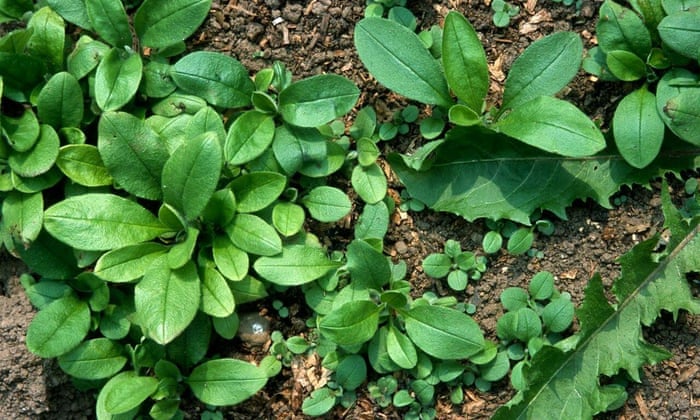
Bare, exposed soil isn’t part of nature’s master plan. How many examples can you think of where soil is naturally found bare and with no plants at all growing in it? Good examples are beneath freshly uprooted trees, landslips, or where the ground has been charred following a heathland fire. In these situations bare soil isn’t bare for long; within days seedlings begin to appear and cover the ground with a miniature green forest. In a few months’ time the scar is barely noticeable. A year later you would never know it had been there at all.

Contrast these natural examples of bare soil with those created by man: ploughed fields and freshly dug gardens and allotments are obvious examples. But, left to nature, even these vast expanses of bare soil soon turn green with a multitude of tiny seedlings. Think of those wild, overgrown allotments or that jungle-like abandoned garden – these too were once bare earth. In fields, gardens and allotments, on lawns, roadside verges and sports fields, along streets and on paths and pavements, we are constantly battling to stop weeds from growing. All we are doing is keeping the healing powers of nature at bay.

Weeds act like a kind of living “plaster” whenever soil is exposed, either by natural or artificial causes. As far as nature goes, bare soil is out. When soil is exposed to sunlight it’s not only the earthworms that quickly burrow back into the darkness. Millions of microscopic soil organisms are also exposed to the potentially harmful rays of the sun, so the sooner plant growth covers the soil over again, the better. Once you appreciate this perfectly natural reaction by nature, you start to see that weeds aren’t there to deliberately frustrate our gardening efforts; they are simply doing their job. Just as new skin forms after we’ve caught ourselves on a rose thorn, weeds help heal wounds in the earth. Look at it another way: it’s us who are causing the problem by insisting on bare, neat-looking soil – open wounds, if you like.

Left to their own devices, weeds also help to improve the fertility of the soil. They do this in several ways. Their roots bind the soil together, helping to improve its structure and create a more stable environment in which soil life can flourish. Those weeds with a deep taproot, such as curled dock, draw up plant nutrients from deeper in the ground, making them available to plants growing near the soil surface. Above ground, the stems of weeds help trap fallen leaves and other organic matter, which break down into the soil or are dragged underground by earthworms. And when the weeds themselves finally die – after weeks, months or years depending on the type of weed and its life cycle – both the leafy tops and the roots decompose into valuable humus.

Read more here.

SOUTHEND UNITED GROUNDSMAN KEN HARE REACHES SETTLEMENT WITH CLUB

Press release on behalf of: The Institute of Groundsmanship

southendProspect, the union that represents grounds staff, football officials, cricket umpires and other sports professionals, has reached a mutually acceptable agreement for Southend United’s groundsman, Ken Hare, whose employment was terminated in January.

Ken was dismissed on 21 January after Southend’s home match against Bolton was postponed because the pitch was frozen.

He contacted his professional body, the Institute of Groundsmanship (IOG) – the leading membership organisation for everyone involved in the management of sports pitches, landscape and amenity facilities in the UK - which provided support and advice, as well as his trade union, Prospect.

Prospect national secretary, Alan Leighton, represented Ken in the negotiations with Southend United’s chairman, Ron Martin.

Alan Leighton said: “The negotiations were tough, but conducted in a good and fair spirit with each side acknowledging the other’s position in order to reach a mutually-satisfactory agreement.

“The nature of the negotiations was typified by the kind offer of two season tickets for Ken as part of the arrangement. Ken gratefully accepted the offer and hopes to see Southend promoted in 2017/18.”

The terms of the agreement are confidential, but Ken Hare commented: “I am delighted with the outcome and would like to express my thanks to Prospect, the IOG and also the club chairman, Ron Martin, for helping reach a mutually-satisfactory agreement.

“Without the support of my union, I would have had difficulty resolving this without incurring the cost and stress of it potentially being determined at an employment tribunal. I would encourage all my grounds staff colleagues to join Prospect and the IOG.”

Alan Leighton added: “This was a hugely important issue for Ken and for grounds staff generally. Employees in football clubs need the support of an independent friend in the workplace because problems can arise at any time.

“Prospect was able to provide crucial professional advice and representation.”

Alan also paid tribute to Ron Martin for being proactive and prepared to compromise and reach a mutually-satisfactory agreement.

IOG director of business and membership, Tim Gray, said: “Ken’s case was a classic example of why the partnership between IOG and Prospect is so important. It shows why grounds staff should be members of both the IOG – for professional advice and development – and of Prospect, for employment advice and representation.”

About The Institute of Groundsmanship

The Institute of Groundsmanship (IOG) is the leading membership organisation representing grounds managers, groundsmen, grounds maintenance managers, greenkeepers and all others involved in the management of sports pitches, landscape and amenity facilities in the UK. As well as maintaining the IOG Performance Quality Standards and providing a consultancy service for sports grounds, lawn maintenance and amenity horticulture, the IOG’s extensive Training and Education programme includes cricket, football, tennis, horseracing, bowls, artificial surfaces, turf science and many other specialist subjects. It also stages the annual IOG SALTEX exhibition, Europe’s leading show for the open space profession. For more information visit www.iog.org

The Tories and the British People

by Michael Smith (Veshengro)

18301185_457003687969748_1515353862462350840_nNever ever has a Tory government in Britain benefited the people with, possibly, one single exception and that was the victory in the Second World War but even that is questionable. Churchill certainly was not the benevolent Daddy he is often made out to have been.

The only ones that always and ever benefit from a Tory government in Britain were and are the rich and the aristocracy. The working class and the poor have always been the victims and still are. The Tories will never, whatever say may claim, have the working class at heart.

The majority of the British people will never benefit from a Tory government in the country, and that is regardless of the fact that some, even working class, could become homeowners due to the fact that Thatcher ordered the councils to sell off their housing stock, and here especially, originally, to sitting tenants.

This sell off of council housing is what led us to the problem that we have today with the so-called housing crisis in Britain, though, in fact, we don't really have a housing crisis but an empty homes crisis. And an empty property crisis, in the latter case of properties that could become homes.

Under Thatcher the wholesale sell off of all state assets began, and not just housing stock. Utilities, railways and public transport, telecommunications and everything else, bar, at that time, the Royal Mail, was “privatized”, that is to say the assets that we created by taxpayer money, and thus are owned by the people, were sold off to capitalists, mostly Tory backers and/or foreign entities, as in the case of the utilities.

The buzzword was “creating competition” which would benefit the consumer. Yes, sure, we saw how it benefited the consumer through every increasing prices and fares. Now, under Theresa May, they have almost succeeded to sell off the National Health Service (NHS), which even Thatcher shied away from.

Even those of the middle class are headed toward the precariat, in many cases, but still they, and even many, far too many, of the working class, back the Tories and vote for them believing – why beats me – that they may have a change of heart and really will do what they say and work for all the people, especially the poor. Yes, sure they will; the day that pigs fly and the one particular place freezes over. But certainly not before that time.

© 2017

Podcast: The Call for a New Economy

Bellowing out in the songs of eco-village choirs and reverberating down city streets through the chants of the 99 percent, the call for a new economy echoes out over the dying gasps of late capitalism.

From energy co-operatives in Spain that are literally bringing power to the local level, to a small school hidden deep in the English moors that is redesigning the study of economics, to a vast coalition in North America that is challenging domination by the one percent, this episode of Upstream explores the movement for a new economy.

Our story begins in 1984, just outside of the G7 World Economic Summit in London, where a small group convened a counter summit to challenge the ideas and theories that dominated mainstream economics. We follow the ripples of this seminal event as they radiate out through the world and on into our current era of Trump & Brexit.

Read more and listen or download the podcast here.

The “Smart-Meter” may not be able to count right

by Michael Smith (Veshengro)

Smart-MeterA great majority of so-called “Smart-Meters” that have been tested in Germany and elsewhere show that those intelligent meters miscount very often, and that not to the consumer's benefit.

Not so long ago you had to – at least once a year – read your electricity and gas meter, or someone from the utility companies would come around to read the meters. Intelligent meters, so-called “smart” meters, no do that all by themselves and in many cases transmit the data to the companies direct. Tests have shown, however, that they often get their figures wrong, badly wrong even, and that to the disadvantage of the consumer. To prove that the meter reading is wrong, however, is for the consumer not an easy one.

While a small number of smart-meters metered an amount of up to 30% below actual use the great majority, apparently, metered up to six times the real usage. In other words, the majority of those will leave the consumer out of pocket, and that very much so.

According to the researchers the reason that the smart-meters measure so badly and often higher than actual use could be because they use electronics that cause interference to the mains circuitry. And all those meters, by the way, were EU approved ones.

Consumer protection organizations are ringing the alarm bells because in the next couple of years those smart-meters are supposed to become mandatory everywhere. Unless they can be guaranteed to work accurately which, at present, the apparently cannot and do not, then the consumer will not be the one benefiting at all but will be disadvantaged. But, hey, so what, its great technology and technology is the way forward.

© 2017

Local urban farm redefining farm to table

GRAND JUNCTION, Colo. (KJCT) -- Local farms have to deal with Colorado's ever changing weather.

Many farms, orchards and vineyards in the valley were caught off guard by the cold snap overnight earlier this week.

One urban farm, Rooted Gypsy Farms, that is trying to make it easier to shop local, lost hundreds of plants.

"I jumped the gun and planted a little too soon, the frost came and nipped them all a little bit and we lost over half of our crop," said Shauna Rhyne, with Rooted Gypsy Farms.

Business at Rooted Gypsy Farms is still just a seedling after all.

“October third was first delivery, so it’s still a new thing in the valley,” said Shauna Rhyne. “It kind of makes us feel like we are connected to the community, in a way that I feel good giving our product to a family.”

They use an aquaponics system for your lettuce, kale and other herbs.

“It’s all ran through the fish, they excrete ammonia, which turns into nitrate and nitrites, which the plants need to survive,” explained Rhyne.

They are all about community supported agriculture, meaning your produce comes from the soil to the kitchen.

Read more here.

Poundland Charlie Dimmock In the Garden Hand Trowel – Product Review

Review by Michael Smith (Veshengro)

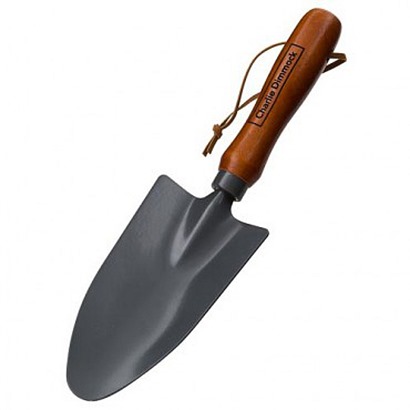
173752-1While they may call it a hand spade on the website it is a trowel for planting – well – plants and digging in more or less soft soil. It is not a spade, not even a hand spade, and thus not a tool to dig heavy and untilled soil with, not even in a raised bed, for instance.

This trowel – no, folks, it is not a hand spade – is part of the new and exclusive Charlie Dimmock range – assortment of wooden handled hand tools at Poundland and yes, it costs just one British Pound. The assortment, according to the website, includes, aside from the trowel, a “rake”, which actually is a three-pronged weeder, a hand-hoe (which has fork tines on one side and a near heart-shaped blade on the other, so it is a bit like a mattock), a fork, and a scoop.

OK, but we shall, in this review, be talking about the trowel; a review of the hoe is to follow.

While it may not be hammer forged – at least it does not appear to me that it would be – and rather stamped steel and does not have a welded on bit that goes into the handle it is quite heavy but also quite well balanced.

The “blade” of the trowel sits snug and tight in the varnished wooden handle which has a hole for a thong and has a leather one fitted even. Not the greatest quality of leather in that thong though but, hey, where is the problem there. The blade of the trowel is coated with a hammer effect paint making it, together with wooden handle and all, look very good indeed. The edge of the blade has not been ground, though, as would be the case with more expensive makes but you cannot expect Rollins Bulldog or Burgon & Ball quality for a Pound now.

As trowels go the Charlie Dimmock one from Poundland will go the job a trowel is meant to do though, personally, I might not want to use it to dig out, say, dandelions from the lawn or even out of somewhat compacted soil elsewhere, or brambles from under shrubs or such in order not to put too much strain on it. Seeing that the edge is not beveled and ground it would also be rather hard work. Would I put a bevel and a ground edge onto the “blade”? The honest answer is no.

Considering the price of just one Pound, including VAT, I cannot fault the tool and if you have to count your pennies but still want a garden trowel that you can afford – and the cheapest you will find elsewhere if metal blade and wooden handle is desired will set you back around seven to ten times that much – then this is a good choice.

For less than a tenner you can, at Poundland, get all the hand tools you will need for your gardening endeavors, as long as you do not expect battle tank strength.

© 2017

Stop Tilling Your Vegetable Garden!

Don't Till Garden

I get why you till. There’s something in all of us gardeners that leaps with joy when we see a freshly tilled bed. That rich, dark, blank canvas beckons us to come on over and work our vegetable magic. We imagine ourselves gently planting a seedling in the fluffy soil with no straining or digging necessary.

But, garden fantasies aside, tilling the garden every year is a terrible idea in practice. Not only are you destroying the soil structure, creating a hard pan, and bringing weed seeds up to the surface – you’re also creating more work for yourself.

Inevitably, within a few days of tilling there will be a torrential downpour that completely erodes and compacts your freshly tilled garden. It’ll look like a war zone of flattened, soil splattered plants with a depressing system of rivulets running everywhere.

Read more here.