Environmental psychology

By Michael Smith (Veshengro)

Environmental psychology is a a somewhat fascinating, and rather interdisciplinary, “science” focused on fostering a greater understanding of the interplay between human beings and their environment.

The term “environment” is being defined in this field rather broadly; it can include natural environment, designed and built environment, and learning, social and informational environment.

It is believed that protecting, building and creating a “preferred environment” increases a sense of wellbeing in a human being and facilitates behavioral effectiveness.

The questions that is being addressed by environmental psychology are these: Do our homes, offices, places of work, and public spaces (including our streets) make us feel peaceful, happy and sheltered? Do they feel like the safe havens they are meant to be? Are they calming, sustaining, mood-elevating and strengthening?

All of this is attainable, and can be made possible and feasible, in our homes and offices, our schools, and public buildings, with natural ventilation, the proper lighting, with plants, color, shapes and views.

In public spaces, when it comes to some aspects, other things come into play and for that purpose police and municipalities conduct so-called environmental visual audits (EVAs) from time to time in order to get the feel and then to see how improvements can be made and where.

Looked at it from a greater perspective, environmental psychology is about our relationship with Mother Earth.

There are many different theories as to why we, as a species, and the only one for that matter, have found ourselves seemingly intent on destroying our own Planet. We are the only species that has the capacity to do so if we continue on our merry way.

Some environmental psychologists believe that when we left our tribal way of living and life, many centuries and more ago, we were separated from our mothers far too early in life.

This act, under this theory, has led us to experience premature separation from the mother at the same time as we were being isolated from the natural world.

This abrupt disconnection, the theory holds, has led us to suffer a post-traumatic stress disorder. Underlying this hypothesis is the belief that feeling connected to the natural world is an essential component for proper maturing and responsible behavior toward the environment.

Others in the field of environmental psychology hold that we, as a species, are suffering from a “disassociation syndrome”. While this syndrome is similar to PTSD and even multiple personality disorder, this thinking is based on a belief that many, if not most, people (today) are no longer able to respond properly and appropriately to the natural world.

The complex causes, as argued by those who advocate this particular theory, involve advertising, economic systems, politics and our schools and institutes of higher learning, all of which, so it is reckoned, reportedly have “disassociation” built into their fabric.

Yet another theory is that humans may just be suffering from a form of collective amnesia. We have forgotten, so the advocates of this theory, about our inherent link to Nature and the lessons of our forefathers.

Another reason, and as far as I am concerned, and probably the main one, is that in the three Abrahamic faiths, especially Christianity, we are being taught – basically - that we are the masters over creation, over the natural world, and its resources.

This got further “enhanced”, so to speak, by the “scientific” revolution that caused us to become more and more detached from Nature.

Over the years – centuries by now – man has developed the attitude of fighting Nature, but this will never work, for the day that we win that battle we have lost.

Another big issue as far as Christianity is concerned is, and all arms of the church are equally guilty, though the Roman Church and Protestantism probably more than Orthodoxy, and that is the way they dealt with people who sought closeness with Nature.

Those that sought a close relationship with the Earth have been persecuted as heretics and as witches and people have been told that they must not “worship” Nature, at pain of death more often than not.

It is, therefore, together with other aspects, no wonder that we, as a species, have become so disconnected from Mother Earth. We have been taught, over centuries, that regarding Nature as anything but something to be used and taken from as heresy and that it can get you killed.

In fact, if wed do not reconnect with Mother Nature that will get us killed, and even some in the Abrahamic faiths begin to understand that; slowly only ion some cases but...

we must learn – once again – the way of Nature and to live in harmony with Her and to honor Her as Mother and Giver of Life and not fight against Her like naughty children.

© 2011

A Tree for Life Not Just for Christmas

With over 6* million Christmas Trees dumped outside on the streets each year, and 976,000** of those in London alone simply being thrown away, it is never too early to start thinking about how we can be more environmentally responsible this festive season.

In an era of "reduce, reuse and recycle", the Ideal Home Show at Christmas is teaming up with the Little Tree Company to offer a unique, ‘Christmas Tree Hire Scheme’; a new way of hiring and recycling your Christmas to help reduce waste from your home this year.

In partnership with The Little Tree Company, the Ideal Home Show at Christmas will create a 1001 strong Christmas Tree snowflake shaped maze, offering beautifully pruned and potted Christmas trees that you can select to annually hire over the Christmas period, for the same price as a normal cut tree.

Once at the end of the Christmas period, the tree can then be collected by the Little Tree Company in the New Year and re‐planted to be rented out again the following Christmas, making perfect wildlife habitats over the rest of the year.

Once the tree finally grows too big for the home, The Little Tree Company will plant it out where it can grow into the towering giant it aspires to be, creating beautiful woodlands and habitats for Britain’s wildlife and find a final resting place in a variety of community locations from schools to nursing homes.

Figures show that only 10% of the UK’s 6 million Christmas Trees are recycled each year for composting and wood chipping. The rest goes into landfill - a wasted opportunity to create biomass that could provide nutrients for depleted soil.

Unlike normal Christmas trees, these especially grown and pruned rental trees don't cost the earth and use the most eco-friendly and sustainable growing methods available.   Every Christmas tree recycled by this scheme will save one cubic yard of landfill space per tree, with each re-planted average tree then absorbing approximately 1 ton of carbon - that’s around 10% of your annual carbon footprint.

Unlike standard cut trees, these recycled pot grown trees won’t die whilst on display, nor will they drop all of their needles like cut Christmas trees do, meaning they last longer and look fresher for the whole Christmas season.

Lee Newton, Managing Director of the Ideal Home Show at Christmas, commented: “It is always a bit heart-breaking to see bare bristled Christmas trees dumped and discarded along the streets every January, so we are proud to be able to offer our visitors an alternative way of purchasing and recycling their Christmas trees this year.

“Not only will we help offset their home’s carbon footprint, but this initiative will help reduce the domestic  waste created by Christmas trees, whilst allowing the trees to live on beyond the holiday season as they are replanted and reused year after year,  or rehoused in communities and more permanent locations.”

Visitors to this year’s show will be able to enter the maze and reserve their very own tree from a variety of 3 different species in a range of sizes from mini 2ft trees right up to 7 footers.

Once you have selected your tree it will be reserved and delivered to your door just in time for the Christmas period. This service costs from as little as £29.95 and £16.95 for the delivery and collection, so you won’t have to worry about where to get rid of the tree after Christmas, saving on your domestic waste.

In addition to this eco Christmas tree rental service, The Little Tree Company will also be offering an eco-decor service, where they decorate the trees with a range of dried fruits, spices and flower heads all sourced from nature’s craft cupboard, as well as a range of eco gift ideas which include Botanical Beverages and Gourmet Woodland Mushroom Logs.

So like you might already do with your cards, your wrapping paper and your empty bottles ,do your bit for the environment and recycle a living Christmas tree with The Little Tree Company rental scheme.  Come with the whole family and pick your own tree for hire at The Ideal Home Show at Christmas, from the 16th to the 20th November at Earls Court.

The Little Tree Company: The Little Tree Company hires out specially pot grown and pruned Christmas Trees delivered directly to your door for the price of a cut tree. They are then collected from your doorstep in the New Year. Once back home, the potted trees are maintained again until the following Christmas, making perfect wildlife habitats over the rest of the year. Once the trees finally grow too big for houses they find their final resting places planted out in a variety of community locations from schools to nursing homes.

Graham Willett of The little Tree Company talks you through how to have a beautiful tree that doesn't cost the earth, from what to look for, how to recycle and re-use your tree if you already have an artificial or cut tree, or better still, how and why to rent a tree this Christmas. Watch charming decorating ideas take shape all using materials and decorations from sustainable sources, available to make and buy at our Christmas Trees to Rent winter wonderland feature at the show.'http://www.thelittletreecompany.com/

Ideal Home Show at Christmas:  The Ideal Home Show Christmas will run over five days, from the 16th – 20th November at London’s Earls Court, based on the same format as the London and Scotland events, including the brand’s flagship zoned areas that include; Ideal Home Improvements, Food, Interiors and Woman sections, but featuring a Christmas twist and with more Gadgets, shopping and gifts for all the family, in time for the busiest retail shopping period of the year.

Media 10 Ltd: Formed 6 years ago, Media 10 is a privately owned publishing and events company based in Loughton, Essex. It currently employs approximately 150 staff and has fast become one of the leading players in the events industry as a result of the hugely successful Ideal Home Show and Grand Designs Live exhibitions.

Other events in the portfolio include the Duke of Essex Polo Trophy – now one of the largest attended polo matches in Europe; Clerkenwell Design Week, Britain and Ireland’s Next Top Model, The London Design Trail; The Milan Design Trail and the Grand Designs Awards.

Media 10’s award-winning magazine portfolio also includes icon magazine, the leading international architecture and design magazine; Grand Designs, the magazine of the leading property program on Channel 4; The Selfbuilder, a monthly resource for anyone looking to refurbish their home.

Source: Stuart Higgins Communications on behalf of Ideal Home Show at Christmas

This press release is presented without editing for your information only.

Full Disclosure Statement: The GREEN (LIVING) REVIEW received no compensation for any component of this article.

Plastic bottles and the lack of recycling

By Michael Smith (Veshengro)

Americans use four million plastic bottles every hour but only about one bottle out of four is being recycled.

This is just another proof that plastic bottles, whether they contain water, soda, or whatever else, are simply not sustainable and never will be.

However, the weirdest thing is that even some greenies say that plastic is better than glass, as, being lighter, plastic bottles have smaller carbon footprint when it comes to shipping. But that is also the only time they may win.

As far as I am concerned let's cut that crap – pardon my French – and look once again properly at the glass bottle and not from the point of recyclability. That is not the point and issue. Let's look instead at reuse and return for reuse, and let's also, as during WWII, all bottles and jars in that.

Curbside recycling, in many places in the UK, as far as I have seen, is but a farce and a sham. When all colors of bottles and jars are dumped in the same hopper then that glass, now broken and mixed, either goes into landfill or, if we are lucky, to be ground down into road building “sand”. That is a waste on both counts.

Until broken a bottle or a jar can be reused again and again ad infinitum and unless they are broken they should not, ever, go for recycling. Instead they should, as used to be the case, go back to be cleaned and refilled. It has been done before and must be done again, and it must be done NOW.

Every time that we deliberately break a bottle or a jar to be recycled we waste raw materials and energy that were used to make that bottle or jar.

Now we have also ended up with supermarkets, such as Sainsbury's, who decide, claiming it to be a “green” move, to put all their peanut butter now into plastic jars. Better for the environment, they claim, as lighter than glass jars. Real truth... better for them as far as transportation costs go. Nothing green about it.

We seem to have gone mad...

© 2011

It’s quite easy being green (at home and elsewhere)

By Michael Smith (Veshengro)

“It’s not easy being green,” Kermit the Frog always laments. But it does not have to be a struggle going and being green. On the other hand there will be times when “green” may not be the option, as far as purchasing goes, and you should not get disheartened then either.

However, the idea was, in the good ol' Hippie days, that going green actually would not cost you anything but save you money. Somewhere along the line and over the decades this precept seems to have gotten lost and nowadays green is big business and greenwash abounds.

The first thing we must get away from – and it also will save us money – is the trap of advertising and the belief that we NEED this or that, and we are presently getting the same thing as regards to being “green”.

Everywhere, on the Internet and elsewhere, we are being told that this or that “green” product or gadget will make us more “green” but we must ask as to whether it really does.

The truth is that, more often that not, sticking with what we have got and, in other cases, making do, mending and making ourselves, is the answer to going and being “green” (at home and elsewhere).

Many people, especially those in the lower income brackets see “going green” out of the league as they see it as something that they cannot afford and as only something that the richer ones can do.

However, going green should not cost; the opposite rather. It should save you money. If it is expensive then there is something wrong somewhere.

Kermit, though he did not mean to, expressed the perception that the great majority of working class people have as to going green. They see it as difficult and as expensive; as something that they cannot afford to do. But, as I have said before, that is not the way it is supposed to be.

When I make my own tooth powder from a few ingredients such as salt (and no, it does not have to be expensive sea salt), baking soda (bicarbonate of soda, as it is called in Britain), and an essential oil or two such as tea tree and oil of cloves, then I do save in comparison to non-fluoride toothpaste.

When I make my own cleaners using vinegar (and once again it does not have to be the expensive distilled kind) and this or that natural ingredient, such as lemon juice, etc. I am again saving money.

In both cases I am also friendly to the Planet and to my health.

Other cases where being green should also help the wallet is by turning off unnecessary lights and appliances though, in some cases the savings may not be as great as claimed by some people. Nevertheless, a light bulb that does not needlessly burns, or an appliance that is not needed to be on turned off, is good on all counts, and for some people, like myself too, every penny counts.

When I reuse paper that has been printed on only one side either for printing something else on it, or as a notelets or to make notebooks from then I am saving myself money and also don't have to buy paper for the purpose which I need it for.

People have said to me: “but you can buy a notebook for a Pound or less.” That's fine but every pound I do not have to spend on a notebook – as I use lots of them – is a Pound Sterling saved, and also some trees saved, in a way.

There are so many things that you can do to go green that cost nothing and that bring you savings too. One day, I promise, I'll write a book about that all...

In fact, I have done one already but it needs revising a little maybe and it is available here...

© 2011

How green is your laptop?

The world's most sophisticated ethical ranking site publishes new laptops buyers' guide

Ethical Consumer magazine has published the world's most comprehensive green and ethical buyers' guide to laptops and netbooks.

The buyers' guide ranks 26 leading IT brands across 23 ethical and environmental categories and presents them in a simple ranking format. The unique twist is that web users can customise the rankings to accurately reflect the issues that they personally feel passionate about.

The result is that for the first time consumers can easily identify and support those companies whose green credentials they agree with and avoid the companies that are falling behind on the green agenda.

The buyers' guide key findings are:

  • Only two companies score top marks for environmental reporting (Sony and Toshiba)

  • Only one company scores best in the habitats and resources category (Dell)

  • All companies score negatively in the pollution and toxics category

  • Thanks to the work of NGO's and civil society groups, the overall transparency and reporting on social responsibility issues is improving, albeit inconsistently, across the sector

All companies score negatively in the pollution and toxics category.

Thanks to the work of NGO's and civil society groups, the overall transparency and reporting on social responsibility issues is improving, albeit inconsistently, across the sector.

Tim Hunt from Ethical Consumer said: “This buyers' guide shows that the market for laptops and netbooks is littered with serious problems both environmental and social. Consumers need to let IT companies know that they must do better. Ultimately we need to see far more action from the companies themselves to improve their ethical performance.”

To celebrate the launch of their new website Ethical Consumer is giving away this new buyers' guide free of charge including detailed access to the research that underpins the data.

The buyers' guide includes information on all the major current issues in the IT market: conflict minerals; toxic chemicals and supply chain and environmental policies.

The newly re-launched Ethical Consumer website is now the UK's biggest online resource for people wanting to reduce the environmental and human impact of their shopping.

It has over 180 free online buyers' guides on a wide range of everyday products and services from bread to banks.

The new site also has the UK's most comprehensive consumer boycotts resource including the only available online list of current consumer boycotts.

Ethical Consumer Rob Harrison editor said: “At Ethical Consumer we understand that different people bring different values to the market. Some people are heavily involved in animal rights issues whilst other are not. That's why we've developed a number of cutting-edge website tools which we believe make for the world's most sophisticated on-line ethical rating system.”

The laptop buyers' guide features new research from Ethical Consumer as well as research from a number of key NGO's including Greenpeace and the Enough Project.

The buyers' guide to laptops and netbooks is available here: www.ethicalconsumer.org/Laptops

Launched in 1989 Ethical Consumer is the UK's leading ethical and environmental magazine. In each issue Ethical Consumer examines the ethical and environmental record of the companies behind everyday products and services from bread to banks. For more information visit the Ethical Consumer website: www.ethicalconsumer.org 

This press release is presented without editing for your information only.

Full Disclosure Statement: The GREEN (LIVING) REVIEW received no compensation for any component of this article.

Livinggreen Centre launches

By Michael Smith (Veshengro)

377356_38_preview Saturday, November 5, 2011 will see the launch of the National Trust's Livinggreen Centre at Morden Hall Park.

Come along to the opening of the exciting new visitor centre in the stable yard at Morden Hall Park and see how the National Trust has renovated this 19th century stable block to become one of the most energy efficient historic buildings in Britain.

There will be an interactive exhibition, free craft activities, a chance to do some Christmas shopping at the new craft stalls and the opportunity to be inspired to live more sustainably.

When

Saturday 5 November, 12-4pm

Where

The stable yard, Morden Hall Park, SM4 5JD

Pubic transport

Nearest Underground Station: Morden (London Underground)

Many bus routes serve Morden Station and also the Morden Hall Park more or less directly.

Website: www.nationaltrust.org.uk/mordenhallpark

See you there...

Photo copyright © National Trust

© 2011

Coca-Cola Plant Bottle = Greenwash

By Michael Smith (Veshengro)

plant bottle coca-cola Coca-Cola has made a great hullabaloo over its so-called “plant bottle” but that bottle is nothing but lies and a way to mislead the consumer.

On the official promotional material and the stands in the shops for the “plant bottle” Coca-Cola proudly declares as follows:

Up to 22.5 percent plant material, up to 25 percent of recycled plastic, as ingredients for the bottle. This equals 100% greenwash for well over 50% of the bottle are still made with (virgin) PET-plastic.

Coca-Cola also claims that the bottle is 100% recyclable but this is something that also does not compute and ring true as there are so far no plants on-stream that can handle that kind of mixed PET.

Somewhere along the line here this is false advertising, if not worse even, and the various standard agencies should give Coca-Cola a serious rap on the knuckles if not more. A good solid spanking might be called for and in order.

To call it “plant bottle” is not just greenwash and misleading but outright dishonest. The consumer is being conned yet again.

Let's boycott Coca-Cola, at least until such a time that they apologize and rectify things.

© 2011

CIWEM CALLS FOR BROWNFIELD FIRST

By Michael Smith (Veshengro)

Greenbelf or brownfieldGreenbelt land or brownfield site?

The Chartered Institution of Water and Environmental Management’s Contaminated Land Network has expressed relief that Greg Clark MP has confirmed that the Government will not do away with the current, forward thinking and sustainable policy of building on brownfield sites before open greenfield land.

In the draft National Planning Policy Framework, currently being consulted on, the intention is to remove detailed planning guidance and withdraw and replace PPS23 (and its Annex 2) on Planning and Pollution Control by a short and focussed note.

This direction aroused suspicion that the NPPF is a sop to the development lobby who can profit more from greenfield sites and to lawyers who will pounce on the lack of clarity for more appeals, challenges and inquiries.

Brownfield-first policies are eminently sensible and far better than allowing a developer-led free for all on greenfield sites. We have a legacy of brownfield land in this country and we need to ensure that there is sufficient legislation and guidance in place to protect against a massive potential increase in inappropriate and unregulated redevelopments.

Recently the planning minister Greg Clark conceded that the NPPF used a different phrase, "land of least environmental value" rather than brownfield. He added: “It was never my intention, and it certainly was not the Government’s intention, to depart from the obviously desirable situation in which derelict land should be brought back into use”. CIWEM welcomes this statement and urges the brownfield first policy to be carried into the final version.

Gary Winder, Chair of CIWEM’s Contaminated Land Network, says: “There is a current presumption to use brownfield sites first and this must be clearly spelled out in the final National Planning Policy Framework. Using previously developed sites has many significant recognised benefits - addressing neglected and disused land, recycling land back into sustainable use, improving the environment by addressing contamination issues and helping to enhance and regenerate local communities. It is essential that the opportunities and importance of regenerating brownfield land are recognised in the final policy document”.

It is, however, at times rather funny what, according to some councils and planning authorities was greenbelt land and which was not, such when a former scrapyard in Essex, with an (illegal) traveller site is declared a greenbelt site, while some greenbelt sites, when they want to put something there, is declared a former brownfield site. Time we seriously had a level playing field for all.

When it comes to development of housing, offices, etc., certainly brownfield sites should always be the first chosen and they then should also not be declared as greenbelt sites when one wants to object to a development, even for a private traveller site.

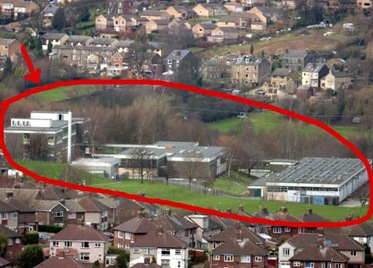
In Sheffield the go ahead was just given in the middle of October 2011 to build a housing project on the site of a former college campus which also, for some strange reason, was declared by everyone bar the council, as greenbelt land. You cannot greenwash brownfield into greenbelt, but this is what some try to do.

We must keep the distinction clear as to what is brownfield, namely land that once had been built on, and what is greenbelt.

Yes, you can green former industrial sites quite nicely as our old railroad tracks and converted factory sites show but they are not, when they became vacant, suddenly greenbelt land.

The truth is important, also in these matters, and homes are needed too.

© 2011

Air quality: the UK's invisible health crisis

The government appears to be disinterested in the UK's pollution problem, which cuts short thousands of lives each year

By Michael Smith (Veshengro)

It's an invisible health crisis which causes thousands of premature deaths in the UK every year. It can lead to asthma, reduce lung capacity and trigger heart attacks. And our country's failure to adequately address the issue has forced the European commission to take legal action against us.

While everyone keeps talking about GHG emissions and all that jazz the worst ones are being ignored, namely the general air pollution. It is worse for humans and the rest of the environment than the rest of all the things.

Not much good to have a cool Planet when we have all but died out because of air pollution and polluted soil and water, the latter two which are often relkated to the first one.

Yet if the disinterested performance of the Department for Environment, Food and Rural Affairs (Defra) minister Lord Henley at an environmental audit committee hearing last week is anything to go by, the government still just isn't that bothered about the UK's pollution problem.

The committee hearing, which coincided with the 55th anniversary of the 1956 Clean Air Act – introduced in response to the "great smog" over London which killed 4,075 people – saw the minister grilled by MPs on his department's inability to get to grips with air quality.

The government's lack of urgency is surely compounded by the fact that the current threat in the air we breathe is far less obvious than the looming smog clouds of the 1950s. At a previous committee session, Prof Frank Kelly of the environmental research group at King's College London warned us that "we have this new problem that we cannot see: it is tiny particles of nitrogen dioxide." But the health impact of poor air quality in the UK, which is among the worst in Europe, is clear for all to see.

Kelly estimates that about 30,000 people died from air pollution in Britain in 2008, with individuals "losing on average three years of their life."

Road traffic emissions are still the primary culprit, due to the quantity of particulate matter (PM10) and nitrogen dioxide (NO2) – and also due to the way in which traffic permeates our towns and cities. Pollution from vehicles is released directly into our streets at a low height level, where it has little opportunity to disperse before being inhaled by those who live and work in heavily populated urban areas.

It is being estimated that the traffic emissions of those nigh nano-particles will be getting worse should we decide to have full bio-diesel usage. Some estimate that the nano-particles from bio-diesel would be many times worse – op to 40 times – than those from actual petroleum-based diesel.

However, some of the biggest polluters, and hence the problem in the South of England and around the coastal areas, is in fact shipping, and the ever bigger container vessels, that are putting out the equivalent of thousand times that of all the vehicles on our roads at any given time.

Also, that pollution, even if emitted over the seas, does not remain over the oceans but, will, at some stage, make landfall.

This points once again to the fact that we either need to put in filtration systems into the exhausts and chimneys or we must find another way of doing things.

Unfortunately, the way things are going, I cannot see the government(s) having the political will to enact legislation to clean this up and neither can I see anyone else doing anything about it.

Luck might be on our side in due course when, finally, petroleum products simply become too expensive for the masses to use. Then our air may, eventually, get sorted out again. But, until then, I should guess the cases of asthma in children and adults and other respiratory ailments, as well as allergies, will be increasing.

London's great smog had little to do with automobile fumes in those days back then but everything with the use of (dirty) coal. It was visible because of the high sulfur content.

The pollution from motor vehicles, especially today, is not that visible, if at all. And while the lead has been taken out of gasoline, and thus doing away with the metal taste that was left in your mouth when you had spent a long day in London or such the pollution is still as acute, if not even more so.

Time we cleaned up out act, and the only way to do that is to get out of our cars and walk and cycle more, aside from political will and forcing scrubbers to be put into exhausts and chimneys.

© 2011

Has the Rapture been canceled?

By Michael Smith (Veshengro)

Harold Camping best goes as his name suggests...

harold-camping-false-prophet-sets-new-date-october-21-2011Once again, the world failed to end, despite a high-profile prediction from a radio preacher in California.

On Friday, October 21, 2011 was, according to the founder of Family Radio, Harold Camping, the End of the World, postponed from six months ago, was, definitely, going to occur. It would appear, however, as if, once again, nothing happened.

The deadline came and went … once again, just like the one six months ago, and nothing happened. On Camping’s Family Radio website, the event … or non-event, as is the case, is not even acknowledged. No statement has been forthcoming from the group – despite the fact that a small earthquake, 4.3 on the Richter Scale, occurred in nearby San Francisco. There was no reported damage – a far cry from the total destruction of the universe Camping had been forecasting, twice by now, and Mr. Camping is not issuing any statements.

I presume he will be coming up with a new date shortly, claiming again that G-d has decided to walk the Earth a little longer to gather his sheep, as he claimed, Camping, not G-d, the last time round.

So far there have been no reports of millions of the faithful being caught up in the Rapture, to meet the returning King of Kings in the air, and no one has, so it seems, the Four Horsemen of the Apocalypse galloping through the streets either.

Harold Camping is just simply wrong, again. And that’s not a big surprise, for sure. Anyone who still even gives such a “prophet” any credence has only got him- or herself to blame.

The Rapture is not even mentioned in the Scriptures but is something made us from some snippets of text here and there of the Bible.

Jesus wept! And yes, that is in the Bible and He probably is right now over all the gullible people who think that Camping and others can interpret the signs.

The message was to be vigilant as no one knows the time and the hour, and that includes Camping and neither is there to be any Rapture though there might be some ruptures happening as regards to Mr. Camping and it is, I would suggest, high time that some of his followers went to court and sued him.

© 2011