Showing posts with label seeds. Show all posts

Grow Your Own still on the rise

Grow Your Own still on the rise as seed firm reports strongest ever start to retail year

Seed and plant specialist Thompson & Morgan is predicting the best ever year for grow your own following a sharp rise in vegetable seeds sales for the 2016 season.

The Thompson & Morgan seed retailing year runs September to September. The Ipswich based mail order expert has reported an impressive 24 per cent rise in seed sales through September to end of November 2015, compared to the same period in 2014. While flower seed sales remain strong it is vegetable seed that has driven the increase.

Interest in grow your own hit an all time high in 2009, when industry wide sales of vegetable seeds peaked at an historic £60million for the year. Some said the bubble would soon burst but Thompson & Morgan customers are showing no sign of giving up on the good life. Thompson & Morgan Horticultural Director Paul Hansord says if vegetable seed sales continue to perform at current levels then the firm will be reporting its best ever year for the category.

Tomato seeds sales have jumped 51 per cent in the three month period. Much of this growth has been generated by sales of Thompson & Morgan’s Vegetable of the Year for 2016 – Tomato Mountain Magic, a fully blight resistant variety ideal for a trouble-free late season outdoor crop. Akron and Sweet Aperitif join with blight buster to form T&Ms top three tomatoes.

Brassica seed sales have risen 52 per cent, while onion seeds have seen an impressive growth of 67 per cent. T&M says the loss of show bench favourite Onion Kelsae from other retailer’s 2016 catalogues (the Italian seed crop was destroyed by a hail storm and will not be available again until at least 2017) has driven growers towards other large varieties including Onion Bunton’s Showstopper, an exclusive show bench variety developed by one of Thompson & Morgan’s customers. Pea and Bean sales have risen 82 per cent, with Runner Bean Firestorm - the 2016 Thompson and Morgan Seed Catalogue cover star - alone seeing a 75 per cent rise in sales.

Thompson & Morgan’s Chilli and Pepper range has seen the biggest growth, with sales rising a staggering 111 per cent. This has been driven by a complete overhaul of the category for 2016. Paul said: “Much of our product development focus has been on making growing from seed as easy as possible. Our redesigned sweet and hot pepper range does away with the complicated Scoville Heat scale. Each variety has been given a 1-10 heat rating, from cool & sweet to explosive, allowing gardeners to make a quick informed decision on which varieties are right for them.

Thompson & Morgan is also helping veg growers to take the guesswork out of crop timings in 2016 with All Season Vegetable Collections. Each packet contains at least three top- performing varieties of the same vegetable that can all be sown in one hit but will crop at different stages to give the longest harvest window from a single sowing. The All Season Mange Tout Pea collection for example contains Oregon Sugar Pod, Sweet Horizon and Kennedy for a 16 week harvest from June through to October, while the All Season Leeks collection provides a massive 36 week crop window from August through to the following April.

Thompson & Morgan has a long history as market leader in the mail order supply of seed and young plants, direct to gardener’s doors since 1855. Its award winning website and seasonal catalogues have undergone a massive product expansion through 2015, now listing 10,000+ items covering most areas of garden supply, from sheds, greenhouses and mature plants to garden machinery, composts, fertilisers and hand tools.

Despite this, Paul says Thompson & Morgan remains committed to offering the best selection of garden seeds on the market. He says: “Seed sowing is economy-proof, remaining core to our customers’ garden experience in both good and bad years. Nothing beats the satisfaction of nurturing a seasonal crop from plot to plate, especially when you can make a huge saving against supermarket produce and slash your weekly spend.”

Source: Thompson & Morgan

This press release is presented without editing for your information only.

Full Disclosure Statement: The GREEN (LIVING) REVIEW received no compensation for any component of this article.

Grow Your Own Mushy Peas From Suttons

Mushy peas? Mmmmmm ... yes please!!

Ah yes, nothing like a bag of chips and some mushy peas on a wet winter night to warm the cockles of your heart. The Suttons team know all about fish and chips coming from sunny Devon and they have decided to bring a little bit of the seaside to your garden!

So if you fancy growing your own mushy peas … just like the ones from childhood trips to the chippy. Look no further than Suttons new Pea ‘Maro’. This premier ‘marrowfat’ variety is ideal for making your own mushy or as some proper old Devonians call them ‘soapy’ peas. Harvest your peas when the pods are fully dry and mature and the peas are hard and firm. Peas can also be soaked for stews and casseroles. These little beauties can also be eaten fresh when the pods are young - although the peas are less sweet then most garden varieties they do have a distinctive savoury taste.

Sow from March for delicious peas from May.

  • Makes perfect mushy peas
  • Harvest when peas are hard & firm
  • Rehydrate for stews & casseroles

Packet of 300 seeds costs £2.79


Suttons Mushy Peas - Just Like One From the Chippy

Source: Suttons Seeds www.suttons.co.uk


This press release is presented without editing for your information only.

Full Disclosure Statement: The GREEN (LIVING) REVIEW received no compensation for any component of this article.
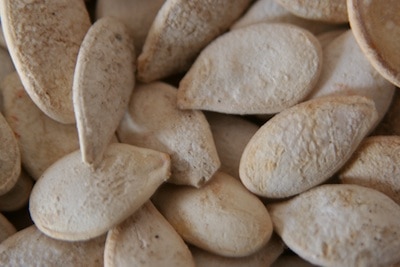
Collecting and saving seed

Collecting and growing seed is a cheap way to get new plants. It’s also easier than you might think and few activities bring more pleasure than raising your own flowers at home.

The key to seed saving is to emulate nature as far as possible. Collect your seeds just before the plant is about to shed them. This doesn't involve hanging around decaying plants and waiting for seed heads to pop, but just keeping an eye on things.

As the plant begins to dry and turn brown, the seeds will be ripening so you should place a paper bag over the top of a flower head, cut the stem and invert the whole thing.

Tie the bag at the top before putting it somewhere to dry – hung from a the roof of a garage with good ventilation, for example. Check the bag after a few weeks and you should find seeds in the bottom of the bag. If not, you can give them a helping hand by rubbing or shaking the seeds out of the dry pods or seed heads.

Read more here.

Free Seeds and Plants: 6 Ways To Get Them for Your Garden

Gardening can be a pricey hobby, but it doesn’t have to be. Savvy gardeners have ways of increasing their collections without emptying their bank accounts. Let’s look at six economical ways to get more seeds and plants for your garden.

1. Propagate Your Own Garden Plants

If you have time and patience, propagating your own plants is the best way to get exactly what you want at a fraction of the cost of a full-grown plant. For home gardeners propagating includes growing plants from seeds, cuttings, or divisions.

Annual flowers and vegetables are easy to grow from seed at a fraction of the cost of buying starter plants. In fact, many do better when started from seed sown right in the ground. Taking cuttings involves cutting a piece of stem, putting it in a pot with a light soil or soilless mix, and keeping it moist until it grows roots.

You can divide most perennials and many shrubs by separating sections of roots and stems and planting these divisions in the ground.

Read more here.

Just How "Legal" Are Seed Libraries?

After the Pennsylvania Department of Agriculture cracked down on a community seed library, hundreds of seed libraries in the U.S. are suddenly wondering if they are breaking the law. According to PA regulators, in order to give out member-donated seeds, the Simpson Seed Library in Cumberland County would have to put around 400 seeds of each variety through prohibitively impractical seed testing procedures in order to determine quality, rate of germinability, and so on. The result of the PA crackdown is that the library can no longer give out seeds other than those which are commercially packaged.

Quite ironically, this is in the name of “protecting and maintaining the food sources of America.” In this news article that went viral, regulators cited, among other things, that “agri-terrorism is a very, very real scenario.” In reality, seed libraries have emerged in an effort to protect our food sources and to ensure access to locally adapted and heirloom varieties. The public’s access to seeds has been narrowing ever since 1980, when the Supreme Court ruled that a life-form could be patented. Since then, large seed companies have shifted away from open-pollinated seeds to patented hybridized and genetically-engineered varieties. The companies generally prohibit farmers from saving and replanting the seeds, requiring that farmers buy new seed each year. In response to this trend, seed libraries give members free seeds and request that members later harvest seed and give back to the library in the future, thereby growing the pool of seeds available to everyone.

Seed Law Basics

It’s important to set the record straight about the legalities of seed libraries. Let’s begin with the basics: In every state, there are laws requiring seed companies to be licensed, test seeds, and properly label them. At the federal level, there is a comparable law governing seed companies that sell seeds in interstate commerce. All of these laws exist for good reason: If a tomato grower buys 10,000 tomato seeds, the grower’s livelihood is on the line if the seeds turn out to be of poor quality or the wrong variety. Seed laws, like other truth-in-labeling laws, keep seed companies accountable, prevent unfair competition in the seed industry, and protect farmers whose livelihoods depend on access to quality seeds. The testing and labeling of the seeds also helps to prevent noxious weeds and invasive species from getting into the mix.

In some states, the licensing, labeling, and testing laws only apply if you sell seed. In other states, such as California, the laws apply if you even offer seeds forbarter, exchange, or trade. How do you define words like sell, barter, exchange, and trade? And how do they apply to seed libraries? Read on if you are ready to venture into interesting legal grey areas.

In at least one state (yup, Pennsylvania), even supplying seeds make you subject to at least some regulation. But the Pennsylvania seed law is about to be put to the test, and we think that regulators should have read their law more carefully.

Read more: http://www.resilience.org/stories/2014-08-12/just-how-legal-are-seed-libraries

Europe is committed to the criminalization of old varieties of seeds

by Michael Smith (Veshengro)

Despite the fact that they stated when everyone went up in arms against this new proposal that home growers would be, for the time being, exempt from this legislation about seed registration it would appear now that the recent confirmation by the European Court of Justice has changed the game again and the compulsory registration of all seeds in the Official catalog will also apply in that case.

A new law, called the “Plant reproductive materials law”, introduced by the European Commission, a body that has not been elected by anyone, remember, now makes it illegal to “grow, reproduce or trade” any seed of vegetables was not "tested, approved and accepted" by the new European “EU Plant Variety Agency”, and that includes giving seeds away for free or swapping.

The aims of the “Plant reproductive materials law” is to make all plants and seeds the virtual responsibility of government and only the real big companies can afford the thousands of Euro required to register each and every plant and varieties thereof.

Home gardeners, allotment holders and such like, who grow their own plants from seeds not listed would be considered criminals under the law. In fact, even collecting seeds from your own plants and using them is, under the legislation, as it stands, a crime.

According to Ben Gabel, the director of natural seed that grows heirloom vegetables, this legislation will put an end immediately to the professional development of vegetable varieties for home gardeners, organic farmers, and the small market gardeners. Home gardeners have really different needs – for example they are gardening by hand, do not have computers and are unable or unwilling to use chemical sprays. There is no way to save the varieties suitable for home use because they do not meet the strict criteria of the “EU Plant Variety Agency”, which deals only with the approval of the type of seed used by industrial farmers.

Virtually all plants, vegetables, seeds and gardeners will be finally registered by the governments and the European Union.

Pursuant to paragraph IV of the proposed EU law on the registration of varieties in national registries and the Union: Varieties in order to make them available on the market throughout the Union, will be included in a register or in the Union a national registry through a process of direct application by the EU Community Plant Variety Office (CPVO).

Gardeners and growers will also have to pay a registration fee to the EU bureaucracy to record their seeds, and those fees are in the thousands of Euro per individual variety.

According to the proposed legislation, the competent authorities and the CPVO would levy a fee for the processing applications, formal and technical examination, including audits, variety denomination and maintenance of varieties for each year for the duration of the recording. And the only ones that can afford such exorbitant costs are the big agri-businesses who have been lobbying the EU hard (cash in hand), such as Monsanto, Astra-Zeneca, Bayer, DuPont and a few others.

A bureaucracy gone crazy (but then again, nothing new here as far as the EU is concerned)

Everything that this new law does is to create a ton of civil servants in the EU paid to move mountains of paper all day while removing a supply of seeds to home gardeners and interfering with the rights of farmers to grow what they want.

It is also very annoying they have arrogated unto themselves the power to regulate and give permission in the future for all species of plants – not just agricultural plants, but grasses, turf, flowers, all – without anyone having a say or vote in this.

This idea is basically the "final solution" of Monsanto, DuPont and other seed corporations who have long admitted that their goal is to completely dominate all the seeds and crops in the world. By criminalizing the private cultivation of vegetables – transforming gardeners criminals – the EU bureaucrats can finally give full control of the food supply to those powerful corporations, who will also apply intellectual property to each and every individual seed variety thus making the retention and reuse of seeds, should they even be capable of reproduction, a crime. Food control is the name of the game.

Most heirloom seeds will become criminal

Most heirloom seeds, if not indeed all, will become criminal and that includes the possession of them.

This is to say that to save seeds from one generation to replant the following year – based on a sustainable way of doing things – is going to become a criminal act. In addition this law effectively kills off the use of seeds for home gardens in the EU.

This is of course the ultimate desire of all governments. Namely to criminalize any action of autonomy and make people completely dependent on corporate monopolies to survive.

And this is true in the EU as much as in the US. That's what governments do. They take control, one sector at a time, year after year, until people end up living as slaves in a global dictatorship. We are well on the way to this unless people will take action against this and I doubt that a change in government, in a ruling party, will make any difference there. If voting would change anything they would have made it illegal by now.

Seeds are on the verge of becoming a contraband product. Anyone grow their own food is about to be targeted as a criminal. World governments, conspiring with corporations like Monsanto, do not want a person to be able to grow their own food.

© 2013