Showing posts with label localism. Show all posts

90 percent of US could live on food grown entirely within 100 miles

Eating locally

New farmland-mapping research shows the country’s surprising potential when it comes to eating more locally.

In all the years that I’ve been writing about choosing food grown nearby, the irony that persists is this: I can easily find and purchase food that was grown within 100 miles of my New York City address, but people who live in the middle of farming country cannot. If you ask me, that speaks of a screwy food system in need of help. We grow so much food in this country, yet the average food item travels, by one oft-quoted statistic, some 1,500 miles to reach our plates. Food miles aren't the only important thing when it comes to eating sustainably, but if we could make some shifts toward opting for things that were produced more closely, it would clearly be helpful.

But would it be possible for everyone to eat locally? According to a new study by Elliott Campbell, a professor at the University of California, Merced, it is. In his research, he found that in fact, 90 percent of Americans could be fed entirely by food grown or raised within 100 miles of their homes. It's hypothetical of course, but the potential is intriguing. And hopeful.

Read more here.

Loving Local: Place, Economy and Community

A block of brownstone row houses in West Philadelphia became my place in the world – a place where I aspired to start a business, raise a family, and help build a strong and joyful community. Making a commitment to this place and taking responsibility for its well-being was the first step I took toward helping to build a sustainable local economy in my region. After opening the White Dog Cafe on the first floor of my house in 1983, I soon began buying from local farmers. Fresh local food not only became a hallmark of my business, but also the way I learned about broader economic issues for my region and beyond.

A farmer who supplied my restaurant once told me that successful farming is the balance of masculine and feminine energy – of efficiency and nurturing. Too much efficiency and not enough nurturing means a well run farm, but poor quality products. While too much nurturing may produce great tomatoes, but end in a failed business. I applied this concept to the larger economy and saw that our industrial food system is all about efficiency with little or no nurturing. How much can we squeeze out of the soil, the animals, the workers with as little as possible in return? How little space can we give that egg-laying hen? How little light and air? How little food and water? All to get the cheapest egg possible. No nurturing there.

It’s just as bad for pigs. In windowless factory farms mother pigs are kept in crates so small that they cannot turn around, lie down or take a single step for most of their lives. When I first learned of these conditions in 1999, I was horrified to think that the pork we were serving in my restaurant must come from these animal factories, as most all pork in our country does. I went into the kitchen and announced, “Take all the pork off the menu – the bacon, the ham, the pork chops. We cannot be part of this cruel and unhealthy system.” In our search for a humane source, our supplier of free-range chickens and eggs told us of a neighbor who raised pigs on pasture. We began buying two whole pigs a week, and our chef created recipes to use all the parts of the meat.

Read more: http://theeconomicsofhappiness.wordpress.com/2014/10/19/loving-local-place-economy-and-community/

What Harvey Milk can teach today’s green activists

Since the days of the big Keystone protests, it’s become clear that the focus of environmental activism has moved away from trying to pressure the feds and towards making progress at the local level. What has happened nationally — changes to the Clean Air Act and the EPA, quiet climate negotiations with China(why were none of us invited?), and the American Recovery and Reinvestment Act— is important, but also inside baseball. There’s not much of the direct engagement between grassroots activists and national policy that happened, say, around the time the Clean Air and Clean Water Acts were first passed, in the 1970s.

Meanwhile, local environmentalism has been going like gangbusters. There’s the ongoing tussle between tiny Richmond, Calif., and Chevron, the Community Environmental Defense Council in upstate New York, the Sacred Headwaters in British Columbia, the Lummi and the Gateway Pacific Terminal in Washington state.

But how does a person get involved in local politics, anyway? I must have studied local government in high school, but I don’t remember it. We had student government — the elections were just like the race for prom king and queen, only less competitive. The end result was similar: Winners were expected to smile, not talk too much, and work on their parade wave.

One thing that seems to help is growing up in a political household. Many of the community organizers and politicians I’ve interviewed came from politically involved families; even if they weren’t politicians themselves, they had seen political campaigns roll out. They knew how to organize a boycott, how to figure out who they should be talking to in government, which political clubs they should be getting the endorsements of, and how to get the attention of the media.

Read more: http://grist.org/politics/what-harvey-milk-can-teach-todays-green-activists/

Land, Co-ops, Compost: A Local Food Economy Emerges in Boston's Poorest Neighborhoods

Food Economy graphic by Michelle NeyFrom kitchens that buy and sell locally grown food, to a waste co-op that will return compost to the land, new enterprises are building an integrated food network. It's about local people keeping the wealth of their land at home.

When Glynn Lloyd couldn’t source enough locally grown produce, he decided to grow his own.

Since 1994, Lloyd has run City Fresh Foods, a catering company based in Roxbury—one of Boston's lowest-income neighborhoods. He wanted his business to use locally produced food, but at that time it was hard to come by. So in 2009 Lloyd helped found City Growers, one of Boston's first for-profit farming ventures.

Today, City Growers is part of an emerging network of urban food enterprises in Roxbury and neighboring Dorchester. From a community land trust that preserves land for growing, to kitchens and retailers who buy and sell locally grown food, to a new waste management co-op that will return compost to the land, a crop of new businesses and nonprofits are building an integrated food economy. It's about local people keeping the wealth of their land and labor in the community.

“We don’t need big corporations like Walmart to come in and save us," Lloyd said. "We have homegrown solutions right here.”

Read more: http://www.yesmagazine.org/commonomics/boston-s-emerging-food-economy

Beyond the CSA: Four Ways Communities Support Everything From Books to Beer

You know the model: Consumers purchase a share of the season’s harvest upfront and get a box of fresh produce each week from the farm. Now you can get your medicine that way too.

Since the first community supported agriculture program was established in western Massachusetts in the 1980s, the concept of buying food directly from local farms has taken off. There are now thousands of CSAs across the country. It’s a simple enough model—consumers purchase a share of the season’s harvest upfront, and they get a box or bag of fresh, locally grown produce each week from the farm.

And this model is not restricted to farming. In recent years, people have applied the CSA idea to other types of goods and services such as dining out, microbrews, and even fish. It’s a system that works for both producers and consumers. Here are some of our favorite examples.

Community supported breweries

According to the Brewers Association, there were nearly 1,500 microbreweries in the United States in 2013, a 23 percent increase over the 2012 count. As craft beer becomes ever more popular, some breweries have adopted the farm CSA model to offer customers exclusive access to their favorite local brews.

By purchasing a CSB share, you get to take home a specified quantity of beer at regular intervals, usually monthly. You are directly purchasing from the producer, thus creating a relationship between creator and consumer. CSB memberships typically offer six- or twelve-month options and include additional benefits like discounts and members-only events.

It’s a system that works well from a brewery’s perspective too. “For a small producer, you get money upfront that you need to buy ingredients and packaging, you know what people want ahead of time (in some instances), and they come and pick up the beer themselves,” explained Page Buchanan, owner of House of Brews in Madison, Wis., in an email. “So, it solves the challenges of knowing what to make, buying the raw materials to make it, and then distributing it to the end consumer. It’s very efficient.”

Read more: http://www.yesmagazine.org/happiness/beyond-the-csa-four-ways-communities-support-everything-from-health-care-to-beer

The Real Food Store, UK

realfoodstore1The Real Food Store is the first community-owned grocery store in Exeter, U.K. The store was initiated in 2009 by Transition Exeter, a localist initiative affiliated with the global Transition Town movement.

Given its grassroots beginnings, it's not surprising that Real Food is much more than your average store: it's a vibrant hub reconnecting local consumers with local producers, and reweaving the fabric of local interdependence severed in the process of globalization.

Since its opening in 2011, the store has been committed to forging strong relationships with sustainable local farmers and food enterprises, and to creating a robust local supply chain that reduces the distance between farm and table.

Close to 100% of the store's suppliers are from South West England, with 70% sourced from within the surrounding county of Devon (one of its main suppliers is a mere three miles away from the store).

By sourcing locally, the Real Food Store recirculates money in the community, and helps to revitalize the local foodshed.

The store is owned and governed by Exeter Local Food Ltd, a Community Benefit Society with over 300 voting shareholder-members from the community, making it one of the largest community-owned and managed food enterprises in England. (A Community Benefit Society, or 'BenCom', is an alternative, not-for-profit business model in the U.K. for enterprises that exist first and foremost to benefit their communities.)

As a BenCom, Exeter Local Food was able to offer community investment shares to raise the capital needed to open the store -- a great example of how localizing investment can help create vital community assets that pay important social dividends.

In keeping with the store's social mission, Real Food also organizes community and educational events, including bread-baking classes and supper evenings.

The upshot: by rebuilding a more resilient and sustainable local supply chain in Devon, The Real Food Store models a much-needed alternative to the global industrial food system.

Find out more about this inspiring initiative by visiting http://www.realfoodexeter.co.uk/

Localism and the Internet

By Ajax Greene:

Many “buy local” campaigns are very welcoming of the local chain store on the corner, but are anti-internet. This makes no sense to us.

Let me be totally clear: Localism loves the internet — when the sellers are locally owned and independent. Just because we are pro-retail does not mean we support large chain stores. And being pro-internet does not mean we support shopping at publicly traded mega sites like Amazon.

In fact, Re>Think Local has several criteria we use for screening members:

  • Do the business owners who have a controlling interest (greater than 50% of ownership) live in Dutchess, Greene, Orange, Putnam, Sullivan, Columbia or Ulster County?
  • Is your business registered in the state of New York, with no corporate or national headquarters outside of the previously noted Mid Hudson Valley Region?
  • Do you have full autonomy to make your own independent decisions regarding your unique business and its purchasing, operations and distribution, as well as the name and look of your business?
  • Do you pay all your own marketing, rent and other business expenses without assistance from, or payment to, a corporate headquarters?

Why are these questions important? It all has to do in part with how money circulates. As a recent study Re>Think Local conducted here in the Hudson Valley shows, locally owned businesses circulate a dollar 3 times more than a non-local business, and this includes internet businesses.

Read more: http://www.rethinklocal.org/blog/2014/09/localism-and-the-internet/

Black Friday promotions are starting even earlier this year

by Michael Smith (Veshengro)

Black Friday promotions are starting even earlier this year, earlier even than they did last year and the years before. Thus, in timely fashion, I have decided to issue my “thought for the day” also early.
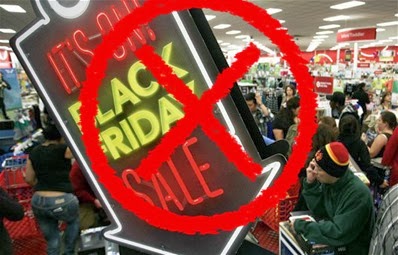
No_to_Black_FridayBlack Friday is the Friday following Thanksgiving Day in the United States, often regarded as the beginning of the Christmas shopping season. In recent years, most major retailers have opened extremely early and offered promotional sales to kick off the holiday shopping season. This year this day falls on November 29, with November 28 being Thanksgiving.

So, therefore, before you line up, however, on Thursday night, as so many do in order to be first in line when the stores open, for those great sales - I am being sarcastic, yes - ask yourself this:

"How is buying things that are made in China at discounted prices going to help the economy of the country that I am concerned about, or should be concerned about?"

It does not and cannot. It only fills the pockets of the corporations that are having their stuff made in China, in Vietnam, in India, in Thailand, in the Philippines, and other low wage countries, with many instances in China prison (slave) labor being used even to make the goods that we all are forced to buy, as far too many things are no longer available as "Made in US" or "Made in England".

Instead go and buy local, on Saturday. Boycott Black Friday by not buying anything on that day and encourage others to do so too. Buy from local makers, craftspeople, and others and chose “Made in USA” or “Made in England” (or chose your country) over anything from the Far East. I know it is not easy but we can try and if we do then we can create a positive change in our country, especially by how we spend our money.

Another question you should ask yourself also is: “Do I need those things that are on sale anyway?” and more often than not the answer will be a firm “No!” if you are but honest with yourself.

Often, I am sure, if you will really think about it in the right way you will find that those goods are not a need and not even, maybe, a want and if you really look at things there are many of them that, with a little thought and skill you could even make yourself – from waste – rather than buying. It is better for your finances and good for the Planet.

As consumers our money is our weapon for change and if we put it into the hands of local makers and craftspeople and producers we can keep them in business and can send a message to the rest of the country and indeed the world that we will not put up with this system anymore and that we demand a change.

Every Dollar, Pound or Euro that does not flow into the pockets of the corporations but goes to a local business it a plus for the (local) economy and even more so if the goods are produced locally.

Let's put local back into economy and demand local products and produce.

© 2013