Spirit of journalism shines through in times of devastation

By Michael Smith (Veshengro)

In the aftermath of the earthquake and the tsunami in Japan which led to the Fukushima nuclear power station meltdown editors and journalists of the Ishinomaki Hibi Shimbun paper kept the spirit of journalism alive by publishing with pen and poster paper.

Not being able to run the presses and all the paraphernalia needed for publishing the news today and delivering it to the masses the publishers and editors of the paper reverted back to the old method of the wall newspaper.

Instead of publishing a printed paper they wrote it on poster paper in ink and then posted those pages on to the walls of the evacuation centers.

This is also not the first incident of Japanese papers – in the face of disaster – reverting back to the tried and tested methods of old when the modern methods of printing and distribution do not function.

Actions such as these epitomize, in my view, the inexhaustible spirit of the journalist and of journalism.

It might be even a good exercise for many journalists and publishers to, every so often, to work on emergency contingencies for just such events and to have ready some old, tried and tested methods and means of producing a paper.

© 2011

Fragmented habitats fragmented thinking

By Michael Smith (Veshengro)

October 3rd marked World Habitats Day, yet there certainly was no cause for celebration for the Chartered Institution of Water and Environmental Management (CIWEM) has serious doubts over the UK Government’s ability to protect and reintegrate vital habitats which provide a number of valuable ecosystem services in light of the new National Planning Policy Framework. A much more integrated policy approach is needed in order to halt increased habitat fragmentation, vital to increasing our resilience to the impacts of climate and demographic change.

The fragmentation of habitats can considerably undermine the integrity of whole ecosystems - reducing genetic diversity, limiting migration and reducing predators’ range. In the UK the degree of habitat fragmentation has long been recognised and the 2011 National Ecosystem Assessment found that of the 8 habitat types assessed, 30% are in decline.

The importance and value of ecosystems and the services they provide to the economy, to society and to individuals are now widely recognised, with the international TEEB study (The Economics of Ecosystems and Biodiversity) placing a value of trillions on the potential loss of ecosystem services. The recent Natural Environment White Paper offered a welcome recognition of this value and a shift in approach with the promotion of ecological networks at a landscape scale to deliver increased resilience to ecosystem pressures.

However, any optimism over the White Paper is quickly called into question in light of the draft National Planning Policy Framework (NPPF) which outwardly compromises many of the outlined objectives. The loss of regional tier planning, the removal of any protection for local wildlife sites (placing some 40,000 at risk across England) and the absence of any reference to the Nature Improvement Areas introduced by the White Paper misses the opportunity to integrate this new thinking into practical delivery via planning.

CIWEM’s Executive Director, Nick Reeves OBE, says: “Fragmented approaches across government departments raise serious doubts over this Government’s green credentials. A lack of compatibility between the NPPF and Natural Environment White Paper leaves huge questions over how planning delivered at a local level will incorporate wider strategic aims. The NPPF reduces the environment to a series of discrete protected areas rather than a dynamic set of ecosystems interacting with our built environment. At the current speed of the planning reforms, England looks set on a trajectory of increasing biodiversity loss and fragmentation, further reducing the ability of this nation’s ecosystems to undertake the valuable services they provide threatening our natural heritage.”

It is such a shame that the “greenest government ever”, as Prime Minister David Cameron claimed, has so far failed to materialize and I must say that I very much doubt that it ever will materialize. The fact is, the way it looks from where I am standing, that they have not the slightest inkling to green the government and the country.

Claims are being made that certain things cannot be implemented right now in the economic climate as it would be hurting British companies and the economy of the country. Poppycock.

A great many jobs, more than any elsewhere, could be created, if the country would adopt the right green principles but, I would suggest, there are not enough backhanders to be had in that. Hence it is business as usual.

© 2011

We must overhaul our monetary system

By Michael Smith (Veshengro)

Our monetary system is in direct conflict with the basic rule of “Though shalt not steal”

It is becoming clearer day by day that we must, already from ethical and moral reasons, urgently put our monetary system on a different base. But not only that. We also need a fair distribution of resources of this Planet.

All over there world basic rules for life have been established, which make it possible for us to deal with one another in a more or less trusting atmosphere and which, at the same time, create the foundations for a life that is more or less free of fear.

However, all around the globe we, the people, are becoming aware that those basic foundations and tenets are being eroded and they begin to shake.

The number of crises around the globe as well as the more and more ailing society is proof enough that the inner forces, which are supposed to be holding our communities together, are breaking and failing.

On the other hand are the worldwide protests a vehicle that clearly permit us to see and read the feelings of the people, that we need to move in order to reverse the trend of the destruction of our society and the world as a whole.

A most urgent problem here is presented by the monetary and banking system which has brought greed into our world and which, in the last years and decades has become more and more unrestrained in that there remains but one direction of transfer; that from the poor to the rich.

This flow is breaking a number of basic tenets. The “thou shalt not steal” in but one of them. It might be better to formulate it a little more positive like “thou shalt share”.

Sharing is the one cooperative act and basic need and “rule” that has made us strong as humans and able to withstand the often fickle nature of Nature in community.

This principle of giving, of sharing, has been burned deep into our neurons and psyche. When we give to another person something of ours, and that can be a simple smile, holding an umbrella over him during rain, a bed for the night, or whatever, then we see in the face of the recipient happiness and joy.

This happiness and joy in turn stirs in us also a happiness and joy of a different kind and on a different level and by this mechanism humans are being molded and welded into a community and a caring society. That is why we already our youngest ones to share fairly and those youngest ones often feel the sense of unfairness better and faster than do us grownups; or so at least it would seem.

Often it is also our children that have the most affinity for the World, the Planet, the environment, Mother Nature, and our neighbor. We, when we grow up, somehow, via the career path or whatever, seem to lose this sense of justice for all and everything.

It is, simply because of the fact that as children we seem to have, often, this deep sense of justice and injustice, to watch how, as grownups, we find it good and acceptable, when someone is being rewarded in the lending of money with interest, when it should be a matter of course to help someone in need. Would it not be much better to punish those that hoard money as means of exchange and in doing so create bottlenecks in the economy.

A fair number of religions, theoretically, including Christianity, Judaism and Islam, make usury – the lending of money on interest – an ethical issue and a crime even but it is, and this is not intended as an anti-Jewish rant, Jews that are the big money lenders and bankers.

But, worse still than lending money on interest is the practice of creating money from thin air, the quantitative easing, often referred to as the “printing of money” and other such actions. Why do we permit banks to then demand interest also for this money that never existed before? And worse still is the practice to demand collateral, often of several times the value of the loan, plus interest, should the lender default. This is robbery, not just simple theft, in my eyes and view and something that goes against the most basic tenets of our societal rules.

When we now come to realize that this theft and robbery has been going on for years, nay decades and centuries, and that those stolen moneys and assets were used to buy concessions for the exploitation of the resources of Mother Earth, it is then that the dimensions of this perverseness of our society becomes clearer still.

For what reason should individual people and corporations have the rights to call resources of this Planet theirs when such resources belong to all of the Earth's children and not just those with the right amount of money and assets and where such assets that were used to buy those “rights” to exploit those resources were stolen in the first place?

It is high time that we begin, once again, to share the resources of our Planet fairly and to use them sustainably. Utopia, you say. I do not think so. But it requires a change of mindset and a return to the understanding of a child in certain aspects.

It is in this context too, it would seem, where the words of the New Testament come in that there state “you must become as little children”. And it is the churches that best begin with themselves there.

This could be the beginning of a new world order, one where all of the Earth's children have enough, and that should be enough, to have enough.

© 2011

US EPA claims that waste incinerating power plant emit more carbon dioxide

By Michael Smith (Veshengro)

According to a recent Tweet by TerraCycle the United States Environmental Protection Agency claims that power plants based on waste incinerators emit more carbon dioxide per megawatt-hour than coal, natural gas or oil-fired power plants.

This claim should not and does not surprise anyone who knows how compromised the EPA is as regards to the industry lobby in the same way as the FDA is compromised by its contacts to Monsanto and the likes.

Where the government is in bed with, or indeed is, the oil and coal industry claims such as this one are hardly surprising and also not that it is the protection agency that makes such claims. It is, after all, but an arm of that very government, and thus has to say what it is being told.

Scandinavian countries have been using closed loop combined heat and power generating plants based on waste incinerators for decades and, apparently, they work well and have very low emissions.

Anything that burns this or that to create heat and power will put out carbon dioxide but we must not just look at CO2 emissions. We must, once again, consider what worried us in the 1970s; air pollution and acid rain and this was solved via scrubbers in the chimneys and other measures.

Air pollution is killing millions each year in the developed world and we won't even want to talk about places such as China and India, do we now.

While I can hear the likes of the Friends of the Earth already singing their mantra again about we should not incinerate waste but recycle more the fact is that, and Sweden who recycles more than most, knows that well, there will, with the best intentions in the world, always remain some waste that cannot be recycled or turned into methane gas even. Some of that can, however, be burned in order to create energy and heat. Better than putting it into holes in the ground, I should think.

Waste incineration to create electricity and heat must be part of the “renewables” circle as much as methane gas powered electricity plants and others. Otherwise we would be wasting resources. Oil (and natural gas) are coming to an end and there is no such thing as clean coal.

Pellets from the wood industry too and chippings should find a use in power plants but here best in heating homes and offices, as well as producing electricity via Sterling engines, for instance.

© 2011

Britain will stand with America if it attacks Iran

British military is readying contingencies for the eventuality of a more or less imminent conflict with Iran

by Michael Smith (Veshengro)

MoDSources of the British government have confirmed that in the event of a US strike – or should we say US/Israeli strike – against Iran that British forces will stand shoulder-to-shoulder in support of the USA and its forces.

This is all we needed; NOT!

Already for more than three quarters of a year two US Navy carrier groups – with at least one of the flat tops full of Israeli helicopters – are on station in an area near the Straits of Hormuz. They are there, in readiness, no doubt, for the moment President Obama gives the green light to attack.

The more we are seeing of this first Black American President the more is there to dislike and especially in the way he goes about breaking one election promise after the other.

Tony Blair made Britain into a poodle to George W Bush, the previous US President and his warmongering operations and endeavors and the new government in the UK appears to be no different. The USA should not be our master and the UK should not follow them into each and every stupid war. If the US believes that they are the world's policeman then they can carry the can alone.

A war with/against Iran could have serious and sire consequences indeed for all involved, especially, as it would appear, if the US allows the Israelis to fire the first shot, with “The Unit” going in as the first wave. Bad move indeed on all counts.

The British people are being told that they have to accept austerity measures not seen for about half a century or more, and pay freezes and even pay cut, and public sector job losses and cuts in council services, etc., while the government is committing the country to yet another illegal and stupid war for oil as America's sidekick.

When is the British government going to learn that Britain no longer is a great military power – as of Friday, November 4, 2011 we do not even have our own Navy protecting our waters anymore – and neither should it be and that our government's obeisance to the United States makes the country and its people a serious target for revenge attacks and the quasi 51st State of the Union.

Britain cannot afford another war for oil and neither can the world.

© 2011

Unison claims overwhelming mandate for strike

Unison claims mandate for strike with 1 out of 5 members voting yes

by Michael Smith (Veshengro)

unison Unison leadership claims that members have given the union overwhelming support for strike action on November 30th and thus a mandate to proceed.

I admit that I am no mathematical genius but 1 out of 5 equals 20% and that is NO majority; not by a long shot.

While there may have been a majority of yes votes amongst the ballot papers returned the fact that about 70% of Unison's membership did not even bother to vote should tell the union and its leadership a thing or two. Namely that there is NO interest from the sides of members in a strike and thus NO mandate for any such action.

The message from the members is a loud and clear one that they – the majority of them – do not want a strike. Only Dave Prentis and his cronies in Unison and other public sector unions want one.

Unison's idea of democracy seems a rather strange one and not just in relation to this particular ballot.

The same is the case with a majority, from my questioning, of members not wishing their dues to prop up the British Labour Party.

And let's not even mention the fixed leadership elections even with people already “elected” to positions on the ballot papers without members given a say as to yeah or nay.

All women, all “Gay”, all Black, shortlists are NOT democracy and to appoint people to the board, whether national or regional, simply because of gender, sexual orientation, race or creed is NOT democratic. It is Stalinist fascism.

Time for Unison (and other unions) to rethink its ideas.

© 2011

Nick Clegg against EU referendum

Deputy Prime Minister stabs British public in the back

By Michael Smith (Veshengro)

nick-clegg While his opposition to any referendum is no surprise, considering the way the Lib-Dems are in love with the EU, his vitriolic attack on those MPs that voted for a referendum and against the people demanding one are those of someone who is getting to big for his boots.

Deputy prime minister says coalition will not take back powers from Brussels and calls EU debate a 'dangerous distraction'.

So, in other words, what he is saying is f*$& the wishes of the people. Government decides.

That means Nick Clegg does not care one iota as to what the people of the country want. Time politicians realized they owe us not we them.

To further his point and to scare the electorate he claims that there will be three million plus jobs at risk if the UK would pull out of the EU.

However, according to several sources, including research by Channel 4, this is not the case and all that Clegg is doing is engaging in scaremongering.

Those are the actions of a desperate man and also those of a churlish child and not those of a politician worth the trust of the people.

The entire British government, including Her Majesty's Opposition, do not care one single little bit as to the wishes of the people, which made clear their demand for a referendum on our continued membership in the European Union.

The British government, however, has decided that what the people ask is irrelevant and that they really are the masters and that the people are but serfs or children, to do as they are told and that's it.

It is time, I thing, that we, the people, may be made clear to the Members of Parliament that they are answerable to us, their electorate, or that they might become irrelevant.

© 2011

Canadian Farmers’ Almanac Forewarns of CLIME AND PUNISHMENT

by Farmers' Almanac Staff

Unusual Winter Weather, Floods, Record Heat, Now What?

LEWISTON, Maine – After a wild year of roller-coaster weather—record snowfalls, flooding, and extreme bouts of heat—the 2012 Canadian Farmers’ Almanac is rolling out its newest edition and its long-range winter outlook. According to the famous weather-predicting publication, the winter of 2011-12 will be one of “Clime and Punishment,” which means some parts of the country will get a very frigid winter; while others will be on tap for lots of rain and snow.

The Canadian Farmers’ Almanac, which bases its long-range weather forecast on a mathematical and astronomical (and top secret) formula,

The “punishment” will come from the precipitation. The 2012 Canadian Farmers’ Almanac predicts the winter of 2011–12 will bring unusually cold and stormy weather. For some parts of the country that means a frigid climate; while for others, it’s lots of rain and snow.

The 195-year-old publication is forecasting the upcoming winter will be cold to very cold, from Alberta east across Saskatchewan and Manitoba into western Ontario. Meanwhile, temperatures are expected to average above normal for much of Nova Scotia and possibly southern New Brunswick. Near-normal temperatures should prevail elsewhere. A very active storm track will bring copious precipitation through the Great Lakes into central and eastern Ontario, Quebec, and much of the Maritimes. Another active storm track over the Pacific Ocean will guide systems into southern and central British Columbia and western Alberta, giving them a wetter-than-normal winter.

But the Canadian Farmers’ Almanac isn’t just about the weather. It’s about living smart. The 2012 Canadian Farmers’ Almanac provides tons of tips, articles, and ideas on ways to get back to basics and live a more resourceful lifestyle. “The need for a more sustainable, healthy, and affordable lifestyle continues to grow as does the need for the Canadian Farmers’ Almanac to share its wisdom, tips, and ideals,” reveals Peter Geiger, Philom., Editor, adding “and in this crazy economy the need to live life a bit more wisely is not just a desire but a dire need.”

Some of this new edition’s must-read articles include: “How to Have a Nice Yard Without Going Broke,” “Learn How to Can and Freeze,” plus healthy living topics, such as natural itch relief and eating whole foods to beat the winter doldrums; and, of course, tons of the tips, trivia, and wit and wisdom that you can only find in the Canadian Farmers’ Almanac.

The 2012 Canadian Farmers’ Almanac has officially hit the store shelves August 29, 2011, and can be accessed online at www.FarmersAlmanac.com and on Facebook and Twitter.

This press release is presented without editing for your information only.

Full Disclosure Statement: The GREEN (LIVING) REVIEW received no compensation for any component of this article.

Britain’s Greenest Band The Phoenix Rose to Support Junior Marvin

Britain’s Greenest Band The Phoenix Rose to Support Junior Marvin of Bob Marley’s Wailers Live at Under the Bridge

ThePheonixRose_web Eco-warrior and front man of The Phoenix Rose, Jarvis Smith is delighted to announce their support of the legendary Junior Marvin at an exclusive gig to be held at London’s hottest live music venue, Under the Bridge on Thursday 24th November 2011.

The unmissable event promoted by Jambila Music in association with PEA Pod Sessions includes support from No-Maddz and promises an eclectic collaboration of Reggae and Rock music where for every ticket sold, a tree will be planted through PEA Pod Sessions.

The Phoenix Rose

Having performed this summer at Glastonbury with Junior Marvin, The Phoenix Rose’s music has been dubbed by double Grammy  winner Wayne Jobson as “the sound you would hear if The Police Clashed with Bob Marley”.  The band, fronted by Jarvis Smith including Jim Evans-Jones (drums), Rob Tree (bass), Fingers (guitar) and Reet on vocals was signed by the UK’s first and only green record company, Archangel Green.  Their contract has unique guidelines regarding carbon-offsetting reduced travel, utilisation of green energy and efficient CD production.  Their upcoming album 'Planet 2012’ which includes single 'Sick and Tired' produced by Pete 'mixmaster' Hammond and the album title track featuring Junior Marvin encourages people to realise their own capability to instigate positive change.

Jarvis Smith comments...“I’m thrilled The Phoenix Rose will be joining Junior to perform at this exciting and highly sought after venue. He and Bob Marley made the concept of ‘love and unity’ become an accepted philosophy, and he truly believes, as I do, that music can once again be used to encourage people to make positive changes to their lifestyles in order to save the planet”

Junior Marvin

The Jamaican born guitarist and singer previously formed his own band, Junior Marvin’s Hanson in the early 70’s before joining Bob Marley and The Wailers band in 1977. “Exodus” was his first album with them which was voted “Best Album Of The 20th Century’ by Time Magazine. He is on all Bob Marley and The Wailers Albums since that time. Since Bob Marley’s death in 1981, Junior has released four albums with The Wailers; “ID”, “Majestic Warriors”, “Jah Message” and “My Friends” (Live). Junior also featured on albums with Burning Spear, Alpha Blondy, Bunny Wailer, Israel Vibrations, Culture, The Meditations, Beres Hammond, The Congos, O.A,R. and SOJA.

In 1997 Junior left The Wailers Band and relocated to Brazil, where he formed a short-lived group called Batuka. Following his return to Jamaica he continued working as a session artist, more recently touring with Kaliroots and The Wailers Band. He has been touring with The Original Wailers since 2009 and his new single, ‘Where is Love’ as a solo artist is out now to buy on iTunes and vinyl.

Under the Bridge

Under the Bridge is a uniquely stylish west London music venue, purpose-built with the highest attention to detail, and featuring stunning, state-of-the-art sound and lighting. Designed in homage to the legendary venues in London’s rock history and the greats of British Isles music, it’s a new club that feels like it’s been around forever. This inspiring venue, holding up to 600 people, is perfect for gigs, press calls, showcases, fashion shoots, live broadcasts, warm-ups, after-parties, comedy nights, corporate events and much more.

Doors: 7pm – 1am

£15 in advance… £20 at the door

Tickets available from: www.underthebridge.co.uk/events

Under The Bridge

Stamford Bridge, Fulham Road, SW6 1HS

Nearest Tube: Fulham Broadway

The Phoenix Rose: http://thephoenixrose.com/

Junior Marvin: www.juniormarvin.com

Jambila Music: www.jambila.co.uk

No-Maddz: www.nomaddzja.com

This press release is presented without editing for your information only.

Full Disclosure Statement: The GREEN (LIVING) REVIEW received no compensation for any component of this article.

Forests of the future may actually soak up more CO2 than previously believed

Assumptions of the response of the ecosystem to rise in CO2 and pollution levels are incorrect

By Michael Smith (Veshengro)

North American forests appear to have a greater capacity to soak up heat-trapping carbon dioxide gas than researchers had previously anticipated.
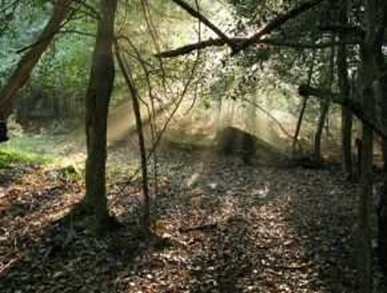
Forests CO2 absorbtionA s a result, they could help slow the pace of human-caused and human-induced climate warming more than most scientists had thought, a University of Michigan ecologist and his colleagues have concluded.

The results of a 12-year study at an experimental forest in northeastern Wisconsin challenge several long-held assumptions about how future forests will respond to the rising levels of atmospheric carbon dioxide blamed for human-caused climate change, said University of Michigan microbial ecologist Donald Zak, lead author of a paper published online this week in Ecology Letters.

“Some of the initial assumptions about ecosystem response are not correct and will have to be revised,” said Zak, a professor at the U-M School of Natural Resources and Environment and the Department of Ecology and Evolutionary Biology in the College of Literature, Science, and the Arts.

To simulate atmospheric conditions expected in the latter half of this century, Zak and his colleagues continuously pumped extra carbon dioxide into the canopies of trembling aspen, paper birch and sugar maple trees at a 38-acre experimental forest in Rhinelander, Wis., from 1997 to 2008.

Some of the trees were also bathed in elevated levels of ground-level ozone, the primary constituent in smog, to simulate the increasingly polluted air of the future. Both parts of the federally funded experiment - the carbon dioxide and the ozone treatments – produced unexpected results.

In addition to trapping heat, carbon dioxide is known to have a fertilizing effect on trees and other plants, making them grow faster than they normally would. Climate researchers and ecosystem modelers assume that in coming decades, carbon dioxide's fertilizing effect will temporarily boost the growth rate of northern temperate forests.

Previous studies have concluded that this growth spurt would be short-lived, grinding to a halt when the trees can no longer extract the essential nutrient nitrogen from the soil. But in the Rhinelander study, the trees bathed in elevated carbon dioxide continued to grow at an accelerated rate throughout the 12-year experiment. In the final three years of the study, the CO2-soaked trees grew 26 percent more than those exposed to normal levels of carbon dioxide.

It appears that the extra carbon dioxide allowed trees to grow more small roots and “forage” more successfully for nitrogen in the soil, Zak said. At the same time, the rate at which microorganisms released nitrogen back to the soil, as fallen leaves and branches decayed, increased.

“The greater growth has been sustained by an acceleration, rather than a slowing down, of soil nitrogen cycling,” Zak said. “Under elevated carbon dioxide, the trees did a better job of getting nitrogen out of the soil, and there was more of it for plants to use.”

Zak stressed that growth-enhancing effects of CO2 in forests will eventually “hit the wall” and come to a halt. The trees' roots will eventually “fully exploit” the soil's nitrogen resources. No one knows how long it will take to reach that limit, he said.

This is, however, once again but an assumption of the scientists and does not meant that that will actually happen, in the same way that they now have to rethink their previously held claims and beliefs that forests of the future would not be able to cope with increased CO2 (if that is happening even) and would become sources of CO2 themselves.

The ozone portion of the 12-year experiment also held surprises. Ground-level ozone is known to damage plant tissues and interfere with photosynthesis. Conventional wisdom has held that in the future, increasing levels of ozone would constrain the degree to which rising levels of carbon dioxide would promote tree growth, canceling out some of a forest's ability to buffer projected climate warming.

In the first few years of the Rhinelander experiment, that's exactly what was observed. Trees exposed to elevated levels of ozone did not grow as fast as other trees. But by the end of study, ozone had no effect at all on forest productivity.

“What happened is that ozone-tolerant species and genotypes in our experiment more or less took up the slack left behind by those who were negatively affected, and that's called compensatory growth,” Zak said. “The same thing happened with growth under elevated carbon dioxide, under which some genotypes and species fared better than others.”

“The interesting take home point with this is that aspects of biological diversity – like genetic diversity and plant species compositions – are important components of an ecosystem's response to climate change,” he said. “Biodiversity matters, in this regard.”

We do have to remember one thing, however, and that is that if those trees are “allowed” to stand over the maximum span they, themselves, in fact, will release CO2 rather than absorb it and it is here were forestry comes in.

I would say that, you might say, being a professional commercial forester by original trade, but it is the truth. There is a certain lifespan when a tree is actually “healthy”, so to speak, and is absorbing CO2 and then come the phase when the tree will actually exhale carbon.

Therefore it is important that forests are managed in a proper system and are not just allowed to stand there while we pretend that everything is hunky dory and fine. This is important especially when we want forests and woodlands to act as serious carbon sinks. At the same time we also benefit from the wood, though a strict regime of sustainable management and replanting is required.

Sustainable wood is more important today than ever before and we must replace a lot of the stuff that we use plastics for today with wood and wood products again, as used to be the case.

Wood for heating, whether in the form of split logs, chips or briquettes or pellets, is carbon neutral, as wood, when burned, only releases the amount of CO2 that the tree absorbed during its productive life.

Leaving wood to go into decay, as with habitat piles and such like, is harmful, as not only the absorbed CO2 is being released but also methane gas during the process of decay. The latter being a GHG that is said to be 40 times more dangerous than CO2 as regards to climate change.

In addition to that said habitat piles also harbor diseases and are a fire hazard in forests and woodlands, despite what misguided environmentalists may claim. During the old times when there was, basically, a clean forest floor policy with anything that could not be utilized burned on site, though enough litter was always there, there was more wildlife, including fungi and invertebrates, than there are today. But, there were fewer tree diseases.

© 2011